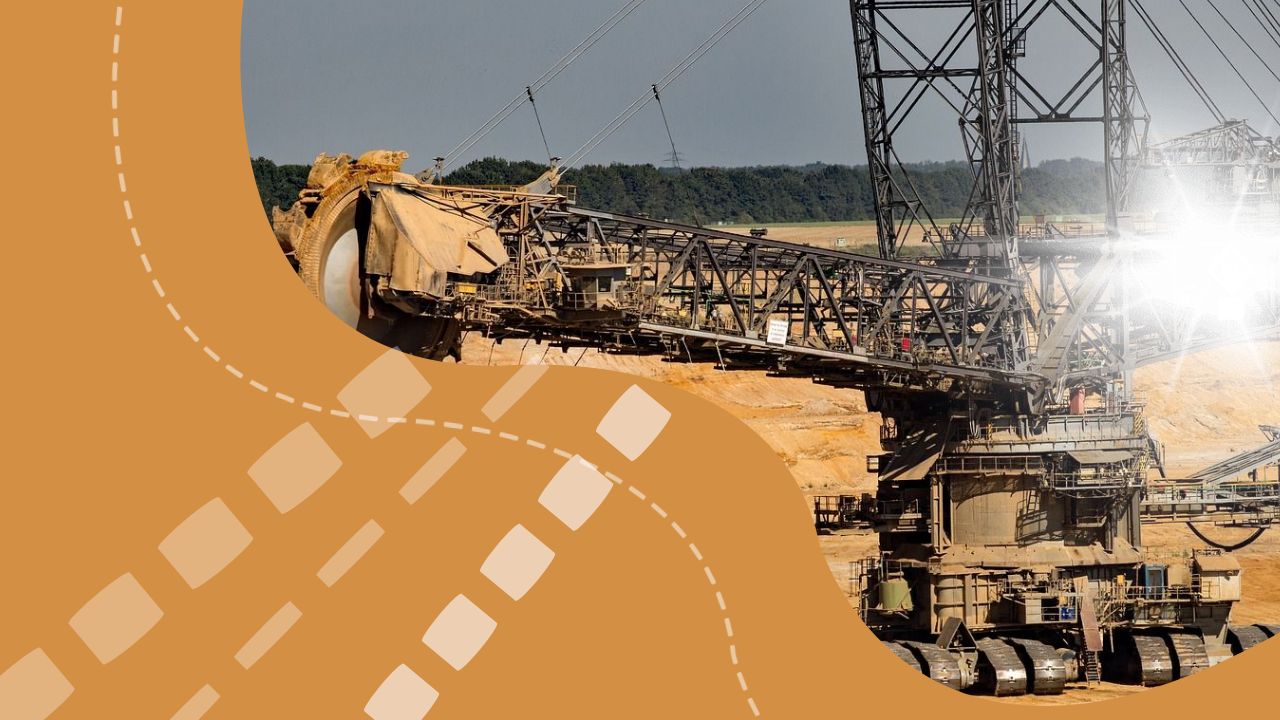
Kazakhstan’s Energy Minister Yerlan Akkenzhenov has met with senior leadership of China’s East Hope Group to discuss a series of major investment projects in Kostanay Region, including a proposed one-gigawatt coal-fired power plant intended to supply electricity to a new aluminium complex.
The meeting between Akkenzhenov and East Hope Group Chief Strategy Investment Officer Chen Lei covered the Chinese conglomerate’s plans to develop industrial and energy capacity in the region. Beyond the coal plant and aluminium complex, East Hope Group signalled interest in expanding into renewable energy and broader coal industry projects in Kazakhstan.
Akkenzhenov pledged the Ministry of Energy’s full support for initiatives that strengthen Kazakhstan’s industrial and energy capabilities, emphasising the importance of foreign investment, advanced technology adoption, localisation of production and the creation of high-value-added employment.
East Hope Group is one of China’s largest private industrial conglomerates, with extensive interests in aluminium smelting, silicon manufacturing and chemical industries, making it a strategically relevant partner for Kazakhstan’s ambitions to develop domestic aluminium processing capacity alongside its existing raw material base.
Turkish President Recep Tayyip Erdoğan is paying a state visit to Astana on 13 to 14 May at the invitation of Kazakhstani President Kassym-Jomart Tokayev, with the sixth meeting of the High-Level Strategic Cooperation Council between the two countries scheduled alongside broader bilateral talks. The visit will be followed on 15 May by an Informal Summit of the Organisation of Turkic States in Turkistan.
The diplomatic encounter arrives at a moment of sharp economic momentum. Bilateral trade between Kazakhstan and Turkey reached $1.13 billion in the first two months of 2026 alone, up 44.9% year-on-year from $777.6 million in the same period of 2025. Kazakhstan’s exports to Turkey surged 66.1% to $916.4 million, driven overwhelmingly by copper and oil, which together account for approximately 90% of export value. Copper and copper cathode supplies more than doubled to $515.7 million, while crude oil exports rose 31.7% to $314.5 million. The trade surplus in Kazakhstan’s favour more than doubled to $705.6 million.
Beyond the dominant commodities, notable growth was recorded in several other categories: unwrought aluminium rose 80-fold, unwrought zinc nearly 184-fold, and more technologically advanced exports including electric motors, pipeline fittings and automatic control instruments also expanded significantly. Turkey’s exports to Kazakhstan, while declining overall by 6.7%, showed growth in pharmaceuticals, prepared food products, electric generating sets and specialised industrial equipment — indicating a gradual shift toward finished goods and industrial supply.
The broader relationship has been three decades in the making. Turkey was the first country to recognise Kazakhstan’s independence on 16 December 1991, and bilateral relations have since evolved through three distinct phases — from cultural and political foundation-building in the 1990s, through the formalisation of a strategic partnership framework from 2009, to the current phase emphasising transport and logistics, energy, defence industry cooperation, digital technology and education. More than 5,000 companies with Turkish capital operate in Kazakhstan, Turkish investment over 20 years has totalled nearly $6 billion, and Kazakhstani investment in Turkey has exceeded $2.5 billion. The two countries aim to raise bilateral trade turnover to $10 billion.
A central pillar of the current partnership is the Middle Corridor — the trans-Caspian transport route connecting Central Asia, the South Caucasus, Turkey and Europe. World Bank estimates suggest cargo volumes along the corridor could triple by 2030 while transit times are halved, making logistics infrastructure one of the fastest-growing and most strategically significant dimensions of the bilateral relationship. In 2025 alone, the two sides signed 20 interstate and intergovernmental agreements covering energy, transport and logistics.
Analysts note that achieving the $10 billion trade target will require export diversification beyond copper and oil, development of processing industries and removal of logistical bottlenecks — challenges that both governments acknowledge as central to the partnership’s next phase.
China’s export controls on rare earth elements continue to inflict severe damage on global supply chains more than a year after they were first imposed, with shipments of the most strategically sensitive heavy rare earths remaining approximately 50% below pre-restriction levels despite ongoing trade talks between Beijing and Washington, according to Chinese customs data reviewed by Reuters.
The controls, introduced in April 2025 in retaliation for President Donald Trump’s Liberation Day tariffs, have become one of the most consequential legacies of the Sino-American trade dispute. While overall Chinese rare earth export volumes have broadly recovered, exports of yttrium, dysprosium and terbium — critical inputs for advanced permanent magnets, aerospace thermal coatings, EV motors, wind turbines and military systems — remain sharply constrained. Outside China, prices have surged dramatically: dysprosium and terbium have risen four to five times since April 2025, while yttrium prices have climbed approximately 140-fold, according to consultancy Argus.
Ilya Epikhin of Arthur D. Little told Reuters that headline export volumes can be misleading. “China appears to be selectively licensing exports while preserving leverage over supply chains considered strategically sensitive, particularly where defense or advanced technology applications are involved,” he said.
The ongoing restrictions sit awkwardly against statements from the White House following the October summit in South Korea, where Washington said China had agreed to effectively eliminate current and proposed rare earth export controls. Beijing eased some trade restrictions after that summit but the April 2025 controls have remained firmly in place, with China’s Ministry of Commerce maintaining that export applications are being approved for eligible buyers.
The squeeze is falling hardest on US allies. Japan — the world’s largest rare earth magnet producer outside China — has received just 4% of its previous dysprosium import volumes since restrictions began. Germany has reportedly received none. Manufacturers globally are now paying between 1.5 and three times more for magnets than before the controls were imposed, according to Benchmark Mineral Intelligence. Several US aerospace companies temporarily paused production earlier this year due to yttrium shortages, and the White House was recently forced to intervene directly with Beijing to secure export approvals for a major US industrial group with civilian and defence operations that had lost hundreds of millions of dollars in monthly revenue.
The rare earth issue is expected to feature prominently in discussions during Trump’s visit to China this week — his first since 2017. One US official told Reuters that both sides are seeking stability in rare earth supply chains, while a White House spokesperson confirmed the president’s team is “engaging continuously with China to ensure the flow of rare earths while building out trusted and resilient supply chains.”
Analysts remain cautious about near-term relief. “The situation looks set to get worse before any better,” said David Merriman, research director at Project Blue.
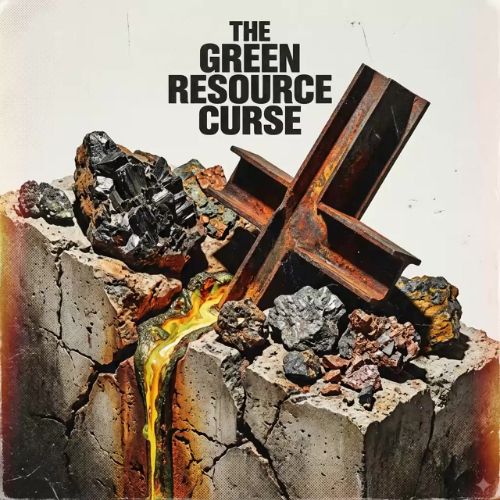
A MINEX Forum Production: Escaping the Green Resource Curse in Central Asia
Welcome to this special deep-dive podcast episode, brought to you by the MINEX Forum. This episode is based on the groundbreaking research article, “Central Asia as New Battle Grounds: Critical Mineral Strategies of Kazakhstan and Uzbekistan,” authored by Younkyoo Kim, Lyailya Ivatova, Sujin Kang, and Yerden Ordabek.
Whether you are driving an electric vehicle in Europe, using a smartphone in the USA, installing solar panels in Australia, or relying on advanced semiconductors in South Korea, your daily life depends on an invisible, highly concentrated global supply chain. This introductory long-read breaks down the complex science and geopolitics of critical minerals, revealing why the true battleground for the future of green technology isn’t in the mines—it’s in the midstream.
The “Hourglass” Supply Chain and the Green Resource Curse
As the world accelerates its transition away from fossil fuels, the demand for critical minerals like lithium, cobalt, nickel, and rare earth elements is skyrocketing. However, a severe structural imbalance threatens the stability of this green revolution.
While the extraction of these minerals happens all over the globe, the capability to refine and process them is heavily monopolized. The global supply chain resembles an “hourglass,” where raw materials from dozens of countries flow into a tiny number of refining bottlenecks—predominantly in China, which controls 85% to 90% of the processing capacity for key elements like rare earths, lithium, and cobalt.
For resource-rich developing nations, this creates a dangerous trap known as the “green resource curse”
. Just as oil and gas historically led to corruption, economic volatility, and environmental damage in some nations, the rush for green minerals risks repeating the cycle
. Developing countries bear the heavy environmental and social burdens of mining, only to export low-value raw ores
. They are entirely excluded from the lucrative “midstream” stages—smelting, refining, and chemical separation—meaning they must ultimately buy back expensive, finished green technologies manufactured elsewhere.
The New Battlegrounds: Kazakhstan and Uzbekistan
Central Asia has emerged as a crucial “third zone” capable of disrupting these bottlenecks and offering a more secure supply chain to the world. But Kazakhstan and Uzbekistan are no longer content to simply dig dirt out of the ground; they are fighting for “midstream sovereignty” to capture the actual value of their natural resources.
Kazakhstan’s “New Oil” Kazakhstan, already a dominant force in global uranium production, is treating its vast rare earth element deposits as its “new oil”. The country holds massive potential, such as the Kuirektykol deposit which holds an estimated 28.2 million tons of rare earths. However, separating rare earth elements into high-purity industrial materials requires incredibly complex precision technology. To bridge this technological gap, Kazakhstan is rapidly attracting Chinese capital—recently launching a $300 million tungsten processing plant—while simultaneously courting Western nations and South Korea to avoid becoming entirely dependent on Beijing’s vertically integrated supply chains. Uzbekistan’s $2.6 Billion Masterplan Uzbekistan is taking a highly centralized, state-driven approach. The government has consolidated its critical mineral assets under a new entity, the Uzbekistan Technological Metals Complex (UzTMK), and launched a massive $2.6 billion investment program covering 76 different projects. Remarkably, Uzbekistan is also building its own domestic electric vehicle manufacturing base, partnering with companies like BYD to ensure that the minerals they extract can be used in factories right at home. To make its products attractive to strict Western markets, Uzbekistan is pioneering eco-friendly processing methods, such as a closed-loop system for molybdenum that slashes chemical emissions.
A New Model for Partnership
As Central Asia attempts to climb the value chain, it faces competing models of global partnership. The Chinese Model offers incredibly fast infrastructure development and capital, but threatens to lock Central Asian processing into China’s broader monopolies, stifling domestic technological independence. The Western Model (US & EU) focuses heavily on environmental, social, and governance (ESG) compliance and supply chain transparency. However, Western initiatives often emphasize financial de-risking over the actual transfer of the complex refining technologies these nations desperately need.
This gap has created an opening for an alternative approach, championed by middle powers like South Korea. Because South Korea is highly reliant on mineral imports (procuring over 82% of key battery minerals from China), it is highly motivated to help Central Asia succeed. Rather than just providing cash or demanding regulatory compliance, South Korea is utilizing a “Process-Embedded Industrial Partnership Model”. Through initiatives like the Uzbek-Korea Rare Metals Center, South Korea is actively transferring laboratory skills, high-purity separation techniques, and process engineering knowledge directly to the local workforce.
Why This Matters to You
The fight for midstream processing in Central Asia is not just a regional economic issue; it is the linchpin of global clean energy security. Escaping the green resource curse is the only way these nations can achieve sustainable industrialization, and diversifying the refining bottlenecks is the only way everyday consumers can rely on a stable, affordable supply of electric vehicles and renewable energy in the decades to come. Hit play on the podcast to listen to our hosts dive deeper into the strategies, the science, and the high-stakes geopolitical chess game defining the future of the global energy transition.
Ionic Rare Earths has demonstrated what it describes as the Western world’s first complete end-to-end recycled rare earth supply chain for electric vehicle motor magnets, successfully converting Belfast-recycled rare earth oxides into high-specification magnets that passed durability testing at Ford’s UK research and development facility.
The project, led by the Australian company and supported by the UK government’s CLIMATES initiative, brought together Less Common Metals, GKN and Ford UK in a collaboration designed to test whether recycled rare earth material could meet the exacting quality standards required for EV motor production. The process ran from Ionic’s recycling operations in Belfast — where neodymium, dysprosium and terbium oxides are produced at purities above 99.5% from end-of-life magnets and secondary magnet supply chain materials — through to alloy production by LCM, magnet manufacturing by GKN to Ford’s specifications, and final rotor testing at Ford’s Dunton facility. The recycled material rotor passed the full durability test cycle with results equivalent to rotors produced using conventional production magnets.
Ionic managing director Tim Harrison described the achievement as the culmination of a landmark technology development. “Ionic Technologies was the first producer of recycled, individually separated magnet REOs in the Western world, and this now proves that its long-loop recycling technology can supply Western supply chains for the most demanding applications,” he said.
The company received UK government backing in late 2023 to build a commercial rare earth magnet recycling facility in Belfast, which will feed materials to LCM for alloy production, with the resulting magnets intended for Ford’s UK electric vehicle manufacturing operations.
The demonstration carries policy significance at a moment when the UK is seeking to reduce dependence on imported critical minerals. Under the Critical Minerals Strategy announced in November 2025, the country is targeting domestic production of 10% of its mineral needs and recycling supply of 20% by 2035 — compared with current domestic production accounting for just 6% of critical minerals requirements. The CLIMATES initiative supported 36 circular rare earth projects, with the Ionic-led automotive supply chain designated a flagship.
Deep in the wooded Little Carpathian hills near Bratislava, a Soviet-era mine shaft bores into a hillside above the Slovakian wine town of Pezinok. The Trojarova antimony deposit, discovered by Soviet engineers in the 1980s and abandoned when the Iron Curtain fell, has become an unlikely symbol of Europe’s failure to match its critical minerals ambitions with the money and institutional resolve to act on them.
Military Metals Corp, the small Canadian company that acquired Trojarova almost two years ago, is pitching the project as a chance for Europe to secure domestic supply of a metal used in munitions, night vision goggles, infrared sensors, fire retardants and nuclear energy. If reactivated, the site could supply as much as a third of the continent’s annual antimony demand of approximately 6,000 tonnes and be operational within two to three years. But the company, with a market capitalisation of less than $30 million, needs partners — and Europe has not yet provided them. No offtake agreement has been secured from EU buyers.
Antimony sits at the intersection of several geopolitical fault lines. China controls approximately 80% of global processing capacity and, along with Russia and Tajikistan, dominates primary supply. Beijing imposed sweeping export controls on critical minerals and rare earths last year, and the US has since aggressively pursued partnerships and project financing worldwide. Europe has lagged. “Antimony is a textbook example of a small-volume mineral with outsized strategic impact,” said Sabrina Schulz of the European Initiative for Energy Security. “Europe is almost entirely import-dependent, and supply is highly concentrated.”
The gap between European ambition and action is not lost on officials inside the bloc. The European Critical Raw Materials Act of 2023 set targets for extracting at least 10% and processing 40% of annual key mineral consumption — benchmarks that galvanised some action on battery metals but have not been extended to defence-critical materials such as antimony, gallium and germanium. Brussels officials lack both the mandate and the budget to pursue the kind of direct project financing the US has deployed. Germany’s own €1 billion raw materials fund has supported only two projects and is criticised for creating more qualification hurdles than it removes. Between the economy ministry, the chancellery and the foreign ministry in Berlin, there is still no agreed definition of what a de-risking strategy in critical minerals actually entails, according to people familiar with the internal discussions.
Frank Hartmann, the German foreign ministry official responsible for Asia, was direct at a March event in Berlin: “What we have to do is long-term strategy, take money and funds into our hands to invest in these critical mineral funds for the next 10 years. Otherwise, we never escape this dependency trap.”
The contrast with American action is stark. One US company has already approached Military Metals about Trojarova. Last month, the US government’s investment arm agreed a $5 million deal to restart a dormant antimony mine in North Macedonia. As US President Donald Trump heads into summit talks with Xi Jinping in Beijing this week, the Trojarova situation illustrates precisely what European officials fear — that any deal struck between Washington and Beijing could bypass Europe entirely.
Military Metals CEO Scott Eldridge has outlined a vision that goes beyond the mine itself — with plans to produce ingots directly for defence clients and potential refining partnerships in Germany and Sweden that could anchor a complete European supply chain. But execution requires partners that have not materialised. Thomas Hüser, the company’s chairman and a former Glencore executive, put the situation plainly: “What we are still lacking is not ambition, but execution. Europe’s raw materials strategy remains fragmented, slow, and often disconnected from industrial reality.”
The EU and US last month reached a coordination accord on critical minerals supply chain policies, which Military Metals hopes could eventually lead to joint investment and offtake partnerships for Trojarova. Whether that translates into concrete action — or remains another framework document in a drawer — may determine whether Europe’s most strategically important forgotten mine stays forgotten.
AIM-listed explorer 80 Mile has received all exploration permits and signed a definitive agreement with USFM to commence drilling at its Disko nickel-copper-cobalt-platinum group elements project in West Greenland, with a 5,000-metre initial drill programme scheduled to begin in the first week of July.
Under the agreement, USFM will fund an initial $30 million to earn up to a 51% interest in the Disko project. The opening drill campaign carries an approved and fully funded budget of $7.5 million provided by USFM. SRK Exploration has been engaged as geological manager, and Forage Fusion Drilling will supply two diamond drill rigs for the campaign — marking the first systematic drilling ever undertaken at the project.
The Disko-Nuussuaq project in West Greenland has been identified as having potential to host mineralisation comparable to the Norilsk-Talnakh nickel-copper sulphide system in northern Russia, one of the world’s most significant base metals deposits. 80 Mile chief operating officer Olga Solovieva said the agreement secured the company a free-carried position for 49% of Disko after its partners spend $30 million, describing it as a major step forward for the company’s Greenlandic mineral assets.
80 Mile, which holds exploration projects across Greenland, Finland and Italy, said it has a first-mover advantage in Greenland having secured what it describes as two of the highest-potential commodity projects known in the country.
The Arctial aluminium smelter in northern Finland, backed by Rio Tinto, is targeting first hot metal production in the second half of 2029, contingent on a final investment decision being taken in 2027, the project’s chief commercial officer has said.
Maxime Vandersmissen outlined the timeline while speaking at the CRU World Aluminium Conference in London on Tuesday. The project is designed to produce 610,000 metric tonnes of aluminium per year, which would make it one of the largest new smelter developments in Europe in decades.
The Arctial project has attracted attention as Europe seeks to reduce its dependence on aluminium imports and rebuild domestic primary production capacity, which has contracted significantly over recent years due to high energy costs. Finland’s abundant renewable energy resources and competitive power pricing have positioned the country as one of the few viable locations on the continent for new large-scale smelting capacity.
Poland sees significant and growing potential for energy sector cooperation with Kazakhstan, with a particular focus on green technologies, renewable energy and environmental infrastructure, according to the head of the Polish Investment and Trade Agency’s foreign trade office in Astana.
Julia Horodecka told Trend that the Poland-Kazakhstan Business Forum held in Astana on 9 April 2026 drew a large Polish business delegation that included winners of the Ministry of Climate and Environment’s GreenEvo Green Technology Accelerator programme — companies selected for their innovation in sustainable technologies. “This confirms the growing interest in cooperation in this area,” she said.
Horodecka identified energy efficiency, energy storage and the modernisation of energy infrastructure as the areas attracting the strongest interest from Polish companies, alongside renewable energy projects in wind and solar power. She also highlighted green technology solutions in waste management and water management as rapidly expanding sectors that are becoming an increasingly important part of Kazakhstan’s environmental and energy transition agenda.
The engagement forms part of a broader deepening of Polish-Kazakhstani economic ties. Poland and the United States signed a critical raw materials memorandum earlier this month, and Poland has been among the European countries most actively building bilateral frameworks with Central Asian nations as the region’s strategic importance in global supply chains and the energy transition grows.
Four Bosnian environmental organisations have filed criminal charges against Canadian mining company Dundee Precious Metals following the discovery of elevated lead levels in the blood of more than 300 residents living near the Vares silver, lead and barite mine in central Bosnia — a development that has thrown the future of a community that had only recently begun to recover from decades of economic decline into serious doubt.
The charges were filed on Wednesday with the Zenica-Doboj cantonal prosecutors’ office. Environmental group Opstanak (Survival) Vares was among those bringing the case. “We think that the situation is ripe to declare an emergency situation,” the group’s president Miroslav Pejcinovic told Reuters. “Somebody needs to take responsibility.” Charges were also filed against cantonal and regional government ministers accused of failing to act adequately to protect residents.
The Vares mine opened in 2024 under the ownership of UK-based Adriatic Metals, which was subsequently acquired by Toronto-listed Dundee Precious Metals in September. The mine’s opening had initially brought genuine revival to the small mountain town — new roads, new houses, filled cafes and a growing population of workers and new residents. Blood testing, which DPM agreed to finance in December following an offer by the previous owner, initially covered 44 people living near the processing plant and waste depot, finding elevated lead levels in 17 of them. Subsequent testing by health institutes in Zenica and Sarajevo extended the picture substantially: more than 300 people, including some living further from the mine, were found to have lead in their blood.
Of 238 blood tests conducted by the Zenica-based Institute for Health and Food Safety, 23% exceeded a danger threshold of 2.8 micrograms per decilitre and 13% surpassed 5 micrograms per decilitre. The Vares health centre said in March that results did not indicate acute lead poisoning but suggested long-term low-intensity exposure to environmental factors. Elevated lead levels can damage the nervous system and brain and cause learning difficulties in children, and doctors note that any level carries risk.
A complicating factor acknowledged by local officials is that the area has a long history of mining activity, making it difficult to determine whether lead exposure stems from the current operation or from legacy contamination. DPM has joined a working group of town officials and physicians and initiated environmental testing of land, water, agricultural produce and dust around the processing plant and waste depot. The company said it took health and environmental matters seriously and believed issues should be “assessed on the basis of expert analysis, verified data and through the appropriate institutional procedures, without prejudging responsibility.”
Among those affected is the Ahmedovic family, who live near the processing plant and have invested in cattle and crops through the town’s economic difficulties. After the family — including two children — tested positive for lead and the metal was detected in their cropland, they halted the planting of wheat, vegetables and fruit and are now considering leaving. “Life with lead is not easy,” the mother, Enisa Ahmedovic, said.
Bosnia’s Federation Prime Minister Nermin Niksic said a government expert group was being formed. “The peoples’ health cannot be endangered because of someone’s negligence, or someone’s investment or someone’s interest,” he said.