Website: Eurasia.com

  • C5+1 Critical Minerals Dialogue with Central Asian countries

    C5+1 Critical Minerals Dialogue with Central Asian countries

    U.S. President Joe Biden met with the leaders of Kazakhstan, Kyrgyzstan, Tajikistan, Turkmenistan, and Uzbekistan at the United Nations General Assembly on 19 September 2023.

    Perhaps the most surprising point of discussion was the proposed launch of a C5+1 Critical Minerals Dialogue. Critical minerals like chromium, copper, and lithium are needed for manufacturing clean energy technology.

    Central Asian countries – especially Kazakhstan and Uzbekistan – have great potential to leverage their mineral resource bases for geopolitical gain, especially as the United States is eager to shed its dependence on China for minerals. China currently dominates the global critical minerals market, and it is the largest source of imports to the U.S. for 26 critical minerals. A C5+1 dialogue focused just on mineral wealth stands to be mutually beneficial for all participants.

    “We are committed to deepening cooperation to develop the capacity to meet growing global clean energy demands, including by potentially providing the world with safe, secure, and sustainable nuclear fuel supplies.  Our attention to energy security in the region includes building diverse, resilient, and secure critical minerals supply chains; developing new technologies for the extraction and processing of raw materials; and adding value through regional industrial cooperation to reduce strategic dependencies and meet our respective economic, energy security, and climate goals.  Demand for critical minerals, which are essential for clean energy and other technologies, will expand significantly in the coming decades.  To further develop Central Asia’s vast mineral wealth and advance critical minerals security, we will launch a C5+1 Critical Minerals Dialogue.  It will provide a forum in which the C5+1 can share information about critical minerals challenges and opportunities, promote connections between government officials and private sector industry, catalyze investment, and collaborate on critical minerals supply chains.”

    However, it’s not a done deal yet. Biden noted only that “we are also discussing the potential for a new critical minerals dialogue.” Given the importance China also attaches to the critical minerals sector, close cooperation with the United States may be politically difficult for Central Asian states.

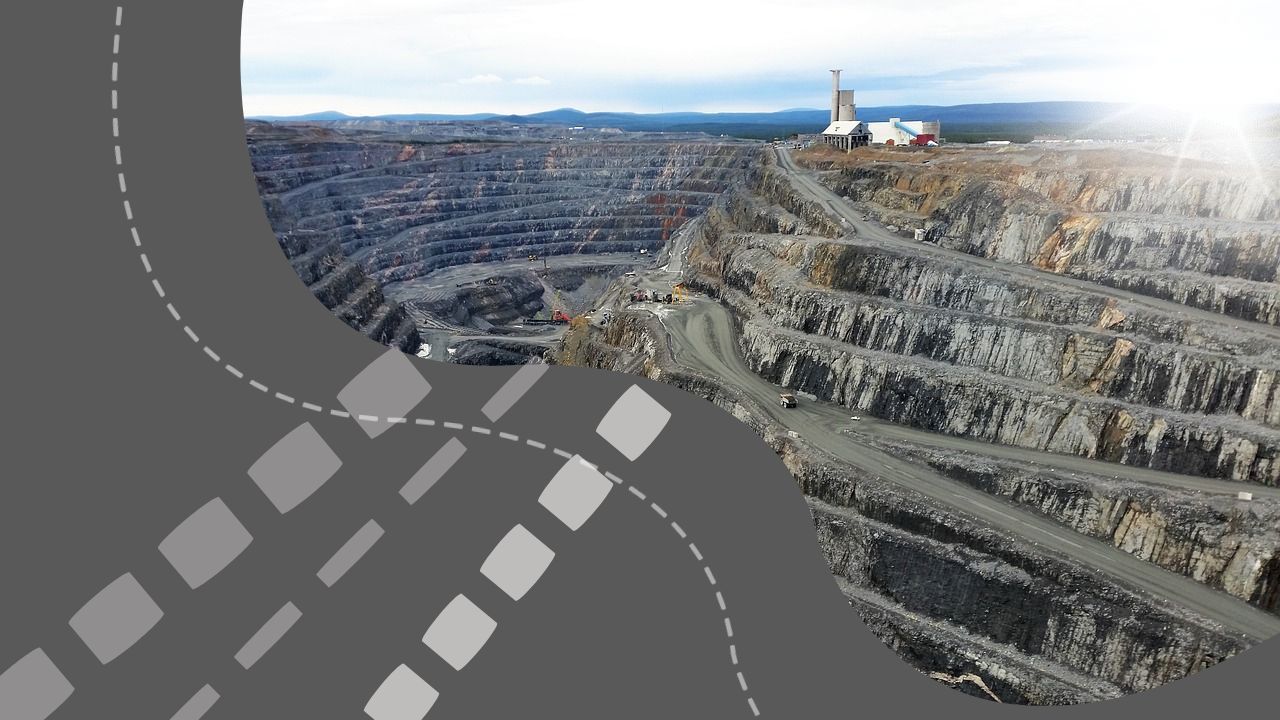
  • Many society organisations are calling on the EBRD to reconsider its approach to mining investments

    Many society organisations are calling on the EBRD to reconsider its approach to mining investments

    Twenty civil society organisations from Albania, Armenia, Azerbaijan, Bosnia and Herzegovina, Georgia, Mongolia, Uganda, Ukraine and Uzbekistan, as well as seven international environmental and human rights organisations, are calling on the European Bank for Reconstruction and Development (EBRD) to reconsider its approach to mining investments.

    In their recommendations, civil society groups urge the Bank to do more to safeguard the environment and welfare of local communities and to take action to reduce the demand for critical raw materials.

    The EBRD is currently in the process of revising its Mining Sector Strategy for 2024 to 2028. The draft document proposes an increase in investments in mining critical raw materials required for the green and digital transition, as well as the promotion of exploration.

    On 15 September, civil society organisations submitted recommendations regarding the EBRD’s mining strategy, advocating for the following measures:

    • Prioritise the circular economy over just mining;
    • Focus on reducing material footprints and promote recycling;
    • Ensure that no mining investments are made in countries that do not enforce environmental laws;
    • Define no-go zones and prohibited technologies;
    • Guarantee Free Prior Informed Consent for Indigenous Peoples and consent from all affected communities;
    • Deliver tangible benefits to local communities in the countries where the EBRD operates.

    Although the draft strategy highlights the importance of improving relations between mining companies and local communities, public consultations on the draft were conducted during the summer holiday period. A very small number of handpicked groups were invited at extremely short notice to local consultation events, seriously limiting public input.

    The mining sector has a shameful track record of pollution, human rights abuses, community resistance and retaliation against activists around the world. It remains the most perilous sector for environmental defenders, with almost 30 per cent of annual attacks occurring within the industry. EBRD-funded projects in Armenia (Amulsar) and Bosnia and Herzegovina (Adriatic Metals) have already prompted complaints by affected communities to the EBRD’s Independent Project Accountability Mechanism (IPAM) due to environmental pollution and lack of public consultation.

    Nina Lesikhina, Policy Officer at Bankwatch, says: ‘Business as usual is no longer an option. Relying solely on environmental and social safeguards is insufficient, given their gaps and inadequate implementation. The EBRD needs to consider each country’s capacity to implement mining projects sustainably and how to reduce demand for critical raw materials in the first place. The imperative for a green transition should not be used as an excuse to reduce efforts, but as a motivation to do more to ensure that the transition is truly green and equitable.’

    Sukhgerel Dugersuren, Chair at Oyu Tolgoi Watch, Mongolia, says: ‘If the EBRD and other development banks increase financing for mining, corporations will scramble to secure critical and/or transition minerals. This will have further negative impacts on climate change, contaminating the environment, depleting water resources and deepening desertification processes. The Mongolian economy is dependent on a single sector – mineral extraction – which is closely tied to the Chinese market. Any future mining strategy must be guided by principles that balance economic, geopolitical and other risks.’

    Gaelle Dusepulchre, Deputy Head of the Business, Human Rights and Environment Desk at the International Federation for Human Rights, says: ‘Mining projects are among the most harmful to human rights and the environment. Any mining strategy must promote a truly just transition. These projects not only require increased due diligence but also rely on the meaningful participation and consent of communities likely to be affected. Protecting human rights and environmental defenders is just as essential.’

  • Baksy conducts estimations of reserves in the gold-copper area

    Baksy conducts estimations of reserves in the gold-copper area

    The company Polymetal, in partnership with “Kazgeology,” is currently in the process of calculating the reserves in the gold-copper area of Baksy in the North Kazakhstan Region. The CEO of Polymetal International plc, Vitaly Nesis, provided this information during a press approach at the “Transfer of the Initial Listing to the AIX Exchange and Redomiciliation to the AIFC” ceremony with inbusiness.kz.

    Nesis expressed satisfaction with the partnership with “Kazgeology” and mentioned that discussions regarding future steps will be more meaningful after the reserves are placed on the state balance sheet. Polymetal recently increased its stake in Baksy to 75% and is considering a decision on production at the site for the upcoming year. It’s worth noting that “Kazgeology” is now under the control of the national mining company “Tau-Ken Samruk.”

    During discussions with reporters, Nesis also mentioned the planned sale of Polymetal’s Russian division within the next 6-9 months. The company is exploring opportunities not only in Kazakhstan but also in Central Asian countries.

    The CEO addressed the topic of a potential increase in the tax burden on businesses in Kazakhstan, emphasizing that the recent increase in the mineral extraction tax (MET) was justified given the favorable external conditions. He expressed hope that the final decisions on tax code amendments would consider the capital-intensive nature of the mining industry and maintain its investment attractiveness.

    Furthermore, Polymetal aims to increase the liquidity of its shares on the AIX exchange in Astana over the next two years. The company recently transferred its primary listing from the London Stock Exchange to the AIX exchange, and Nesis emphasized that the domicile in the AIFC is permanent. There are no plans for an additional listing in Abu Dhabi or any other platform at this time.

    The relocation of Polymetal to the AIX exchange is expected to enhance liquidity on the platform and attract global investors. Renat Bekturov, the head of the AIFC, highlighted the positive impact on the Kazakh stock market and the increased participation of renowned investment companies.

    Regarding the proposed merger of the AIFC trading platform with the Kazakhstan Stock Exchange (KASE), Nesis mentioned ongoing discussions on how to combine liquidity between the two entities, considering their respective minority shareholders.

    In conclusion, Polymetal’s collaboration with “Kazgeology” in calculating reserves, its strategic plans for the future, and its involvement in the AIX exchange demonstrate the company’s commitment to growth and development in the mining sector.

    Regarding the potential merger between the AIFC trading platform and the Kazakhstan Stock Exchange (KASE), Nesis commented on the consideration of KASE’s Russian shareholders.

    “Both KASE and Polymetal have minority shareholders. MOEX, the Moscow Exchange, along with local banks and brokers, are shareholders of KASE. On the other hand, the AIFC exchange has notable shareholders such as the Shanghai Stock Exchange, NASDAQ, and the Silk Road Fund. Currently, no decision has been made, and our discussions primarily revolve around how to combine our liquidity, in what form it will take, whether there will be changes in the legal structure, and if so, what those changes will entail. The next step involves negotiations with the existing shareholders to determine their future involvement, whether they will continue as shareholders, or if a new structure will be established. These matters remain open and under discussion,” Bekturov elaborated.

    Furthermore, Bekturov addressed the question of measures planned to enhance the liquidity of Russian issuers like “Rusagro” or Ozon on the AIX.

    “These issuers are relatively new, and their global depositary receipts (GDRs) are listed and traded on our exchange. The challenge lies with the global depository, Euroclear, as they are currently working on segregating the accounts of shareholders due to the situation at hand. Once Euroclear resolves this matter and market-making brokers willing to provide liquidity are identified, the issue will be resolved. We are actively working with the issuers to address this matter,” Bekturov affirmed.

  • Getech : Supports Asian Battery Minerals in Nickel Exploration in Mongolia

    Getech : Supports Asian Battery Minerals in Nickel Exploration in Mongolia

    Getech, the esteemed global leader in subsurface resource detection, has successfully concluded an exploration project for Asian Battery Minerals, a participant in the 2023 BHP Xplor accelerator program. The aim of the project was to identify potential nickel deposits in Mongolia.

    Invited by BHP to participate in the accelerator program, Getech offered its exceptional geoscience exploration solutions to the program’s cohort. Asian Battery Minerals, with its focus on nickel exploration in Mongolia, chose to engage Getech’s services.

    Leveraging its pioneering methodologies, including terrain and structural analysis, as well as gravity and magnetics data analysis, Getech provided invaluable assistance to Asian Battery Minerals. Their team produced an extensive report analyzing the structural and paleotectonic elements within the area of interest for exploration.

    The project has been deemed a resounding success by Asian Battery Minerals, as the results have the potential to significantly enhance their exploration strategy in Mongolia.

    Richard Bennett, the Executive Chairman of Getech, shared his thoughts on the accomplishment, stating, “While we are renowned for our extensive experience in mineral exploration for sedimentary basin ores, this project focused on ‘hard rock’ exploration. This challenge highlighted our capabilities in mineral systems analysis and data interpretation for deeper and older deposits, such as magmatic nickel. By harnessing our proprietary data collected over three decades and our expertise in geological exploration, complemented by AI-driven analytics, we can effectively identify potential new areas for a wide range of minerals.”

    Gan-Ochir Zunduisuren, the Managing Director at Asian Battery Minerals, expressed his delight with the partnership, saying, “We are thrilled with the results of our collaboration with Getech. Their thorough analysis and innovative approaches have provided us with valuable insights for our nickel exploration endeavors in Mongolia.”

    The collaboration with Asian Battery Minerals serves as a testament to the versatility and adaptability of Getech’s mineral exploration approach.

    Background:

    The BHP Xplor program is a global initiative that accelerates the progress of innovative early-stage mineral exploration companies in their search for critical resources vital to the energy transition. Over a span of six months, the program assists seven carefully selected companies in mitigating geological risks and preparing for investment opportunities.

    Nickel, with its exceptional properties, plays a pivotal role in a wide range of clean energy technologies. It is indispensable not only in geothermal technologies but also in batteries for electric vehicles and energy storage systems. Moreover, nickel is crucial for hydrogen, hydro, wind, and concentrating solar power technologies. It serves as an essential component in nuclear energy technologies and carbon capture and storage systems. According to a report by McKinsey, the world may face a nickel shortage of 10-20% by the end of this decade. Consequently, nickel exploration has become a crucial aspect of the global energy transition. Getech, with its commitment to innovation and data-driven approaches, is actively addressing this pressing challenge.

  • Government Ready to Collaborate with Businesses to Solve Kyrgyzstan’s Mining Issues

    Government Ready to Collaborate with Businesses to Solve Kyrgyzstan’s Mining Issues

    During the meeting, representatives of the IBC presented a comprehensive list of key issues that affect the industry. These concerns encompassed the ban on the export of gold-bearing ores and concentrates, the onerous financial burden imposed on subsoil users, the exorbitant license retention fees spanning from October 2021 to August 2022, government intervention in industry affairs, interference by law enforcement agencies in enterprise operations, and the matter of electricity tariffs.

    The meeting proved to be highly productive, as we were able to present a thorough compilation of questions prepared by esteemed members and experts of the IBC Committee on Mineral Resources. Akylbek Usenbekovich, the Prime Minister, assured us that these issues are of great concern to the government and acknowledged their acute nature. It is imperative that we adopt a proactive approach in resolving these industry challenges,” affirmed Askar Sydykov, the esteemed Executive Director of the International Business Council.

    To address these concerns, it is crucial to develop a comprehensive strategy accompanied by a step-by-step plan of action. This strategy should take into account the construction timelines and operational activities of significant mining enterprises, as well as the development programs for smaller deposits. Ultimately, this will serve as the foundation for the creation of the Mining Code of Kyrgyzstan. Following the meeting, there was a mutual understanding with the government regarding many of these matters. The Prime Minister expressed his agreement that these problematic issues must be swiftly resolved, and the government is committed to taking all necessary measures to address them,” concluded Askar Sydykov.

  • American Air Products to Invest $10 Billion in Projects in Uzbekistan

    American Air Products to Invest $10 Billion in Projects in Uzbekistan

    As previously reported by Spot, Shavkat Mirziyoyev is in the United States on a working visit and has held several meetings with representatives of American companies.

    One of the main items on the president’s business agenda was negotiations with the CEO of Air Products, Seifollah Ghasemi. Jeffrey Pyatt, Deputy Secretary of Energy of the United States, also participated in the discussions.

    The meeting focused on the implementation of the company’s ongoing projects in Uzbekistan. Its specialists are working on establishing the production of nitrogen, oxygen, synthesis gas, and liquefied carbon dioxide based on “Navoiazot.”

    The participants of the meeting also discussed prospective projects involving Air Products. These include coal gasification, technical gas production, hydrogen production, ammonia production, and the utilization of sour gases.

    The portfolio of projects for the American company also includes the introduction of innovations in the food industry. Another area in which their experts plan to participate is the development of the regulatory framework for decarbonization.

    Additionally, the president awarded Seifollah Ghasemi the “Dustlik” order. The CEO of Air Products was presented with the award by the decree of the head of state at the end of August.

    Earlier, Spot reported that Uzbekistan GTL began exporting synthetic diesel.

  • Kazakhstan’s Plans for Uranium Sector Development

    Kazakhstan’s Plans for Uranium Sector Development

    The main players in this field are Russia, Germany, the Netherlands, the United Kingdom, the United States, France, and China. The establishment of enrichment facilities is under the control of the IAEA and the global community.

    “The Ministry of Energy, together with Kazatomprom and other interested organizations, is working on the development of the nuclear fuel cycle in the atomic industry,” explained the ministry.

    In turn, Kazatomprom reported that through the Russian-Kazakh Uranium Enrichment Center, they have access to enrichment services of up to 2.5 million SWU* per year until 2043 based on long-term contracts.

    “This option is used to ensure the production of Ulba-TVS fuel with a designed capacity of 200 tons of uranium per year in the form of fuel assemblies. The plant was launched in 2021 and, according to Kazatomprom, fully satisfies the enriched element requirements for the implementation of this fuel project for the entire duration.”

    The national company also holds a 10% stake in the International Uranium Enrichment Center, a joint venture with Russia, Ukraine, and Armenia. The center was established to strengthen the non-proliferation regime of nuclear weapons. Shareholders of the center have access to enrichment services based on their guaranteed SWU quota proportionate to their share in the center for the production of fuel for their own nuclear energy needs. The national company noted that this covers the demand for low-enriched uranium.

    It is worth mentioning that President Kassym-Jomart Tokayev previously instructed to focus on several areas, including uranium enrichment.

    *SWU: Separative Work Unit

  • How much gold is left at the largest Vasilkovsky deposit in Kazakhstan

    How much gold is left at the largest Vasilkovsky deposit in Kazakhstan

    According to information presented by the “Mining Industry. Central Asia” magazine through inbusiness.kz, the Vasilkovsky deposit in Kazakhstan is a significant source of gold. After the completion of open-pit mining operations in 2026, the company, specifically the “Kazzinc” division of Altyntau Kokshetau, plans to process off-balance ores from its stockpiles. This new project for gold extraction from the Vasilkovsky deposit has been posted for discussion on Kazakhstan’s Unified Environmental Portal.

    The company’s mining operations are expected to reach a depth of 540 meters by 2026, with a horizon of -305 meters. It is worth noting that a considerable portion of the Vasilkovsky deposit’s reserves has already been mined. In 2022, experts conducted a reevaluation of the resources and included them in the state balance. The documented reserves indicate that the subsoil contains 37.38 million tons of gold-bearing ores with 73.77 tons of gold at an average content of 1.97 g/ton. Additionally, there are 6.58 million tons of ore and 12.08 tons of gold categorized as presumed.

    The enterprise has a designed capacity of processing 8 million tons of ore annually. The existing gold processing plant, which has been operational since 2009, will handle the raw material. The processing method will remain the same, utilizing a gravity-flotation beneficiation scheme followed by sorption cyanidation of the finely ground flotation concentrate.

    Furthermore, the report highlights that the Vasilkovsky and Bakyrchik deposits are the largest gold assets in Kazakhstan. The Vasilkovsky deposit alone boasts approximately 370 tons of proven reserves, with a gold content of 2.8 g per ton. On the other hand, the Bakyrchik deposit holds around 326 tons of precious metal, with a higher gold content in the ore, at 7.7 g per ton.

    Gold-bearing ore from the Vasilkovsky deposit undergoes multi-stage processing at the company’s ore-processing plant to produce doré. The resulting doré alloys are then sent to the Ust-Kamenogorsk Metallurgical Complex’s refining plant. Additionally, the company is involved in gold refining into bars.

    Altyntau Kokshetau contributes significantly to Kazakhstan’s gold production, bringing in up to 400,000 troy ounces of gold to the country each year.

    Overall, Kazakhstan is home to approximately 300 gold deposits, spread across all regions of the republic, with a concentration in the East Kazakhstan and Akmola regions. As of June 2022, Kazakhstan’s gold reserves stood at 373.4 tons, ranking the country 14th among the world’s largest “gold” countries. Notably, in the first quarter of 2022, Kazakhstan held the highest gold reserves among Central Asian countries.

    In 2021, the country produced approximately 33 million tons of ore and 66 tons of refined gold, as reported by Marat Karabaev, Deputy Minister of Industry and Infrastructure Development, at the Third Forum of Gold Miners of the Republic of Kazakhstan.

    Kazakhstan’s gold mining enterprises also export a portion of the extracted metal to other countries, with primary destinations being Kyrgyzstan, Russia, Uzbekistan, and Italy. According to the National Statistics Bureau of Kazakhstan, gold exports in bars and other unprocessed forms witnessed an 18% increase in the first nine months of 2020 compared to the same period in 2019. Notably, Kyrgyzstan received the largest amount of precious metal, totaling $4.6 million, followed by Russia with $235.6 thousand, Uzbekistan with $34 thousand, and Italy with $12.5 thousand.

  • Kazgeology Becomes Subsidiary of Tau-Ken Samruk, 100% Voting Shares Transferred

    Kazgeology Becomes Subsidiary of Tau-Ken Samruk, 100% Voting Shares Transferred

    As per the Government Resolution No. 1128 dated December 30, 2022, the state-owned stake in Kazgeology has been transferred as a form of payment in exchange for newly issued shares of the esteemed Samruk-Kazyna Fund. Kazgeology, in its role, primarily focuses on the exploration and assessment of mineral resources, the identification of promising areas, and the facilitation of foreign and domestic investments to bolster the nation’s mineral resource base.

    As the sole shareholder of Kazgeology, Tau-Ken Samruk assumes both the rights and obligations. It is worth highlighting that the conditions for partners and investors in all ongoing projects will remain unaltered. However, we are presented with a remarkable opportunity to broaden the horizons of cooperation. With a shared interest, Tau-Ken Samruk can actively participate in investment projects throughout the construction and operational phases,” expressed Bakytzhan Chirchikbaev, the esteemed Chairman of the Management Board of Tau-Ken Samruk.

    At present, Kazgeology is diligently engaged in the implementation of numerous investment projects in collaboration with esteemed partners. Joint ventures and consortia have been established, fostering fruitful associations with esteemed global leaders in the mining industry such as Rio Tinto, KazZinc, Yildirim Holding A.S., Polymetal, Kazakhmys, and Ulmus Fund.

  • What Does the Abandoned Kutessay-II Rare Earth Elements Deposit Look Like Now?

    What Does the Abandoned Kutessay-II Rare Earth Elements Deposit Look Like Now?

    Throughout the visit, Zhaparov was duly apprised of the encouraging news that the deposit’s ore reserves had witnessed a commendable increase, surging from 51.5 thousand tons to an impressive 75 thousand tons subsequent to the latest additional exploration. This bountiful ore houses a rich assemblage of molybdenum, bismuth, lead, beryllium, and silver.

    During the bygone Soviet era, the Kyrgyz Chemical and Metallurgical Plant (HMP) played a pivotal role in processing the rare earth concentrate. At the zenith of its operational prowess, the plant boasted an impressive production capacity of 500 million tons per annum. Its comprehensive processing techniques ingeniously extracted rare earth elements from the esteemed Kutessay-II deposit, effectively fulfilling a staggering 80% of the USSR’s demand.

    Sadly, the plant’s production activities inadvertently necessitated the creation of five waste storage facilities in the Kemin district. Four of these facilities are situated in the Ak-Tuz settlement, while the remaining one finds its abode in the Orlovka settlement.

    With unwavering dedication, the Prime Minister diligently inspected these facilities and subsequently issued a series of pertinent instructions. Regrettably, the precise details regarding these instructions, as well as the purpose of Zhaparov’s visit to the site, were not disclosed by the esteemed Cabinet of Ministers’ press service.