Website: Eurasia.com

  • Growing value through discovery in the Balkans

    Growing value through discovery in the Balkans

    Terra Balcanica, a junior Canadian explorer of critical metals, eyes untapped opportunities at Europe’s doorstep.

    What do you get when you combine a millennia of mining history, two resource extraction-friendly European jurisdictions with clear paths to permitting mineral exploration concessions, a knowledgeable workforce, and a continent starved for critical metallic resources?

    Add to that a world class metallogenic expertise and a plethora of innovative geochemical and geophysical techniques that helped define grassroot drill targets in less than a year, all of which proved to be mineralised. Welcome to Terra Balcanica Resources Corp. and its ~350km² polymetallic portfolio of the Western Balkan Peninsula.

    Terra Balcanica is a junior Canadian explorer of precious and base metal resources in Europe’s front yard, where it has been advancing five exploration licenses in Bosnia and Serbia. Listed on both the Canadian Securities Exchange, and the Frankfurt Stock Exchange, the company has made strides since acquiring its flagship land package in eastern Bosnia in 2020.

    Called the Viogor-Zanik Project, the 215km² aggregate of licences surrounds the operation Sase mine (Mineco Ltd.) with an annual production of 350,000 tonnes of Pb-Zn-Ag+/- Sb concentrate, and is centred upon a mining district mined as far back as the Roman times when it was known as Argentaria.

    A multidisciplinary approach to target definition

    In slightly over three years, Terra’s technical and field teams have mapped, sampled, surveyed, and drilled two out of three highly prospective target zones within the only Oligo-Miocene manifestation of the highly prolific Western Tethyan orogen in Bosnia and Herzegovina.

    The belt, whose mapped southeastern extension reaches Afghanistan via the Balkans, Turkey, and Iran, features world class porphyry copper and epithermal gold-silver deposits (Sarcheshmeh, Sari Guni, Kişladag, Skouries, Olympias, Trepca), and terminates right at Terra Balcanica’s feet as the metalliferous Srebrenica Magmatic Complex.

    Here, a meticulously systematic approach of layering dozens of data sets obtained by months of lithological and structural mapping, combined by those gained from airborne geophysics, satellite multispectral terrain surveys, and thousands of rock and soil chemical assays revealed two genetically distinct, yet equally attractive targets worth drill testing.

    And drill, Terra did. Both the Cumavici and Brezani targets were tested to the tune of over 2,000m of diamond drilling, respectively, with attractive metal grades intercepted close to surface but the story does not stop with Bosnia.

    In neighbouring Serbia and another mining heavyweight of Europe (e.g. Timok District), Terra Balcanica operates two exploration concessions in the historic Rashka district, once home to many a medieval Saxon miner employed by the Serbian kings of the epoch.

    Here, the Ceovishte and Kaludra licences comprise a 130km² land portfolio rich in Zn-Pb-Ag-Au-Cu showings. Particularly interesting is the former, where Terra’s geologists have collected high-grade precious metal samples on-surface that overlay historical workings featuring highly enriched vein-hosted mineralisation. None of the Serbian targets have been drill tested to date, and remain Terra’s immediate focus for the 2024 Phase III campaign.

    As only the second (foreign) mineral explorer in Bosnia, Terra Balcanica is poised to capitalise on regional early-mover opportunities, while remaining a nimble, agile, and cost-effective explorer of choice in SE Europe.

    For many at Terra, discovering mineable resources needed by the world of tomorrow is not just a self-evident mission but an homage to the proud, century-long history of mining in Europe.

    The art of discovery

    Ours is a disciplined and creative team of mining professionals that has demonstrated an ability to make discoveries in places overlooked or abandoned by others, and to leverage these forgotten or neglected gems as incubators of the mining continuum, and value creators for our shareholders.

    Whether it is systematically rehashing volumes of archived data sets, modelling newly acquired geophysical data, or rapidly ground-truthing the rugged vast expanse of the Western Balkan Peninsula aimed at targeting the ‘sweet spots’ – discovery is in our geological DNA. Our leadership group and technical team are fully vested and singularly committed to this goal.

    The Čumavići target

    Within the Viogor-Zanik Project of eastern Bosnia and Herzegovina lies the Čumavići target. This shallow, high-grade, polymetallic target area extends for over seven kilometres NW/SE through the project. Tens of mineralised showings which returned assay grades up to 128 g/t silver and 20% zinc are visible alongside historic mining works. Silver-zinc-manganese-antimony all show anomalism in soil geochemistry, coupled with linear magnetic low responses (indicative of possible host structures).

    Terra has completed diamond drilling at two locations and discovered polymetallic veins and breccias returning assay grades up to 11m at 505 g/t silver equivalent (gold-silver-lead-antimony-zinc recalculated to the value of silver) in 2022 drillhole CMVDD004.

    Individual drill core samples have returned values as high as 1,420 g/t silver over 1.7m and 31% combined lead and zinc over 90cm. Terra has only scratched the surface of the Čumavići story and is excited to continue drilling in 2024. As more mineralisation is discovered within the Čumavići corridor it is worth noting the proximity of Terras discovery to the operating Sase Mine, actively depleting their ore reserves.

    The Brežani target

    Just 11km to the southeast, within the Viogor-Zanik Project. lies the Brežani target. A greenfield discovery in 2021, Brežani presents a kilometre-scale mineralised hydrothermal system first identified as a large magnetic anomaly, coupled with over 700m strike length of elevated gold in soil. Drilling at the target has revealed not only that the gold on surface extends down to 88m (results from drillhole BREDD002) but is also host to strong epithermal mineralisation at depth.

    The gold in drill core was consistent at 0.5 g/t, reaching up to 1.5 g/t for six metres. Brežani represents the only gold mineralised skarn (a calc-silicate rock) in Bosnia and Herzegovina and is set to grow with further drilling.

    Recently discovered and extensive epithermal mineralisation encountered downhole shallows to the east-northeast, where a similar element assemblage of silver-arsenic-antimony is present within rock and soil samples from a topographic low, coupled with a magnetic low. This offers shallower drill targets for this prospective polymetallic mineralisation.

    Prospective work at Ceovishte

    Terra Balcanica also operates in neighbouring Serbia, where it holds 80km² of highly prospective land in the historic Raška mining district. The Ceovishte Project represents a previously overlooked high grade gold-copper target with surface rock chip assay results up to 64 g/t gold and 2% copper.

    What is in store for 2024?

    As a regional Balkans explorer, Terra Balcanica has proven capabilities of identifying prospective projects and discovery mineralisation. Being on the doorstep of Europe, and given the demand for critical metals such as lithium, Terra has identified a prospective area and is looking to move into the battery metal exploration space.

    The western Balkan Li-B (lithium-boron) metallogenic zone spans for over 1,500km through Croatia, Bosnia and Herzegovina, Serbia, and Kosovo along its path to Turkey to the east. The Serbian portion of the zone hosts Rio Tinto’s Jadar Project, a sediment hosted lithium-boron deposit discovered in 2004 hosting indicated resources of 85.4Mt at 1.76% Li2O and 16.1% B2O3 with further inferred resources of 58.1Mt at 1.87% Li2O and 12.0% B2O3 as of 31 December 2021.

    Terra Balcanica is excited to commence its lithium exploration journey in 2024 and add value to an already diversified portfolio of assets.

    Sustainable mineral exploration practices

    At Terra Balcanica, we emphasise responsible engagement with local communities, municipal governments, and key stakeholders. The company is committed to proactively implementing Good International Industry Practice (GIIP) and sustainable health, safety, and environmental management.

    We are particularly proud of our workplace safety and environmental protection record that include safety trainings, baseline environmental surveys, and regular community initiatives. The goal is to have our employees return to their families safely while maintaining a minimal environmental footprint.

  • Raiden Resources advances its exploration projects in Pilbara, Australia, and Bulgaria

    Raiden Resources advances its exploration projects in Pilbara, Australia, and Bulgaria

    Raiden Resources Limited has made significant strides in its exploration projects, both in Pilbara, Australia, and Bulgaria, heralding a potentially fruitful future in mineral exploration. The company recently completed an Induced Polarisation orientation survey at the Mt Sholl Project, revealing optimistic signs for mineralization. Concurrently, Raiden has advanced its Zlatusha Joint Venture in Bulgaria, setting the stage for a drilling program later this year.

    Exploration Breakthroughs and Future Plans

    Under the guidance of Managing Director Dusko Ljubojevic, Raiden Resources has undertaken a comprehensive geophysical orientation survey at the Mt Sholl Project. This endeavor has not only showcased the project’s potential but has also laid down a roadmap for future exploration activities. The survey’s promising results have steered the company towards planning an extensive drilling program in the Pilbara region for the remainder of 2024. In parallel, Raiden’s permit-wide targeting exercise over the Zlatusha Joint Venture in Bulgaria signifies a leap forward, with drilling activities scheduled to commence later in the year.

    Strategic Expansion in the Mining Sector

    The company’s proactive approach in both Australian and Bulgarian territories underlines its commitment to expanding its mining portfolio. This strategic expansion is not just about exploring new territories but also about strengthening Raiden Resources’ position in the global mining sector. The meticulous planning and execution of geophysical surveys, coupled with the upcoming drilling programs, underscore the company’s determination to explore and exploit potential mineralization zones.

    Implications for the Future

    The advancements made by Raiden Resources in its exploration projects are poised to have significant implications for the mining industry. The successful completion of the Induced Polarisation orientation survey and the detailed targeting exercise in Bulgaria are indicative of the potential for substantial mineral discoveries. These developments not only enhance Raiden’s portfolio but also contribute to the broader mining sector by potentially uncovering new resources. As the company moves forward with its drilling programs in Pilbara and Bulgaria, the industry watches closely, anticipating the outcomes that may redefine the landscape of mineral exploration.

  • Teako Minerals announces strategic pivot with Norway as key focus

    Teako Minerals announces strategic pivot with Norway as key focus

    TEAKO MINERALS CORP. (the “Company” or “Teako“) announces that following a recent Norwegian parliament meeting and the various developments in mineral exploration in Fennoscandia in recent years, the Company has decided to pause exploration efforts in British Columbia, to primarily concentrate on Norway, while also maintaining a minor focus on Finland. The majority of the Company’s projects in British Columbia are in good standing for 2-3 years, allowing the Company the strategic flexibility to explore various alternatives, including the potential of partnering with other parties or selling the projects, as part of its ongoing commitment to maximizing shareholder value. Investors will be regularly informed of developments, ensuring transparency and continuous engagement with our valued stakeholders.

    The primary targeted metals in Norway will be copper, cobalt, and base metals, as well as gold and rare earth minerals (or “REE”), while in Finland, the focus will be on gold.

    The Rationale Behind the Pivot

    Access to critical and battery metals is crucial to establishing a robust value chain in Europe and carrying out the green shift. Today, most of the battery metals, such as nickel, cobalt, and lithium, are produced outside Europe, often in countries with low ESG standards. The EU has introduced a goal that 10% of all critical minerals consumed in the EU in 2030 will need to be produced in the EU by 2030. This means that the production of battery metals within the EU must be dramatically increased to attain this goal.

    Oil and gas have been the primary contributors to Norway’s recent sovereign wealth. However, in alignment with the green shift and rising commodity prices, the mineral exploration industry and Government are keen on reviving the mining and exploration sector, which became dormant in the 1970s due to low commodity prices and the discovery of oil and gas.

    The bedrock in Norway is promising for discoveries of new occurrences of battery and critical metals with its rich history of mining copper, nickel, and cobalt. Only a handful of exploration companies have carried out systematic exploration since the late 1980s; however, multiple major mines are about to open/reopen very shortly, namely the REE mines of Engebø and Fensfelt, as well as the copper mine in Finnmark by Nussir.

    Norway is currently also a world leader in renewable energy production, with an estimated 92% of the country’s energy supply being derived from hydroelectric plants and a further 6% from wind energy and other renewable sources.

    More recently, the Company was invited to attend and contribute to an event at the Norwegian Parliament held on January 16, 2024. The event focussed on sustainable exploration and extraction of critical metals, bringing together a diverse group of experts and industry leaders to discuss establishing Norway’s pivotal role in the European battery and critical minerals supply chain.

    The event surrounded a cross-political specialist seminar with representatives and advisors in the energy and environment committee, the finance committee, the industry committee, mining companies, politicians, and various organizations. The event was followed by a networking gathering where Teako and another Service Alliance partner, Kuniko Limited, and Norsk Bergindustri, met.

    The Company would like to express its profound gratitude to the Norwegian Parliament for the opportunity to contribute to the discussions on the development of Norway’s critical mineral infrastructure. We also sincerely thank Norsk Bergindustri and our Service Alliance partner, Kuniko Limited, for hosting the networking gathering.

  • Untitled post 36180

    Национальная атомная компания “Казатомпром” укрепила свою позицию в качестве ведущего мирового производителя урана, как сообщает финансовый веб-сайт Insider Monkey, известный своими экспертными знаниями в области внутренней торговли и данными о хедж-фондах, 23 февраля.

    Выступая в качестве ведущего оператора Казахстана по экспорту и импорту урана, топлива для атомных электростанций и сопутствующих технологий, “Казатомпром” вносит заметный вклад в мировое предложение урана – 23%, закрепляя свой статус крупнейшего производителя и распространителя природного урана на всемирном уровне.

    Только в 2022 году “Казатомпром” достиг впечатляющего объема производства урана в размере 11 373 тонн, демонстрируя свой значительный вклад в мировой рынок урана.

    Данные из Фонда суверенного благосостояния “Самрук-Казына” показывают, что Казахстан стал доминирующей силой в урановой добыче в том же году, приходя на долю внушительных 42% мирового производства, при этом “Казатомпром” один лишь представлял 22% этой доли.

    Более того, согласно Европейскому сообществу по атомной энергии (Евратом), Казахстан сыграл ключевую роль в 2022 году, внесши вклад в размере 26,82% в импорт урана Европейского союза, подчеркивая свое значение как ключевого игрока на европейском рынке урана.

    Insider Monkey, известный своими авторитетными финансовыми новостями и инвестиционными идеями, предоставляет комплексный анализ, статьи, основанные на данных, и обновления рынка, чтобы дать возможность инвесторам на всех уровнях. С акцентом на такие темы, как тренды на рынке акций, инвестиционные стратегии и финансовые новости, Insider Monkey помогает людям оснаститься знаниями, необходимыми для принятия осознанных инвестиционных решений благодаря своему обширному покрытию и тщательному анализу.

  • Kazatomprom Claims Top Spot Among Global Uranium Producers

    Kazatomprom Claims Top Spot Among Global Uranium Producers

    Kazatomprom National Atomic Company has secured its position as the leading global uranium producer, as reported by Insider Monkey, a financial website renowned for its expertise in insider trading and hedge fund data, on February 23.

    Serving as Kazakhstan’s premier operator for uranium export and import, nuclear power plant fuel, and associated technologies, Kazatomprom contributes a remarkable 23% to the global uranium supply, solidifying its status as the largest producer and distributor of natural uranium on a worldwide scale.

    In the year 2022 alone, Kazatomprom achieved an impressive production output of 11,373 tons of uranium, showcasing its significant contribution to the global uranium market.

    Data from the Samruk Kazyna Sovereign Wealth Fund reveals that Kazakhstan emerged as a dominant force in uranium mining during the same year, accounting for a substantial 42% of global production, with Kazatomprom alone representing 22% of this share.

    Furthermore, according to the European Atomic Energy Community (Euroatom), Kazakhstan played a pivotal role in 2022, contributing to 26.82% of the European Union’s uranium imports, underscoring its significance as a key player in the European uranium market.

    Insider Monkey, renowned for its reputable financial news and investment insights, provides comprehensive analysis, data-driven articles, and market updates to empower investors of all levels. With a focus on topics such as stock market trends, investment strategies, and financial news, Insider Monkey equips individuals with the knowledge needed to make informed investment decisions through its extensive coverage and thorough research.

  • Critical Minerals: A Direct Line to Strengthening US-Central Asia Relations

    Critical Minerals: A Direct Line to Strengthening US-Central Asia Relations

    In the recent article published on Carnegie Endowment for International Peace, Gregory Wischer, the founder and principal of Dei Gratia Minerals (a critical minerals consultancy) issued a warning that the U.S. Military and NATO Face Serious Risks of Mineral Shortages. “Given their limited domestic mineral production, both the United States and Europe depend heavily on mineral imports, including from rival powers like China, which supplies minerals such as graphite, rare earth elements, and other battery minerals, and Russia, which provides aluminium, nickel, and titanium…. The United States and other NATO countries must act now to address these supply chain risks”, argues Mr Wischer.

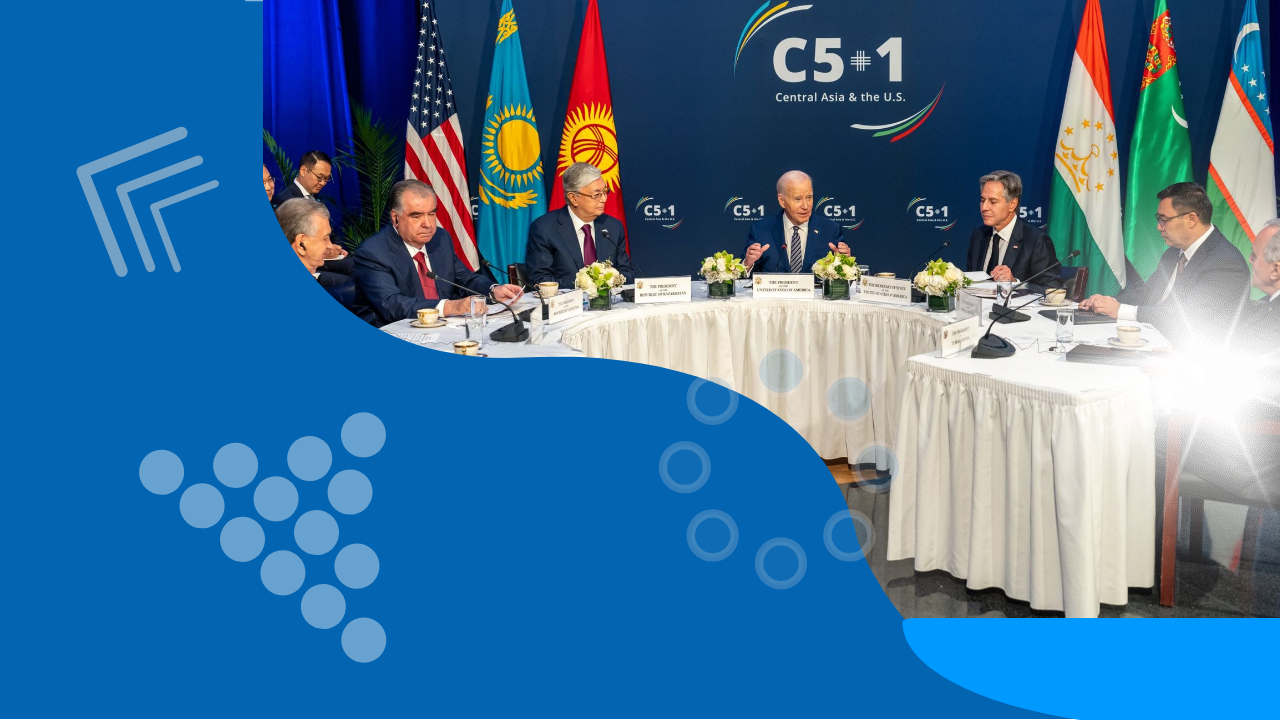
    On 21 September 2023, the presidents of the United States, the Republic of Kazakhstan, the Kyrgyz Republic, the Republic of Tajikistan, Turkmenistan, and the Republic of Uzbekistan held the first-ever C5+1 Presidential Summit to discuss opportunities for extending cooperation «to address the region’s complex challenges and emerging threats”.

    Following the signed 2023 declaration of the “C5+1 Resilience through Security, Economic, and Energy Partnership”, on 8 February 2024, the U.S. Department of State hosted the inaugural meeting of the C5+1 Critical Minerals Dialogue.

    Among the initiatives discussed, the United States emphasised opportunities through the Minerals Security Partnership and Partnership for Global Infrastructure and Investment.

    The Critical Minerals webinar held on 27 February 2024 by the U.S. Department of State, invited U.S. ambassadors from Uzbekistan, Kyrgyzstan, and Tajikistan and regional experts to discuss the opportunities in the mining equipment and critical minerals sectors in the region. This event underscored an important step towards strengthening the strategic partnership between the U.S. and Central Asian countries, focusing on the extraction and development of critical minerals essential for modern technologies and clean energy solutions.

    The Importance of Central Asia’s Critical Minerals Resources

    Critical minerals, including rare earth elements, play a crucial role in various industries such as computing, communications, clean energy, transportation, and healthcare. Central Asia, with its vast reserves of minerals like manganese, chromium, lead, zinc, titanium, aluminium, copper, cobalt, and molybdenum, stands at the forefront of contributing significantly to the global supply chain of these essential resources. The region’s potential in mining these resources not only promises economic growth but also plays a vital role in the global transition to clean energy technologies.

    Strengthening US-Central Asia Cooperation

    The webinar highlighted the U.S. government’s commitment to enhancing cooperation with Central Asian countries in the critical minerals sector. Notable speakers, including Undersecretary for Economic Growth, Energy and Environment Jose Fernandez and Special Representative for the Office of Commercial and Business Affairs Sarah Morgenthau, emphasised the importance of this partnership. The discussions revolved around increasing critical minerals production, diversifying supply chains, and addressing climate change challenges through sustainable mining practices.

    The establishment of the Mineral Security Partnership in June 2022, as mentioned by Undersecretary Fernandez, marks a significant step towards bolstering and diversifying critical mineral supply chains. This partnership aims to foster joint investments and share information about mining opportunities, highlighting the collaborative spirit between the U.S., Central Asian countries, and other MSP partner countries.

    Opportunities and Challenges

    Central Asia’s rich mineral reserves present vast opportunities for American and international companies. However, challenges such as underdeveloped infrastructure, outdated geological data, and policy inconsistencies need to be addressed to fully harness the region’s mining potential. The U.S. ambassadors to Uzbekistan, Kyrgyzstan, and Tajikistan shared insights into the business environment and mining sectors of their respective countries, shedding light on both the opportunities and obstacles present in the region.

    Views from the US Ambassador to Uzbekistan Jonathan Henick

    The mining sector in Uzbekistan is undergoing significant changes and is a key area for U.S.-Uzbekistan cooperation. The Uzbek government, under President Mirziyoyev who came to power in 2016, has prioritised economic reform and attracting foreign investment, particularly from Western countries like the United States. The country has seen substantial economic growth and an increase in foreign investor interest as a result of these reforms.

    U.S.-Uzbekistan Cooperation

    The U.S. is in dialogue with Uzbekistan to develop a memorandum of understanding on critical minerals, indicating a strong interest in bilateral cooperation in the mining sector. The U.S. Geological Survey is also active in Uzbekistan, conducting mineral resource assessments that could reveal new opportunities for U.S. businesses.

    Challenges and Considerations for U.S. Companies

    U.S. companies looking to invest in Uzbekistan’s mining sector should be prepared for a long-term commitment and focus on building personal relationships, as decision-making is highly centralised. It is also important to be aware of the challenges such as insufficient protection of intellectual property rights, an overregulated banking sector, currency issues, and a judicial system that may favour local partners over foreign ones.

    On the Ground Opportunities

    Uzbekistan has considerable reserves of copper, gold, silver, iron, steel, uranium, and critical minerals. However, only about 40% of the country has been accurately surveyed, suggesting that there may be significant untapped resources.

    The mining sector is currently dominated by state-owned enterprises, but in April 2023 the government has formed a new company, ” Yangi Kon (New Mine)”, to work with international partners to develop lithium and critical mineral deposits.

    Political Developments

    Since President Mirziyoyev’s rise to power, Uzbekistan has transformed significantly, with the government taking steps to diversify its foreign investment and focus on economic reforms. These political developments provide a context for potential foreign investment, as the government is actively seeking to cultivate more investments and is sending delegations to the United States to meet with companies.

    In summary, Uzbekistan’s mining sector presents significant opportunities for U.S. companies, supported by the government’s interest in attracting foreign investment and cooperation. However, companies must navigate challenges related to the business environment and should engage in relationship-building and long-term strategies to succeed.

    Views from the U.S. Ambassador to Kyrgyzstan Lesslie Viguerie

    Ambassador Viguerie highlighted the opportunities and challenges in the Kyrgyz Republic’s mining sector, emphasising the presence of critical minerals and the need for U.S. investment and expertise. The Kyrgyz Republic possesses significant deposits of antimony, beryllium, tin, uranium, rare earth elements, and gold, with gold being actively mined. However, many of these resources are underexploited due to outdated information, primarily from the Soviet era, and a lack of modern mining operations and support services.

    Opportunities for U.S. Companies

    There is a demand in Kyrgyzstan for mining support services, including technical expertise, equipment, and solutions for remote operations. The country is also interested in developing value-added processing capabilities, presenting further opportunities for U.S. technology and expertise. Additionally, there is a need for expertise in developing the mining sector sustainably, with a focus on environmental protection, community benefits, and adherence to international safety and quality standards. 

    Challenges in the Business Environment

    The business environment in the Kyrgyz Republic presents several challenges, including a history of nationalisation and license revocations that have affected the country’s reputation among investors. The law mandates that the state must own at least 30% of mining companies. The country’s rugged terrain and high altitude, coupled with inadequate infrastructure, pose additional challenges for mining operations.

    U.S. Embassy Support and Bilateral Efforts

    The U.S. Embassy is actively working with the Kyrgyz government and through regional platforms to address regulatory and governance concerns in the mining sector. The Ambassador’s upcoming meeting with the Minister of Natural Resources signifies ongoing efforts to discuss critical minerals and improve the investment climate. The embassy encourages U.S. companies to engage with the Kyrgyz government to convey their challenges and explore opportunities, offering support to facilitate these interactions.

    In summary, the Kyrgyz Republic’s mining sector offers significant opportunities for U.S. companies, particularly in the exploration and development of critical minerals and the provision of mining support services. However, navigating the challenging business environment requires careful consideration and active engagement with local stakeholders and government authorities. The U.S. Embassy stands ready to support U.S. businesses interested in exploring these opportunities.

    Views from Manuel Micaller, Jr., Ambassador of the United States to the Republic of Tajikistan

    The U.S. Ambassador to Tajikistan provided an insightful overview of the mining sector in Tajikistan, highlighting both the opportunities and challenges present in the country. Tajikistan, like other Central Asian nations, holds vast reserves of critical minerals essential for global markets, including lithium, antimony, nickel, tungsten, and graphite. These resources are largely untapped and await further discovery and development.

    Opportunities in Tajikistan

    One of the most significant and enduring mining and refining operations in Tajikistan is the Antimony Production Company.

    Despite facing challenges such as taxation issues, labour shortages, and at times an unresponsive government, this operation has managed to remain highly profitable. It is predominantly managed and operated by Tajik nationals and has consistently produced high-quality metals and concentrates for the international market. This success has positioned Tajikistan as the third-largest producer of antimony in the world.

    Government Interest

    The Tajik government is keen on expanding global partnerships in the mining sector to develop its mineral wealth. It has expressed willingness to offer incentive packages to attract U.S. investment.

    Challenges Facing the Mining Sector

    Underdeveloped Infrastructure: Tajikistan’s mountainous terrain and underdeveloped transportation networks make mining operations difficult.

    Outdated Geological Data: Much of the mining data is outdated, stemming from the Soviet era, and does not focus on the strategic minerals of interest today. The mining surveys and research that are currently being utilized in Tajikistan were primarily conducted during the Soviet era. This data is largely focused on the industrial minerals of that time, such as iron, coal, copper, and to a lesser extent, titanium and molybdenum, rather than the strategic minerals that are of interest today. Recognizing this gap, the Tajik government has sought assistance to update and expand their geological data. Efforts are being evaluated on how best to support and assist in this area, with the aim of benefiting American investors and businesses.

    Government Policies: While the government expresses a desire to attract investment, some policies may counteract these efforts. The bureaucracy is small and underfunded, focusing on short-term revenue maximization.

    Labour Force Issues: The labour force is largely unskilled or semi-skilled, and skilled workers often seek higher wages abroad.

    U.S. Embassy Support and Advocacy

    The U.S. Embassy in Dushanbe is actively working with various U.S. government agencies to advocate for an open, stable, transparent, and predictable business environment in Tajikistan. The embassy collaborates with the American Chamber of Commerce in Tajikistan to directly address the concerns of the business community with the Tajik government. Recent engagements, such as a breakfast meeting co-hosted with the Minister of Industry and New Technologies, demonstrate a commitment to an open dialogue with American businesses.

    In summary, Tajikistan’s mining sector offers significant opportunities for U.S. companies willing to navigate its challenges. The country’s vast reserves of critical minerals, combined with the government’s interest in attracting foreign investment, present a promising landscape for development. However, overcoming the challenges of outdated infrastructure, geological data, government policies, and labour force issues will be crucial.

    Contrasting Approaches to Mining Industry Development in Uzbekistan, Kyrgyzstan & Tajikistan

    The keynote speaker of this event, Simon Glancy from Strategic Solutions LLP provided an overview of the mining industry development and strategies in Uzbekistan, Kyrgyzstan, and Tajikistan, with a focus on critical minerals. He outlined the strategic approaches, government policies, and foreign investment dynamics in the mining industries of these Central Asian countries, with a focus on critical minerals like copper, gold, lithium, uranium, antimony, and tungsten.

    Uzbekistan Market Overview

    Uzbekistan has the largest and most developed mining industry among the three countries. Unlike Kazakhstan, Uzbekistan lacks large-scale private mining companies, with the state firms playing a central role in the industry. The mining sector is predominantly controlled by state-owned entities, with Almalyk Mining and Metallurgical Combine (AGMK) and Navoi Mining and Metallurgical Combinat (NGMK) leading the industry. AGMK is the exclusive producer of copper, while NGMK stands as the primary gold producer in the country. Navoi Uran State Mining Company is developing uranium projects.

    Mining is a highly profitable sector in Uzbekistan. In 2022, Navoi reported net profits of $1 billion, and Almalyk reported profits of $528 million. The financial results for the full year of 2023 are pending. Both Almalyk and Navoi have extensive mining operations and are engaged in significant capital investment and organisational transformation projects, which include expanding their processing facilities. This has resulted in substantial procurement budgets, surpassing those of any other mining group within the country.

    Almalyk’s 2023 Business Plan revealed plans to allocate $721 million for the import of equipment, machinery, and raw materials, a significant increase from $367 million in 2022. Navoi’s expenditure on consumables and spares in 2022 amounted to $560 million, although the breakdown of imports within this figure is not specified.

    Foreign Investment and Projects

    As of February 2024, 17 foreign investors are active in Uzbekistan’s mining sector, with investments totalling $3.6 billion. The largest project, Yangi Kon, backed by a consortium of Gulf State investors, represents 44% of all foreign mining FDI in Uzbekistan. Other notable investments include Orano’s $400 million uranium extraction project and various Chinese investments in geological exploration and mining projects.

    Uzbekistan Mining Strategy

    Uzbekistan’s forthcoming state mining strategy, expected in March 2024, aims to enhance the mining sector further. The Uzbekistan 2030 Strategy outlines several development targets, including attracting an additional $2 billion in foreign mining investment by November 2023 — a goal already surpassed with $3.6 billion achieved by early 2024. Other objectives include completing geological exploration of 60,000 square kilometres, auctioning 500 licenses for new mining projects, and selling at least 300 mining sites in 2024. The strategy also targets significant increases in the production and processing of critical minerals by 2030.  EITI, JORC, and ESG standards are being implemented.  There are plans to expand the base of rare metals mined and processed, and targets for increases in the production of copper, gold, silver, uranium, and ferrous metals.

    Kyrgyzstan Market Overview

    Kyrgyzstan boasts significant reserves of copper, antimony, tin, and tungsten, with a strong interest in developing these resources and attracting foreign investment. However, extracting these reserves poses challenges due to the difficult nature of the sites.

    Gold mining has traditionally been the primary draw for international mining companies in Kyrgyzstan, with notable foreign players including Eti Bakir Tereksay (Turkey), KAZ Minerals Bozymchak (Kazakhstan), Alliance Altyn/Jerui Gold (Russia), Chaarat Gold (UK), and Altynken (China). By the end of 2023, Chinese companies held approximately 30 mining licenses, with only one pertaining to critical minerals.

    The Kumtor Gold Company is a major player in the sector, accounting for 60% of all gold mining activities in Kyrgyzstan in 2022. Following its nationalization in 2022-2023, Kumtor became a wholly owned subsidiary of the state-owned gold company, Kyrgyzaltyn, producing 17.3 tons of gold and generating a net profit of $372 million in 2022, up from $233 million in 2021.

    In 2022, two companies, including the Kazakh mining company KazMinerals Bozymchak, dominated copper production, yielding 6,200 tons of copper from its operations in Kyrgyzstan.

    Currently, there are no companies engaged in the mining or processing of lithium or antimony in Kyrgyzstan. The country’s main sources of mining equipment, machinery, and technology are believed to be Russia and China, although British firms have also successfully penetrated the market.

    There is limited processing capacity and an intention to adopt JORC standards. The largest mining company – Kumtor, was nationalised.

    Kyrgyzstan Mining Strategy

    Kyrgyzstan’s State Concept for the Development of the Mining Industry from 2023 to 2035 outlines initiatives in geology, mining exploration, processing, environmental protection, subsoil use management, and regulation. The government estimates $500 billion in mineral reserves. The goals include increasing geological exploration, creating national databases, digitising geological data, harmonising methods for classifying reserves, improving production planning, and encouraging import substitution.

    Key policies outlined in the Concept include:

    • Expanding geological exploration and surveying to identify investable assets, leveraging new technology for efficiency and cost-effectiveness. In 2022, there were 722 active mining licenses, including 202 for gold and 65 for other metals.
    • Focusing exploration efforts on minerals that can reduce import dependency, particularly in construction materials, by processing these minerals domestically.
    • Enhancing the environmental performance of the mining industry through comprehensive impact studies.
    • Improving regulatory oversight of mine closures to ensure proper land reclamation post-mining activities.
    • Increasing public accountability in the issuance and cancellation of production and exploration licenses, promoting transparency and community consultation in the licensing process.

    Tajikistan Market Overview

    According to the latest briefing note from the US Geological Survey on Antimony, Tajikistan was identified as the world’s third-largest producer of this mineral in 2022, with a production of 13,000 tons and holding reserves of 50,000 tons, placing it 10th globally. However, the Tajik government’s own geological surveys suggest much larger reserves, estimating up to 1.5 million tons of antimony in the Zeravshan-Gissar mercury-antimony belt.

    Additionally, the Tajik government posits that the country has significant silver reserves, particularly in the Big Konimansur deposit, which is believed to be among the largest silver deposits globally, potentially containing 50,000 tons of metal. This contrasts with the US Geological Survey’s January 2022 briefing note on silver, which did not list Tajikistan among the top 11 countries for silver production or reserves.

    In 2023, Tajikistan’s Department of Geology announced the discovery of substantial lithium reserves, classified as Category C2, though specific quantities were not disclosed. The Tajik government also claims that the country holds 10% of the world’s tungsten reserves, but details on this are sparse, and as of now, there are no mining operations for lithium or tungsten in Tajikistan. The government is currently prioritising the development of 28 confirmed gold deposits, seeking foreign investment to bolster national wealth and increase foreign currency reserves.

    China is Tajikistan’s leading trading partner and investor and this also applies to the mining industry. As of June 2023, 37 mining companies were operating in Tajikistan, 14 of which were engaged in the exploration and processing of critical minerals. Among these, 11 companies were focused on gold exploration, including joint ventures with Chinese and Canadian investors. The Zarafshon metallurgical plant, a significant investment project launched in July 2023 in partnership with Zijin Mining, is estimated to be worth $119 million. This facility is expected to process 165,000 tons of gold-copper concentrate annually, producing 4,500 tons of grade A copper cathode, along with gold and silver.

    Another Chinese company, TVEA Dushanbe, began open-pit gold mining in 2023 in the Ayni District of Sugd Region. The Anzob mining company, owned entirely by US investor Comsup Commodities Inc., is the sole extractor of antimony in Tajikistan, having invested $300 million over 15 years to modernize a Soviet-era ore processing plant.

    Key Considerations for Foreign Companies Accessing Critical Minerals in Uzbekistan, Kyrgyzstan and Tajikistan

    Each country has set strategic goals for their mining industries, including increasing production, attracting foreign investment, and improving regulatory and environmental oversight.  The following considerations are valid for the whole Central Asian region.

    Development of Indigenous Value-Added Industries

    Foreign entities granted access to critical minerals are likely to be required to contribute to the development of local value-added industries. This would involve processing some of these minerals domestically, which could help reduce import dependency and foster economic growth within the country.

    Adherence to International Environmental Standards

    A strong commitment to international environmental standards is becoming increasingly important for governments when awarding mining licenses. Companies must demonstrate their dedication to sustainable practices throughout the production and processing stages to be considered for such opportunities.

    Support for Large-Scale Geological Exploration

    Countries are investing in extensive geological exploration projects to better understand their reserves of critical minerals. This exploration is crucial for attracting the next wave of international investors by showcasing the potential for resource extraction and by using advanced technology to conduct surveys more efficiently and cost-effectively.

    These considerations are part of a broader trend where governments are seeking to balance economic development with environmental sustainability and the promotion of local industries. The approach aims to ensure that the exploitation of natural resources translates into long-term benefits for the country, including technological advancement, environmental protection, and the growth of indigenous businesses.
  • The National Geological Service (NGS) plans to develop another database of geological data, which will be integrated into the information platform minerals.gov.kz

    The National Geological Service (NGS) plans to develop another database of geological data, which will be integrated into the information platform minerals.gov.kz

    According to the comments made by the head of the national company, Erlan Galiev, during the capital conference “Increasing the Investment Attractiveness of Kazakhstan’s Mining Industry,” organized by the Kazakhstan Mining Chamber and reported by inbusiness.kz, the NGS intends to create a database specifically for primary geological information within the minerals.gov.kz portal.

    The minerals.gov.kz platform, which supports solid mineral exploration, was launched into industrial operation last year with the technical support of the national company “Kazakhstan Garysh Sapary.” The Subsoil Code, which came into effect in 2018, anticipated the creation of a special information system in the form of a National Bank of Mineral Resources, through which market participants could access all geological information and submit online applications for subsoil plots based on the “first come, first served” principle.

    Galiev mentioned that 20% of all primary geological information was digitized last year, and this year, they plan to digitize another 30%. By the end of 2025, they expect to fully digitize and populate the minerals.gov.kz IT platform with primary geological reports from the NGS.

    Regarding the selection of IT solutions, negotiations are currently underway with potential suppliers, whom Galiev preferred not to name, among global vendors with experience in working with national geological data banks for Asian, European, and American countries.

    Galiev emphasized the necessity of a separate database for primary geological information to ensure that it is properly structured, cataloged, and accompanied by metadata for the convenience of investors. He explained that the information digitized last year is currently stored on hard disks because simply dumping it into the system without proper organization would be incorrect. The data must be cartographically referenced, and if it involves geophysical information, it must be visualized.

    Galiev clarified that all primary geological data will be stored as part of the activities of the state technical service in Kazakhstan. After digitization, the reports will be translated into English using optical character recognition and artificial intelligence technologies.

    Currently, the downloaded secondary geological data cannot be accessed as minerals.gov.kz is migrating to another platform with the participation of “Kazakhstan Garysh Sapary.” Once the migration is complete, mechanisms for downloading geological reports will be linked to the platform, and users will be able to access them after connecting the acquiring tool.

    Galiev addressed the issue of increasing fees for providing geological data, stating that the pricing list was approved in 2022 and has not been changed since. He emphasized that efforts are being made to improve data packaging for users and expedite the process, reducing the waiting time for reports from several months to 10 working days, or two days at most if the report has already been scanned. Thus, there are no plans to increase fees for geological data provision.

  • Компания East Star Resources получила лицензию на разведку медной порфировой руды.

    Компания East Star Resources получила лицензию на разведку медной порфировой руды.

    Компания East Star Resources Plc, сфокусированная на разведке медных руд и развитии ресурсов в Казахстане, обеспечила свою первую лицензию на разведку медной порфировой руды в рамках новой стратегии, частично финансируемой грантом в размере 500 000 долларов США от программы BHP Xplor.

    Сотрудничая с BHP, East Star стремится выявить региональные цели для медных порфировых месторождений, в основном в магматической дуге Балкаш-Или, на которой расположены значительные месторождения, такие как Коунрад и Актогай-Айдарлы. Используя современные концепции минеральных систем и передовые аналитические методы, East Star планирует получить дополнительные лицензии на разведку и провести полевые работы в регионе.

    Грант BHP Xplor покроет затраты на лицензии, программы полевых работ, дистанционные оценки и административные расходы. Программа, управляемая East Star с содействием BHP и экспертов, направлена на продвижение перспектив, выявленных через спутниковые изображения и геологическую картографию.

    Алекс Уокер, генеральный директор East Star, выразил удовлетворение от получения первой лицензии в рамках новой стратегии, подчеркнув выявление гидротермального изменения, связанного с кремневой лифтокапсулой, в ходе первого посещения месторождения. Лицензия находится в вулканической дуге Балкаш-Или, известной своими медными и золотоносными порфировыми и скарными месторождениями.

    Кластер Актогай, расположенный неподалеку, содержит значительные запасы меди и золота. Исторические данные о лицензии указывают на аномальные показатели золота и вторичные кварциты, характерные для порфировых вторжений, что дополнительно подтверждает их перспективность.

    Лицензия пользуется существующей инфраструктурой, включая железную дорогу и гравийную дорогу, облегчающие доступ к месторождению. Первоначальная работа будет включать геологическую картировку и образцовые исследования почвы для оценки перспективности района на основе паттернов металлической зонации и анализа видов глин.

  • East Star Resources awarded copper porphyry exploration licence

    East Star Resources awarded copper porphyry exploration licence

    East Star Resources Plc, a company focused on copper exploration and resource development in Kazakhstan, has secured its first copper porphyry exploration license under a new strategy, funded in part by a US$500,000 grant from the BHP Xplor program.

    Partnering with BHP, East Star aims to generate regional targets for copper porphyry deposits, primarily in the Balkash-Ili magmatic arc, which hosts significant deposits like Kounrad and Aktogai-Aidarly. Utilizing modern mineral systems concepts and advanced analytical techniques, East Star plans to secure additional exploration licenses and conduct fieldwork in the region.

    The BHP Xplor grant will cover license costs, field programs, desktop evaluations, and administrative expenses. The program, managed by East Star with guidance from BHP and experts, aims to advance prospects identified through satellite imagery and geological mapping.

    Alex Walker, CEO of East Star, expressed satisfaction with obtaining the first license under the new strategy, highlighting the identification of hydrothermal alteration associated with a silica lithocap during an initial site visit. The license is located in the Balkash-Ili volcanic arc, known for hosting copper and gold-rich porphyry and skarn deposits.

    The Aktogai cluster, located nearby, contains significant copper and gold reserves. The historical data on the license indicates anomalous gold and secondary quartzites, characteristic of porphyry intrusions, further confirming its prospectivity.

    The license benefits from existing infrastructure, including a railway and a gravel road, facilitating access to the site. Initial work will include geological mapping and soil sampling to assess the prospectivity of the area based on metal zonation patterns and clay species analysis.

  • Rovina Valley project is setting a new standard for sustainable mining in Romania

    Rovina Valley project is setting a new standard for sustainable mining in Romania

    Toronto-listed Euro Sun Mining, under the leadership of South African CEO Grant Sboros, is charting a new course for gold and copper mining in Romania with its Rovina Valley project. This initiative not only aligns with the European Union’s Critical Raw Materials Act but also sets a new standard for environmental sustainability in mining operations. Sboros’s active engagement with the Romanian government and the local community underscores a collaborative approach to ensure the project’s success and compliance.

    Euro Sun Mining’s Rovina Valley project is a beacon of innovation in the mining industry, emphasizing the exclusion of cyanide and wet tailings from its process. This method reflects a growing trend towards more environmentally friendly mining practices. The project’s focus on copper, a critical raw material, is timely given the EU’s increasing emphasis on securing a sustainable supply of such materials. The environmental impact assessment, nearing completion, is a testament to the project’s commitment to minimizing its ecological footprint.

    Engaging with communities and government for mutual growth

    Grant Sboros’s proactive dialogue with Romanian officials and the community at large is pivotal in navigating the bureaucratic and social landscapes. Such engagement is crucial for aligning the project’s goals with those of the local population and the broader Romanian economy. The government’s projected earnings of 45% from the project underline its potential economic impact. Furthermore, the comparison with Gabriel Resources’ Roșia Montană project highlights a shift in Romania’s mining sector towards more sustainable and community-friendly practices.

    Setting the stage for a sustainable mining future

    The Rovina Valley project, slated to begin production in mid-July 2026, represents a significant step forward in the mining industry’s journey towards sustainability and economic viability. The possibility of extending the mine’s life by exploring and potentially doubling its resources speaks to the project’s long-term vision. As the European Union focuses on critical raw materials, projects like Rovina Valley are crucial for demonstrating how mining can evolve to meet modern demands for sustainability and economic contribution.

    This ambitious project not only reflects a significant economic opportunity for Romania but also a model for future mining operations worldwide. The emphasis on environmental sustainability, community engagement, and alignment with critical raw material needs positions the Rovina Valley project as a pioneering initiative in the global mining industry.