Website: Eurasia.com

  • Kyrgyzstan Budget Committee Approves Concept of Uranium and Thorium Mining Law

    Kyrgyzstan Budget Committee Approves Concept of Uranium and Thorium Mining Law

    The Committee on Budget, Economic, and Fiscal Policy of the Jogorku Kenesh (Parliament) of the Kyrgyz Republic today, May 27, considered and approved the draft law “On Amendments to Certain Legislative Acts of the Kyrgyz Republic (to the Code of the Kyrgyz Republic on Administrative Offenses, the Law of the Kyrgyz Republic “On Subsoil”) and the recognition of the Law of the Kyrgyz Republic “On Prohibition of Activities Related to Geological Exploration of Subsoil for the Purpose of Uranium and Thorium Deposits Exploration and Development in the Kyrgyz Republic” as no longer in force in the first reading.

    The Minister of Natural Resources, Ecology, and Technical Supervision, Melis Turgunbaev presented the information about the draft law. The Minister noted that the draft law proposes to declare the Law of the Kyrgyz Republic “On Prohibition of Activities Related to Geological Exploration of Subsoil for Uranium and Thorium Deposits Exploration and Development in the Kyrgyz Republic” dated December 14, 2019, No. 139, which prohibits activities related to geological exploration of subsoil for uranium and thorium deposits, as no longer in force. The adoption of the Law will be accompanied by monitoring by state bodies of modern technologies for uranium and thorium extraction, which will contribute to minimizing the negative impact of mineral extraction on the environment. If such technologies are identified, state bodies will introduce requirements for their implementation by subsoil users.

    During the discussion, deputies Azamat Isirailov, Aisarakan Abdybaeva, and Nadira Narmatova raised questions about mechanisms and procedures for ensuring environmental safety and protecting public health. The Minister emphasised that adopting the draft law will be accompanied by introducing and enforcing environmental protection standards by subsoil users, including minimising emissions of harmful substances, ensuring workplace safety, and compliance with norms regarding the permissible impact on water and soil resources.

    The lifting of the ban would enable the extraction of valuable minerals at 83 deposits highly demanded in the global market. Turgunbayev highlighted the Kyzyl-Ompol deposit, which holds significant reserves of titanomagnetite, with mining operations to be conducted by state-owned companies.
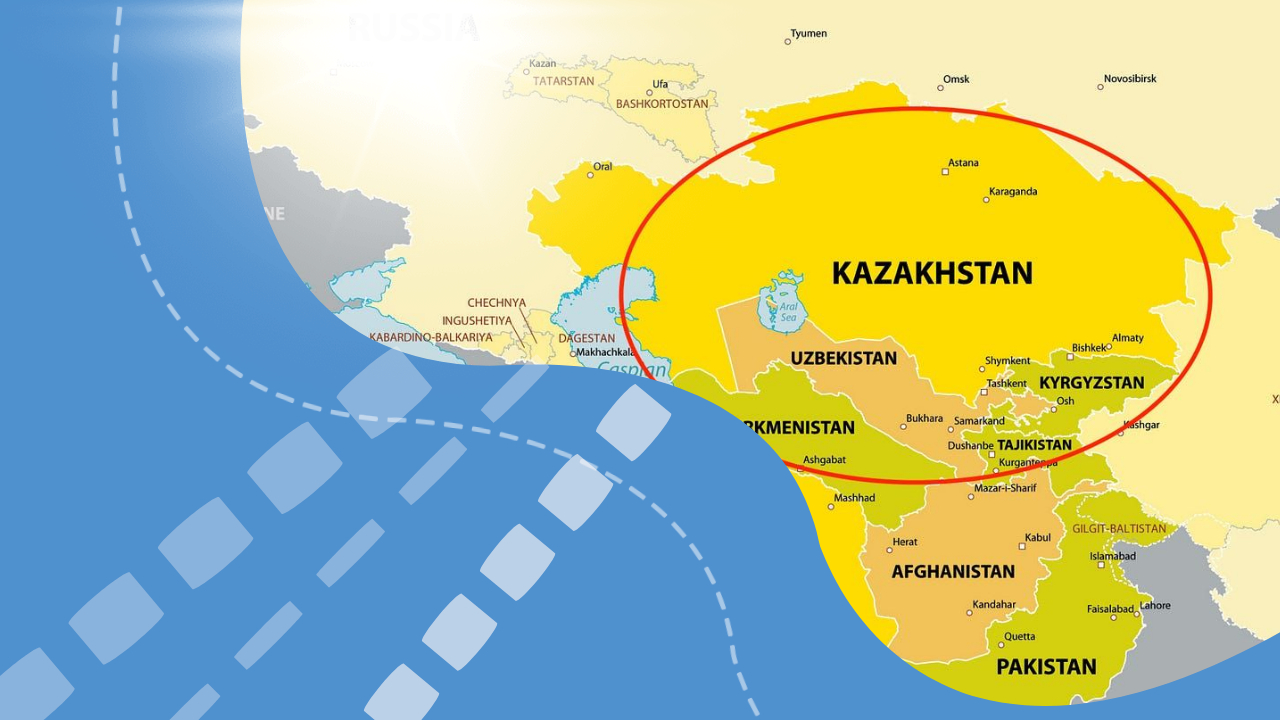

  • Kazakhstan to Welcome New Metallurgical Plant in Five Years

    Kazakhstan to Welcome New Metallurgical Plant in Five Years

    In a recent development, Kazakhstan is set to launch a new metallurgical plant in five years, with a capacity of 5 million tons, in Shymkent. The project will be carried out by the Chinese company Fujian Hengwang Investment Co., Ltd, with the necessary documents already signed in the city’s administration, as reported by kapital.kz.

  • Britain – Kazakhstan rare earth relations

    Britain – Kazakhstan rare earth relations

    In March, Kazakhstan and the United Kingdom signed a Roadmap for Cooperation in the field of critical minerals. This initiative aims to strengthen the partnership by establishing joint ventures within Kazakhstan. Kazinform’s correspondent investigates the benefits that Kazakhstan stands to gain from this collaboration with the UK.

    As the world rapidly moves towards a “green” future, the demand for critical minerals is steadily increasing. These minerals, including rare elements and certain metals, are crucial for the economic prosperity and national security of leading nations. The creation of sustainable supply chains and access to these elements’ deposits are at the heart of the UK’s strategy for critical minerals, adopted in July 2022 and updated in March last year.

    “We are moving towards a world based on critical minerals: we need lithium, cobalt, and graphite for electric vehicle batteries; silicon and tin for our electronics; rare earth elements for electric vehicles and wind turbines,” states the UK strategy document.

    The document emphasizes that critical minerals will become even more significant in the future, with expectations that by 2040, the world will need four times more of these minerals for clean energy technologies.

    Participants at the “Energy Transition 2023” conference at the Chatham House in the UK reported that wind generators and electric vehicle manufacturers urgently need neodymium and praseodymium, while suppliers of high-voltage power lines require cobalt and aluminium.

    Of the 18 critical minerals identified by the British Geological Survey, eight are already produced in Kazakhstan, with raw material bases for the other eight available in the country. This positions Kazakhstan among the top 10 key partners for the UK in this sector.

    Kazakhstan and the UK approved a Roadmap for Strategic Partnership in the field of critical minerals in March 2024. The British side emphasizes “sharing experience in mineral extraction and processing with support for the full lifecycle of raw material extraction,” viewing London as a financial and trade hub. Kazakhstan’s Ministry of Industry and Construction aims to create production with added value for critical raw materials, parts, or components for subsequent delivery to consumer countries.

    Deputy Minister of Industry and Construction, Iran Sharkan, noted that the minimum raw material processing threshold for investors matches the intermediate level, meaning goods of low technological complexity or semi-finished products. Specific projects include collaborative work on advanced international practices and modern technology for geological mapping, as well as promoting best practices in regional exploratory and mapping work for critical minerals between the Geological Survey of Kazakhstan and the British Geological Survey.

    One existing example of cooperation is the joint venture between MaritimeHouse and “Zhezkazganredmet” for rhenium processing in Kazakhstan. Rhenium is a rare metal mainly used as an alloying addition in the production of heat-resistant alloys essential for high-temperature installations like aircraft engines, industrial gas turbines, and rocket engines.

    According to Kazakhstan’s Ministry of Industry and Construction, beryllium, tantalum, vanadium, copper, titanium, and phosphorus are already being supplied to the UK market. However, the ministry did not comment on the degree of processing or the form of the exported products in response to Kazinform’s inquiry.

    Experts highlight that cooperation with Kazakhstan is vital for the UK to achieve its goals of securing access to mineral resources. Jeff Townsend, founder of the British Critical Minerals Association, stated that about 40% of Kazakhstan’s territory has been fully explored, making it an incredible opportunity to build a continuous supply chain from initial exploration and extraction to early processing stages and subsequent processing and marketing in the UK.

    Political changes in Kazakhstan over recent years have made the country more attractive to British companies. However, Townsend noted three challenges: the lack of understanding of Kazakhstan’s business environment among British companies, logistical difficulties in delivering goods to the UK, and competition with Chinese companies. Despite these challenges, the British believe that their technological advantages and expertise will help them overcome these obstacles and maintain their competitiveness.

  • Polymetal Int Recommends Dividend Waiver and Name Change to Solidcore Resources plc

    Polymetal Int Recommends Dividend Waiver and Name Change to Solidcore Resources plc

    Polymetal Int’s management has proposed that shareholders refrain from receiving dividend payments for the previous year and has suggested approving a change in the organization’s name to Solidcore Resources plc, as reported by the gold miner’s press center. The disposal of the company’s assets in Russia facilitated debt reduction and increased liquidity. However, it is highlighted that further investments of over $1 billion will be required for prospective projects in Kazakhstan and Central Asia, such as the construction of the Irtysh Hydrometallurgical Plant and M&A activities. Despite these initiatives, challenges remain as geopolitical and macroeconomic conditions are unstable, and access to key sources of debt financing is limited. It is worth noting that Polymetal was officially registered in Kazakhstan in the summer of 2023 following the sale of its Russian business in early spring of the same year. In the 12 months of 2023, the Kazakh metals producer witnessed a 10% decrease in gold equivalent output to 15,116 tons (486 thousand ounces).
    Excerpt: Polymetal Int suggests shareholders forgo dividends and approve a name change to Solidcore Resources plc for strategic reasons.

  • Erdene Resource Development Corp Advances Bayan Khundii Gold Project in Mongolia

    Erdene Resource Development Corp Advances Bayan Khundii Gold Project in Mongolia

    Erdene Resource Development Corp (TSX:ERD, OTC:ERDCF) made significant progress in the first quarter of 2024 with the development of its Bayan Khundii gold project in Mongolia in collaboration with the Mongolian Mining Corporation (MMC). Erdene CEO Peter Akerley announced that construction was 15% complete by the end of the quarter, proceeding on schedule and within budget. The project is expected to produce its first gold in the second quarter of 2025, positioning Bayan Khundii as one of the highest-grade open-pit gold mines globally. Akerley emphasized that this project would become Mongolia’s largest primary gold producer, boosting the mining sector’s contribution to the national economy and creating long-term value for Erdene shareholders. Additionally, Erdene launched its 2024 exploration program during the quarter to expand mineralization in the Khundii Minerals District, focusing on the Dark Horse, Ulaan, and Zuun Mod gold and copper targets.

  • Eastern Gold to Develop Rodnikovoye Gold Deposit

    Eastern Gold to Develop Rodnikovoye Gold Deposit

    Eastern Gold plans to bring the Rodnikovoye gold deposit, part of the Ashaly-Daubai ore field, into industrial production. The company’s mining plan has been published on Kazakhstan’s Unified Environmental Portal. The project documentation indicates that operations will take place at two sites: Belaya Gorka and Rodnikovoye, with extraction of precious metals conducted through open-pit mining.

    The balance reserves of the first site include 818,000 tons of oxidized gold-bearing ores and 1.18 tons of gold, with an average gold content of 1.44 g/t. The second site has 1.15 million tons of ore and 1.15 tons of gold, averaging 1.31 g/t. Eastern Gold plans to extract 250,000 tons of ore annually, with the mining operations scheduled from 2024 to 2032.

    The chosen method for ore processing is heap leaching. Industrial trials of processing the oxidized ores from Rodnikovoye have shown that with gold content in the raw ore between 0.8-1.3 g/t, the extraction rate of precious metals into the solution is 65%. The final product of the production process will be Dore alloy.

  • Kazakhstan Proposes to Declassify Rare and Rare Earth Metal Deposits

    Kazakhstan Proposes to Declassify Rare and Rare Earth Metal Deposits

    In Kazakhstan, there is a proposal to declassify certain deposits of rare and rare earth metals, aiming to expedite the development of these valuable resources, according to inbusiness.kz. Experts predict that the demand for rare and rare earth metals, now crucial for many developed countries, will quadruple by 2040. Consequently, the active development of such deposits could significantly boost the nation’s economy.

    Deputy Andrey Lukin, who suggested declassifying the deposits, stated that the next step towards successful exploitation could be simplifying the licensing process for exploring Kazakhstan’s subsoil and expanding the areas for geological exploration. Additionally, Mr. Lukin emphasized the need to implement technical and financial support mechanisms for both local and foreign investors, alongside improving environmental standards.

    The World Bank reports that Kazakhstan possesses over 5000 unexplored sites with critically important rare metals, with an estimated value exceeding $46 trillion.

  • Chaarat Gold Secures Major Funding for Tulkubash Mine in Kyrgyzstan

    Chaarat Gold Secures Major Funding for Tulkubash Mine in Kyrgyzstan

    Chaarat Gold Holdings Ltd announced on Friday significant progress in securing funding to initiate production at the Tulkubash gold mine in Kyrgyzstan. The company’s shares surged 43% to 4.00 pence each in London following the announcement.

    Chaarat Gold, a mining exploration and development company, has entered into a non-binding term sheet with Xiwang International Co Ltd (XWIC) for a USD 150 million funding package. This investment would grant XWIC a 60% economic interest in the Tulkubash project, while Chaarat would retain a 40% stake.

    XWIC, an investment company based in the British Virgin Islands and an affiliate of Touchstone Capital Partners, aims to build a substantial portfolio of mining assets globally. This agreement represents a key step in advancing discussions between the parties and sets a clear action plan for a successful transaction.

    The completion of this deal would provide full financing for the development and commencement of production at the Tulkubash gold project. It would also enable Chaarat to restructure its existing commitments and lay the groundwork for potential future joint ventures in the gold mining sector.

    Chaarat continues to engage with other potential funding sources and plans to enter discussions with convertible bondholders regarding outstanding bonds due for repayment at the end of July. The Tulkubash project has an initial mine life of six years, with significant development potential from additional prospects such as Karator and Ishakuldy. The company aims to extend the total mine life beyond 15 years.

  • Court Overturns Illegal Seizure of Solid Metals’ Property in Kazakhstan

    Court Overturns Illegal Seizure of Solid Metals’ Property in Kazakhstan

    In a landmark decision, the specialized inter-district administrative court of Zhetysu region has annulled two critical resolutions connected to the unlawful seizure of land and assets from the company Solid Metals. On April 9, 2024, the court invalidated the Sarkand district akimat’s Resolution No. 275, which had transferred a land plot granted to Solid Metals for temporary compensated land use into communal property. Additionally, the court overturned the regional coordination council’s decision to revoke the investment status of Solid Metals’ plant construction project.

    These resolutions were originally made possible due to a raid in November 2019, facilitated by former Vice Minister of Industry and Infrastructure Development (MIIR) Timur Toktabayev. Toktabayev, later arrested and sentenced to seven years for abuse of office, had acted in the interests of certain entrepreneurs, illegally transferring sites with discovered mineral deposits under the guise of exploration. This led to significant state losses amounting to billions of tenge.

    Solid Metals, which had legally acquired 420,000 tons of technogenic mineral formations (TMF) in 2017 and invested heavily in a processing plant, was forcibly evicted from their property by Aksenger Ltd, a company allegedly set up to facilitate this illegal takeover. Despite proving the legality of their acquisition in court, Solid Metals continues to battle for the return of their assets, emphasizing the need for transparent legal proceedings to mitigate external pressures on the judicial process.

  • EBRD and Kazakhstan Collaborate to Modernize Mining Sector

    EBRD and Kazakhstan Collaborate to Modernize Mining Sector

    An a significant move to enhance the national mining sector, the European Bank for Reconstruction and Development (EBRD) and Kazakhstan have signed a Memorandum of Understanding (MoU). The agreement, aimed at promoting modernisation and development within the sector, was formalized today by Kazakhstan’s Minister of Industry and Construction, Kanat Sharlapaev, and EBRD First Vice President, Jürgen Rigterink. This partnership will focus on improving governance, transparency, and regulation, adhering to international standards and practices.

    The MoU is a crucial element of the EBRD’s strategy for responsible exploration and mining of critical raw materials. It includes the creation of an advanced system for capturing, processing, and disseminating geoscientific documents such as maps and data. Additionally, the initiative aims to develop the legal and regulatory frameworks governing the mining sector.

    The signing ceremony was attended by EU Executive Vice-President Valdis Dombrovskis, underscoring the agreement’s importance within the EU-Kazakhstan critical raw materials roadmap and their broader strategic partnership.