Website: Eurasia.com

  • Kyrgyz Parliament Lifts Ban on Uranium and Thorium Mining, Focusing on Economic Benefits

    Kyrgyz Parliament Lifts Ban on Uranium and Thorium Mining, Focusing on Economic Benefits

    Deputies of the Kyrgyz Parliament have voted in favor of a bill to lift the ban on mining uranium and thorium, with 69 votes in favor and three against. The parliamentarians are confident that these legislative changes will bring substantial economic dividends to the country.

    The ban on uranium and thorium mining was initially imposed in 2019 when authorities sought to sell a development license for a deposit. However, local residents expressed concerns about potential environmental damage and harm to the water table, leading to a complete ban across the Republic.

    Over the past century, the Issyk-Kul region of Kyrgyzstan alone has accumulated 150,000 cubic meters of radioactive waste from uranium mining. The country currently has 92 burial sites containing 23 tailing dumps with uranium elements, resulting in a total volume of 2.9 million cubic meters of poisonous and hazardous substances.

    The new bill emphasizes the need for alternative sources of income due to severe economic impacts in recent years. However, it also highlights the importance of strict compliance with environmental norms and standards in uranium and thorium mining.

    Minister of Natural Resources, Environment, and Technical Supervision, Melis Turganbayev, assured the deputies that the passage of the bill would not harm the environment or the health of Kyrgyz citizens. Turganbayev explained that the focus is not solely on uranium but also on associated metals. The plan is to mine titanomagnetite, which contains uranium and thorium. The extracted uranium will be sold to other states, while thorium will be stored. Processing will take place at the Kara-Balta Combine in Chui Oblast.

    While three deputies voted against the bill, citing environmental concerns, Doctor of Geological and Mineral Sciences, academician Rozalia Jenchuraeva, described the 2019 ban as a “big folly.” She highlighted the need to address the harmful waste and contamination of soil and water caused by hazardous materials lying just 20 meters below the surface. Jenchuraeva believes that mining these elements will clean up the land and create opportunities for the Kara-Balta Combine.

    President Japarov, who met with residents near the Kyzyl-Ompol deposit, expressed optimism about the development. He stated that it would create over a thousand jobs and become a significant resource similar to the Kumtor gold deposit. The aim is to boost the local budget and improve the living standards of the people.

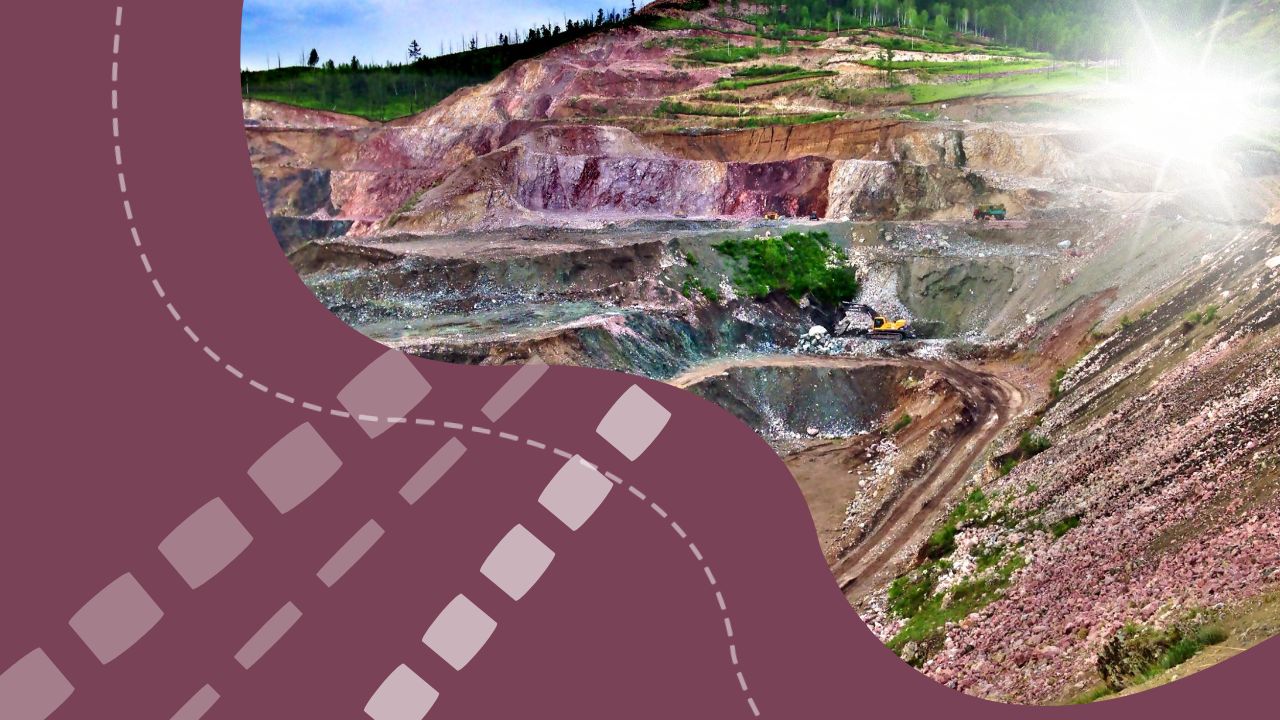
    Kyzyl-Ompol, a uranium-thorionite placer deposit discovered in 1951, is one of the five areas in Kyrgyzstan where these minerals are found. It has been extensively explored by the Kyrgyz Institute of Geology.
  • KAZ Minerals сообщает о результатах за первый квартал текущего года

    KAZ Minerals сообщает о результатах за первый квартал текущего года

    В первые три месяца этого года KAZ Minerals произвела 94 тыс. тонн меди, как сообщается в Telegram-канале компании. Это на 8% меньше, чем 102 тыс. тонн, произведенных в четвертом квартале прошлого года. Сокращение объема производства было ожидаемым из-за прогнозируемого снижения содержания меди в добываемой руде. Компании удалось частично компенсировать уменьшение за счет увеличения производственной мощности на 2%.

    Интересно, что с января по март меднодобывающая компания продала 103 тыс. тонн металла, что на 9% больше, чем было произведено. Значительное сокращение времени отгрузки продукции способствовало уменьшению числа грузов со статусом “в пути.” Кроме того, продажи всех попутных товаров превысили показатели четвертого квартала 2023 года

  • KAZ Minerals Reports First Quarter Results for Current Year

    KAZ Minerals Reports First Quarter Results for Current Year

    In the first three months of this year, KAZ Minerals produced 94,000 tons of copper, according to a statement on the company’s Telegram channel. This marks an 8% decrease from the 102,000 tons produced in the fourth quarter of last year. The reduction in output was anticipated due to a forecasted decline in copper content in the mined ore. The company managed to partially offset the decrease by increasing its production capacity by 2%.

    Interestingly, from January to March, the copper mining company sold 103,000 tons of metal, 9% more than it produced. The significant reduction in product shipment times contributed to fewer shipments being classified as “in transit.” Additionally, sales of all by-products surpassed the figures from the fourth quarter of 2023.

  • Kaz Critical Minerals LLP Begins Drilling Activities in East Kazakhstan

    Kaz Critical Minerals LLP Begins Drilling Activities in East Kazakhstan

    Kaz Critical Minerals LLP, a wholly-owned subsidiary of Kaz Resources LLC and a portfolio company of Cove Capital LLC—a leading player in the global critical minerals industry, has commenced drilling activities and its 2024 geological programs in East Kazakhstan. This marks a significant milestone in its exploration endeavors and underscores the Company’s commitment to developing Kazakhstan’s rich critical minerals potential.

    “We commend the cooperation between the United States and Kazakhstan on critical minerals development, and we anticipate very promising results from this phase of our operation. This initiative demonstrates the potential for successful U.S. foreign direct investment in Kazakhstan’s rare earth and critical minerals sector,” said Pini Althaus, Chief Executive Officer of Kaz Resources LLC. “Through extensive investments in exploration and eventual production, we aim to substantially contribute to the local Kazakh economy and the global transition to sustainable energy and advanced technology,” Mr. Althaus added.

    Kazakhstan possesses significant mineral wealth, including 17 critical materials on the U.S. Department of Energy’s Critical Materials List. In 2023, Kazakhstan and the United States signed a memorandum of cooperation on geology, and the active bilateral dialogue continues with a strong emphasis on geological exploration and critical minerals development.

    Cove Capital was an early entrant to the rare earths and critical minerals sector in East Kazakhstan, and we appreciate the ongoing and mutually beneficial cooperation at the highest levels of the U.S. and Kazakh governments,” said Mr. Althaus. “Kazakhstan is an abundantly mineral-rich country that can serve a multitude of manufacturing and industrial sectors. With the new approach and mandate President Kassym-Jomart Tokayev has led on the development of the country’s critical minerals reserves, Kazakhstan is well positioned to become a global leader in this sector,” added Mr. Althaus.

    Kaz Resources LLC & Cove Capital LLC in Kazakhstan
    In 2023, Kaz Resources LLC (through its wholly-owned subsidiary Kaz Critical Minerals LLP), became the first U.S. company to receive critical minerals and rare earths land concessions in Kazakhstan. These concessions include minerals such as rare earth elements, lithium, tantalum, beryllium, niobium, cesium, and tin.

    In September 2023, Cove Capital LLC entered into an MoU with Kazakhstan’s Sovereign Wealth Fund, Samruk Kazyna, as part of the cooperation on critical raw materials, specifically rare earth metals. On April 8, 2024, Cove Capital LLC announced a landmark collaboration with Tau-Ken Samruk, Kazakhstan’s national mining company, aimed at advancing the exploration and development of rare earth and critical metals within the Republic of Kazakhstan. This partnership demonstrates a significant milestone in Cove Capital’s mission to drive innovation and sustainable development in the rare earth industry.

    In the groundbreaking development, Tau-Ken Samruk (via “Kazgeology” JSC), entered into a binding joint venture agreement with Cove Capital for geological exploration on the Akbulak rare earth project in the Kostanay region of Kazakhstan. Historical reserves at the site include reserves of rare earth elements, including those used for permanent magnets. To carry out geological exploration work, a joint venture was created between Kazgeology JSC and Cove Capital with the parties’ participation shares: Cove Capital – 75% and Kazgeology JSC – 25%. Cove Capital will fully finance exploration work until reserves are listed on the balance sheet.

    This strategic alliance underscores Cove Capital’s commitment to leveraging its expertise and financial resources to unlock the potential of Kazakhstan’s rich mineral reserves.

  • Через пять лет в Шымкенте будет запущено новое металлургическое предприятие

    Через пять лет в Шымкенте будет запущено новое металлургическое предприятие

    Через пять лет в Казахстане будет запущено ещё одно металлургическое предприятие, речь идёт о современном заводе мощностью 5 миллионов тонн в Шымкенте. Реализовывать проект будет китайская компания Fujian Hengwang Investment Co., Ltd. В акимате города уже подписали соответствующие документы, сообщает портал kapital.kz.

    Известно, что за время строительства китайские партнёры инвестируют в промышленность мегаполиса порядка 1,75 миллиарда долларов США. Кроме того, в регионе появится примерно 1000 новых вакансий. Согласно утверждённому плану, возведение завода будет осуществляться в три этапа.

    Стоит отметить, что инвестор входит в состав Jiangsu Coastal Steel Group Co., Ltd, одной из крупнейших корпораций, имеющих серьёзный опыт в сфере производства и реализации стали. Представители иностранной компании заметили, что на данный момент в городе создана подходящая среда для вложений. Если завод будет успешно построен и запущен, китайская сторона предложит акимату Шымкента ряд новых инвестиционных проектов.

    Городские власти со своей стороны пообещали оказывать необходимую поддержку в рамках реализуемого проекта.

  • New Metallurgical Plant to be Launched in Shymkent in Five Years

    New Metallurgical Plant to be Launched in Shymkent in Five Years

    In five years, another metallurgical plant will be launched in Kazakhstan, specifically in Shymkent. The modern facility, with a capacity of 5 million tons, will be implemented by the Chinese company Fujian Hengwang Investment Co., Ltd. The relevant documents have already been signed by the city’s administration, reports the kapital.kz portal.

    It is known that during the construction period, Chinese partners will invest about 1.75 billion US dollars into the metropolis’s industry. Additionally, around 1,000 new jobs will be created in the region. According to the approved plan, the construction of the plant will be carried out in three stages.

    It is worth noting that the investor is part of Jiangsu Coastal Steel Group Co., Ltd, one of the largest corporations with significant experience in the production and sale of steel. Representatives of the foreign company mentioned that the city currently provides a favorable environment for investments. If the plant is successfully built and launched, the Chinese side will propose a number of new investment projects to Shymkent’s administration.

    City authorities, in turn, have promised to provide the necessary support for the project.

  • Construction of Small Nuclear Power Plant to Begin This Summer in Jizzakh Region

    Construction of Small Nuclear Power Plant to Begin This Summer in Jizzakh Region

    Construction of a small nuclear power plant (330 MW) based on a Russian project will commence in the Jizzakh region this summer. This marks Rosatom’s first export contract for building such a station. According to the official statement, “the chosen site has already been surveyed, confirming its suitability and safety.”

    Uzbekistan will host the first small nuclear power plant in the region using Russian technology. Documents regarding this were signed on May 27 during the state visit of Russian President Vladimir Putin to Uzbekistan. The Directorate for the Construction of Nuclear Power Plants under the Agency for Atomic Energy of the Cabinet of Ministers of Uzbekistan and the company Atomstroyexport (an engineering division of Rosatom) have signed a contract to build the small nuclear power plant (SNPP) in Uzbekistan. Additionally, a protocol was signed to amend the intergovernmental agreement on cooperation in the construction of a nuclear power plant dated September 7, 2018.

    According to the press release from the Agency for Atomic Energy and Rosatom, the SNPP with a capacity of 330 MW (six reactors with 55 MW each) will be built in the Jizzakh region near Lake Tuzkan. Rosatom will serve as the general contractor for the construction, and Uzbek companies will also be involved.

    Construction work at the site will begin this summer. “The chosen site has already been surveyed, confirming its suitability and safety, which will significantly shorten the project implementation timeline,” the press release notes. “According to forecasts, the demand for energy resources in Uzbekistan will nearly double by 2050, and it is clear that for the stable operation of the energy system and economic development, our country must ensure itself with a basic energy source in addition to renewable energy sources,” said Azim Ahmedkhadjaev, director of the Agency for Atomic Energy.

    For Rosatom, this is the first export contract for the construction of a small nuclear power plant. “And this is not just a preliminary agreement, we are starting construction immediately this summer,” commented Alexey Likhachov, General Director of Rosatom.

    President of Uzbekistan Shavkat Mirziyoyev emphasized the importance of this project: “Practically all leading states in the world ensure their energy security and sustainable development through nuclear energy. With substantial uranium reserves and exporting it to third countries, this project is vital for us if we think about advancing to a new stage of development for Uzbekistan.”

    The project is based on the water-cooled reactor RITM-200N. The thermal power of the RITM-200N is 190 MW, electrical power is 55 MW, and its service life is up to 60 years. The RITM-200 series reactors have been tested in Arctic conditions on Russian icebreakers. Since 2012, 10 RITM-200 reactors have been manufactured for the nuclear icebreakers Arktika, Sibir, Ural, Yakutia, and Chukotka. The first three are already in operation and fulfilling their commitments in the Arctic.

    An SNPP based on the RITM-200N reactor is also being built in the Yakut village of Ust-Kuyga. The launch of the first power unit is expected in 2027, and commissioning in 2028. The facility will supply electricity to industrial enterprises, including the development of the Kyuchus, Deputatskoye, and Tirekhtyakh deposits.

    “The nuclear power plant based on RITM-200N features a fully integrated layout, which ensures high economic efficiency of the project and the highest level of safety,” the official statement emphasizes. The safety of the planned small nuclear power plant will be achieved through multi-level systems and containment barriers, which prevent accidents and eliminate the release of radioactive substances into the environment.

  • Qarmet запускает пилотный проект по снижению уровня метана на шахте «Тентек»

    Qarmet запускает пилотный проект по снижению уровня метана на шахте «Тентек»

    Металлургическая компания Qarmet запустила пилотный проект по заблаговременному устранению вредных газов из угольных пластов шахты «Тентек», такие сведения появились в Telegram-канале комбината. Предполагается, что применение плазменно-импульсной технологии позволит существенно сократить уровень метана. В итоге проходческие работы на «Тентекской» станут более безопасными. Известно, что такой метод дегазации успешно используют кузбасские промышленники.

    Бурение скважин на пласте Д-6, где выявлено порядка 16 млн т твёрдого топлива, уже началось. По прогнозам, объём извлечённого тут метана составит свыше 200 млн м³. По словам сотрудника угольного департамента компании Александра Полчина, шахты Qarmet имеют низкую газопроницаемость при достаточно высоком уровне природной газоносности. Поэтому использованные ранее методы не могли существенно улучшить ситуацию.

    Теперь же, как сообщает инженер, применяя наработки коллег с Кузбасса, холдинг рассчитывает вдвое сократить газоносность, что позволит исключить риски для шахтёров при разработке угольных пластов. В рамках проекта запланировано бурение десятка скважин глубиной до 1000 м. Известно, что для выхода метана в пласте создадут сеть микротрещин. Газ с концентрацией более 97% отправят для последующей обработки и применения.

    Для полного устранения газа понадобится 87 скважин. Первые объёмы метана будут извлечены осенью этого года. В будущем такой способ дегазации хотят использовать и на других шахтах предприятия.

  • Qarmet Implements Pilot Project for Methane Reduction at Tentek Mine

    Qarmet Implements Pilot Project for Methane Reduction at Tentek Mine

    Qarmet, a metallurgical company, has launched a pilot project aimed at the early removal of harmful gases from the coal seams of the Tentek mine, as reported on the company’s Telegram channel. The initiative involves the use of plasma-impulse technology, which is expected to significantly reduce methane levels, thereby enhancing safety during mining operations at Tentek. This method of degasification has already seen success in the Kemerovo region.

    Drilling has commenced on the D-6 seam, which contains an estimated 16 million tons of solid fuel. Projections indicate that over 200 million cubic meters of methane will be extracted. Alexander Polchin, a representative from Qarmet’s coal department, noted that the company’s mines have low gas permeability despite high levels of natural gas content. Previously employed methods did not substantially improve the situation.

    According to the engineer, adopting techniques used by colleagues in Kemerovo, the company aims to halve the gas content, thus mitigating risks for miners. The project includes drilling ten wells, each up to 1000 meters deep. To facilitate methane release, a network of microfractures will be created within the seam. Methane with a concentration above 97% will be processed and utilized.

    A total of 87 wells will be needed for complete gas removal, with the first methane volumes expected to be extracted this autumn. The company plans to extend this degasification method to other mines in the future.

  • Казахстан объявил о крупных промышленных проектах для увеличения производства металла

    Казахстан объявил о крупных промышленных проектах для увеличения производства металла

    Казахстан делает ставку на производство металла с несколькими новыми промышленными проектами, согласно Министерству индустрии и строительства. Министр Канат Шарлапаев изложил детали этих инициатив.

    Первый проект – завод Mineral Product International, который будет производить 160,000 тонн ферросилиция в год. Также завод будет выпускать 300,000 тонн железа прямого восстановления и 1 миллион тонн стали ежегодно. Этот металлургический кластер находится на стадии подготовки площадки, уже начаты строительные и монтажные работы, включая заливку фундамента.

    Второй проект – модернизация Qarmet. По соглашению с инвестором будет инвестировано 3,5 миллиарда долларов до 2028 года, включая 1,3 миллиарда долларов в 2024 году. К 2030 году планируется увеличить производство стали до 5 миллионов тонн, угля до 9 миллионов тонн и железорудного концентрата до 5 миллионов тонн. Модернизация направлена на снижение выбросов на 20% и увеличение выхода железного концентрата. Технический аудит предприятия начался в марте и ожидается завершение в июле, после чего будет разработан комплексный план модернизации.

    Третий проект – строительство нового медеплавильного завода, который позволит производить 300,000 тонн рафинированной меди ежегодно. Этот проект включен в национальную карту индустриализации и в настоящее время проходит технико-экономическое обоснование.

    Четвертый проект – строительство завода по производству горячебрикетированного железа. Реализация этого проекта увеличит производство железорудного сырья с 9,9 миллиона тонн до 15,5 миллиона тонн в год, улучшая переработку этих материалов с высокой добавленной стоимостью. Договор о розничной поставке газа между Соколовско-Сарбайским горно-обогатительным производственным объединением и КазТрансГаз Аймак находится на завершающей стадии подписания.

    Пятый проект – планы компании Polymetal по строительству нового автоклавного производства в Казахстане. Этот гидрометаллургический завод будет перерабатывать золотосодержащие высокоуглеродистые сульфидные концентраты, что ранее было невозможно в стране. В настоящее время в СЭЗ “Павлодар” ведутся инженерные, геологические и геодезические работы.

    По состоянию на апрель 2024 года, производство металла в Казахстане выросло на 5,1%. К концу года ожидается, что производство стали достигнет 4 миллионов тонн, гладкого проката 2,6 миллиона тонн, а чугуна 3 миллиона тонн.