Website: Eurasia.com

  • Chinese Company Expresses Interest in Montenegro’s Berane Coal Mine

    Chinese Company Expresses Interest in Montenegro’s Berane Coal Mine

    An unnamed Chinese company has shown interest in purchasing the coal mine in Berane, a northeastern town in Montenegro, which has been inactive for several years, according to local media reports. Representatives from the Chinese firm have already visited Berane for discussions regarding the potential acquisition, though the current status of the negotiations remains unclear, as per broadcaster RTCG.

    Nikola Scekic, head of the mining company, stated, “It is about a serious company that has expressed interest in our mine. We hope that the further talks will result in a good decision.” The Berane coal mine, owned by Serbia-registered company Metalfer, halted production in March 2020 due to the COVID-19 pandemic. Additionally, the mine has been without electricity since November 2022 due to a power substation failure.

    In January, Montenegro’s energy ministry announced its goal to restart production at the mine, promising to conduct an economic analysis to determine the best approach. Restarting operations will require new investments and strategic partnerships, with the government needing to evaluate both existing and potential production capacities, energy minister Sasa Mujovic stated.

    At its peak, the Berane coal mine employed 150 workers and supported a supply chain of 20 smaller firms, as noted by RTCG.

  • Kazakhstani Deputies Propose Measures to Sustain Mining Towns Amid Resource Depletion

    Kazakhstani Deputies Propose Measures to Sustain Mining Towns Amid Resource Depletion

    Kazakhstan is home to numerous towns where mining enterprises are the backbone of local economies. However, according to Majilis deputy Ekaterina Smyshlyaeva, approximately thirty mining sites in the country are nearing critical depletion levels, reports kaztag.kz. The closure of these key enterprises would result in significant job losses for a large portion of the population, leading to a downturn in other sectors such as services and small businesses, ultimately causing population decline in these towns and settlements.

    To delay the closure of mining operations and proactively prepare new employment opportunities in these monocities, deputies have proposed several measures. They suggest monitoring the extraction levels at mining sites that may cease operations within the next decade and striving to extend the life of valuable deposits. This would require subsoil users to ensure comprehensive processing of extracted minerals, including the utilization of technogenic mineral wastes.

    For sites already at critical depletion, the recommended solution is to conduct further exploration to extend their operational life. In areas with low profitability, there is a proposal to expand the application of a special tax regime. Additionally, deputies emphasize the need to address economic diversification in towns and settlements facing the closure of mining enterprises within ten years. This includes preemptively retraining workers who will soon lose their jobs due to the shutdowns.

  • Decarbonizing Asia’s Steel Industry: A Long Road Ahead

    Decarbonizing Asia’s Steel Industry: A Long Road Ahead

    According to Reuters, it’s time to scrutinize the feasibility of decarbonizing Asia’s vast and expanding steel sector. Reducing carbon emissions is possible but requires a phased approach over a longer-than-ideal period and only if incentives are provided. The steel industry, the world’s largest industrial source of carbon dioxide emissions, accounts for about 8% of global emissions, making efforts to decarbonize this sector crucial for achieving net-zero carbon goals.

    This week, representatives from Asia’s iron ore and steel industries gathered in Singapore, revealing both encouraging and discouraging news about decarbonization efforts. The good news is that nearly every market player, from mining companies to steel mills, is taking the issue seriously, investing time, effort, and capital in finding solutions. The bad news is that achieving net-zero emissions by 2050 in Asia seems unattainable with current and foreseeable technologies.

    Another significant obstacle is the current steel pricing structure. There is no real premium for producing low-carbon steel in Asia, and little indication of this changing soon. As it stands, mining companies and steel mills are mainly undertaking decarbonization efforts under voluntary commitments to reduce carbon emissions, driven by shareholder pressure, some government directives, and public demand to mitigate the expected negative impact of climate change.

    While this is positive, it means that any costs incurred for decarbonization are effectively excluded from company profits since there is no financial reward for producing cleaner steel in Asia. The challenge is how to implement incentives for decarbonization, from relatively simple and low-cost initial steps to much more complex and capital-intensive ambitions for zero-emission steel production.

    One potential approach is a multi-tiered incentive system. For example, the base level of carbon emissions might be set at 2.1 metric tons per ton of steel produced using the current method of smelting iron ore fines in a blast furnace followed by a converter. If a steel plant could reduce emissions by one-third, it might be rewarded with a carbon credit or avoid paying a carbon tax of a set amount per ton of reduced emissions.

    Suppose this initial reduction costs $60 per ton, roughly the price of a carbon credit in the European Union. If a steel plant can cut emissions by another third through investments in new processes like using direct reduced iron (DRI) or its transportable equivalent, hot briquetted iron (HBI) in an electric arc furnace (EAF), this reduction could be rewarded with a higher carbon price, say $120 per ton.

    The final steps towards fully decarbonizing steel production using green hydrogen to produce HBI, clean electricity to run EAFs, and eco-friendly shipping fuels like methanol for transporting materials might attract even greater carbon credits to offset the substantial capital required to achieve this.

    STIMULI NECESSARY

    Presentations at this week’s Green Steel Forum in Singapore made it clear: without incentives, only the initial and relatively simple steps towards decarbonization will become a reality. These include maximizing the efficiency of basic oxygen furnaces, increasing the use of higher-quality iron ore and agglomerates like DRI and HBI, boosting the use of recycled steel in EAFs, and decarbonizing iron ore mining by limiting diesel power at remote mines and electrifying vehicles and trains.

    The problem is that these efforts are likely to reduce only about 20% of global steel emissions. Further steps include using natural gas to process low-grade iron ore into DRI and HBI for use in more advanced converters or even EAFs, then transitioning this process to green hydrogen. This is where costs become significant, and shareholders are likely to question the benefits.

    Ultimately, to push steel decarbonization beyond the low-hanging fruit, a pricing incentive is needed, and the market alone is unlikely to provide this, as costs will likely outweigh climate concerns for most consumers. This necessitates implementing policies like carbon taxes or carbon credits, ideally coordinated across many countries, particularly the largest iron ore exporters—Australia, Brazil, and South Africa—as well as China, which produces half of the world’s steel, and new major producers like India.
  • Kazakhstan Faces Challenges in Processing Mining and Metallurgical Waste

    Kazakhstan Faces Challenges in Processing Mining and Metallurgical Waste

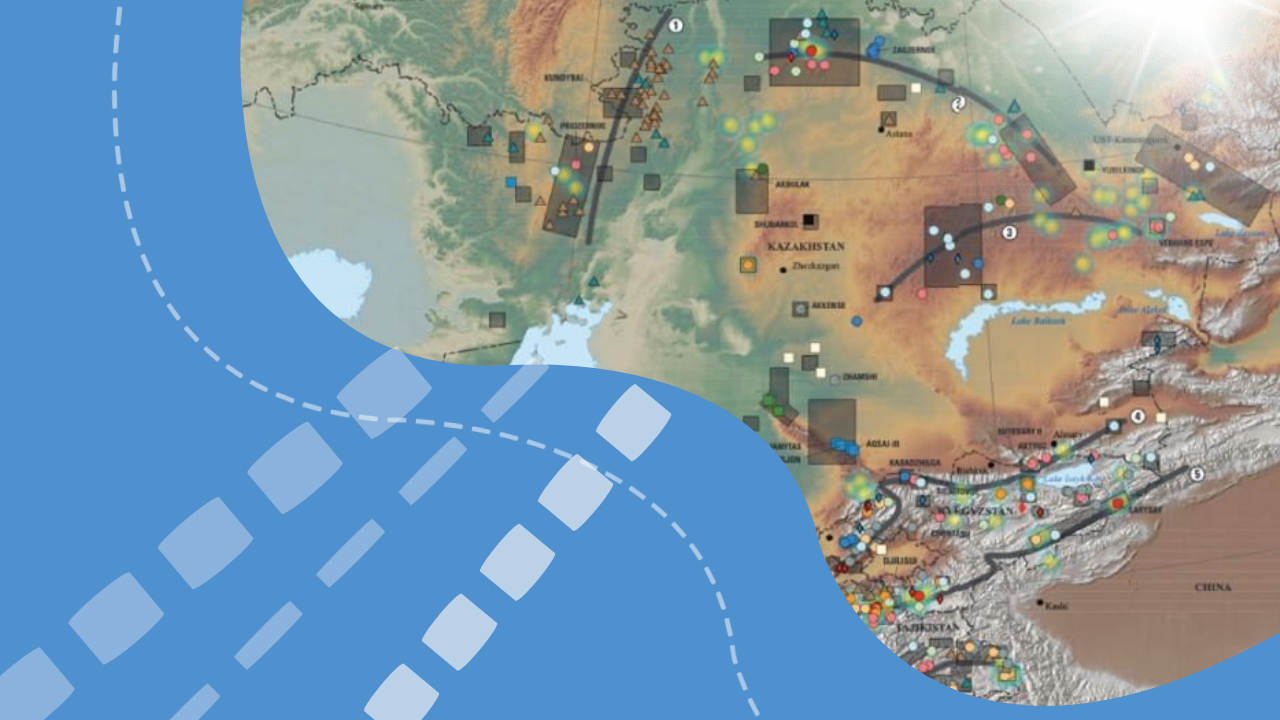
    One of the pressing issues in Kazakhstan’s mining industry is the processing of technogenic mineral formations (TMF). For the past 80-90 years, waste from the mining and metallurgical sectors has accumulated on industrial sites. This includes not only industrial sectors but also waste from the energy sector, found across all regions regardless of economic focus. TMFs, which include tailings from enrichment processes, low-grade ore, slags, clinkers, cakes from metallurgical production, and ash from burning solid fuels, are present in almost every region of the country.

    TMFs are viewed both as a potential source of additional profit and as an existing and potential environmental threat. The classification of TMFs, whether as subsoil or waste, and the subsequent taxation, remains a contentious issue. On April 9, in Astana, the Working Group under the Committee of the Geological Industry, Mining, Coal Mining, and Metallurgical Industry of the Presidium of the NCE “Atameken” began discussions on these problematic issues. Gulnara Kadirzhanovna Bizhanova, Deputy Chairman of the Board of NCE RK “Atameken,” provided insights.

    Bizhanova noted that the volume of TMF is dynamically growing due to increased mining and processing activities. Kazakhstan has accumulated over 60 billion tons of TMFs, with an annual processing rate of only about 11%, compared to 70-80% in developed industrial countries. The significant accumulation of TMFs, potential valuable components, and negative environmental impacts necessitate their processing and subsequent reclamation.

    The role of TMF processing is crucial in enhancing economic efficiency and rational use of natural resources, requiring a comprehensive approach. However, the classification of TMFs into private and state-owned categories, and the risk of double taxation, limit the possibilities for secondary use. Addressing these issues requires legal frameworks to regulate ownership and taxation, reducing financial burdens and stimulating investment in new technologies.

    Bizhanova identified economic and regulatory barriers, such as high processing costs, lack of infrastructure, and unclear legal bases, as major obstacles. Additionally, the Environmental Code’s emission fee for re-placing TMFs is seen as counterproductive, as users already pay for initial placement. Clear legal guidelines could stimulate active engagement in TMF processing, improving economic and environmental outcomes.

    Active TMF processing would bring economic benefits by reducing raw material costs and significant environmental advantages, pushing Kazakhstan towards a green economy.

  • ERG Exploration Granted Exploration Rights in Mughalzhar District

    ERG Exploration Granted Exploration Rights in Mughalzhar District

    ERG Exploration, a subsidiary of ERG, has been authorized to conduct geological exploration for solid minerals across 8.9 thousand hectares in the Mughalzhar district of Aktobe region. According to a decree by Darhan Yermagambetov, the district’s akim, a public easement will be established on land plots in the Kayyndy rural district without removing land users. The exploration rights are valid until May 6, 2030. The public discussion of the decree will continue until May 30, and it will be published on the district akimat’s website.

    The company received a license for solid mineral exploration, numbered 2633-EL, on May 6. Last October, ERG Exploration began geological work on 2.8 thousand hectares in the Aktogay district of Karaganda region, focusing on areas predominantly within the district’s land fund and two farming estates.

    ERG Exploration’s CEO, Azamat Shalabayev, revealed plans to digitize geological data and explore for various metals, including chromium, manganese, copper, and rare metals. The company recently secured the right to explore a copper site in North Pribalkhash, having paid over 420 million tenge. Initial studies, conducted during the Soviet era and later by Rio Tinto with Kazgeology, estimated the site contains up to 200 thousand tons of copper with low ore concentration. ERG plans to extend exploration to a depth of 700 meters to locate more minerals.

    ERG has acquired 43 licenses for mineral exploration, focusing on cobalt, lithium, and copper. ERG’s Board Chairman, Serik Shakhazhanov, emphasized the company’s dedication to exploring future-critical metals. ERG recently inaugurated the ERG GeoHub core storage in Rudny, and plans to invest around $6.5 billion in Kazakhstan over the next five years, significantly boosting production across various divisions.

    The ultimate owners of ERG include the Ministry of Finance with a 40% stake, Alexander Mashkevich and the Ibragimov family each holding 20.7%, and Patokh Shodiev with 18.6%. These stakeholders were the first Kazakh billionaires according to Forbes in 2005. Mashkevich and Shodiev have since changed their citizenships to Israeli and Belgian, respectively. Mashkevich ranked sixth among the wealthiest Israelis in Forbes 2022 with a net worth of $3.7 billion. The Ibragimov family’s net worth is currently estimated at $1.5 billion.

  • Uzbekistan Launches Joint Venture with Chinese Company for Mining Machinery Parts Production

    Uzbekistan Launches Joint Venture with Chinese Company for Mining Machinery Parts Production

    Today, on the eve of the Day of Mining and Metallurgical Industry Workers of the Republic of Uzbekistan, a ceremonial event was held in the Akhangaran district to mark the commencement of the joint venture LLC “HG-AMMC.” This venture is being implemented in collaboration with China’s “Huigong (Hebei) Machinery Group Co., Ltd.”

    The event saw the participation of the leadership of the Almalyk Mining and Metallurgical Combine, the president and specialists of Huigong (Hebei) Machinery Group, and various public representatives. It was noted that this enterprise is the result of agreements made during President Shavkat Mirziyoyev’s official visit to China in January of this year.

    The joint venture will undertake the project “Production of Spare Parts for Mining Machines.” This project is valued at $23 million, with an annual production capacity expected to reach $37.5 million. The partner company will produce over 282 types of spare parts for mining machinery. Additionally, an experimental project to convert oil into electricity will be implemented to reduce operational costs of mining equipment and promote green energy at the joint venture.

    The products manufactured will primarily meet local market needs and eventually be exported. The construction of the joint venture is expected to create 150 new jobs. The implementation of this project will significantly contribute to the industrial success of Uzbekistan and support economic growth.

    The event concluded with a symbolic ribbon-cutting ceremony, marking the beginning of construction.

  • KazMunayGas Invests 68 Billion Tenge in Oilfield Rehabilitation Projects

    KazMunayGas Invests 68 Billion Tenge in Oilfield Rehabilitation Projects

    KazMunayGas, the national oil company of Kazakhstan, has allocated 68 billion tenge towards the rehabilitation of two valuable oil and gas fields, Uzenskoye and Karamanbas. This update was provided by the company’s press center. The project, which began last year, is being implemented by Ozenmunaigas, a major oil enterprise and subsidiary of KazMunayGas.

    This year, the company’s leadership has approved a detailed task list and budget for the ongoing project. Of the total investment, 17 billion tenge was allocated last year, with an additional 51 billion tenge being added this year. The rehabilitation plan includes the deployment of over 200 Electric Submersible Pumps (ESPs), drilling 31 new wells, and undertaking extensive capital repairs of existing wells. Additionally, new methods to enhance oil recovery will be introduced, and a diagnostic and repair hall for underground equipment will be upgraded.

    So far, 23 new wells have already been commissioned, and over 100 have been equipped with modern technology. The project aims to increase oil production by 136,000 tons by the end of the current year, with an overall goal of extracting nearly 19 million tons of additional oil by 2036.

  • Expansion Underway at Navoi Mining and Metallurgical Combine

    Expansion Underway at Navoi Mining and Metallurgical Combine

    Recent updates from the press office of NGMK reveal progress within their 2024 Investment Program, focusing on the implementation of a project titled “Ore Extraction at the Gold Deposits of Kokpatas and Daugyztau (Phase III)” at the Navoi Mining and Metallurgical Combine.

    Presently, construction is underway at Hydro-Metallurgical Plant No. 3, where two new milling units are being erected to process 2 million tons of gold-bearing ore annually. This initiative aims to augment the number of milling units to eight, with an annual ore processing capacity reaching 10 million tons.

    Oibek Ashurov, Chief Technologist of the Northern Ore Management, anticipates a significant boost in production volumes upon the commissioning of the new milling units. Expansion plans include enlarging flotation, bio-oxidation, filtration, drying, and roasting workshops, facilitating further augmentation of production capacities.

    Essential equipment and spare parts for the milling units are manufactured at the Navoi Machine-Building Plant and subsidiaries of the Northern Ore Management. Construction activities are supervised by the Zarafshan Construction Management.

  • New Leader Appointed at Mining and Metallurgical Company

    New Leader Appointed at Mining and Metallurgical Company

    In a recent development, Jeanat Zhanbotin has been appointed as the new head of the mining and metallurgical company. Formerly serving as the Executive Director of Finance, Zhanbotin brings a wealth of experience and expertise to his new role.

    Born in 1980, Jeanat Dusenovich holds degrees in Mining Engineering, Economics and Finance, and a Master’s in Business Administration (MBA). His professional journey commenced in the banking sector, where he climbed the ranks from a specialist to a department head in credit management.

    Since 2007, Zhanbotin has been associated with AO “Vasilkovsky GOK,” a subsidiary of AO Altyntau Kokshetau (a subsidiary of TOO “Kazcink”). By 2021, he had assumed the position of Executive Director of Finance at “Kazcink.”

    Married with four children, Zhanbotin emphasizes his commitment to both his family and his professional responsibilities.

    Speaking on his new role, Zhanbotin acknowledges the dynamic nature of “Kazcink” within the mining and metallurgical sector, highlighting the need to address current challenges posed by global market turbulence and geopolitical uncertainties. He pledges to uphold the company’s legacy of social responsibility while navigating through these complexities.

  • Kazakh Coal Producer “Bogatyr Komir” Maintains Supply Agreement with Russian Company Despite U.S. Sanctions

    Kazakh Coal Producer “Bogatyr Komir” Maintains Supply Agreement with Russian Company Despite U.S. Sanctions

    Despite U.S. sanctions, the agreements between the Kazakh coal producer “Bogatyr Komir” and the Russian coal and energy company SUEK remain intact for regular fuel deliveries, as reported by inbusiness.kz.

    “TOO Bogatyr Komir” is a joint venture between AO Samruk-Energo and Rusal. Concerns had arisen over potential secondary sanctions against the coal mining company due to the inclusion of the Russian buyer, Siberian Coal Energy Company (SUEK), in the U.S. sanctions list.

    Annually, up to 10 million tons of “Bogatyr” fuel were shipped to the affiliated Reftinskaya GRES linked to SUEK.

    According to the “Bogatyr Komir” report, the Kazakh coal producer is operating at full capacity, fulfilling all obligations regarding extraction and export. Between January and April 2024, they extracted and shipped 15,255 thousand tons of coal, with 2,584 thousand tons shipped to Russia. These figures slightly decreased compared to last year, which saw 15,488 thousand tons extracted and 3,343 thousand tons shipped to Russia.