Website: Eurasia.com

  • The right mine, at the wrong time at the wrong place?

    The right mine, at the wrong time at the wrong place?

    The controversial video “Not In My Country: Serbia’s Lithium Dilemma” in now live on the YouTube channel Journeyman Pictures: https://lnkd.in/ejacPysy

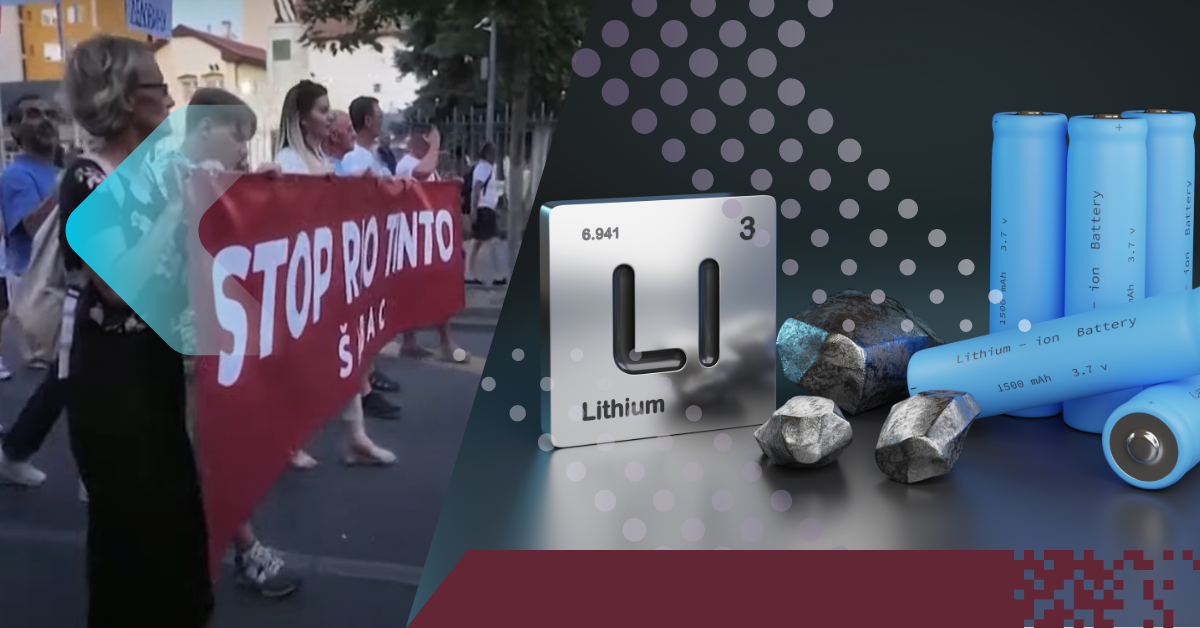
    Belgrade, Serbia – August 2024: Massive protests have erupted in Serbia over the proposed lithium mine in the Jadar Valley, spearheaded by British-Australian mining giant Rio Tinto. Approximately 25,000 people took to the streets of Belgrade, expressing their fury over the project’s potential environmental impact and raising concerns about the nation’s future.

    The controversy stems from the Serbian government’s reversal of a 2022 decision to halt the project, reinstating it two years later. This move has ignited widespread public outrage, with many fearing the mine will devastate local agriculture and natural habitats.

    Environmental and Political Concerns Fuel Opposition

    Climate expert Dr. Peter Tom Jones, director of the KU Leuven Institute for Sustainable Metals and Minerals, traveled to Serbia to investigate the strong opposition. He notes the paradox of Serbia, home to Europe’s largest lithium deposit, resisting a project vital for the continent’s transition to electric vehicles and renewable energy storage.

    Rio Tinto plans to invest $2.4 billion in the Jadar mine, potentially making Serbia a leading lithium producer. However, the project has faced fierce resistance from local groups like NAD Jadar, who cite fears of pollution and environmental destruction.

    Marijanti Babic, Rio Tinto’s country head in Serbia, claims the mine will be an “invisible mine,” operating primarily underground with minimal surface impact. She emphasises the company’s commitment to preserving local farming and utilising modern, electronically controlled operations.

    However, resistance groups allege intimidation and threats, claiming they will “defend this with their lives.” The project has become deeply politicised, with allegations of disinformation campaigns and distrust of both Rio Tinto and the Serbian government.

    Disinformation and Distrust Plague the Project

    Anthropologist Jena Vasilovich from the University of Belgrade points to a lack of transparency and democratic process as key drivers of public distrust. She also highlights past grievances with similar projects and a general dissatisfaction with the current political regime under President Vučić.

    Rio Tinto has established an information center and a “fake news wall” to combat what they claim is an organised disinformation campaign. They deny allegations of radioactivity, excessive acid use, and the existence of a large aquifer beneath the mine.

    The company has engaged in extensive community outreach, holding over 150 events in the Jadar Valley to address local concerns. They emphasize their commitment to environmental, social, and governance (ESG) standards and highlight the project’s potential economic benefits, including the creation of 20,000 jobs in the battery value chain.

    Economic Potential vs. Environmental Risks

    Companies like battery manufacturer 11 ES see the Jadar mine as a crucial step towards establishing a European lithium battery supply chain, reducing reliance on China. They highlight the project’s potential to drive economic growth and support the transition to climate neutrality.

    However, environmental groups remain skeptical, citing past mining industry practices and the potential for long-term environmental damage. They call for stricter regulations and greater transparency.

    The European Union sees the Jadar mine as a strategic asset, aiming to secure its lithium supply and reduce dependence on external sources. However, the project has become entangled with Serbia’s EU membership aspirations, adding another layer of complexity to the debate.

    A Nation Divided

    The Jadar lithium mine has divided Serbia, pitting economic potential against environmental risks and fueling political tensions. As the global demand for lithium surges, Serbia faces a critical decision that will shape its economic and environmental future.


  • Docville Cancels Lithium Mine Documentary Due to “Overestimated Sensitivity”

    Docville Cancels Lithium Mine Documentary Due to “Overestimated Sensitivity”

    The Docville documentary festival in Leuven has decided to cancel a planned screening and debate surrounding a controversial lithium mine in Serbia. The decision, described as being made “with a bit of a heavy heart,” was influenced by the subject’s sensitivity. The festival’s director, Frank Moens, confirmed to VRT NWS that this marks the first time such a cancellation has occurred at the festival.

    The cancellation applies to the debate titled “Ethical Mining: Is That Possible?” and the accompanying documentary, Not in My Country: Serbia’s Lithium Dilemma, directed by Peter Tom Jones of the KU Leuven Institute for Sustainable Metals and Minerals. The documentary explores the contentious development of a lithium mine in Serbia’s Jadar Valley.

    The European Union sees lithium mining as crucial for the green transition, especially for producing batteries for electric vehicles. However, Europe faces challenges in mining lithium domestically, with Serbia identified as a prime location. Yet, proposals to establish lithium mines have provoked significant opposition due to concerns over environmental impacts, such as polluted water, noise, and threats to biodiversity.

    Jones, who supports lithium mining as part of the green transition, highlights emotional and historical resistance within Serbia. Activists have voiced concerns about the mine’s potential to harm agriculture, water quality, and the local ecosystem, including threats to bees and other wildlife.

    Moens explained the difficulty of organising a balanced debate on the topic, as some parties refused to participate if specific individuals were included, and there were disagreements over moderators. Without a debate, the festival opted not to show the documentary. This contrasts with last year’s successful discussion about a Swedish lithium mine, which included perspectives from the indigenous Sami community. Moens admitted, “We probably underestimated it a bit.”

    Despite this setback, Docville still offers a wide range of documentaries, with the festival kicking off next Wednesday.

  • Cornwall to Host Prestigious International Mining Games in 2024

    Cornwall to Host Prestigious International Mining Games in 2024

    Cornwall has been selected to host the 47th International Mining Games, a prestigious event celebrating the global mining industry. The competition will take place over two days at the King Edward Mine Museum in Troon, near Camborne, on March 21 and 22, 2025. This marks the first time since 2012 that Cornwall has hosted the event, which attracts teams from around the world.

    The games, established in 1978 to honor the 91 miners who lost their lives in the Sunshine Mine disaster in the USA, feature seven challenging events. These include jackleg drilling, hand drilling, and gold panning, showcasing the skills and traditions of mining.

    This year, 45 teams from countries such as Australia, the USA, Canada, and Germany will compete. A local team, comprising students and alumni from the renowned Camborne School of Mines, will also participate, highlighting Cornwall’s deep-rooted connection to the mining industry.

    The women’s and co-ed competitions will be held on Friday, March 21, followed by the men’s and alumni competitions on Saturday, March 22, from 8:00 to 16:00 GMT.

    Carol Richards, a trustee of the King Edward Mine Museum, expressed excitement about hosting the event, stating it aligns with the museum’s mission to celebrate Cornwall’s mining heritage and promote education in geoscience, geology, and mining. She emphasized that the museum is an ideal venue to inspire interest in STEM (science, technology, engineering, and mathematics) fields.

    The International Mining Games not only honor the legacy of miners worldwide but also serve as a platform to foster global camaraderie and showcase the enduring significance of mining in modern society.

  • Uzbekistan at a Crossroads: Balancing Critical Minerals Boom with Environmental Sustainability

    Uzbekistan at a Crossroads: Balancing Critical Minerals Boom with Environmental Sustainability

    Uzbekistan stands on the brink of a transformative opportunity as global demand for critical minerals— essential for clean energy and high-tech manufacturing — surges at an unprecedented rate. With vast reserves of gold, copper, lithium, and rare earth elements, the nation has the potential to become a major global supplier. However, history warns that such resource wealth can be a double-edged sword, bringing both economic growth and environmental risks.

    The global shift toward electric vehicles, renewable energy, and digital technologies has created an insatiable appetite for critical minerals. Already a top 10 gold producer in 2024 and a growing exporter of copper, Uzbekistan is well-positioned to capitalize on its untapped mineral wealth. If managed wisely, this sector could attract billions in investment, create jobs, and elevate the country’s global economic standing.

    Yet, the risks are significant. The so-called ‘resource curse’ — where resource-rich nations experience economic booms followed by environmental degradation, corruption, and instability — looms large. Uzbekistan faces pressing challenges, including transboundary water pollution from Kazakhstan’s industrial waste, which contaminates the Syr Darya River. Heavy metals, arsenic, and other toxins threaten agriculture, food security, and public health. Without strict safeguards, expanding mining operations could turn this golden opportunity into an ecological disaster.

    The Aral Sea crisis, one of Central Asia’s most infamous environmental catastrophes, serves as a stark reminder of the consequences of mismanaged industrial development. Once the world’s fourth-largest lake, the Aral Sea has shrunk to 10% of its former size due to unsustainable water diversions for cotton production. This disaster devastated local economies, destroyed biodiversity, and left behind toxic dust storms that continue to harm public health.

    To avoid a similar fate, Uzbekistan must adopt strategic policies and sustainable practices. Key measures include establishing binding agreements with Kazakhstan to regulate industrial waste, enforcing strict environmental standards for mining projects, and investing in modern, water-efficient technologies. Regional cooperation, scientific research, and public engagement will also be critical to ensuring long-term prosperity.

    The decisions made today will shape Uzbekistan’s economic future and environmental legacy. By prioritizing responsible resource management, innovation, and cooperation, Uzbekistan can lead Central Asia in sustainable mining while becoming a global supplier of critical minerals for the clean energy transition.

  • Kazakhstan Defies Global Steel Production Decline with 6.5% Growth in 2024

    Kazakhstan Defies Global Steel Production Decline with 6.5% Growth in 2024

    Despite a global downturn in steel production and a 20% average drop in steel prices, Kazakhstan has emerged as a standout performer in 2024, achieving an 8th-place ranking worldwide with a 6.5% increase in production. This growth contrasts sharply with the global trend, where steel output fell by 0.8%, according to the World Steel Association. Major producers like China, the United States, Japan, and Russia recorded declines, while countries such as the UK, Argentina, and Pakistan saw even steeper drops.

    The global steel crisis has forced several major plants to halt operations, including Hyundai Steel’s Pohang-2 in South Korea, Acerinox in Spain, and Huachipato in Chile, which closed after 74 years of operation. Similarly, facilities in the US and Portugal have been temporarily idled.

    Kazakhstan’s success is attributed to strategic investments in domestic raw materials and the expansion of production at the Qarmet metallurgical plant. Yerbol Ismailov, Managing Director of Qarmet, highlighted that the company’s growth was anticipated, driven by $3.5 billion in investmentsand a focus on modernization. Qarmet produced over 3.5 million tons of steel in 2024, a 15% increase from the previous year, with plans to reach 5 million tons annually by 2028.

    However, challenges remain. Competing with China and Russia, which offer lower production costs, has been difficult. Qarmet has addressed this by reducing operational costs by 23.5%, lowering the price per ton of slab from 440∗∗to∗∗320, with a target of $280. The company has also implemented anti-corruption measures, digitized operations, and optimized procurement processes to enhance efficiency.

    Despite rumors of financial instability, Qarmet has invested heavily in worker safety, digitalization, and waste management, underscoring its commitment to sustainable growth.

  • Czech Republic Declares Manganese Project Crucial for Strategic Independence

    Czech Republic Declares Manganese Project Crucial for Strategic Independence

    Prague, Czech Republic – March 20, 2025 – The Czech Government has officially designated Euro Manganese’s Chvaletice manganese project as a strategic deposit under recent amendments to the Czech Mining Act, signaling the nation’s commitment to securing a reliable supply of this crucial raw material.

    This designation comes as the European Union seeks to strengthen its domestic supply chains for critical minerals, essential for electric vehicle batteries, renewable energy technologies, and various industrial applications.

    The Chromete Deposit at Chvaletice holds significant reserves of manganese, a metal vital for both the burgeoning green energy sector and traditional industries.

    “This is a significant milestone for Euro Manganese, and we appreciate the support and recognition of the importance of the Chvaletice manganese project,” said Martina Blahova, interim CEO of Euro Manganese. “This designation is a major catalyst for our development timeline and reflects the crucial role our project plays in establishing secure, sustainable raw material supply chains within the Czech Republic”.

    The strategic designation of the project is expected to significantly accelerate the permitting process with expedited approvals and streamlined bureaucracy. This will allow Euro Manganese to move forward with development more efficiently and meet the growing demand for manganese.

    Moreover, the classification unlocks access to potential state investment incentives, including grants, which will further bolster the project’s financial sustainability.

    This move signifies the Czech Republic’s proactive approach to addressing potential supply chain disruptions and securing its position in the growing global market for critical minerals.

    “The Chvaletice project is a prime example of how responsible mining can contribute to economic growth, energy independence, and the transition to a more sustainable future,” added Blahova.

    The company, which received Environmental and Social Impact Assessment approval in March 2024 and the Determination of Mining Lease permit in January 2025, is now well-positioned to bring this vital project online.

  • Uzbekistan and France Strengthen Economic Partnership Through Uranium Mining Initiatives

    Uzbekistan and France Strengthen Economic Partnership Through Uranium Mining Initiatives

    (Paris, France) – Uzbekistan and France are deepening their economic partnership, forging new trade agreements and collaborations that could reshape the energy landscape of Central Asia. French nuclear giant Orano signed a major agreement during President Shavkat Mirziyoyev’s state visit to Paris earlier this month, signifying a significant leap forward in uranium mining cooperation between the two nations.

    The details of the agreement, estimated to be worth billions of euros, remain undisclosed. However, sources indicate it involves Orano increasing its current uranium mining operations in Uzbekistan and potentially expanding into new areas. Uzbekistan, holding significant uranium reserves, is keen to develop its nuclear energy sector and position itself as a key supplier to international markets.

    This multi-million-euro deal builds on a series of agreements signed during President Mirziyoyev’s visit, totaling up to €12 billion in investments across diverse sectors like infrastructure, energy, and water management.

    “Uzbekistan views France as a key strategic partner in its drive to modernize its economy and transition towards cleaner energy sources,” said a senior Uzbek government official, speaking on condition of anonymity. “This partnership opens doors for significant technological transfer and investment in Uzbekistan’s nuclear sector.”

    French companies, including Suez and Orano, are already actively investing in Uzbekistan, contributing to key sectors like utilities and resource development. The France-Uzbekistan Chamber of Commerce, launched last year, further underscores the growing bilateral economic ties.

    Critics, however, raise concerns regarding the environmental and social impacts of expanding uranium mining operations in Uzbekistan. They call for greater transparency and stringent safety regulations to ensure responsible resource development and protect local communities.

  • Kazatomprom Reports Record Production and Revenue in 2024

    Kazatomprom Reports Record Production and Revenue in 2024

    Astana, March 20, 2025 – President Kassym-Jomart Tokayev recently held a meeting with Meirzhan Yusupov, Chairman of the Board of JSC “National Atomic Company Kazatomprom.” The discussion revolved around the company’s 2024 operational results, as well as its short- and mid-term goals.

    During the meeting, it was reported that uranium production exceeded 23,000 tons last year, with over 16,600 tons sold across the group. Kazatomprom’s consolidated revenue reached a record-breaking 1.8 trillion tenge, marking a 26% increase from 2023. Tax contributions to the national budget surged to 720 billion tenge, representing a 58% rise compared to the previous year.

    The President was briefed on global market developments, new contracts for the supply of natural uranium concentrate, and progress on several investment projects. Notably, the Ulba-TVS plant achieved its full production capacity of 200 tons of low-enriched uranium annually in 2024, marking a significant milestone for the industry.

    A key point of discussion was Kazatomprom’s new development strategy for 2025-2034. This initiative focuses on expanding and efficiently utilizing the nation’s mineral resource base. Licenses for uranium exploration in promising areas with an estimated resource potential of 170,000 tons were acquired last year.

    Mr. Yusupov highlighted recent international collaborations, including agreements with Tajikistan on rare and rare-earth metal processing, with France on workforce training for the nuclear sector, and with Mongolia and Jordan on joint uranium exploration projects.

    Additionally, the President was informed about Kazatomprom’s socially significant initiatives aimed at regional development and support. In 2024, over 3.7 billion tenge was allocated for these projects.

    At the conclusion of the meeting, President Tokayev set forth tasks to further enhance Kazatomprom’s operations and its participation in implementing socially impactful projects.

  • Aurania Resources’ potential gold discovery in France

    Aurania Resources’ potential gold discovery in France

    Aurania Resources CEO Keith Barron recently showcased a remarkable quartz sample containing visible gold from Brittany, France, at the PDAC convention in Toronto. The sample boasts an impressive 46% gold content, a grade Barron likened to legendary discoveries such as the Croesus mine in Ontario. This discovery has sparked significant interest, with Aurania Resources applying for concessions in Brittany’s high-grade gold area and expecting permits by early summer. The project could also lead to a polymetallic opportunity, with gold revenue potentially funding the extraction of byproducts like antimony.

    Barron, who holds a 43% stake in Aurania, is deeply invested in the company’s success, both financially and personally. He expressed his determination to make the venture profitable, saying, “If the company doesn’t make money, I don’t make money, and I intend to make a lot of money”.

    You can find more details in the Northern Miner article or watch the PDAC JV video.

  • Kazkahmys Halts Operations Over Safety Concerns

    Kazkahmys Halts Operations Over Safety Concerns

    Kazakhmys, the Central Asian mining giant, has announced a temporary shutdown of its higher-risk production facilities across Kazakhstan for a comprehensive safety review. The company will be halting operations at various sites in stages, following a pre-determined schedule.

    This decision comes after management identified a need to strengthen industrial safety and workplace protections.

    Phased Shutdown Schedule:

    • March 20: Eastern Jezkazgan, Abyz, Sayak, Konirat mines; Nurkazgan, Karagaylin, Balakhsh concentrating mills; repair and maintenance, construction, foundry-mechanical plant, and energy repair specialists’ management units.
    • March 21: Southern Jezkazgan, Akbasta, Khachikong, Shatyrkol, Zaysan mines.
    • March 22: Western Jezkazgan mine.
    • March 23: Zhylandi mine.
    • March 24: Jezkazgan concentrating mill.
    • A review is ongoing at the Jomaart mine, which was temporarily halted earlier.

    A dedicated commission has been established to meticulously inspect all operations to ensure compliance with safety regulations. Operations at each site will only resume after all identified violations are rectified and safe working conditions are confirmed.

    “Kazakhmys is fully committed to the well-being of its employees,” said Arman Tleukenenov, an official representative of the Kazakhmys Corporation. “During this temporary shutdown, all employees will continue to receive their full salaries. This demonstrates our dedication to labour rights and workplace safety.”

    Kazakhmys Group is determined to fortify its safety protocols across all its facilities. This initiative will involve strengthening oversight to ensure compliance with all regulations and implementing additional measures to enhance working conditions.