Website: Eurasia.com

  • European Commission Enhances Raw Materials Knowledge Platform

    European Commission Enhances Raw Materials Knowledge Platform

    The European Commission’s Joint Research Centre (JRC) has significantly upgraded the Raw Materials Information System (RMIS), reinforcing its commitment to providing comprehensive data on non-fuel, non-agriculture primary raw materials and secondary raw materials.RMIS – Raw Materials Information System+8RMIS – Raw Materials Information System+8RMIS – Raw Materials Information System+8

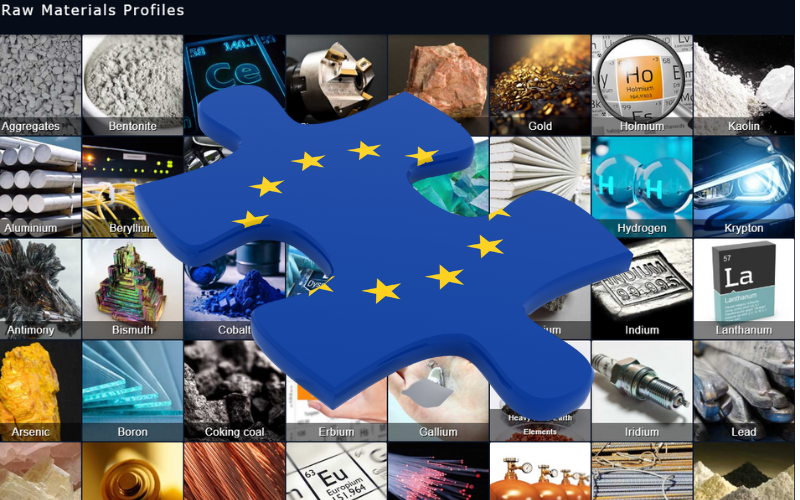
    RMIS serves as the Commission’s primary knowledge platform, offering in-depth profiles of various raw materials, including lithium, cobalt, and nickel. These profiles deliver critical insights into material properties, applications, supply chains, and sustainability considerations, supporting informed decision-making across industries and policy sectors.RMIS – Raw Materials Information System

    In a recent development, the JRC published a report focusing on enhancing the recycling and recovery of critical and strategic raw materials in vehicles. This report addresses the growing demand for raw materials driven by the expansion of electric vehicle production and renewable energy technologies, emphasizing the need for responsible sourcing and recycling practices to mitigate environmental and social impacts.OUP Academic+7RMIS – Raw Materials Information System+7RMIS – Raw Materials Information System+7RMIS – Raw Materials Information System

    The RMIS platform also features analyses of value chains and demand forecasts for critical raw materials in strategic sectors such as renewables, e-mobility, energy, ICT, and aerospace & defense. These analyses assist stakeholders in understanding material flows and anticipating future supply and demand dynamics.RMIS – Raw Materials Information System

    Furthermore, RMIS supports the European Union’s objectives for strategic autonomy by promoting circularity in critical raw materials. The platform provides data and indicators on material flows, recycling rates, and supply chain dependencies, aiding in the development of policies and strategies to reduce reliance on non-EU sources.JRC Publications+9OUP Academic+9RMIS – Raw Materials Information System+9

  • Ukraine’s Rare Earths: A Strategic Contest Between the US and the EU

    Ukraine’s Rare Earths: A Strategic Contest Between the US and the EU

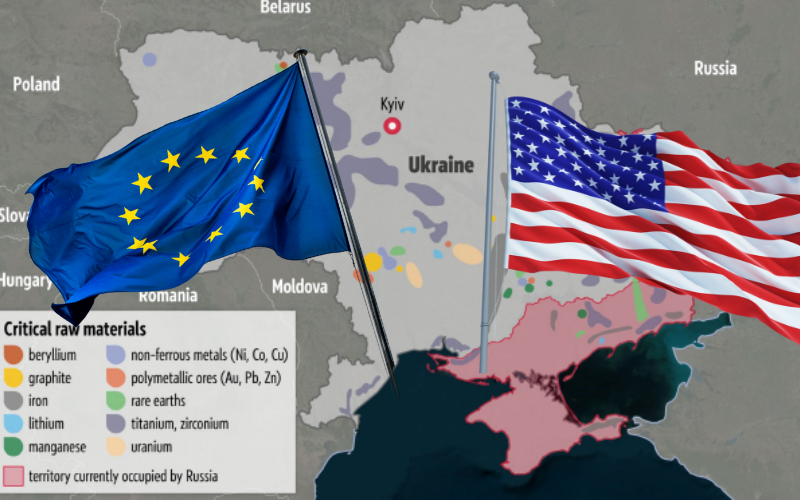
    As Ukraine grapples with the ongoing conflict with Russia, its vast mineral resources have become a focal point in the global geopolitical landscape. The U.S. and the European Union (EU) are both eyeing these valuable reserves, especially Ukraine’s rare earths, which could play a pivotal role in strengthening their strategic autonomy and reducing dependence on foreign powers such as China.

    The Trump administration in the United States has proposed a deal to Ukraine: in exchange for continued U.S. military support against Russia’s aggression, the U.S. would secure a significant portion of Ukraine’s rare earth reserves, estimated at $500 billion. Ukraine, a candidate for EU membership, is also at the center of European strategic plans, with a 2021 agreement aimed at better integrating critical raw materials into EU supply chains. The growing competition for these minerals highlights the EU’s concerns over its current reliance on China, which supplies 98% of the rare earths imported by the union.

    A Growing Geopolitical Challenge

    In a February 2025 interview, U.S. President Donald Trump outlined his vision for securing $500 billion in Ukrainian rare earths as compensation for ongoing U.S. military assistance. Just days earlier, Ukrainian President Volodymyr Zelenskyy expressed his willingness to negotiate mineral deals with the U.S. as part of a “victory plan” against Russia, which included critical minerals. The Ukrainian government also revealed that it was negotiating deals with several Western allies, including Britain, France, and Italy, to exploit Ukraine’s critical materials.

    However, the situation is complicated by Russia’s occupation of significant portions of Ukrainian territory. According to Ukrainian officials, 20% of the country’s minerals and half of its rare earth deposits are under Russian control, while Soviet-era mineral surveys are outdated and fail to account for the economic viability of mining.

    US-Ukraine Talks: A Stalled Deal

    Efforts to formalize a deal between Ukraine and the U.S. on rare earths hit a snag at the Munich Security Conference in February 2025, when Zelenskyy rejected a proposal to hand over 50% of Ukraine’s rare earth reserves in exchange for military support. While the Ukrainian president agreed to continue talks with the U.S., he emphasized the need for more comprehensive security guarantees. Former Ukrainian Foreign Minister Dmytro Kuleba also stated that the U.S. had no legal claim to Ukraine’s minerals, which were part of a broader strategic partnership with the EU signed in 2021.

    Tensions escalated further when Zelenskyy and Trump met at the White House on February 28, 2025. A public argument ensued, and Zelenskyy was reportedly asked to leave, signaling a breakdown in negotiations. By mid-March 2025, the White House announced it had abandoned the idea of a minerals deal, shifting its focus to long-term peace initiatives instead.

    The EU’s Strategic Interest in Ukrainian Rare Earths

    The EU, for its part, sees Ukraine’s mineral wealth as a critical element in its efforts to reduce dependency on China. The EU’s Critical Raw Materials Act, adopted after Russia’s invasion of Ukraine, aims to address the vulnerabilities exposed by the conflict, particularly in sectors like electric vehicles and renewable energy, where raw materials like nickel and lithium saw significant price increases.

    Ukraine holds some of Europe’s largest reserves of essential minerals, including lithium, graphite, titanium, and rare earths such as beryllium, gallium, and uranium. These materials are critical for the EU’s green transition and technological advancement. Ukraine’s minerals could potentially help diversify the EU’s supply chains and bolster its self-sufficiency in critical raw materials, reducing reliance on authoritarian regimes.

    In 2021, the EU and Ukraine signed a strategic partnership to foster greater cooperation on raw materials, with a focus on integrating Ukraine’s mining sector into Europe’s battery value chains. However, the Ukrainian mining sector remains underdeveloped, and significant investment is required to unlock its potential. The EU is also concerned with Ukraine’s need to align its mining regulations with European standards as part of its ongoing enlargement negotiations.

    Ukraine’s Growing Role in Global Mineral Supply

    Ukraine ranks among the top 10 global suppliers of mineral resources, with its mining sector contributing approximately 10% to the country’s GDP and 33% of exports before the war. Mining income has more than doubled since the conflict began, highlighting the sector’s strategic importance. Ukraine also benefits from a skilled workforce, relatively low labor costs, and well-developed infrastructure, making it an attractive destination for mining investments.

    Experts suggest that the development of Ukraine’s mining sector, backed by either U.S. or EU support, could play a crucial role in strengthening Ukraine’s economy and defense capabilities while also contributing to Western self-sufficiency and economic security. The prospect of accessing Ukrainian resources could help democratic countries reduce their dependence on non-democratic regimes, particularly in the energy and technology sectors.

    The Road Ahead: US vs. EU Influence

    As the global competition for Ukraine’s rare earths intensifies, both the U.S. and the EU have stakes in shaping the future of Ukraine’s mining sector. While Ukraine remains a candidate for EU membership, the question remains: which power stands to benefit the most from these valuable resources? Much will depend on how Ukraine navigates its relationships with both powers, as well as the investment strategies and regulatory frameworks that will shape its mineral sector in the years to come.

    The geopolitical competition over Ukraine’s rare earths underscores the growing importance of critical raw materials in global power dynamics. As Ukraine continues to recover from the war, its vast mineral reserves could become a key asset for the EU’s quest for strategic autonomy and greater independence from external sources.
  • Uzbekistan’s Critical Raw Materials Sector Gains Momentum Amid U.S. Engagement

    Uzbekistan’s Critical Raw Materials Sector Gains Momentum Amid U.S. Engagement

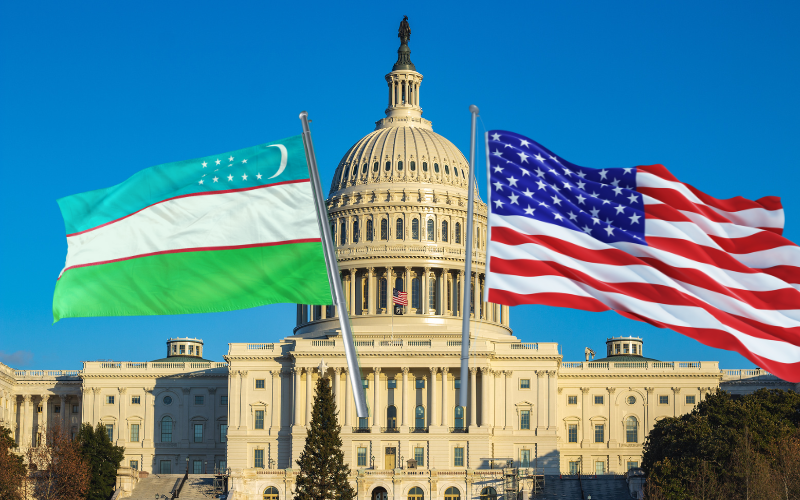
    In a significant stride towards fostering U.S.-Uzbekistan relations, the recent Congressional Breakfast titled “Uzbekistan – Trade, Investment & U.S. Relations” brought together key stakeholders to discuss the evolving economic landscape of Central Asia. The event highlighted Uzbekistan’s ongoing reforms under President Shavkat Mirziyoyev, with a particular focus on the mining and critical minerals sector—a cornerstone for sustainable development and secure supply chains.

    One of the pivotal moments of the gathering was the announcement by Congressman Trent Kelly regarding the introduction of H.R. 2329, a bill aimed at extending Permanent Normal Trade Relations (PNTR) to Uzbekistan. This legislative move, now referred to the House Committee on Ways and Means, underscores the growing importance of Uzbekistan as a strategic partner in the global supply chain for critical raw materials.

    Congresswoman Carol Miller’s recent visit to Central Asia, where she engaged with Presidents Mirziyoyev and Tokayev, further emphasized the region’s potential as a unified partner for the United States. Her presence at the event symbolized the collaborative spirit needed to address challenges in securing critical resources and ensuring regional stability.

    Bridge Capital Partners, in collaboration with Cove Capital LLC, has been at the forefront of these efforts, leveraging American expertise to unlock Central Asia’s potential. Since 2023, Cove Capital has deepened its engagement in the region, advancing initiatives in critical sectors such as minerals, infrastructure, and sustainable development. These partnerships are not only fostering economic growth but also building trusted, long-term relationships across Uzbekistan and Kazakhstan.

    As Uzbekistan continues to open its economy, the mining and critical minerals sector stands out as a beacon of opportunity. The reforms and investments in this area are not just reshaping the nation’s economic trajectory but also positioning it as a key player in the global push for sustainable and secure raw material supply chains.

  • ​DOCVILLE Festival Cancels ‘Not In My Country’ Documentary Amid Death Threats and Anti-Mining Protest Controversy

    ​DOCVILLE Festival Cancels ‘Not In My Country’ Documentary Amid Death Threats and Anti-Mining Protest Controversy

    The DOCVILLE documentary festival in Leuven has canceled two films following death threats and intimidation. One of the withdrawn documentaries is “Not In My Country, Serbia’s Lithium Dilemma,” which examines the extensive protests in Serbia against the proposed Jadar lithium mine. The second film, “Russians at War,” faced criticism for being perceived as pro-Russian propaganda.kuleuven.sim2.be

    “Not In My Country” delves into the environmental and geopolitical tensions surrounding the Jadar Valley lithium project. The documentary raises questions about potential Russian hybrid warfare techniques influencing opposition since mid-2020, a concern also highlighted in a Wall Street Journal report.kuleuven.sim2.be

    DOCVILLE’s director, Frank Moens, expressed surprise at the unprecedented situation, noting that in the festival’s 21 editions, there had never been a need to withdraw films. He remarked, “I believe it says something about the spirit of the times. Everyone is just shouting in their own bubble.”

    Previously, KU Leuven Rector Prof. Luc Sels expressed sadness over the missed opportunity for an evidence-based discussion on the science and technology of the Jadar lithium project. The film’s creators aimed to facilitate a factual conversation about the project’s scientific and technical aspects, separate from the geopolitical controversies and mass demonstrations against Serbia’s regime. They sought to address topics central to the film but often overlooked by opponents, such as the differences between lithium minerals and other ores, comparisons between jadarite and spodumene, environmental considerations of jadarite extraction, and the potential development of a Serbian mine-to-electric vehicle value chain.

    Ironically, the campaign against “Not In My Country” has heightened interest in the documentary, leading to increased views, reports, and interviews. This surge in attention underscores the complexities and sensitivities surrounding discussions of mining projects and environmental activism in Europe.

  • European Commission Throws the Door Wide Open to Mining

    European Commission Throws the Door Wide Open to Mining

    The European Commission has identified 47 strategic projects to help the EU become self-sufficient in critical raw materials. More than half of these involve mining plans, several of which are controversial.

    In its effort to reduce Europe’s reliance on external suppliers—particularly countries like China—the European Commission wants at least 10 percent of critical raw materials used within the EU to be sourced domestically by 2030. Additionally, it aims for 40 percent of these materials to be processed inside Europe, while no more than 15 percent should come from any single non-EU country. To support this goal, the Commission has selected 47 “strategic” projects that will benefit from funding and expedited permits. Over half focus on extracting raw materials from the ground, ranging from Norway to Sweden, Germany, and Spain.

    “It’s crucial for Europe’s independence to mine more of its own lithium, nickel, and other metals,” a European Commission Vice President explains. “We can’t keep relying on third parties for such vital resources.” Some of the proposed mines have already stirred controversy—for example, certain lithium mining projects—due to concerns over environmental impact, water usage, and potential harm to local communities. Nevertheless, the Commission views these initiatives as essential for the EU’s green transition and for manufacturing batteries, solar panels, and wind turbines.

    Two Billion Euros for Drilling and Digging

    Under the EU’s plan, two billion euros from the Recovery and Resilience Facility will be allocated to mining initiatives. This includes both developing new mines and expanding or modernizing existing sites. One example is the proposed development of Europe’s largest lithium deposit in the Czech Republic, along with expansions of nickel and cobalt mines in Finland. The Commission also wants to promote the recycling of batteries, electronics, and other products so that precious metals can be recovered and reused. Additionally, the plan involves building strategic stockpiles of critical raw materials, similar to how the EU manages its gas reserves.

    Despite these efforts, experts caution that the EU’s aspirations for raw materials may be overly ambitious. “We’re not going to be completely self-sufficient,” says one raw materials analyst. “Demand for these metals is skyrocketing because of the energy transition and digitalization, so we won’t be able to extract enough on our own.” According to the analyst, the best strategy is to diversify supply chains and forge stable partnerships with countries such as Australia, Canada, and Chile—though this will require making Europe a more appealing trade partner, especially since China has been heavily investing in those regions.

    The Commission acknowledges that the new raw materials plan is not a cure-all. “Still,” says a spokesperson, “it’s a critical step toward reducing our dependence on a single supplier.”

  • Resistance Hinders Europe’s Push for Critical Raw Material Mining

    Resistance Hinders Europe’s Push for Critical Raw Material Mining

    The European Union’s ambitions to boost domestic mining for critical minerals like lithium, essential for its climate transition goals, are encountering fierce resistance from environmental groups and local communities. Despite the EU’s Critical Raw Material Act (CRMA) targeting self-sufficiency in metals such as lithium and cobalt, delays and protests threaten to derail projects across member states, raising concerns about the bloc’s ability to meet its green energy targets.

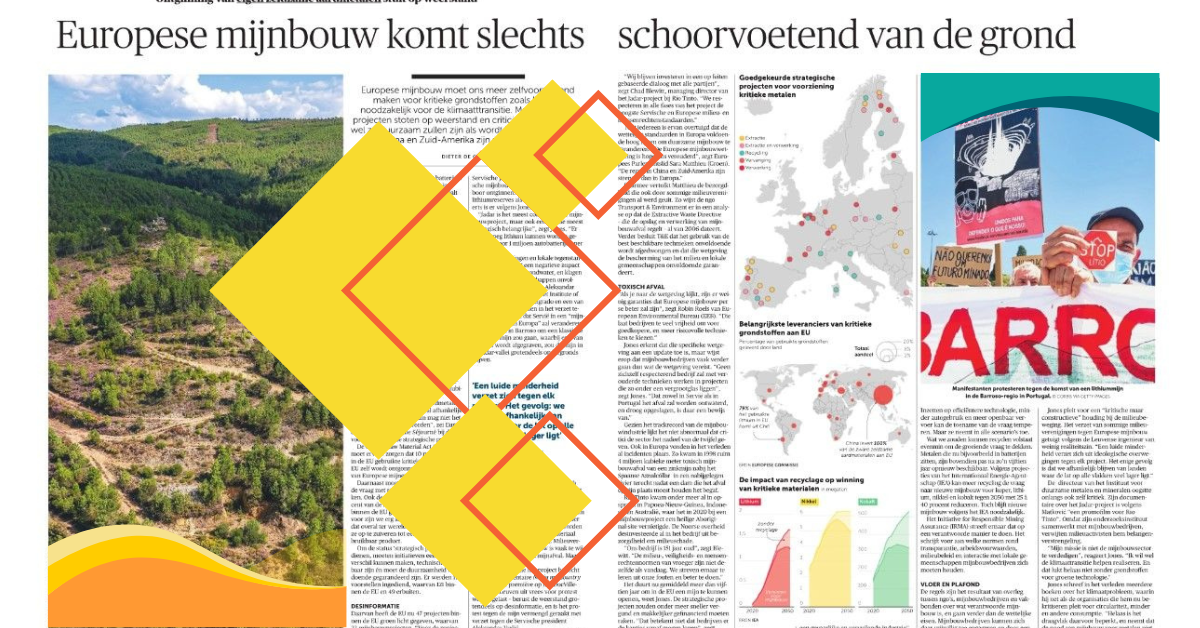
    The CRMA, adopted in 2023, aims to reduce reliance on imports from China and other nations by fast-tracking permits for strategic mining projects. However, activists argue these initiatives prioritize industrial interests over ecological preservation. In Portugal’s Barroso region, for instance, plans to extract lithium—a key component in electric vehicle batteries—have sparked demonstrations, with protesters holding signs declaring “No to the mine” and “Stop Lithium.” Similar tensions exist in Spain’s Serra da Lousã area, where locals fear deforestation and water contamination from mining operations.

    With over 200 mining projects stalled across Europe, the continent’s path to energy independence remains fraught. As activists chant “Just Transition, Not Just Extraction,” the EU must navigate a precarious balance between securing raw materials and safeguarding its green credentials.

    In recent years, Australia has overtaken France and Portugal in terms of lithium production. Is that a problem? From the perspective of the European Commission, it is one of the first “warning signs” regarding the supply of critical raw materials. Lithium is crucial for the batteries used in electric vehicles and energy storage systems, and its demand is expected to increase significantly in the coming decades.

    The European Commission’s Vice-President Frans Timmermans recently warned about this situation during a meeting with Dutch ministers. He stated: “This is not just an issue for the Netherlands; it affects all of Europe.” The commission aims to ensure that Europe can produce sufficient amounts of these materials domestically to meet its needs.

    Several factors make it challenging for Europe to secure its supply of critical raw materials. One reason is the high environmental standards in Europe, which often lead to delays or cancellations of mining projects. Additionally, there is significant public opposition to mining activities, particularly in densely populated areas.

    These challenges have led to calls for increased domestic mining in Europe. Critics argue that Europe’s reliance on imports from countries like China poses risks. Chinese lithium mining has been criticized for its environmental impact, leading some European policymakers to push for greater self-sufficiency.

    The Critical Raw Materials Act (CRMA), adopted by the EU in 2023, aims to address these concerns by promoting sustainable mining practices and reducing dependency on imports. However, implementing this act faces numerous obstacles, including regulatory hurdles and public resistance.

    One challenge is the lack of political consensus on mining projects. In many European countries, mining is seen as environmentally harmful, and local communities often oppose new mines. This opposition can delay or derail projects, even when they are deemed necessary for the transition to renewable energy.

    Another factor is the limited availability of suitable mining sites within Europe. Many potential sites are located in protected areas or regions with strict environmental regulations. This makes it difficult to find locations where mining can be conducted without significant environmental impact.

    Despite these challenges, some European countries are taking steps to increase their domestic production of critical raw materials. For example, Germany has launched several initiatives to explore and develop domestic mining opportunities. Similarly, Sweden and Finland are investing in research and development to improve mining technologies and reduce environmental impacts.

    However, critics argue that these efforts are insufficient. They point out that the pace of development is too slow, and current projects may not be able to meet future demand. There are also concerns about the social and economic impacts of mining, particularly in rural areas where mines are often located.

    To address these issues, the European Commission has proposed several measures, including financial incentives for sustainable mining projects and stricter regulations on imported materials. The goal is to create a balanced approach that ensures both environmental protection and resource security.

    In conclusion, while Europe is making progress towards greater self-sufficiency in critical raw materials, significant challenges remain. Balancing environmental concerns with the need for resources will require innovative solutions and strong political will. Without decisive action, Europe risks becoming increasingly dependent on foreign suppliers, which could undermine its ability to achieve its climate goals.

  • Portugal’s Battery Value Chain Accelerates with Five Game-Changing Developments

    Portugal’s Battery Value Chain Accelerates with Five Game-Changing Developments

    Portugal has taken monumental steps in establishing itself as a key player in the global battery value chain. Five major initiatives have been announced recently, marking a transformative moment for the nation’s green energy ambitions. Here’s a roundup of the latest developments:

    1️⃣ CALB Confirms Gigafactory Plans in Sines
    The world’s fourth-largest battery producer, CALB Group Co., Ltd., has officially approved the Final Investment Decision (FID) for a gigafactory in Sines. Construction of the initial 15 GWh facility is set to commence this year, with production expected by 2028. Read more here.

    2️⃣ Savannah Resources Resumes Field Work in Boticas
    Savannah Resources PLC has restarted operations at its Boticas concession. With plans to begin production of Europe’s largest lithium spodumene resource by 2027, the project is gaining momentum. Currently, a team of 50—mostly local workers—is actively involved. Discover more.

    3️⃣ Lifthium Energy Moves Closer to Refinery Project in Estarreja
    Lifthium Energy has identified Estarreja as its preferred location for a lithium refinery, signaling substantial progress. The company is already nearing completion of a €35 million pilot plant and an advanced R&D lab in Coimbra. Details available here.

    4️⃣ DST Group Partners with CALB on Battery Recycling and Storage
    DST Group from Braga has entered into a partnership with CALB, focusing on battery recycling and storage solutions, further strengthening Portugal’s green energy initiatives. Read about it here.

    5️⃣ Battery Cluster Portugal Gains Official Recognition
    Battery Cluster Portugal, which includes CALB, Savannah, Lifthium, DST, and over 50 other entities, has been designated as one of Portugal’s four key Competitiveness Clusters for 2024-2030. This recognition underscores the sector’s strategic importance. Learn more.


    These developments come at a pivotal time, as the European Commission unveils its new industrial plan to accelerate transformation in the automotive sector—a sector supporting nearly 15 million high-quality jobs. Savannah’s progress has been particularly endorsed by the Portuguese State, with the Ministry of Environment emphasizing the urgency of advancing the sector for national and European growth.

    Portugal’s battery value chain is not just about energy; it represents a broader shift towards economic sustainability and global competitiveness. The journey is challenging, but these milestones prove that the future is bright.

  • Europe names Savannah’s Barroso Lithium Project a ‘Strategic’ Asset

    Europe names Savannah’s Barroso Lithium Project a ‘Strategic’ Asset

    On March 26, 2025, the European Commission announced in Brussels that the Barroso Lithium Project, developed by Savannah Resources in Portugal, has been designated as one of 47 “Strategic” projects under the Critical Raw Materials Act (CRMA). This designation is given to projects that are deemed technically feasible within a reasonable timeframe and have a high likelihood of achieving their projected production volumes sustainably.

    This recognition places 𝐭𝐡𝐞 𝐏𝐫𝐨𝐣𝐞𝐜𝐭 𝐚𝐦𝐨𝐧𝐠 𝐣𝐮𝐬𝐭 47 𝐩𝐫𝐨𝐣𝐞𝐜𝐭𝐬 𝐚𝐜𝐫𝐨𝐬𝐬 𝐄𝐮𝐫𝐨𝐩𝐞 𝐜𝐡𝐨𝐬𝐞𝐧 𝐟𝐨𝐫 𝐭𝐡𝐞𝐢𝐫 𝐜𝐨𝐧𝐭𝐫𝐢𝐛𝐮𝐭𝐢𝐨𝐧 𝐭𝐨:

    • Securing the EU’s strategic raw material supply
    • Meeting high environmental, social, and governance (ESG) standards
    • Demonstrating technical feasibility and cross-border benefits

    As a Strategic project, the Barroso Lithium Project will be eligible for coordinated support from the Commission, Member States, and financial institutions to aid in accessing finance and connecting with relevant off-takers. The project will also benefit from streamlined permitting processes and a commitment to upholding environmental, social, and governance standards. Savannah Resources will work with the European Commission to take full advantage of the opportunities provided by this designation, while continuing work on the Definitive Feasibility Study and aiming to begin production in 2027.

    Emanuel Proença, CEO of Savannah Resources, expressed pride in this recognition of the company’s years of work on the technical, social, and economic aspects of the project, which has created local jobs and contributed to the sustainable development of the region.

    The European Commission has identified the 47 projects, including Barroso Lithium, as significant in securing a domestic supply of strategic raw materials for the green and digital transitions, as well as the aerospace and defense sectors. The CRMA-listed raw materials include Lithium, Nickel, Cobalt, Copper, Manganese, Graphite, and Germanium.

  • Talga Group’s Swedish Graphite Project Earns “Strategic Project” Status Under EU’s Raw Materials Act

    Talga Group’s Swedish Graphite Project Earns “Strategic Project” Status Under EU’s Raw Materials Act

    Stockholm, Sweden – Talga Group has announced a significant milestone: its Swedish graphite project has been designated a “Strategic Project” under the European Commission’s newly enacted Critical Raw Materials Act (CRMA). This designation underscores the project’s crucial role in securing Europe’s supply of essential materials for its green and digital transitions.

    Talga Group Ltd (ASX:TLG), a battery materials and technology company, has achieved a significant milestone with its natural graphite mine in northern Sweden receiving “Strategic Project” status under the European Commission’s Critical Raw Materials (CRM) Act.

    This designation is a major endorsement of the project’s strategic importance in securing Europe’s battery material supply chain, and is expected to significantly accelerate Talga’s efforts to finalize project financing and development.

    The CRM Act, designed to enhance the EU’s autonomy in critical raw materials vital for clean energy technologies, offers Strategic Projects a range of benefits. For Talga, this includes:

    • Improved Access to Financing: A dedicated subgroup within the CRM Board will coordinate EU, national, private, and public financial institutions to facilitate project financing.
    • Enhanced Appeal to Partners and Customers: The designation strengthens Talga’s position in ongoing discussions with debt providers, strategic investors, customers, and government-backed funding programs.
    • Expedited Permitting: Streamlined approvals will reduce project timelines and mitigate risks.

    “The Strategic Project status validates Talga’s natural graphite mine and our vital role in sustainable battery materials,” stated Martin Phillips, CEO of Talga Group. “Graphite is critical to the lithium-ion battery industry, and increased EU capacity to extract and produce battery-grade graphite is essential for Europe’s resilience and competitiveness. We look forward to engaging with new opportunities under the CRMA to deliver Europe’s first fully integrated active anode supply.”

    Talga’s Vittangi Anode Project aims to produce 19,500 tonnes per annum of Talnode®-C, a natural graphite battery anode material sourced from Talga’s wholly-owned graphite resources in Sweden. The project boasts a low emission footprint, vertical integration from mine to anode, and a resource base capable of supporting expansion to over 100,000 tonnes per annum.

    The Company is actively pursuing customer offtake agreements and project financing structures as it progresses towards a Final Investment Decision. This “Strategic Project” status significantly strengthens Talga’s position in the European battery materials market and underscores its crucial role in the region’s transition to sustainable energy.

    Mark Thompson, Founder & Managing Director of Talga Group Ltd commented, “This designation is a testament to the strategic importance of our Swedish project in securing a sustainable and reliable supply of graphite for Europe. We are committed to contributing to the EU’s ambitious green transition goals.”

    Adding to the excitement, he also revealed that they are embarking on a series of meetings focused on securing new funding opportunities, engaging with potential customers, and exploring the onshoring of EU battery materials. “I am on a plane tomorrow for a range of meets including new funding opportunities, new customers and onshoring of EU battery materials!”.

    This news comes at a crucial time as Europe intensifies its efforts to reduce reliance on foreign suppliers for critical raw materials and build a robust domestic battery supply chain. Talga’s “Strategic Project” status is expected to accelerate the development and implementation of their Swedish graphite operation, contributing significantly to the EU’s strategic autonomy and sustainability goals.

  • Oyu Tolgoi Underground Mine Celebrates Milestone with Mongolian President

    Oyu Tolgoi Underground Mine Celebrates Milestone with Mongolian President

    Two years after the landmark announcement marking the beginning of underground production at Oyu Tolgoi LLC / Оюу толгой ХХК copper mine in Mongolia, the site is celebrating monumental progress. On a momentous occasion, President Khurelsukh Ukhnaa joined mine operators at the 1,300-metre underground site, standing as a testament to rapid advancements and collaboration.

    “It’s an amazing feat of engineering, technological advancement and safety standards,” stated a representative from Oyu Tolgoi, emphasizing the project’s complexity and success. The company also announced the establishment of the South Gobi Underground Mass Mining Institute, aimed at further developing local skills and knowledge in the mining sector.

    Beyond its economic contributions, Oyu Tolgoi is actively involved in promoting sustainable practices in Mongolia. A key initiative is the company’s commitment to plant up to 100 million trees, supporting President Khurelsukh’s “One Billion Trees” initiative to combat desertification. This ambitious project underscores OT’s commitment to environmental stewardship and its dedication to mitigating the impacts of climate change.

    President Khurelsukh Ukhnaa’s visit underscored the government’s continued support for the project, recognizing its significance to the nation’s economy. “My huge thanks again to President Khurelsukh Ukhnaa and other Members of the Parliament as well as Cabinet for your visit and continued support,” expressed a representative from OT, highlighting the importance of the partnership.

    The year 2025 is anticipated to be a pivotal year for Oyu Tolgoi, with further expansion and increased production expected. The mine’s success is attributed to the collaborative efforts of its workforce, the government, and partnerships with hundreds of local suppliers.