Website: Eurasia.com

  • Gold Mining Operations Expand at Besapantau Deposit in Uzbekistan

    Gold Mining Operations Expand at Besapantau Deposit in Uzbekistan

    In a significant development for Uzbekistan’s mining sector, the Besapantau deposit in the Tamdyn district is emerging as one of the most promising gold mining sites in the country. The deposit, which is part of the Central Mining Administration, is currently engaged in the extraction of gold-bearing ore, marking a new chapter in the region’s mineral resource exploitation.

    Dilshod Jumaniazov, the head of the Besapantau mine, provided detailed insights into the ongoing operations:

    “Currently, ore extraction is underway at the Besapantau and Balpantau quarries, which are part of the mine complex. These sites present complex geological structures, requiring specialized mining techniques. Particular attention is being paid to drilling and blasting operations to ensure efficient and safe extraction.”

    The scale of operations at Besapantau is impressive, with approximately 60 units of heavy mining equipment deployed across the site. This includes state-of-the-art machinery such as Epiroc drilling rigs, Hitachi, Komatsu, and Liebherr hydraulic excavators, as well as Komatsu and Caterpillar dump trucks. This extensive array of equipment underscores the significant investment and technological advancement in the project.

    The extracted ore is transported via railway to Hydrometallurgical Plant No. 2 for processing, integrating the mine into the broader mineral processing infrastructure of the region. This logistical setup ensures efficient handling and processing of the extracted resources.

    Looking towards the future, the Besapantau project is set for substantial expansion:

    • The Besapantau quarry is projected to reach dimensions of approximately 1,750 meters in length, 1,050 meters in width, and 300 meters in depth.
    • The Balpantau quarry will extend to about 1,370 meters in length, 1,350 meters in width, and 200 meters in depth.

    These expansions signify the long-term potential and commitment to the project. Jumaniazov further revealed that the mine has set an ambitious target of extracting over 12 million tons of ore annually, highlighting the scale of operations and the deposit’s significance to Uzbekistan’s mining sector.

    The development of the Besapantau deposit is expected to play a crucial role in boosting precious metal production at the Navoi Mining and Metallurgical Combine, one of Uzbekistan’s largest industrial enterprises. This increase in production capacity aligns with the country’s broader strategy to leverage its mineral resources for economic growth and development.

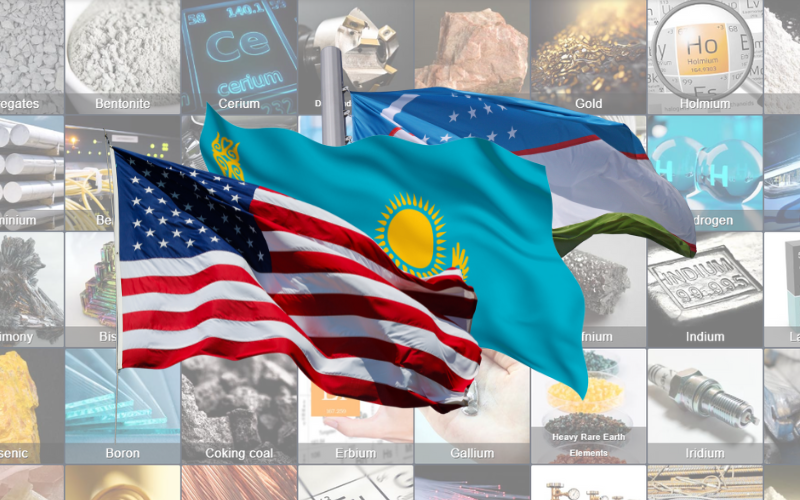
    This expansion comes at a time when global gold production is facing challenges. According to recent data, Kazakhstan, a neighboring country and significant gold producer, is expected to see a decline in gold production with a Compound Annual Growth Rate (CAGR) of -3.38% between 2023 and 2027[6]. In this context, Uzbekistan’s investment in expanding its gold mining operations at sites like Besapantau could potentially position the country to fill gaps in the global gold supply.

    The Besapantau project represents a significant step forward in Uzbekistan’s mining industry, showcasing the country’s commitment to modernizing its mineral extraction capabilities and boosting its economic output through responsible resource development.
  • Tau-Ken Samruk Pays Off EBRD Loan Prior to Project Completion

    Tau-Ken Samruk Pays Off EBRD Loan Prior to Project Completion

    “Tau-Ken Samruk” has fully repaid its loan to the European Bank for Reconstruction and Development (EBRD), which was initially secured for the expansion of the Shalkiya zinc deposit in the Kyzylorda region. This information was disclosed in the mining holding’s consolidated report for 2024.

    The financial document stated, “During 2024, the group received tranches from the EBRD amounting to $8,360 thousand USD, equivalent to 3,786,153 thousand tenge (2023: $35,424 thousand USD or an equivalent of 16,745,062 thousand tenge). On December 18, 2024, the agreement with the EBRD was terminated early, and the loan, including accrued interest, totaling $124,158 thousand USD, or an equivalent of 64,803,815 thousand tenge, was fully repaid. The interest paid for 2024 amounted to 4,549,341 thousand tenge (2023: 2,856,424 thousand tenge).”

    It’s worth recalling that in September 2021, “Tau-Ken Samruk” updated the terms of its credit line with the EBRD for the development of the Shalkiya zinc deposit, reducing the amount to $175 million at a rate of LIBOR plus 2.5% per annum, with a transition to the alternative SOFR 6m + 2.5% rate scheduled for June 30, 2023.

    The loan was guaranteed by “Samruk-Kazyna,” and additionally, a $2.9 million long-term deposit and the rights to funds in all monetary accounts of the mining holding’s subsidiary, “ShalkiyaZinc LTD,” were pledged to the international financial institution. The principal repayment of the credit line was initially planned in equal semi-annual installments from 2025 to 2032, and interest payments in equal six-month installments from December 2021 to December 2032.

    Under the credit line, “Tau-Ken Samruk” received tranches of $35.4 million in 2023, $52.3 million in 2022, and the first transfer from the bank in 2021 amounted to $18.8 million. Throughout 2023, “Tau-Ken Samruk” paid the EBRD 2.9 billion tenge in interest. By the end of that year, the total amount of borrowed funds from the European bank reached 46 billion tenge, exceeding $100 million at the previous year’s exchange rate.

    A year ago, inbusiness.kz reported that the mining holding had failed to meet covenants on the EBRD loan. According to the MFI’s website, the $175 million pre-privatization credit project has been implemented and completed. The European bank reportedly received no complaints regarding the project, as indicated on its project page. Overall, the loan was intended to finance the expansion of mining operations at the existing Shalkiya lead-zinc mine and the construction of a processing plant with a capacity of 4 million tons of ore per year. Incidentally, it was previously reported that Shalkiya might be privatized before the summer.

    In late 2022, inbusiness.kz wrote that the Shalkiya processing plant was expected to be commissioned in November 2025. According to the company’s report on financial and economic activities for the past year, pilot industrial tests were conducted in 2024 to assess the feasibility of obtaining a collective concentrate under the conditions of the processing plant. This year’s plans include the development of technological regulations for this process, pilot industrial tests on the application of X-ray radiometric separation, optimization of capital expenditures for the construction of the processing plant, and a recalculation of reserves according to the KAZRC standard.

    Furthermore, the financial report for 2024 notes that the launch of the Shalkiya plant and reaching its design capacity of 400,000 tons are planned for 2026, with the project expected to continue until 2047.

  • Czech Republic Secures Uranium Supply from Kazakhstan

    Czech Republic Secures Uranium Supply from Kazakhstan

    Kazatomprom, the world’s largest uranium producer, has signed a landmark agreement with ČEZ, a.s., a prominent energy company in the Czech Republic, to supply natural uranium concentrates over the next seven years. The official signing ceremony took place at ČEZ headquarters in Prague.

    Under the terms of the agreement, Kazakh uranium will fulfill approximately one-third of the fuel requirements for Westinghouse-manufactured assemblies used at the Temelín Nuclear Power Plant, one of the Czech Republic’s major nuclear facilities. This collaboration is expected to enhance the Czech Republic’s energy security and align with its decarbonization and sustainability goals.

    Strategic Importance of the Deal

    This deal is a strategic milestone for both countries:

    • For Kazatomprom, it signifies an expanded footprint in the European market and a strengthened position in the global uranium industry. The company has increasingly focused on diversifying its sales portfolio and forging international partnerships, as evidenced by similar agreements with Switzerland earlier this year.
    • For ČEZ, the agreement diversifies its uranium supply chain, reducing reliance on traditional sources and ensuring stability in nuclear fuel provision. Nuclear energy accounts for approximately 36% of the Czech Republic’s electricity production, with ČEZ operating six reactors at the Dukovany and Temelín sites.

    Broader Energy Security and Sustainability Goals

    The deal underscores broader trends in the nuclear energy sector, including supply chain diversification and the shift toward cleaner energy sources. With geopolitical uncertainties affecting traditional uranium markets, partnerships with producers like Kazakhstan, which holds about 12% of the world’s uranium reserves, are becoming increasingly critical.

    Both companies view this partnership as essential for advancing shared sustainability goals. “This agreement is another important milestone in our mission to be the global nuclear energy industry’s partner of choice,” said Kazatomprom Chief Commercial Officer Vladislav Baiguzhin. ČEZ’s Director of Nuclear Energy Division, Bohdan Zronek, emphasized the strategic importance of securing a reliable uranium supply for the Czech Republic’s decarbonization plans under its “Vision 2030” initiative.

    Expanding European Presence

    Kazatomprom, headquartered in Kazakhstan, has been strengthening its presence in the European market. The agreement with ČEZ follows similar contracts signed earlier with Swiss energy companies to supply nuclear power plants in Beznau and Leibstadt. These partnerships reflect the growing reliance on Kazakhstan’s extensive uranium resources for nuclear energy production in Europe.

  • U.S. Geological Survey’s Role in Central Asia: A Strategic Perspective

    U.S. Geological Survey’s Role in Central Asia: A Strategic Perspective

    In a recent publication, Pini Althaus, a mining executive and expert on critical minerals, highlighted the underutilized potential of the U.S. Geological Survey (USGS) in supporting America’s critical mineral security, particularly through its work in Central Asia. Althaus critiques the current framework of USGS operations, asserting that its activities, while scientifically impactful, often benefit foreign competitors, particularly China, more than the United States itself.

    Current USGS Efforts in Central Asia

    The USGS has been actively involved in mineral resource mapping and assessments across Central Asia, including resource-rich nations like Kazakhstan, Uzbekistan, Kyrgyzstan, and Tajikistan. These countries boast significant reserves of rare earth elements (REEs), uranium, and other critical minerals essential for advanced technologies and defense industries. For example, the USGS completed an inventory in the region from 2012 to 2016, identifying 384 occurrences of rare and critical minerals, including 160 in Kazakhstan and 87 in Uzbekistan.

    While these efforts contribute to scientific understanding and global development, Althaus points out that the data collected by USGS, funded by American taxpayers, is often made publicly available without prioritization of U.S. strategic interests. This allows foreign competitors, including Chinese state-owned enterprises, to utilize the information strategically, often outmaneuvering U.S. companies in securing access to these valuable resources.

    The Need for Strategic Alignment

    Althaus argues that the USGS should adopt a model akin to Japan’s government-backed agency, JOGMEC, which aligns geological surveys with national and commercial interests. JOGMEC ensures that Japanese companies benefit directly from government-led mineral exploration endeavors through investments, offtake agreements, and first-mover advantages. He proposes several measures to recalibrate the USGS’s role to serve U.S. critical mineral goals:

    • Strategic Mapping: Prioritize surveys in countries open to U.S. partnerships, securing agreements favoring U.S. stakeholders.
    • Data Access Restrictions: Delay public release of mapping data until U.S. firms have assessed and acted on it.
    • Government-to-Government MOUs: Establish formal agreements with host nations like Kazakhstan and Uzbekistan to give U.S. firms preferential access to concessions mapped by the USGS.
    • Collaboration: Foster partnerships between USGS and local geological bureaus, including joint ventures with U.S. companies.
    • Budget Expansion: Increase the USGS budget proportionately to enable its strategic re-orientation.

    The Strategic Importance of Central Asia

    Central Asia’s critical mineral reserves are pivotal in the global supply chain, offering an opportunity for the U.S. to counter its dependency on China. For instance, Kazakhstan alone is a world leader in reserves of rare earth elements, uranium, and chromium, while Uzbekistan holds significant untapped deposits. Despite this, China currently dominates mineral processing and export, underscoring the urgency for the U.S. to establish stronger ties with the region and promote American access to these resources.

    A Call for Action

    Althaus’s call to “weaponize” the USGS emphasizes utilizing the bureau’s expertise strategically to enhance U.S. economic and national security. This involves balancing the USGS’s mandate for scientific rigor with an alignment of its outcomes to American commercial and geopolitical priorities. He contends that such a shift would not only secure critical mineral supply chains but also foster economic growth through U.S.-led mining and resource development initiatives.

    At a time when global competition for critical minerals is intensifying, aligning the USGS’s efforts with national interests is essential to ensuring America’s resilience in technology and defense industries. Althaus’s perspective underscores the need for decisive action to transform the USGS into a keystone of U.S. strategic mineral security.

  • German Company to Establish Lithium Mining and Processing Operations in East Kazakhstan

    German Company to Establish Lithium Mining and Processing Operations in East Kazakhstan

    Two new industrial facilities for the extraction and processing of lithium will be built in the Ulan district of East Kazakhstan by 2029. The announcement was made by Nurymbet Saktaganov, the Akim (governor) of East Kazakhstan, who revealed plans for both a mining and processing plant, as well as a pegmatite ore processing facility.

    $500 Million Investment from Germany

    The project will be led by HMS Bergbau AG, a German mining company that will invest $500 million to develop a lithium deposit discovered in 2023. The project aims to both extract raw lithium materials and produce lithium oxide concentrate, which is highly sought after in the global high-tech market.

    Germany’s growing interest in Kazakhstan’s rare earth resources was first discussed in a September 2023 meeting between President Kassym-Jomart Tokayev and Dennis Schwindt, Chairman of the Board of HMS Bergbau AG. During the meeting, Tokayev emphasized Kazakhstan’s openness to foreign investment and outlined the country’s goal of becoming a major supplier of strategic raw materials, particularly as lithium becomes increasingly important for industries such as renewable energy and advanced manufacturing.

    HMS Bergbau AG, which operates in markets such as the USA, Singapore, South Africa, and Poland, is recognized as a leading player in the global solid minerals sector. The company’s new facility in East Kazakhstan is set to become a critical link in the global lithium supply chain, responding to rising demand driven by electric vehicles, portable electronics, and energy storage systems.

    $15.7 Billion Lithium Discovery by South Korean Researchers

    In a separate development, researchers from the Korea Institute of Geosciences and Mineral Resources (KIGAM) announced in 2024 the discovery of a lithium deposit in East Kazakhstan, valued at approximately $15.7 billion. The deposit, covering 1.6 square kilometers, was previously mined for tantalum. The research, commissioned by the Kazakh government, indicated that lithium, cesium, and tantalum deposits often occur together in the region.

    “KIGAM has been studying the area since May 2023 at the request of the Kazakh government, as tantalum is commonly found alongside lithium and cesium,” reported The Korea Times.

    Lithium: The Foundation of the New Economy

    Lithium is widely recognized as one of the most critical and scarce elements in today’s global economy. It is essential for the production of lithium-ion batteries that power a wide range of technologies, from smartphones and laptops to electric vehicles and large-scale energy storage systems.

    Kazakhstan’s efforts to tap into its lithium reserves in East Kazakhstan are expected to enhance the country’s role in the global energy transition, while opening up significant investment opportunities in the region.

  • Eurasian Resources Group Implements 3D QR Code Technology for Equipment Training and Repairs at SSGPO

    Eurasian Resources Group Implements 3D QR Code Technology for Equipment Training and Repairs at SSGPO

    Eurasian Resources Group (ERG), a leading diversified natural resources group based in Luxembourg, has launched an innovative digital tool at the Sokolov-Sarbai Mining Production Association (SSGPO) JSC, one of the largest iron ore producers in Eurasia. The new technology integrates 3D visualisation of equipment accessible via QR codes, enabling a more efficient approach to both employee training and equipment repairs.

    By scanning a QR code with a smartphone, employees can instantly view a 3D image of specific equipment, enabling them to examine its structure, diagnose malfunctions, and identify repair solutions. This digital tool, which builds upon ERG’s use of virtual reality (VR) for training at its Corporate University, offers a streamlined way to enhance knowledge, troubleshoot issues, and improve productivity on-site.

    The technology is expected to improve both the speed and accuracy of diagnostics and repairs, reduce downtime, and contribute to a safer working environment. It also serves as an efficient tool for training new staff and providing refresher courses for experienced employees.

    ERG’s new system is already being used at the processing site of SSGPO, with QR codes displayed on 75 pieces of equipment. These codes allow staff to access visual aids for maintenance and repairs during team meetings or shift briefings. This initiative is part of ERG’s broader strategy to enhance operational efficiency and competitiveness within its iron ore division.

    According to Mikhail Shestakov, ERG’s talent development manager, the idea for this tool came from Sergey Kuzmenko, General Director of SSGPO JSC, during a routine inspection. This user-friendly innovation simplifies the maintenance process by providing instant access to clear 3D visuals, offering a modern solution to common workplace challenges.

  • Poland’s JSW Reports Record €1.7 Billion Loss Amid Falling Coal Prices and One-Time Write-Off

    Poland’s JSW Reports Record €1.7 Billion Loss Amid Falling Coal Prices and One-Time Write-Off

    Jastrzębska Spółka Węglowa (JSW), the EU’s largest coking coal producer and a Polish state-owned firm, has posted a staggering net loss of nearly 7.3 billion zloty (€1.7 billion) for 2024 — its worst result since going public in 2011. The company’s revenue plunged by 26.2% year-on-year to 11.3 billion zloty, marking a sharp reversal from a profit of nearly 1 billion zloty in 2023.

    JSW attributed the record loss largely to a 6.4 billion zloty non-financial asset write-off, alongside lower coal production and declining global coal prices. Coal output dropped 9.3% to 12 million tonnes, while coke production fell 8.6% to 3 million tonnes, driven by geological challenges and operational setbacks.

    The average price for JSW’s coal fell 20%, with hard coking coal prices down 19% and thermal coal prices plummeting over 30%. JSW plans to cover 6.33 billion zloty of its 2024 loss using reserve capital and seeks to reclaim a 1.6 billion zloty “solidarity contribution” imposed under a 2023 windfall tax.

    With extraction costs in Poland averaging 820 zloty per tonne—over five times higher than in the US—the country’s coal mining industry remains heavily subsidised. Government support for the sector is set to increase from 7 billion zloty in 2024 to 9 billion zloty in 2025.

    Despite pledges to accelerate its coal phase-out, Poland’s new ruling coalition has made limited progress. Coal still powers roughly 57% of the country’s electricity and remains a key heating source in many homes.

  • Estonia Taps AFRY for Phosphate Mining Assessment to Boost Critical Raw Material Supply

    Estonia Taps AFRY for Phosphate Mining Assessment to Boost Critical Raw Material Supply

    The Geological Survey of Estonia has commissioned Swedish-Finnish engineering firm AFRY to conduct a preliminary economic assessment (PEA) and pre-feasibility study (PFS) for a major phosphate ore project in Toolse, Estonia.

    Estonia hosts some of Europe’s largest phosphorite reserves, which are rich in phosphorus—an essential component in fertiliser production. These deposits also contain rare earth elements critical for electronics, renewable energy, and battery technologies. The project aims to strengthen Estonia’s role in supplying key raw materials while reducing dependency on imports.

    AFRY’s assessment will cover economic viability, environmental impacts, and the socio-economic outcomes of phosphate extraction, with a focus on phosphoric acid production. Both surface and underground mining methods will be evaluated, along with the feasibility of a beneficiation plant and full production chain.

    According to Sirli Sipp Kulli, Director of the Geological Survey of Estonia, the project’s success depends on strict sustainability standards and responsible resource use. “Our focus is on long-term benefits to local communities, including job creation and regional development,” she said.

    AFRY’s Janne Tikka added that their holistic approach integrates process technologies with environmental performance to ensure responsible development. The project could significantly support Estonia’s agricultural sector, attract investment, and reinforce its position in the global critical materials supply chain.

  • Kazakhstan to Use AI for Analyzing Soviet-Era Geological Data

    Kazakhstan to Use AI for Analyzing Soviet-Era Geological Data

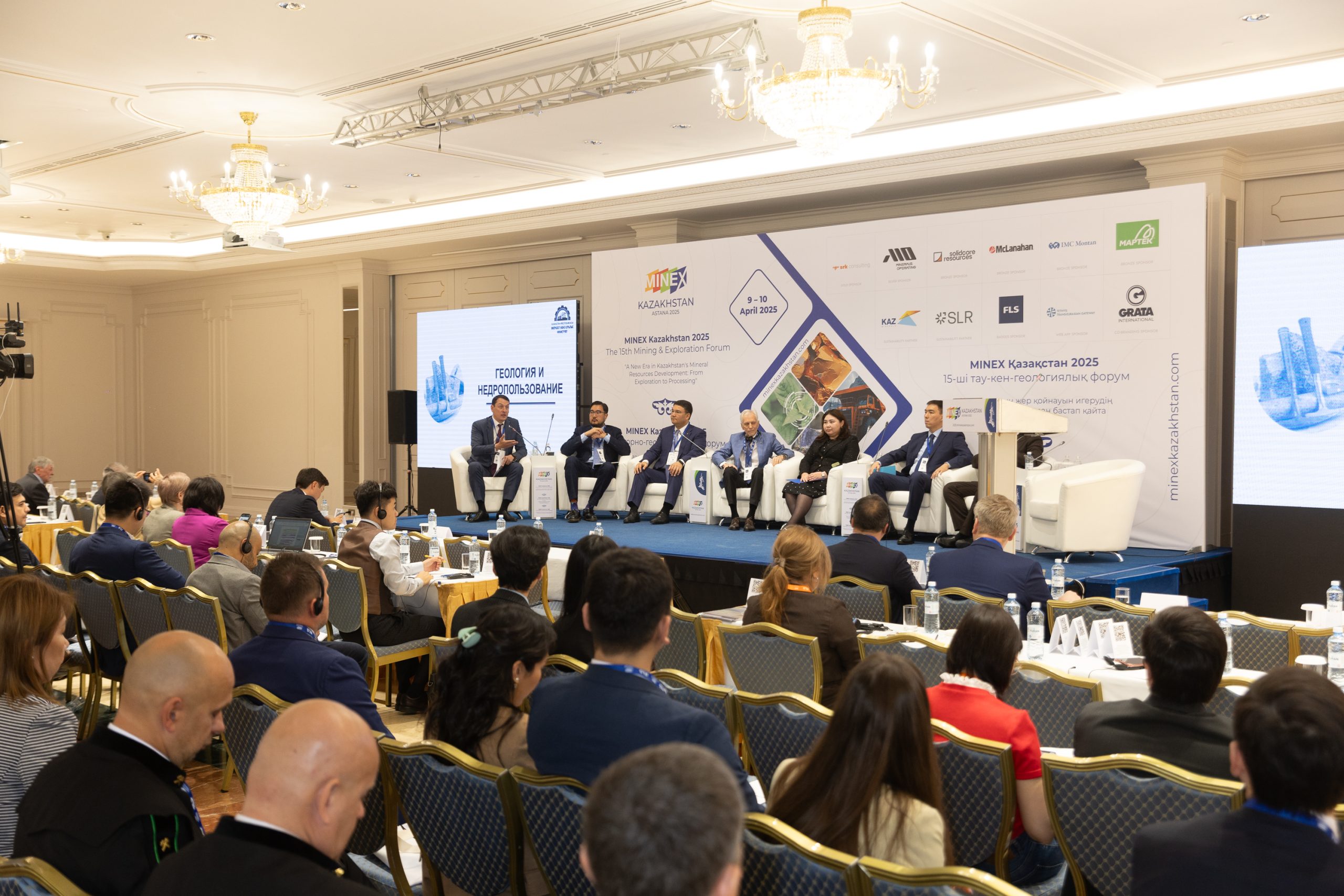
    Kazakhstan’s Ministry of Industry and Construction is integrating artificial intelligence to analyze geological data collected between the 1950s and 1980s, Vice Minister Zhannat Dubirova announced at MINEX Kazakhstan. The digitization of this historic data is set to be completed by the end of the year, with AI tools helping to identify and interpret geological characteristics, create predictive models, and process even low-quality data using Big Data technologies.

    According to Dubirova, over 56,000 geological reports have already been digitized. The AI system currently recognizes up to 90% of information and allows for manual corrections where needed. By 2026, the ministry plans to fully convert all geological data into machine-readable formats, accessible via the Unified Subsoil Use Platform.

    This platform, launched earlier this year, streamlines the entire licensing process for exploration and extraction—from application to auction and licensing—and has already processed over 500 applications. It features an interactive map showing current and available subsoil plots and allows investors to participate directly in auctions without intermediaries.

    Digital control mechanisms are also in place to monitor compliance with issued licenses and contracts for solid mineral resources, replacing a manual system that tracked 3,000 agreements.

  • Kazakhstan Proposes Rare Earth Research Center in Astana Amid EU Cooperation Push

    Kazakhstan Proposes Rare Earth Research Center in Astana Amid EU Cooperation Push

    President Kassym-Jomart Tokayev has proposed the creation of a Regional Research Center for Rare Earth Metals in Astana, aiming to deepen strategic cooperation between Central Asia and the European Union. The announcement came during the “Central Asia – European Union” summit held in Samarkand. According to the president, rare earth elements represent a key area of partnership as Kazakhstan currently produces 19 out of 34 raw materials deemed critical for the EU economy, including uranium, titanium, copper, lithium, cobalt, and tungsten.

    Kazakhstan, in collaboration with the European Bank for Reconstruction and Development (EBRD), is already advancing exploration projects and integrating modern, sustainable practices in the mining sector. The proposed research center would provide companies and investors with up-to-date information on available deposits, technologies, and development prospects.

    During the summit, Tokayev also declared Kazakhstan’s readiness to boost exports to the European Union by $2 billion. This follows recent news of the discovery of a rare earth deposit in the Karaganda region, estimated to contain around one million tons of resources.