Website: Eurasia.com

  • Production of Rhenium Launched at AGMK

    Production of Rhenium Launched at AGMK

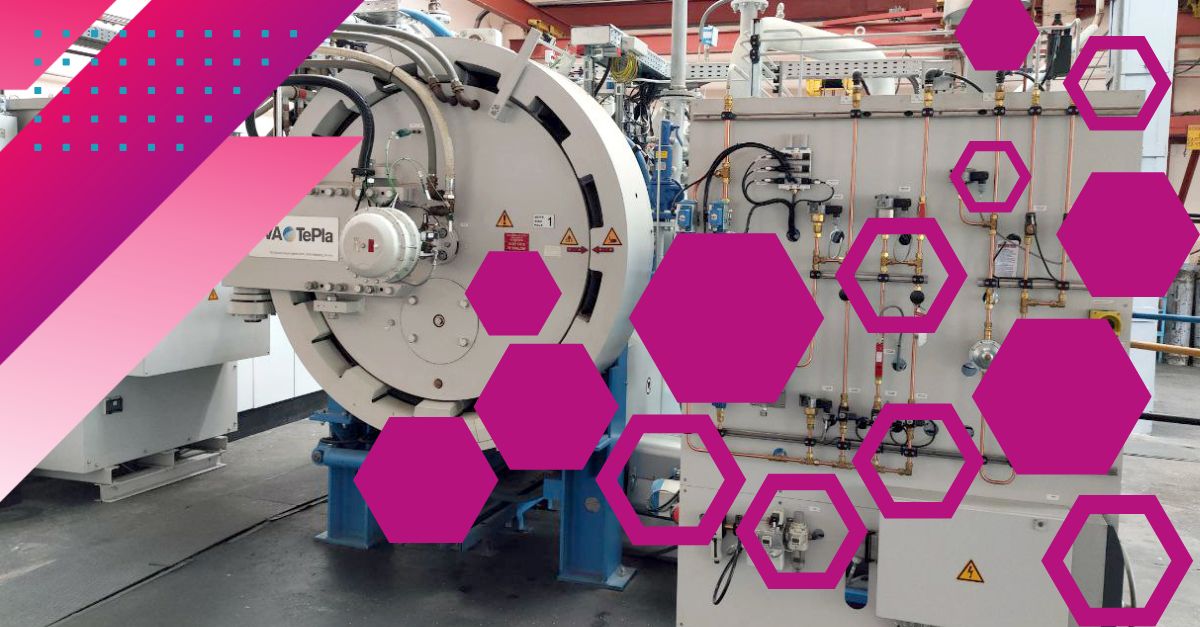
    The Almalyk Mining and Metallurgical Complex (AGMK) has officially commenced the industrial-scale production of rhenium, marking a significant milestone for the Uzbek metallurgical industry. Following years of meticulous research and development, AGMK succeeded in producing rhenium with an impressive purity of 99.9% as early as 2021. This rare and valuable element is extracted from ammonium perrhenate, derived at the copper-smelting plant through hydrogen reduction.

    According to AGMK’s business plan, the launch of large-scale rhenium production was scheduled for 2025. To achieve this goal, the Uzbek Metallurgical Technologies Complex has established a specialised production facility equipped with state-of-the-art German technology. The raw materials required for production are supplied by the copper-smelting plant and other domestic enterprises. AGMK is poised to produce up to three tonnes of rhenium annually.

    A Rare and Versatile Metal

    Rhenium, the 75th element on Mendeleev’s periodic table, boasts exceptional physical and chemical properties, making it indispensable across various industries. As one of the densest and hardest metals, rhenium is integral to:

    • Oil Refining: It serves as a key component in catalysts.
    • Aerospace and Electronics: Critical for advanced manufacturing.
    • Nuclear Industry: Used in thermocouples to measure high temperatures in reactors.
    • Medical Equipment: Vital for the production of devices addressing severe illnesses.
    • Jewellery: Applied as a premium coating for decorative pieces.

    Currently, the global market price for rhenium averages around $2,000 per kilogram, with demand remaining consistently high.

    This new development strengthens AGMK’s position as a significant player in the global market for strategic metals.

  • Prior U.S. Aid to Ukraine Not Included in Minerals Deal, PM Shmyhal Confirms

    Prior U.S. Aid to Ukraine Not Included in Minerals Deal, PM Shmyhal Confirms

    Prime Minister Denys Shmyhal has clarified that past US financial aid to Ukraine will not be included in the pending minerals and natural resources deal between the two countries. Shmyhal made the statement after a visit to Washington for technical talks with US officials on the long-debated minerals deal, which took place from 24-26 April.

    During the visit, Shmyhal met with US Treasury Secretary Scott Bessent to discuss “important political aspects” of the agreement. The Ukrainian delegation and US officials made good progress in their negotiations, according to Shmyhal. He emphasized that the agreement must comply with European obligations, not contradict the Constitution and legislation of Ukraine, be ratified by the Parliament, and not count the assistance provided before its signing.

    The US and Ukraine signed a memorandum on the minerals deal on 27 April , and technical talks were completed by 26 April . However, the agreement has not been finalised yet. The deal has been under discussion for months and has faced delays due to concerns it contradicts Ukrainian law and could interfere with Kyiv’s hopes of joining the European Union.

    The minerals deal has also caused tension between President Volodymyr Zelensky and former President Donald Trump. Earlier versions of the deal granted the US extensive control over a joint investment fund with no offer of security guarantees in return. Trump has touted the minerals deal as a way for the US to “recoup” aid provided to Ukraine over the course of Russia’s full-scale war.

    Deputy Economy Minister and Trade Representative Taras Kachka has stated that the deal would not entail converting previously provided US aid into debt. Instead, the US, as one of the partners, will earn at least as much from the activities of this fund as the aid provided. Shmyhal did not specify a date on which he expects the deal to be signed.

  • Solidcore Resources Reports Q1 2025 Production Results, Reaffirms Full-Year Outlook

    Solidcore Resources Reports Q1 2025 Production Results, Reaffirms Full-Year Outlook

    Solidcore Resources plc (“Solidcore” or the “Company”) announced its production results for the first quarter ended 31 March 2025. Despite facing temporary shipment delays that impacted sales, the Company reaffirmed its full-year production and cost guidance, citing confidence in a strong recovery during the second half of the year.

    Chief Executive Officer Vitaly Nesis commented, “While sales have been deferred due to shipment delays, the fundamentals of our business remain solid. We expect a meaningful recovery beginning in May as concentrate stockpiles start to unwind.”

    Operational Highlights:

    • Solidcore recorded no fatalities or lost time injuries among its employees and contractors during the quarter.

    • Gold equivalent (GE) production totaled 68 thousand ounces (Koz), a 42% decrease year-on-year, largely due to delays in concentrate shipments from the Kyzyl mine to Amursk POX, impacted by operational challenges linked to international sanctions.

    • Kyzyl’s production of gold in concentrate rose 6% to 97 Koz due to higher ore grades, though shipment delays led to a stockpile of 41 Koz of payable metal.

    • At Varvara, production fell 10% year-on-year as planned, reflecting lower grades and reduced third-party processing.

    • Sales were notably down to 38 GE Koz from 116 GE Koz a year earlier, resulting in revenue of US$ 109 million, a 63% decline year-on-year. A strong rebound is anticipated in the second half as operations normalize.

    Strategic Developments:

    • Solidcore announced the acquisition of the Tokhtar gold property, located near its Varvara hub. The property adds 1.1 million ounces of JORC-compliant Mineral Resources at an average head grade of 2.4 g/t, bolstering the Company’s long-term growth pipeline.

    • The acquisition of the initial 51% interest is on track to complete in Q3 2025, pending regulatory approvals.

    Outlook: The Company reiterated its full-year guidance of 470 GE Koz in production, with Total Cash Costs (TCC) and All-In Sustaining Costs (AISC) expected within the ranges of US$ 1,000–1,100/oz and US$ 1,350–1,450/oz, respectively.

    Solidcore remains well-positioned to navigate near-term operational hurdles and capitalize on favorable gold market dynamics.

  • Vast Resources Advances Mining Operations in Romania and Seeks New Investment Partnerships

    Vast Resources Advances Mining Operations in Romania and Seeks New Investment Partnerships

    Vast Resources, a mining company with operations in Romania, Tajikistan, and Zimbabwe, has announced the continuation of production activities at the Băița Plai polymetallic mine in Romania while initiating discussions for a joint venture with other mining companies to attract foreign investment, according to Economica.net.


    At Băița Plai, Vast reported the mining of 13,562 tonnes during the second half of 2024, alongside the production of 307.8 tonnes of copper concentrate with an average copper grade of 18.06%. Mining operations are running in parallel with underground drilling and reprofiling work.


    The company is also in discussions with potential off-takers and financiers regarding the restart of mining at the Manaila Polymetallic Mine, fully owned by Vast Resources Romania.


    Meanwhile, at the former Hanes Gold Mine, operated under a management contract, Vast has commenced on-site development after a harsh winter. A gravity concentrator has been installed to process gold and polymetallic alluvial minerals directly from the surface, with production expected to start this quarter. Additionally, facilities are prepared to truck significant quantities of ore to Băița Plai for processing, pending approval of new transport permits.


    Vast also confirmed receipt of separation tests for its Blueberry Gold Project, demonstrating gold extraction without the use of cyanide.

  • Uzbekistan’s Navoiuran Signs €9 Million Uranium Transport Deal with Kazakhstan’s Logistic Centre

    Uzbekistan’s Navoiuran Signs €9 Million Uranium Transport Deal with Kazakhstan’s Logistic Centre

    Navoiuran, a leading uranium producer from Uzbekistan, has signed a €9 million contract with Kazakhstan’s TOO Logistic Centre for the transportation of uranium concentrate to France, according to inbusiness.kz citing EURASIA TODAY.


    Under the agreement, TOO Logistic Centre will transport 500 containers of uranium concentrate from the port of St. Petersburg to the commune of Malvési in southern France. The total cargo volume is expected to reach up to 6,000 tons.


    Deliveries are scheduled to continue until the end of the first quarter of 2026, with each shipment required to reach its destination within 15 days of departing the Russian port.


    In addition to the French deliveries, Navoiuran plans to export uranium through Russia to the United States and Canada and is currently seeking contractors for transportation to processing facilities in those countries.

  • Kazakh Authorities Shut Down Five Companies Engaged in Illegal Gold Mining

    Kazakh Authorities Shut Down Five Companies Engaged in Illegal Gold Mining

    Kazakhstan’s Ministry of Internal Affairs (MIA) and National Security Committee (KNB), coordinated by the General Prosecutor’s Office, have shut down the operations of five companies involved in illegal mining and processing of gold-bearing materials in the Abai, Zhetysu, East Kazakhstan, and Turkestan regions, according to inbusiness.kz citing Polisia.kz.

    Authorities found that the companies held licenses only for geological exploration but were in fact conducting large-scale illegal extraction of gold-bearing ore using specialized equipment and machinery. During the raids, over 6,700 tons of gold-bearing ore, 300 tons of ore slurry, 120 tons of ammonium nitrate, explosives, and detonators were seized. In addition, 45 pieces of specialized equipment were confiscated on-site.

    A total of 62 individuals, including directors and founders of several limited liability partnerships (LLPs), were detained. Five criminal cases have been registered related to the illegal circulation of precious metals and raw materials containing precious metals. The damage to the state has been assessed as particularly large.

    Kuanlyk Alpis, a representative of the MIA’s Department for Combating Organized Crime, emphasized the importance of the operation in protecting the country’s natural resources and fighting organized crime in the precious metals sector.

  • EU Opens Industry Consultation on Critical Raw Materials Cooperation Amid Supply Chain Pressures

    EU Opens Industry Consultation on Critical Raw Materials Cooperation Amid Supply Chain Pressures

    As the European Union works to shore up the security and sustainability of its raw material supply chains, European Commission Executive Vice-President Teresa Ribera has launched a public consultation aimed at promoting cooperation among industry players under EU competition rules.

    The move reflects Ribera’s dual mandate as Commissioner for a Clean, Just and Competitive Transition: guiding the bloc’s competition policy through 2029 while co-leading the Clean Industrial Deal, a pillar of the EU’s green and industrial transformation. According to her 2024 Mission Letter, Ribera must “modernise the EU’s competition policy” to enable innovation, resilience, and sustainability in an era marked by geopolitical tensions and unfair subsidy-driven competition.

    Announcing the consultation, Ribera invited stakeholders in extraction, processing, and recycling to identify barriers and opportunities for collaboration across the raw materials value chain. “Together, we can build sustainable supply chains and transform challenges into opportunities for prosperity, innovation and resilience,” she stated.

    The consultation comes as companies struggle to navigate legal uncertainty around cooperation. While the EU’s 2023 Horizontal Guidelines offer some room for sustainability agreements, they caution that even modest cooperation—such as setting a joint purchase price for recyclable phones—can breach antitrust rules. Meanwhile, the 2022 Vertical Guidelines do little to clarify how sustainability considerations might enable cooperation further down the supply chain.

    The legal ambiguity stands in contrast to growing EU policy imperatives. The Draghi Report on European Competitiveness (2024) urges the Commission to ease legal pathways for joint procurement and collaborative production efforts in critical raw materials. Likewise, the Commission’s Clean Industrial Deal communication commits to providing companies with tailored antitrust guidance aligned with EU economic and security priorities.

    While the EU’s 2024 Critical Raw Materials Act (CRMA) already outlines strategic public-sector projects to diversify sourcing, the CRMA stops short of addressing the private sector’s role in joint action. In March 2025, the Commission selected 25 Strategic Projects across 14 critical materials—including lithium, cobalt, nickel, graphite, and tungsten—but implementation rests largely with national governments and non-EU partners.

    Ribera’s new consultation, therefore, fills a key policy gap. The Commission is expected to initially focus on the 14 raw materials prioritized under the CRMA, particularly those essential to sectors like renewables, digital, aerospace and defence. Based on the feedback, the Commission will consider whether to issue new competition guidance—possibly by 2026—clarifying when and how companies may work together to strengthen critical supply chains without violating EU antitrust law.

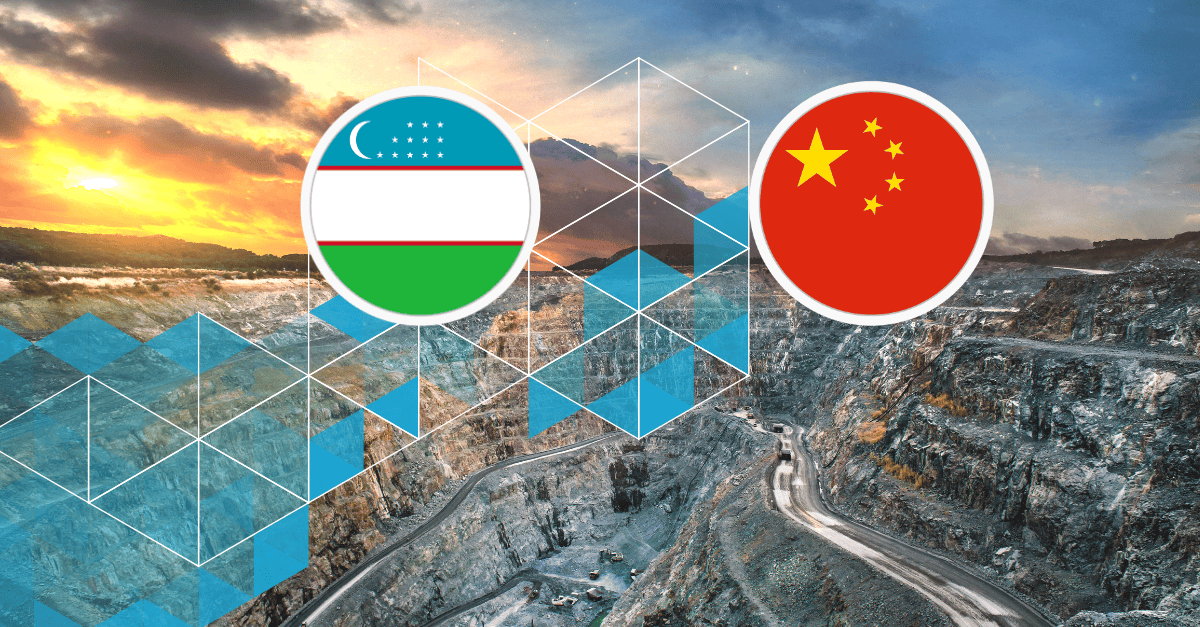
  • China Deepens Grip on Uzbekistan’s Mineral Sector Amid Global Race for Critical Resources

    China Deepens Grip on Uzbekistan’s Mineral Sector Amid Global Race for Critical Resources

    As global powers intensify their pursuit of critical minerals, Central Asia has emerged as a strategic pivot. Among its nations, Uzbekistan stands out—not only for its rich deposits of copper, tungsten, molybdenum, and rare earth elements, but also for its increasingly central role in China’s mineral strategy.

    Already heavily involved in the region’s energy and infrastructure sectors, China has taken a proactive investment stance in Uzbekistan’s mining industry. In 2024, Limaomaoli Metal Company launched construction of the Syurenata mining complex in Parkent, aimed at processing 1 million tons of iron ore concentrate annually. Simultaneously, China Baoli Technologies is investing $200 million in a non-ferrous metal facility in the Ipak Yuli Free Economic Zone, targeting up to 45,000 tons of annual output with $18 million in export potential.

    Copper, a linchpin in global energy transition efforts, is another key focus. China Mining Energy Group is spearheading a $200 million copper mining project in Chust (Namangan region), expected to yield 30,000 tons per year and create 420 local jobs. Additionally, Boi Yi Da is planning a new copper processing plant in the same region, while a $2.7 billion project to tap copper and silver reserves in Bobotog is under negotiation.

    For Uzbekistan, these ventures promise significant job creation, technological transfer, and a move up the value chain—critical steps toward its goal of becoming a producer of value-added mineral products. They also reflect Tashkent’s broader push to localize mineral processing, boost exports, and attract FDI into downstream sectors.

    For Beijing, meanwhile, these deals help secure raw materials essential for its green economy and industrial resilience, while also reducing reliance on vulnerable maritime supply routes. The copper and iron ore flowing from Uzbekistan may soon become vital to China’s supply diversification strategy.

    Yet, the growing Chinese footprint is not without challenges. Concerns around environmental degradation and transparency in resource deals are mounting. Public unease over Chinese firms acquiring mineral rights is increasingly voiced in Uzbek media and civil society. Moreover, critics warn that unless Chinese investments support advanced processing, Uzbekistan risks becoming locked into the role of a mid-tier raw exporter.

    There’s also increasing Western interest. France has inked uranium deals with Tashkent, and the U.S. recently signed a critical minerals investment agreement. China’s accelerated moves may reflect efforts to edge out competitors and reinforce dominance over global mineral supply chains.

    Ultimately, China’s growing influence in Uzbekistan’s mining sector presents both a strategic opportunity and a test. A long-term, mutually beneficial partnership will require more than capital—it will demand transparency, environmental responsibility, and alignment with Uzbekistan’s industrial transformation goals.

  • Uzbekistan and Saudi Arabia Explore Deeper Cooperation in Mining Sector Reforms

    Uzbekistan and Saudi Arabia Explore Deeper Cooperation in Mining Sector Reforms

    Officials from Uzbekistan and Saudi Arabia held high-level talks this week to discuss expanding cooperation in the mining sector, with a focus on reform, localization, and industrial collaboration.

    On 23 April, Uzbekistan’s Ministry of Mining Industry and Geology hosted a delegation led by Nasser Albakran, Director at Saudi Arabia’s Ministry of Energy. The meeting in Tashkent was attended by First Deputy Minister Oybek Nasritdinkhodjaev, Deputy Minister Ulugbek Yusupov, and other Uzbek mining officials, including Director Mirabdulla Ilkhamov of the State Scientific-Practical Center for Localization and Industrial Cooperation Development.

    The discussions centered on Uzbekistan’s ongoing reforms in mining and geology, and the country’s aim to enhance local content in investment projects. Both sides expressed interest in strengthening bilateral ties and sharing experience in industrial localization and cooperation.

    The talks underscore growing regional interest in Uzbekistan’s mineral wealth and its strategy to attract foreign partners for technology transfer, sustainable development, and local industry growth.

  • Navoi Mining and Metallurgical Combine Expands Capacity at Tech Waste Recycling Plant

    Navoi Mining and Metallurgical Combine Expands Capacity at Tech Waste Recycling Plant

    Navoi Mining and Metallurgical Combine (NGMC) continues its ambitious expansion drive with significant progress reported at Hydrometallurgical Plant 7 (GMZ-7) – a facility specializing in processing technogenic waste.

    Located in the Kyzylkum Desert, GMZ-7 stands as a testament to NGMC’s commitment to sustainable development. Unlike other hydrometallurgical plants in the combine, GMZ-7 boasts the unique advantage of eliminating the costs associated with ore mining, processing, sorting, and transportation.

    Having processed 16 million tonnes of technogenic waste in 2024, GMZ-7 aims to reach 19 million tonnes this year. Further cementing this commitment, NGMC has initiated a major investment project: “Expansion of Processing Capacity of Hydrometallurgical Plant No. 7,” slated for completion in 2030.

    “Within the framework of the Sustainable Development Programme of JSC ‘NGMK’, construction work is underway for installing four new mills, each with a capacity to process 10 million tonnes of technogenic waste annually. These additions will bring the total number of mills on site to ten. Two of the new mills have already been commissioned. Essential equipment and spare parts are being localised and manufactured by Navoi Machine-Building Plant and Zarqush Repair and Mechanical Plant,” explained Olzhon Akhatov, Deputy Chief Engineer at GMZ-7.

    Further expansion plans include extending several factory sections, marking a crucial step towards boosting production volumes.

    These investments underline NGMC’s dedication to technological innovation and responsible resource management, showcasing its position as a leader in sustainable industrial practices.