Website: Eurasia.com

  • Kazakhstan’s Nuclear Two-Step: Rosatom to Build First Plant, China Likely for Second

    Kazakhstan’s Nuclear Two-Step: Rosatom to Build First Plant, China Likely for Second

    Kazakhstan has officially selected Russia’s Rosatom to build its first nuclear power plant, deepening energy ties with Moscow — but within hours, the country signaled a balancing act by revealing plans for a second plant likely to be built by China.

    In an unusual Saturday announcement on June 14, Kazakh authorities confirmed Rosatom as the winner of the long-running bid to construct the first plant in Ulken, near Lake Balkhash. The same day, the head of Kazakhstan’s nuclear energy agency, Almassadam Satkaliyev, said a second nuclear power station would likely be built by China’s state-owned China National Nuclear Corporation — the runner-up in the initial bid.

    This dual-track approach reflects Kazakhstan’s broader geopolitical strategy of maintaining equilibrium between its powerful neighbors: Russia and China. While Rosatom brings deep integration advantages — from uranium processing and cultural ties to favorable financing and waste disposal — the inclusion of a Chinese-built second plant helps offset dependence on Moscow.

    “Rosatom’s proposal does look strong in technical and financial terms,” said energy researcher Shaimerden Chikanayev. Yet, he added, the political cost of excluding China likely triggered Astana’s swift pivot.

    The Rosatom-led project is slated for completion by 2036, with a price tag of at least $15 billion. The financing details remain murky, though Kazakhstan insists it will retain ownership, distancing itself from Turkey’s Akkuyu model, where Rosatom owns the facility outright.

    The announcement landed just days before Chinese President Xi Jinping’s visit to Kazakhstan for the second China–Central Asia summit — potentially souring Beijing’s expectations of regional energy investment leadership. Political analyst Dosym Satpayev noted the timing could have left “an unpleasant aftertaste for Beijing.”

    Officials now appear eager to proceed with both reactors in parallel. Deputy Prime Minister Roman Sklyar even suggested the Chinese-built plant could be completed first, depending on the technology used.

    However, financial questions loom large. “Kazakhstan will be paying back the Russian loans for a very, very long time,” warned energy analyst Olzhas Baidildinov, with electricity tariffs likely to bear the burden.

    As Astana juggles energy security with foreign policy nuance, the outcome of its nuclear ambitions may shape the region’s balance of power for decades to come.

  • Euro Sun Secures $200M Loan with Trafigura Backing to Advance Romanian Copper-Gold Project

    Euro Sun Secures $200M Loan with Trafigura Backing to Advance Romanian Copper-Gold Project

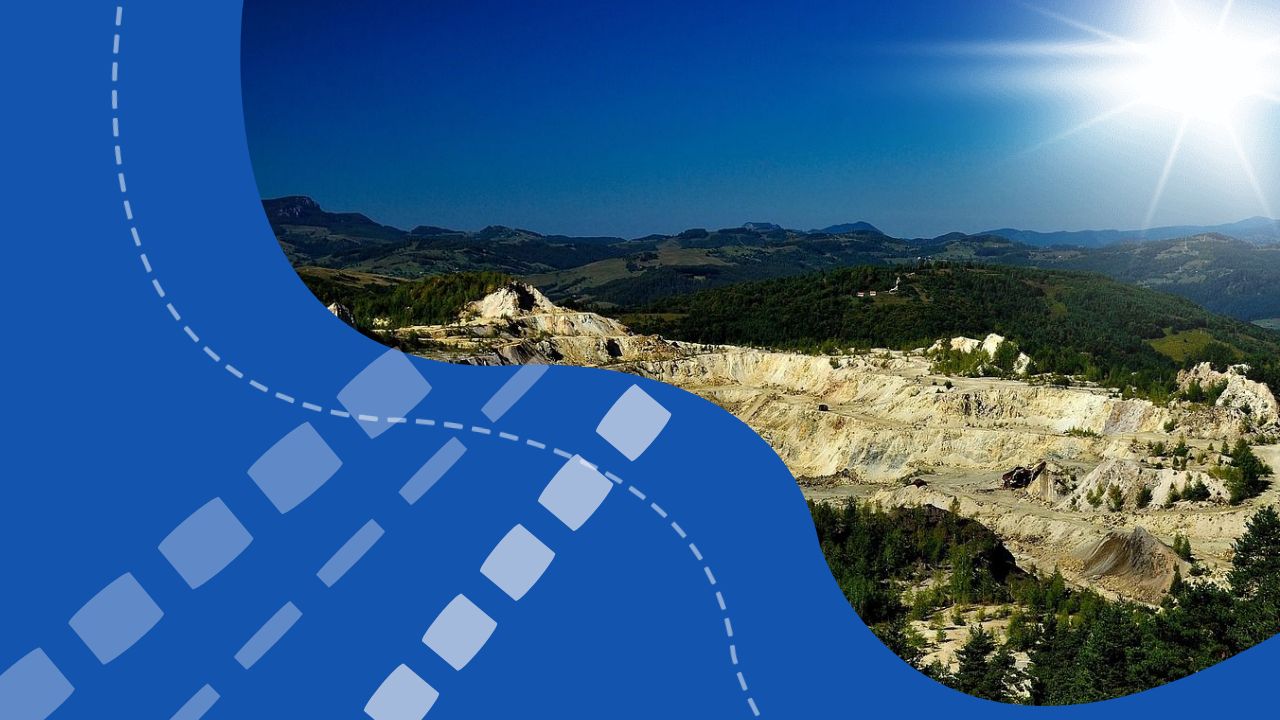
    Euro Sun Mining (TSXV: ESM) has secured a $200 million loan package to help fund its Rovina Valley gold-copper project in Romania, marking a major milestone for one of Europe’s largest undeveloped critical mineral assets. The financing—arranged with international banks and supported by global commodities trader Trafigura—aims to push forward feasibility, permitting, and pre-development work.

    The loan includes a binding offtake agreement for up to all commercial production over seven to nine years and will be disbursed in two stages: an initial $50 million upon signing final documentation, and the remaining $150 million following completion of a definitive feasibility study. The project’s total build cost is estimated at $448 million, based on a 2022 feasibility study.

    Rovina Valley is listed among the European Union’s 47 strategic projects aimed at securing supply chains for critical minerals. Located in Hunedoara County, the mine is projected to operate for 27 years, producing an average of 116,000 oz of gold and 49 million lb of copper annually in its first decade.

    Despite long-standing opposition from environmental groups, Euro Sun says it is advancing environmental impact assessment submissions and plans close engagement with Romanian officials. The company also notes the project holds a mining licence and is the first non-state-owned deposit in Romania to do so.

    The support from Trafigura reinforces its strategy of investing upstream to lock in access to vital metals like copper, cobalt, and nickel amid global energy transition pressures.

  • Greenland Approves 30-Year Molybdenum Mining Project to Supply 25% of EU Demand

    Greenland Approves 30-Year Molybdenum Mining Project to Supply 25% of EU Demand

    Greenland has granted a 30-year permit to Toronto-listed Greenland Resources for the development of the Malmbjerg molybdenum mine, marking a major step forward for EU-backed efforts to secure critical raw materials. The project, located in eastern Greenland, is expected to produce an average of 32.8 million pounds of concentrated molybdenum annually—enough to meet around a quarter of Europe’s demand for the metal.

    Molybdenum is used in aerospace, clean energy, and defense due to its strength and resistance to heat and corrosion. With China controlling around 40% of global molybdenum production and recently tightening export controls in response to U.S. tariffs, the project carries geopolitical significance.

    The Malmbjerg mine is backed by the European Raw Materials Alliance and has already secured supply agreements with major European firms, including Finland’s Outokumpu and Italy’s Cogne Acciai Speciali.

    Greenland’s mining sector is seeing increased momentum. Just last month, the country issued another exploitation licence to a Danish-French consortium, and the EU included a graphite project in Greenland among 13 new strategic initiatives aimed at bolstering mineral supply.

    Though development in Greenland has historically been slowed by regulatory hurdles and limited financing, interest from both the U.S. and EU is accelerating. The U.S. Export-Import Bank recently confirmed that a Greenland-based rare earth mine met the initial criteria for a $120 million loan.

  • Turkey’s Onur Group to Begin Mining Major Ukrainian Mineral Deposits in 2026

    Turkey’s Onur Group to Begin Mining Major Ukrainian Mineral Deposits in 2026

    Ukraine has granted Turkish conglomerate Onur Group five special permits to mine some of the country’s most valuable mineral deposits, including graphite, gold, and kaolin. The mining operations, scheduled to begin in 2026, are focused on high-potential regions such as Dnipropetrovsk, Kirovograd, and Khmelnytsky.

    Among the five sites, the graphite deposit in the Khmelnytsky region stands out. The Gorodnyavskoye deposit alone holds nearly 143 million tonnes of ore with a graphite carbon content of 5.14%. Experts estimate the deposit could support extraction for over a century. The European Union has recognized its strategic value, listing it among key critical mineral projects vital for Europe’s industrial supply chains.

    However, not all prospects proved economically viable. Onur Group has pulled back from plans to develop a gold site in Dnipropetrovsk after testing revealed lower-than-expected yields of just 1.4 grams per tonne—significantly below the 4.5 grams originally projected.

    While four sites remain in early stages due to safety and logistical issues—partly owing to Ukraine’s ongoing conflict—the graphite project is moving forward. Mining at Gorodnyavskoye is expected to begin in 2026.

    The deal underscores Turkey’s growing interest in critical mineral supply chains. Rare earths and graphite are essential for high-tech manufacturing, energy storage, and defense. With global supply chain pressures intensifying, this venture positions Turkey as a key player while also highlighting Ukraine’s mineral wealth as a geopolitical asset.

  • Tungsten West’s Hemerdon Mine Gains EU Strategic Status, Eyes 2026 Restart

    Tungsten West’s Hemerdon Mine Gains EU Strategic Status, Eyes 2026 Restart

    Tungsten West has confirmed that its Hemerdon mine near Plymouth, Devon, has been officially designated a strategic project under the European Union’s Critical Raw Materials strategy. The recognition is a significant milestone for the site, which hosts the world’s second-largest tungsten deposit and has the potential to meet up to 20% of global demand for the critical mineral.

    CEO Jeff Court stated that the mine is “fully permitted and shovel ready,” with production potentially restarting by the end of 2026. However, to move forward, the company still needs to raise £69 million ($93 million) in private investment.

    Originally operated by Australia’s Wolf Minerals Ltd., the mine fell into administration in 2018. Tungsten West acquired the site in 2019 and began interim operations in 2023.

    Tungsten is highly valued for its extreme heat resistance and strength, making it indispensable in the production of ammunition, aerospace components, electronics, and cutting tools. Despite its importance, the Hemerdon project has so far received no UK government support—unlike lithium and tin initiatives in Cornwall that have benefited from significant funding.

    Court highlighted the mine’s potential benefits for the UK economy, calling for more equitable government backing: “It’s great we have interest from the US and EU, but this is a UK project. Jobs, money into the economy, regional development—it’s all here.”

    A spokesperson for the Department for Business and Trade noted that the UK’s upcoming Critical Minerals Strategy will address production improvements and financial support for domestic projects. “We welcomed the EU’s announcement of Tungsten West as a strategic project,” they added, indicating a broader intent to strengthen global supply chains in coordination with international partners.

  • Greenland Grants 30-Year Permit to EU-Backed Malmbjerg Molybdenum Mine

    Greenland Grants 30-Year Permit to EU-Backed Malmbjerg Molybdenum Mine

    Greenland Resources (Cboe CA: MOLY) has received a 30-year exploitation licence for its Malmbjerg molybdenum project, a significant step in securing the European Union’s critical mineral supply. Backed by the EU and the European Raw Materials Alliance (ERMA), the open-pit mine is expected to meet up to 25% of the EU’s molybdenum needs during its first decade of production.

    The Malmbjerg site will produce an average of 32.8 million pounds of molybdenum annually—an essential element for steel reinforcement and vital applications in aerospace, energy, and defence. The strategic importance of this development has only intensified as China, the global leader in molybdenum supply, tightened export controls following new U.S. tariffs.

    Greenland Resources has already signed off-take agreements with major European steelmakers, including Finland’s Outokumpu and Italy’s Cogne Acciai Speciali. The government of Greenland sees the project as a milestone in its push toward economic self-sufficiency. Minister Naaja H. Nathanielsen emphasized that Malmbjerg will bring jobs, local business opportunities, and potentially $1 billion in tax revenues over its operational lifetime.

    The project’s approval adds momentum to Greenland’s expanding mining sector. In recent weeks, the government has approved a range of new ventures, including a graphite initiative added to the EU’s list of 13 new critical raw materials projects and progress by Critical Metals Corp. on the Tanbreez rare earth mine with prospective U.S. EXIM Bank backing.

    As global competition for critical minerals intensifies, Greenland is emerging as a strategic hub for raw materials vital to Western supply chains.

  • EU to Press China on Rare Earth Access at Upcoming July Summit

    EU to Press China on Rare Earth Access at Upcoming July Summit

    European Union leaders plan to use next month’s high-level summit with China to push for improved access to critical minerals and rare earths, according to four sources familiar with the matter. The summit, set for July 24–25 in Beijing, comes as tensions grow over trade disputes and export restrictions.

    The EU delegation—led by European Commission President Ursula von der Leyen and European Council President Antonio Costa—will meet with Chinese President Xi Jinping and Premier Li Qiang. Their primary agenda: addressing China’s tightening of export licences on rare earth alloys, magnets, and mixtures, which has created production concerns for European automakers and manufacturers.

    China, which controls the majority of global rare earth output, has offered to expedite licensing for EU firms through a so-called “green channel.” Yet according to diplomats and business leaders, less than half of the hundreds of licence applications have made meaningful progress, and customs delays continue even after approvals.

    Amid the broader trade friction—ranging from European tariffs on Chinese EVs to China’s retaliatory measures on EU brandy—Brussels aims to secure longer-term or exemption-based rare earth agreements that distinguish the EU from the U.S. The summit falls just two weeks before a U.S. deadline for allies to align on new tariff deals, further complicating EU negotiations with Beijing.

    While major breakthroughs are unlikely, EU leaders hope to leverage the symbolic 50th anniversary of EU-China relations to press their case. A European official noted, “China is playing its cards very well,” suggesting Beijing sees rare earths as a strategic bargaining chip.

  • ArcelorMittal Sells Bosnian Steel and Iron Ore Operations to Pavgord Group

    ArcelorMittal Sells Bosnian Steel and Iron Ore Operations to Pavgord Group

    ArcelorMittal, the world’s second-largest steel producer, has agreed to sell its operations in Bosnia and Herzegovina to local conglomerate Pavgord Group, marking the end of a 21-year presence in the Balkan nation. The deal includes ArcelorMittal’s steel mill in Zenica and its iron ore mine in Prijedor, which collectively employ approximately 2,700 workers.

    The sale, announced Friday, is expected to close in the third quarter of 2025 once all regulatory and contractual conditions are satisfied. Under the terms of the agreement, Pavgord Group will retain all employees, aiming to ensure operational continuity.

    ArcelorMittal anticipates a $200 million accounting loss from the transaction, not including any income from the sale itself. The company cited ongoing financial challenges—specifically, €162.6 million in losses over the past two years—as the reason for divesting. A sustained drop in steel demand across Europe heavily impacted the viability of its Bosnian operations.

    “Despite significant investment and efforts to sustain the business, a detailed strategic analysis led us to conclude that a sale is the most viable path forward for the development of the operations and the welfare of the employees,” the company stated.

    Pavgord Group, the buyer, is already a major force in Bosnia’s industrial landscape, owning Alumina, the country’s top exporter last year, and a controlling stake in Boksit, a leading bauxite mining firm.

  • Turkey’s Onur Group Secures Ukraine’s Top Mineral Sites Amid EU Strategic Push

    Turkey’s Onur Group Secures Ukraine’s Top Mineral Sites Amid EU Strategic Push

    Ukraine has granted Turkish conglomerate Onur Group exclusive access to exploit some of its most prized mineral reserves—including graphite, kaolin, and gold—marking a significant step in international investment amid regional conflict and economic uncertainty. The company is expected to launch operations in 2026, starting with what may be Ukraine’s largest graphite deposit in the Khmelnytsky region.

    According to reports from Czech outlet Body Guru, Onur Group currently holds five special mining permits. These include one gold deposit in the Dnipropetrovsk region, three kaolin sites spread across Kirovograd and Dnipropetrovsk, and the massive Gorodnyavskoye graphite deposit. The latter boasts 143 million tonnes of approved ore with an average graphite carbon content of 5.14%, promising up to 130 years of extraction potential.

    The graphite project has been recognized by the European Union as strategically important, reinforcing its role in securing Europe’s supply of critical raw materials essential for electronics, electric vehicles, and green technologies.

    Despite initial optimism, Onur Group has walked away from the gold deposit after discovering far lower-than-expected mineral grades—just 1.4 grams of gold per tonne, compared to the projected 4.5 grams. This economic mismatch rendered the project unfeasible.

    While four of the five mining sites remain in preparation stages due to logistical and security challenges near conflict zones, Onur’s efforts represent more than just a commercial venture—they also illustrate Turkey’s strategic push to increase influence over key mineral supply chains.

    As global competition intensifies over rare earth elements and industrial minerals, Ukraine’s openness to foreign investors may offer both risks and rewards. For some, the move raises concerns over sovereignty and long-term control of national resources. For others, it signals a pragmatic path toward economic recovery and integration with Western supply chains.

  • Tungsten West’s Hemerdon Mine Named Strategic Project Under EU Critical Minerals Strategy

    Tungsten West’s Hemerdon Mine Named Strategic Project Under EU Critical Minerals Strategy

    Tungsten West, the company behind the revival of the Hemerdon tungsten mine near Plymouth, Devon, has announced a key milestone in its path to resuming operations. The project has been officially designated a strategic initiative under the European Union’s Critical Raw Materials Act, giving it a crucial boost in recognition and visibility within the global supply chain of vital minerals.

    The Hemerdon site, which contains the world’s second-largest known tungsten deposit, could supply up to 20% of global tungsten demand, according to company CEO Jeff Court. “We’re fully permitted and shovel ready,” Court confirmed, adding that production could resume as early as the end of 2026—provided the company secures £69 million ($93 million) in private funding.

    Tungsten West took over the site in 2019 after former operator Wolf Minerals Ltd entered administration. Interim operations began in 2023, but full-scale mining remains contingent on new investment.

    While UK government support has flowed toward lithium and tin projects in Cornwall, Tungsten West has yet to receive any public funding. Court emphasized the need for more domestic backing: “It’s a UK project. The benefits—jobs, tax revenue, and regional growth—will be felt here.”

    Court called on Westminster to offer “an equal share of support” to tungsten and other strategic metals vital for defense and electronics. A spokesperson from the Department for Business and Trade noted that the UK’s forthcoming Critical Minerals Strategy will outline measures to support domestic projects and strengthen international partnerships.

    Tungsten’s strategic importance stems from its use in high-performance electronics, tools, and military applications, including missiles and bullets due to its extreme heat resistance.