Website: Eurasia.com

  • China’s Smelter Expansion Cripples Western Metal Processors as Critical Minerals Crisis Deepens

    China’s Smelter Expansion Cripples Western Metal Processors as Critical Minerals Crisis Deepens

    Global supply chains are already buckling under China’s rare earth export controls — but an even larger threat is brewing in the base metals sector, where Western smelters are being pushed to the brink by China’s overcapacity and collapsing processing fees.

    Copper smelters in Namibia and the Philippines have recently shuttered, while Glencore warns its Mount Isa plant in Australia is no longer viable. The crisis has prompted urgent calls to save Nyrstar’s zinc and lead smelters and Rio Tinto’s Tomago aluminum operation.

    At the heart of the issue is China’s rapid smelting expansion, which is saturating the global market. Chinese refiners recently agreed to process copper concentrates from Chile at zero fees — a historic inversion where smelters typically charge miners. In some cases, smelters are even paying miners, wiping out margins and driving global treatment charges to record lows.

    Zinc tells a similar story: despite booming mine output, spot smelter fees are struggling to rebound after turning negative last year. China is flooding the market with processed metals while continuing to expand capacity, including building new smelters in Indonesia, which now supplies half the world’s nickel.

    While Chinese smelters benefit from state support, vertical integration, and cheap electricity, Western smelters are being crushed by high energy prices and policy gaps. In Europe, aluminum and zinc plant closures followed the 2022 energy crisis. Meanwhile, the U.S. and Australia face tough decisions over keeping critical facilities afloat.

    Western governments are finally taking notice. The EU is promoting power purchase agreements and faster grid access for energy-intensive sectors. The U.S. and allies are rethinking how to protect their strategic midstream assets, which not only refine base metals but also recover vital by-products like gallium, tellurium, and antimony — now restricted by China.

    Without urgent support, experts warn that China could soon extend its dominance from rare earths to base metals, turning smelters into the next front in the geopolitical resource war.

  • EU Plans Emergency Stockpiles of Critical Minerals Amid Rising Geopolitical Risks

    EU Plans Emergency Stockpiles of Critical Minerals Amid Rising Geopolitical Risks

    The European Commission is preparing to launch a sweeping initiative to build emergency stockpiles of critical minerals, in a move to safeguard the bloc’s supply chains from mounting geopolitical and cyber threats, according to a draft document seen by the Financial Times.

    The proposal advises EU member states to accelerate stockpiling of rare earth minerals, permanent magnets, and other vital components used in energy, defence, and communications infrastructure. The draft highlights a “rapidly deteriorating risk landscape” marked by rising geopolitical tensions, cyberattacks, and climate-related disruptions.

    “Europe must boost its resilience,” the document reads, urging coordination on backup stocks of not just industrial materials, but also food, medicine, cable repair modules, and nuclear fuel. The Commission warns that underwater communication systems and gas pipelines remain particularly vulnerable to sabotage.

    This marks a notable policy shift in Brussels, which has historically focused on free market mechanisms to ensure supply. The war in Ukraine and ongoing tensions with Russia have exposed serious vulnerabilities in Europe’s strategic reserves. Last month, Germany’s chief of defence warned that Russia could potentially target an EU member within four years, intensifying calls for preparedness.

    The Commission is set to publish the finalized strategy next week. It follows March’s announcement of the EU Preparedness Union Strategy, which encouraged citizens to stock up on essentials and urged governments to build national reserves of critical goods.

    The urgency is also driven by what the document calls “limited common understanding” among member states about what essential goods are needed to respond to major crises.

  • Visit to the AKFA Group’s Technopark, Tashkent, Republic of Uzbekistan

    Visit to the AKFA Group’s Technopark, Tashkent, Republic of Uzbekistan

    Date: 26 June 2025

    Location: Tashkent, Republic of Uzbekistan

    Photos: https://2025.minexasia.com/

    The MINEX Central Asia’25 Forum took place against the backdrop of impressive economic growth in the region’s countries. Special attention was given to Uzbekistan’s achievements: over the past eight years, the country’s GDP has doubled, and it is projected to reach $200 billion by 2030. Uzbekistan’s mineral resources are estimated to be worth approximately three trillion dollars, and projects for creating full-cycle technoparks—from geological exploration to deep processing—are actively being implemented.

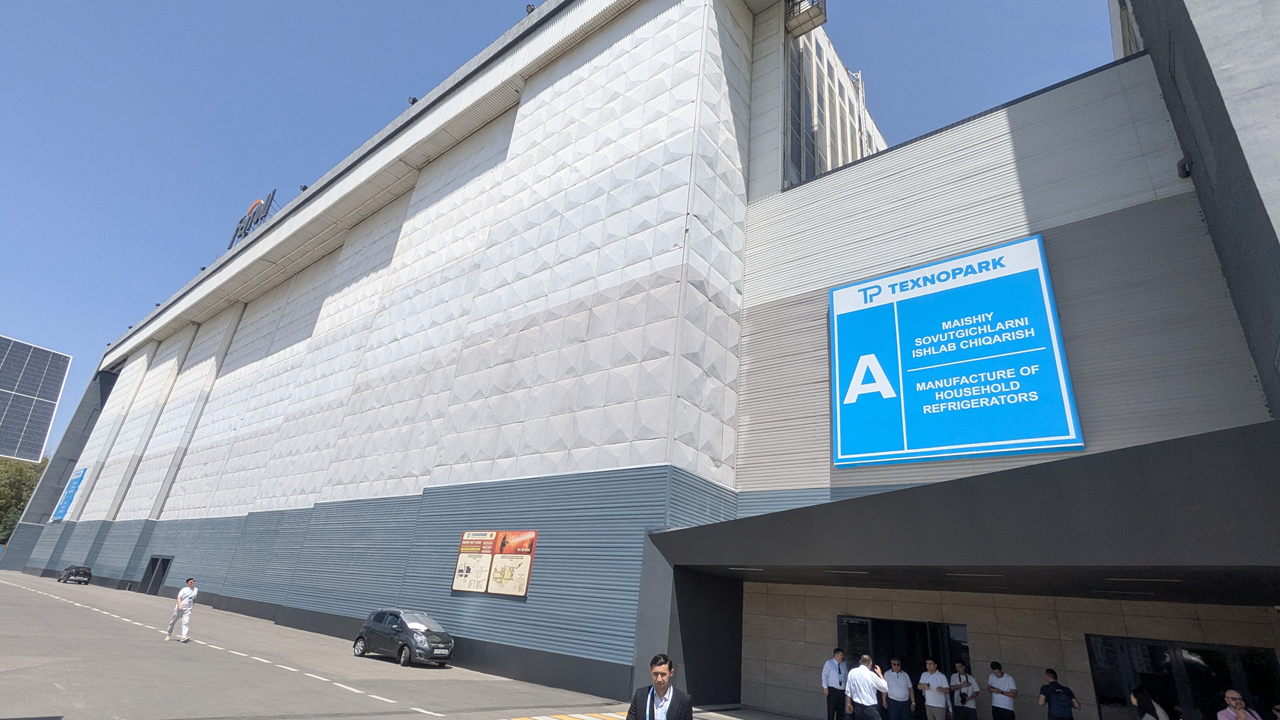
    The Forum participants visited the AKFA Group Industrial Technopark in Tashkent, where they learned about the integration of mineral resources into high-tech production. The Technopark brings together more than 20 high-tech manufacturing facilities operating as a single cluster. This enables control over the entire value chain and the ability to offer comprehensive solutions for various industries, including licensed production of household appliances, metal structures, heating systems, electrical products, building materials, and other high-tech products. The Technopark spans more than 350,000 square meters, making it one of the largest in Central Asia. Many of the enterprises have a full production cycle, from raw material processing to finished goods.

    The visit to the Technopark was organised to present the plans of the Forum’s strategic partner, the “Uzbekistan Technological Metals Complex ” (UzTMK), to establish two industrial parks in Uzbekistan specializing in the production of products made from rare and rare-earth metals. In addition to launching new industrial sites, UzTMK also plans to open a unique scientific and technical centre in Central Asia, dedicated to the development and implementation of innovative technologies for processing critical minerals.

  • Visit to Uzbekistan’s State Geological Museum, Tashkent, Republic of Uzbekistan

    Visit to Uzbekistan’s State Geological Museum, Tashkent, Republic of Uzbekistan

    Date: 26 June 2025

    Location: Tashkent, Republic of Uzbekistan

    Photos: https://2025.minexasia.com/

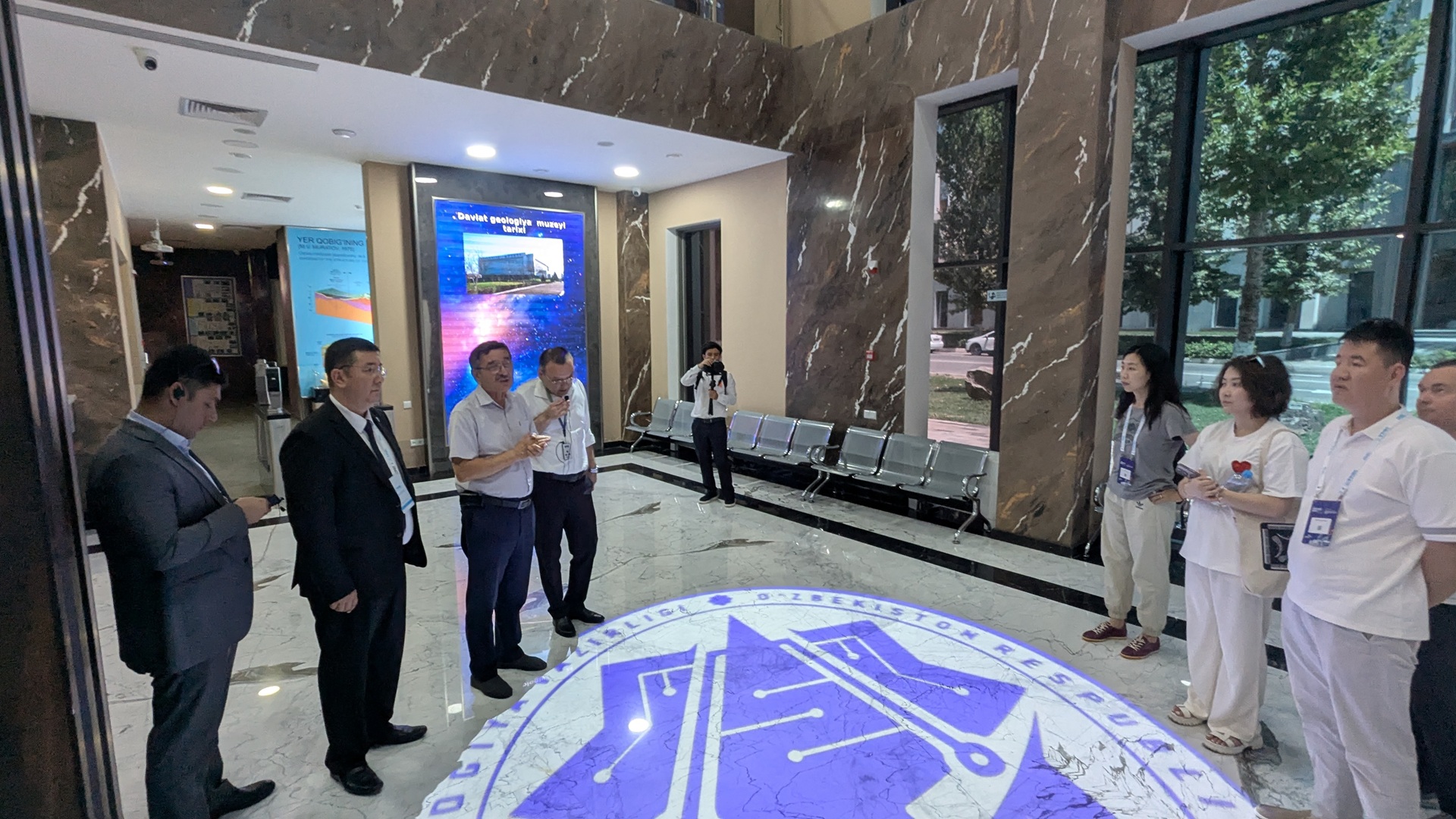
    After the conclusion of the MINEX Central Asia’25 Forum, participants enjoyed a fascinating visit to the State Geological Museum of the Republic of Uzbekistan, widely recognised as one of the largest and most significant scientific and cultural institutions in the region. Established in 1926, the museum was founded based on unique collections of rocks and minerals amassed by Uzbek geologists over many years of research. Today, the museum’s collection comprises more than 50,000 exhibits, making it second only to the Beijing Geological Museum in Central Asia in terms of size.

    Since 2024, the museum has occupied a new, modern building situated next to the Ministry of Mining Industry and Geology of Uzbekistan, as well as a branch of the University of Pisa. The three-level exhibition space features interactive multimedia technologies and encompasses a broad array of topics: mineralogy, palaeontology, the geological history of the country, both ancient and modern mining industries, technological processes of mineral extraction, and contemporary research into Uzbekistan’s subsoil.

    Among the most impressive halls is the vertebrate exhibition, where visitors can view skeletons and fragments of prehistoric animals, including a dinosaur skeleton discovered near Tashkent. The main hall houses mineral collections representing nearly all elements of the periodic table. The hall dedicated to historical development reveals the geological processes that have shaped present-day Uzbekistan over the past 600 million years, while the hall of mineral resources displays ore samples from more than 2,700 of the country’s deposits.

    A particular highlight is the petrography hall, showcasing igneous, metamorphic, and sedimentary rocks, as well as a regional hall with samples collected by geologists during numerous expeditions throughout Uzbekistan. The monographic and expedition halls recount discoveries of fauna and flora made by scientists from the 1920s to the present day.

    The Geological Museum is more than a centre for education; it is a place that reveals the link between nature and the country’s economy, industry, and culture. Here, visitors can see materials that underpin the construction, metallurgical, and jewellery industries, and state-of-the-art exhibition technologies make scientific knowledge accessible to a wide audience, from schoolchildren to professional geologists.

    This visit provided both an educational and inspirational finale to the forum’s packed programme, enabling participants to acquaint themselves with Uzbekistan’s natural and scientific heritage and to appreciate the country’s potential in geology and related fields.

  • Adriatic Metals Reaches Commercial Production at Vareš Silver Mine in Bosnia

    Adriatic Metals Reaches Commercial Production at Vareš Silver Mine in Bosnia

    Adriatic Metals has officially achieved commercial production at its Vareš silver operation in Bosnia and Herzegovina, marking a major operational milestone for the company. The announcement follows the successful ramp-up of the processing plant, which reached sustained throughput levels of 75% over 14 days, including 80% over the last seven days, and hit 90% of nameplate capacity (2,000 tonnes per day) in late June.

    Key to unlocking production was the resolution of tailings-related challenges. Adriatic completed the construction of the Veovača tailings storage facility in March, with tailings deposition starting on April 2. A newly completed access road between the Vareš processing plant and the storage site has been operational for the past month.

    Underground development at the Rupice mine, the project’s high-grade core, is also progressing well. The company reported 900 metres of development in Q2, a new quarterly record.

    “We are proud to announce the achievement of commercial production at the Vareš silver operation, marking a significant milestone that demonstrates our ability to operate at production levels that support strong cash generation,” said Adriatic CEO Laura Tyler. She credited the company’s team and management for their dedication in bringing the project across the finish line.

    All critical permits, equipment, and personnel are now in place, ensuring the operation is positioned for continued success and consistent output.

  • China Says Rare Earths “Not a Problem” for Europe Amid Export Licensing Concerns

    China Says Rare Earths “Not a Problem” for Europe Amid Export Licensing Concerns

    China’s Foreign Minister Wang Yi attempted to calm European fears over rare earth export restrictions during a visit to Berlin on Thursday, insisting that “rare earths have not been, are not, and will not be a problem” between China and Europe. His remarks come amid growing anxiety in the EU over Beijing’s tightening grip on critical mineral exports.

    Speaking alongside German Foreign Minister Johann Wadephul, Wang emphasized that China’s new licensing regime, which began in April, is standard practice for controlling dual-use goods, not an attempt to disrupt supply. “If legal applications are submitted, Europe’s and Germany’s normal needs can be met,” he said.

    The comments were made during Wang’s European tour, which is aimed at laying the groundwork for the upcoming EU-China summit later this month. The Chinese diplomat had previously met EU foreign policy chief Kaja Kallas in Brussels, who also pressed for an end to export curbs.

    Germany, one of the EU’s leading industrial powers and heavily reliant on critical materials, expressed unease over the export rules. “The restrictions are causing great concern and damaging China’s image as a reliable trade partner,” Wadephul said, though he noted efforts were underway to find “sustainable joint solutions” and ease tensions.

    Beijing controls over 90% of global rare earth processing capacity, making its policy decisions critical to industries ranging from electric vehicles to consumer electronics. In April, China imposed a requirement for exporters to obtain special licenses — a move seen by many as retaliation for escalating trade pressures, particularly with the United States.

    When asked if a deal on the export restrictions could be reached before the EU-China summit, Wang reiterated that the issue should not be viewed as a bilateral dispute. He also pointed to the Chinese Ministry of Commerce’s fast-track procedure to expedite applications and ease concerns.

    Beyond rare earths, the two ministers also discussed global flashpoints, including Russia’s invasion of Ukraine, tensions over Taiwan, and the Middle East crisis. Wadephul added, “We believe China can play a constructive role in relation to Iran.”

  • Zijin Mining Acquires One of Kazakhstan’s Largest Gold Mines for $1.2 Billion

    Zijin Mining Acquires One of Kazakhstan’s Largest Gold Mines for $1.2 Billion

    China’s leading gold and copper producer, Zijin Mining, has announced a $1.2 billion deal to acquire one of Kazakhstan’s largest gold mines — the Raygorodok Gold Mine — marking a significant expansion of its overseas resource portfolio.

    According to the statement released Monday, Zijin’s subsidiaries Zijin Gold International and Jinha Mining have reached an agreement to purchase the full mining and processing operations from RG Gold LLP and RG Processing LLP, the Kazakh firms currently operating the site. The acquisition includes both the mine itself and associated processing plant assets.

    This strategic move comes amid a surge in global gold prices, driven by escalating U.S.-China trade tensions and increased investor appetite for safe-haven assets. It also complements Zijin’s broader ambitions: the company previously announced plans to spin off Zijin Gold International and list it on the Hong Kong Stock Exchange to streamline and boost the value of its international gold operations.

    The Raygorodok acquisition reinforces China’s ongoing push to secure overseas supplies of key resources. Kazakhstan, rich in precious and critical minerals, has become a major focus for Chinese mining investment, particularly under Beijing’s Belt and Road Initiative.

  • EU Greenlights Subsidies for Energy-Intensive Industries in Major Policy Shift

    EU Greenlights Subsidies for Energy-Intensive Industries in Major Policy Shift

    In a landmark departure from long-standing EU policy, Brussels will now allow member states to subsidize the operating costs of energy-intensive industries in an effort to prevent the exodus of key sectors to countries with cheaper power.

    The newly approved measure permits governments to offer discounts of up to 50% on half of a company’s electricity usage, effectively covering up to 25% of their total power bills, as long as costs don’t fall below €50 per megawatt-hour. The policy, which breaks from traditional EU restrictions on state aid, will remain in effect until 2030.

    “If Europe wants to lead in clean tech, we must act with courage and clarity,” said EU competition chief Teresa Ribera. She called the move essential to keeping European energy systems “stable, affordable, and fair” without distorting the bloc’s single market.

    Historically, the EU treaties prohibited state aid to avoid giving domestic firms unfair advantages. While capital investments were occasionally supported, operational subsidies were typically off-limits—until now.

    Joachim Schmitz-Brieber of think tank EPICO noted the scale of the change: “This was only conceivable in absolutely exceptional cases. Now it’s policy.” The shift reflects serious concerns about industrial relocation, particularly as European firms struggle to compete with Chinese and U.S. companies enjoying lower energy costs.

    Industries eligible for the subsidies include steel, aluminum, and coal operations, which face mounting pressure from foreign competitors. The measure is expected to be most welcomed by Germany and France, which have long lobbied for relaxed state aid rules to help struggling industries.

    However, smaller EU countries have voiced concern that such subsidies could create market imbalances by favoring richer member states with deeper pockets.

  • Kazakhstan to Become World’s Second-Largest Gallium Producer as ERG Commits $20M Investment

    Kazakhstan to Become World’s Second-Largest Gallium Producer as ERG Commits $20M Investment

    Eurasian Resources Group (ERG) announced plans to invest $20 million into facilities for producing gallium in Kazakhstan, marking the country’s entry into the global gallium supply chain. Starting in 2026, ERG will begin extracting the critical mineral from bauxite ore processed for alumina, with initial production targets set at up to 15 metric tons per year.

    Gallium, essential in the production of semiconductors, radar systems, and missile guidance technologies, is listed as a critical mineral by both the United States and the European Union. ERG’s initiative comes at a time of growing concern over China’s dominance in the gallium market, which currently accounts for the vast majority of the world’s 760-ton annual output, according to the US Geological Survey.

    “ERG plans to become a significant player in the global market for gallium, starting production in 2026 to supply OECD countries,” said ERG CEO Shukhrat Ibragimov. The move could make Kazakhstan the world’s second-largest gallium producer, directly challenging China’s supply monopoly.

    China imposed a ban on gallium exports to the U.S. in December 2024, following a broader crackdown by Washington on Beijing’s chip industry. This followed a series of tighter export controls and licensing regimes applied to gallium, germanium, and antimony over the prior 18 months, raising alarm bells among Western nations dependent on Chinese supply.

    ERG’s investment also reflects Kazakhstan’s rising profile as a key critical mineral supplier. With its bauxite-processing infrastructure already in place, the country is well positioned to enter strategic supply chains for electronics, defence, and advanced manufacturing across Europe and North America.

  • Kazakhstan and China Deepen Nuclear and Trade Ties with $25 Billion Deal

    Kazakhstan and China Deepen Nuclear and Trade Ties with $25 Billion Deal

    Kazakhstan and China are set to ink 60 agreements worth up to $25 billion as part of a sweeping strategic partnership, solidified during the China–Central Asia Industrial and Investment Cooperation Forum held in Astana. The deals mark a new phase of cooperation, particularly in nuclear energy, infrastructure, and mineral supply chains.

    At the center of the new partnership is China National Nuclear Corporation (CNNC), which Kazakhstan has now officially designated as a strategic partner for its upcoming nuclear power plant projects. The two sides are also launching joint research into transboundary uranium ore belts, reinforcing Kazakhstan’s role as a global uranium powerhouse and a key nuclear fuel supplier to China.

    “Kazakhstan considers CNNC a reliable strategic partner,” President Kassym-Jomart Tokayev stated, highlighting CNNC’s global track record and Kazakhstan’s own dominance in uranium supply. In 2022, the country supplied 25% of U.S. uranium imports, more than twice that of Russia.

    Bilateral trade has also surged, hitting a record $44 billion in 2024, with Kazakhstan’s strategic location and mineral wealth serving as a cornerstone of China’s Belt and Road Initiative. The forum spotlighted plans to upgrade logistics corridors, expand border infrastructure, and simplify customs procedures, all part of Beijing’s wider ambition to make Kazakhstan Central Asia’s premier transit and supply hub.

    The announcement comes at a pivotal time. China’s push to build 150 nuclear reactors by 2035 — 27 of which are already under construction — is setting a new global pace in nuclear energy. Its domestic capacity, innovation leadership, and fourth-generation reactor tech, such as the recently launched Shidaowan-1 plant, are positioning Beijing to dominate nuclear exports just as it has with electric vehicles and batteries.

    This partnership could see Kazakhstan, which currently lacks any nuclear energy production, transform into a key node in China’s—and the world’s—nuclear future. With both countries leveraging uranium-rich geology and deepening geopolitical ties, this move further sidelines the West, especially the U.S., which remains heavily dependent on foreign uranium despite efforts to revive its own nuclear sector.