Website: Eurasia.com

  • Kazakhstan Unveils 38 Major New Mineral Deposits

    Kazakhstan Unveils 38 Major New Mineral Deposits

    Kazakhstan has announced the discovery of 38 new deposits of copper, nickel, coal, gold, and rare earth metals in the first quarter of 2025, according to an official government statement.

    The discoveries were made following extensive geological studies, including aerial photograph analysis, route surveys, drilling, geochemical testing, radiation and water sampling, and desk research.

    The newly identified deposits are estimated to contain:

    • 2.6 million tonnes of rare earth metals
    • 1.1 billion tonnes of brown coal
    • 3.7 million tonnes of copper and nickel
    • 19 tonnes of gold

    The total area of geological and geophysical exploration in Kazakhstan is expected to expand to 2.2 million square kilometres by 2026, up from just 2,000 square kilometres in 2024. This initiative follows a directive from President Kassym-Jomart Tokayev, who has instructed the cabinet to prioritise mineral exploration.

    To support this effort, the government has allocated $44.4 million for geological exploration between 2024 and 2026, with $14.8 million designated for 2025.

    Between 2018 and 2024, mining companies invested approximately $827.3 million in Kazakhstan’s mineral sector. In 2025 alone, exploration investments are expected to reach $206.8 million. A streamlined licensing process—requiring only reporting rather than predefined work volumes—has made the market more accessible to investors.

    Earlier this month, Eurasian Resources Group announced the discovery of a new copper deposit with projected reserves of 250,000 tonnes.
  • Kazakh Oligarch Vladimir Zhumanbayev Expands Mining Empire

    Kazakh Oligarch Vladimir Zhumanbayev Expands Mining Empire

    Vladimir Dzhumanbayev, one of Kazakhstan’s wealthiest businessmen, has further expanded his business empire through his company Altynalmas, which has officially acquired two new assets: TOO Anisimov Klyuch and TOO Met Miner. The transaction, confirmed by documentation published on the Kazakhstan Stock Exchange (KASE) and dated 12 June, grants Altynalmas a 100% stake in both companies. The size of the deal has not been disclosed.

    The acquisitions underscore Altynalmas’s ongoing strategy of broadening its footprint within the mining sector. TOO Anisimov Klyuch operates a copper deposit of the same name in East Kazakhstan’s Glubokovsky district, with a site area of approximately 11 hectares and an annual production capacity of up to 500,000 tonnes of ore. The company, with eight years of operational experience, has contributed over 45 million tenge in taxes, more than half of which were paid in the last year alone. Anisimov Klyuch was previously part of the Kazakhmys corporation.

    The second asset, TOO Met Miner, is engaged in geological exploration across the Aksuyskaya region of Akmola and the Stepnogorsk area. Within just three years, Met Miner has initiated the search for gold, copper, and other minerals. With integration into the Altynalmas structure, an acceleration in exploration and development efforts is anticipated.

    These moves reflect a continued concentration of mining assets in the hands of Kazakhstan’s largest capital holders. Dzhumanbayev himself holds significant stakes in Altynalmas and other major mining outfits, ranking 21st on the Forbes Kazakhstan’s 2025 rich list with a net worth reported at $472 million.

    Previously, Dzhumanbayev was mentioned in connection with a criminal investigation by Kyrgyz authorities, but proceedings were ultimately dropped. His growing influence in the sector signals a further consolidation of Kazakhstan’s mining industry under the control of its most powerful business figures.

  • Over 3 Million Tonnes of Secondary Resources Processed in Karaganda

    Over 3 Million Tonnes of Secondary Resources Processed in Karaganda

    In early 2024, Qarmet established a new specialised department—the Recycling Department—with the primary goal of managing the processes of recycling secondary resources.

    As of the end of May 2025, the company has processed over 3.1 million tonnes of secondary raw materials, which is more than three times the figure for the same period last year. Based on these achievements, the forecast for 2025 is 7.6 million tonnes of processed materials, equivalent to a 95.2% increase compared to the results of 2024.

    Significant results have also been achieved in the processing of steelmaking slag. At the beginning of 2024, the monthly output of metallic scrap did not exceed 4,000 tonnes. However, by the third quarter, thanks to the modernisation of equipment operation approaches and improvements in internal processes, this figure increased to 20,000 tonnes per month.

    Additional impetus for the development of steelmaking slag processing came from contracts with subcontractor organisations, which completed commissioning and start-up work by the end of the year and transitioned to industrial operation of the equipment. This not only significantly increased processing volumes but also became a driver for creating new jobs in related industries, ensuring additional employment and the development of production cooperation.

    For Qarmet, the recycling of secondary resources is not just a technological direction but a crucial element of sustainable development.

  • Savannah Resources Appoints Ex-Ministers to Steer Controversial Lithium Mine Forward

    Savannah Resources Appoints Ex-Ministers to Steer Controversial Lithium Mine Forward

    Despite persistent local resistance and legal challenges, Savannah Resources continues to press ahead with its controversial open-pit lithium mine in Barroso, northern Portugal. The company announced the formation of a new advisory committee, composed of former Portuguese government ministers Luís Mira Amaral (PSD) and Luís Amado (PS), German supply chain specialist Astrid Karamira, and former EDM president Carlos Caxaria.

    Savannah’s CEO Emanuel Proença stated that the committee’s role is to provide strategic guidance to ensure the “success and sustainability” of the Barroso lithium project, which is slated to begin production in 2027. The mine received a conditional Environmental Impact Statement (EIS) in 2023 and has been classified as a strategic project by the European Commission under the Critical Raw Materials Regulation.

    However, opposition remains fierce. NGOs including Unidos em Defesa de Covas do Barroso (UDCB), MiningWatch Portugal, and ClientEarth have formally challenged the European Commission’s support, claiming the project’s environmental and social impacts were insufficiently assessed.

    Savannah argues that the mine could supply enough lithium to power over half a million electric vehicle batteries annually — more than three times Portugal’s yearly vehicle sales. Nonetheless, the lack of a domestic refinery has drawn criticism, with the original plan for a lithium processing plant by GALP now abandoned and a new facility only projected for 2028.

  • Kazakhstan Selects CNNC to Lead Construction of Second Nuclear Power Plant

    Kazakhstan Selects CNNC to Lead Construction of Second Nuclear Power Plant

    Kazakhstan has chosen China National Nuclear Corporation (CNNC) to lead the consortium that will build the country’s second nuclear power plant, according to Almasadam Satkaliyev, head of the Atomic Energy Agency. The two sides plan to sign a general cooperation agreement on nuclear energy.

    Satkaliyev emphasized that China has full technological capabilities and industrial infrastructure to handle the entire nuclear cycle independently, making CNNC a top priority partner. He also highlighted CNNC’s ability to deliver “fast and high-quality” results.

    Previously, Kazakhstan selected Russia’s Rosatom as the lead for its first nuclear power project. Other shortlisted contenders included France’s Électricité de France (EDF) and South Korea’s Korea Hydro & Nuclear Power (KHNP). Satkaliyev described the Russian and Chinese proposals as “objectively the strongest.”

    The country’s nuclear ambitions have been progressing since 2021. In 2023, a national referendum showed strong public support for building a nuclear plant, with over 70% voting in favor. According to an official decree, the second nuclear plant will be built in the Zhambyl district of the Almaty region.

    The project will be handled by an international consortium of no more than five countries, with political risk assessments taken into account. The government expects the technical feasibility study to take one year and the design and planning stage another 18 months.

  • Dundee Precious Metals to Acquire Adriatic Metals in $1.25 Billion Deal

    Dundee Precious Metals to Acquire Adriatic Metals in $1.25 Billion Deal

    Toronto-listed Dundee Precious Metals (DPM) is set to acquire London- and Sydney-listed Adriatic Metals in a $1.25 billion cash-and-stock transaction, expanding its portfolio with the addition of the Vareš silver project in Bosnia and Herzegovina. The deal strengthens DPM’s position in the Balkans and adds near-term production growth and cash flow diversification.

    Adriatic shareholders will receive 0.1590 new DPM shares and 93 pence in cash for each Adriatic share, valuing each share at 268 pence—a 50.5% premium to Adriatic’s LSE closing price on May 19. DPM has already secured support from Adriatic directors and shareholders holding 37.23% of shares.

    The Vareš project, Adriatic’s flagship operation, completed construction last year and began producing silver/lead and zinc concentrates. The mine is ramping up to nameplate capacity of 0.8 million tonnes per year by the second half of 2025, with expansion studies under way to increase output to 1.3 million tonnes.

    “This transaction brings together complementary strengths to create a dynamic and diversified mining company with meaningful scale,” said Adriatic CEO Laura Tyler. DPM CEO David Rae highlighted the strategic fit, citing DPM’s expertise in underground mining and financial strength to maximise Vareš’ potential.

    Analysts from SP Angel endorsed the deal, viewing it as beneficial for Adriatic shareholders and noting that the combined entity could become a key player in the Balkan mining sector. They also noted possible but unlikely interference from Zijin, which already operates in the region.

  • Uzbekistan Unveils $3 Trillion Mineral Reserve Potential, Invites Global Investment

    Uzbekistan Unveils $3 Trillion Mineral Reserve Potential, Invites Global Investment

    At the Tashkent International Investment Forum, President Shavkat Mirziyoyev announced that Uzbekistan holds mineral reserves valued at an estimated $3 trillion, underscoring the country’s vast potential in high-tech metals. Speaking to a global audience, the President called on international investors to engage in full-cycle mineral processing and manufacturing, offering state support for ventures that start from geological exploration.

    Among the incentives, Mirziyoyev promised a ten-year refund of rent taxes for companies that develop end-to-end production capabilities. He also emphasized that Central Asia could become a regional hub for mineral raw material processing, with construction already underway on technoparks in the Tashkent and Samarkand regions focused on rare and rare earth metals.

    Previously, the Uzbek government reported the discovery of over 30 rare and critical minerals across its territory, including lithium, vanadium, germanium, and titanium. A national development strategy published in March outlines 76 mineral projects worth a combined $2.6 billion.

  • U.S. and Kazakhstan Deepen Strategic Collaboration on Critical Minerals

    U.S. and Kazakhstan Deepen Strategic Collaboration on Critical Minerals

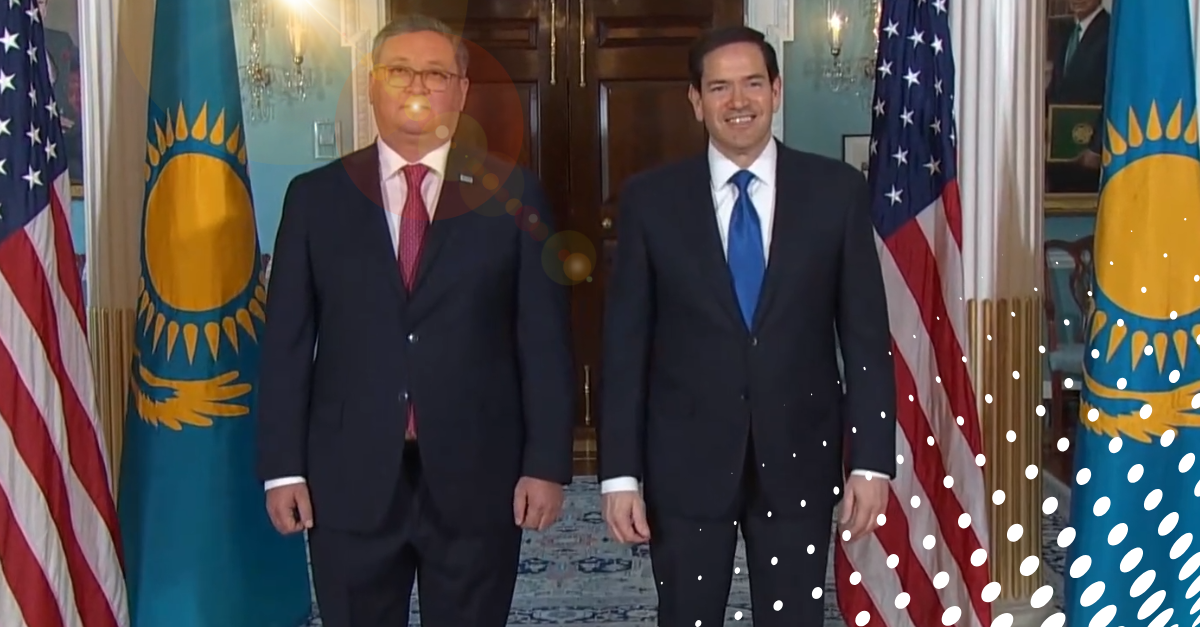
    A high-level meeting between U.S. Secretary of State Marco Rubio and Kazakhstan’s Deputy Prime Minister & Foreign Minister Murat Nurtleu marks a pivotal step forward in the evolving partnership between Washington and Astana, particularly in the domain of critical minerals. This official dialogue underscores both nations’ shared commitment to enhancing global supply chain resilience and advancing national security interests by diversifying sources of strategically vital materials.

    Kazakhstan holds substantial reserves of rare earths, lithium, copper, lead, zinc, and other critical minerals—resources that are increasingly central to cutting-edge industries and clean technology. The nation has rapidly increased its rare-earth mining output, with exports rising almost fivefold since 2020. It is also producing high-purity manganese sulphate for lithium-ion batteries and is actively developing major graphite deposits, laying the groundwork for lithium-ion phosphate battery production in the future. Additionally, Kazakhstan is among the few countries with gallium production capabilities and is seeking to broaden its role from raw extraction to include value-added processing and technology innovation.

    This strategy aligns closely with U.S. efforts, as articulated by Secretary Rubio, to reduce American dependence on single-source suppliers and cultivate secure, sustainable sourcing for critical minerals. Such diversification is increasingly urgent amid shifting global trade dynamics and export restrictions from dominant producers.

    The Trump administration’s focus on Central Asia, emphasized by Secretary Rubio’s tenure, positions Kazakhstan as a critical player in securing supply chains for the U.S. and allied nations. This collaboration aims to leverage Kazakhstan’s mineral wealth for not just extraction, but also downstream processing, technology transfer, and the nurturing of industrial ecosystems that contribute to sustainable economic growth in both countries.

    The private sector is already responding to these strategic signals. Cove Capital LLC, the first U.S. company to invest in Kazakhstan’s critical minerals sector, announced its commitment to deepening engagement and supporting projects that echo the reform-driven economic vision of President Kassym-Jomart Tokayev. These investments are designed to benefit both nations, creating new jobs, fostering technology innovation, and anchoring Kazakhstan more firmly within the global critical minerals value chain.

    “This is more than a transaction; it’s a strategic alliance.”

    The meeting also highlighted the broader U.S. strategy in Central Asia, with Secretary Rubio reaffirming support for regional integration through the C5+1 diplomatic platform and enhanced security cooperation.

  • Investors Flock to Central Asia’s Mining and Resources

    Investors Flock to Central Asia’s Mining and Resources

    The second annual edition of Montfort Eurasia’s Investor Perception Report on Central Asia and the Caucasus is out now!

    For the second consecutive year, Montfort Eurasia has conducted in-depth polling of international investors across the #UK and #US, revealing a surge in investor interest in #CentralAsia and the #Caucasus — with interest in the region tripling since 2023.

    This year’s report sheds light on both rising enthusiasm and persistent challenges, underscoring the importance of investor education and proactive engagement with governments and local markets as the region positions itself as a major emerging economic hub.

    🔑 Key Takeaways:

    • 66.7% of UK investors and 72.9% of US investors report strong interest in global emerging markets — a significant increase from last year.
    • Interest in Central Asia and the Caucasus has surged, with 47% of investors now actively exploring opportunities in the region (up from just 15.5% in 2023).
    • Mining and natural resources continue to draw strong interest, with 49.2% of foreign investors identifying the sector as one of the most attractive.
    • Other leading sectors include industrial and manufacturing (63.5%) and oil and gas (57.9%).
    • Security (76%) and political stability (65%) remain the top investor concerns.
    • International media (80%) and financial analysts (70%) are the most relied-upon sources for emerging market insights.
    • Kazakhstan, Armenia, Azerbaijan, and Uzbekistan emerge as the top investment destinations.

    As regional economies mature and open up, the report highlights a growing appetite for opportunity — but also a clear call for strategic communication and confidence-building measures.

    📘 Read the full Investor Perception Report here

  • Intensifying Competition for Central Asia’s Critical Raw Materials

    Intensifying Competition for Central Asia’s Critical Raw Materials

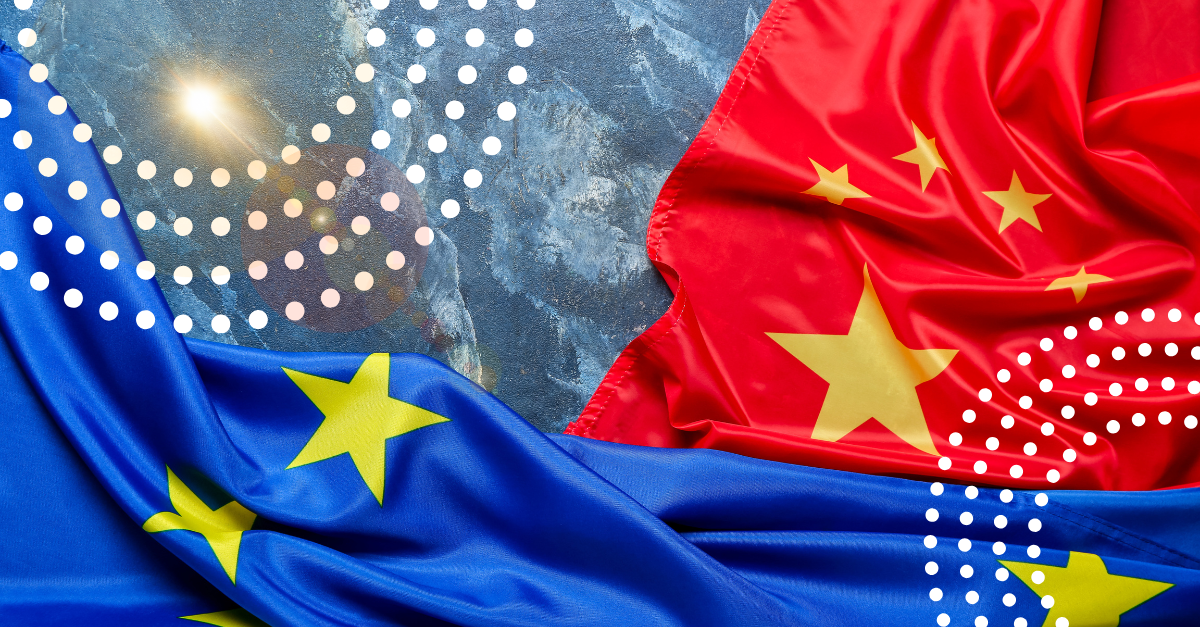
    As the race for Central Asia’s critical raw materials accelerates, the EU is intensifying efforts to reduce its dependency on China—currently the dominant force in the region’s resource exports. Brussels is taking a new approach: instead of merely sourcing raw ore, it is promoting full value-chain development within Kazakhstan and Uzbekistan.

    The EU’s strict environmental standards contrast with growing criticism of China’s ecological impact. In response, Beijing is highlighting its commitment to “green” cooperation. Over the past 18 months, Chinese investments in Central Asia’s energy and manufacturing sectors have surged to $4.1 billion and $11.8 billion, respectively.

    EU MOVES TO STAKE CLAIM IN STRATEGIC MINERALS

    In June 2025, the European Commission designated the Sarytogan graphite deposit as strategic under its Critical Raw Materials Act and began courting investors with EU-backed contract support. Located between Europe and China—which processes over 90% of global graphite—Sarytogan has become a focal point in the resource race.

    Earlier, in August 2024, the European Bank for Reconstruction and Development (EBRD) made its first direct investment in Central Asian graphite, acquiring a 17.36% stake in Sarytogan Graphite for €3 million. Germany has also moved decisively: in mid-2023, HMS Bergbau AG secured a $200 million lithium deal, followed by the formation of a German industrial consortium in Kazakhstan in early 2024.

    CHINA UPS ESG STANDARDS AT HOME AND ABROAD

    Facing growing scrutiny, China has enacted a new Mineral Resources Law, effective July 1, 2025, that for the first time mandates environmental restoration plans prior to mining. While the law raises environmental, social, and governance (ESG) requirements, critics point to vague restoration rules and weak provisions for community involvement. Nonetheless, China is encouraging similar standards in its overseas projects—including in Central Asia.

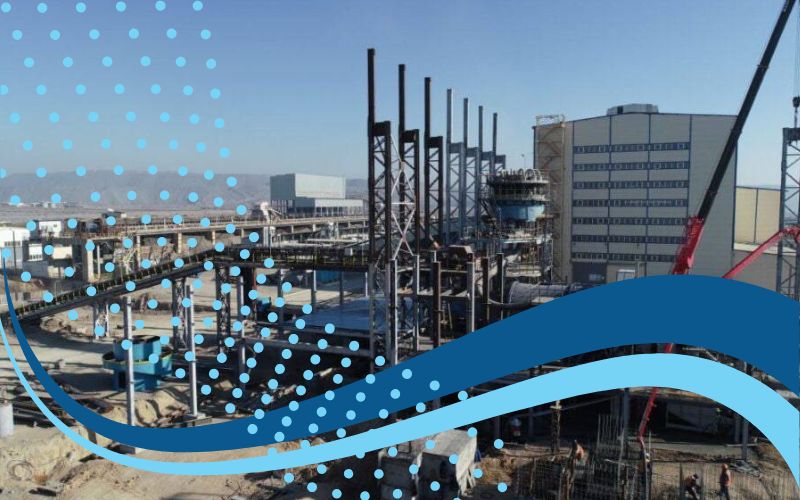
    To secure supply chains, China is focusing on vertical integration. One major initiative is East Hope Group’s $12 billion industrial project in Kazakhstan, which will combine mining, processing, electrolysis, and power generation, creating up to 10,000 jobs and a self-contained industrial ecosystem.

    INTENSIFYING COMPETITION AND NEW STANDARDS

    As competition heats up, Central Asian governments are under pressure to elevate both environmental and technological benchmarks. The EU is leveraging “soft power” through financing, green policy frameworks, and public diplomacy. Meanwhile, China is building vertically integrated industrial clusters and expanding its outreach through experts and state media.