Website: Eurasia.com

  • Kyrgyzstan Launches Underground Gold Mining at Kumtor, Prioritizing Sustainability and State Control

    Kyrgyzstan Launches Underground Gold Mining at Kumtor, Prioritizing Sustainability and State Control

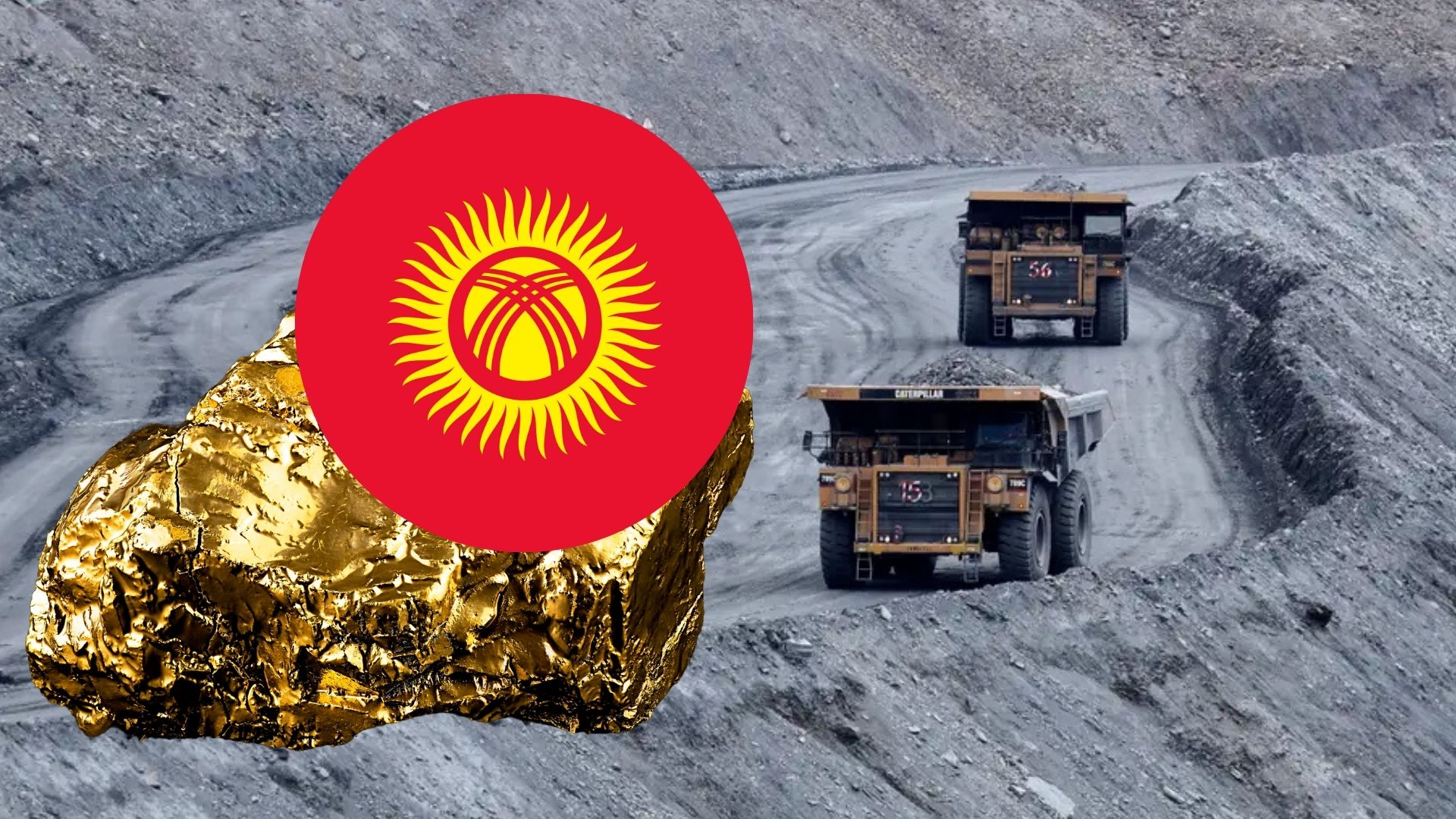
    BISHKEK, Kyrgyzstan — President Sadyr Zhaparov officially launched an underground gold mining project at the Kumtor Gold Company during a working visit to the Issyk-Kul region on Wednesday, marking a significant shift in the country’s mining strategy and environmental approach.

    The project, which builds on over 1,600 meters of developed tunnels, is set to tap into high-grade ore deposits containing over 5 grams of gold per ton. The underground operation is expected to last 17 years and has added 147 tonnes of gold to Kyrgyzstan’s state reserve balance.

    President Zhaparov hailed the move as both an economic and environmental milestone.

    “This marks a new chapter for Kumtor — one that aligns with our goals of sustainable development and environmental protection, especially in preserving our glaciers,” he said.

    The president underscored the importance of the Kumtor deposit’s return to state ownership, calling it a historic achievement. Under domestic management since May 2021, Kumtor has generated $3.45 billion in revenue, of which $891.6 million has gone to the state budget. Over 54 tonnes of gold have been produced in that time, with $441 million in dividends transferred to the state — a dramatic increase compared to just $100 million during the previous 28 years of foreign operation.

    The project is being executed entirely by local specialists, with underground mining chosen for its lower environmental impact compared to open-pit methods. While open-pit operations will continue, the strategic focus will increasingly shift underground.

    Zhaparov also revealed plans to process gold-rich tailings and develop new sites, including the Togolok deposit and the Jangart exploration area, as part of Kyrgyzstan’s broader efforts to maximize national resource benefits.
  • Kazatomprom to Lower Uranium Production in 2026 Amid Market Uncertainties

    Kazatomprom to Lower Uranium Production in 2026 Amid Market Uncertainties

    Friday, 22 August 2025 – Kazakhstan’s national atomic company, Kazatomprom, the world’s largest producer of natural uranium, has announced a significant reduction in its planned production for 2026. The company will lower its output by approximately 10% from previous targets, stating that current market conditions do not provide sufficient incentive to return to its 100% production levels at this time.

    The decision was announced alongside the company’s consolidated financial results for the first half of 2025. CEO Meirzhan Yussupov stated that while the long-term price for uranium has remained stable at around US$80 per pound, proving that “fundamentals remain strong,” the company does not view the current supply-demand balance and existing uncovered demand as sufficient to justify a return to full capacity.

    The reduction will decrease Kazatomprom’s nominal production level (on a 100% basis) from 32,777 tU (around 85 million pounds U₃O₈) to 29,697 tU. This cut, which amounts to roughly 8 million pounds, is expected to reduce the world’s primary uranium supply by about 5%. The majority of this production adjustment is attributed to the JV Budenovskoye project.

    Kazatomprom’s announcement comes despite a positive first half of 2025, which saw a 13% year-on-year increase in production to 12,242 tU (on a 100% basis). The company’s whole-year production guidance for 2025 remains unchanged. Kazatomprom also confirmed that its sulphuric acid supplies, a key reagent for its in-situ leach mining process, are estimated to be stable for 2026.

    In his statement, Yussupov also highlighted the potential for a new domestic market for the company’s output, pointing to Kazakhstan’s plans to build nuclear power plants. With each plant requiring about 400 tonnes of uranium annually, this could translate to a cumulative demand of 72,000 tonnes over the lifetime of three plants, potentially creating a new allocation for a portion of the company’s production.

  • Torngat Metals Secures Rare Earth Supply Deal with German Magnet Maker VAC

    Torngat Metals Secures Rare Earth Supply Deal with German Magnet Maker VAC

    Montreal-based Torngat Metals has signed a memorandum of understanding (MoU) with German company Vacuumschmelze (VAC) to pursue a long-term supply agreement for rare earth oxides. The non-binding deal was formalised in Berlin on Tuesday, marking a significant step in diversifying the global rare earth supply chain.

    The agreement was signed by Torngat Metals CEO Yves Leduc and VAC CEO Erik Eschen, with the attendance of Canada’s Minister of Energy and Natural Resources Tim Hodgson and Germany’s Minister for Economic Affairs and Energy Katherina Reiche. Both nations have been actively seeking to reduce dependence on China, which currently dominates the global rare earths industry, particularly for technologies such as wind turbines, electric vehicles, and defence systems.

  • Kyrgyzaltyn Strengthens Ties with Tajik Mining Giants Through Strategic Co-Op Agreements

    Kyrgyzaltyn Strengthens Ties with Tajik Mining Giants Through Strategic Co-Op Agreements

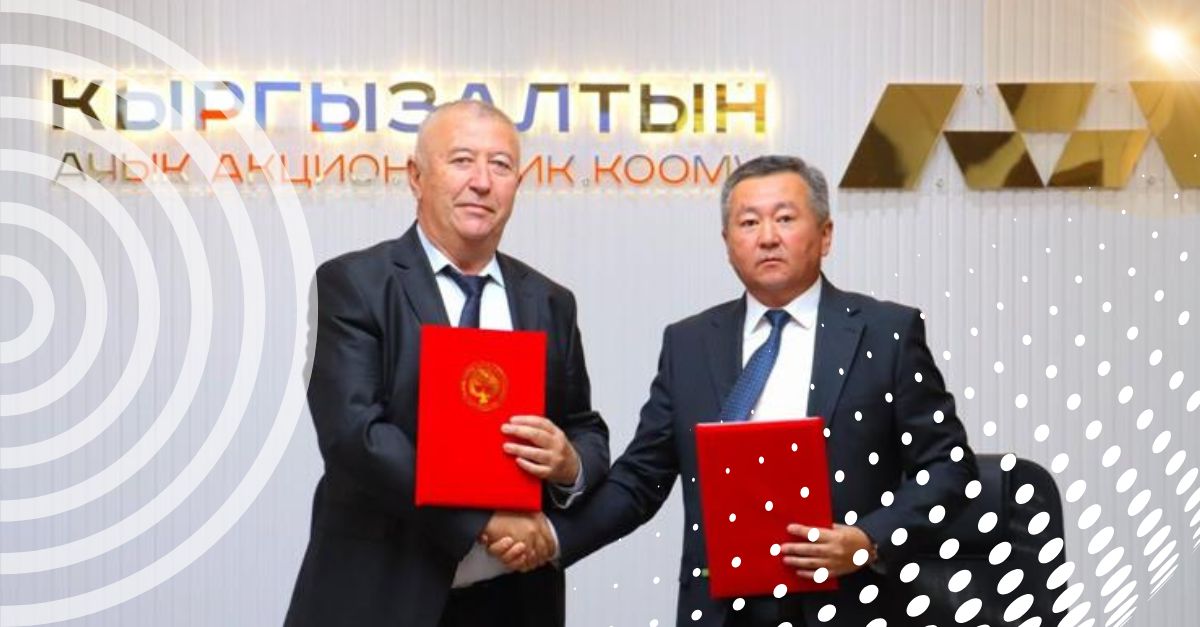
    Kyrgyzaltyn, Kyrgyzstan’s state-owned mining company, has entered on 27 August 2025 into significant co-operation agreements with three of Tajikistan’s premier mining firms: Talco Gold, Tajik-China Mining Company, and Pakrut. The memorandums of understanding were officially signed during a high-level visit by Tajikistan’s First Deputy Prime Minister, Hokim Kholikzoda, and a large business delegation.

    The agreements, which were announced by Kyrgyzaltyn, are intended to bolster the development of the mining sector across both nations. The focus will be on the implementation of advanced technologies, improving production efficiency, and creating new job opportunities.

    In a further sign of burgeoning economic ties, a separate memorandum was also signed between the Tajik delegation and the wheel processing and restoration plant belonging to Kumtor Gold Company, a subsidiary of Kyrgyzaltyn.

    As part of their visit, the Tajik delegation toured several key Kyrgyz enterprises, including the wheel processing and restoration factory and Kyrgyzaltyn’s main facilities.

    Kyrgyzaltyn, which holds a crucial position as the sole domestic producer of refined gold and gold bars in Kyrgyzstan, stated that the newly signed agreements will lay the groundwork for strengthened good-neighbourly relations and foster long-term, mutually beneficial collaboration between the two countries.

  • Historic Swedish Church Completes Epic Relocation by LKAB

    Historic Swedish Church Completes Epic Relocation by LKAB

    In a meticulously orchestrated feat of engineering, the iconic Kiruna Kyrka, a 1912 red wooden church weighing 672 tonnes, arrived at its new location in the Arctic town of Kiruna on Wednesday after a two-day, five-kilometre (three-mile) journey. The relocation was necessitated by the expansion of Europe’s largest underground mine, operated by LKAB.

    The church, which began its journey on Tuesday, inched forward at a pace of half a kilometre per hour on two remote-controlled flatbed trailers. Its arrival around 2:30 pm (1230 GMT) was celebrated with a musical fanfare, marking the culmination of a complex logistical operation.

    Kiruna’s entire town centre is being relocated due to the LKAB iron ore mine’s deepening excavations, which have compromised the stability of the ground. The church’s new location, chosen to preserve its character and connection to its surroundings, has been rotated 180 degrees, positioning the altar to face west—a symbolic gesture towards the town and its residents.

    The relocation has captivated widespread attention, with large crowds gathering along the route to witness the historic event. Lisa Weber, a 26-year-old real estate agent from Germany, travelled to Kiruna specifically to see the relocation, describing it as a “historical” moment. “It’s something that you do once in your life, or see once in your life,” she told AFP.

    King Carl XVI Gustaf of Sweden participated in the festivities, engaging with the Argentinian driver, Sebastian Druker, who remotely controlled the trailers using a joystick. The king also joined an attempt to set a world record for the largest “kyrkkaffe” (a coffee break following a church service).

    The town’s relocation process, which began nearly two decades ago, is expected to continue for years. The new town centre was inaugurated in September 2022. LKAB has offered financial compensation or rebuilding services to those affected by the relocation, with 23 historic buildings already moved before the church.

    Despite the meticulous planning, not all residents are satisfied. Critics, including local podcast hosts Alex Johansson and Magnus Fredriksson, have expressed dissatisfaction with LKAB’s handling of the relocation. “LKAB maybe didn’t read the room so well when they destroyed the whole town and then they stage this huge street party for the people,” Fredriksson remarked to broadcaster SVT.

    LKAB’s discovery of Europe’s largest known deposit of rare earth elements near the Kiruna mine in 2023 has added another layer of complexity to the situation. These elements are crucial for the green transition, particularly in the manufacturing of electric vehicles. However, activists argue that mining operations are detrimental to the region’s pristine forests, lakes, and traditional Sami reindeer herding practices.

    The relocation of the church alone is estimated to cost LKAB 500 million kronor ($52 million). Designed by Swedish architect Gustaf Wickman, the church features a blend of architectural influences, including designs inspired by the Indigenous Sami people. The church’s handblown glass windows were removed before the move and replaced with painted plywood. The separate belltower will be relocated next week.

    As Kiruna continues to adapt to the demands of modern industry, the relocation of the Kiruna Kyrka stands as a testament to the town’s resilience and the intricate balance between progress and preservation.

  • Chvaletice Manganese Project Highlights EU’s Critical Minerals Delivery Gap in Central Europe

    Chvaletice Manganese Project Highlights EU’s Critical Minerals Delivery Gap in Central Europe

    In the quiet industrial belt east of Prague, the Chvaletice Manganese Project is being touted as Europe’s best chance to secure a domestic source of high-purity manganese for electric vehicle (EV) batteries. Led by Canada-listed Euro Manganese, the project would extract 50,000 tonnes of battery-grade manganese sulphate per year from decades-old tailings — without opening a new mine.

    Endorsed by the European Commission under the Critical Raw Materials Act (CRMA) and backed by the European Investment Bank and EIT InnoEnergy, Chvaletice is the only Czech project on the EU’s Strategic Projects list. Yet despite feasibility studies and EU support, construction has not begun. Final environmental permits and grid access approvals are still pending.

    The CRMA, which came into force in May 2024, promises 27-month fast-track permitting for Strategic Projects. But in Czechia — as in Slovakia, Poland, and Hungary — this has not yet been transposed into national law, leaving projects like Chvaletice in limbo.

    Across Central and Eastern Europe (CEE), multiple projects have been named under the CRMA, from Poland’s lithium and rare earth ventures to Slovakia’s proposed Magnon Green Energy separation plant near Nitra. None have yet reached financing or construction. A Penta Group analysis warns of “technical, financial, social, and geopolitical” barriers delaying progress.

    The funding gap is also stark. The International Energy Agency (IEA) estimates the EU spends just 0.05% of GDP on critical raw materials — far less than the US (0.2%) or Australia (0.39%). In CEE, governments have prioritized downstream EV battery plants, while upstream mining and processing projects receive little public funding.

    China’s dominance in CRM processing compounds the risk. The country controls over 80% of rare earth refining and nearly all natural graphite processing. In July, Beijing tightened export controls further, adding gallium, antimony, and manganese to its restricted list.

    Industry leaders warn that unless Europe accelerates CRM development, it will remain strategically vulnerable. “The EU may as well be a province of China,” AMG Lithium CEO Stefan Scherer recently remarked, urging a “continental-scale investment surge.”

    For now, Chvaletice stands as CEE’s flagship. But with the EC due to revise its Strategic Projects list in early 2026, its future hinges on whether Czech authorities can align laws and issue permits in time. “Brussels has recognised the urgency,” Euro Manganese CEO Matthew James said. “But unless national systems accelerate, these projects will miss the transition window.”

  • Kazakhstan’s RG Gold Expands Operations, Safety Standards, and Workforce Development Amid Booming Mining Sector

    Kazakhstan’s RG Gold Expands Operations, Safety Standards, and Workforce Development Amid Booming Mining Sector

    Kazakhstan’s mining industry is thriving as rising gold and commodity prices drive exploration, investment, and legislative reform. Among the country’s leading players, RG Gold is charting a growth path that blends operational expansion, safety leadership, and employee development while preparing for its transition into a global gold operator.

    Deputy CEO and CFO Marat Shaimardanov said recent government reforms, including a new royalty-based tax code and deregulation of mining laws, have spurred fresh activity. “There’s a lot of deregulation happening for the mining industry, which is reflected by its current increased activity,” he noted.

    Operational Growth and Heap Leach Revival
    RG Gold has restarted its heap leach operations after exploration revealed remaining potential, buoyed by higher gold prices. The site is expected to run for another five years. Meanwhile, the company’s carbon-in-pulp (CIP) plant, built in 2022, has been upgraded from 5 Mtpa to a 7.2 Mtpa run rate, with plans to stabilize at 7+ Mtpa by 2026. Exploration has also expanded resources to more than 10 million ounces, with reserves rising from 450,000 oz to 4 million oz in less than eight years.

    The firm is expanding its tailings storage facility, identifying new nearby deposits, and improving environmental compliance through a new oxygen plant. It is also preparing to transition from outsourced mining to owner-operated fleets to boost efficiency and safety.

    Safety and Cultural Transformation
    Shaimardanov stressed that safety remains a cornerstone of RG Gold’s strategy. The company has tripled its safety department headcount and changed its reporting culture to encourage incident disclosure without penalizing staff KPIs. “Even our CEO was once stopped at site for not wearing the correct gloves,” he said, underlining a culture where safety applies to all, from top management to contractors.

    Local and Workforce Engagement
    RG Gold prioritizes local contractors for both essential and non-essential services, strengthening ties with surrounding villages and SMEs while sourcing international partners only for specialized needs such as SGS lab testing.

    Employee development has also advanced, with personal development plans, international training programs, and partnerships with universities. The company supports professional associations, including a geotechnical engineering network now recognized internationally. Staff turnover has dropped sharply from 19% to 5% in just two years.

    Looking Ahead
    With construction projects delivered on schedule and ore reserves expanding, RG Gold is now focused on sustaining operational quality, ensuring smooth shareholder transitions, and pursuing new gold tenders. “It’s really about sustaining the business, raising the bar in operational quality, retaining employees, and taking our expansion to the next level,” Shaimardanov said.

  • Critical Metals Reports Thick Rare Earth and Gallium Intercepts at Tanbreez in Greenland

    Critical Metals Reports Thick Rare Earth and Gallium Intercepts at Tanbreez in Greenland

    Critical Metals (Nasdaq: CRML) has reported strong drilling results from its Tanbreez project in southern Greenland, one of the world’s largest undeveloped heavy rare earth deposits outside China.

    The standout intercept came from hole DDH-C-24 at the Fjord deposit, returning 65 metres grading 0.55% total rare earth oxides (TREO) from surface, including 25.5% heavy rare earth oxides (HREO) and 90 parts per million (ppm) gallium oxide (Ga₂O₃). Gallium is a key energy transition material used in semiconductors, solar panels, and LED technologies.

    “These incredible results underscore the strategic value of Tanbreez as a rare earth elements and gallium project with scale, grade, and a high proportion of critical heavy rare earths,” said CEO and executive chair Tony Sage. “With China’s total control over the rare earth market globally, securing sources of these critical minerals has become paramount for US defence capabilities and national security.”

    Additional assays included 61.3 metres grading 0.5% TREO, 26% HREO, and 100 ppm Ga₂O₃ in hole DDH-B-24; 41 metres at 0.52% TREO, 26.9% HREO, and 95 ppm Ga₂O₃ in DDH-A2-24; and 40 metres at 0.48% TREO, 27.1% HREO, and 100 ppm Ga₂O₃ in DDH-A1-24. Mineralisation remains open at depth, with over 1,500 metres drilled this year and further results pending.

    While grades are lower than some high-grade global rare earth projects, the bulk tonnage and high proportion of heavy rare earths position Tanbreez alongside large-scale deposits such as Kvanefjeld in Greenland and Norra Kärr in Sweden.

    According to a March preliminary economic assessment, Tanbreez has a pre-tax net present value of $2.8–$3.6 billion (at 12.5–15% discount rates) and an internal rate of return of 180%. Current resources stand at 25.4 million tonnes indicated at 0.37% TREO and 19.5 million tonnes inferred at 0.39% TREO.

    The news comes shortly after the US Department of Defense deepened its support for domestic rare earth production through a partnership with MP Materials, highlighting growing geopolitical urgency around supply chain diversification.

    Critical Metals shares fell 6.9% on Monday to $5.43, giving the company a market cap of $534.4 million.

  • Military Metals Targets Strategic Antimony-Gold Potential in Slovakia’s Tiennesgrund Project

    Military Metals Targets Strategic Antimony-Gold Potential in Slovakia’s Tiennesgrund Project

    Military Metals (CSE: MILI) says its Tiennesgrund Antimony-Gold Project in eastern Slovakia could play a key role in bolstering Europe’s strategic resource independence. Following a preliminary field inspection and historical data review, CEO Scott Eldridge highlighted the project’s potential to strengthen domestic supply chains for critical minerals under the European Union’s Critical Raw Materials Act.

    “Antimony is listed as a critical raw material under the EU’s CRMA, and our project has potential to support the continent’s ambition to secure domestic supply chains for essential minerals,” Eldridge said. “We’re proud of the possibility that we may contribute to Europe’s resilience in the face of global resource volatility and will seek to help power the technologies that drive the green and defence sectors.”

    The 13 km-long, 0.8–1.4 km-wide property hosts numerous historical adits, where mineralised material remains visible in waste dumps. Historical sampling indicates antimony grades between 2.5% and 39.4%, and gold grades from 0.07 g/t to 9.6 g/t.

    A field campaign is planned for October 2025 to study structural controls of mineralisation and define drill targets. The program will include trenching, sampling, and mapping, with drill testing to follow where results indicate significant concentrations of antimony and gold.

    Military Metals, based in British Columbia, focuses on acquiring and advancing mineral projects with a particular emphasis on antimony, a metal critical to batteries, renewable energy systems, flame retardants, and advanced technologies such as liquid metal batteries and solar panels.

    Antimony prices have remained stable since July, with Shanghai Metals Market data showing No.1 ingot prices between ¥185,000 and ¥188,000 ($39,456–$40,092) per tonne.

  • Montenegro to Modernize Mining Laws in Line with EU Standards, Focus on Sustainability and Critical Minerals

    Montenegro to Modernize Mining Laws in Line with EU Standards, Focus on Sustainability and Critical Minerals

    Montenegro is preparing a new set of mining and geological exploration laws aimed at making the sector more sustainable, investor-friendly, and aligned with European Union standards, according to Marko Vučinić, acting director general of the Directorate for Geology and Mining at the Ministry of Energy and Mining.

    “Our goal is to support the economy and simplify procedures, but also to make mining environmentally sustainable, with a special focus on rehabilitation, recultivation, and protecting the Montenegrin stone brand,” Vučinić told the Gazette of the Chamber of Commerce.

    The new law on geological exploration, expected by the end of the year, will harmonize Montenegro’s framework with EU practice while simplifying procedures. It will place particular emphasis on hydrogeology, water resource management, and seismicity, given the country’s earthquake-prone geography. A geological cadastre will also be established to provide investors with greater transparency and facilitate decision-making.

    Vučinić stressed that the mining sector is an important employer in Montenegro, with over 5,000 jobs, covering not only mines but also the extraction of technical and construction stone. Currently, 53 concessions are active for detailed geological research and mineral exploitation.

    He noted that Montenegro possesses significant resources critical to the EU, including bauxite, lead, zinc, barite, and construction stone. The Varina copper deposit and the Red Mud Basin in Podgorica, rich in rare minerals, are among the country’s key strategic assets.

    The upcoming mining law will target illegal exploitation, streamline permitting, and strengthen quality control, with Croatia’s framework serving as a model. The government hopes to see parliament debate the laws in the autumn session.

    A further challenge lies in addressing the shortage of mining and geology professionals, as Montenegro lacks a dedicated faculty. Vučinić said the government is considering establishing new academic programs and offering scholarships to attract students to the sector.