Website: Eurasia.com

  • Kazakhstan Detects $1.9 Million in Subsoil Use Violations Through Digital Monitoring

    Kazakhstan Detects $1.9 Million in Subsoil Use Violations Through Digital Monitoring

    Since January 2025, Kazakhstan has operated a Unified Subsoil Use Platform, through which 2,443 operators have submitted electronic reports. The new digital monitoring tool has enabled regulators to uncover violations of subsoil use legislation.

    As a result, companies received notifications of breaches across 196 contracts and licenses, with total penalties amounting to 910 million tenge (approx. $1.9 million). In addition, 37 contracts were terminated — 30 for geological exploration, five for extraction, and two for combined activities. Authorities also revoked 61 licenses from non-compliant operators.

    The Ministry of Internal Affairs and the National Security Committee have halted illegal mining operations in four regions of the country. In the third quarter of this year, the agencies plan to issue about 350 notifications and conduct 65 on-site inspections.

    By the end of the year, a draft law on digitalization and auctions, along with amendments to allocate 50% of subscription bonuses to state geological exploration, will be submitted to the Parliament of Kazakhstan, Kazinform reports.

  • Lloyd’s of London Scraps Net Zero Policies Under New CEO Amid Global Backlash

    Lloyd’s of London Scraps Net Zero Policies Under New CEO Amid Global Backlash

    Lloyd’s of London has abandoned its net zero insurance commitments following pressure from political and industry figures, including former U.S. president Donald Trump. Patrick Tiernan, who became chief executive of the centuries-old insurance market earlier this year, confirmed that member insurers will no longer be bound by previous pledges to restrict coverage for high-pollution fossil fuel projects.

    Under the new direction, Lloyd’s members will only be required to comply with national laws in the jurisdictions where they operate, removing the climate targets introduced by former chief executive John Neal in 2021. Neal had aimed to steer Lloyd’s toward a full net zero transition by 2050, including restrictions on underwriting coal mines, coal-fired power stations, and Arctic oil sands projects.

    Tiernan defended the policy reversal, stressing that Lloyd’s must remain “apolitical” and aligned with government-set regulations rather than independently pursuing climate commitments. “The 2050 targets are government targets. We operate in multiple jurisdictions under different governments with different targets. We have to operate under the policies and the laws of where we operate,” he said.

    The decision comes as Trump’s election victory last November accelerated a rollback of climate initiatives in the U.S., with his administration promoting fossil fuel expansion under the slogan “drill, baby, drill.” Similar anti-net-zero positions have been taken by Britain’s Conservatives and Reform UK, citing economic risks of rapid green transitions.

    Environmental campaigners have strongly criticized the move, warning that Lloyd’s continued support for fossil fuel projects undermines efforts to combat climate change. However, Lloyd’s said its role is to enable insurers to operate freely within legal frameworks while supporting governments in shaping energy strategies. A spokesperson stated: “Our aim is to support whatever energy mix individual governments determine is in their jurisdiction’s best interests while enabling managing agents to operate at the vanguard of new energy technologies.”

  • UN Committee Rules Portugal Breached Treaty in Barroso Lithium Mine Approval

    UN Committee Rules Portugal Breached Treaty in Barroso Lithium Mine Approval

    Portugal violated international obligations by restricting public access to information during the environmental licensing of Europe’s largest lithium mining project, a UN committee ruled on Wednesday.

    The Aarhus Convention Compliance Committee found that the country’s environmental agency, APA, failed to uphold citizens’ rights to information and participation in the approval process for Savannah Resources’ Barroso project in northern Portugal. The Barroso region, recognized as a World Heritage agricultural site since 2018, has been at the center of a fierce debate between mining interests and local communities.

    In 2023, APA conditionally approved the mine, operated by London-listed Savannah Resources, but residents and environmental groups have continued to resist the project. They argue that the UN ruling reinforces their demand for the license to be revoked.

    According to the committee, APA did not respond to environmental information requests within legal deadlines and, when denying access, failed to inform citizens of their right to appeal. The complaint was lodged in 2021 by Spain’s Montescola Foundation, with two Portuguese groups acting as observers.

    Montescola President Joam Evans welcomed the ruling, saying, “The environmental permit should be revoked.”

    APA defended its actions, stating it had always complied with administrative law and made the required information available, albeit with a “different interpretation” of the convention. Savannah declined to comment.

    The miner has described Barroso’s spodumene deposit as Europe’s largest, with reserves of at least 28 million tonnes of high-grade lithium, and plans to begin production in 2027 to supply the electric vehicle sector.

  • Allied Critical Metals Hits High-Grade Tungsten at Borralha, Strengthening Europe’s Strategic Supply

    Allied Critical Metals Hits High-Grade Tungsten at Borralha, Strengthening Europe’s Strategic Supply

    Allied Critical Metals Inc. (CSE: ACM; OTCQB: ACMIF; FSE: 0VJ0) has reported one of the highest-grade tungsten intercepts in Western exploration, marking a breakthrough at its 100%-owned Borralha Tungsten Project in northern Portugal.

    Drill hole Bo_RC_14/25 returned 12.0 metres at 4.27% WO₃, including 6.0 metres at 8.39% WO₃ from 252 metres downhole. The result confirms visual observations of massive wolframite and highlights a high-grade breccia corridor within the mineralized system. Allied says the intercept validates its geological model and positions Borralha among Europe’s most promising undeveloped tungsten assets.

    More than 2,500 metres of drilling across nine holes have been completed, with visible wolframite and chalcopyrite encountered in several holes. Drilling, temporarily paused in August due to fire season restrictions, resumed September 1 with two rigs, aiming to complete 4,200 metres in Phase 1. An additional 1,528 metres of fully funded drilling is scheduled for Q4 2025.

    The campaign is designed to expand and upgrade resources under NI 43-101, collect material for metallurgical testing at 65% WO₃ concentrate grades, and deliver a Mineral Resource Estimate (Q4 2025) and Preliminary Economic Assessment (PEA) by year-end.

    The update comes as tungsten prices surge to $545 USD/MTU, up 40% in four months, amid growing demand and tightening Chinese export controls.

    “Allied’s exceptional tungsten grades place Borralha among Europe’s most exciting critical mineral projects,” CEO Roy Bonnell said. “We are confident this will become a cornerstone asset for Western supply chains at a time of heightened strategic need.”

    Borralha, a past-producing tungsten district, is advancing through environmental permitting, with a final decision expected by late 2025 or early 2026. Tungsten is classified as a Critical and Strategic Raw Material by both the EU and the US, vital for defense, AI, and EV technologies.

  • France’s EMILI Project: A Game-Changer for European Lithium Production

    France’s EMILI Project: A Game-Changer for European Lithium Production

    The EMILI project in Beauvoir, France, has taken a major step forward following the visit of Minister of Industry and Energy Marc Ferracci. Recognised as a project of major national interest, EMILI is home to Europe’s largest lithium deposit and the fourth largest globally.

    A recently completed pre-feasibility study revealed a higher-than-expected lithium grade, extending the project’s lifespan from 25 to 50 years. This long-term outlook cements EMILI’s role in bolstering European sovereignty over critical battery materials and supporting the continent’s electric vehicle ambitions.

    “Beneath our feet lies a lithium deposit recognised as a project of major national interest, the fourth largest in the world and the largest in Europe,” said Guillaume Delacroix, Senior Vice President Performance Minerals EMEA & APAC.

    EMILI benefits from France’s new regulatory framework that accelerates mining development, alongside eligibility for €200 million in tax credits once operations commence. With a focus on high environmental and social standards, the project is poised to become a cornerstone of Europe’s clean energy future.

    Learn more here.

  • Avrupa Minerals Regains Full Control of Sesmarias Project in Portugal

    Avrupa Minerals Regains Full Control of Sesmarias Project in Portugal

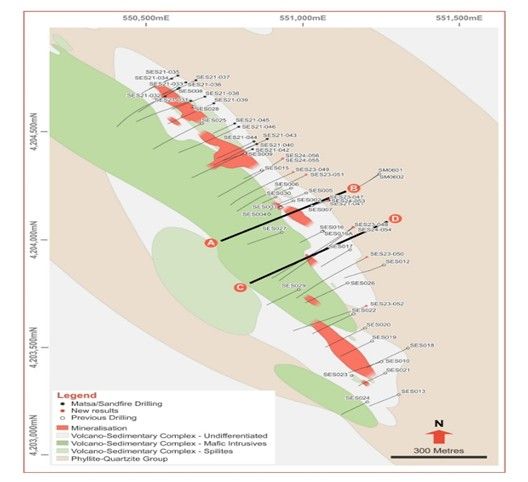
    Avrupa Minerals is reaffirming its commitment to the Sesmarias project in Portugal, even as it continues to expand its Finnish exploration portfolio. Sesmarias, the company’s flagship discovery since 2014, has seen significant progress through multiple joint ventures and self-funded efforts. Most recently, Sandfire MATSA supported exploration from 2020 to 2025, yielding impressive high-grade intercepts and expanding the project’s geological understanding.

    Despite these advancements, the project did not meet Sandfire MATSA’s internal criteria, leading to Avrupa regaining 100% ownership. With complex geology and promising mineralization—including intercepts like 26.95 meters @ 2.18% Cu and 28.60 meters @ 1.68% Cu—the company is now focused on securing a new strategic partner to advance towards a potential mining decision.

  • Pallas Resources Unveils Thick Copper Outcrop at Merke and Launches Drilling at Glubokoe

    Pallas Resources Unveils Thick Copper Outcrop at Merke and Launches Drilling at Glubokoe

    London, 3 September 2025 — Pallas Resources has announced the discovery of a substantial outcropping copper zone at its Merke and Lugovoe licences in southern Kazakhstan, alongside the commencement of first drilling at the Glubokoe Project in the western Chu-Sarysu Basin. Both developments mark significant milestones in the company’s strategic alliance with Ivanhoe Mines.

    Fieldwork at Merke has revealed a 20-metre-thick copper-bearing horizon within fractured carbonate rocks, exposed in a historic pit. The discovery confirms visible surface mineralisation, including malachite and azurite, and strongly supports the structural model guiding exploration. According to the company, the mineralisation is thought to be structurally controlled, with fractures and faults serving as conduits for copper-bearing fluids.

    The Lugovoe licence, recently granted to the Pallas–Ivanhoe partnership, extends prospective stratigraphy by a further 40 kilometres to the west. Early reconnaissance has already identified surface copper mineralisation, with fold zones appearing to act as structural traps. Upcoming work will focus on detailed structural mapping, complemented by high-resolution magnetic surveys to trace mineralisation beneath cover.

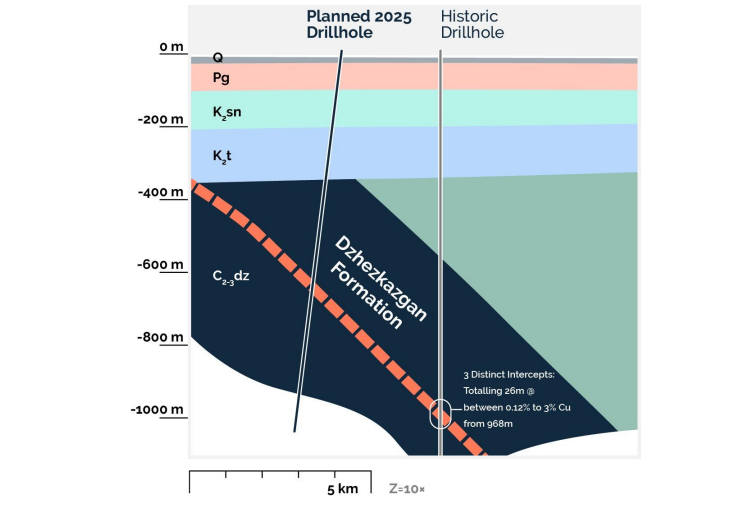
    Meanwhile, drilling has commenced at Glubokoe, a 2,500 km² project in the western Chu-Sarysu Basin. The programme will comprise five diamond drill holes, each between 800 and 1,000 metres deep, totalling around 4,200 metres. The first hole is targeting extensions of mineralisation first recorded by Soviet geologists in the 1980s, where three copper-bearing intervals were intersected over a total of 26 metres, with grades ranging from 0.12% to 3% copper.

    Simon Cooper, Chief Executive of Pallas Resources, described the start of drilling as a “key milestone,” coming less than a year after the partnership with Ivanhoe Mines was formalised. Results from the current campaign are expected by late December and will help inform a planned 15,000-metre drilling programme in 2025.

    The Chu-Sarysu Basin is recognised as the world’s third-largest sediment-hosted copper province, already hosting more than 27 million tonnes of discovered copper, with the US Geological Survey estimating a further 25 million tonnes yet to be found.

    Pallas holds over 16,000 km² in the basin, making it the leading explorer in this emerging copper district. Under the terms of the alliance, Ivanhoe Mines will sole-fund $18.7 million during the initial phase, with the option to invest up to $115 million over four years.

  • Germany’s Zinnwald Lithium Project Faces Local Backlash Over Tourism and Environmental Concerns

    Germany’s Zinnwald Lithium Project Faces Local Backlash Over Tourism and Environmental Concerns

    Plans to tap Europe’s second-largest lithium reserves are meeting resistance in the Ore Mountains, where residents are split over a proposed mining project that could bring jobs but also disrupt the local tourism economy.

    Privately held Zinnwald Lithium aims to begin extracting lithium-rich ore from the region in 2030, with the goal of producing battery-grade lithium hydroxide for Europe’s fast-growing electric vehicle and energy storage industries. The project promises hundreds of new jobs and fresh investment in an area with deep mining traditions.

    But in the border village of Zinnwald, opposition is mounting. Locals worry that large-scale mining will damage the scenic landscape that attracts thousands of tourists each year, threatening one of the region’s main sources of income. Environmental campaigners have also raised concerns about water use, waste, and long-term ecological impacts.

    Supporters argue the mine could revive the Ore Mountains’ historic role as a mining hub and help Europe reduce its reliance on imported critical raw materials. Yet with community resistance growing, the future of lithium production in Zinnwald remains uncertain.

  • Romania Seeks Five-Year Delay in Coal Phase-Out Amid Energy Transition Challenges

    Romania Seeks Five-Year Delay in Coal Phase-Out Amid Energy Transition Challenges

    Romania is negotiating with the European Commission to postpone its planned 2026 coal phase-out by at least five years, Energy Minister Bogdan Ivan said Tuesday, citing delays in replacement projects and risks to energy security.

    Under its EU-funded recovery aid package, Romania had pledged to retire 2.6 gigawatts of lignite and hard coal generation within the next year. However, Ivan told reporters that the timeline is “unrealistic,” as new gas-fired and renewable capacity will not be connected in time.

    State-owned lignite power producer CE Oltenia is working with OMV Petrom, Tinmar, and Alro Slatina to build solar parks and gas plants, but construction has lagged behind schedule. In central Romania, MAS Group Holding is also developing a 1.7 GW steam and gas power plant to replace older hard coal facilities.

    “Right now we are having fairly intense negotiations to postpone the deadline by at least five years, a realistic deadline for when we will connect new gas-fired energy units,” Ivan said. Romania has been requesting an extension since 2023 and plans to submit a study to Brussels outlining the negative economic and power market impacts of an early shutdown.

    Looking further ahead, Ivan said Romania expects to install 12.96 GW of new generation capacity by 2032 across gas, nuclear, wind, and solar projects, supported by EU funds and both public and private investment. This includes 2.25 GW of storage, which would transform the country from a net electricity importer to an exporter.

    A major offshore gas development, due online in 2027, is also set to make Romania a net gas exporter. The country already produces about 90% of its gas needs through Romgaz, OMV Petrom, and Black Sea Oil & Gas (BSOG).

  • Germany Surpasses 2028 Coal Reduction Target, No Forced Plant Closures Needed

    Germany Surpasses 2028 Coal Reduction Target, No Forced Plant Closures Needed

    Germany has already surpassed its 2028 interim goal for cutting coal-fired power capacity, eliminating the need to order additional plant shutdowns for a second consecutive year, the Federal Network Agency said Monday.

    The country had aimed to reduce coal generation by 8.7 gigawatts by 2028. As of September 1, capacity cuts had exceeded that figure by roughly 10%, according to the regulator’s update.

    Almost two-thirds of Germany’s electricity is now generated from renewable sources, with excess solar power often pushing wholesale prices below zero and eroding the profitability of coal plants. Despite this progress, Germany remains the European Union’s largest polluter and still relies heavily on fossil fuels for parts of its energy mix.

    The federal government plans to phase out coal entirely by 2038. However, large lignite-burning plants tied to mining operations have been granted more time to close in order to cushion job losses. Smaller lignite and hard-coal facilities, initially allowed to participate in voluntary shutdown auctions until 2026, can be closed earlier if deemed necessary by regulators.

    Coal operators must also buy emissions permits under the EU Emissions Trading System, where carbon prices have ranged between €60 and €84 per ton this year, settling near €74 at present.