Website: Asia.com

  • UN Expert Panel Issues Guidelines for Just and Equitable Energy Transition

    UN Expert Panel Issues Guidelines for Just and Equitable Energy Transition

    A United Nations panel of experts has published a comprehensive set of recommendations and guidelines for governments and mining companies aimed at safeguarding human rights, justice, and equity during the global race for energy transition minerals. The report, titled Resourcing the Energy Transition: Principles to Guide Critical Energy Transition Minerals towards Equity and Justice, outlines ways to ensure that the shift to renewable energy promotes sustainable development, protects the environment, and fosters prosperity in resource-rich developing nations.

    UN Secretary-General António Guterres, who convened the panel in April, emphasized that the report acts as a “how-to guide” for generating both prosperity and equality alongside clean energy, noting the critical timing as demand for minerals is projected to nearly triple by 2030. Among the panel’s key proposals are the establishment of a UN expert advisory group to facilitate policy dialogue on mineral value chains, a global transparency and accountability framework, and the creation of a fund to address issues stemming from abandoned or derelict mines.

    The report also highlights the need to empower artisanal and small-scale miners as agents of change, promoting environmental protection and human rights. It stresses the importance of enhancing material efficiency and supporting the role of the UN as a neutral convener in achieving the goals of the Paris Agreement. The Secretary-General has instructed the panel to present its findings to member states and other stakeholders ahead of the COP29 conference later this year.

  • Kaz Critical Minerals Completes Successful Drilling Program in East Kazakhstan

    Kaz Critical Minerals Completes Successful Drilling Program in East Kazakhstan

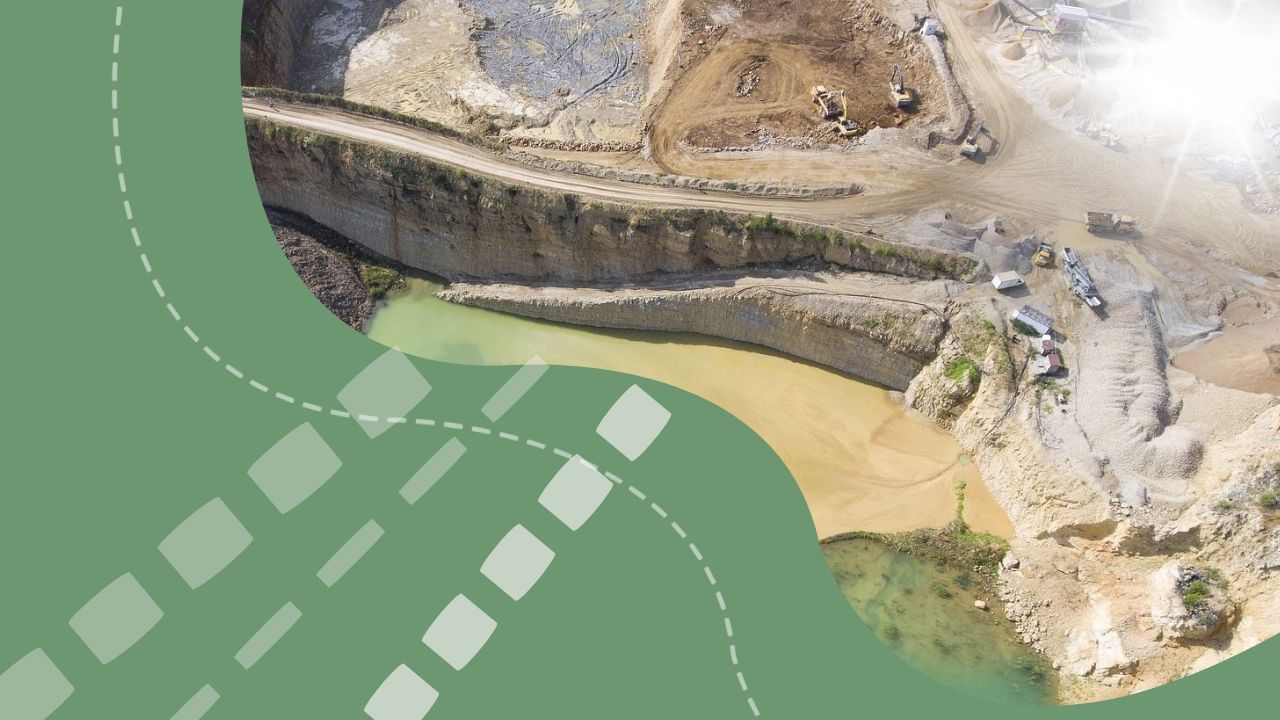
    Kaz Critical Minerals LLC (KCM), a subsidiary of Kaz Resources LLC and portfolio company of Cove Capital LLC, has completed its drilling program on the Alday concession in East Kazakhstan, a key milestone in its efforts to develop critical minerals in the region. The program included 15 holes spanning 4,700 meters and sets the stage for further exploration across additional concessions.
    CEO Pini Althaus expressed optimism, noting that preliminary results from the Alday site are “very promising”. KCM plans to expand its drilling activities across three other concessions, fast-tracking exploration for the remainder of the 2024 field season. The company is also benefiting from timely approvals from the Kazakhstan Government, keeping their exploration schedule on track.
    KCM, with the backing of Cove Capital, remains committed to sustainable exploration, collaborating with local communities for mutual benefit. Cove Capital has also formed a strategic alliance with Kazakhstan’s Sovereign Wealth Fund and Tau-Ken Samruk to advance rare earth metal exploration, particularly through joint ventures like the Akbulak rare earth project.

  • Putin Suggests Limiting Exports of Uranium, Titanium, and Nickel in Response to Western Sanctions

    Putin Suggests Limiting Exports of Uranium, Titanium, and Nickel in Response to Western Sanctions

    On Wednesday, Russian President Vladimir Putin proposed that Moscow should consider imposing export restrictions on key commodities such as uranium, titanium, and nickel in response to Western sanctions. During a televised meeting with Prime Minister Mikhail Mishustin, Putin stated, “Please take a look at some of the types of goods that we supply to the world market… Maybe we should think about certain restrictions – uranium, titanium, nickel.”

    Russia ranks as the fourth largest uranium producer globally, according to the World Nuclear Association. This suggestion follows U.S. President Joe Biden’s recent signing of a law that bans the import of enriched uranium from Russia, a trade valued at approximately $1 billion annually.

    In 2023, the United States and China were the largest importers of Russian uranium, followed by South Korea, France, Kazakhstan, and Germany. Additionally, Russia holds the position of the world’s third largest titanium sponge producer, a material used in the aerospace, marine, and automotive industries, despite having limited domestic titanium reserves. Russia’s Nornickel is also the leading producer of refined nickel worldwide.


  • National Atomic Company Granted License for Mineral Exploration at Budenovskoye Deposit

    National Atomic Company Granted License for Mineral Exploration at Budenovskoye Deposit

    The National Atomic Company has been granted a license to explore mineral deposits at Site No. 5 of the Budenovskoye field in the Turkestan region, according to the press center of Kazatomprom. This site is located to the northeast of the southern flank of the field and is considered a promising area for further exploration.

    The company will conduct geological exploration in this part of the Mynkuduk ore district for the next six years. Kazatomprom’s Chairman, Meirzhan Yusupov, emphasized that this new site plays a key role in the company’s strategy to increase uranium reserves.

    Experts anticipate long-term exploitation of the area due to favorable geological conditions and the well-developed transportation and energy infrastructure. Site No. 5 effectively extends the Inkai deposit southward. Preliminary estimates suggest the area holds over 18,000 tons of uranium. Kazatomprom expects a significant increase in resources following the exploration results.

    The company highlighted the high productivity of the ore in this region. Last month, Kazatomprom announced joint projects with Tajikistan’s TajRedMet in the uranium and rare-earth sectors.

  • KAZ Minerals Extends Artemyevsky Mine Operations Until 2034

    KAZ Minerals Extends Artemyevsky Mine Operations Until 2034

    KAZ Minerals has announced the extension of operations at the Artemyevsky Mine, initially launched 19 years ago, until 2034. The second phase of the mine’s development, which involved an investment of approximately $500 million, was revealed through the company’s Telegram channel. The Artemyevsky Mine produces 1.2 million tons of polymetallic ores annually, and to maintain production capacity, the company plans to explore and develop new mining horizons.

    Ildur Dautov, head of Vostoktsvetmet LLP, highlighted that although this is an expansion project, its scale and complexity are comparable to building a new mine. “By extending the life of the mine, we are ensuring social stability in the region,” Dautov stated.

    Geological exploration at the site began in 2012, and by 2018, the company had recalculated the reserves and developed a new mining project. As part of the second phase of the mine’s expansion, specialists have completed 18 kilometers of mine workings, upgraded the main ventilation system, and replaced key equipment. Additionally, they built a new air heating system, waste treatment facilities, and a tailings storage facility in the disused Nikolaevsky quarry.

    A new 742-meter air-supply shaft, equipped with an elevator and access points at two levels, has also been constructed. KAZ Minerals has added other infrastructure, including an explosives warehouse and a three-conveyor transport system. Further plans include the installation of a repair facility for equipment and other auxiliary structures.

  • BHP Orders Three More Continuous Mining Systems for Jansen Potash Project’s Second Phase

    BHP Orders Three More Continuous Mining Systems for Jansen Potash Project’s Second Phase

    BHP has extended its collaboration with Sandvik Mining and Rock Solutions by ordering three additional underground continuous mining systems for the second phase of the Jansen potash project in Saskatchewan. Valued at approximately $249 million, the systems will be delivered between 2028 and 2029. In 2022, BHP had contracted Sandvik for four systems for the project’s first phase.

    Each continuous mining system includes a Sandvik MF460 borer miner and a Sandvik PO140 extendable conveyor, capable of cutting up to 6.3 metres wide and 4.36 metres high, and can produce between 1,300 and 1,500 tonnes of potash per hour. Sandvik’s system is said to double the industry benchmark for tonnes per hour. The partnership began in 2010 when BHP approached Sandvik to solve material handling challenges, leading to the development of these systems.

    The Jansen project is expected to become one of the world’s largest potash mines, with production starting in 2026. Once fully operational, it will produce up to 8.5 million tonnes of potash annually.

  • Vokshod Chrome Fined Over 2.9 Billion Tenge for Environmental Violations

    Vokshod Chrome Fined Over 2.9 Billion Tenge for Environmental Violations

    The Atyrau Regional Prosecutor’s Office has fined Vokshod Chrome more than 2.9 billion tenge after the company failed to obtain the mandatory environmental permit for its operations in 2022. According to environmental authorities, all of Vokshod Chrome’s emissions for the year were deemed illegal or excessive. In 2022, the company emitted over 52 tonnes of magnesium oxide, trivalent chromium, and inorganic dust.

    In addition to air emissions, Vokshod Chrome accumulated significant industrial waste. Over the year, the company gathered 395,000 tonnes of large-particle and slurry waste from mineral processing on its premises.

    The company attempted to appeal the administrative penalty, but the regional court upheld the decision, ruling that the fine was justified.

    According to public sources, Vokshod Chrome mines and processes chromite ore in the Khromtau district of the Aktobe region. The company supplies chromite ore and concentrates to both domestic and international markets. In 2013, it was acquired by the Turkish holding Yilmaden.


  • Qazaq Kaolin to Launch New Plant at Alekseevskoye Kaolin Deposit in 2026

    Qazaq Kaolin to Launch New Plant at Alekseevskoye Kaolin Deposit in 2026

    n 2026, Qazaq Kaolin plans to launch a new facility at the Alekseevskoye kaolin deposit, located in the Zerenda district of Akmola region. The construction plan for the processing plant has been submitted for review on Kazakhstan’s Unified Environmental Portal.

    The Alekseevskoye deposit once hosted a mining and processing complex during the Soviet era, producing 200,000 tonnes of enriched kaolin annually until operations ceased in 1996. In 2016, Qazaq Kaolin decided to revive production at the site, with the project now included in the regional industrialization map of Akmola. The new initiative involves not only kaolin ore processing but also the creation of a technological cluster. The cluster will focus on producing ceramic products and sheet glass.

    The new factory will have an annual production capacity of 90,000 tonnes of enriched kaolin. Additionally, it will produce up to 91,440 tonnes of quartz sand and 2,160 tonnes of slip.

    According to the project documentation, kaolin from the Alekseevskoye deposit consists primarily of high-alumina, low-iron raw material, meeting the standards required by industries using premium-grade kaolin.

  • NMMC Secures $150 Million Loan from Japan’s MUFG for Expansion Plans

    NMMC Secures $150 Million Loan from Japan’s MUFG for Expansion Plans

    Navoi Mining and Metallurgical Company (NMMC), Uzbekistan’s largest industrial enterprise, has signed a $150 million bilateral loan agreement with Japan’s Mitsubishi UFJ Financial Group (MUFG). The funding will be directed toward NMMC’s ongoing investments, particularly to enhance its operations and expand its production capabilities.

    NMMC operates two major mining sites, seven hydrometallurgical plants, and two heap leaching facilities, positioning it as the largest gold producer in Central Asia. The company’s flagship asset is the Muruntau-Myutenbai open-pit mine, considered the largest of its kind globally, with a resource base of 101 million ounces of gold. In total, NMMC’s gold reserves are estimated at 148 million ounces.

    The loan comes after NMMC received long-term credit ratings of “BB-” with a stable outlook from both Fitch and S&P, reflecting its standing as a top-four global gold producer. Production is forecasted to surpass 3 million ounces by 2024. NMMC CFO, Jakhongir Khasanov, emphasized that the loan highlights the company’s strong financial health, noting that it will support further investments in expanding operations.

    In addition to the loan, NMMC has embarked on an ambitious investment program, set to increase processing capacity and production volumes while creating new jobs and modernizing existing facilities. The company is reportedly ahead of schedule on several projects, with expectations of boosting production capacity by 30% compared to 2017.

    Analysts have praised NMMC for its low-cost base, long mine life, high profit margins, and low debt levels. Fitch highlighted the structural reforms in Uzbekistan, which have contributed to macroeconomic stability, as a key factor in the company’s positive outlook. NMMC is 98% owned by Uzbekistan’s Ministry of Economy and Finance.

    MUFG, headquartered in Tokyo, is Japan’s largest financial institution and operates in over 40 countries, making it one of the biggest banking groups globally.

  • Kazakhstan and South Korea to Establish High-Tech Materials Research Center for Rare Metals

    Kazakhstan and South Korea to Establish High-Tech Materials Research Center for Rare Metals

    This week, Kazakhstan’s Metallurgy and Enrichment Institute under the Satbayev University and the Korea Institute of Industrial Technology signed a memorandum of cooperation. The partnership aims to establish a research center in Kazakhstan focused on high-temperature and high-activity materials based on rare metals. According to a press release from Kazakhstan’s Ministry of Science and Higher Education, the collaboration will also advance technologies for producing high-quality industrial products.

    Kazakhstani scientists are keen to commercialize domestic innovations related to the extraction of strategically important metals. Meanwhile, South Korean developers will contribute technologies for producing high-tech products using these rare metals.

    The two institutes plan to invest over $10 million in this five-year project, with Kazakhstan’s Minister of Science, Sayasat Nurbek, overseeing its progress personally.

    The ministry also highlighted that the collaboration will include joint scientific seminars and master classes, as well as potential bilateral exchange programs for scientists to effectively develop innovative solutions.

    It is worth noting that last year, the Korea Institute of Geoscience and Mineral Resources (KIGAM) discovered a major new lithium deposit in Kazakhstan, which is likely to attract foreign investors for its development.