Website: Asia.com

  • Illegal Mining Operation Uncovered in Kostanay Region

    Illegal Mining Operation Uncovered in Kostanay Region

    Authorities in Kostanay Region’s Zhitikara District have halted an illegal precious metal mining operation on agricultural land, according to inbusiness.kz, citing Kazakhstan’s Ministry of Agriculture.

    Investigations revealed that a local LLP had acquired the land rights under the designation “for agricultural production.” However, instead of farming, the company illegally extracted precious metals by washing soil.

    Regulatory and law enforcement agencies discovered prospectors, along with specialized machinery, metal detectors, and other mining tools, actively engaged in the unauthorized extraction of minerals.

    Additionally, authorities recorded the destruction of fertile soil layers. As a result, the Department for Land Resources Management of Kostanay Region imposed a fine of 2.6 million tenge on the violators. The company has also been ordered to restore the damaged soil caused by its illegal activities.

  • Kazakhstan’s Unified Subsoil Use Platform Processes 506 Applications

    Kazakhstan’s Unified Subsoil Use Platform Processes 506 Applications

    Since the launch of minerals.e-qazyna.kz, authorities have processed 506 applications from subsoil users for geological exploration, mining, and other state services. This was announced during an expanded meeting of the Ministry of Industry and Construction of Kazakhstan.

    According to Vice Minister of Industry Zhanat Dubirova, by 2025, the Unified Subsoil Use Platform (USP) will offer a seamless process, from application submission to auction participation and license issuance for exploration or extraction.

    The official noted that the full launch of the USP in early 2024 was the result of extensive work since July 2024. Developers analyzed international geological portals from Canada, the UK, Finland, and the UAE, redesigned business processes, and restructured the platform’s architecture.

    Currently, the website provides 22 state services in geology and subsoil use. To facilitate transactions, an “electronic wallet” service has been introduced, allowing companies to pay subscription bonuses directly on the platform.

    The National Geological Service has digitized and uploaded approximately 56,200 secondary geological reports. Additionally, the monitoring of contractual obligations for solid mineral deposits and the submission of annual reports by exploration and mining companies has been automated.

    In January 2024, the USP auctioned 26 subsoil plots, with investors acquiring 21, generating 20.69 billion tenge in revenue.

  • 12 Gold Mining Companies Acquire 31 Gold-Bearing sites in Navoi

    12 Gold Mining Companies Acquire 31 Gold-Bearing sites in Navoi

    A fierce competition for gold-bearing land unfolded on 4th February as 12 companies participated in an electronic auction for 31 sites in the Navoi region of Uzbekistan. The auction, held on the E-auksion platform, saw intense bidding, with one lot’s price skyrocketing 110 times its initial value after a 10-hour battle.

    Initially, the plots were listed at prices ranging from 26.3 million UZS ($2,190) to 52.5 million UZS ($4,375). Due to fierce competition, prices rose sharply, and the 31 plots were sold for a total of 25.1 billion UZS ($2.09 million), which is 23 times their combined starting value.

    The most expensive plot sold was the Sop-10/24 site in the Nurota district. After more than 10 hours of bidding, Xinlong Mining Drilling won the lot for 3.6 billion UZS ($300,000), 110 times higher than the initial price. This company also acquired the second most expensive gold plot, Sop-14/24, for 1.9 billion UZS ($158,333) after 183 bidding rounds. In total, Xinlong Mining Drilling secured rights to eight gold sites for 9.1 billion UZS ($758,333).

    Other notable purchases include:

    • Neo Gold Mining: 4 plots for 2.7 billion UZS ($225,000)
    • Zhonghuitong Mining Group: 4 sites for 1.13 billion UZS ($94,167)
    • Golden Diggers: 3 plots for 3.24 billion UZS ($270,000)

    Several companies won two lots each: Ipotekaon, King of Gold Mining, Samnurgold, and YVN Gold. AAA Human, Golden SPV One, Kamron Mir Gold, and Orom Medical Center each secured one plot.

    The auctions were highly competitive, with some lots seeing over 200 bidding rounds. Winners have gained rights to extract gold from these areas using artisanal mining methods, as required by current legislation.

    This auction highlights the growing interest in Uzbekistan’s gold mining sector and the potential for significant investments in the Navoi region’s mineral resources.

  • Uzbekistan’s Gold and Currency Reserves Increase in January 2025

    Uzbekistan’s Gold and Currency Reserves Increase in January 2025

    In January 2025, Uzbekistan’s foreign exchange reserves experienced growth, as reported by the Central Bank. According to the data, the total value of assets in reserves reached $42.9 billion by February 1st, which is a $1.72 billion (4.17%) increase compared to the previous month. The value of gold rose by $3.02 billion, reaching $35.06 billion. This increase is attributed to the rise in global prices for the precious metal, with the price per troy ounce approaching $2900. Additionally, the physical volume of gold reserves also increased from 382.57 tons (12.3 million troy ounces) to 391.9 tons (12.6 million troy ounces). However, the country’s foreign currency reserves decreased by $1.29 billion, falling below $7.3 billion. Of these, $442.3 million are held in accounts with other central banks and the International Monetary Fund, while $6.75 billion are in foreign commercial banks.

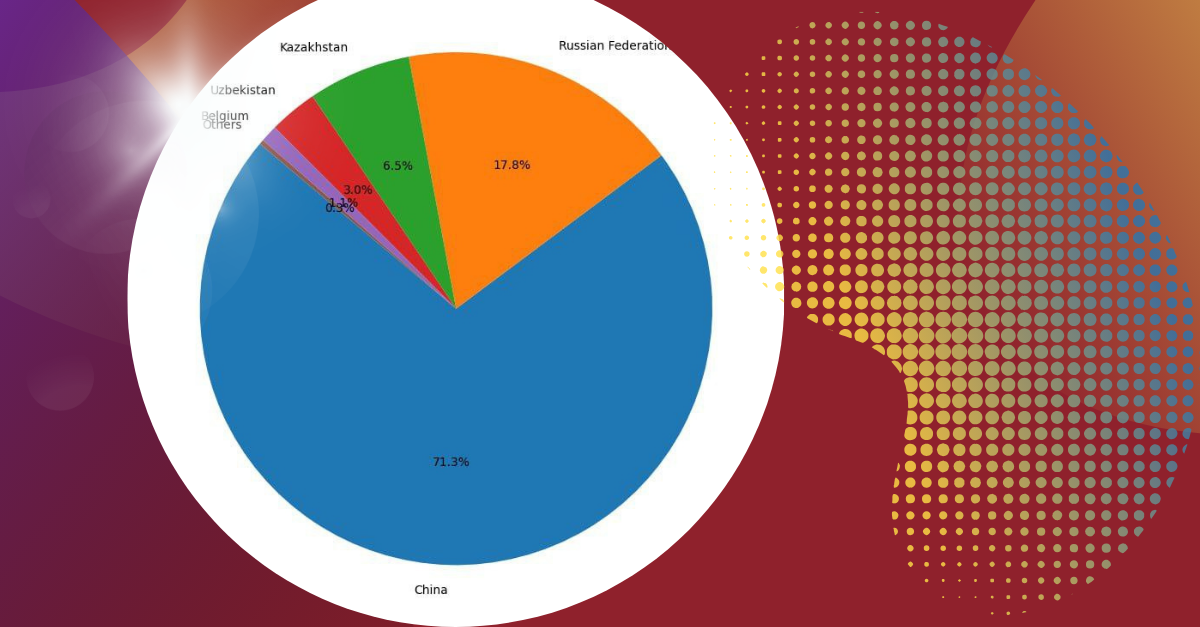
  • China Imports Up to 70% of Critical Metals from Central Asia

    China Imports Up to 70% of Critical Metals from Central Asia

    Despite the lack of official data on the export of rare earth metals by Central Asian countries, an analysis of ore, slag, and ash exports reveals interesting trends. These exports often include critical resources highly sought after by leading global powers, particularly metals such as molybdenum, titanium, and vanadium.

    According to Trademap.org data from 2019 to 2023, Central Asian countries exported a wide range of ores and concentrates, including copper, iron, precious metals, zinc, lead, molybdenum, chromium, and niche metals such as niobium and tantalum.

    In recent years, the market has also seen the introduction of products such as tin, tungsten, and titanium ores. For example, copper ore exports showed stable growth—from approximately $1.17 million in 2019 to around $3.15 million in 2023. Iron ore peaked at $1.6 million in 2021 before experiencing a decline in export volumes in subsequent years.

    One notable trend is the significant increase in molybdenum ore exports, which surged from about $4 million in 2019 to approximately $144 million in 2023. This is a clear reflection of increased global demand and investment.

    An analysis of trade with the European Union under the category “26 Ores, Slags, and Ash” shows that molybdenum stands out: its exports increased from around $11 million in 2021 to nearly $60 million in 2023. In this segment, Kazakhstan holds a dominant position, providing nearly the entire cumulative export value, while contributions from other Central Asian countries remain significantly lower.

    Central Asian countries’ export portfolios reveal a trend towards transitioning from traditional raw materials such as copper and iron to more valuable niche ores, especially molybdenum. This trend is evident both in the global market and in trade with the European Union, where Kazakhstan acts as a key supplier.

    Will the European Union be able to position itself as a key importer of critical metals from Central Asia? The future will tell.

  • Kazzinc Raises Employee Salaries Across All Divisions

    Kazzinc Raises Employee Salaries Across All Divisions

    Kazakhstan’s largest mining and metallurgical company Kazzinc has announced salary increases for its employees. After discussions with shareholders, the company’s management approved an average 8.5% wage hike starting from January 2025.

    This follows two salary increases in 2024 – in March and October – which totaled approximately 10%.

    “It’s no secret that inflation doesn’t stand still and the cost of essential goods is rising. The salary level directly affects the well-being of Kazzinc employees. It’s extremely important for us to maintain it, taking into account market changes,” said Zhanat Zhanbotin, CEO of Kazzinc. “We approached shareholders with a proposal to consider raising Kazzinc employees’ wages at the beginning of this year and they supported us. January salaries have been increased by an average of 8.5%.”

    The raise applies to workers across all divisions of Kazzinc, which is the largest company in East Kazakhstan.

    This move aims to help employees keep pace with inflation and rising costs of living. It demonstrates Kazzinc’s commitment to supporting its workforce’s financial well-being amid changing economic conditions.

  • Kazakhmys Corporation Explores New Ore Enrichment Technologies

    Kazakhmys Corporation Explores New Ore Enrichment Technologies

    In a bid to bolster its resource base, Kazakhmys Corporation is actively seeking new technologies in ore dressing. A recent hackathon held at the Karaganda Technical University named after S.D. Saginov focused on innovative solutions for flotation, a crucial process in the metallurgical industry.

    As many of Kazakhmys’ deposits are nearing depletion and current resource extraction methods are outdated, the corporation is looking to the future.

    “The challenge now is to find engineering solutions that are applicable to our specific cases – our ore, its chemical composition and properties,” explained Saken Shayakhmetov, Director of Sustainable Development at Kazakhmys JSC. “If we can significantly increase efficiency through these solutions, it will be a major breakthrough.”

    Three promising projects from the hackathon will be piloted on a smaller scale production. If proven successful, they will be implemented in larger-scale operations across the corporation.

    This initiative aligns with the government’s focus on sustainable development in the mining industry.

    “Today, we are tackling a specific problem – innovative copper leaching methods,” stated Sayasat Nurbek, Minister of Science and Higher Education of Kazakhstan. “This approach allows for the extraction of valuable minerals without disrupting the land, minimising mining damage, and promoting environmental protection.”

    Beyond technological advancements in ore dressing, Kazakhmys Progress, a subsidiary of Kazakhmys, has achieved a significant milestone.

    “Kazakhmys Progress” has launched the first production line of industrial selenium in Balhash. This marks the beginning of an environmentally friendly industrial-scale production process using a unique vacuum distillation method. The technology was developed by researchers at the Institute of Metallurgy and Enrichment, Satbayev University.

  • ZCMC Management Set to Revise Payment Terms for Employees

    ZCMC Management Set to Revise Payment Terms for Employees

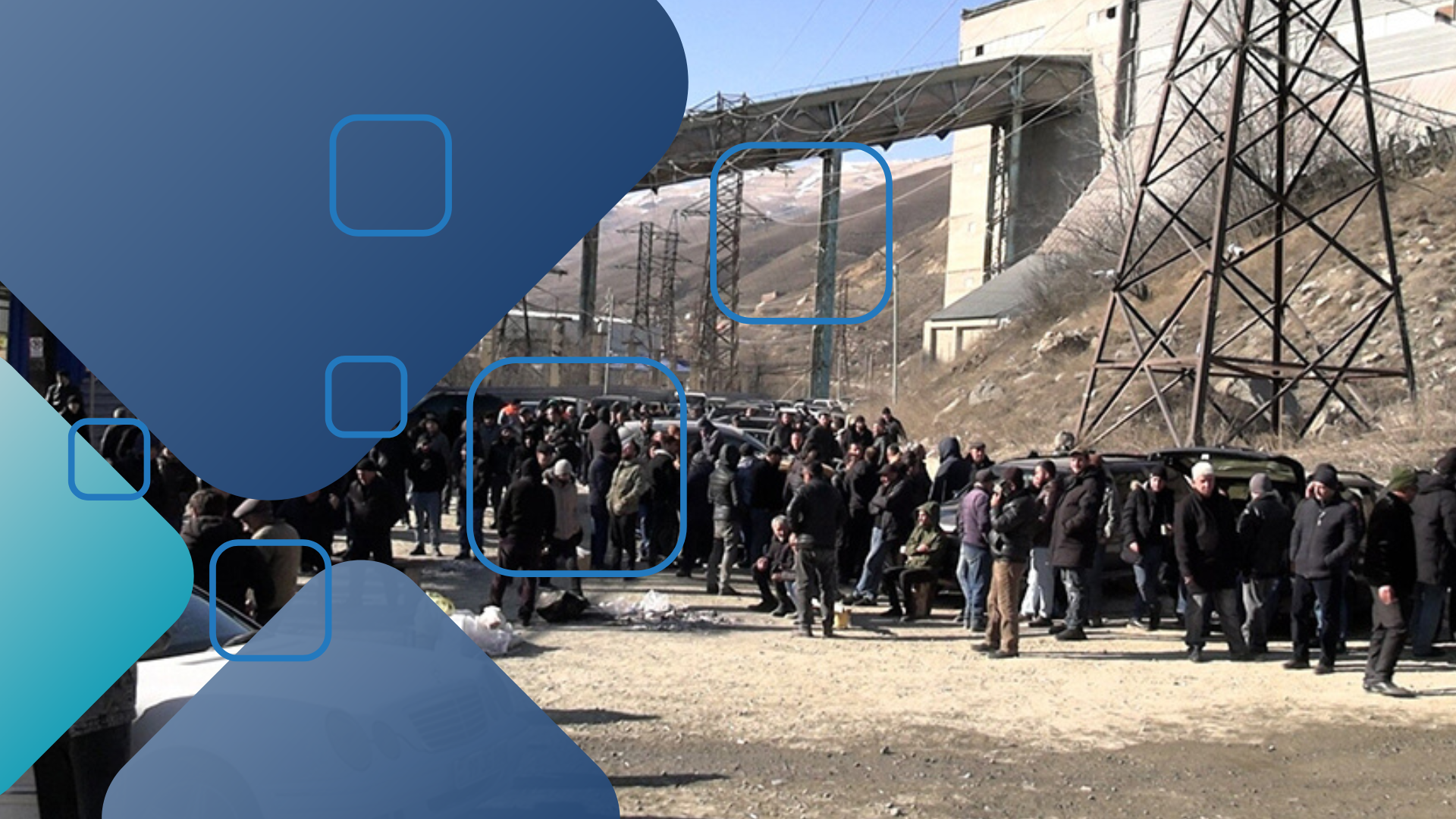
    KAJARAN, Armenia – The Zangezur Copper and Molybdenum Combine (ZCMC) management has announced a series of significant changes to its employee compensation, benefits, and working conditions, following recent strikes and demands for better treatment. The company issued a statement outlining its commitment to addressing employee concerns and urging workers to return to their posts.

    The planned changes include a comprehensive overhaul of the wage system, a new health insurance provider, and significant improvements to workplace infrastructure. The wage review, which began in September 2024, will factor in work experience and qualifications, and will increase the total wage fund by an average of 20%. The new system is expected to be implemented within a month of production resumption.

    Acknowledging employee dissatisfaction with the current health insurance plan, ZCMC will hold an open tender on February 17 to select a new provider. The chosen company will be expected to offer higher quality services that meet employee needs.

    ZCMC also announced plans to modernize its production facilities. Following a technical audit completed in December 2024, the company has begun designing and procuring new ventilation and aspiration systems. These are slated for installation by the end of 2025.

    “Dear employees, we urge you to return to your workplaces,” the ZCMC statement reads. “We can achieve these goals and solve these problems together. ZCMC is a close-knit team, and our common goal is the effective operation of the plant for the benefit of the well-being of employees, the development of the region and the prosperity of Armenia.”

    These announcements come after some ZCMC employees went on strike, demanding a 50% salary increase. The company deemed these demands “unrealistic” and the strikers’ actions as exceeding the bounds of the Labor Code.

    ZCMC is Armenia’s largest mining company, operating the Kajaran copper-molybdenum deposit, which has an estimated ore supply of 150 years. The company is a major contributor to the Armenian economy, consistently ranking among the top taxpayers. In 2024, ZCMC contributed approximately 102 billion drams to the state treasury, a 44% year-on-year increase. This includes 30.2 billion drams in direct taxes and 2.7 billion drams in indirect taxes. In December, Prime Minister Nikol Pashinyan announced that ZCMC had also transferred 33.25 billion drams to the state budget as government dividends, reflecting the government’s shareholder status in the company.

  • KAZ Minerals Sets Processing Record Despite Production Challenges in 2024

    KAZ Minerals Sets Processing Record Despite Production Challenges in 2024

    KAZ Minerals achieved record ore processing volumes in 2024, even as copper production declined due to lower grades at its maturing operations. The Kazakhstan-focused mining company processed 96.5 million tonnes of ore during the year, marking a 6% increase from 2023 and setting a new Group record.

    Andrew Southam, Chief Executive Officer, said: “In 2024, KAZ Minerals set a new milestone by processing 96.5 Mt of ore, a record for the Group and a 6% increase versus 2023. The concentrators at Aktogay and Bozshakol continued to perform above design capacity, highlighting the Group’s commitment to operational excellence.”

    Despite the processing milestone, copper production decreased to 380,000 tonnes in 2024 from 403,000 tonnes in the previous year. The reduction was primarily attributed to lower grades processed across the company’s operations as the ore bodies continue to mature, offsetting the benefits of increased throughput.

    The company also reported decreased production across its by-product portfolio. Output of gold, silver, and zinc declined compared to 2023 levels, as mining activities were conducted in areas with lower polymetallic content.

    On the sales front, KAZ Minerals demonstrated strong performance, with copper sales reaching 387,000 tonnes, exceeding production by 2%. This achievement was attributed to the successful sale of material that had been held in transit at the beginning of the year.

    The company’s ability to maintain high processing rates while managing declining grades underscores its operational capabilities. The continued strong performance of its concentrators at Aktogay and Bozshakol, operating above design capacity, reflects KAZ Minerals’ focus on maximising operational efficiency in the face of natural resource maturation challenges.

  • Mongolia Pushes for New China Railway Link to Boost Coal Trade

    Mongolia Pushes for New China Railway Link to Boost Coal Trade

    Mongolia is set to urge China next week to approve a new railway connection aimed at expanding their already growing coal trade. Prime Minister Oyun-Erdene Luvsannamsrai will visit China on February 13 to sign an agreement for the cross-border railway and the expansion of coal production at the Tavan Tolgoi mine, a government spokesperson told Bloomberg.

    While China’s Foreign Ministry declined to comment on the matter, spokesperson Guo Jiakun stated that both nations remain committed to strengthening bilateral cooperation. Mongolia was China’s fourth-largest foreign coal supplierin 2023, providing 60% of its coking coal imports. A trade boost would increase Mongolia’s revenue, while China seeks alternatives to U.S. and Russian coal due to tariffs and sanctions.

    Mongolia’s parliament has already approved the railway link and allocated 976 billion tugrik ($283 million) for Erdenes Tavan Tolgoi, a state-owned miner, to fund the project, according to Ikon News. The deal with China is also expected to cover coal sales and purchase agreements.

    Mongolia’s coal shipments to China soared to 83 million tons in 2024, up from 70 million in 2023 and 31 million in 2022, following the construction of a 240-km railway from the Tavan Tolgoi mine to the border. However, the gauge difference between Mongolian and Chinese railways remains a key logistical challenge.