Website: Asia.com

  • Hungary’s MOL Expands Oil and Gas Operations in Kazakhstan, Eyes Broader Energy Partnership

    Hungary’s MOL Expands Oil and Gas Operations in Kazakhstan, Eyes Broader Energy Partnership

    Hungarian energy company MOL has secured approval to expand its oil and gas extraction operations in western Kazakhstan, following a new agreement with the Kazakh government. To date, MOL has invested 80 billion forints in the region, producing 300 million cubic meters of gas from a field where it operates five wells. The agreement supports MOL’s participation in developing additional oil and gas fields, leveraging its advanced extraction technologies to tackle challenging reserves.

    Hungarian Foreign Minister Péter Szijjártó announced the deal at a press conference, highlighting the emergence of a broader Kazakh-Chinese-Hungarian strategic partnership. This collaboration could enable MOL to participate in the development of a large, technologically complex field, further boosting energy production.

    The partnership also opens doors for cooperation in nuclear energy. Szijjártó revealed that dry cooling technology, developed by Hungarian company MVM, is being considered for cooling future nuclear power plants in Kazakhstan. This follows a recent referendum in Kazakhstan approving the construction of such facilities.

    In addition, Hungarian firm Globalia has been approved to build solar power plants in several regions of Kazakhstan. Key initiatives under the partnership include the construction of a multimodal cargo terminal in Budapest, increased supplies of Kazakh oil to Hungary, and the transport of uranium and critical minerals.

    To support these projects, a joint investment fund will be established, strengthening energy and infrastructure ties between the two nations.

  • China’s East Hope Group to Invest $12 Billion in Kazakhstan’s Non-Ferrous Metals Sector

    China’s East Hope Group to Invest $12 Billion in Kazakhstan’s Non-Ferrous Metals Sector

    China’s East Hope Group (EHG) has announced plans to build a vertically integrated non-ferrous metals production facility in Kazakhstan. The project, which includes an industrial park, a mining and processing plant, an electrolysis plant, and a power plant, is expected to attract over $12 billionin investment. The announcement was made during a meeting on February 17 between Kazakh First Deputy Prime Minister Roman Sklyar and EHG’s General Director Changjun Meng.

    According to the Prime Minister’s press service, the initiative will create approximately 10,000 jobs and focus on export-oriented production. EHG, which has previously developed a similar 20-square-kilometer project in China, discussed plans to finalize an investment agreement with Kazakh officials.

    On February 18, EHG signed an agreement to implement the project, which will establish new production facilities in two regions of Kazakhstan. The project will incorporate advanced metallurgical technologies, boost exports to international markets such as the European Union, Central Asia, and China, and include the construction of new electrical capacities. Both parties also agreed to finalize an investment agreement outlining specific cooperation terms, government support measures, and mutual obligations.

    EHG, a global leader in non-ferrous metals, semiconductor technologies, and industrial innovations, is known for its investments in low-carbon industrial complexes and international projects.

  • Glencore Considers Selling Its Assets in Kazakhstan

    Glencore Considers Selling Its Assets in Kazakhstan

    Glencore, the Swiss multinational with a 70% stake in Kazakhstan’s Kazzinc, is again exploring options to sell its assets in the country, according to Bizmedia.kz.

    The Financial Times reported that Glencore has held informal talks with potential buyers in recent weeks regarding the future of its assets in Kazakhstan.

    This news comes after a series of reports in June 2024 by Bloomberg that Glencore was planning to sell its stake in Kazzinc to Chinese investors, as well as considering the sale of the Vasilkovskoye gold mine, which is operated by Kazzinc. However, in July 2024, Bloomberg reported that the company had abandoned the deal.

    It remains to be seen whether Glencore will be able to reach an agreement this time. The company has not commented publicly on the reports.

    If Glencore does sell its assets in Kazakhstan, it would be a major shake-up for the country’s mining industry. Kazzinc is one of the largest zinc producers in the world, and the Vasilkovskoye gold mine is a significant gold producer. A sale of these assets would likely lead to significant changes in the ownership and operation of these mines.

    Glencore has been under pressure from investors to streamline its operations and focus on its core business. The sale of its assets in Kazakhstan would be in line with this strategy.

  • Kazakhstan Mining Sector Seeks New Financing Solutions Amidst Global Energy Transition

    Kazakhstan Mining Sector Seeks New Financing Solutions Amidst Global Energy Transition

    Ainur Kapparova, Executive Director Business Relations, AIFC (Astana International Financial Centre) a financial expert with 18 years of experience at international companies such as HSBC, State Street Bank, and McKinsey & Company, shares insights on financing opportunities for Kazakhstan’s mining sector. Having worked in the US, Japan, and the UK, Ms Kapparova now focuses on financing solutions for the mining industry in Kazakhstan.

    A New Phase for Mining Amid Global Energy Transition

    “The Kazakhstan mining sector is entering a new phase of development amid the global energy transition,” states Kapparova. “In this context, access to efficient financing instruments is becoming a key factor.”

    Working with leading global financial players, Kapparova and her colleague Temirlan Mukhanbetzhanov have conducted an in-depth analysis of available financing mechanisms at every stage of a mining project’s lifecycle.

    “We’ve identified solutions for financing early exploration stages, streaming mechanisms that allow capital attraction without diluting shareholder stake or creating debt burden, as well as instruments for junior companies to access IPOs in Kazakhstan and abroad,” explains Kapparova.

    Early-Stage Exploration Financing

    When a project is at its earliest stage—with only a land plot and a few test wells—significant investments are needed to develop the deposit to the level of confirmed reserves and obtain an internationally recognized JORC report or equivalent.

    “This is the riskiest phase, so private investment and government support play crucial roles,” notes Kapparova. “Currently, four private companies in Kazakhstan are planning to launch specialized funds for financing such projects.”

    According to Kapparova, the Astana International Financial Centre (AIFC) offers the most convenient platform for structuring these funds, allowing for flexible LP/GP models adapted for the mining sector. Private junior companies, including foreign players, are also active in the country. Some attract financing from global mining companies, but this requires either preliminary confirmation of reserves or an excellent international reputation.

    Financial Solutions for Companies with Confirmed Reserves

    For companies that have already invested in deposit studies and can obtain a JORC report or equivalent, more financing options become available.

    “One such instrument is an IPO on the Astana International Exchange (AIX), which operates a special listing program for juniors,” Kapparova explains. “Additionally, Kazakhstani companies can access foreign exchanges such as the Toronto Stock Exchange (TSX) through SPACs.”

    Kapparova reveals that discussions with several SPACs trading on the TSX have confirmed interest in quality Kazakhstani projects. The Toronto Stock Exchange and its venture platform (TSX Venture Exchange) are leading global venues for capital raising in the mining industry, providing 36% of global equity capital attracted in the mineral extraction sector from 2019 to 2023.

    Financial Instruments for Pre-Feasibility, Feasibility, and Production Stages

    “At the pre-feasibility, feasibility, and production stages, streaming and royalty instruments become available,” says Kapparova. “These allow financing in exchange for a share of future metal supplies or revenue, without diluting equity or creating debt burden before production begins.”

    While this mechanism is currently used on a limited basis in Kazakhstan, Kapparova believes it could become widespread given its flexibility and adaptability to specific projects. Traditional capital raising methods—equity and debt financing—also remain available, with growing interest from both local and foreign investors.

    Comprehensive Approach to Mining Project Financing

    Kapparova emphasises that financing mining projects requires a comprehensive approach involving government, private, and international investments.

    “We’ve identified effective instruments for each stage—from exploration to extraction and processing,” she concludes. “Kazakhstan’s mining sector has enormous growth potential, and the application of modern financial solutions will help companies minimize risks and achieve sustainable development.”

  • Chinese East Hope Group to Implement Major Non-Ferrous Metals Project in Kazakhstan

    Chinese East Hope Group to Implement Major Non-Ferrous Metals Project in Kazakhstan

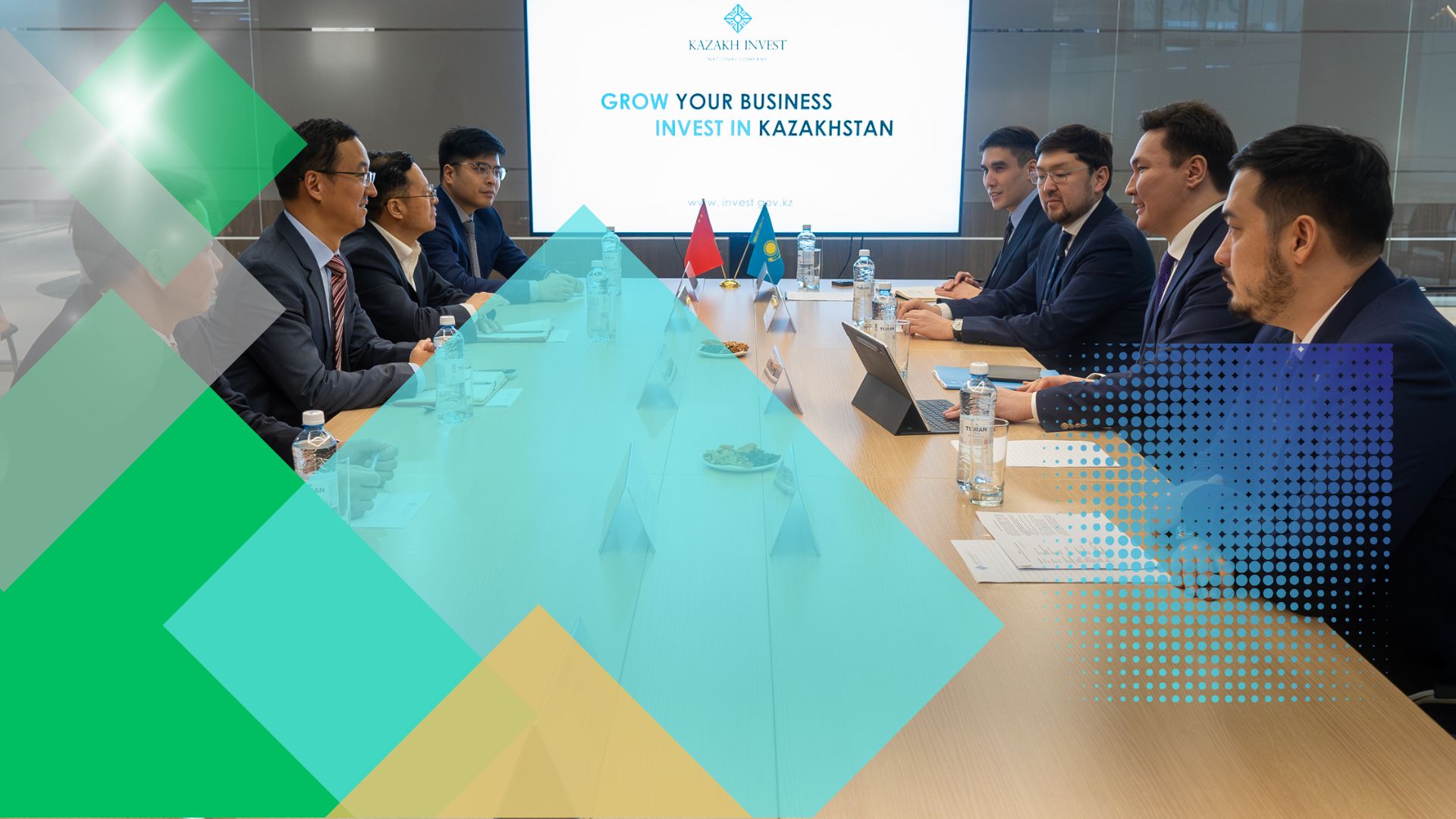
    East Hope Group, a leading Chinese company in non-ferrous metals production, has launched a major investment project in Kazakhstan. Chairman of the Board of JSC “NC” KAZAKH INVEST, Erzhan Elekeev, met with East Hope Group’s CEO Changjun Meng to discuss the prospects of collaboration in the production and advanced processing of non-ferrous metals.

    As part of this investment project, East Hope Group plans to build a large industrial park in Kazakhstan, introducing cutting-edge technologies in the field of non-ferrous metallurgy for deep processing and production of finished products. The project’s cost is expected to exceed $12 billion, with the company planning to supply products to the European Union, Central Asia, and China. The project aims to create up to 10,000 new jobs at various stages of implementation.

    Changjun Meng mentioned that the company has registered a subsidiary in Kazakhstan, which will serve as the main operational center for the project, coordinating further steps for its implementation. Preliminary geodetic and hydrogeological surveys of land plots in several regions have already been conducted, and the company plans to start more detailed studies soon. Erzhan Elekeev emphasized the project’s importance for the development of Kazakhstan’s processing industry and highlighted that its implementation would be a significant step in strengthening economic ties with international partners. “Attracting major strategic investors like East Hope Group opens new perspectives for Kazakhstan. We view this project not only in terms of investment volumes but also in the context of introducing advanced technologies, creating new jobs, and localizing production. The project’s implementation will allow Kazakhstan to occupy a key position in the global non-ferrous metals supply chain and significantly expand the export of finished products.

    We are ready to provide comprehensive support and create favorable conditions for the successful implementation of investments,” stressed Erzhan Elekeev. The parties also discussed the prospect of signing an investment agreement, which would outline the main conditions of cooperation and secure the parties’ commitments. In particular, East Hope Group expressed its readiness to sign a tripartite framework agreement with the Ministry of Foreign Affairs and the Ministry of Industry and Construction of Kazakhstan, marking an important milestone in the project’s development. Following the meeting, Erzhan Elekeev and Changjun Meng expressed confidence in the successful implementation of the initiative and noted Kazakhstan’s high potential as an industrial hub for non-ferrous metals production and deep processing.

    Background Information

    East Hope Group is one of the world’s largest producers in the field of metallurgy and technological innovations. The company has invested approximately $10 billion in the construction of low-carbon industrial complexes in China and continues to expand its international presence. As of 2022, East Hope Group ranked 39th among China’s top 500 private enterprises and 24th in the ranking of China’s top 500 private manufacturing enterprises. The group comprises over 300 subsidiaries. Its main assets are concentrated in mainland China (mainly in Shanghai, Beijing, Xinjiang, Ningxia, Inner Mongolia, Jiangsu, and Hubei), with subsidiaries operating in Vietnam, Cambodia, Singapore, Indonesia, the UAE, and other countries. East Hope Group’s commercial and residential real estate projects are located in Shanghai and Chengdu. Its alumina processing facilities are in Henan province, aluminum production facilities in Baotou and Xinjiang, silicon production facilities in Fukang, and feed and additive production facilities in Xinjiang, Jiangsu, Hubei, Shanghai, and Beijing. —

  • Uzbekistan to Ban New Polluting Factories in Major Cities

    Uzbekistan to Ban New Polluting Factories in Major Cities

    Uzbekistan will prohibit the construction of new industrial facilities that negatively impact the environment in Tashkent and other major cities. The new regulations, outlined in a presidential decree, will take effect in May 2025, according to Gazeta.uz.

    Authorities will stop issuing environmental permits for hazardous industrial enterprises. The measure aims to improve air quality in Tashkent, Nukus, and regional centers.

    The ban specifically targets ferrous and non-ferrous metal production, cement, asbestos, slag and sludge processing, and waste incineration plants handling Class I and II hazardous materials. Additionally, any coal-burning facilitieswithout high-efficiency dust and gas filtration systems will be restricted.

    By autumn 2024, the government will review plans to relocate existing polluting industries outside major urban areas. This includes high-energy-consuming enterprises, with 168 industrial sites identified for potential relocation.

    Before moving these factories, the government must develop new infrastructure, including roads, water, gas, and electricity networks in designated areas.

    In 2023, Uzbekistan’s 7,000+ industrial enterprises generated 125.6 million tons of waste and released 800,000 tons of emissions, accounting for 43% of total pollution in the country.

  • Ivanhoe Mines and Pallas Resources Launch Major Copper Exploration in Kazakhstan

    Ivanhoe Mines and Pallas Resources Launch Major Copper Exploration in Kazakhstan

    Canadian mining company Ivanhoe Mines and UK-based Pallas Resources have announced a joint venture for geological exploration in the Chu-Sarysu Copper Basin in Kazakhstan, according to Interfax-Kazakhstan.

    The Chu-Sarysu Basin is the third-largest sedimentary-hosted copper basin in the world. Experts predict that this project could lead to one of the biggest copper discoveries in Central Asia in recent decades.

    The companies have secured the largest exploration license package in Kazakhstan, covering 16,000 square kilometers—a scale comparable to Ivanhoe Mines’ past exploration projects in Mongolia and the Democratic Republic of Congo.

    According to Robert Friedland, founder of Ivanhoe Mines, Kazakhstan has the potential to become a global hub for copper production. The U.S. Geological Survey estimates that the Chu-Sarysu Basin holds up to 25 million tons of copper resources.

    While the exact start date for exploration has not been disclosed, the companies plan to invest $18.7 million in the first two years. The project will utilize advanced airborne geophysical technologies and digital data analysis, elevating Kazakhstan’s geological exploration to a new level.

  • Kazchrome Implements Advanced Ore Analysis System

    Kazchrome Implements Advanced Ore Analysis System

    Kazchrome, a subsidiary of ERG, has installed a state-of-the-art system for real-time elemental analysis at its Donskoy Mining and Processing Plant. This innovation marks the first of its kind in Kazakhstan’s mining and metallurgical industry, enabling instantaneous quality checks of the extracted ore. Traditionally, determining the elemental composition of raw materials on conveyor belts required taking samples and conducting chemical analysis, a process that took several hours. At Donskoy MPP, this process has been fully automated. Last year, the plant’s Crushing and Processing Plant No. 1 installed a “Sample Tower” system, eliminating the need for manual sampling. This has reduced the need for specialists to carry heavy samples and increased conveyor productivity by removing the need for frequent stops. The newly installed Geoscan-M system further simplifies raw material processing, providing real-time analysis of ore composition and moisture content directly on the conveyor belt. “The system is fully automated and all data is immediately transferred to the enterprise’s information system. Technologists, miners, and other specialists can instantly see the chromium content in the ore and adjust the enrichment processes accordingly. Besides minimizing technological errors, the system also enhances inventory accuracy,” said Project Manager Alexey Ganyushkin. The new analysis system can determine the content of five chemical elements and moisture in the ore (chromium, iron, calcium, silicon, and aluminum) in real-time, with a measurement error of no more than 1%. The analyzer can process up to 1,200 tons of ore per hour at conveyor belt speeds of up to 2 meters per second.

  • Scythian Mining Group Advances London Stock Listing Plans

    Scythian Mining Group Advances London Stock Listing Plans

    Scythian Mining Group Ltd has reaffirmed its commitment to pursuing a listing on the London Stock Exchange’s AIM market. Despite facing challenges in 2023-2024, the mining company is moving forward with its plans to go public. Previously, the company struggled with a lack of funds, which hindered its progress on its flagship gold project in Kazakhstan. As a result, drilling operations planned for the year did not take place, as the expected funding from Canadian investors failed to materialise. The company had initially announced its intention to list on the London Stock Exchange’s AIM market in late 2023. Following this announcement, updates were scarce until now. Scythian Mining has now appointed London-based brokerage firm, Tavira Securities, to assist in planning a pre-IPO fundraising of up to $10 million. This staged funding will cover drilling, exploration, and other costs before the Initial Public Offering (IPO). The company remains optimistic about its chances of going public on the London Stock Exchange’s AIM market.

    In late 2023, Scythian discovered a significant copper-gold (Cu-Au) porphyry system in Kazakhstan. Subsequently, Scythian negotiated a 50/50 joint venture with the US-based company IG Global. The joint venture has applied for two new exploration licenses in the region. Under the terms of the agreement, IG Global will finance and conduct exploration activities for the first two years. This arrangement allows Scythian to concentrate on exploring and developing the Kokkus project and preparing for its IPO. To manage its interest in the project, Scythian has established a new wholly-owned subsidiary, Scythian Copper Ltd.

  • Inkai Uranium Production Falls Short of Target in 2024 Amid Supply Challenges

    Inkai Uranium Production Falls Short of Target in 2024 Amid Supply Challenges

    The Inkai joint venture, a partnership between Kazatomprom (60%) and Canada’s Cameco (40%), produced approximately 3,000 tons of uranium in 2024, according to its CEO, Birzhan Zhylkaidarov. This figure falls short of the 3,200-ton annual target stipulated in the company’s subsoil use contract. Final production data for 2024 will be released later, but preliminary estimates indicate a decline compared to the 3,201 tons produced in 2023.

    The contract allows for a 20% deviation from the annual target of 4,000 tons, meaning production between 3,200 and 4,800 tons is acceptable. However, if the final 2024 output remains below 3,200 tons, it would constitute a breach of contractual obligations. While regulators typically issue a warning for first-time violations, repeated failures could result in fines or contract termination.

    Zhylkaidarov attributed the shortfall to supply chain disruptions, particularly irregular deliveries of sulfuric acid, a critical reagent used in the in-situ leaching (ISL) method of uranium extraction. The ISL process, which involves injecting a solution of sulfuric acid and water into underground uranium deposits, is highly sensitive to reagent availability. Delays in acid deliveries from mid-April to mid-May 2024 disrupted production schedules, leading to a 20% drop in output compared to contractual targets.

    The Inkai venture sources sulfuric acid from KAP Logistics, a subsidiary of Kazatomprom, which transports the reagent from domestic producers like KAZ Minerals, Kazzinc, and Kazphosphate. However, operational halts at supplier plants, including a week-long stoppage at Kazphosphate last fall, exacerbated the challenges.

    Looking ahead, Inkai plans to produce 3,200 tons of uranium in 2025. The company is also exploring long-term solutions, including the construction of a sulfuric acid plant in Taykonur, expected to launch in 2027. This facility, with an annual capacity of 800,000 tons, could fully meet Inkai’s sulfuric acid needs.

    Since commencing operations in 2002, Inkai has extracted 39,476.2 tons of uranium from the Inkai-1deposit, one of Kazakhstan’s richest uranium reserves. The venture’s final product, yellowcake, is processed into uranium oxide (U3O8), which is sold to shareholders Kazatomprom and Cameco for distribution to global markets, including France, a leading consumer of nuclear energy in Europe.