Website: Asia.com

  • Gold Drives Uzbekistan’s Export Surge in Q1 2025, Making Up Nearly Half of Total Shipments

    Gold Drives Uzbekistan’s Export Surge in Q1 2025, Making Up Nearly Half of Total Shipments

    Uzbekistan’s National Statistics Committee has released its foreign trade data for the first quarter of 2025, revealing that gold remains the country’s top export commodity. According to the report, gold accounted for 44% of total export value, with shipments totaling $3.65 billion—an increase of 36.8% compared to the same period last year.

    The majority of these exports occurred in February and March, a trend driven by rising global demand and soaring gold prices.

    Other notable export figures include coal, coke, and briquettes, which tripled to $400,000, and natural gas, which grew to $94.3 million in value. However, exports of oil and oil products dropped by 16.7% year-on-year to $109.5 million.

    On the import side, Uzbekistan brought in $48.8 million worth of coal, down 7.1% from a year ago. Oil imports also declined to $443.1 million, marking a 16% decrease. The most significant drop was seen in gas imports, which plummeted 8.5-fold to just $38.5 million during the reporting period.

  • Uzbekistan Opens Nation’s First 1,000-Meter Skip Shaft at Zarmitan Mine

    Uzbekistan Opens Nation’s First 1,000-Meter Skip Shaft at Zarmitan Mine

    On April 30, 2025, Uzbekistan marked a historic milestone in its mining industry with the inauguration of the country’s first 1,000-meter-deep skip shaft. The event was held at the Zarmitan deposit, part of the Southern Mining Department in the Koshrabot district of Samarkand Region, under the investment project “Development of Lower Horizons of the Zarmitan Deposit.”

    The ceremonial launch was attended by Deputy Minister of Mining and Geology U. Yusupov, Chairman of the Board of NMMC JSC K. Sanakulov, leaders of the plant’s enterprises, representatives of Mine Construction Alliance S.r.o, media personnel, plant workers, and industry veterans.

    As part of the project, the skip shaft—measuring 6.5 meters in diameter—was deepened to 1,000 meters. This engineering achievement, which incorporates innovative construction solutions and digital technologies, will significantly boost ore transport efficiency, reduce operational costs, and create 90 new jobs. The projected annual economic benefit is estimated at 19.2 billion Uzbek soums.

  • Uzbekistan’s Mining Minister Meets Traxys North America to Boost Investment and Cooperation

    Uzbekistan’s Mining Minister Meets Traxys North America to Boost Investment and Cooperation

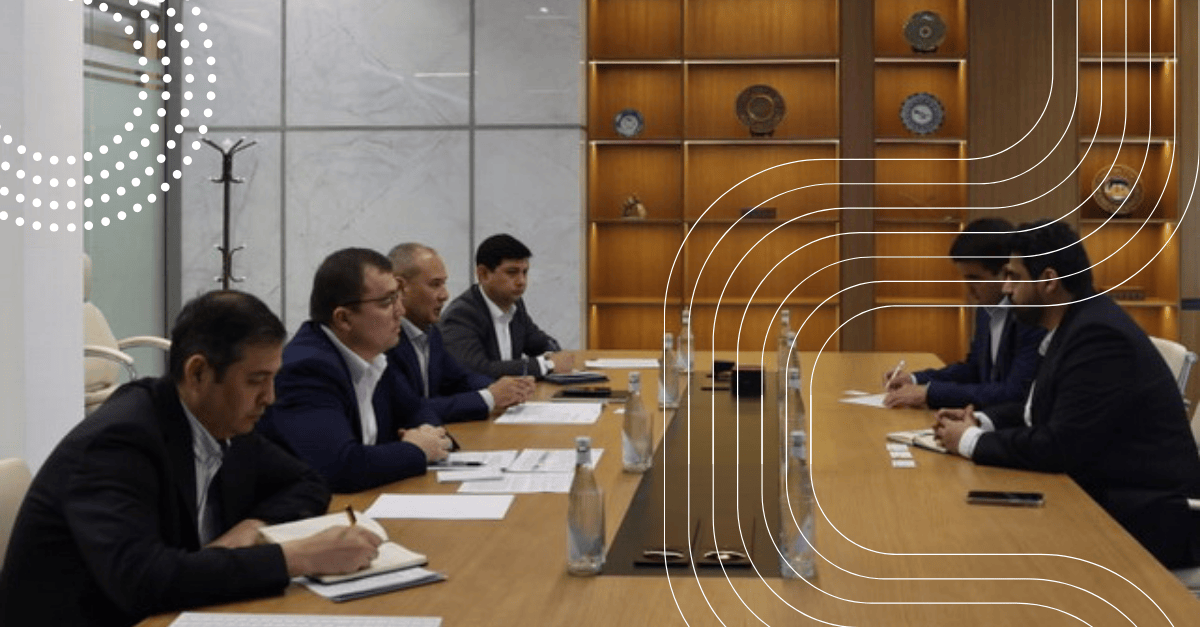
    The Minister of Mining Industry and Geology of Uzbekistan, B. Islamov, held a meeting with a delegation led by Mark Kristoff, President of Traxys North America LLC.


    During the discussions, the delegation was briefed on Uzbekistan’s ongoing reforms aimed at modernizing its mining and geological sectors. The meeting focused on opportunities to strengthen international cooperation, attract foreign investment into mineral exploration, and improve production processes.


    Both parties expressed mutual interest in expanding collaboration, with emphasis on leveraging Traxys’s global experience and capital in support of Uzbekistan’s resource development goals.

  • Production of Rhenium Launched at AGMK

    Production of Rhenium Launched at AGMK

    The Almalyk Mining and Metallurgical Complex (AGMK) has officially commenced the industrial-scale production of rhenium, marking a significant milestone for the Uzbek metallurgical industry. Following years of meticulous research and development, AGMK succeeded in producing rhenium with an impressive purity of 99.9% as early as 2021. This rare and valuable element is extracted from ammonium perrhenate, derived at the copper-smelting plant through hydrogen reduction.

    According to AGMK’s business plan, the launch of large-scale rhenium production was scheduled for 2025. To achieve this goal, the Uzbek Metallurgical Technologies Complex has established a specialised production facility equipped with state-of-the-art German technology. The raw materials required for production are supplied by the copper-smelting plant and other domestic enterprises. AGMK is poised to produce up to three tonnes of rhenium annually.

    A Rare and Versatile Metal

    Rhenium, the 75th element on Mendeleev’s periodic table, boasts exceptional physical and chemical properties, making it indispensable across various industries. As one of the densest and hardest metals, rhenium is integral to:

    • Oil Refining: It serves as a key component in catalysts.
    • Aerospace and Electronics: Critical for advanced manufacturing.
    • Nuclear Industry: Used in thermocouples to measure high temperatures in reactors.
    • Medical Equipment: Vital for the production of devices addressing severe illnesses.
    • Jewellery: Applied as a premium coating for decorative pieces.

    Currently, the global market price for rhenium averages around $2,000 per kilogram, with demand remaining consistently high.

    This new development strengthens AGMK’s position as a significant player in the global market for strategic metals.

  • Solidcore Resources Reports Q1 2025 Production Results, Reaffirms Full-Year Outlook

    Solidcore Resources Reports Q1 2025 Production Results, Reaffirms Full-Year Outlook

    Solidcore Resources plc (“Solidcore” or the “Company”) announced its production results for the first quarter ended 31 March 2025. Despite facing temporary shipment delays that impacted sales, the Company reaffirmed its full-year production and cost guidance, citing confidence in a strong recovery during the second half of the year.

    Chief Executive Officer Vitaly Nesis commented, “While sales have been deferred due to shipment delays, the fundamentals of our business remain solid. We expect a meaningful recovery beginning in May as concentrate stockpiles start to unwind.”

    Operational Highlights:

    • Solidcore recorded no fatalities or lost time injuries among its employees and contractors during the quarter.

    • Gold equivalent (GE) production totaled 68 thousand ounces (Koz), a 42% decrease year-on-year, largely due to delays in concentrate shipments from the Kyzyl mine to Amursk POX, impacted by operational challenges linked to international sanctions.

    • Kyzyl’s production of gold in concentrate rose 6% to 97 Koz due to higher ore grades, though shipment delays led to a stockpile of 41 Koz of payable metal.

    • At Varvara, production fell 10% year-on-year as planned, reflecting lower grades and reduced third-party processing.

    • Sales were notably down to 38 GE Koz from 116 GE Koz a year earlier, resulting in revenue of US$ 109 million, a 63% decline year-on-year. A strong rebound is anticipated in the second half as operations normalize.

    Strategic Developments:

    • Solidcore announced the acquisition of the Tokhtar gold property, located near its Varvara hub. The property adds 1.1 million ounces of JORC-compliant Mineral Resources at an average head grade of 2.4 g/t, bolstering the Company’s long-term growth pipeline.

    • The acquisition of the initial 51% interest is on track to complete in Q3 2025, pending regulatory approvals.

    Outlook: The Company reiterated its full-year guidance of 470 GE Koz in production, with Total Cash Costs (TCC) and All-In Sustaining Costs (AISC) expected within the ranges of US$ 1,000–1,100/oz and US$ 1,350–1,450/oz, respectively.

    Solidcore remains well-positioned to navigate near-term operational hurdles and capitalize on favorable gold market dynamics.

  • China Deepens Grip on Uzbekistan’s Mineral Sector Amid Global Race for Critical Resources

    China Deepens Grip on Uzbekistan’s Mineral Sector Amid Global Race for Critical Resources

    As global powers intensify their pursuit of critical minerals, Central Asia has emerged as a strategic pivot. Among its nations, Uzbekistan stands out—not only for its rich deposits of copper, tungsten, molybdenum, and rare earth elements, but also for its increasingly central role in China’s mineral strategy.

    Already heavily involved in the region’s energy and infrastructure sectors, China has taken a proactive investment stance in Uzbekistan’s mining industry. In 2024, Limaomaoli Metal Company launched construction of the Syurenata mining complex in Parkent, aimed at processing 1 million tons of iron ore concentrate annually. Simultaneously, China Baoli Technologies is investing $200 million in a non-ferrous metal facility in the Ipak Yuli Free Economic Zone, targeting up to 45,000 tons of annual output with $18 million in export potential.

    Copper, a linchpin in global energy transition efforts, is another key focus. China Mining Energy Group is spearheading a $200 million copper mining project in Chust (Namangan region), expected to yield 30,000 tons per year and create 420 local jobs. Additionally, Boi Yi Da is planning a new copper processing plant in the same region, while a $2.7 billion project to tap copper and silver reserves in Bobotog is under negotiation.

    For Uzbekistan, these ventures promise significant job creation, technological transfer, and a move up the value chain—critical steps toward its goal of becoming a producer of value-added mineral products. They also reflect Tashkent’s broader push to localize mineral processing, boost exports, and attract FDI into downstream sectors.

    For Beijing, meanwhile, these deals help secure raw materials essential for its green economy and industrial resilience, while also reducing reliance on vulnerable maritime supply routes. The copper and iron ore flowing from Uzbekistan may soon become vital to China’s supply diversification strategy.

    Yet, the growing Chinese footprint is not without challenges. Concerns around environmental degradation and transparency in resource deals are mounting. Public unease over Chinese firms acquiring mineral rights is increasingly voiced in Uzbek media and civil society. Moreover, critics warn that unless Chinese investments support advanced processing, Uzbekistan risks becoming locked into the role of a mid-tier raw exporter.

    There’s also increasing Western interest. France has inked uranium deals with Tashkent, and the U.S. recently signed a critical minerals investment agreement. China’s accelerated moves may reflect efforts to edge out competitors and reinforce dominance over global mineral supply chains.

    Ultimately, China’s growing influence in Uzbekistan’s mining sector presents both a strategic opportunity and a test. A long-term, mutually beneficial partnership will require more than capital—it will demand transparency, environmental responsibility, and alignment with Uzbekistan’s industrial transformation goals.

  • Uzbekistan and Saudi Arabia Explore Deeper Cooperation in Mining Sector Reforms

    Uzbekistan and Saudi Arabia Explore Deeper Cooperation in Mining Sector Reforms

    Officials from Uzbekistan and Saudi Arabia held high-level talks this week to discuss expanding cooperation in the mining sector, with a focus on reform, localization, and industrial collaboration.

    On 23 April, Uzbekistan’s Ministry of Mining Industry and Geology hosted a delegation led by Nasser Albakran, Director at Saudi Arabia’s Ministry of Energy. The meeting in Tashkent was attended by First Deputy Minister Oybek Nasritdinkhodjaev, Deputy Minister Ulugbek Yusupov, and other Uzbek mining officials, including Director Mirabdulla Ilkhamov of the State Scientific-Practical Center for Localization and Industrial Cooperation Development.

    The discussions centered on Uzbekistan’s ongoing reforms in mining and geology, and the country’s aim to enhance local content in investment projects. Both sides expressed interest in strengthening bilateral ties and sharing experience in industrial localization and cooperation.

    The talks underscore growing regional interest in Uzbekistan’s mineral wealth and its strategy to attract foreign partners for technology transfer, sustainable development, and local industry growth.

  • Navoi Mining and Metallurgical Combine Expands Capacity at Tech Waste Recycling Plant

    Navoi Mining and Metallurgical Combine Expands Capacity at Tech Waste Recycling Plant

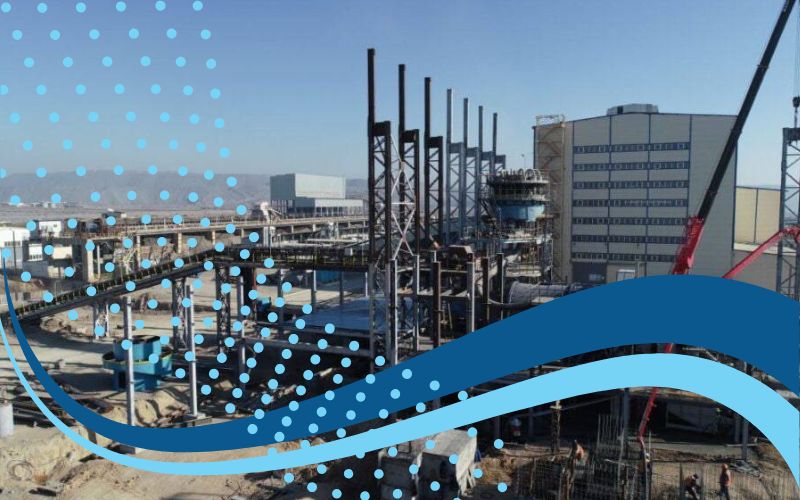
    Navoi Mining and Metallurgical Combine (NGMC) continues its ambitious expansion drive with significant progress reported at Hydrometallurgical Plant 7 (GMZ-7) – a facility specializing in processing technogenic waste.

    Located in the Kyzylkum Desert, GMZ-7 stands as a testament to NGMC’s commitment to sustainable development. Unlike other hydrometallurgical plants in the combine, GMZ-7 boasts the unique advantage of eliminating the costs associated with ore mining, processing, sorting, and transportation.

    Having processed 16 million tonnes of technogenic waste in 2024, GMZ-7 aims to reach 19 million tonnes this year. Further cementing this commitment, NGMC has initiated a major investment project: “Expansion of Processing Capacity of Hydrometallurgical Plant No. 7,” slated for completion in 2030.

    “Within the framework of the Sustainable Development Programme of JSC ‘NGMK’, construction work is underway for installing four new mills, each with a capacity to process 10 million tonnes of technogenic waste annually. These additions will bring the total number of mills on site to ten. Two of the new mills have already been commissioned. Essential equipment and spare parts are being localised and manufactured by Navoi Machine-Building Plant and Zarqush Repair and Mechanical Plant,” explained Olzhon Akhatov, Deputy Chief Engineer at GMZ-7.

    Further expansion plans include extending several factory sections, marking a crucial step towards boosting production volumes.

    These investments underline NGMC’s dedication to technological innovation and responsible resource management, showcasing its position as a leader in sustainable industrial practices.

  • Transformation is Shaping Almalyk Mining and Metallurgical Complex

    Transformation is Shaping Almalyk Mining and Metallurgical Complex

    Uzbekistan is witnessing the emergence of a new industrial identity — one grounded in sustainability, efficiency, and global competitiveness. At the heart of this transformation stands the Almalyk Mining and Metallurgical Complex (AMMC), which is rapidly evolving from a traditional industrial flagship into a high-tech, responsible enterprise meeting international standards.

    The ongoing transformation at AMMC spans several key areas: finance, corporate governance, environmental responsibility, and digitalisation. This ambitious programme represents a strategic initiative poised to significantly influence the pace and quality of the company’s development in the years ahead.


    Transparency Through Numbers

    Openness begins with accurate reporting. Since 2019, AMMC has adopted International Financial Reporting Standards (IFRS), a critical step towards improving transparency and boosting the company’s investment appeal.

    “The transition to IFRS enabled AMMC to obtain international credit ratings from the world’s leading agencies. These ratings were instrumental in successfully securing nearly $2 billion in funding from international financial institutions and banks — directly, without intermediaries,” said Boburjon Siddiqjonov, Head of the Project Office for Transformation, ESG, and International Ratings.

    This achievement has helped reduce the company’s debt burden and freed up resources for strategic investment in AMMC’s continued development.


    Corporate Governance: From Compliance to Excellence

    A critical part of AMMC’s transformation lies in rethinking its management practices. To ensure the enterprise is not only efficient but also sustainable and globally competitive, a dedicated project office for transformation, ESG, and international ratings has been established. This team is tasked with implementing global best practices — from transparent reporting to strategic planning.

    “Key reforms were carried out in collaboration with leading consultancy firms. For example, AMMC’s mineral reserves were re-evaluated using the globally recognised JORC Code. In parallel, a comprehensive development strategy was drawn up through to 2030,” Siddiqjonov added.

    Efforts have also been made to combat corruption and ensure procurement transparency. A thorough audit conducted with major international firms identified vulnerabilities and offered corrective measures. Additionally, the entire “copper chain” — from open-pit mining to the smelting plant — underwent an in-depth evaluation, resulting in a new roadmap to optimise production processes.


    Environmental Responsibility: A Mark of Global Standards

    AMMC is currently pursuing certification under The Copper Mark, an international seal of approval for responsible copper producers. This certification is crucial to enhancing global competitiveness. It allows the company to sell its products at a premium, attract green financing — particularly in Europe — and take part in environmentally focused investment programmes.

    AMMC has also received an ESG rating of ‘3’ with a score of 56 from Sustainable Fitch — the highest among Uzbekistan’s mining and metallurgical enterprises and one of the top ratings in Central Asia.

    This year, AMMC plans to unveil a greenhouse gas emissions reduction strategy, aiming to cut emissions by at least 15% by 2030. In addition, it will plant 370,000 trees annually as part of its broader ecological initiative.


    Digital Transformation in Action

    Digitalisation is another cornerstone of AMMC’s transformation. Financial and accounting reports are now generated automatically using the 1C:ERP system, halving the time needed to prepare documents.

    Warehouse, fuel, and weighing operations have all been automated. At the copper concentration plant, digital weighing systems with 99.8% accuracy have been installed. Moreover, a contactless fuelling system has been introduced — drivers now use ID cards instead of relying on operators, streamlining the process and mitigating corruption risks. These improvements have already saved 89 billion Uzbek soms in diesel costs alone.

    “Digitalisation is already generating an annual economic return of 9.1 billion soms for the company,” Siddiqjonov noted.


    What’s Next for AMMC?

    2025 is set to be a pivotal year. AMMC plans to secure a climate strategy grant from the Asian Development Bank and to begin reporting under the new IFRS S1 and S2 climate standards.

    “Our team faces ambitious goals: complete The Copper Mark certification, publish the first climate report, prepare for a Eurobond issuance, and obtain ISO certification in information security,” said the company representative.

    AMMC’s transformation is far more than a company-wide initiative — it’s a reflection of a broader national agenda aimed at building a modern, resilient, and competitive economy. By embracing global best practices and pursuing strategic long-term priorities, AMMC is helping to shape Uzbekistan’s industrial future.

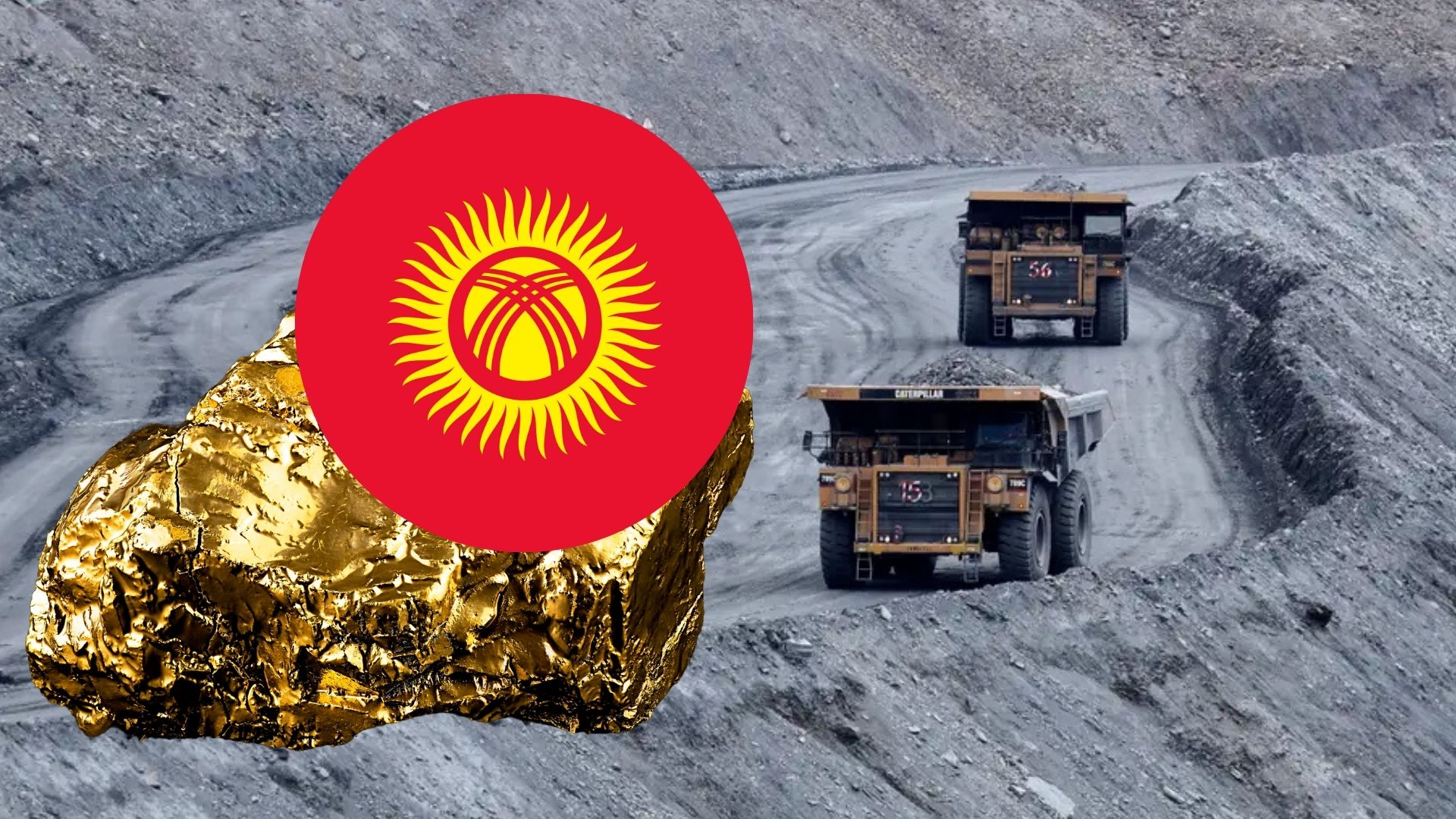
  • Kyrgyzstan: Changes at the Kumtor Gold Mine

    Kyrgyzstan: Changes at the Kumtor Gold Mine

    Three years ago, Kyrgyzstan and the Canadian company Centerra Gold inked an agreement to settle mutual claims. This landmark decision saw full control of the Kumtor gold mine revert to the Official Bishkek.

    Background to the Kumtor Mine

    The Kumtor Gold Company (KGC), a significant contributor to Kyrgyzstan’s GDP (around 10 per cent), was nationalised several years prior. Tensions surrounding the KGC escalated in May 2021 when the Kyrgyz cabinet introduced temporary external management. Before this, the Kumtor mine was operated by Centerra Gold Inc., a Canadian firm established in 2004 following a restructuring of assets from Cameco, a major global uranium producer. It was with Cameco that the government of independent Kyrgyzstan signed the general agreement for the Kumtorzoloto project in December 1992. Commercial gold production at the site commenced in 1997.

    The path to nationalisation was long and debated. In April 2022, the settlement agreement with Centerra Gold Inc. was finally signed, resolving nearly three decades of periodic calls within Kyrgyzstan for the mine’s nationalisation. Notably, the current President Sadyr Japarov was a vocal advocate for this, having raised concerns about Kumtor’s privatisation as early as 2012 and leading a parliamentary commission to scrutinise the company, although the idea did not gain parliamentary support at the time.

    “Nationalisation of Kumtor Was Necessary”

    Gani Abdrasilov, a former advisor to the Kyrgyz Prime Minister, economic analyst, and member of the parliamentary commission on Kumtor, explained that in 2012, while preparing a report for the commission’s then-chairman, Sadyr Japarov, he analysed the economic activities of Cameco and Centerra Gold Inc., specifically examining financial flows and identifying alleged corruption schemes. According to him, international auditing firms were brought in, and they determined that the total lost profit at that point amounted to US$3.5 billion, encompassing both economic and environmental damages.

    Speaking to DW, Mr Abdrasilov asserted that the nationalisation of Kumtor was essential and non-negotiable, as it concerned a national asset and the country’s image. “This is our deposit, which ranks seventh in the world in terms of gold reserves. And why should we give it to someone or operate as a joint venture?” he questioned.

    Mr Abdrasilov believes the Kyrgyz authorities should again engage independent international auditors to recover the lost profits.

    Two Sides to Kumtor’s Operations

    In contrast, Ishimbay Chunuev, President of the Kyrgyz Society of Subsoil Experts and former Director of the State Agency for Geology and Mineral Resources, who worked at the gold mine for 17 years, sees two sides to the Kumtor issue. On one hand, it facilitated the training of local personnel, but on the other, the experience of dealing with the investor proved negative. He noted, however, “It’s easy to say now in hindsight. The finances there are huge – around US$800 million. About 450-500 million went into the construction of the road and the processing plant alone. We didn’t even have 100 million… The issue with investors is another matter, of course, but that involves politics and corruption.”

    Mr Chunuev believes that production at Kumtor has continued post-nationalisation thanks to the national specialists who have been trained over nearly 30 years. He estimates that the mine’s reserves allow for operation until approximately 2040. However, he stresses that for more accurate assessments in the mining sector, Kyrgyzstan should join CRIRSCO (Combined Reserves International Reporting Standards Committee), an international public organisation that includes countries like the USA, Canada, Australia, the UK, China, Russia, Kazakhstan, Mongolia, and Turkey. He points out that this would enable Bishkek to implement international reporting standards for exploration results, mineral resource and reserve estimates.

    Environmental Concerns Linger

    Kaliya Moldogazieva, an independent environmental and health expert and a member of interdepartmental and state commissions on Kumtor, stated that the environmental community was primarily concerned about the state of the environment following the KGC’s nationalisation. Over the years of the mine’s operation, environmental incidents such as a cyanide spill into the Barskoon River and the impact of waste storage on the Lysyi and Davydov glaciers have occurred.

    Ms Moldogazieva highlighted that gold extraction at the site continues to be via open-pit mining. “Around 17 tonnes of explosives are used daily. Even when the Canadians were here, experts and government bodies urged them to switch to underground mining, which is safer,” she recalled, adding, “Of course, now the profit from gold mining goes to the state, but what will be the environmental consequences?”

    Ms Moldogazieva emphasised the need to develop a programme to prevent negative environmental impacts. She believes the government needs clarity on two aspects: the reclamation process and the mine closure concept, which should be updated every three years to reflect changes such as remaining resources or accumulated waste. Furthermore, she called for greater transparency and dialogue with the public, potentially through meetings or site visits to Kumtor for interested parties.

    Changes in Kumtor’s Operations

    In January 2025, changes occurred in the management of Kumtor Gold Company CJSC, with Buzurman Subanov appointed as the new President and Chairman of the Board by the board of directors. Previously, he served as the Deputy Chairman of Kyrgyzaltyn OJSC, a state-owned enterprise specialising in gold deposit development, which is now the sole shareholder of KGC.

    DW reached out to KGC to inquire about the changes in the company’s operations since its transition to state ownership and the priorities of Mr Subanov in his new role.

    “My main task as the head of the company is to ensure the smooth operation of all structural divisions of our enterprise to achieve the set goals,” Mr Subanov responded. He stated that KGC currently employs around 3,600 people, with an additional 1,000 specialists involved through contracting organisations. “After the foreign partners left the project, the working conditions of the company’s employees have not fundamentally changed. We have not cut salaries, nor have we cancelled other payments due to our employees,” he affirmed.

    Regarding financial and production figures, KGC’s revenue from May 2021 to December 2024, since the introduction of external management and subsequent transfer of the Kumtor mine to state ownership, amounted to over US$3.4 billion, with a net profit exceeding US$1.2 billion. The company reported paying US$891.6 million to the state budget in taxes and other payments.

    On the environmental front, KGC mentioned the commencement of a project for underground mining of gold-bearing ore, with an initial phase targeting the extraction of approximately 115 tonnes of gold. Looking ahead, the company intends to undertake a project to extract gold from the processed ore stored in the mine’s tailings facilities.

    However, the management of KGC insists on a nuanced phrasing: “To say that the Kumtor mine was nationalised is fundamentally incorrect.” They clarify that it was not a nationalisation but a “return” of the Kumtor deposit to the ownership of the republic.