Website: Asia.com

  • Central Asia: A New Arena for Global Resource Competition

    Central Asia: A New Arena for Global Resource Competition

    A groundbreaking study reveals how Central Asia is rapidly transforming into a pivotal arena where major global powers compete for access to vast mineral and energy resources, fundamentally reshaping regional geopolitics and investment patterns.

    Authored by Svetlana Novikova, an international business expert from Toulouse Business School, and Viktor Sergeev, a Tashkent-based economist specializing in Central Asian financial systems, the study “Central Asia as an Arena of the New Opportunities” provides a rigorous analysis of shifting power dynamics in the resource-rich region. Published in the Journal of Information Systems Engineering and Management, the report synthesizes decades of geopolitical and economic data to map how global competition for minerals and energy is reshaping trade routes, alliances, and investment flows across Kazakhstan, Uzbekistan, Kyrgyzstan, Tajikistan, and Turkmenistan.

    Strategic Competition Intensifies Over Resource-Rich Region

    Central Asia is emerging as a key player in the global minerals and metals market, attracting increased investment and geopolitical attention due to its vast reserves of rare earth elements (REEs), gold, uranium, and antimony. Kazakhstan alone accounts for an estimated 43% of the world’s uranium production, making it the largest producer globally, while Uzbekistan ranks 10th worldwide in gold production. Kyrgyzstan and Tajikistan are also developing significant antimony and tungsten deposits.

    China’s Belt and Road Initiative (BRI) has emerged as a dominant force in the region, with numerous infrastructure projects aimed at enhancing connectivity across the region’s road, rail, and pipeline networks. In 2024, China accounted for 64% of Turkmenistan’s total exports, primarily minerals and raw materials, and has secured long-term exploration agreements in Uzbekistan and Kazakhstan. However, this ambitious development comes with significant strings attached, as the study warns that increasing dependence on Chinese investment may undermine the sovereignty of Central Asian states. These nations are forced to navigate complex diplomatic relationships, balancing traditional ties with Russia against growing Chinese influence. Russia, leveraging its historic connections, is actively seeking new partnerships following Western sanctions that have disrupted its mineral supply chains. The European Union has also increased its interest in sourcing rare earth elements from Central Asia as part of its strategy to reduce dependency on China.

    Economic Diversification Remains an Elusive Challenge

    Kazakhstan’s economy, with a GDP of approximately $259 billion in 2023, is heavily reliant on its vast oil, gas, and metal resources, which form the largest share of its exports and contribute significantly to government revenue and GDP (the mining sector, including oil and gas, directly contributes roughly 15-20% to GDP).

    Uzbekistan’s economy, which reached a GDP of around $90.4 billion in 2023, is substantially driven by exports of gold, natural gas, and copper. The country is also increasingly focusing on value-added exports like textiles (from its cotton industry) and is exploring the potential of its rare earth metal deposits, though these are not yet primary export drivers.

    Kyrgyzstan and Tajikistan, while possessing mineral wealth, face distinct economic vulnerabilities.

    Kyrgyzstan’s key mineral export is gold, which provides a substantial portion of its export revenue. However, its economy is also heavily dependent on remittances from citizens working abroad.

    Tajikistan relies on exports of aluminum (though processed from imported raw materials) and other metals like antimony and gold, alongside cotton and electricity. Similar to Kyrgyzstan, remittances form a critical part of Tajikistan’s economy. For both nations, over-dependence on a narrow range of export commodities and remittances creates significant economic risks.
    The reliance of nations like Uzbekistan on commodities such as natural gas, and the broader Central Asian region’s dependence on resource exports, underscores their susceptibility to external economic shocks and volatile global markets.”

    The research reveals stark disparities in how Central Asian nations manage their resource wealth. Kazakhstan has successfully diversified its economy, with a growing focus on agriculture and manufacturing. This contrasts sharply with Tajikistan, which remains economically dependent on aluminum exports and mining. The study emphasizes that achieving long-term growth requires actively promoting entrepreneurship, technology advancement, and attracting diversified foreign investment beyond extractive industries.

    Geopolitical Realignment Accelerates

    The traditional Russian sphere of influence faces unprecedented challenges as Turkey and India attempt to establish their presence in a region historically dominated by Moscow. This shifting dynamic reflects broader global competition for Central Asia’s strategic position between Europe and Asia, alongside its critical role as an energy hub.

    The research underscores how these nations must balance relationships with major powers whilst developing sustainable policies benefiting their diverse populations. Success will depend on their ability to leverage their geopolitical positioning for economic independence rather than becoming mere resource extraction zones for competing global powers.

    Challenges and Future Prospects

    Despite the advantages of vast mineral wealth, challenges remain. Limited technological capabilities for deep geological exploration hinder the full potential of Central Asia’s mining sector. Additionally, resource dependency exposes economies to fluctuations in global metal prices. Environmental concerns—particularly regarding water-intensive mining operations in Tajikistan and Uzbekistan—are pushing governments to seek more sustainable extraction practices.

    As global industries shift towards securing critical minerals, Central Asia is poised to play a central role in supply chains. The region’s ability to balance foreign investment, technological innovation, and environmental sustainability will determine its long-term success as a mineral powerhouse.
  • Ministry of Mining in Uzbekistan and CNUC Discuss Cooperation in Geology and Mining Sector

    Ministry of Mining in Uzbekistan and CNUC Discuss Cooperation in Geology and Mining Sector

    The Ministry of Mining and Geology, under the leadership of Deputy Minister U. Yusupov, held a meeting with representatives from China National Uranium Corporation Limited (CNUC). The discussions focused on potential cooperation in the fields of geology and mining, including plans for joint geological exploration projects and the implementation of innovative technologies.

    Both parties expressed interest in launching mutually beneficial initiatives and expanding investment opportunities. The CNUC delegation shared insights from their international experience and highlighted their achievements in global projects. The meeting also included an exchange of views on potential collaborative research and further development within the geological sector.

  • Geological Exploration and Prospecting: Unearthing Tajikistan’s Mining Potential

    Geological Exploration and Prospecting: Unearthing Tajikistan’s Mining Potential

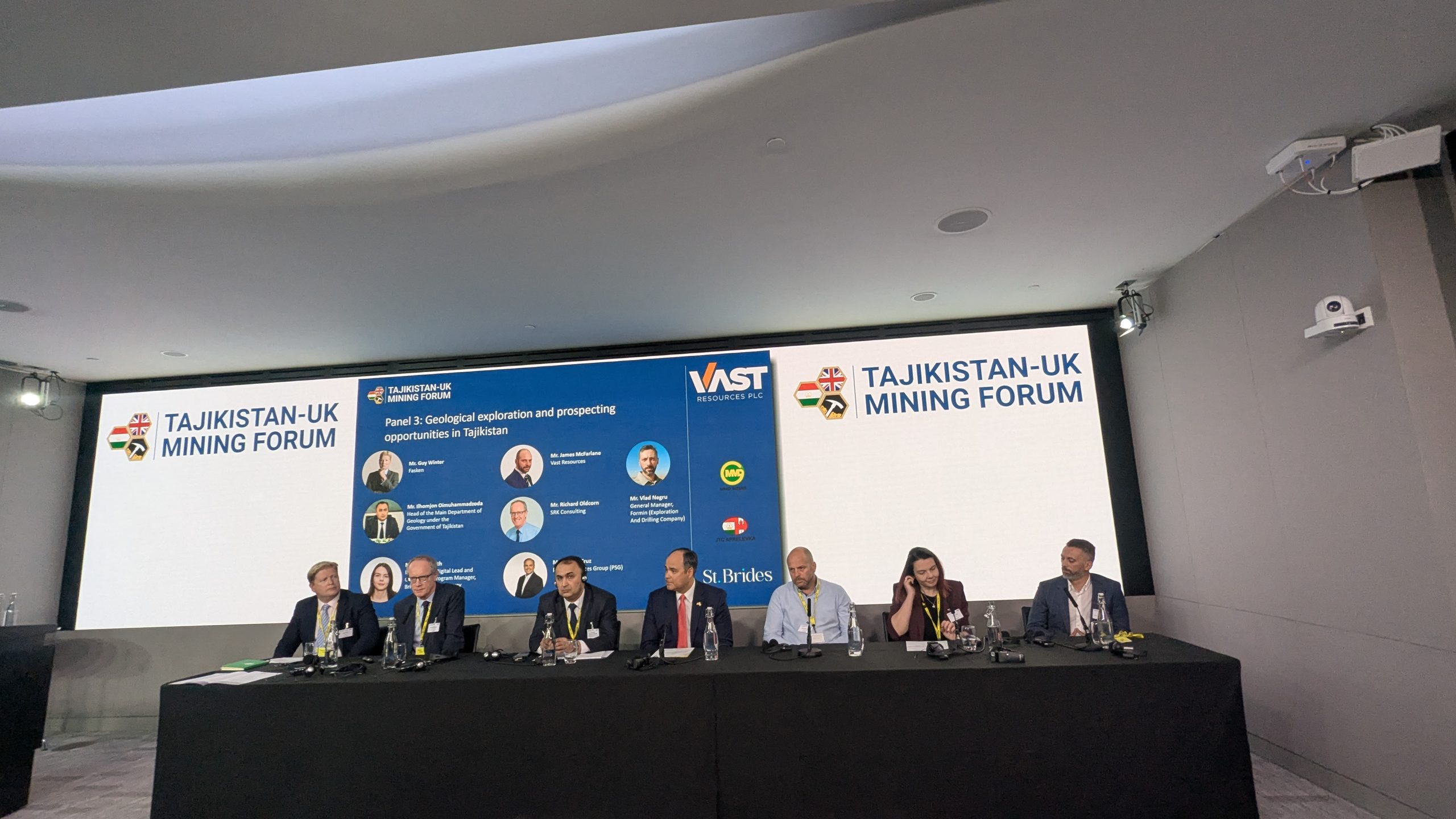
    London, UK – The London Stock Exchange played host on 19 May to a dynamic session titled “Geological Exploration and Prospecting Opportunities in Tajikistan,” a key highlight of the Tajikistan-UK Mining Forum.

    Moderated by Guy Winter, Partner in Fasken’s Global Mining Group, the session brought together leading experts to delve into the untapped geological wealth of Tajikistan and the strategies for attracting international investment.

    Winter kicked off the session by setting the stage, emphasising the significant geological opportunities that Tajikistan presents. He humorously noted that while previous presentations offered a “feast of geology,” this session would be a “smorgasbord of delights.” Winter then invited the distinguished panellists to introduce themselves and share a personal hobby, playfully suggesting that for most geologists, their hobby is, in fact, geology itself.

    The diverse panel included:

    Ilhomjon Oimuhammadzoda, Head of the Main Department of Geology under the Government of Tajikistan, whose hobby is mountain climbing – aptly connecting to Tajikistan’s rugged terrain.

    Nikki Smith, International Digital Lead and Central Asia Programme Manager at the British Geological Survey, who enjoys family history research, a nod to her work with old data.

    Richard Oldcorn, Corporate Consultant and Board Chair at SRK UK, who finds stress relief in gardening and his allotment.

    Dennis Cruz, Partner in the Texas-based investment group Pristine Services Group, who has developed a fondness for cleaning ‘Palau’ (a traditional Tajik dish) plates during his frequent visits to Tajikistan.

    James McFarlane, Non-Executive Director at Vast Resources, a geologist who enjoys exploring old mine sites in Southwest England during his spare time, often by bike.

    Vlad Negru, General Manager of Formin (Exploration and Drilling Company), a geologist through and through, whose hobby, unsurprisingly, is also geology.

    Regional Context and Under-exploration

    Richard Oldcorn began the main discussions by providing a regional perspective on Central Asian geology. He highlighted that Tajikistan sits within the highly prospective Tethyan fold belt, which extends across Iran, Azerbaijan, Europe, and into Mongolia and China. Oldcorn used geological maps to illustrate the region’s vast mineral potential, pointing out significant gold and copper deposits in neighbouring Uzbekistan, like Almalyk and Muruntau. He emphasised that Tajikistan, despite its promising geology, remains significantly underexplored, particularly its central Pamir region, where 92% of the land is over 1,000 metres high.

    Oldcorn presented data showing that exploration expenditure in Tajikistan is currently very low, indicating immense room for growth. He stressed the importance of accessible and reliable geological data to attract investment. “It isn’t just a question of turning up… it’s about understanding the underlying geology, understanding the structures, trying to work out what potential is,” he explained. He showcased Kazakhstan’s interactive online mineral map as an example of how governments can facilitate exploration by making licensing and geological data readily available.

    Government Perspectives and Investment Incentives

    Ilhomjon Oimuhammadzoda followed, outlining the Tajik government’s commitment to creating a favourable environment for geological exploration. He highlighted the “seven pillars” of government policy, which include a simplified licensing process, tax incentives in special economic zones, and a one-stop-shop approach for investors. He expressed the government’s openness to collaboration and its readiness to provide support for exploration activities.

    Dennis Cruz, representing American investors, enthusiastically reinforced Tajikistan’s appeal. He identified several “destination factors” making the country attractive, including political stability, government support, lower production costs, a skilled labour pool, and access to hydropower. Cruz also noted the interest of multilateral development agencies like the World Bank and the U.S. Development Finance Corporation (DFC), which can de-risk investments. He underscored the global demand for critical minerals and Tajikistan’s potential as an alternative supply source. “The time is now, and we believe the location is Tajikistan,” Cruz affirmed.

    Success Stories and the Power of Data

    James McFarlane shared Vast Resources’ positive experience in Tajikistan. He explained that Vast Resources has acquired four producing gold mines in the “elephant country” of northern Tajikistan. McFarlane stressed that these areas have not seen significant modern exploration since the Soviet era, yet historical data indicates substantial potential, with half a million ounces of gold and six million ounces of silver already identified. He emphasised Vast Resources’ commitment to updating the resource and reserve base to CRIRSCO compliance standards through additional exploration and team development.

    This presentation came on the heels of Vast Resources’ announcement of a non-binding Memorandum of Understanding with the Ministry of Industry and New Technologies of the Republic of Tajikistan. The MoU establishes a framework for cooperation in identifying new exploration and exploitation targets for non-ferrous and strategic mineral deposits, as well as developing a “Tajik Mineral Investment Fund” to support the country’s mining industry

    Nikki Smith then discussed the crucial role of national geological surveys in facilitating exploration. She explained that geological surveys should be authoritative providers of baseline, non-competitive geological data, essential for research, exploration planning, and policymaking. Smith highlighted the importance of a “geological data centre” for ingesting, storing, managing, and delivering data in a findable, accessible, interpretable, and reusable format. She shared a successful example from Northern Ireland, where the release of comprehensive geological data online led to a dramatic increase in project licence coverage from 17% to 73% in the years following the data release. Smith also detailed the British Geological Survey’s (BGS) partnership with Tajikistan’s Main Department of Geology, including a recently signed Memorandum of Understanding (MOU), to continue their collaboration on data management and knowledge exchange. She concluded by stating, “data is only useful… if it’s accessible and people can use it.”

    Practical Exploration Experiences

    Vlad Negru offered a practical perspective on exploration, detailing Formin’s experience in Tajikistan. He described how they used historical Soviet-era geological maps and reports to construct a geological model for various projects. Negru emphasised that while hard to obtain, this historical data is invaluable and significantly reduces the need for costly initial exploration. He shared how field validation using excavators confirmed the extension of ore bodies, leading to the decision to expand mining operations. Negru stressed the importance of continuous data collection and modelling to ensure accuracy and build investor confidence. “It is the data that we collect in the field that is giving the value of the project,” he asserted.

    The session concluded with a sense of optimism and excitement about Tajikistan’s mining future. The panellists unanimously agreed that with its rich geology, supportive government, and increasing accessibility of data, Tajikistan is poised to become a significant player in the global mining sector.

  • Tajikistan–UK Mining Forum Highlights Investment Climate at London Stock Exchange

    Tajikistan–UK Mining Forum Highlights Investment Climate at London Stock Exchange

    The untapped economic, political, fiscal, and investment climate in Tajikistan’s mining sector was the central theme of a compelling session held on 19 May at the London Stock Exchange, as part of the inaugural Tajikistan-UK Mining Forum. Chaired by Ayuna Nechaeva, Head of Europe, Primary Markets and Co-Chair of LSEG’s Women Inspired Network UK Chapter (WIN UK), the discussion brought together a diverse panel of experts to shed light on the nation’s burgeoning opportunities.

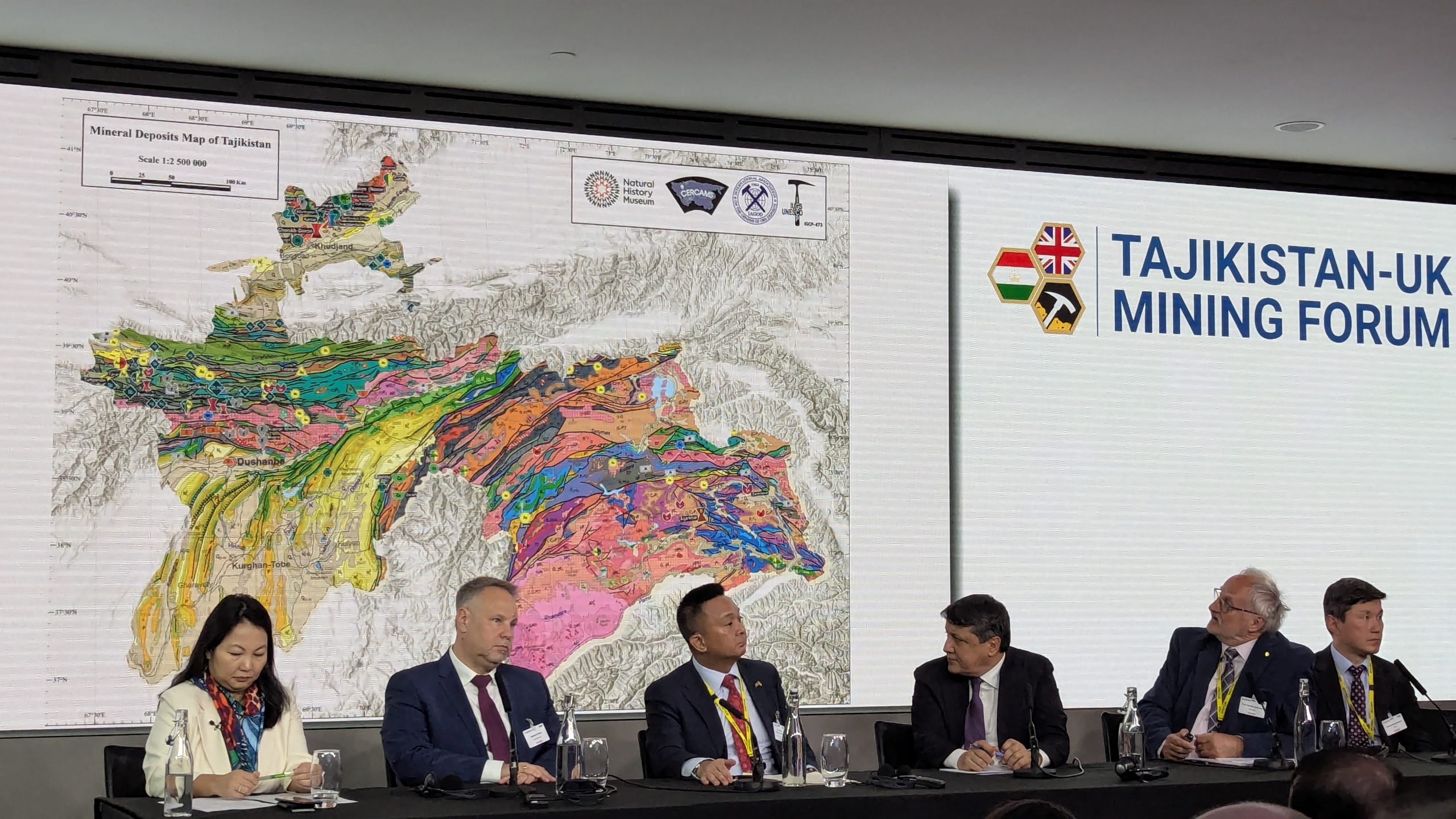
    The session, titled “Overview of Economic, Political, Fiscal, and Investment Climate in Tajikistan,” featured prominent speakers including H. E. Sherali Kabir, Minister of Industry and New Technologies of the Republic of Tajikistan; Manuel P. Micaller, Jr., US Ambassador to Tajikistan; Andrew Prelea, CEO of Vast Resources; Azamat Kasymbekov, Principal Banker, Natural Resources (EBRD); and Prof Reimar Seltmann, Research Leader and Head of CERCAMS.

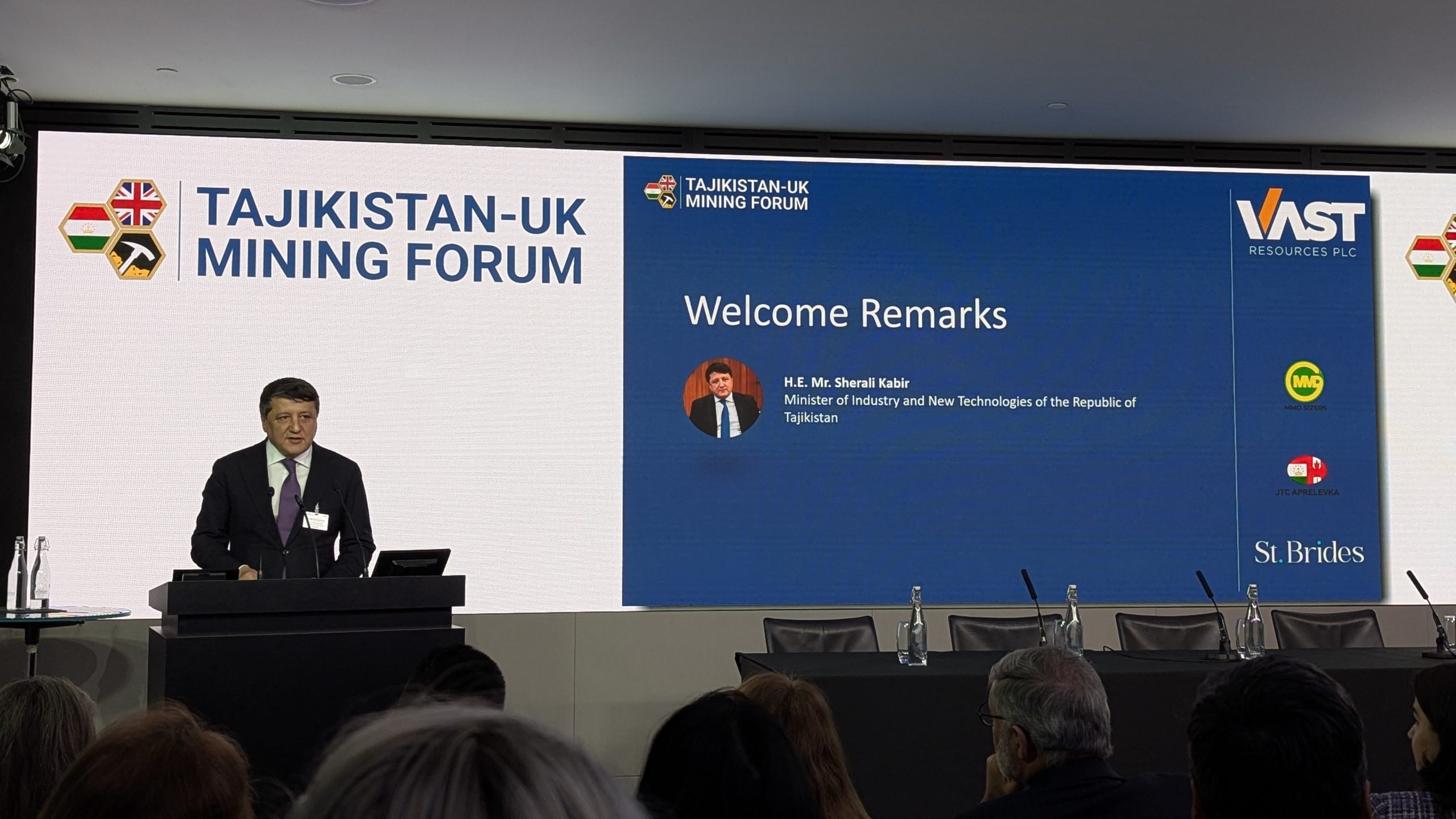
    Minister Kabir opened the session, setting the stage for a deep dive into Tajikistan’s commitment to fostering a favourable investment environment.

    Ambassador Micaller highlighted the long-standing US involvement in Tajikistan’s mining sector, citing the successful joint venture between US company Comsup Commodities Inc. (Comsup) and the Tajik government, which made Tajikistan the world’s second-largest producer of antimony and the leading exporter to the United States last year. He underscored the US market’s demand for critical minerals and the readiness of the US Embassy in Dushanbe to support American companies exploring opportunities in Tajikistan. The Ambassador emphasised the importance of fair, open, stable, and transparent business environments to attract Western investment, praising Tajikistan’s progress in this regard.

    Andrew Prelea of Vast Resources shared a compelling anecdotal account of his initial reluctance to invest in Tajikistan, which transformed into a profound endorsement. He described Tajikistan as an “unexplored area from a Western perspective,” a “sleeping giant” with immense, high-grade deposits of strategic minerals like antimony, gold, tin, lead, zinc, silver, and copper. Prelea stressed the unique advantage of Tajikistan’s green mining sector, with 98% of its energy derived from hydroelectric sources, making it an ideal destination for ESG-conscious investors. He boldly stated that Tajikistan holds more of the resources needed in the modern world than any other country he has experienced, comparing its resource base to that of Africa and Australia in the 1950s.

    Azamat Kasymbekov from the European Bank for Reconstruction and Development (EBRD) outlined the bank’s extensive investment in Tajikistan since 1993, totalling around €1 billion across over 180 projects, primarily in infrastructure. He also detailed EBRD’s 30-year history of financing in the mining sector, highlighting a growing focus on critical raw materials. Kasymbekov addressed common challenges in emerging markets, such as regulatory uncertainty and infrastructure deficiencies, and explained how the EBRD provides technical assistance and supports the adoption of modern mining codes to improve the investment climate.

    Prof Reimar Seltmann of CERCAMS presented a detailed geological overview, emphasising Tajikistan’s largely underexplored mineral potential. He showcased CERCAMS’ work in building comprehensive geological databases and maps for Central Asia, highlighting the presence of numerous large and medium-sized deposits, particularly for critical metals.

    The discussion also touched upon the Tajik government’s measures to ease the process for foreign investors, including direct engagement and problem-solving, which Prelea commended as “highly unusual” for emerging markets. The panel agreed that while significant progress has been made, continued efforts are needed to further enhance transparency, clarity of regulations, and adherence to international standards to attract more foreign direct investment.

    In their concluding remarks, speakers reiterated Tajikistan’s unique position as a prime investment destination in the mining sector. Prelea urged junior miners to seize the opportunities in a country with abundant resources, readily available green power, water, and a supportive government. Ambassador Micaller reaffirmed the US commitment to supporting Tajikistan’s economic sovereignty and connecting it with global partners.

    The session underscored a strong consensus: Tajikistan, with its vast and largely untapped mineral wealth, stable government, young and educated population, the world’s cheapest exploration costs, and commitment to green energy, presents an unparalleled opportunity for international investors in the global pursuit of critical minerals.

  • Uzbek Geological Exploration Advances Across Multiple Sites with Coal, Polymetallic, and Non-Metallic Discoveries

    Uzbek Geological Exploration Advances Across Multiple Sites with Coal, Polymetallic, and Non-Metallic Discoveries

    Uzbek Geological Exploration JSC has reported significant progress across multiple exploration sites, highlighting ongoing developments in the country’s resource sector. At the Uriqli site, part of the Surkhandarya field expedition under the Gissar central geological exploration expedition, coal seams numbered 1 through 6 have been successfully identified as a result of recent mining works.

    Simultaneously, polymetallic ore bodies are under evaluation at the northern section of the Khandiza ore field, while detailed exploration continues at the Vodny Say section. Exploration activities have concluded at the Severny area, where a comprehensive geological report is now being finalized for submission to the State Reserves Committee (GKZ) in 2025.

    In parallel, the field evaluation of non-metallic mineral resources is ongoing at several locations. These include celestine at Chigatai, dolomite at Loilik, gypsum at Shurobsoy, and basalt at Badava. The corresponding exploration reports are also expected to be submitted for review to the State Commission on Mineral Reserves (SCP) within the year.

  • Vast Resources Signs MoU with Tajik Ministry at UK-Tajikistan Mining Forum

    Vast Resources Signs MoU with Tajik Ministry at UK-Tajikistan Mining Forum

    Vast Resources plc, an AIM-listed mining company, announced its active participation in the Tajikistan-UK Mining Forum held yesterday at the London Stock Exchange. The event served as a platform to reinforce bilateral ties between the United Kingdom and Tajikistan while spotlighting the investment potential within Tajikistan’s mining sector.

    During the forum, Vast Resources signed a non-binding Memorandum of Understanding (MoU) with the Ministry of Industry and New Technologies of the Republic of Tajikistan. The agreement outlines a framework for cooperation aimed at identifying both historical and greenfield exploration opportunities for non-ferrous and strategic mineral deposits.

    A notable element of the MoU includes plans to jointly develop a “Tajik Mineral Investment Fund” to facilitate growth in Tajikistan’s mining industry. The agreement remains in effect until 19 May 2026. Vast Resources confirmed that any material developments arising from the MoU will be disclosed as they occur.

  • Tajikistan-UK Mining Forum: Keynotes at the London Stock Exchange

    Tajikistan-UK Mining Forum: Keynotes at the London Stock Exchange

    The Tajikistan-UK Mining Forum, held at the London Stock Exchange on 19th May, brought together key figures to discuss the immense potential of Tajikistan’s mining sector and foster stronger bilateral ties with the UK. The event featured insightful keynote speeches from high-ranking officials, highlighting opportunities for investment, sustainable development, and collaborative partnerships.

    Ambassador H.E. Mrs. Rukhshona Emomali: A Vision for Growth

    H.E. Mrs. Rukhshona Emomali, Ambassador Extraordinary and Plenipotentiary of Tajikistan to the UK, opened the keynote session, emphasising Tajikistan’s rich, largely untapped mineral wealth. She highlighted the nation’s significant reserves of gold, silver, antimony, lead, and other valuable minerals, positioning Tajikistan as a potential key player in the global mining landscape.

    Under the leadership of its President Emomali Rahmon, the Tajik government is committed to the sustainable development of its mining sector. This includes modernising its regulatory framework and creating a favourable investment climate, with transparency, environmental responsibility, and innovation at the core of its approach. The Ambassador stressed that Tajikistan is seeking not just investment, but committed partners to help build a modern, responsible, and competitive mining industry for the benefit of its people and the international community.

    Lord Alderdice: UK’s Commitment to Responsible Mining

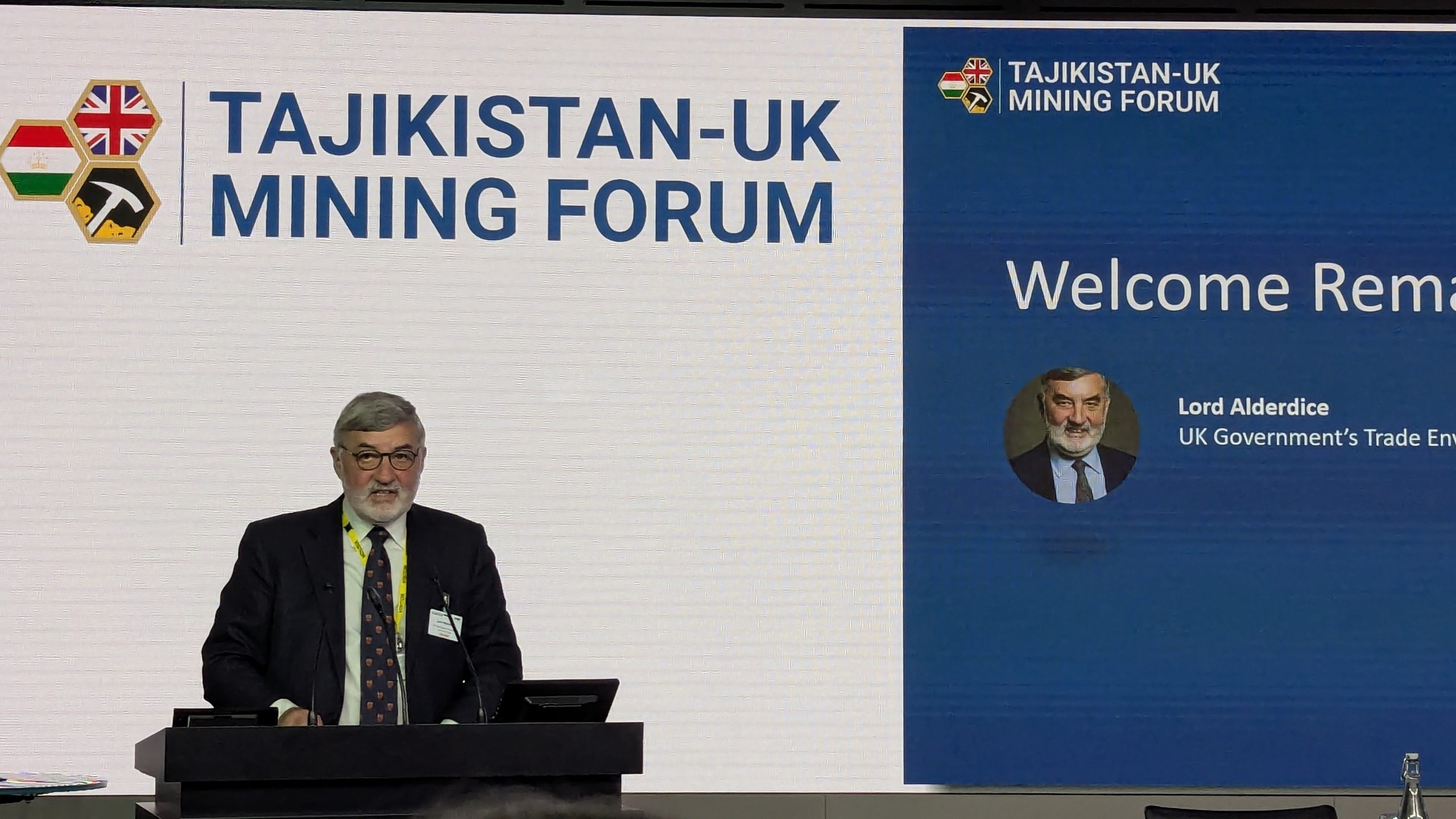
    Lord Alderdice, the UK Government’s Trade Envoy to Azerbaijan and Central Asia, spoke on behalf of the UK government, expressing his delight at the burgeoning partnership with Tajikistan. As the newly appointed UK Trade Envoy to Tajikistan, he underscored the vital importance of the mining sector in the bilateral relationship, recognising the significant scope for further collaboration.

    Lord Alderdice highlighted the UK’s outstanding capabilities across the entire mining and minerals value chain, from exploration and mapping to environmental management, engineering consultancy, and mining operations. Crucially, he emphasised the UK’s reputation as a leader in responsible mining, with fairness and transparency at the heart of its industry ethos. This commitment extends to engaging local communities, minimising environmental impacts, and protecting human rights. He noted that the London Stock Exchange, a gracious host for the forum, lists some of the world’s largest mining companies, solidifying the City of London’s role as a global centre for mining finance. He also pointed to the UK’s strength in research and development, spearheaded by universities like the Camborne School of Mines at the University of Exeter, the University of Birmingham, and the University of Manchester, all contributing cutting-edge expertise to the sector.

    Dr. Maggy Heintz: Geoscience for Sustainable Futures

    Dr. Maggy Heintz, Director of International Geoscience at the British Geological Survey (BGS), offered insights into the crucial role of geoscience in unlocking Tajikistan’s mineral potential responsibly. She highlighted Tajikistan’s rich geological diversity and strategic resources, including those critical for the global energy transition.

    Dr. Heintz stressed that unlocking this potential requires more than just extraction; it demands sustainable practices, science and data-driven decision-making, and robust international cooperation. As the world’s oldest geological survey organisation, BGS has a long history of sharing knowledge and strengthening capacity in geological science and data management worldwide. She expressed BGS’s commitment to listening, learning, and exploring ways to contribute to a sustainable, resilient, and economically inclusive future for Tajikistan’s mining sector.

    A significant development announced by Dr. Heintz was the renewal of a partnership between the British Geological Survey and the Tajik Main Department of Geology through a new Memorandum of Understanding (MoU). This MoU will build on previous successful collaborations, focusing on globally important geological challenges and ensuring the long-term sustainability of geological knowledge and data management within Tajikistan.

    The keynotes collectively painted a compelling picture of a promising future for the Tajikistan-UK mining partnership, founded on shared goals of economic growth, innovation, and sustainable development.

  • Tajikistan’s Minister Showcases Nation’s Mining Potential at London Stock Exchange Forum

    Tajikistan’s Minister Showcases Nation’s Mining Potential at London Stock Exchange Forum

    His Excellency Sherali Kabir, Minister of Industry and New Technologies of the Republic of Tajikistan, delivered a compelling presentation at the Tajikistan-UK Mining Forum held yesterday at the London Stock Exchange. The high-profile event, which took place on 19 May 2025, highlighted the significant investment opportunities within Tajikistan’s rapidly developing mining sector.

    Mineral Wealth and Strategic Resources

    In his address, Minister Kabir emphasised Tajikistan’s extensive mineral resources, noting that the country currently extracts over fifty types of raw materials from explored deposits. These include gold, silver, lead, antimony, tungsten, rare and scattered elements, precious and semi-precious stones, and rock salt.

    The Minister highlighted that Tajikistan possesses ten different types of strategic metals and minerals that feature on the critical resources lists of China, the European Union, the United States, and the United Kingdom. These include copper, aluminium, lithium, zinc, antimony, chlorite, graphite, nickel, tungsten, and rare earth metals.

    “Dependence on critical raw materials may soon replace dependence on oil and gas,” Minister Kabir stated, emphasising the growing global demand for these resources due to international economic competition, industrialisation in developing countries, and ongoing transformations in the global economic order.

    Future Market Prospects

    Minister Kabir presented a strategic outlook for the critical minerals market, predicting substantial price increases for rare earth metals—potentially up to 1,000 percent by 2035—driven largely by the projected production of 140 million electric vehicles worldwide. Despite the current global market for rare earth metals being valued at only $15 billion annually, Tajikistan is positioning itself to become an integral part of new supply chains.

    “We are a country that possesses unique resources, and we believe we can be part of new supply chains. We will certainly use this opportunity,” the Minister asserted.

    Investment Framework and Government Support

    The Tajik government has established a robust investment framework that guarantees stability for mining projects. Minister Kabir explained that investment agreements include provisions ensuring that legislative changes will not affect approved projects during their operational period, thus mitigating fiscal risks for investors.

    “The task of our government is to ensure foreign investors feel comfortable in Tajikistan,” Minister Kabir stated, emphasising the government’s commitment to supporting international partners through active engagement and advocacy.

    Value-Added Production Strategy

    Looking ahead, Minister Kabir revealed that Tajikistan is moving away from the direct sale of raw mineral concentrates. The government has implemented a five-year programme using tariff regulation to encourage domestic processing of metals, aiming to create higher value-added products within the country.

    This strategic shift coincides with Tajikistan’s impressive economic growth, with an overall growth rate of approximately 8.5% and industrial sector expansion of 25% this year, following last year’s 20% increase.

    International Cooperation

    The forum also saw the signing of a non-binding Memorandum of Understanding between Vast Resources PLC, an AIM-quoted mining company that sponsored the event, and the Ministry of Industry and New Technologies of Tajikistan. The MoU establishes a framework for cooperation in identifying new exploration and exploitation targets for non-ferrous and strategic mineral deposits, as well as developing a “Tajik Mineral Investment Fund”.

    The Tajikistan-UK Mining Forum marked an important milestone in strengthening bilateral relations and showcasing the Central Asian nation’s growing significance in the global critical minerals supply chain.

  • Uzbekistan Explores Cooperation with Utah in Mining and Geological Sectors

    Uzbekistan Explores Cooperation with Utah in Mining and Geological Sectors

    On May 16, 2025, First Deputy Minister of Mining Industry and Geology, O. Nasritdinhojaev, along with representatives from the Ministry, met with delegation from the U.S. state of Utah.

    During the meeting, the parties discussed the ongoing reforms in Uzbekistan’s mining sector, the investment opportunities being created, and explored prospects for cooperation in investments, advanced technologies, and scientific research, considering Utah’s economic potential and its advanced expertise in the mining and geological fields.

    Additionally, both sides exchanged views on improving the qualifications of lecturers and students of the University of Geological Sciences under the Ministry of Mining Industry and Geology. Discussions also included the possibility of opening branches of Utah-based universities specializing in geology and mining—such as the University of Utah and Utah State University—in Uzbekistan.

  • Anglo Asian Mining Begins Production at Gilar Underground Mine in Azerbaijan

    Anglo Asian Mining Begins Production at Gilar Underground Mine in Azerbaijan

    Anglo Asian Mining PLC (AIM: AAZ) has commenced production at its Gilar underground mine, situated within the Gedabek site in Azerbaijan. The company targets an output of approximately 2,000 tonnes of ore per day, with expectations to ramp up to a monthly production rate of 50,000 to 60,000 tonnes.

    A maiden JORC mineral resource estimate released on December 11, 2023, revealed that the Gilar deposit holds 6.10 million tonnes of mineralisation. The average grades include 0.88% copper—equating to nearly 54,000 tonnes of copper—and 1.30 grams of gold per tonne, totaling over 255,000 ounces of gold.

    Following the announcement, shares of Anglo Asian Mining rose by 7% in London, bringing the company’s market value to £169.9 million ($226.9 million).

    In 2024, Anglo Asian produced 16,760 gold-equivalent ounces, although production faced disruptions due to a partial environmental shutdown. Operations resumed by the end of the year.

    The company plans to evolve into a multi-asset, mid-tier copper and gold producer by 2029, with copper becoming its primary product. As part of its growth strategy, Anglo Asian intends to bring four new mines into production between 2025 and 2029: Gilar, Zafar, Xarxar, and Garadag.