Month: March 2026

  • Kazatomprom to Invest up to 85 Billion Tenge in Uranium Exploration by 2030

    Kazatomprom to Invest up to 85 Billion Tenge in Uranium Exploration by 2030

    Kazakhstan’s national atomic company Kazatomprom is accelerating its exploration activities and expanding its mineral resource base, with planned investments of 75 to 85 billion tenge in geological exploration by 2030.

    The announcement was made by CEO Meirzhan Yussupov during a meeting with President Kassym-Jomart Tokayev. According to the company, six uranium exploration areas have already been identified across Kazakhstan, covering a total area of more than 1000 square kilometres.

    Kazatomprom reported that its group enterprises produced 25.8 thousand tonnes of uranium in 2024, with 13.5 thousand tonnes attributable directly to the company. Sales volumes increased by 11% in 2025, reaching 18.5 thousand tonnes, reflecting steady demand growth in global markets.

    As part of its development strategy for 2025–2034, the company is actively expanding its international presence. Over the past year, Kazatomprom has signed supply agreements with major global energy players, including Switzerland’s AxpoPower AG, Czech utility ČEZ Group and Japan’s Kansai Electric Power. In addition, negotiations are underway for a long-term uranium concentrate supply agreement with India.

    The company is also prioritising technological innovation, with a dedicated strategy focused on improving operational efficiency, reducing environmental impact and implementation solutions across its production processes.

    Industry forecasts support the company’s long-term outlook. According to the World Nuclear Association, global nuclear generating capacity could reach 746 GW by 2040, while uranium demand may rise to 150 thousand tonnes annually.

    Against the backdrop of anticipated supply shortages and growing reliance on nuclear energy, Kazatomprom is focusing on expanding its resource base and securing long-term contracts to maintain its leading position in the global uranium market.

  • EU Industrial Accelerator Act Seen as Key to Reviving Metals Production

    EU Industrial Accelerator Act Seen as Key to Reviving Metals Production

    The proposed Industrial Accelerator Act (IAA) is being positioned as a pivotal opportunity to strengthen Europe’s industrial base, with the non-ferrous metals sector highlighting its critical role in achieving the European Union’s climate, digital and security objectives.

    Industry stakeholders argue that the IAA must prioritise restoring a viable business case for producing metals within Europe, which has been undermined in recent years by persistently high energy prices and rising operational costs. They stress that without targeted measures to address energy affordability, the credibility of the IAA as an industrial policy tool could be compromised.

    Among the key proposals is the development of “lead markets” to support demand for low-carbon materials. However, industry representatives warn that such mechanisms must remain realistic, flexible and aligned with sector-specific conditions. They emphasise the need for accompanying incentives, including VAT reductions and public procurement criteria, to prevent European producers from being undercut by cheaper imports.

    The introduction of local content requirements is also seen as a strategic priority to reduce reliance on critical raw materials from third countries and to support a “Made in EU” approach. At the same time, stakeholders caution that these measures must be carefully calibrated to avoid increasing production costs excessively or disrupting global supply chains. Flexibility is recommended, particularly in recognising partnerships with allied countries such as the UK, Canada, Australia and Japan.

    Green public procurement is identified as another key lever, with calls for minimum EU-wide standards based on life-cycle sustainability criteria. Industry groups argue that procurement frameworks should prioritise material efficiency, recyclability and end-of-life recovery, while remaining achievable and aligned with existing regulatory frameworks.

    Permitting reform is also highlighted as a major requirement. Current processes for obtaining environmental approvals can take years, delaying investment and project development. Stakeholders propose the introduction of EU-wide time limits for permitting decisions, alongside measures to streamline administrative procedures and improve regulatory predictability.

    Access to finance remains a central concern, particularly given the high capital and operating costs associated with decarbonisation. The IAA is expected to support both CAPEX and OPEX through long-term, predictable funding mechanisms, including carbon contracts for difference and dedicated instruments to mitigate energy price volatility.

    In addition, stakeholders advocate for a more coordinated approach to critical raw materials, including tailored stockpiling strategies to enhance short-term supply security. However, they emphasise that long-term resilience will depend on increasing domestic extraction, processing and recycling capacity within Europe.

    Overall, industry representatives stress that the success of the IAA will depend on its ability to balance climate ambition with industrial competitiveness. Without addressing structural cost disadvantages and regulatory barriers, they warn that Europe risks further erosion of its metals production base in an increasingly competitive global market.

  • Kazakh Investor Shakhmurat Mutalip Emerges as Leading Bidder for Yuzhuralzoloto

    Kazakh Investor Shakhmurat Mutalip Emerges as Leading Bidder for Yuzhuralzoloto

    Kazakh businessman Shakhmurat Mutalip has emerged as a leading contender to acquire the nationalised Russian gold mining group Yuzhuralzoloto (YUGK), according to media reports, as Moscow prepares to auction the asset in the coming weeks.

    The company, previously controlled by businessman and former politician Konstantin Strukov, was transferred to state ownership in 2025 following a legal case related to anti-corruption violations. The Russian Ministry of Finance has indicated that the sale of a controlling stake of approximately 67% could take place as early as March 2026.

    Mutalip, 35, is considered one of the fastest-rising business figures in Kazakhstan. He began his career in industry in 2008 and later became the beneficiary of Integra Construction KZ, a major construction group that has grown into one of the country’s leading companies by assets and tax contributions.

    In recent years, Mutalip has expanded his interests into the mining sector and has been linked to several major deals involving strategic assets. These include a potential acquisition of a 70% stake in Kazzinc from Glencore, estimated at up to $4.5 billion, and a possible 40% stake in Eurasian Resources Group (ERG), valued at around $1.4 billion. He has also been associated with interest in other mining assets, including Altynalmas.

    If completed, these transactions could position Mutalip as a major player in Kazakhstan’s non-ferrous and precious metals sector. His business structures, including entities registered in the Astana International Financial Centre, reflect growing ambitions in metallurgy and critical minerals.

    Analysts note that Mutalip has built strong commercial ties between Kazakhstan and Russia, particularly in the context of sanctions, facilitating industrial cooperation and access to financing. His companies are reportedly supported by major Russian banks and maintain relationships with global commodity traders.

    His candidacy for Yuzhuralzoloto is viewed as strategically consistent, given his growing presence in the gold sector and ability to operate across jurisdictions. Market observers suggest that the sale could reflect a broader trend of asset redistribution toward investors capable of maintaining operational continuity amid geopolitical uncertainty.

    The outcome of the auction is expected to be closely watched as an indicator of shifting ownership patterns in the region’s mining industry.

  • Vatican Launches Global Initiative Urging Disinvestment from Mining Sector

    Vatican Launches Global Initiative Urging Disinvestment from Mining Sector

    The Vatican has launched a new international initiative encouraging investors to withdraw funding from the mining sector, marking an unprecedented move by the Catholic Church to target a specific industry on ethical grounds.

    Announced on Friday and supported by senior Church officials and around 40 faith-based organisations, the initiative aims to promote stronger environmental protection and fair labour practices within mining operations. Companies that fail to meet these expectations could face pressure through divestment.

    Cardinal Fabio Baggio said the expansion of mining activities in many parts of the world has led to significant social tensions and environmental damage. He described the initiative as a reflection of the Church’s commitment to human dignity and ethical responsibility.

    The move builds on previous Vatican guidance urging Catholics to divest from sectors such as fossil fuels and armaments, but represents the first time the Church has directly called for disinvestment from mining.

    Rev. Dario Bossi, one of the project’s coordinators, said the initiative invites Catholic institutions and broader faith communities to reconsider their investment strategies in response to the social and environmental impacts of mining. The Vatican has not disclosed which organisations are participating or identified specific companies that could be affected.

    The announcement comes at a time of rapidly increasing global demand for critical minerals such as lithium, cobalt and copper, driven by the transition to clean energy and digital technologies. According to the International Energy Agency, demand for these materials could triple by 2030 and quadruple by 2040.

    While parts of the mining industry have acknowledged the need for improved sustainability practices—through initiatives such as the International Council on Mining and Metals—the Vatican’s intervention highlights growing scrutiny from non-governmental actors.

    Cardinal Alvaro Ramazzini of Guatemala, who participated in the launch, emphasised that legal compliance alone is not sufficient, calling on governments and corporations to align their actions with broader principles of justice.

    The initiative adds a new ethical dimension to the global debate over responsible sourcing of minerals at a time when demand for these resources is accelerating.

  • Kazakhstan Lawmaker Proposes Unified Disclosure Rules for Subsoil Users

    Kazakhstan Lawmaker Proposes Unified Disclosure Rules for Subsoil Users

    A member of Kazakhstan’s Mazhilis has proposed introducing unified transparency standards for subsoil users, calling for mandatory disclosure of income and production data across the mining and oil and gas sectors.

    Deputy Yerlan Barlybayev, representing the Ak Zhol faction, submitted the proposal to Prime Minister Olzhas Bektenov, arguing that greater transparency is essential to uphold the constitutional principle that subsoil resources belong to the people.

    The инициативa highlights inconsistencies in disclosure practices among companies operating in the extractive industries. While joint-stock companies are required by law to publish financial statements, many major players in Kazakhstan’s mining and oil and gas sectors operate as limited liability partnerships, whose financial reporting is accessible only to their founders. These include companies such as Tengizchevroil, Kazakhmys Corporation and Kazzinc, as well as entities registered in foreign jurisdictions or within the Astana International Financial Centre.

    According to Barlybayev, this lack of transparency prevents the public from objectively assessing how effectively the country’s natural resources are being utilised. He emphasised that the issue lies not in corporate structure itself, but in the absence of consistent disclosure standards for large subsoil users.

    To address this, the proposal calls for all major extractive companies to provide public reporting aligned with the requirements applied to listed companies under securities market legislation. This would ensure a comparable level of transparency across the sector.

    As a longer-term measure, the deputy also suggested that new entities seeking licences for strategic deposits should be established exclusively as joint-stock companies. While this requirement would not affect existing investors, it is expected to improve transparency and governance standards over time.

    The proposal reflects growing attention to accountability and resource governance in Kazakhstan’s extractive industries.

  • Savannah Resources Delays Key Studies for Barroso Lithium Project in Portugal

    Savannah Resources Delays Key Studies for Barroso Lithium Project in Portugal

    Savannah Resources has slightly revised the timeline for its flagship Barroso lithium project in northern Portugal, now expecting to complete its definitive feasibility study and environmental compliance process in July.

    The updated schedule represents a minor delay from the company’s previous target of end-June completion. Despite this, Savannah maintains its broader development timeline, with the final environmental licence anticipated in the third quarter of 2026, a final investment decision by year-end, and first production targeted for 2028.

    Chief executive Emanuel Proença stated that the company can meet required technical and environmental standards without waiting for additional geotechnical and resource data from ongoing fieldwork. Instead, this data will be incorporated into future engineering phases. The decision follows validation from independent technical consultants and project finance advisers.

    The Barroso project has been designated as a “strategic” asset under the European Critical Raw Materials Regulation and is considered by Savannah to be Europe’s largest spodumene lithium deposit. The company is currently finalising metallurgical testing and conducting environmental studies, including noise modelling, as part of the permitting process.

    Savannah plans to develop four open-pit mines at the site, with projected annual output sufficient to supply lithium for approximately 500000 electric vehicles. According to the company, the project is economically viable at lithium prices of around $600 per tonne, positioning it as a competitive source of supply for European battery manufacturers seeking shorter and more secure supply chains.

    The company is also progressing procurement, with a tender underway for detailed engineering services and a contractor expected to be selected in the coming weeks. Additional fieldwork is pending approval for temporary land access and will inform subsequent project stages.

    Portugal has historically produced lithium for ceramic applications but has yet to establish large-scale battery-grade production. The government has recently awarded Savannah a €110 million grant to support the project’s development.

    However, the Barroso project continues to face opposition from local communities and environmental groups, particularly given the area’s designation as a World Heritage agricultural landscape since 2018.

  • Unpacking Kazakhstan’s $25 Billion Mining and Critical Minerals Revolution

    Unpacking Kazakhstan’s $25 Billion Mining and Critical Minerals Revolution

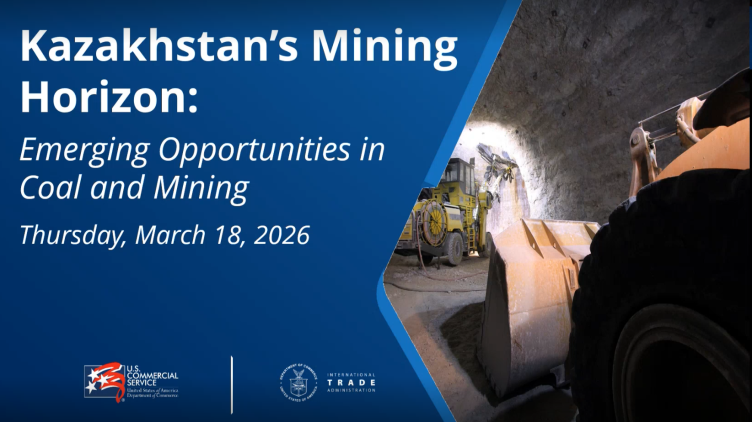
    On 18 March the US Commercial Service hosted a webinar featuring experts from the Kazakh government and industry. The central message was clear: Kazakhstan is no longer presenting itself simply as a resource-rich country. It is actively seeking to become a more significant destination for investment, processing, industrial partnerships and long-term supply chain co-operation.

    If you are tracking the global energy transition and supply chain security, this is a market that demands your attention. Here are my biggest takeaways from the session:

    A market defined by scale, ambition and strategic importance

    Kazakhstan’s resource base remains one of its greatest strengths. Speakers highlighted that mining and metallurgy continue to play a major role in the national economy, while reforms are being introduced to improve transparency, modernise infrastructure and create a more attractive environment for foreign investors.

    Particular attention was given to coal, mining and critical minerals as sectors with major growth potential. Kazakhstan is pursuing a pragmatic approach to energy development, combining its natural resource base with efforts to attract technology, financing and international partners. For U.S. companies, this is increasingly being framed not only as a commercial opportunity, but also as a chance to help build more resilient allied supply chains.

    The Sheer Scale of the Resource Opportunity

    Kazakhstan holds a formidable position on the global energy map, but it’s the untapped potential that is most striking:

    • Massive Reserves: The country sits on 33 billion tonnes of coal reserves, ranking 8th globally—enough to sustain production for over 300 years.
    • Cost Advantages: Kazakh coal prices hover around $25 to $50 per tonne—a fraction of the cost in other global markets. Furthermore, the cost of geological exploration is incredibly low at just $11 per square kilometre, compared to $167 in Australia and $203 in Canada.
    • The Coal Chemistry Boom: Currently, only 3% of Kazakhstan’s coal is processed. Shifting towards deep processing (synthetic fuels, ammonia, urea, methanol) represents a $25 billion untapped market.

    Modernising the Energy Grid

    As power demand surges—driven by industrialisation and the rise of AI—Kazakhstan is heavily focussed on modernising its infrastructure. The Ministry of Energy plans to introduce 26 gigawatts of new power capacity over the next decade. This includes a near-term plan to add 7.6 GW of new coal-fired capacity, requiring an estimated $16 billion in investment by 2030. The government is actively seeking technological partnerships for carbon capture and storage (CCS) and ultra-supercritical boiler technologies to ensure this growth aligns with clean energy standards.

    Critical minerals are becoming central to the conversation

    One of the most interesting aspects of the discussion was the growing focus on critical minerals and rare earth-related opportunities.

    Kazakhstan is developing a more comprehensive strategy for critical raw materials, with plans to define priority minerals, support processing and encourage higher-value production. The direction of travel is clear: the country wants to move further up the value chain and become more than simply an exporter of raw materials.

    This was particularly relevant in light of the tungsten discussion that followed.

    Resources:

    Looking ahead to 14-16 April: MINEX Kazakhstan Forum in Astana

    The next important date in the calendar is 15 April, when Julie M. Stufft , U.S. Ambassador to the Republic of Kazakhstan, will speak at the strategy session on Critical Minerals and Global Strategic Alliances at the 16th MINEX Kazakhstan Forum in Astana.

    Also speaking will be Dominic Heaton Dominic Heaton, CEO of Cove Kaz Capital Group, who will present the Severniy Katpar case study.

    This is especially significant because Severniy Katpar and Verkhnee Kairakty together hold 1.4 million tonnes of tungsten trioxide under JORC standards, representing around 70% of Kazakhstan’s total tungsten reserves. The project involves an estimated $1.1 billion joint venture investment, with potential support from U.S. EXIM and the U.S. International Development Finance Corporation totalling up to $1.6 billion.

    That level of financial and diplomatic backing underlines how strategically important this project could become, not only for Kazakhstan, but also for broader allied efforts to secure critical mineral supply chains.

    Why these matters

    What stood out most from the 18 March webinar was the alignment now emerging between Kazakhstan’s resource ambitions and international demand for secure, diversified supply chains.

    Kazakhstan offers scale, geological potential and a strategic location between major markets. The United States and other partners bring financing, technology and industrial expertise. If those elements come together effectively, the result could be a new phase of co-operation built around mining, processing, infrastructure and critical minerals development.

    For anyone following energy security, industrial policy or strategic resource investment, Kazakhstan is becoming increasingly difficult to ignore.

    The webinar made that case convincingly. The 15 April MINEX Forun sessions should offer an important next step in showing how these opportunities may translate into practical projects and partnerships.
  • Qazaq Kalium Plans $2.4 Billion Potash Project in Western Kazakhstan

    Qazaq Kalium Plans $2.4 Billion Potash Project in Western Kazakhstan

    Qazaq Kalium, controlled by businessman Nurlan Artykbayev, is preparing to begin construction of a major potash mining and processing complex in western Kazakhstan, marking a significant step in the development of the country’s fertiliser industry.

    According to a statement of planned activities, the first phase of the mining and processing plant (GOK) will be built at the Satimola deposit in the Akzhayik district of West Kazakhstan region. Construction is expected to begin in April 2026 and last approximately 32 months, with commissioning scheduled for the first quarter of 2029.

    The Satimola deposit, located near the Ural River, holds potassium and boron-bearing salts and was originally discovered in the 1960s. The licence for its development was issued in 2023 for a period of 25 years. Mining operations are currently planned to continue until December 2050, after which a decision will be made on further development or site closure.

    The project  is designed with an annual processing capacity of 8.5 million tonnes of ore and output of up to 2 million tonnes of potassium chloride, including both granular and fine products. In the longer term, Qazaq Kalium aims to establish a larger комплекс capable of processing up to 25 million tonnes of potash ore annually, alongside 1 million tonnes of boron ore, producing fertilisers such as potassium chloride and boric acid.

    The total investment in the project has previously been estimated at approximately $2.4 billion. Infrastructure development will include the construction of railway access, power lines, water supply systems and a gas pipeline, with natural gas expected to be used in processing operations.

    Despite Kazakhstan’s agricultural sector having relatively low fertiliser usage domestically, the project is expected to target export markets, particularly China, where demand for potash remains strong.

    The development of Satimola has been under consideration since the 2010s, attracting interest from both domestic and international investors. The project has also been the subject of corporate disputes in the past before coming under the control of Artykbayev.

    Environmental and social concerns have been raised locally, particularly regarding the potential use of water from the Ural River and proposed extraction methods. However, according to the project documentation, no significant environmental constraints or cultural heritage sites have been identified within the project area.

    Exploration and preparatory works are already underway. As of late 2025, drilling and earthworks had progressed significantly, including the completion of a 490-metre control shaft and ongoing development of key mine shaft structures.

    The Satimola project is expected to position Kazakhstan as a notable player in the global potash market, diversifying its mining sector beyond metals into fertiliser production.

  • EU Divided as 10 Countries Push to Reform Carbon Market Ahead of Summit

    EU Divided as 10 Countries Push to Reform Carbon Market Ahead of Summit

    A growing rift has emerged within the European Union over climate policy, as ten member states call for urgent reforms to the bloc’s Emissions Trading System (ETS), warning that current rules risk undermining industrial competitiveness.

    In a joint letter addressed to the European Commission ahead of a key European Council summit in Brussels, leaders from Austria, the Czech Republic, Croatia, Greece, Hungary, Italy, Poland, Romania and Slovakia argued that the existing ETS framework poses an “existential risk” to strategic industries. The countries are urging a slower and more flexible transition to balance climate ambitions with economic stability.

    The ETS, the EU’s flagship carbon market, requires companies to pay for their emissions but currently provides a limited number of free allowances to ease the burden on industry. The signatories are calling for these free allowances to be extended beyond 2034 and for the planned phase-out, set to begin in 2028, to be slowed.

    They argue that rising energy prices, persistent inflation and the high cost of decarbonisation technologies are placing heavy strain on energy-intensive sectors such as steel, chemicals and manufacturing. Without adjustments, they warn, European industries could struggle to remain competitive globally.

    The letter also calls for measures to reduce volatility in carbon prices, enabling businesses to better plan long-term investments, and for action to prevent excessive electricity costs, which are increasingly linked to natural gas prices.

    The appeal comes at a politically sensitive moment, as EU leaders prepare to discuss energy security challenges exacerbated by geopolitical tensions, including the conflict in the Middle East. The debate highlights a broader struggle within the bloc to reconcile climate targets with economic resilience.

    European Commission President Ursula von der Leyen has defended the ETS, describing it as a cornerstone of the EU’s climate strategy and a key mechanism for driving investment into clean technologies. However, she acknowledged the complexity of reforming the system, noting that electricity pricing is influenced by multiple factors, including national taxes, grid costs and energy market structures.

    The push for reform is not universally supported. A separate group of countries, including Denmark, Finland, the Netherlands and Sweden, has called for the ETS to remain unchanged, arguing that it has been effective in reducing emissions, supporting cross-border electricity trade and generating significant economic benefits.

    With competing positions emerging, EU policymakers face mounting pressure to deliver a compromise. The ten countries have urged the Commission to accelerate its review of the ETS and present concrete proposals within weeks, rather than waiting until the scheduled review later in the year.

    The outcome of the upcoming summit is expected to shape the future direction of Europe’s climate policy and its impact on industrial competitiveness.

  • Kazatomprom Reports Stable Operations Despite Geopolitical Uncertainty

    Kazatomprom Reports Stable Operations Despite Geopolitical Uncertainty

    Kazakhstan’s national uranium producer Kazatomprom has reported stable operations and financial performance despite ongoing geopolitical tensions, including conflicts in Ukraine and the Middle East.

    In its financial results for the year ended 31 December, the London-listed company stated that its production, exports and overall business activities remain unaffected. Uranium deliveries continue without disruption via both the Russian Federation and the Trans-Caspian International Transport Route, with no restrictions currently impacting shipments to customers.

    However, the company cautioned that broader geopolitical uncertainty and volatility in global capital markets could influence commodity prices and market conditions in the future.

    Chief Executive Officer Meirzhan Yussupov noted that the global nuclear energy sector is entering a more mature phase, with uranium increasingly recognised as a strategic resource within national energy security frameworks. According to him, major consumers are shifting focus from short-term price considerations to securing reliable long-term supply, entering contracts that extend well into the next decade.

    Despite this trend, Kazatomprom indicated that overall contracting activity in 2025 remained below actual demand levels, suggesting continued tightening in the uranium market.

    During the reporting period, the company expanded its international presence, adding Switzerland and the Czech Republic to its customer base, signing a supply agreement with a Japanese utility, and establishing a new long-term partnership with India.

    Kazatomprom also highlighted that the majority of its revenues and financing are denominated in US dollars, which provides a natural hedge against exchange rate fluctuations and supports financial stability.

    The company said it will continue to closely monitor global developments while maintaining operational resilience in a complex geopolitical environment.