Month: March 2026

  • Cornish Tin Raises £2.2 Million to Advance World-Class Tin and Lithium Projects in Southwest England

    Cornish Tin Raises £2.2 Million to Advance World-Class Tin and Lithium Projects in Southwest England

    Cornish Tin has closed a funding round of over £2.2 million ($3 million), exceeding its target and valuing the privately held minerals explorer at £29 million ($38 million) pre-money, as the company presses ahead with exploration at two critical mineral projects in Cornwall that it believes could play a meaningful role in securing domestic UK supply.

    The raise was supported by a combination of existing shareholders and new investors. Proceeds will be directed toward the company’s flagship Great Wheal Vor tin project and the Tregonning South lithium project, funding priority target advancement and further resource definition across both sites.

    Great Wheal Vor, located in the Breage mining district, encompasses 26 former producing sites with a history of exceptionally high-grade tin output. Historic records cited by the company indicate average production grades of 3% tin, with peak grades exceeding 5.5% — figures that Cornish Tin says would rank the project among the top three tin mines in the world by grade if it were in production today.

    At Tregonning South, initial exploration in 2022 identified a potential new lithium field underlain by what the company describes as G5 granite, also known as topaz granite — a rare geological formation accounting for approximately 1.4% of all outcropping granites across Cornwall. The region has historically been one of England’s most significant mining areas, and its geology is increasingly attracting attention in the context of European critical mineral supply chain diversification.

    Chief Executive Sally Norcross Webb said the funding marked an important milestone for the company. “We believe Cornwall has the potential to play a significant role in securing domestic supply of critical minerals, and this capital enables us to accelerate our progress towards that goal,” she said.

  • Chinese Mining Firm Jinxin Secures Kazakhstan Gold Deposit Near Chinese Border After Auction Winner Defaults on Payment

    Chinese Mining Firm Jinxin Secures Kazakhstan Gold Deposit Near Chinese Border After Auction Winner Defaults on Payment

    Chinese company Jinxin Mining has been awarded the rights to develop the Ketmen alluvial gold deposit in Kazakhstan’s Almaty Region, after the original auction winner apparently failed to complete payment — handing the licence to the Chinese firm in circumstances that have drawn public scrutiny.

    The deposit, also known as Predgorny Ketmen, is located close to the Chinese border in the Uygur and Raimbeksky districts of Almaty Region, near the Ketmen and Shalkudysu rivers. Total forecast alluvial gold resources at the site were estimated in 2015 at 7.1 tonnes. According to earlier reporting from 2018, the deposit remained underexplored at that time, with its reserves not fully calculated, a gold-bearing placer extending 15 to 16 kilometres in length, and gold content ranging between 400 and 1,200 milligrams per cubic metre.

    The Ministry of Industry put the deposit up for auction in 2024. According to auction records, the winning bid was submitted by Kazakh firm Korgold at 600 million tenge, with Jinxin Mining placing second at 546 million tenge — just over $1 million. It appears Korgold was subsequently unable to meet its full payment obligation, and the subsoil use rights were transferred to Jinxin Mining, which confirmed its auction commitment. The company received formal notification of its winning status from Kazakhstan’s Ministry of Industry in November 2024.

    Jinxin Mining’s founders are listed as Liu Yanling, Chen Haiyan and the limited liability company Jinxin Mining 1, the beneficial owner of which is Tursunbek Omurzakov, a former member of parliament representing the Communist People’s Party.

    A publicly released site closure and remediation plan filed by the company provides detailed technical parameters for the operation. Mining will be conducted using open-pit methods within the riverbed and terraces of the Ketmen River, using excavator and bulldozer equipment. The quarry will cover an area of 2.2 hectares, extend approximately 1,100 metres along its axis, and reach a depth of up to 8 metres. The average gold grade at the deposit is stated at 0.27 grams per tonne. The document specifies that no long-term conservation of mining infrastructure is planned; upon completion, all structures will be dismantled and the land progressively rehabilitated, with terrain restoration and biological remediation carried out in stages as individual blocks are worked out.

    The deposit had previously been subject to exploration rights held by Tau Ketmen LLP, a company linked to the state mining holding Tau-Ken Samruk.

  • MinRex and Electrum Shareholders Approve Merger to Create Gold-Copper Explorer Spanning Australia and Serbia

    MinRex and Electrum Shareholders Approve Merger to Create Gold-Copper Explorer Spanning Australia and Serbia

    Australian mining company MinRex Resources has confirmed that shareholders of its Canadian peer Electrum Discovery have overwhelmingly approved a planned merger of the two companies, paving the way for the creation of a combined gold-copper exploration group with assets across Serbia and New South Wales.

    An extraordinary shareholder vote held on 24 March returned 99.99% in favour of the transaction, with completion of the merger anticipated on or around 9 April. Under the agreed terms, Electrum’s security holders will hold a 49% stake in the merged entity, with MinRex shareholders retaining the remaining 51% controlling interest.

    First announced in January, the deal is expected to create a combined group with a market capitalisation of approximately A$28 million ($19.3 million). The merged company will bring together Electrum’s Serbian exploration portfolio with MinRex’s gold and base metals projects in Australia’s Lachlan Fold Belt, which spans approximately 438 square kilometres of tenements.

    Electrum, listed on the Toronto Stock Exchange, holds two projects in Serbia — the gold-silver Novo Tlamino and the copper-gold Timok East — both situated within the Western Tethyan Belt, a well-established and mineralised corridor known for significant gold and copper endowments. MinRex, listed on the Australian Securities Exchange, contributes its Lachlan Fold Belt holdings, a region with a strong track record of gold and base metal discoveries in New South Wales.

  • Czech Cinovec Lithium Project Nears Critical EIA Verdict as European Metals Holdings Targets Mid-2026 Milestone

    Czech Cinovec Lithium Project Nears Critical EIA Verdict as European Metals Holdings Targets Mid-2026 Milestone

    European Metals Holdings is approaching a defining moment for the Cinovec lithium project in the Czech Republic, with a pivotal environmental ruling expected by the end of June that will determine whether the development — increasingly regarded as central to Europe’s battery supply chain ambitions — can unlock its EU funding and advance toward construction.

    The Czech Ministry of Environment is anticipated to deliver its verdict on the project’s Environmental Impact Assessment by 30 June 2026, a decision that carries significant financial consequences. A positive outcome is a mandatory prerequisite for European Metals Holdings to access grants allocated from the EU Just Transition Fund, making the ruling one of the most consequential regulatory moments in the project’s history. The formal review procedure is currently underway and will be followed by a public consultation phase before a final decision is issued.

    Ahead of that deadline, the company’s Annual General Meeting on 19 May 2026 will provide shareholders with an opportunity to hear updates on project progress, vote on the reappointment of board directors and receive further detail on planned lithium carbonate production targets. The project’s feasibility study envisages output of battery-grade lithium material sufficient to meet a substantial share of Europe’s projected demand by 2030, positioning Cinovec as a key node in the regional electric vehicle supply chain.

    The project has already secured meaningful regulatory momentum in recent months. In February 2026, official approval was granted for the regional rezoning of the project area, legally designating zones for mining operations, processing facilities and utility infrastructure corridors — a significant permitting milestone that builds on the formal submission of the comprehensive EIA documentation in December 2025.

    Cinovec’s strategic significance has been formally acknowledged by both the European Union and the Czech government, with the project classified as a priority resource in the context of the continent’s energy transition. Located in the Erzgebirge mountain region on the Czech-German border, it is considered one of the largest hard-rock lithium deposits in Europe and has drawn growing attention as the bloc seeks to reduce dependence on imported battery raw materials, particularly from China.

  • Bosnia’s “Green Transition” Dilemma: International Mining Companies Move In as Communities Fight to Protect Land, Water and Livelihoods

    Bosnia’s “Green Transition” Dilemma: International Mining Companies Move In as Communities Fight to Protect Land, Water and Livelihoods

    In the gentle hills of Majevica, a low mountain range in northeastern Bosnia and Herzegovina where farmers grow strawberries, keep bees and distil rakija, a battle is unfolding that mirrors conflicts playing out across much of the developing world: the collision between the European Union’s hunger for critical minerals and the communities whose land sits above them.

    Since September 2023, when residents learned by chance that Swiss prospecting company Arcore was preparing to drill for lithium on the mountain, a grassroots anti-mining movement has taken root across the region. Local activist Andrijana Pekić and her neighbours in Lopare founded an informal organisation to educate their community about the dangers of lithium extraction, collaborating with established environmental groups including Bijeljina-based Eko Put and Tuzla’s Karton Revolucija. Their core argument is unambiguous: “There is no such thing as clean lithium mining.” Tailings from extraction processes containing sulphuric acid and hazardous chemicals contaminate streams, groundwater and soil; rock dust pollutes the air for miles. Majevica’s waterways feed the Drina and Sava rivers, meaning environmental damage would ripple across a vast surrounding region encompassing Tuzla, Bijeljina, Brčko and Zvornik.

    Activists have conducted two petition drives, in 2024 and 2025, calling for a ban on lithium mining and the establishment of a nature reserve across most of the mountain. Both were dismissed by the Republika Srpska parliament. Arcore, meanwhile, has already conducted drill tests on private land — in some cases without the knowledge of landowners — with documented consequences. After the company drilled on the property of Jovan Krsmanović in the village of Vukosavci, both his well and a neighbour’s dried up entirely.

    Majevica is far from an isolated case. Lithium, magnesium, copper, nickel, cobalt and other minerals featured on the EU’s 2024 critical raw materials list have been identified across Bosnia and Herzegovina, and international mining companies have been awarded concessions across the country in circumstances activists and legal experts describe as opaque and frequently unlawful. A central grievance concerns a long-standing legal prohibition on the sale or change of use of state-owned property — a restriction rooted in unresolved property succession disputes following Yugoslavia’s dissolution — which both entities have repeatedly violated when doing so serves favoured investors.

    The most prominent example is the Vareš municipality in central Bosnia, where a concession was granted to Eastern Mining in 2018 and later acquired and expanded by Adriatic Metals, covering silver, zinc, lead and barite deposits. A significant portion of the land falls on state property. The company has been found guilty of clear-cutting forested land, while mining at the Rupice mine has contaminated drinking water supplies for the downstream town of Kakanj. In July 2024, Bosnia’s Constitutional Court ruled that the Federation’s granting of state-owned land use was unconstitutional — yet excavation was permitted to continue regardless.

    Federation Prime Minister Nermin Nikšić has shown little sympathy for conservationists. He dismissed those seeking to protect land around Vareš, suggesting it was irrational to allow “scrubland they call state property to lie useless rather than become a valuable investment.”

    The contradiction at the heart of the crisis is captured bluntly by Snežana Jagodić-Vujić of Eko Put: “Our entire country is being attacked. The green transition is clean there, but dirty here.” Campaigners point out that significant lithium deposits exist within the EU itself — in Portugal and Spain — where stricter environmental laws and stronger rule of law have at least slowed the pace of extraction following mass public protests. Bosnia and Herzegovina, riven with corruption and institutional dysfunction dating to the Dayton constitutional settlement, has so far offered mining companies a far more permissive environment.

  • IMC Montan at Minex Kazakhstan 2026: An Expert Perspective on Industry Challenges

    IMC Montan at Minex Kazakhstan 2026: An Expert Perspective on Industry Challenges

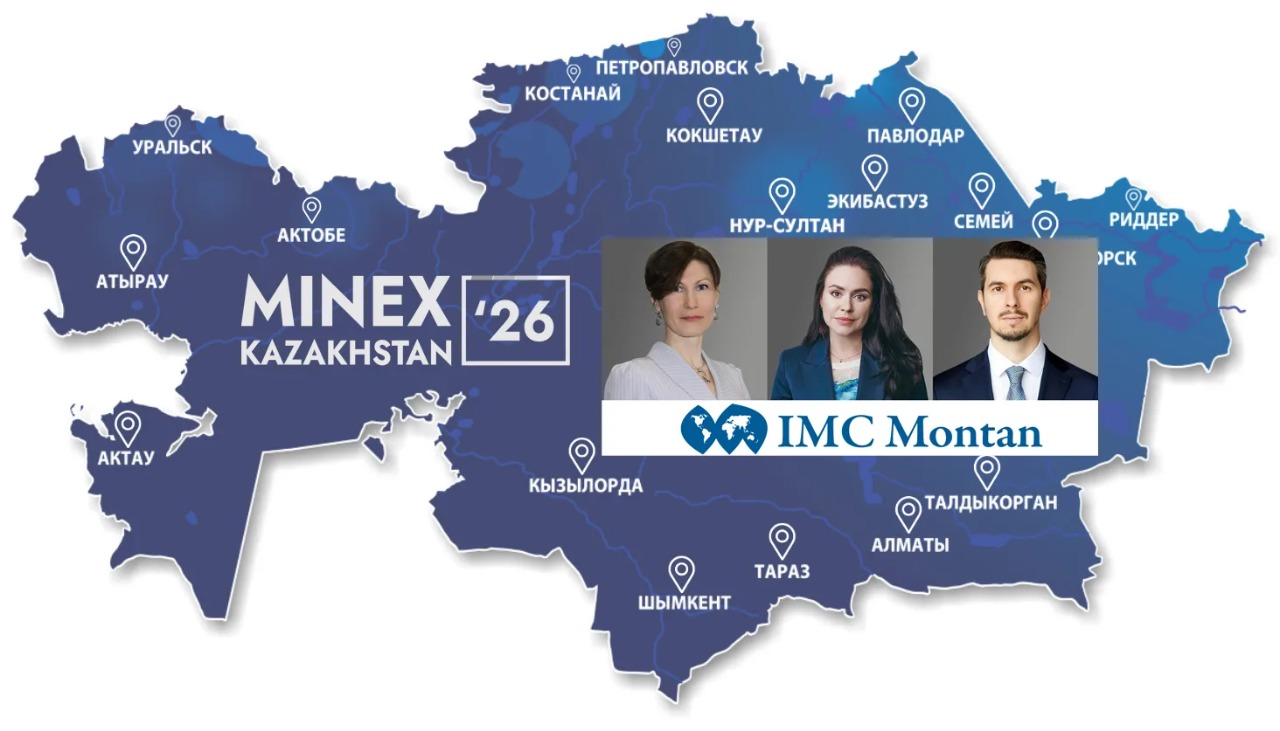
    This year, IMC Montan is co-organizing the session “ESG Transformation and the ‘Social License’ in Kazakhstan’s Mining Sector” at the Minex Kazakhstan forum. The company’s experts explain why the ESG agenda is becoming not just a trend, but an economic necessity.

    IMC Montan’s decision to co-organize a session dedicated to sustainable development is driven by the times. Kazakhstan has reached the point of regulatory implementation of ESG principles for business. Previously, this agenda was the prerogative of companies traditionally following international trends and seeking to meet investor or partner requirements. Now, ESG in Kazakhstan is actively developing not only due to external conditions. The mining sector is one of the most sensitive to ESG factors, so sharing experience on this topic will be valuable for all forum participants.

    What issues in this area do you consider most relevant for subsoil users today?

    When it comes to broad issues that go beyond national legislation and form part of sustainable development principles and the application of best available technologies, key topics include mining waste management, energy efficiency, rational water use, and biodiversity conservation. Closure and reclamation aspects deserve special mention. We are confident that forum participants will be interested in unconventional case studies addressing these issues. For example, relatively few experts have real hands-on experience with closure and reclamation works — yet these activities have a significant impact on the overall project economics, and underestimating these costs can become a critical factor. Environmental responsibility is playing an increasingly important role for business, and companies want to see financial benefits or preferences from implementing their environmental policies. The current agenda for subsoil users is therefore focused on asset lifecycle management: from waste handling during operations to post-investment assessment of closure and reclamation obligations.

    You mentioned the topic of mining and processing waste management. Could you share some interesting case studies?

    Mining companies must think carefully about where and how their large-tonnage mineral waste (overburden, processing tailings) will be handled. The main challenge is the sheer volume generated — conventional surface disposal requires significant land areas. The situation is further complicated by the conditions at mine sites: difficult terrain, proximity to populated areas, or the presence of environmentally or socially significant features. Naturally, subsoil users are interested in finding alternative approaches. There is also growing interest in recovering valuable components from mining waste and using waste as construction material or as a component thereof.

    However, waste disposal remains one of the most painful issues, as it is not only an environmental concern but equally an economic and land-property one. The most interesting case studies sit at the intersection of technological and legal solutions. Successful examples show that waste can be not just a financial burden, but a resource — if the rationale and documentation can be structured in line with circular economy principles.

    In our practice, we have encountered a number of innovative solutions. For example, placing tailings in exhausted open-pit voids (with or without prior waterproofing), or producing a specialized material from tailings (a recultivant) for backfilling mined-out areas — treating it not as waste disposal but as product manufacturing. Such unconventional approaches naturally require robust environmental safety justifications, but they open new opportunities. Both tailings management approaches yielded a tangible economic effect (in the range of $27–50 million USD), while requiring careful review of the legal framework and regulatory outlook to eliminate critical administrative risks — not just fines, but potential production shutdowns.

    An important regulatory stimulus emerged in Kazakhstan at the beginning of 2026 with the adoption of the “Concept for Managing All Types of Waste in the Republic of Kazakhstan for 2026–2030.” Waste management in the mining and metallurgical industries is identified as one of its strategic priorities. The planned development of the country’s regulatory framework regarding the utilization of mining waste (including as technogenic mineral formations) provides an additional incentive for subsoil users to seek optimal solutions.

    You separately mentioned closure and reclamation. In your view, what practical challenges do subsoil users face when fulfilling their closure and reclamation obligations?

    In our view, the main problem is a lack of understanding of the goals and principles of successful reclamation, which ultimately leads to ineffective solutions. In our practice, we frequently encounter “template” approaches to reclamation planning, and consequently, an underestimation of the associated costs. International practice has long established the core criteria for successful reclamation — environmental (such as site safety in terms of physical, geochemical and ecological parameters, protection of public health and safety, absence of water pollution post-closure, and ecological system integrity) and social (minimizing socioeconomic impacts of closure and generating socioeconomic benefits). Closure and reclamation plans should be developed as early as possible in the project design phase. Each of the mentioned criteria requires consideration during planning. Issues such as the adequacy of mine water management measures, forecasting the geochemical stability of waste dumps post-closure, and stakeholder engagement must be studied and solutions justified.

    In Kazakhstan, subsoil users are required to prepare reclamation plans at the design stage — however, in our observation, such plans tend to be formal documents rather than strategic ones. This can ultimately lead to insufficient financial provision for the required scope of reclamation and closure works when the time comes. That said, effective measures do not always mean costly ones. Some decisions made during overall production planning can reduce closure costs — such as the previously mentioned option of placing tailings in open pits, or accounting for the potential formation of acid drainage and managing it during waste rock stockpiling.

    Turning to the topic of international standards — in your personal view, can their implementation bring real benefits to business?

    Absolutely. Drawing on our practical experience working with industry enterprises across the CIS, we can confidently speak not just of benefits, but of the strategic necessity of implementing international standards. Integrating ESG principles enables a meaningful restructuring of risk management systems. We observe how chaotic responses to environmental and social incidents at many enterprises are being replaced by a systematic approach to predictive analysis and prevention. Standards also act as a catalyst for corporate culture: there is a marked increase in business accountability at all levels, which directly affects companies’ reputational assets.

    It is telling that the initiative most often comes from environmental protection departments — as those most attuned to regulatory changes. However, we have recently noted growing engagement from senior management as well. It is no secret that the cost of using natural resources is steadily rising — and the cost of environmental mistakes is rising even faster.

    Kazakhstan is now at a unique juncture: accumulated experience and current demand from both the state and the market are creating the conditions for a qualitative leap in eco-social responsibility.

    We have discussed challenges, unconventional solutions, economic effects and regulatory changes in the ESG space. What other areas of work — in this or other fields important to subsoil users — can IMC Montan’s experts shed light on?

    IMC Montan has been supporting mining projects for many years, including in the areas of environmental management, sustainable development and risk management. Our accumulated experience — spanning more than 1,000 completed projects worldwide — has allowed us to develop a comprehensive understanding of existing challenges and an expert approach to risk mitigation and overall project management. At the session, we will share illustrative case studies, present quantitative and qualitative characteristics of the approaches being implemented in natural resource management, and do our best to make the meeting both engaging and useful. Information about session participants and discussion topics is available at: https://2026.minexkazakhstan.com/ru/forum-agenda/tehnicheskaya-sessiya-2/

  • IMC Montan на Minex Kazakhstan 2026: экспертный взгляд на вызовы отрасли

    IMC Montan на Minex Kazakhstan 2026: экспертный взгляд на вызовы отрасли

    В этом году компания IMC Montan выступает соорганизатором сессии «ESG-трансформация и «социальная лицензия» в горнодобывающем секторе Казахстана» в рамках форума Minex Kazakhstan. Почему ESG-повестка сегодня становится не просто трендом, а экономической необходимостью рассказали эксперты Компании.

    Решение IMC Montan выступить организатором сессии, посвященной устойчивому развитию, продиктовано временем. Казахстан подошел к регуляторному внедрению принципов ESG для бизнеса. Ранее такая повестка была прерогативой компаний, традиционно следящих за международными трендами и стремящихся соответствовать требованиям инвесторов или партнеров. Сейчас же ESG в Казахстане активно развивается не только за счет внешних условий. Горнодобывающий сектор является одним из наиболее чувствительных к ESG-факторам, поэтому обмен опытом по этой теме будет полезен для всех участников форума.   

    Какие вопросы в этой сфере, как вам кажется, сейчас наиболее актуальны для недропользователей?

    Если говорить о масштабных вопросах, находящихся не только в рамках национальных законодательств, но и являющихся составной частью принципов устойчивого развития и областью внедрения наилучших доступных технологий, то стоит отметить такие, как обращение с отходами недропользования, энергоэффективность, рациональное водопользование, сохранение биоразнообразия. Отдельно стоит отметить аспекты ликвидации и рекультивации. Мы уверены, что, участникам форума будут интересны какие-то нестандартные кейсы решения таких вопросов. Например, не так много экспертов, которые имеют реальный опыт проведения работ по ликвидации и рекультивации, а между тем, данные мероприятия оказывают существенное влияние на экономику проекта в целом, недооценка этих затрат может стать критическим фактором. В настоящее время аспекты экологической ответственности играют все большую роль для бизнеса, и в том числе бизнес хочет видеть финансовые преимущества или получить какие-то преференции от реализации своих экологических политик. Таким образом, актуальная повестка для недропользователей ориентирована на управление жизненным циклом актива: от обращения с отходами в период эксплуатации до постинвестиционной оценки обязательств по ликвидации и рекультивации.

    Вы говорили про тему обращения с отходами добычи и переработки. Можете поделиться какими-то интересными кейсами?

    Предприятия горнодобывающего сектора обязаны задумываться от том, как и куда будут «уходить» их крупнотоннажные минеральные отходы (вскрышные породы, отходы обогащения). И основная сложность при обращении с такими отходами – это объемы их образования, ведь при привычном способе размещения таких отходов на поверхности требуются значительные площади земельных участков. Ситуация осложняется исходными условиями расположения месторождений. Например, сложные условия рельефа или наличие населенных пунктов, других объектов природной или социальной значимости. Естественно, что недропользователи заинтересованы в поиске альтернативных вариантов. Также существенный интерес сегодня вызывают вопросы добычи полезных компонентов из отходов недропользования, использование отходов в качестве строительного сырья или его компонента.

    Но все-таки одним из самых болезненных вопросов остается вопрос размещения отходов, так как он не только экологический, но и в равной степени экономический и земельно-имущественный. Наиболее интересные кейсы лежат на стыке технологических и правовых решений. Успешные примеры показывают, что отходы могут быть не только точкой финансового напряжения, а ресурсом, если удается выстроить логику и документальную базу в соответствии с принципами экономики замкнутого цикла.

    В нашей практике мы сталкивались с рядом интересных решений. Например, размещение хвостов в отработанном пространстве карьеров (как с их предварительной гидроизоляцией, так и без) или производство из хвостов специального материла (рекультиванта) для закладки выработанного пространства (когда речь идет не о размещении отходов обогащения, а о производстве продукта). Безусловно, такие нестандартные подходы требуют достаточных обоснований экологической безопасности, но открывают новые возможности. Оба упомянутых варианта обращения с хвостами имели ощутимый экономический эффект (в размере 27-50 млн. долл. США), но требовали рассмотрения правовых основ и регуляторных перспектив для исключения критических административных рисков (не только штрафных санкций, но и закрытия производства).  

    Важный регуляторный стимул появился в Казахстане в начале 2026 г с принятием «Концепции управления всеми видами отходов в Республике Казахстан на 2026-2030 годы». Управление отходами горнодобывающей и металлургической отраслей определено в ней одним из стратегических направлений. Планируемое развитие нормативно-правовой базы Республики в части вовлечения отходов недропользования в использование (в том числе в качестве техногенных минеральных образований) становится дополнительным стимулом для поиска оптимальных решений со стороны недропользователя.

    Отдельной темой вы упомянули вопросы ликвидации и рекультивации. По вашему мнению, с какими практическими проблемами сталкивается недропользователь при выполнении обязательств по ликвидации и рекультивации? 

    По нашему мнению, основной проблемой является недопонимание целей и принципов успешной рекультивации, что и приводит в итоге к неэффективным решениям. В нашей практике мы часто сталкиваемся с «шаблонными» принципами планирования рекультивационных работ, и, соответственно, недооценке затрат на их проведение. В международной практике давно сформулированы основные критерии успешной рекультивации – экологические (такие как безопасность территории по физическим, геохимическим и экологическим параметрам, безопасность здоровья и жизни населения, отсутствие загрязнения водных ресурсов после закрытия, целостность экологических систем) и социальные (минимизация социально-экономических последствий закрытия к минимуму и получение социально-экономических выгод). При этом разработка Планов закрытия и рекультивации должна осуществляться на как можно более раннем этапе проектирования. Каждый из упомянутых критериев успешной рекультивации требует рассмотрения при планировании. Такие вопросы как достаточность мер по управлению шахтными водами, прогноз геохимической стабильности отвалов после закрытия, учет мнения заинтересованных сторон и другие должны быть изучены, а решения – обоснованы.

    В Казахстане, как мы знаем, формирование недропользователями Планов (проектов) по рекультивации также вменено в обязанность на проектной стадии, однако, по нашим наблюдениям, такие Проекты являются скорее формальными, чем стратегическими. В конечном итоге это может приводить к недостатку финансового обеспечения необходимого объема рекультивационно-ликвидационных работ к моменту их осуществления. При этом, эффективность мероприятий не всегда означает их затратность. Некоторые решения, принятые при планировании всего производства в целом, могут снижать затраты на закрытие. Например, уже ранее приведенный вариант размещения хвостов в карьере.  Или учет возможности формирования кислого стока и управление им в процессе складирования породы в отвалах.

    Переходя к теме международных стандартов, поделитесь личным мнением, может ли их внедрение принести реальные выгоды бизнесу?

    Безусловно, да. Основываясь на практическом опыте взаимодействия с предприятиями отрасли в странах СНГ, мы можем уверенно говорить не просто о пользе, а о стратегической необходимости внедрения международных стандартов. Интеграция принципов ESG позволяет качественно реструктурировать систему управления рисками. Мы наблюдаем, как на многих предприятиях хаотичная реакция на экологические и социальные инциденты сменяется системным подходом к их предиктивному анализу и предотвращению. Стандарты выступают также катализатором корпоративной культуры: фиксируется значительный рост ответственности бизнеса на всех уровнях, что напрямую влияет на репутационные активы компаний.

    Показательно, что, инициатива чаще всего исходит от служб охраны окружающей среды (как наиболее чувствительных к регуляторным изменениям). Однако последнее время можем отметить и рост вовлеченности руководства. Не секрет, что стоимость пользования природными богатствами неуклонно растет, еще в большей прогрессии растет стоимость экологических ошибок бизнеса.

    Казахстан сейчас находится в уникальной точке: накопленный опыт и текущий запрос со стороны государства и рынка создают предпосылки для качественного скачка в повышении эко-социальной ответственности.

    Сегодня мы говорили о вызовах, нестандартных решениях, экономических эффектах и регуляторных изменениях в сфере ESG. Какие еще направления работы в этой или других важных для недропользователя сферах могут раскрыть эксперты IMC Montan? 

    IMC Montan на протяжении многих лет сопровождает горнодобывающие проекты, в том числе в вопросах экологии, устойчивого развития и управления рисками. Накопленный опыт, а это более 1 000 реализованных проектов по всему миру, позволил нам сформировать комплексное понимание существующих проблем и выработать экспертный подход в части нивелирования рисков, да и в целом эффективного управления проектами. На сессии мы поделимся показательными кейсами, отразим количественные и качественные характеристики реализуемых подходов в части управления природопользованием, постараемся, чтобы встреча была интересной и полезной. Информация об участниках сессии и темах обсуждения доступна на активной ссылке площадки: https://2026.minexkazakhstan.com/ru/forum-agenda/tehnicheskaya-sessiya-2/

  • Citigroup to Enter London Gold Market With Heathrow Vault Partnership as Bullion Boom Drives Clearing Expansion

    Citigroup to Enter London Gold Market With Heathrow Vault Partnership as Bullion Boom Drives Clearing Expansion

    Citigroup is preparing to join the exclusive club of banks at the centre of the world’s largest gold-trading hub, partnering with secure logistics firm Malca-Amit to use its vault near London’s Heathrow Airport as the bank moves toward becoming a clearing member of the London bullion market.

    The move would see Citigroup become only the fifth clearing member of the London market, joining JPMorgan Chase, ICBC Standard Bank, HSBC and UBS Group — a group whose numbers have dwindled in recent years even as the market’s importance has grown. Clearing members occupy a pivotal role in the London market, settling tens of billions of dollars in transactions every day in a city where more than $1 trillion in gold is held in storage. Vaulting capacity is central to that function, allowing precious metals to physically change hands to settle contracts.

    Malca-Amit’s facility near Heathrow — bullion vaults are typically located close to airports to facilitate the swift movement of metal by air — was described in a 2012 profile as capable of holding more than 300 tonnes of gold and 1,000 tonnes of silver. At current prices, 300 tonnes of gold would be worth approximately $43 billion.

    Citigroup’s approach of contracting with an external custodian mirrors the model used by UBS, which also relies on a third-party vaulting arrangement rather than operating its own facility. By contrast, JPMorgan and HSBC both maintain their own London vaults, while ICBC Standard Bank acquired Barclays’ London facility in 2016. JPMorgan’s vault in the City of London is among the largest gold stores in the world, holding close to 1,000 tonnes on behalf of a single bullion-backed exchange traded fund — a holding worth roughly $136 billion.

    The timing of Citigroup’s expansion into the market reflects a broader surge in investor appetite for gold. Bullion prices have risen approximately 45% over the past year, significantly boosting revenues from vaulting services, which are typically calculated as a percentage of the value of gold stored. Citigroup and JPMorgan declined to comment on the matter. Malca-Amit did not respond to a request for comment.

  • Northern Ireland Awards Seven Mining Licences Despite 99.5% of Public Respondents Opposing Them

    Northern Ireland Awards Seven Mining Licences Despite 99.5% of Public Respondents Opposing Them

    Seven mineral prospecting licences have been granted across Northern Ireland to four mining companies, the Department for the Economy has confirmed, in a decision that has drawn fierce criticism from local communities, environmental groups and elected representatives after more than 2,100 public objections were effectively overridden.

    The licences, which cover exploration for minerals excluding gold and silver across parts of Counties Armagh, Tyrone and Fermanagh, were awarded following a 12-week public consultation that concluded in April. Of the responses received, 99.5% were opposed to the licences being granted. Every affected local council also objected to the proposals.

    Under the terms of the awards, Conroy Gold will be permitted to explore south Armagh in areas near Keady and Newtownhamilton. Dalradian Gold will be able to prospect across portions of County Tyrone including land near Strabane and Plumbridge in the Sperrin Mountains. Karelian Diamond Resources has been granted rights to explore in Colebrook, County Fermanagh, while Flintridge Resources will focus on land near Killeter in County Tyrone. The licences cover prospecting only, though there remains the possibility that exploration could ultimately lead to full-scale mining operations.

    Environmental campaigners condemned the decision as a democratic failure. Save Our Sperrins, which has led opposition to the licences, said communities were “shocked and deeply disappointed,” adding that the decision came despite a recent successful judicial review that had identified failures in the very licensing process now being used. “Once again, the democratic voice of local communities has been sidelined in favour of private mining interests,” the group said, describing the decision as “anti-democratic, environmentally reckless, legally questionable, and socially divisive.”

    Martin Tracey of the Campaign Against Mining highlighted what he described as a significant shift in position by Economy Minister Caoimhe Archibald, who he said had previously called for a moratorium on mining licences and a rigorous review of the system governing their award — a stance apparently at odds with the department’s decision to proceed.

    A Department for the Economy spokesperson defended the process, noting that existing legislation must be complied with and that a comprehensive review of mineral licensing is currently underway. The department also clarified that it holds no role in licensing gold and silver exploration, which falls under the remit of the Crown Estate.

    Local campaigners argue the exploration activities pose risks to the environment, water supplies and tourism-dependent rural communities across the affected areas.

  • Kazakhstan Seizes $1 Million Mining Equipment Shipment Bound for Russia at Ayat Border Checkpoint

    Kazakhstan Seizes $1 Million Mining Equipment Shipment Bound for Russia at Ayat Border Checkpoint

    Kazakh customs authorities have confiscated a shipment of mining equipment weighing eight tonnes and valued at over $1 million that was being illegally exported to Russia through the Ayat border checkpoint, officials have confirmed.

    The exporter did not hold the required licence to export the equipment, prompting authorities to detain the shipment. Following intervention by the prosecutor’s office, the Kostanay Regional Court ruled that the confiscated assets should be transferred to state ownership, formally confirming both the legality of the seizure and the government’s claim to the equipment.

    The incident comes amid heightened scrutiny across Central Asia over the cross-border movement of technical and industrial hardware, particularly equipment that could be subject to international export controls in the context of sanctions against Russia. Analysts say the case underscores a broader tightening of enforcement at Kazakhstan’s border crossings and could have implications for the regional market in crypto mining hardware, a sector that has seen significant activity in Kazakhstan in recent years.

    Authorities are now expected to review export licensing requirements and consider strengthening customs oversight mechanisms to prevent similar violations.