Month: March 2026

  • Katco JV Boosts Uranium Output to 3,700 Tonnes in 2025, Strengthening Orano’s Overseas Portfolio

    Katco JV Boosts Uranium Output to 3,700 Tonnes in 2025, Strengthening Orano’s Overseas Portfolio

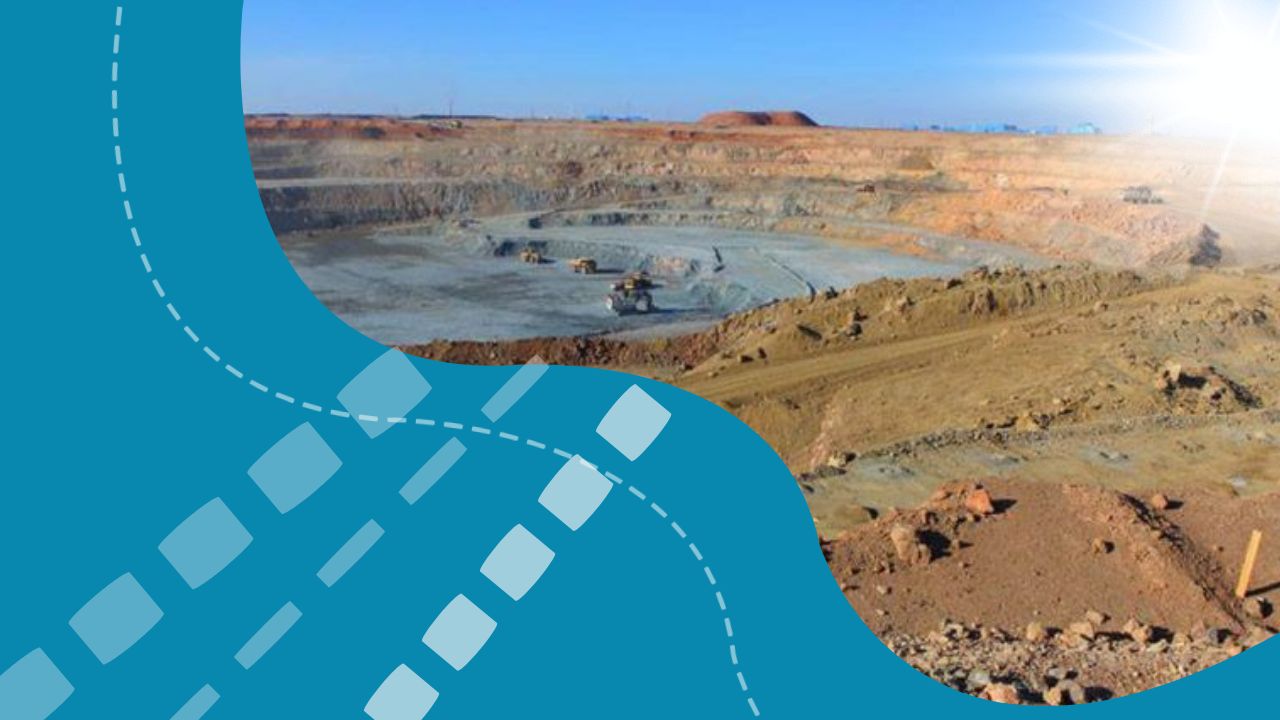
    The uranium joint venture Katco, owned by France’s Orano (51%) and Kazakhstan’s Kazatomprom (49%), produced more than 3,700 tonnes of uranium in 2025, marking a significant increase in output following the commissioning of the South Tortkuduk section at the Moinkum deposit.

    The figures were disclosed during a conference call by Orano, which confirmed that production at Katco rose from just under 2,400 tonnes in 2024 to slightly above 3,700 tonnes in 2025. Katco operates at the South and Tortkuduk sections of the Moinkum uranium field in the Sozak district of Turkestan region.

    Development of the South Tortkuduk project, formalised through an additional agreement in 2022, has enabled the joint venture to extend production by up to 15 years while targeting annual output of around 4,000 tonnes. A new uranium processing plant under the South Tortkuduk project was launched in July 2024, with production from the new section gradually replacing output from older mining areas.

    According to Kazatomprom’s annual reports, Katco produced 2,564 tonnes in 2022, 2,103 tonnes in 2023 and 2,388 tonnes in 2024, underscoring the scale of the 2025 increase. As of the end of 2024, Katco’s uranium reserves stood at 47,900 tonnes. Based on 2025 production levels, reserves may have declined to approximately 44,200 tonnes by year-end. With a subsoil use contract valid until 2039, sustained production at 4,000 tonnes per year would allow remaining reserves to be mined over roughly 11 years.

    Financially, Katco remains one of Orano’s most profitable international uranium assets. In 2025, the Kazakh joint venture generated €628 million in revenue and €324 million in net profit, compared with €479 million and €273 million respectively in 2024.

    Kazatomprom’s share of net income amounted to €159 million, reflecting its 49 percent ownership stake, along with an additional €36 million under a previously agreed 11 percent profit distribution arrangement valid through the end of the contract period. This implies that Orano’s net income from Katco in 2025 totalled approximately €129 million, a significant contribution given the French group’s adjusted net loss of €25 million for the year.

    During the call, Orano’s management also indicated plans to expand exploration activities into Canada, Botswana, Australia and Mongolia, as the company seeks to diversify its uranium portfolio following the loss of operations in Niger, which had previously accounted for a substantial share of its global production.
  • Fen Deposit in Norway Expands 81%, Strengthening Europe’s Rare Earth Ambitions

    Fen Deposit in Norway Expands 81%, Strengthening Europe’s Rare Earth Ambitions

    Rare Earths Norway has announced a substantial upgrade to mineral resources at its Fen project, describing the deposit as Europe’s largest rare earth accumulation and a potential cornerstone of the continent’s strategic supply chain.

    According to a revised estimate prepared by consulting firm WSP, indicated and inferred resources at Fen now total 15.9 million tonnes of rare earth oxides, an 81 percent increase from the 8.8 million tonnes reported in 2024. The updated figures place Fen well ahead of Sweden’s Per Geijer deposit, previously cited by LKAB as Europe’s largest rare earth discovery.

    Bernd Schaefer, CEO of EIT RawMaterials, said the resource expansion elevates Fen from a promising discovery to what he described as a world-class strategic asset. He noted the project could serve as the foundation for a compact “mine-to-magnet” value chain within Europe, supporting industrial resilience and long-term raw material security.

    Europe currently has no operating rare earth mines, leaving the region heavily dependent on imports. Eurostat data show that in 2024, 95 percent of the European Union’s rare earth imports originated from China, Malaysia and Russia. The development of Fen would support EU efforts to diversify supply and reduce strategic vulnerability.

    Rare earth elements are essential for advanced defence systems, including precision motors and sensors used in naval vessels, fighter aircraft and drones, as well as permanent magnets required for electric vehicles, wind turbines and consumer electronics. The latest resource estimate indicates that approximately 19 percent of Fen’s oxides consist of neodymium and praseodymium, key materials for high-performance magnets. The deposit also contains notable quantities of niobium and thorium.

    Rare Earths Norway has previously outlined plans to commence production in late 2031, targeting annual output of 800 tonnes of NdPr by 2032, equivalent to roughly 5 percent of projected EU demand. While the company holds an extraction permit, it still requires an operating permit before mining can begin. The latest announcement did not revise projected timelines or production targets.

    The project aligns with the EU’s ResourceEU action plan adopted in December 2025, which seeks to accelerate domestic extraction, processing and recycling of critical minerals. However, current EU policy does not restrict the export destinations of rare earths mined within the bloc, meaning production could still be sold to non-European markets.

  • At PDAC’s “Uzbekistan Day,” the “Mine-Metal-Market” Model is Presented to the International Community

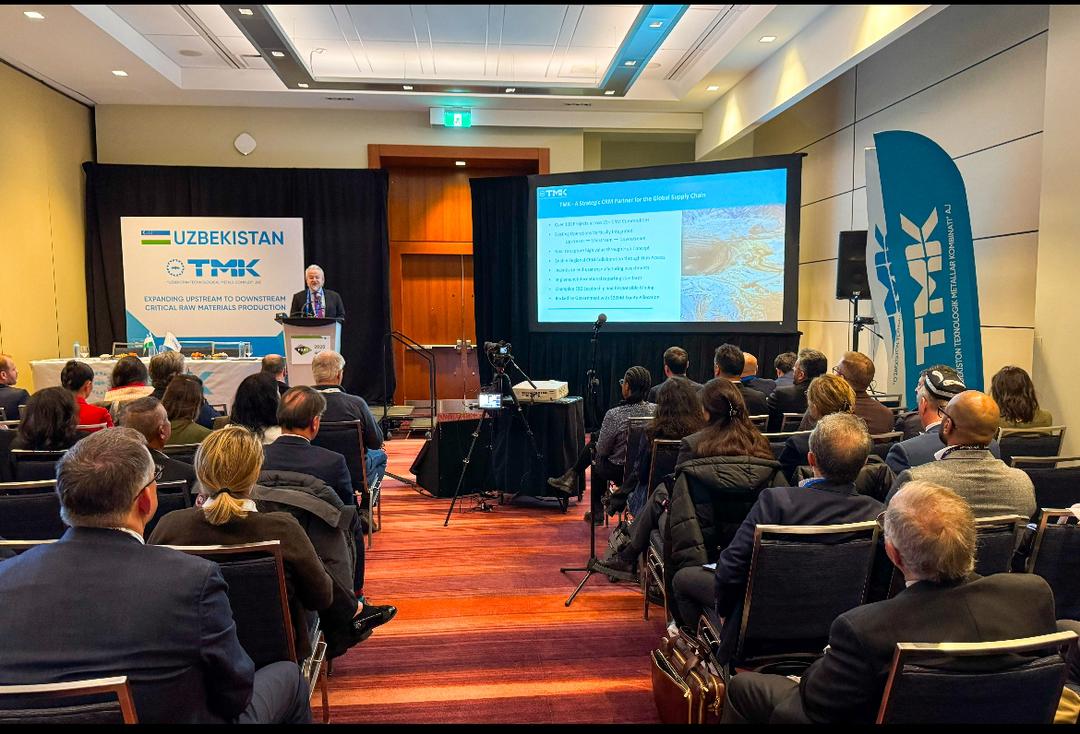
    At PDAC’s “Uzbekistan Day,” the “Mine-Metal-Market” Model is Presented to the International Community

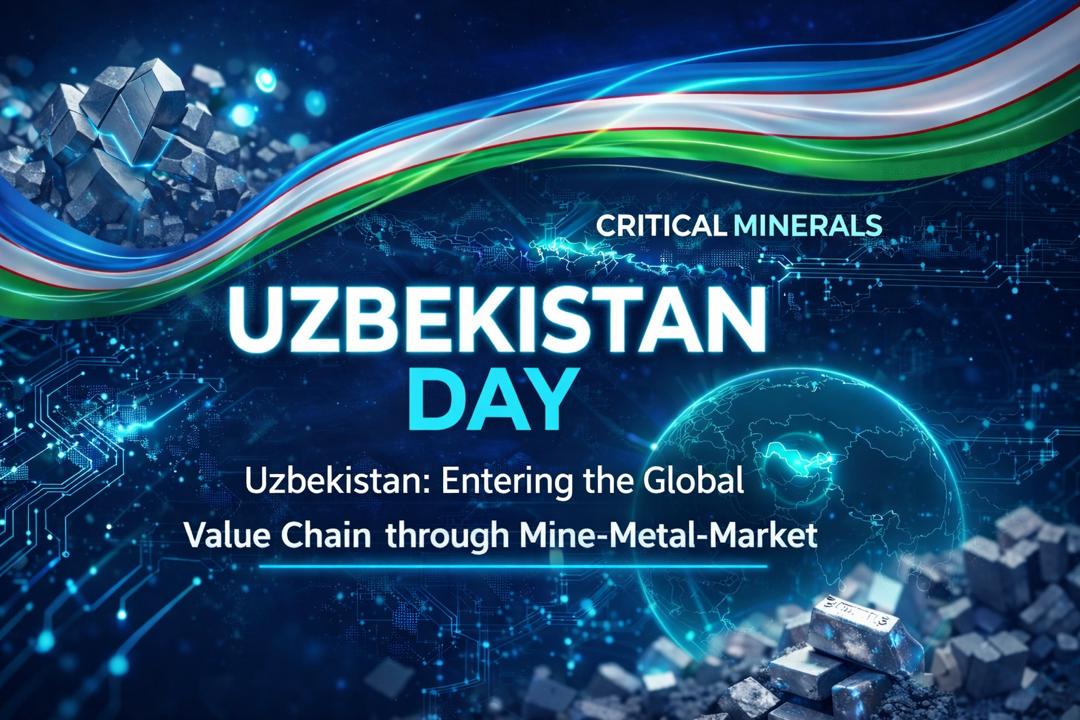
    At the “Uzbekistan Day” event, organized in Toronto, Canada, as part of the prestigious PDAC-2026 global mining and geological conference, Uzbekistan’s potential in critical minerals was showcased to an international audience.
    During this event, held under the auspices of the Ministry of Mining Industry and Geology of the Republic of Uzbekistan, the country’s geological capabilities, investment potential, and an industrial model based on the complete “Mine-Metal-Market” value chain were presented to the global community.
    The event was attended by the Ambassador Extraordinary and Plenipotentiary of Uzbekistan to the USA, representatives from the Ministry of Foreign Affairs, as well as the management, consultants, and international experts of the Uzbek Technological Metals Complex – the country’s first and only industrial operator focused on critical minerals, established at the initiative of President Shavkat Mirziyoyev.
    “Uzbekistan Day” was met with great interest by representatives of the global mining and metallurgical industry. The event drew representatives from nearly 200 companies and institutions, including leadership from major firms such as Alpha Bronze, international engineering giant AtkinsRéalis, AGT Systems NA, aerogeophysical services leader Xcalibur, Speyside, Global Mining Capital Corp, and Freedom Capital Markets, as well as representatives from the US Geological Survey (USGS) and the European Commission’s critical raw materials policy division.
    Scott Sutherland, Managing Director of the Society of Exploration Geophysicists:
    “I participated in the Uzbekistan Day session at PDAC and was very impressed by the geological and mining potential presented by Uzbekistan. By the end of this year, the Society of Exploration Geophysicists plans to hold an international conference in Uzbekistan, specifically in Tashkent, dedicated to the mining industry.We are pleased with the fruitful cooperation we have established with the Government of Uzbekistan and intend to work even more actively in the country in the future, contributing to the realization of its resource potential and extensive opportunities.”
    The event highlighted the large-scale reforms underway in our country, promising projects for developing new deposits and the deep processing of rare and technological metals, and initiatives aimed at expanding international cooperation.
    Additionally, during the event, the Uzbek Technological Metals Complex signed a memorandum with the Canadian company OMAD International Inc. aimed at attracting investment and developing industrial cooperation.
    Furthermore, a memorandum of cooperation was signed with Erdenes IT LLC, which entails the creation of technology parks, the implementation of joint research and development initiatives, and collaboration in mining, geology, and international marketing.
    These agreements reflect a consistent strategic approach to the international promotion of the “Mine-Metal-Market” model, which aims to transform Uzbekistan’s geological potential into globally competitive industrial products with high added value and establish the country as a key link in the global critical minerals value chain.

  • US EXIM Signals Up to $240m Financing for QazMoly’s Drozhi­lovskoye Tungsten-Molybdenum Project in Kazakhstan

    US EXIM Signals Up to $240m Financing for QazMoly’s Drozhi­lovskoye Tungsten-Molybdenum Project in Kazakhstan

    QazMoly Limited, part of Kazakhstan-based mining and energy group AltynGroup controlled by the Asaubayev family, said it has received indicative interest from the Export-Import Bank of the United States (US EXIM) for financing of up to $240 million to advance the Drozhi­lovskoye tungsten-molybdenum deposit in the Denisov district of Kostanay region.

    According to the company, the Drozhi­lovskoye deposit contains significant resources of critical minerals including tungsten, beryllium and molybdenum, metals widely used in high-technology manufacturing and applications across engineering, aerospace and defence industries. The announcement positions the project within broader US and European efforts to diversify critical mineral supply chains away from China, which remains a dominant supplier of many strategic raw materials.

    Under the proposed structure, the financing would be conditional on 100% of Kazakhstan’s tungsten concentrate output from the project being supplied to the US market, reflecting Washington’s classification of tungsten as a strategic material. QazMoly said Fosbury Capital is expected to act as the exclusive buyer and financial partner for the project.

    The potential EXIM support remains subject to completion of QazMoly’s feasibility studies and the lender’s full legal, commercial and technical due diligence. QazMoly said the project benefits from competitive production costs, government support, and macro tailwinds from expected growth in global tungsten demand, which market estimates suggest could rise by an average of around 8% per year and push the sector toward a value of $10 billion by the mid-2030s.

    Aidar Asaubayev, chairman of QazMoly’s board, said the indicative backing could help move the Drozhi­lovskoye development forward, supporting job creation and strengthening critical mineral supply chains. The company expects the financing, if finalised, to cover a significant share of capital expenditure and could become one of the largest examples of US export credit participation in Kazakhstan’s mining industry.

    Earlier plans disclosed in the early 2020s by Qaz Mining Company envisaged development of the 5.86 km² Drozhi­lovskoye licence area over 2022–2034, with a reported resource base of 125.2 million tonnes of ore and a targeted mining and processing capacity of 11 million tonnes per year. However, public sources have not confirmed the start of full-scale operations.

    QazMoly’s 2024 financial reporting cited estimated tungsten trioxide mineral resources at Drozhi­lovskoye of 126,400 tonnes at a grade of 0.116%, with the licence valid until 2034. The company previously indicated plans to build a concentrator designed to process molybdenum-tungsten ores at a capacity of 200,000 tonnes per year by 2025.

    The company also disclosed it holds an exploration contract for the Smirnovskoye molybdenum project in Kostanay region. QazMoly reported a loss of £213,000 for the 2024 reporting period.

  • Allied Critical Metals Posts Strong PEA Economics for Borralha Tungsten Project as 20,000 m Drill Program Gets Underway

    Allied Critical Metals Posts Strong PEA Economics for Borralha Tungsten Project as 20,000 m Drill Program Gets Underway

    Allied Critical Metals Inc. has released the results of an initial Preliminary Economic Assessment (PEA) for its 100%-owned Borralha Tungsten Project in northern Portugal, outlining an underground development concept with strong returns across multiple tungsten price scenarios and a fully funded drilling campaign aimed at expanding resources beyond the initial mine plan.

    In the study’s medium case using a tungsten price of USD 1,000/mtu WO₃, the project delivers an after-tax NPV(8%) of C$473.4 million (USD 346.6 million) and an after-tax IRR of 48.8%, with an estimated payback period of 4.2 years. Under the base case aligned with an Argus long-term average price assumption of roughly USD 704/mtu WO₃, the after-tax NPV(8%) is C$182.7 million (USD 134.0 million) and the after-tax IRR is 27.2%, with a payback of 5.8 years. A high-price sensitivity case at USD 1,500/mtu WO₃ increases the after-tax NPV(8%) to C$963.8 million (USD 706.4 million) and the IRR to 78.4%, shortening payback to 3.2 years.

    The PEA estimates initial capital at approximately USD 91 million (C$124.2 million) and sustaining capital at about USD 87 million (C$118.8 million), for total life-of-mine capital of roughly USD 178 million (C$243.1 million). The mine plan covers an 11-year operating life, based on the Santa Helena Breccia deposit, with a nominal processing rate of 1.4 million tonnes per annum and average mill feed grade of about 0.20% WO₃. Average annual recovered production is estimated at approximately 1,708 tonnes WO₃, with peak annual output of 2,388 tonnes WO₃. The company reported an all-in sustaining cost estimate of around USD 303/mtu WO₃.

    Allied said the economic model was built on conservative design assumptions, including mine design and cut-off grade selection developed using USD 659/mtu WO₃. The company highlighted that reported spot market pricing for tungsten has recently been materially higher than the study’s sensitivity cases.

    The company also reported several de-risking milestones and strategic positioning factors. Borralha has received a favourable Environmental Impact Declaration (DIA) from Portugal’s environment agency, subject to standard regulatory conditions, and the project has been endorsed by idD Portugal Defence as a strategic initiative of national importance.

    To support growth beyond the initial 11-year plan, Allied has begun a fully funded 20,000-metre drill program targeting resource expansion, conversion of inferred material into higher-confidence categories, potential mine life extension, and possible throughput and scale optimisation. The PEA does not include Allied’s other tungsten project at Vila Verde.

  • Kazakhstan Plans Launch of New Metallurgical Plants Under Multi-Year Industry Expansion

    Kazakhstan Plans Launch of New Metallurgical Plants Under Multi-Year Industry Expansion

    Kazakhstan is set to accelerate development of its metallurgical sector, with seven new metallurgical enterprises scheduled to begin operations in 2026, according to the Ministry of Industry.

    The total investment in the first phase of projects is estimated at KZT 154 billion. By the end of the year, the country expects to commission new production facilities manufacturing ferrosilicon, longitudinal welded and galvanised pipes, as well as reinforcing steel products of various diameters. The projects are expected to create more than 1,100 jobs across several regions.

    A further seven metallurgical plants are planned for launch within the following two years, supported by investments exceeding KZT 2 trillion. These facilities will focus on the production of ferroalloys, profile and strip steel, steel billets, large-diameter pipes and industrial wire products.

    The Ministry projects that expansion in the ferrous metallurgy sector will generate approximately 3,500 additional jobs between 2027 and 2028, including around 1,200 positions in rural areas.

    In parallel, another 16 industrial projects are currently at the design and approval stage. Planned developments include production of high-purity manganese, hot-briquetted and sponge iron, premium-grade steel, grinding balls and other materials required by Kazakhstan’s mining and metallurgical complex.

    Potential investment in these longer-term initiatives could reach KZT 2.8 trillion and is expected to create up to 5,500 additional jobs nationwide.

    Despite strong investment momentum, early-year production indicators in the sector showed mixed performance. Steel output declined by 5.7 percent to 339,500 tonnes, while rolled steel production increased by 11.1 percent to 292,400 tonnes, reflecting shifting demand dynamics within domestic and export markets.

  • Kazakhmys Launches 2026 Digital Modernisation Programme for Exploration and Geological Operations

    Kazakhmys Launches 2026 Digital Modernisation Programme for Exploration and Geological Operations

    Kazakhmys Corporation has announced a comprehensive modernisation programme for its geological exploration system in 2026, focusing on digital transformation and the development of new geological infrastructure in Zhezkazgan.

    The decision follows an independent audit conducted across five Kazakhmys deposits using Micromine software, which revealed that existing digital tools were not being fully utilised. According to the assessment, geological calculations were frequently performed in two-dimensional formats, limiting the accuracy of modelling and resource forecasting.

    Under the new programme, the company plans to transition to full three-dimensional geological modelling to improve exploration efficiency and decision-making. Around 400 employees will undergo training in Micromine Origin & Beyond, alongside advanced professional courses under the Micromine Advance programme.

    Kazakhmys has already begun developing integrated lithological and hydrological models for its mining operations, incorporating both ore body geometry and complex natural conditions. A centralised geological data storage and analytics platform, Geobank, will also be introduced across company assets to streamline data management and interpretation.

    The digital transformation initiative will be supported by new physical infrastructure in Zhezkazgan, where construction of a geological cluster covering approximately 14,000 square metres is underway. The facility will include a modern core storage centre with capacity of up to 200,000 linear metres, to be operated jointly with Australian laboratory services provider ALS.

    The planned geo-cluster will additionally house geo-mineralogical and geophysical laboratories, training facilities and a museum. The educational component of the project will be developed in cooperation with the Colorado School of Mines, strengthening professional training and technical expertise within Kazakhstan’s mining sector.

  • EU Lawmaker Says Serbia’s Jadar Lithium Project Remains Frozen Amid Legal Uncertainty

    EU Lawmaker Says Serbia’s Jadar Lithium Project Remains Frozen Amid Legal Uncertainty

    The proposed Jadar lithium project in Serbia remains suspended due to legal and regulatory uncertainty, despite its strategic importance for Europe’s critical raw materials supply, according to European Parliament representative Hildegard Bentele.

    Speaking to Deutsche Welle, Bentele, a member of Germany’s Christian Democratic Union and rapporteur on critical raw materials policy in the European Parliament, said the project remains “frozen,” although mining major Rio Tinto continues to retain exploitation rights over the deposit.

    She noted that the project could play a significant role in strengthening Europe’s lithium supply chain while delivering economic benefits to Serbia, provided a stable and reliable legal framework is established. According to Bentele, Rio Tinto has indicated its intention to comply with environmental and social standards should regulatory conditions improve.

    The Jadar project, considered one of Europe’s largest lithium deposits, had previously been included on the European Union’s list of strategic raw material projects. Plans linked the development to potential downstream battery manufacturing investments, including earlier discussions involving German industry and automotive supply chains.

    However, Bentele stressed that lithium mining projects require predictable licensing systems and institutional stability, conditions she believes are currently lacking. She pointed to concerns over governance, judicial independence and public trust in state authorities as key factors contributing to the project’s suspension.

    The EU, she added, will not pressure Rio Tinto to resume development under present circumstances, describing continued investment as too risky without regulatory certainty. The company’s earlier decision to halt implementation in Serbia’s Jadar Valley was therefore understandable given public opposition and doubts surrounding permitting procedures.

    While acknowledging broader challenges in sourcing critical minerals globally, often located in politically complex jurisdictions, Bentele emphasised that Serbia’s status as an EU candidate country places importance on alignment with European governance and environmental standards.

    According to her assessment, the future of the Jadar project depends primarily on improvements to Serbia’s legal and institutional framework. Until then, the project remains suspended rather than permanently cancelled, leaving open the possibility of future development if regulatory stability is restored.

  • Uzbekistan to Showcase Mining and Investment Opportunities at PDAC 2026 in Toronto

    Uzbekistan to Showcase Mining and Investment Opportunities at PDAC 2026 in Toronto

    We look forward to seeing you at Uzbekistan Day!

    As part of PDAC 2026 — one of the world’s most prestigious mining and geology conventions held in Toronto, Canada — the Ministry of Mining Industry and Geology of the Republic of Uzbekistan is organizing the “Uzbekistan Day” event.

    The event will be attended by the Ambassador Extraordinary and Plenipotentiary of Uzbekistan to the United States, as well as representatives of the Ministry of Foreign Affairs, the Ministry of Investments, Industry and Trade, and leading national companies.

    “Uzbekistan Day” serves as a key platform to present Uzbekistan’s geological potential, investment opportunities, and its integrated industrial model based on the full value chain under the “Mine–Metal–Market” principle.

    📅 March 1, 2026
    ⏰ 08:00–12:00
    📍 PDAC North Building, Meeting Room 202B

    We also invite you to attend the “Uzbekistan Global Roundtable” session, held as part of the PDAC Global Roundtables organized by Canada’s Trade Commissioner Service (TCS).

    📅 March 2, 2026
    ⏰ 14:30–16:00 (EST)
    📍 MTCC, North Building, Room 104A

    During this session, participants will gain deeper insight into Uzbekistan’s investment potential in the technological metals sector and its new industrial model focused on value-added processing and downstream development.

    Please note that seating is limited. To register, kindly contact:
    📩 anna.ilhan@uztmk.uz

    Throughout PDAC, we also welcome you to visit our booth #7523N in the North Building, where you will have the opportunity to engage in direct B2B discussions on project development and partnership opportunities with the Uzbekistan Technological Metals Complex.