Month: May 2025

  • Uzbekistan and Türkiye Reaffirm Strategic Partnership in Geology and Mining

    Uzbekistan and Türkiye Reaffirm Strategic Partnership in Geology and Mining

    On 26 May 2025, Uzbekistan’s Deputy Minister of Mining Industry and Geology, Rakhim Yusupov, held official talks with a Turkish delegation headed by Ramazan Sarı, Deputy Director of Türkiye’s General Directorate of Mineral Research and Exploration (MTA). The meeting underscored the enduring and productive cooperation between the two nations in the fields of geology and mining.

    Both sides praised the strength and strategic nature of their bilateral relations and expressed a shared commitment to deepening collaboration further. The discussions highlighted Uzbekistan’s ongoing sectoral reforms, which aim to modernize geological research and attract foreign investment to the mining industry.

    A key focus of the talks was Uzbekistan’s “E-auksion” electronic platform—an open-access system designed to provide entrepreneurs and investors with transparent opportunities to explore and develop newly identified mineral-rich sites. The initiative aligns with the government’s broader goals of enhancing transparency, boosting investor confidence, and unlocking the country’s geological potential.

    The meeting concluded with a mutual interest in expanding technical exchange, knowledge-sharing, and joint exploration projects between the two countries.

  • Uzbekistan and Austria Deepen Ties with Focus on Energy, Digitalization, and Infrastructure

    Uzbekistan and Austria Deepen Ties with Focus on Energy, Digitalization, and Infrastructure

    On 20 May, the Ministry of Economy and Finance of Uzbekistan held high-level talks with an Austrian delegation led by Andreas Reichhardt, Deputy Minister of Finance and Director General for Telecommunications, Postal Services, and the Mining Industry of Austria. The meeting underscored a mutual commitment to expanding economic cooperation and advancing practical joint initiatives.

    Representatives from both nations discussed the implementation of priority bilateral projects, focusing on enhancing energy efficiency, modernizing heating systems, and applying innovative technologies across key sectors of Uzbekistan’s economy. The sides agreed to prepare and sign a memorandum of cooperation in the energy sector.

    The Austrian delegation proposed closer collaboration in the digitalization of small and medium-sized enterprises (SMEs), aiming to support sustainable business growth. Additionally, detailed discussions were held on the modernization of tax audit and administration systems, with a goal to boost transparency, oversight, and digital governance.

    Cybersecurity, legal reforms, and institutional strengthening in the area of information security were also on the agenda, reflecting a shared interest in digital resilience. The Uzbek side expressed keen interest in leveraging Austria’s experience with energy-saving technologies and smart urban infrastructure as part of the country’s broader development strategy.

    This dialogue marks a pivotal step toward deepening economic and technological ties between Uzbekistan and Austria, aligning both countries around shared goals of innovation, efficiency, and sustainable growth.

  • IEA Warns of Growing Global Supply Risks in Critical Mineral Markets

    IEA Warns of Growing Global Supply Risks in Critical Mineral Markets

    The International Energy Agency (IEA) has raised concerns over the increasing concentration of critical mineral supplies and the growing use of export restrictions, warning that these trends heighten the risk of severe disruptions to global markets. In the latest edition of its Global Critical Minerals Outlook, the agency provides a detailed analysis of supply chains, demand, investment, and policy trends across vital energy-related minerals, including lithium, copper, cobalt, graphite, and rare earth elements (REEs).

    According to the report, the global supply of critical minerals has become more concentrated, particularly in refining and processing. In 2024, the average market share held by the top three producers rose to 86%, up from 82% in 2020. China remains the dominant player in most mineral supply chains, while Indonesia leads in nickel.

    While demand, especially for battery metals like lithium, continues to grow—lithium demand jumped by nearly 30% in 2024—investment momentum has slowed. Capital spending on critical minerals rose just 5% this year, a sharp decline from 14% in 2023. Exploration activity has also plateaued, signaling a pause in growth and increasing long-term supply risk.

    The IEA projects that even under current policy settings, supply diversification will advance slowly over the next decade. This raises alarm for markets like copper, where a looming supply shortfall of up to 30% by 2035 is expected due to insufficient mine development.

    Additionally, the report reveals that over half of strategic energy minerals are now subject to some form of export control. China holds an average 70% market share in the refining of 19 out of the 20 critical minerals analyzed and remains central to processing technologies for emerging battery chemistries like lithium-iron-phosphate and sodium-ion.

    IEA Executive Director Dr. Fatih Birol warned that critical minerals have become “a frontline issue” in global energy and economic security. The report urges countries to accelerate efforts to diversify supply chains, boost investment, and build resilience to geopolitical and trade-related shocks.

  • Uzbekistan and EU Discuss Deeper Economic Cooperation Under Global Gateway Strategy

    Uzbekistan and EU Discuss Deeper Economic Cooperation Under Global Gateway Strategy

    The Ministry of Investment, Industry, and Trade of Uzbekistan hosted a high-level meeting with a European Commission delegation led by Pēteris Ustubs, Director for International Partnerships for the Middle East, Asia, and the Pacific. The talks focused on advancing joint initiatives and reinforcing bilateral cooperation under the EU’s Global Gateway strategy for 2017–2027, Trend reports.

    Key areas of discussion included joint projects in digital transformation, transport and logistics, and green energy development in Uzbekistan. Both sides reaffirmed their commitment to enhancing economic collaboration through strategic, sustainable investments.

    The meeting also addressed logistical and organizational preparations for two major upcoming events: the Third European Union – Central Asia Economic Forum and the Tashkent International Investment Forum. These forums, to be hosted in Uzbekistan later this year, will gather participants from countries along the Trans-Caspian Corridor and aim to boost regional economic integration and development.

  • Uzbekistan Participates in Second C5+1 Critical Minerals Dialogue with the United States

    Uzbekistan Participates in Second C5+1 Critical Minerals Dialogue with the United States

    The latest round of the C5+1 Critical Minerals Dialogue—bringing together Central Asian countries and the United States—was recently held in an online format for the second time. The initiative is aimed at deepening cooperation in the field of critical minerals vital to industrial development.

    Representing Uzbekistan were officials from the Ministry of Mining and Geology, led by Deputy Minister R. Yusupov, along with representatives of the Uzbek State Enterprise for Technological Metals. During the session, the Central Asian states put forward several proposals to strengthen ties with the U.S. regarding the exploration, development, and supply of critical minerals.

    Participants also presented new investment projects aimed at fostering greater economic and strategic collaboration in the resource sector. The dialogue highlighted the region’s potential as a future supplier of key minerals crucial to the global transition toward clean energy and advanced technologies.

  • Europe’s Lithium Paradox: New Documentary Explores EU’s Critical Mineral Dilemma

    Europe’s Lithium Paradox: New Documentary Explores EU’s Critical Mineral Dilemma

    A new documentary, Europe’s Lithium Paradox, produced by Storyrunner and SIM² KU Leuven and distributed by Journeyman Pictures, delves into the European Union’s struggle to secure a sustainable and self-sufficient supply of lithium—a metal essential for electric vehicle batteries and renewable energy storage.

    Despite possessing significant lithium reserves, Europe lacks operational mines and remains heavily dependent on imports, particularly from China. The film investigates the challenges hindering the development of domestic lithium mining, including slow permitting processes and opposition from environmental groups.

    Featuring insights from policymakers, industry experts, and civil society representatives, the documentary examines key projects across the continent, such as Serbia’s Jadar mine and Portugal’s Mina do Barroso. It also addresses the broader implications of Europe’s reliance on external sources for critical raw materials and explores potential pathways toward a more resilient and environmentally conscious supply chain.

  • Dodik Offers Republika Srpska’s Minerals to Trump in Exchange for Sovereignty Guarantees

    Dodik Offers Republika Srpska’s Minerals to Trump in Exchange for Sovereignty Guarantees

    Milorad Dodik, the separatist leader of Republika Srpska in Bosnia & Herzegovina, has publicly offered the entity’s mineral resources to former US President Donald Trump in exchange for guarantees of political sovereignty. The statement, made during a special parliamentary session on May 21, comes amid rising political isolation of Dodik’s SNSD party and mounting legal pressure.

    Dodik framed the gesture as a strategic opportunity for the US to secure critical minerals—such as lithium, magnesium, potassium, and boron—amid global efforts to reduce reliance on Chinese supply chains. He claimed the West, particularly Germany, is attempting to strip Republika Srpska of its mineral wealth, with international High Representative Christian Schmidt acting as an “executor” of those plans.

    This move follows a 2023 announcement by Swiss firm Arcore AG, which reported uncovering substantial lithium deposits in the Lopare region, sparking both investor interest and local opposition due to environmental concerns.

    Despite Dodik’s appeal to the US and Hungary for a strategic mineral partnership, opposition parties boycotted the session, and no response has yet been received from Trump or his circle. Dodik and his family remain under US sanctions, further complicating his overtures.

    Dodik emphasized that the offer is conditional: “Give us freedom, confirm our sovereignty, guarantee the Dayton Agreement, our autonomy and independence – and we are partners.”

  • Kazakhstan Advances Geological Data Digitization, Aiming for 86% Completion by 2025

    Kazakhstan Advances Geological Data Digitization, Aiming for 86% Completion by 2025

    Kazakhstan is making major strides in the digitization of its primary geological data as part of a nationwide initiative to enhance subsoil management. According to the Ministry of Industry and Construction, 60% of sector-specific geological information has already been digitized.

    In 2024 alone, approximately 1.906 million geodata units—representing 42% of the remaining volume—were processed. Combined with results from 2023, a total of 2.7 million records have been converted so far. These include over 2.47 million paper documents and graphical materials, 75,000 magnetic tapes, and around 50,000 cartridges.

    Looking ahead to 2025, Kazakhstan plans to digitize an additional 1.2 million units, pushing the digitization level to 86%. This progress brings the country closer to establishing a comprehensive and modern digital geological database.

    One of the key benefits of this digital transformation is its potential to attract foreign investment. By offering fast and convenient access to detailed geological data, Kazakhstan positions itself as a more transparent and investor-friendly destination in the natural resources sector.

  • Central Asia: A New Arena for Global Resource Competition

    Central Asia: A New Arena for Global Resource Competition

    A groundbreaking study reveals how Central Asia is rapidly transforming into a pivotal arena where major global powers compete for access to vast mineral and energy resources, fundamentally reshaping regional geopolitics and investment patterns.

    Authored by Svetlana Novikova, an international business expert from Toulouse Business School, and Viktor Sergeev, a Tashkent-based economist specializing in Central Asian financial systems, the study “Central Asia as an Arena of the New Opportunities” provides a rigorous analysis of shifting power dynamics in the resource-rich region. Published in the Journal of Information Systems Engineering and Management, the report synthesizes decades of geopolitical and economic data to map how global competition for minerals and energy is reshaping trade routes, alliances, and investment flows across Kazakhstan, Uzbekistan, Kyrgyzstan, Tajikistan, and Turkmenistan.

    Strategic Competition Intensifies Over Resource-Rich Region

    Central Asia is emerging as a key player in the global minerals and metals market, attracting increased investment and geopolitical attention due to its vast reserves of rare earth elements (REEs), gold, uranium, and antimony. Kazakhstan alone accounts for an estimated 43% of the world’s uranium production, making it the largest producer globally, while Uzbekistan ranks 10th worldwide in gold production. Kyrgyzstan and Tajikistan are also developing significant antimony and tungsten deposits.

    China’s Belt and Road Initiative (BRI) has emerged as a dominant force in the region, with numerous infrastructure projects aimed at enhancing connectivity across the region’s road, rail, and pipeline networks. In 2024, China accounted for 64% of Turkmenistan’s total exports, primarily minerals and raw materials, and has secured long-term exploration agreements in Uzbekistan and Kazakhstan. However, this ambitious development comes with significant strings attached, as the study warns that increasing dependence on Chinese investment may undermine the sovereignty of Central Asian states. These nations are forced to navigate complex diplomatic relationships, balancing traditional ties with Russia against growing Chinese influence. Russia, leveraging its historic connections, is actively seeking new partnerships following Western sanctions that have disrupted its mineral supply chains. The European Union has also increased its interest in sourcing rare earth elements from Central Asia as part of its strategy to reduce dependency on China.

    Economic Diversification Remains an Elusive Challenge

    Kazakhstan’s economy, with a GDP of approximately $259 billion in 2023, is heavily reliant on its vast oil, gas, and metal resources, which form the largest share of its exports and contribute significantly to government revenue and GDP (the mining sector, including oil and gas, directly contributes roughly 15-20% to GDP).

    Uzbekistan’s economy, which reached a GDP of around $90.4 billion in 2023, is substantially driven by exports of gold, natural gas, and copper. The country is also increasingly focusing on value-added exports like textiles (from its cotton industry) and is exploring the potential of its rare earth metal deposits, though these are not yet primary export drivers.

    Kyrgyzstan and Tajikistan, while possessing mineral wealth, face distinct economic vulnerabilities.

    Kyrgyzstan’s key mineral export is gold, which provides a substantial portion of its export revenue. However, its economy is also heavily dependent on remittances from citizens working abroad.

    Tajikistan relies on exports of aluminum (though processed from imported raw materials) and other metals like antimony and gold, alongside cotton and electricity. Similar to Kyrgyzstan, remittances form a critical part of Tajikistan’s economy. For both nations, over-dependence on a narrow range of export commodities and remittances creates significant economic risks.
    The reliance of nations like Uzbekistan on commodities such as natural gas, and the broader Central Asian region’s dependence on resource exports, underscores their susceptibility to external economic shocks and volatile global markets.”

    The research reveals stark disparities in how Central Asian nations manage their resource wealth. Kazakhstan has successfully diversified its economy, with a growing focus on agriculture and manufacturing. This contrasts sharply with Tajikistan, which remains economically dependent on aluminum exports and mining. The study emphasizes that achieving long-term growth requires actively promoting entrepreneurship, technology advancement, and attracting diversified foreign investment beyond extractive industries.

    Geopolitical Realignment Accelerates

    The traditional Russian sphere of influence faces unprecedented challenges as Turkey and India attempt to establish their presence in a region historically dominated by Moscow. This shifting dynamic reflects broader global competition for Central Asia’s strategic position between Europe and Asia, alongside its critical role as an energy hub.

    The research underscores how these nations must balance relationships with major powers whilst developing sustainable policies benefiting their diverse populations. Success will depend on their ability to leverage their geopolitical positioning for economic independence rather than becoming mere resource extraction zones for competing global powers.

    Challenges and Future Prospects

    Despite the advantages of vast mineral wealth, challenges remain. Limited technological capabilities for deep geological exploration hinder the full potential of Central Asia’s mining sector. Additionally, resource dependency exposes economies to fluctuations in global metal prices. Environmental concerns—particularly regarding water-intensive mining operations in Tajikistan and Uzbekistan—are pushing governments to seek more sustainable extraction practices.

    As global industries shift towards securing critical minerals, Central Asia is poised to play a central role in supply chains. The region’s ability to balance foreign investment, technological innovation, and environmental sustainability will determine its long-term success as a mineral powerhouse.

  • JSW Declares Force Majeure After Fire Disrupts Budryk Mine Operations

    JSW Declares Force Majeure After Fire Disrupts Budryk Mine Operations

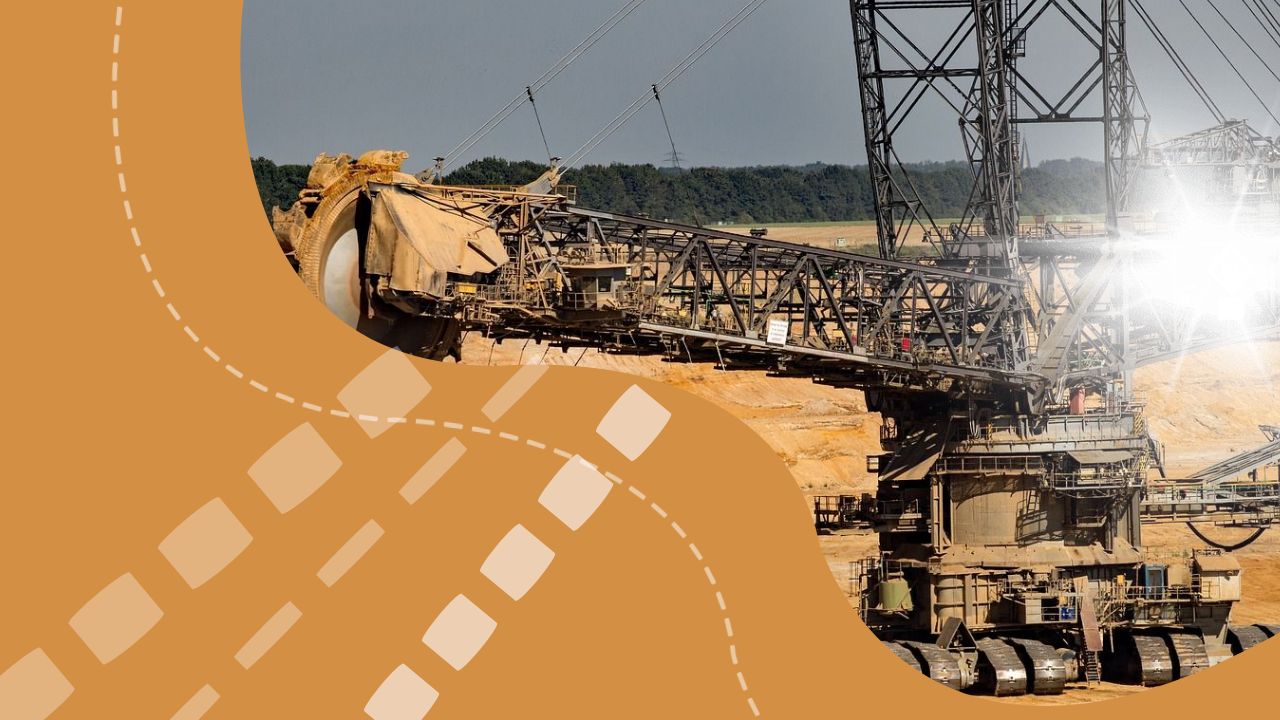
    Jastrzębska Spółka Węglowa (JSW), Poland’s leading producer of coking coal, has declared force majeure following a fire at its Budryk mine on May 7, 2025. The fire, attributed to endogenous ignition, forced a temporary suspension of operations in the affected mining area.

    JSW estimates that the disruption could result in a loss of approximately 345,000 tons of coal output in 2025. This incident compounds earlier challenges the company faced at its Szczygłowice mine in January, prompting JSW to revise its full-year production forecast downward from 14.5 million tons to about 12 million tons.

    In response to the mounting operational difficulties, trade unions are calling for swift strategic action, including the potential acquisition of additional mines and voluntary staff departure programs to help stabilize the company’s long-term outlook.