Month: May 2025

  • Nationalist Surge in Romania’s Election Shakes Mining Sector and Western Alliances

    Nationalist Surge in Romania’s Election Shakes Mining Sector and Western Alliances

    Romania’s political future has entered uncharted territory after George Simion, a pro-Trump, nationalist candidate, surged ahead in the first round of the presidential election, triggering political upheaval and potentially redefining the country’s economic and geopolitical direction.

    Simion, who ran on a platform of economic nationalism, sovereignty, and resistance to foreign influence, resonated with voters increasingly disillusioned by EU integration and the perceived foreign control over Romania’s resources. In the wake of his strong showing, the current prime minister has indicated plans to resign, signaling a broader shake-up in governance.

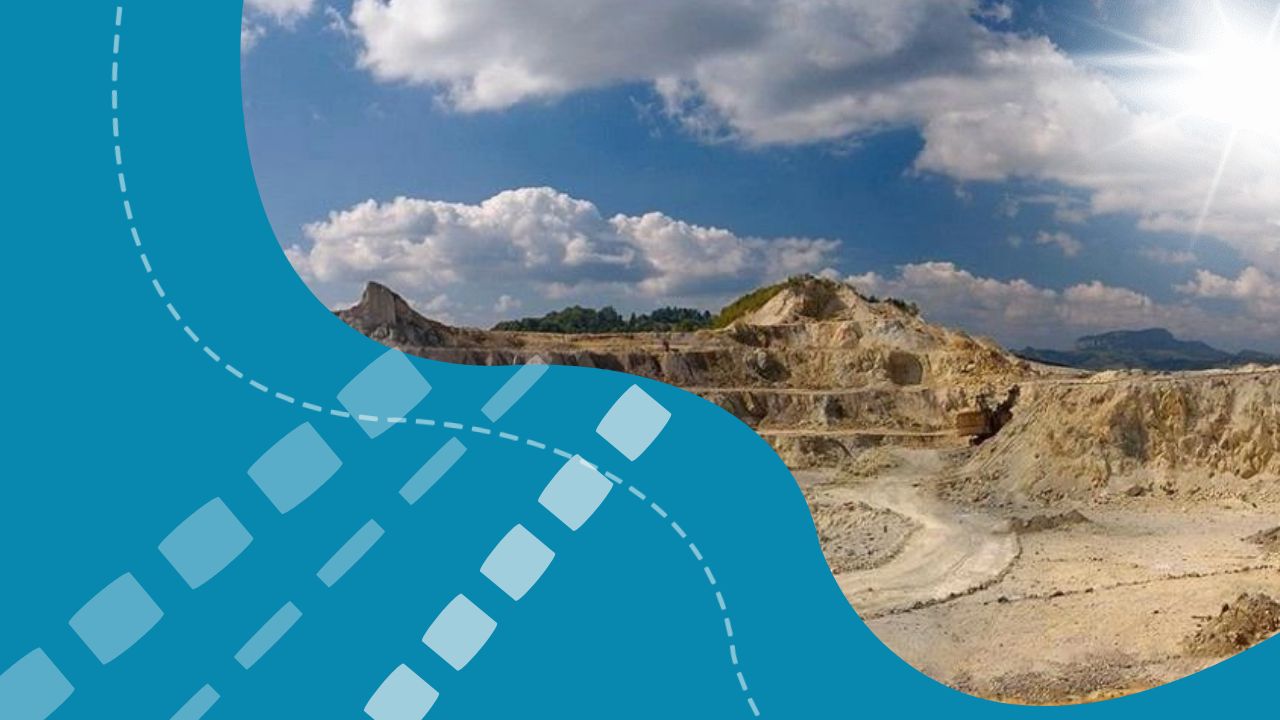
    The implications of Simion’s rise are particularly significant for Romania’s critical minerals sector. The country is rich in rare earth elements, copper, and gold—resources that have attracted the attention of North American companies seeking alternatives to Chinese supply chains. Projects such as Euro Sun’s and Glencore’s Rovina Valley copper-gold venture have been labeled strategic by European authorities. However, Simion’s rhetoric against multinational corporations and foreign-led mining initiatives raises concerns about the future of such projects.

    The specter of increased resource nationalism looms large, with industry insiders warning that a Simion-led government may enforce tighter regulations, raise royalties, or revisit current licenses. These moves could deter foreign investment and reverse recent progress toward a stable, investor-friendly mining environment.

    Simion’s ascent also risks disrupting Romania’s role as a reliable US ally in Eastern Europe. With NATO’s eastern flank under strain due to Russia’s war in Ukraine, any pivot in Bucharest’s foreign policy stance could ripple across the region’s security architecture.

    The second and decisive round of voting, set for May 18, will determine whether this populist shift becomes a permanent fixture. The backdrop to this year’s vote includes the annulled results of a prior election marred by fraud accusations and alleged Russian interference, adding further tension to an already volatile political landscape.

  • Rosatom Sues Finnish Firms for $2.8 Billion Over Cancelled Nuclear Plant Contract

    Rosatom Sues Finnish Firms for $2.8 Billion Over Cancelled Nuclear Plant Contract

    Russia’s state nuclear corporation Rosatom has launched a high-stakes lawsuit in Moscow against Finnish companies Fortum and Outokumpu, seeking 227.8 billion roubles (approximately $2.8 billion) in damages related to the cancelled Hanhikivi-1 nuclear power plant project in Finland.

    The lawsuit alleges unlawful termination of the EPC (engineering, procurement, and construction) contract and further violations of a shareholder agreement, a nuclear fuel supply deal, and an outstanding loan that Rosatom claims has not been repaid. The contract to construct the 1.2-gigawatt power plant was originally signed in 2013, with planned investments estimated at €6.5–7 billion. However, the Finnish government terminated the agreement in May 2022, citing geopolitical risks following Russia’s invasion of Ukraine, project delays, and overall uncertainty surrounding the project’s feasibility.

    Fennovoima, the Finnish-led consortium behind the Hanhikivi-1 project—of which Outokumpu, Fortum, and SSAB are key stakeholders—responded by initiating international arbitration proceedings to reclaim €1.7 billion in advance payments. Rosatom, in turn, filed counterclaims totaling €3 billion. Both cases are currently being heard in international courts.

    Fortum, once a major foreign investor in Russia’s energy sector, has faced growing losses in the country. In 2023, it effectively lost control of its Russian operations when the Kremlin, under a presidential decree by Vladimir Putin, temporarily seized control of Fortum’s power plants and renewable energy assets.

  • Cracks Appear in Europe’s Lithium Dreams as Global Market Shifts

    Cracks Appear in Europe’s Lithium Dreams as Global Market Shifts

    The once-optimistic projections for lithium mining in Europe, particularly at Portugal’s Covas do Barroso site, are facing new scrutiny amid global market disruptions and plummeting investor confidence.

    Recent developments in Ghana may offer some perspective for local opponents of the Covas do Barroso mine. In October 2023, Ghana awarded a 15-year lease to Atlantic Lithium Limited to mine its Ewoyaa site, one of the top ten largest lithium deposits globally with an estimated 35 million metric tonnes of potential output. However, the company—partly owned by U.S.-based Piedmont Lithium and Cleantech Group—has now announced that the project is on hold. The reason? A dramatic drop in the internal rate of return, from 105% to just 14%, leading Atlantic to declare it unviable under current conditions.

    The company had already invested $70 million, but the lithium market has slumped significantly since its November 2022 peak. Factors contributing to the downturn include major lithium discoveries in the U.S. and China, and the slower-than-expected adoption of electric vehicles. Compounding the issue is China’s fast-developing research and application of sodium-based battery alternatives, which are already entering commercial production for short-range vehicles.

    These global shifts call into question the long-term viability of other lithium projects, such as those pursued by Savannah Resources in Portugal. Savannah, which has secured fiscal concessions from the Portuguese state and projects a 25-million-tonne output from Covas do Barroso, could face similar economic pressures.

    While the Barroso project benefits from geographic proximity to EU refineries and markets—potentially cushioning it from the full brunt of market fallout—it is increasingly likely that operations will proceed on a smaller scale and with diminished returns. This could lead to more balanced decisions that account for both economic realities and the environmental and social concerns of local communities.

  • Uzbek Geologists Discover New Coal Seams at Urikli Site

    Uzbek Geologists Discover New Coal Seams at Urikli Site

    Specialists from the Surkhandarya Field Expedition, part of the Hissar Central Geological Exploration Expedition under JSC “Uzbekgeologorazvedka,” are conducting underground and surface tunneling operations to assess coal reserves at the Urikli site.

    During the course of the underground exploration, coal seams numbered 3, 4, 5, and 6 were identified. Geological exploration continues, with further assessments underway to determine the full extent and potential of the deposit.

    These efforts form part of a broader initiative to explore and utilize Uzbekistan’s mineral resources more effectively.

  • Uzbekistan Approves Technical Regulation on Mine Hoisting Equipment Safety

    Uzbekistan Approves Technical Regulation on Mine Hoisting Equipment Safety

    The Cabinet of Ministers of Uzbekistan has adopted Resolution No. 269, officially approving the General Technical Regulation on the Safety of Mine Hoisting Equipment. This decision follows Presidential Decree No. PP-91 from February 28, 2024, aimed at organizing the activities of the Agency for Technical Regulation and enhancing safety standards in the industrial sector.

    The regulation sets unified requirements for the design, packaging, labeling, and identification of mine hoisting equipment, as well as outlines procedures for conformity assessment. It also includes a roadmap for the phased implementation of the regulation.

    These updated safety standards are crucial for ensuring the reliability of industrial operations, environmental protection, and the safety of workers.

    According to the resolution, the new regulation will come into force six months after its official publication.

  • Ukraine and U.S. Seal Controversial Minerals Deal After Tense Talks

    Ukraine and U.S. Seal Controversial Minerals Deal After Tense Talks

    Ukraine and the United States signed a landmark minerals and profit-sharing agreement on April 30 in Washington, marking the end of months of turbulent negotiations and the beginning of a new phase of economic cooperation focused on reconstruction.

    The agreement gives the U.S. preferential access to future Ukrainian mineral deals and establishes a joint investment fund for rebuilding Ukraine’s war-torn infrastructure. It also secures Ukraine’s full sovereignty over its natural resources, following President Volodymyr Zelensky’s refusal to sign earlier versions that would have required Ukraine to repay past military aid or relinquish control of key assets.

    “This is a win for Ukraine,” said Prime Minister Denys Shmyhal. “We will attract major investments, secure growth, and remain in control of our critical minerals.”

    The U.S. had previously pushed for terms granting it up to 50% of Ukraine’s revenues from rare earths, oil, and gas, and even a stake in infrastructure like ports. President Donald Trump reportedly demanded repayment of $300 billion in aid and up to $500 billion in future mineral revenue — conditions Kyiv firmly rejected.

    Only after Zelensky sent Trump a letter expressing willingness to negotiate and praising U.S. support did tensions ease. “Nobody wants peace more than the Ukrainians,” Trump quoted Zelensky as writing, using the letter to bolster support for the deal during a speech to Congress.

    The final agreement establishes a joint fund where both nations will equally manage proceeds from newly issued licenses for critical minerals. For the first ten years, profits will be reinvested into Ukraine’s infrastructure and economic development. Past revenues and aid are excluded, and there are no debt obligations.

    Ukraine’s mineral wealth includes Europe’s largest lithium deposits, 20% of global graphite resources, and significant reserves of rare earth elements vital to defense and green technologies. But much of this wealth lies in or near Russian-occupied territories, making future exploitation a complex and risky endeavor.

    Despite securing equal partnership terms and full resource control, the deal offers no U.S. security guarantees. Critics say the agreement may remain symbolic if the war drags on.

    Still, U.S. Treasury Secretary Scott Bessent called the agreement a signal to Russia of Washington’s enduring support for a “free, sovereign, and prosperous Ukraine.”

  • Ukraine and U.S. Sign Landmark Minerals Agreement to Launch Joint Reconstruction Fund

    Ukraine and U.S. Sign Landmark Minerals Agreement to Launch Joint Reconstruction Fund

    On April 30, Ukraine and the United States signed a pivotal minerals agreement establishing a joint “Reconstruction Investment Fund” aimed at supporting Ukraine’s economic recovery and long-term development. The deal was signed in Washington by Ukraine’s First Deputy Prime Minister Yulia Svyrydenko and U.S. Treasury Secretary Scott Bessent, following months of complex negotiations.

    “This document ensures success for both our countries,” said Svyrydenko, emphasizing that the fund marks a strategic investment partnership without compromising Ukraine’s sovereignty over its subsoil, infrastructure, or state-owned enterprises.

    The agreement creates a jointly managed fund to which both countries will contribute, using proceeds from newly issued licenses for critical minerals and oil and gas projects. It explicitly excludes revenue from existing projects and does not impose any debt obligations. Additionally, neither Ukraine nor the U.S. will tax the fund’s income or contributions.

    Bessent highlighted the deal as a sign of lasting U.S. support, stating, “This agreement signals clearly to Russia that the Trump Administration is committed to a peace process centered on a free, sovereign, and prosperous Ukraine.”

    While the deal offers no direct security guarantees, it outlines a long-term strategic alignment and commits the U.S. to help attract further investment and technological support for Ukraine. Importantly, it includes safeguards to prevent individuals or entities linked to Russia’s war machine from benefiting.

    Ukrainian Prime Minister Denys Shmyhal praised the agreement, noting it would help drive reconstruction, economic growth, and technology transfer. He confirmed that the deal must now be ratified by Ukraine’s parliament, the Verkhovna Rada.

    Despite last-minute tensions reported by the Financial Times, the agreement was finalized, setting the stage for a new phase of U.S.-Ukrainian economic cooperation.

  • Gold Drives Uzbekistan’s Export Surge in Q1 2025, Making Up Nearly Half of Total Shipments

    Gold Drives Uzbekistan’s Export Surge in Q1 2025, Making Up Nearly Half of Total Shipments

    Uzbekistan’s National Statistics Committee has released its foreign trade data for the first quarter of 2025, revealing that gold remains the country’s top export commodity. According to the report, gold accounted for 44% of total export value, with shipments totaling $3.65 billion—an increase of 36.8% compared to the same period last year.

    The majority of these exports occurred in February and March, a trend driven by rising global demand and soaring gold prices.

    Other notable export figures include coal, coke, and briquettes, which tripled to $400,000, and natural gas, which grew to $94.3 million in value. However, exports of oil and oil products dropped by 16.7% year-on-year to $109.5 million.

    On the import side, Uzbekistan brought in $48.8 million worth of coal, down 7.1% from a year ago. Oil imports also declined to $443.1 million, marking a 16% decrease. The most significant drop was seen in gas imports, which plummeted 8.5-fold to just $38.5 million during the reporting period.

  • Uzbekistan Opens Nation’s First 1,000-Meter Skip Shaft at Zarmitan Mine

    Uzbekistan Opens Nation’s First 1,000-Meter Skip Shaft at Zarmitan Mine

    On April 30, 2025, Uzbekistan marked a historic milestone in its mining industry with the inauguration of the country’s first 1,000-meter-deep skip shaft. The event was held at the Zarmitan deposit, part of the Southern Mining Department in the Koshrabot district of Samarkand Region, under the investment project “Development of Lower Horizons of the Zarmitan Deposit.”

    The ceremonial launch was attended by Deputy Minister of Mining and Geology U. Yusupov, Chairman of the Board of NMMC JSC K. Sanakulov, leaders of the plant’s enterprises, representatives of Mine Construction Alliance S.r.o, media personnel, plant workers, and industry veterans.

    As part of the project, the skip shaft—measuring 6.5 meters in diameter—was deepened to 1,000 meters. This engineering achievement, which incorporates innovative construction solutions and digital technologies, will significantly boost ore transport efficiency, reduce operational costs, and create 90 new jobs. The projected annual economic benefit is estimated at 19.2 billion Uzbek soums.