Month: January 2025

  • Kazakhstan to Develop AI-Powered Geological Data Platform

    Kazakhstan to Develop AI-Powered Geological Data Platform

    The Ministry of Industry and Construction of Kazakhstan has convened a scientific and technical council meeting to discuss promising research in the mining sector. One of the key initiatives approved was the creation of a digital platform for geological data, which will utilize artificial intelligence to analyze information.

    This innovative system aims to reduce exploration costs, improve the accuracy of deposit forecasting, and accelerate exploration timelines. The implementation of this platform is driven by the industry’s ongoing need for digitized geological data to support efficient resource planning.

    In addition to digitalization efforts, the council reviewed research projects from major industry players, including Sokolov-Sarbai Mining and Processing Production Association (SSGPO) and Kachary Ruda, both subsidiaries of ERG. Key research areas include developing methods for pre-reducing ore from the Sarbai deposit, improving carbon-based reductants and exploring alternatives, enhancing the quality of pelletizing ore from the Sokolov deposit, and optimizing the processing of refractory ores from the Kachary deposit.

    The discussion also focused on the introduction of “green” technologies in the mining and metallurgical industry, particularly at the Korzhankul deposit. Experts believe that adopting environmentally friendly solutions will reduce the industry’s environmental footprint and enhance its long-term sustainability.

    Additionally, the council approved a new scientific program by Kazakhmys, which aims to implement high-efficiency reagents to improve the processing of copper ores at the Balkhash Processing Plant.

    The outcomes of the meeting highlight Kazakhstan’s commitment to modernizing its mining sector through digital technologies, scientific advancements, and environmentally sustainable practices.
  • Казахстан создаст платформу для геологической отрасли

    Казахстан создаст платформу для геологической отрасли

    Министерство промышленности и строительства Казахстана провело заседание научно-технического совета, на котором обсудили перспективные исследования в горнодобывающей отрасли. Одним из ключевых решений стало утверждение проекта по созданию цифровой платформы для геологических данных.

    Эта инновационная система будет использовать искусственный интеллект для анализа информации, что позволит значительно сократить затраты на геологоразведку, повысить точность прогнозирования месторождений и ускорить сроки разведочных работ. Введение цифровой платформы обусловлено нехваткой актуальных оцифрованных геологических данных, которые необходимы недропользователям для эффективного планирования добычи.

    Помимо цифровизации геологоразведки, на заседании рассматривались научные исследования, касающиеся крупных предприятий сектора. В частности, обсуждались проекты «Соколовско-Сарбайского горно-обогатительного производственного объединения» (ССГПО) и «Качары руда» — подразделений ERG. Среди ключевых направлений НИОКР: разработка методов предварительного восстановления руды Сарбайского месторождения, усовершенствование свойств углеродистых восстановителей и поиск их альтернатив, повышение качества окускования руды Соколовского месторождения, а также эффективная переработка упорных руд Качарского месторождения.

    Также были затронуты вопросы внедрения «зелёных» технологий в горно-металлургической промышленности, особенно на Коржанкульском месторождении. Эксперты считают, что развитие экологически чистых решений поможет снизить вредное воздействие отрасли на окружающую среду и повысит её устойчивость.

    Дополнительно совет утвердил новую научную программу компании «Казахмыс». В рамках этой инициативы предприятие планирует использовать современные реагенты для повышения эффективности переработки медных руд на Балхашской обогатительной фабрике.

    Результаты заседания подчеркивают стремление Казахстана модернизировать горнодобывающую отрасль за счёт цифровых технологий, научных разработок и экологически ориентированных решений.

  • London Gold Market Faces Tight Supply Amid Surge in U.S. Shipments

    London Gold Market Faces Tight Supply Amid Surge in U.S. Shipments

    Gold market participants in London are scrambling to borrow bullion from central banks as deliveries to the United States increase amid concerns over potential tariffs. The Bank of England, which holds gold reserves for various central banks, now has a minimum four-week waiting period for withdrawals—up from just a few days.

    Although U.S. President Donald Trump has not explicitly targeted precious metals in his trade policies, speculation has driven demand for gold in New York. This has resulted in a 70% increase in COMEX warehouse stocks over the past two months, reaching their highest levels since 2022. London, the world’s largest over-the-counter gold trading hub, has seen reduced liquidity as a consequence.

    Industry experts highlight that the Bank of England, not being a commercial vault, is ill-equipped to handle the surge in borrowing requests. The British Parliament’s Treasury Committee has taken notice, with Bank of England Governor Andrew Bailey downplaying systemic risks, emphasizing that gold no longer underpins monetary policy. However, he acknowledged London’s continued dominance in gold trading.

    As liquidity tightens in London, gold leasing activity has increased to compensate for the shortfall. The impact is also being felt in other major markets like Singapore and Hong Kong, with logistical challenges amplifying supply stresses worldwide.

  • Aluminum Prices Rise Amid EU’s Planned Ban on Russian Imports

    Aluminum Prices Rise Amid EU’s Planned Ban on Russian Imports

    Aluminum prices in London surged as the European Union prepared to introduce a phased ban on Russian imports. The proposed measure, part of a broader sanctions package, would initially allow a quota of 275,000 metric tons for one year before imposing a full ban, according to sources.

    Since Russia’s invasion of Ukraine in 2022, calls for an aluminum ban have grown, and EU imports from Russia have already declined as manufacturers seek alternative suppliers. However, some European buyers and member states have resisted a total ban, citing challenges in replacing certain products.

    The EU imported approximately 320,000 tons of unwrought aluminum from Russia in the first 11 months of 2024, making up 6% of total imports. Meanwhile, Russia has significantly increased sales to China.

    Following news of the EU’s proposal, aluminum prices on the London Metal Exchange rose 2% to $2,624.50 per ton, while copper and lead also gained. Traders are closely watching the impact of global trade tensions, particularly upcoming US tariffs on China, Canada, and Mexico. The White House reaffirmed that these levies will take effect on February 1, with President Donald Trump hinting at even broader trade restrictions in the future.


  • Arras Minerals Reports Significant Gold Intersections at Elemes Project

    Arras Minerals Reports Significant Gold Intersections at Elemes Project

    Arras Minerals Corp. has announced further positive drill results from its ongoing exploration at the Elemes project in Northeast Kazakhstan. The latest findings reveal substantial gold and copper mineralization, reinforcing the project’s potential for large-scale development.

    A highlight of the program is drill hole EL24004 at the Berezski East target, which intersected a significant 304.8-meter zone grading 0.54 g/t gold-equivalent (AuEq), starting from just 1.2 meters below surface. Within this, a higher-grade section of 37.8 meters returned 1.50 g/t AuEq, suggesting the possibility of a sizeable open-pit gold deposit. A deeper zone within the same hole also yielded 50 meters at 0.45 g/t AuEq from a depth of 210 meters.

    At the K-Ozek target, drill hole EL24009 intersected several gold-bearing quartz veins, with a notable interval of 2 meters grading 1.55 g/t AuEq. This supports the presence of a high-grade low-sulphidation epithermal vein system. Meanwhile, drill hole EL24008 at a separate target returned 128 meters of mineralization grading 0.10 g/t AuEq, indicating broader but lower-grade mineralized zones.

    The Elemes project, located in the Bozshakol-Chingiz Magmatic Arc, is positioned near the Bozshakol Copper Mine, one of the largest copper-gold operations in the region. The Phase 1 drill program, which began in September 2024 and concluded in December, has focused on high-priority targets identified through extensive exploration, including geophysical surveys and soil sampling.

    Commenting on the results, Arras Minerals CEO Tim Barry expressed optimism about the project’s potential, particularly at Berezski East. “The continuous near-surface gold mineralization in EL24004 is a major step forward. The results indicate the presence of a large mineralized system that could support an open-pit operation,” Barry stated. President Darren Klinck added that the findings reinforce the Elemes project’s potential to host significant copper and gold mineralization.

    With these encouraging results, Arras Minerals plans to continue its exploration efforts, refining its understanding of the mineralized zones and identifying further opportunities for resource expansion.

  • LKAB Commences Construction of Critical Minerals Facility – a First for Europe

    LKAB Commences Construction of Critical Minerals Facility – a First for Europe

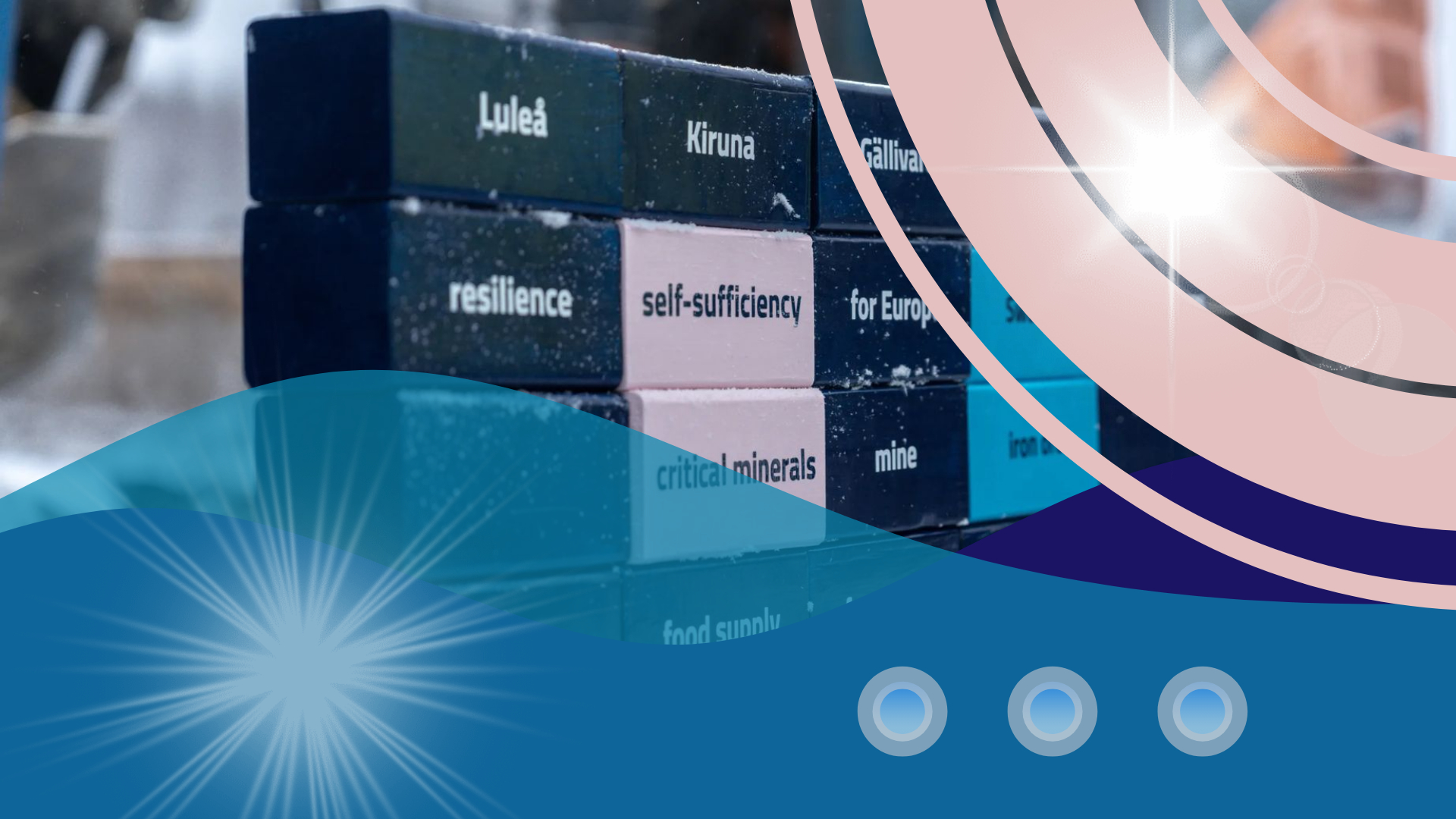
    LKAB has officially begun construction of its new Demonstration plant for processing phosphorus and rare earth elements in Luleå, Sweden. This facility will be the first of its kind in Europe and serves as a crucial building block in LKAB’s strategy to diversify its business with new minerals and improve resource utilisation.

    The construction of the demonstration plant is a major step forward for Europe’s critical minerals industry, as the continent currently relies heavily on imports for these essential materials. By extracting these minerals domestically, LKAB aims to strengthen Europe’s future competitiveness, improve security of supply, and enhance preparedness.

    Importance of Critical Minerals

    Phosphorus is a vital element for food security, as it is used in the production of mineral fertilisers. Rare earth elements are essential for the electrification and digitalisation of society, playing a crucial role in the production of permanent magnets for electric vehicles and wind turbines.

    LKAB’s demonstration plant is expected to meet approximately seven times Sweden’s needs and six percent of the EU’s demand for phosphorus in agriculture. The company also plans to extract rare earth elements from the facility, which are currently not mined in Europe.

    Government Support and Collaboration

    The Swedish government has recognized the importance of this project and has expressed its support for LKAB’s efforts. Minister for Energy, Business and Industry, Ebba Busch, emphasised the significance of the facility in reducing Europe’s import dependency and ensuring access to critical minerals for the future.  Several local and regional authorities have also welcomed the project, highlighting its potential benefits for the region’s economy and development.

    LKAB’s Investment and Future Plans

    LKAB has invested approximately 800 million SEK (approx 70 mln Euro) in establishing the demonstration plant, which is expected to be operational in 2026. The company plans to further develop and verify the process for utilising material flows from iron ore production in Gällivare, where apatite concentrate is produced for further refinement and production of critical minerals in Luleå.  The demonstration plant will also serve as a research and development center, providing an opportunity to explore and develop future potential sources for further refinement. LKAB has identified significant potential for extracting phosphorus and rare earth elements from other mineralizations, and the results from the plant will form the basis for future decisions on scaling up production.

    About LKAB

    LKAB is a leading international mining and minerals group that offers sustainable iron ore, minerals, and special products. The company is committed to developing carbon-free processes and products by 2045 and is driven by its vision of a sustainable future. With a workforce of over 5,200 employees in 12 countries, LKAB generated sales of about SEK 43 billion in 2023.

  • Romanian Government Extends Mining Licenses and Regulates Mineral Deposits

    Romanian Government Extends Mining Licenses and Regulates Mineral Deposits

    The Romanian government has approved key legislative measures to regulate mineral exploitation across various regions, including Alba and Bistrița-Năsăud counties. Among the decisions is the registration of the Dealul Jgheabului and Pârâul Româneasa deposits as state public property, aligning with the country’s Mining Law.

    Additionally, the government extended the exploitation license for the Roșia Poieni mining perimeter by five years, until January 31, 2030. This move allows SC CUPRU MIN SA Abrud to continue extracting copper ore, limestone, and andesite under updated technical and economic conditions.

    Similarly, the mining licenses for dacite exploitation in the Tunel I – Măgura Ilvei and Poiana Ilvei – Măgura Sturzii perimeters have been extended for five years, with the possibility of successive renewals. These licenses, held by Romcim SA, ensure continued extraction activities within their respective areas.

    The license extensions include adjustments to mining royalties in accordance with recent legislative updates. These decisions reflect the government’s strategy to regulate and support mining operations while maintaining state control over critical mineral resources.

  • Newmont Expands Stake in Ariana Resources to Strengthen European Exploration

    Newmont Expands Stake in Ariana Resources to Strengthen European Exploration

    Newmont (TSX: NGT) (NYSE, ASX: NEM), the world’s largest gold miner, has increased its stake in UK-based Ariana Resources (AIM: AAU) by acquiring an additional 28.88 million shares for $871,000. This follows a $2.5 million investment in 2022, forming an alliance to advance copper and gold exploration in southeastern Europe.

    The alliance, now in its third year, is managed by Western Tethyan Resources (WTR), a Kosovo-based company in which Ariana holds a 76% interest, with technical support from Newmont. WTR has secured multiple exploration licenses across Kosovo, North Macedonia, Bosnia and Herzegovina, Bulgaria, Greece, and Serbia.

    Ariana’s managing director, Kerim Sener, stated that Newmont’s increased investment demonstrates a firm commitment to advancing projects in the region. The alliance has already conducted geological, geochemical, and geophysical surveys, leading to new exploration license applications and the identification of promising targets. Initial drill testing at the Hertica project has confirmed a copper-gold-molybdenum mineralized system.

    Under the alliance agreement, Newmont has the option to further invest $1 million over the next two years to acquire a 60% stake in any new WTR project. An additional $15 million investment in a pre-feasibility study could raise its stake to 75%. If Newmont proceeds with full-scale development, it can secure up to 85% ownership, with WTR retaining a 2% net smelter return if its interest falls below 10%.

    Beyond its interest in WTR, Ariana also holds gold assets in Zimbabwe, including the 1.83-million-ounce Dokwe project, and a 23.5% stake in a Turkish joint venture with the Kiziltepe mine and Tavsan and Salinbas projects. Additionally, it owns 61% of Venus Minerals, which operates copper exploration projects in Cyprus.

  • EU’s Pro-Business Roadmap Emphasises Mining Amid Economic Shift

    EU’s Pro-Business Roadmap Emphasises Mining Amid Economic Shift

    On Wednesday  29 January 2025, the European Union introduced a pivotal roadmap aimed at making Europe more business-friendly after years of prioritising green goals. With US President Trump’s aggressive trade policies and China’s technological advancements, the EU seeks to bolster growth by alleviating corporate burdens.

    “We need to reignite Europe’s innovation engine,” EU chief Ursula von der Leyen told a news conference to present the “competitiveness compass” — the first major initiative of her second mandate.

    Specific measures proposed:

      • Creating a new legal regime for innovative companies across the EU
      • Facilitating long-term energy agreements and grid investments
      • Providing targeted aid for industrial decarbonisation
      • Revising competition rules to allow creation of European tech giants
      • Promoting more mining in Europe for critical raw materials
      • Removing barriers in the EU single market for key sectors
      • Creating a “European savings and investments union” to boost startup funding

    The plan aims to streamline regulations, reduce energy costs for businesses, and support the development of green technologies. To achieve this, the EU will revise numerous laws, including those related to environmental standards and supply chains, to reduce the burden on companies.

    A key element of the strategy is to increase the EU’s self-sufficiency in critical raw materials, such as rare earths, which are essential for many advanced technologies. The EU currently relies heavily on imports from China and other countries for these materials.

    To address this dependency, the EU plans to encourage more mining within its borders. The European Commission has already received 170 mining projects and aims to facilitate the permitting process. The plan also includes provisions for joint purchases of critical raw materials and international partnerships to secure supply lines.

    This initiative has sparked concerns from environmental groups, who worry that it could lead to the weakening of environmental protections. However, the EU maintains that it remains committed to its climate goals, including achieving carbon neutrality by 2050.

    The EU’s new plan reflects the growing global competition for resources and technological dominance. By focusing on mining and streamlining regulations, the EU aims to strengthen its industrial base and secure its position in the global economy.

  • EU Unveils Competitiveness Compass, Signals Mining Industry Revival

    EU Unveils Competitiveness Compass, Signals Mining Industry Revival

    The European Commission has unveiled its new Competitiveness Compass, a strategic plan aimed at boosting the EU’s economic strength and innovation capacity. In a statement, European Commission President Ursula von der Leyen highlighted the need to address Europe’s vulnerabilities and reduce dependencies on external suppliers for critical resources.

    A key aspect of the plan involves reviving Europe’s mining industry to secure supplies of critical raw materials. Von der Leyen stated, “To reduce our dependency on China and other countries for rare earths and raw materials, we want more of these resources to be mined in Europe.”

    The Commission plans to facilitate the issuance of permits for mining projects, with Vice-President Stéphane Séjourné revealing that 170 mining exploitation or research projects have already been proposed. This move aims to diversify the EU’s supply chains for essential materials needed in green technologies, semiconductors, and other strategic sectors.

    The Competitiveness Compass also outlines the creation of a platform for the “joint purchase” of critical raw materials and the development of international partnerships to strengthen supply lines for green technologies.

    Environmental concerns are being balanced with economic imperatives, as the EU seeks to maintain its commitment to sustainability while boosting its industrial competitiveness. The plan includes measures to support industrial decarbonization and promote the development of low-carbon products.

    This renewed focus on domestic mining represents a significant shift in EU industrial policy, reflecting the bloc’s ambition to achieve greater strategic autonomy in key economic sectors while navigating the challenges of the green transition.