Month: January 2025

  • Rosatom CEO Confirms Readiness to Join Kazakhstan’s NPP Project

    Rosatom CEO Confirms Readiness to Join Kazakhstan’s NPP Project

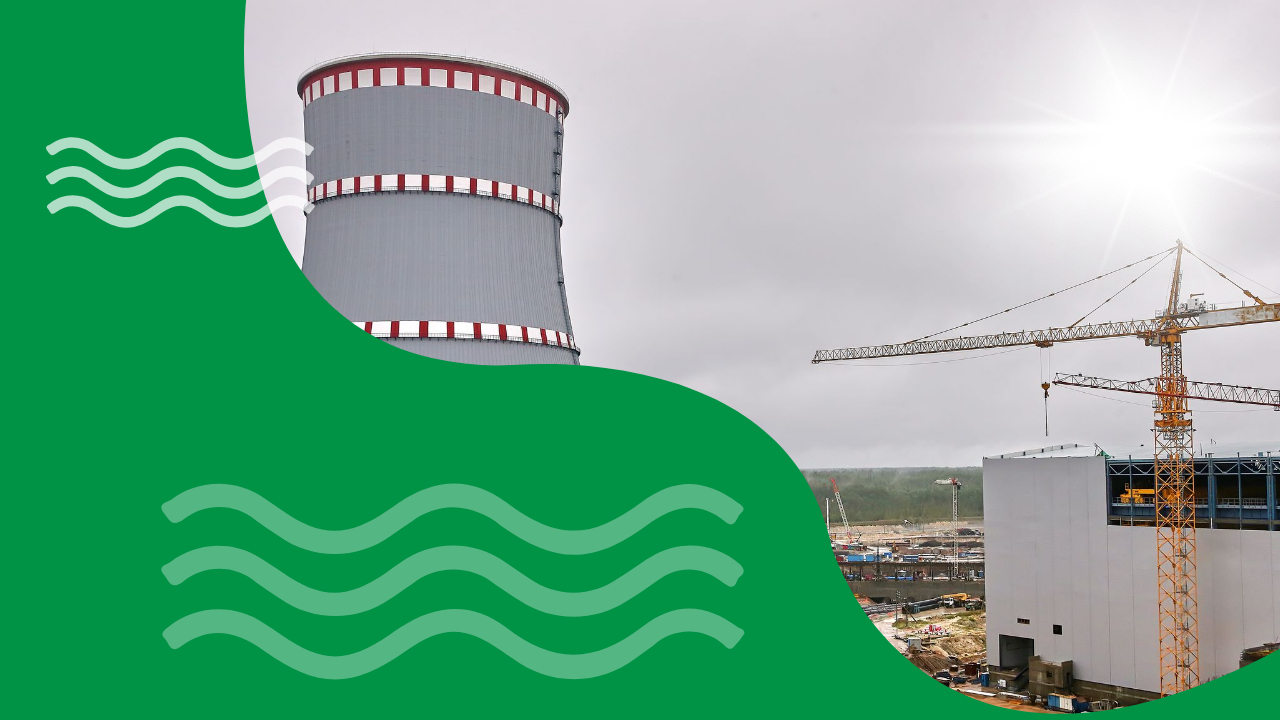
    Rosatom’s CEO Alexey Likhachev has confirmed the Russian state nuclear energy corporation’s readiness to participate in the construction of Kazakhstan’s first nuclear power plant (NPP). This announcement follows discussions between the heads of government of Kazakhstan and Russia, and suggests a move towards closer collaboration on the project.

    “Based on what the heads of our cabinets [Olzhas Bektenov and Mikhail Mishustin] discussed, I think it is safe to say that we are heading toward joint resolutions,” Likhachev told Interfax-Kazakhstan.

    Likhachev emphasised the existing cooperation between the two countries in the nuclear sector, highlighting Kazakhstan’s significant expertise in nuclear technologies and its position as a leading uranium producer. He noted that Kazakhstan is approaching the project with a high level of professionalism, engaging with multiple potential vendors.

    A recent visit by a Kazakhstani delegation to the Leningrad NPP in Saint Petersburg, where they examined Russian nuclear technologies and infrastructure, further underscores the growing interest in Rosatom’s offerings. Likhachev reiterated Rosatom’s commitment to the project, stating, “We will work here with great pleasure.”

    Kazakhstan’s President Kassym-Jomart Tokayev has previously stated that the NPP will be built by an international consortium. Rosatom is among four shortlisted potential vendors, alongside China’s CNNC, South Korea’s KHNP, and France’s EDF. Kazakhstan’s Ministry of Energy aims to select the winning bidder by June. Rosatom’s public expression of interest signals a strong intent to secure the contract.

  • Xanadu Hands Reins for Mongolian Project to Chinese Mining Giant

    Xanadu Hands Reins for Mongolian Project to Chinese Mining Giant

    Xanadu Mines has officially transferred the operational reins of its flagship Kharmagtai copper-gold project in Mongolia to its joint venture partner, Chinese mining giant Zijin Mining. This significant step marks the beginning of a new phase for the world-class project, which will now move towards final development under Zijin’s leadership.

    The transition follows the successful completion of a prefeasibility study (PFS) late last year, which highlighted Kharmagtai’s potential as a major copper-gold operation. The PFS outlined a 29-year mining operation, expected to produce an average of 165,000 tonnes of copper and 75,000 ounces of gold annually. The project’s estimated post-tax net present value (NPV) stands at US$930 million (A$1.49 billion), based on conservative copper and gold price assumptions.

    Xanadu’s executive chairman, Colin Moorhead, expressed optimism about Kharmagtai’s future. “Encouraged by an improving regulatory environment, it is reasonable to expect Kharmagtai will be the next large-scale copper mine built in Mongolia,” he said. The project is currently advancing toward a final investment decision by Zijin, which will follow the completion of a bankable feasibility study based on the PFS.

    The study, which is expected to reflect more current gold prices (around US$2,725 per ounce), will be a key factor in finalizing the investment decision. The two companies are scheduled to meet in Xiamen, China, in early February to discuss the project’s budget, scope, and delivery timeline.

    Xanadu is also reviewing strategic funding options to maximize shareholder value. Among the possibilities is retaining a 50% interest in the joint venture and funding its share of the project costs, selling a portion of its interest to Zijin for US$25 million, or selling its entire stake for US$50 million. Management has indicated a preference for the partial sell-down option, which would provide immediate liquidity while keeping a 25% stake in the project.

    The Mongolian government’s recent positive signals toward mining investments, coupled with ongoing global interest in the country’s resources, sets the stage for Kharmagtai’s next major development milestone. With a bankable feasibility study on the horizon, ongoing water exploration programs, and efforts to secure government approvals, the project is well-positioned to play a key role in the global electrification transition.

    As global demand for copper continues to rise, Xanadu’s flagship Kharmagtai project is poised to become a major player in the mining sector.

  • Kazakhstan Sees Dramatic FDI Drop, Blames Commodity Markets and Project Completion

    Kazakhstan Sees Dramatic FDI Drop, Blames Commodity Markets and Project Completion

    Kazakhstan has experienced a staggering 98.4% year-on-year (YoY) decline in foreign direct investment (FDI) inflows for the first nine months of 2024, according to Kazakh Invest, the national investment promotion company. This drastic drop, which saw FDI plummet from $2.3 billion to just $72.9 million, is being attributed to a confluence of factors, including volatile commodity markets and the completion of major infrastructure projects.

    Kazakh Invest insists the decline isn’t a reflection of flawed investment policies but rather external economic pressures. “The decline in FDI inflows is not related to inefficiencies in investment policy but rather to objective economic factors, including commodity market volatility and investors’ decisions,” the company stated. They emphasized the significant role of the mining sector in Kazakhstan’s FDI landscape, highlighting that these market fluctuations are beyond government control.

    A key factor contributing to the decline is a 93.4% reduction in reinvested earnings. Kazakh Invest suggests this could indicate decreased profits for foreign-owned businesses or increased dividend payouts to international shareholders. The completion of large-scale projects, such as Tengizchevroil’s Future Growth Project, has also played a significant role. While this project’s completion has impacted FDI inflows, Kazakh Invest believes it will pave the way for investment in other promising sectors like renewable energy, agriculture, logistics, and digital technologies.

    Despite the sharp decline, Kazakh Invest maintains that Kazakhstan remains an attractive destination for foreign investors, citing its leading investment volume in new projects among Central and North Asian states. The United Nations Economic and Social Commission for Asia and the Pacific (ESCAP) reported $15.7 billion in investment projects for Kazakhstan in 2024, an 88% increase from 2023.

    Economist Galymzhan Aitkazin suggests that the overall gross FDI inflow decline of 35.7% YoY, totaling $12.7 billion for the first three quarters of 2024, reflects international investor interest rather than capital flight. Kazakh Invest echoed this sentiment, pointing to the completion of the $46 billion Tengizchevroil project as a primary driver of the decline in gross FDI inflows.

    While Kazakhstan attracted $931.9 million in FDI from Russia in the first half of 2024, making it the largest investor, this figure still represents a 21.4% decrease compared to the same period in 2023. Other significant investors include Singapore, Luxembourg, Switzerland, and Cyprus, focusing primarily on trading, financial, and processing sectors.

    President Kassym-Jomart Tokayev has stressed the need for a comprehensive ecosystem to attract high-quality investments. Kazakh Invest has reiterated its commitment to this goal.

    While net FDI remained negative at -$1.6 billion for the first nine months of 2024, it is an improvement compared to -$3.2 billion in 2023. However, FDI outflows have doubled compared to the previous year, reaching $1.5 billion.

    The National Bank acknowledged in August 2023 that relying solely on gross FDI inflows can be misleading, as it overlooks capital outflows and doesn’t provide a complete picture of the investment climate.
  • Ukraine’s President Extends Moratorium on State Mine Bankruptcies Through 2026

    Ukraine’s President Extends Moratorium on State Mine Bankruptcies Through 2026

    President Volodymyr Zelenskyi has signed legislation extending protections for state-owned mines in Ukraine, preventing their bankruptcy through January 1, 2026. The measure aims to preserve critical energy infrastructure during challenging times.

    The legislation, formally known as Bill No. 12220 “On some amendments to laws of Ukraine on restoration of solvency of certain state enterprises in critical condition in the sphere of energy,” received presidential approval on 29 January 2025, following its passage by the Verkhovna Rada on 14 January 20205.

    This protective measure specifically targets state enterprises in the energy sector that are experiencing financial difficulties, implementing a moratorium on bankruptcy proceedings. The law represents a strategic move to maintain stability in Ukraine’s energy sector by preventing the liquidation of state-owned mining operations.

    The extension of the moratorium underscores the government’s commitment to preserving its domestic energy production capabilities and protecting strategic state assets during a period of significant challenges for the country’s industrial sector.

  • ArcelorMittal Hikes Long Product Prices in Europe Amidst Energy Cost Surge

    ArcelorMittal Hikes Long Product Prices in Europe Amidst Energy Cost Surge

    Global steel giant ArcelorMittal has announced a €25/t ($25.6/t) price hike for long products across all European regions. This increase applies to a range of products, including rebar, welded mesh, sectional products, and both low-carbon and high-carbon wire. The new pricing is effective immediately for all new orders, as reported by Kallanish.

    The primary reason behind this price adjustment is a sharp rise in energy costs, which has made current prices for long products unsustainable. In particular, electricity prices in Germany have surged by 41% compared to October 2024, while gas prices across Europe have seen a 22% rise. Gas prices, according to the TTF index, jumped from €40/MWh in October 2024 to €48.2/MWh in January 2025.

    Despite the ongoing market weakness, other European steelmakers have supported the price increase. Rebar, sectional products, and wire prices are climbing in various EU markets, although overall market activity remains subdued. Transaction volumes have been limited, especially with the slowdown of the construction sector in France and Germany.

    However, some positive signs have emerged, particularly from northern Europe, where demand for certain long products, such as sections, has shown unexpected improvement. There has also been a rise in rebar inquiries, signaling potential activity within the construction industry.

    This is the second price hike for long products from ArcelorMittal in recent months. The last increase occurred in early October 2024, when prices were raised by €40/t due to global market volatility and rising raw material costs.

    Steel industry watchers will continue to monitor whether these price adjustments can help stabilize the market or if further challenges will arise in the coming months.

  • Ukraine Must Ensure Stable Tax and Tariff Policies to Attract Foreign Investment, Urges Metinvest

    Ukraine Must Ensure Stable Tax and Tariff Policies to Attract Foreign Investment, Urges Metinvest

    Without a predictable tax and tariff policy, it is impossible to attract foreign investment to Ukraine. This opinion was expressed by Oleksandr Vodoviz, Head of the Office of the CEO of Metinvest Group, at the conference “Strategic Resources of Ukraine: Development Scenarios for the Subsoil Use Industry”.

    Vodoviz emphasized that the mining and processing business is capital-intensive and requires significant initial investments. Stability and predictability of government policy are crucial for attracting large international players. For instance, developing a mine similar to the one in Pokrovsk would require around US$10 billion.

    Projects in the mining industry have a long payback period, taking an average of 18 years to go from obtaining a license to launching an enrichment facility. Currently, there are some projects at the feasibility stage, but none are ready.

    Ukrainian businesses are mostly investing independently in the development and maintenance of enterprises and the mining industry. They invest an average of US$1 billion annually.

    Vodoviz highlighted the challenges of operating businesses during the ongoing war and the need for the government to consider this factor when integrating European legislation. The process of rapprochement with the EU will involve 550 regulations in the extractive industry and will take 4-5 years.

    In January 2025, Metinvest announced the temporary suspension of Pokrovske Coal Group’s operations due to the security situation on the frontline and electricity shortages. The company is replacing Ukrainian coal with supplies from the United States.

  • UkrLithiumMining LLC (ULM) Advances Polokhivske Lithium Project in Ukraine

    UkrLithiumMining LLC (ULM) Advances Polokhivske Lithium Project in Ukraine

    Kyiv, Ukraine – 24 January  2025

    UkrLithiumMining LLC (ULM) showcased its transformative Polokhivskyi lithium project at the high-profile conference “Strategic Resources of Ukraine: Scenarios for the Development of the Subsoil Use Industry” on January 23, 2025. Organised by the “We Build Ukraine” Foundation in partnership with the National Association of Extractive Industries of Ukraine (NADPU), the event convened government officials, industry leaders, and experts to address Ukraine’s role in the global critical materials market, with a focus on lithium’s pivotal role in the energy transition.

    ULM’s Vision for Lithium Leadership
    Denys Aloshyn, ULM’s Director of Strategic Development, highlighted the significance of the Polokhivskyi lithium deposit in the Kirovohrad region, emphasizing its position among Europe’s top three largest lithium reserves. Aloshyn outlined the company’s roadmap, targeting the launch of lithium concentrate production by 2028. He also revealed advanced considerations for downstream processing into lithium carbonate, a critical component for lithium-ion batteries used in electric vehicles (EVs) and renewable energy storage systems.

    “Our project not only positions Ukraine as a key player in Europe’s lithium supply chain but also aligns with global decarbonisation goals,” Aloshyn stated. “The Polokhivskyi field’s scale and potential for value-added production could significantly bolster both national economic growth and energy independence.”

    Challenges and Collaborative Solutions
    The conference underscored urgent challenges facing Ukraine’s subsoil use sector, including the need for transparent regulatory frameworks, attracting international investment, and integrating into global strategic material supply chains. Stakeholders stressed the importance of public-private partnerships and policy reforms to unlock the industry’s potential.

    ULM’s Forward-Looking Commitment
    In a post-conference statement, ULM expressed gratitude to the organizers and partners, affirming its dedication to advancing sustainable lithium extraction practices. “This event has reinforced the collective resolve to transform Ukraine into a hub for critical materials,” the company noted. “Lithium development is more than an economic opportunity—it’s a cornerstone for a resilient, energy-independent future.”

    As global demand for lithium surges, ULM’s Polokhivskyi project signals Ukraine’s strategic entry into the green energy revolution, positioning the nation as a vital link in the battery supply chain while driving long-term industrial and environmental progress.

    For media inquiries, contact:  i.zholonkivskyi@ukrlithium.com


    About UkrLithiumMining LLC (ULM):
    ULM is a leading Ukrainian enterprise focused on the exploration and sustainable development of lithium resources, committed to supporting the global transition to clean energy through innovative mining solutions.

    About the “We Build Ukraine” Foundation:
    A non-profit organization dedicated to fostering Ukraine’s economic and infrastructural development through public-private collaborations and strategic resource management.

    About NADPU:
    The National Association of Extractive Industries of Ukraine advocates for sustainable practices and policy advancements in the country’s mining sector.

  • Adriatic Metals CEO Highlights Successful Q4 Transition to Producer, Eyes 2025 Growth

    Adriatic Metals CEO Highlights Successful Q4 Transition to Producer, Eyes 2025 Growth

    Adriatic Metals PLC (LSE:ADT1, ASX:ADT, OTCQX:ADMLF) CEO Laura Tyler spoke with Proactive’s Stephen Gunnioni about the company’s milestone transition from a development-stage company to a metals producer in the final quarter of 2024.

    Tyler highlighted the impressive ramp-up in production, with silver equivalent output increasing 2.5 times from the previous quarter. The company achieved sales receipts of $27 million, nearly matching its expenditures. Despite challenges from severe weather conditions, Adriatic Metals has maintained continuous operations, running its processing plant 24/7 and aiming for full commercial production in Q1 2025.

    Construction at the Veovaca tailings storage facility is progressing well, with plans to receive tailings by mid-February. A recent study on the Vares processing plant expansion revealed that for a relatively modest investment of $25 million, production capacity could be increased to 1.3 million tonnes per year.

    The company concluded 2024 with a strong financial position, holding a $21 million cash balance and securing a $25 million prepayment arrangement with Trafigura, bringing total liquidity to $46 million. Looking ahead, Tyler expects the company to achieve full throughput rates by Q4 2025, setting the stage for steady growth into 2026.

  • Kazatomprom Secures Exclusive Uranium Exploration License for Inkai-Mynkuduk Block in Turkestan Region

    Kazatomprom Secures Exclusive Uranium Exploration License for Inkai-Mynkuduk Block in Turkestan Region

    National Atomic Company Kazatomprom JSC (Kazatomprom), the world’s largest uranium producer, announced on 30 January 2025 that it has secured an exclusive subsoil use license to explore uranium deposits at the Inkai-Mynkuduk block, located on the northern flank of the Inkai deposit in Kazakhstan’s Turkestan region. The license, granted by Kazakh authorities, permits exploration activities for six years, with an option to extend for an additional five years.

    Strategic Expansion in Shu-Sarysu Uranium Province
    The newly licensed Inkai-Mynkuduk block lies within the prolific Shu-Sarysu uranium province, a region renowned for its sandstone-hosted uranium reserves. Preliminary geological assessments estimate inferred resources (P1 and P2 categories) exceeding 20,000 tonnes of uranium, underscoring the area’s potential to bolster Kazakhstan’s position as a global leader in uranium supply.

    CEO Highlights Growth and Sustainability Goals
    “This license marks a pivotal step in our strategy to secure long-term resource bases while adhering to sustainable extraction practices,” said Yerzhan Mukanov, CEO of Kazatomprom. “The Inkai-Mynkuduk block complements our existing operations and aligns with growing global demand for nuclear energy as a low-carbon solution.”

    Next Steps
    Kazatomprom plans to commence exploration activities immediately, focusing on detailed geological surveys and drilling programs to confirm resource estimates. The company emphasised its commitment to environmental stewardship and community engagement throughout the project lifecycle.

    About Kazatomprom
    National Atomic Company Kazatomprom JSC is the world’s largest producer of natural uranium, with operations across Kazakhstan. The company supplies uranium to nuclear utilities globally and prioritizes safe, sustainable mining practices aligned with the UN Sustainable Development Goals. Kazatomprom’s shares are listed on the London Stock Exchange (LSE: KAP) and the Astana International Exchange (AIX: KAP).

    For media inquiries:
    Kazatomprom Press Office
    Email: press@kazatomprom.kz
    Phone: +7 (7172) 45 80 63

    Forward-Looking Statements
    This release contains forward-looking statements regarding resource estimates and exploration outcomes. Actual results may differ due to technical, economic, or regulatory factors.

  • Kingsrose-BHP Alliance Uncovers High-Grade Copper and Precious Metals in European Exploration

    Kingsrose-BHP Alliance Uncovers High-Grade Copper and Precious Metals in European Exploration

    Kingsrose Mining Limited (ASX: KRM) has announced significant progress in its exploration alliances with global mining giant BHP, targeting critical minerals in Norway and Finland. The joint efforts, part of one of Europe’s largest generative exploration programs, have yielded high-grade copper, gold, silver, and platinum group elements (PGEs), signaling potential for major discoveries.

    In Norway’s Finnmark region, rockchip sampling revealed exceptional results, including 29.7% copper, 1.1 g/t gold, and 0.54 g/t palladium at the Porsanger target, and 4.4% copper with 1.8 g/t gold at Virdnechokka. These findings, hosted in sulphide veins, suggest proximity to deeper magmatic systems, akin to Anglo American’s Sakatti deposit in Finland. A 5,067-line km airborne gravity survey and 208 rockchip samples underpin the 2024 campaign, with helicopter-borne electromagnetic surveys slated for February 2025 to identify conductive bodies indicative of massive sulphides.

    In Central Finland, the alliance focused on the Kotalahti Nickel Belt, historically rich in nickel-copper deposits. Drone and ground magnetic surveys covering 4,980-line km identified new mineralized zones at the Rehula target, including a 0.46% copper and 110 ppm cobalt sample. The program aligns with Kingsrose’s strategy to discover new polymetallic “camps” through systematic geophysical and geochemical analysis.

    Managing Director Fabian Baker emphasized the success of advanced exploration techniques and stakeholder collaboration, stating, “These results underscore the prospective nature of these underexplored regions. Our commitment to environmental and social values ensures sustainable progress.” The company has engaged Indigenous communities and conducted biodiversity surveys to secure social licenses, particularly in Sami-inhabited areas of Norway.

    With 2.7millionofa5 million Year 1 budget spent, Kingsrose plans further fieldwork in 2025, leveraging BHP’s expertise to prioritize drill targets. The alliances highlight Europe’s growing role in supplying critical minerals amid global decarbonization efforts.

    Kingsrose, a ASX-listed explorer, holds 100% interests in the Finnmark and Central Finland projects, backed by BHP’s Xplor accelerator program. Forward-looking statements caution inherent risks, but the findings position the company as a key player in Europe’s mineral exploration frontier.

    For more details, visit www.kingsrose.com.