Month: January 2025

  • Eurasian Resources Group expects a neutral-to-bullish outlook for key metals in 2025

    Eurasian Resources Group expects a neutral-to-bullish outlook for key metals in 2025

    Eurasian Resources Group has shared its market expectations for 2025 and beyond, highlighting several key trends across various metals and industries:

    Copper market growth: The global copper market is expected to grow by 4% year-over-year in 2025, with a compound annual growth rate (CAGR) of 2.5% projected between 2024 and 2034.

    Stainless steel and ferrochrome demand: Development of renewable energy sources like wind turbines, along with record sales in home appliances and consumer goods, is expected to drive strong growth in stainless steel demand, reaching 4.8% in 2025. This growth will significantly benefit the ferrochrome industry.

    Aluminum demand: An average 3% year-over-year growth in aluminum demand is anticipated in 2025, primarily driven by the automotive and renewable energy sectors.

    Cobalt market outlook: While currently in surplus, the global electric vehicle (EV) sector is expected to continue growing and may represent over 60% of cobalt demand by 2030. This is projected to lead to market deficits as cobalt demand outpaces supply by the end of the decade.

    AI impact on metals demand: Artificial intelligence is expected to increasingly boost additional metals demand. Bank of America has estimated that demand directly from data centers for copper could be around 200,000 tonnes per year between 2025 and 2028.

    Overall outlook: Eurasian Resources Group expects a neutral-to-bullish outlook for key metals in 2025, subject to various macro trends and factors such as the economic situation in China, potential trade protectionist measures, and US monetary policy.

    The group notes that while the speed and consistency of economic recovery may be uneven, the long-term fundamentals for metals and minerals in ERG’s product portfolio appear promising.

  • Ukraine: A Potential Key Player in the Global Critical Raw Materials Race?

    Ukraine: A Potential Key Player in the Global Critical Raw Materials Race?

    In a recent statement, U.S. Secretary of State Marco Rubio provided a clear outlook on the future of American policy regarding critical raw materials. As global supply chains for these materials continue to shift, Ukraine’s vast reserves of key minerals could play a pivotal role in reshaping the global balance of power, particularly in the ongoing confrontation between the U.S. and China.

    Rubio highlighted several critical materials essential for advanced technology, renewable energy, and national security, including neodymium, dysprosium, lithium, cobalt, nickel, and titanium. Remarkably, Ukraine is home to abundant reserves of these very materials—and more. With its substantial deposits of germanium and gallium, Ukraine is positioned to be a critical player in the global supply of strategic resources.

    A Treasure Trove of Critical Materials

    • Titanium Ore (Ilmenite): Ukraine ranks 11th in the world for ilmenite reserves, found in the Irshanske, Byrzulivske, and Malyshevske deposits across the Zhytomyr, Kirovohrad, and Dnipropetrovsk regions. Titanium is vital for aerospace, defense, and high-tech manufacturing.
    • Lithium: As a key component in batteries, particularly for electric vehicles and renewable energy storage, Ukraine holds 1% of the world’s lithium reserves—equivalent to 30% of Europe’s supply. Major deposits can be found in Polokhivske (Kirovohrad region) and Balka Kruta (Zaporizhzhia region). The strategic importance of lithium was recently highlighted by China’s attempts to use the resource as leverage in international relations.
    • Germanium and Gallium: Crucial for electronics and telecommunications, these materials are abundant in Ukraine’s coal and lignite deposits in the Donetsk and Lviv-Volyn basins. Before the full-scale war, Ukraine was the world’s third-largest exporter of germanium, although exports have been halted due to the ongoing conflict. Ukraine’s reserves of these rare metals remain a critical asset for global tech industries.
    • Rare Earth Elements (Neodymium and Dysprosium): Located in the Zhytomyr region, these elements are indispensable in the production of magnets for electric vehicles, wind turbines, and high-tech equipment.
    • Nickel and Cobalt: Essential for battery production, Ukraine’s nickel and cobalt reserves are also noteworthy, found in deposits like Devladivske (Dnipropetrovsk region), Lypovenkivske (Kirovohrad region), and Dereniukhivske (Mykolaiv region). While the reserves are smaller compared to other countries, they still contribute to Ukraine’s strategic importance.
    • Manganese and Iron: Ukraine is a major global player in manganese and iron ore production, with significant deposits in the Nikopol Manganese Basin and the Kryvyi Rih Iron Ore Deposit. These resources are fundamental to the global steel and metallurgy industries.

    Ukraine’s Growing Role in Global Supply Chains

    As the global supply chain for critical raw materials becomes increasingly volatile, especially with rising tensions between the U.S. and China, Ukraine has the potential to become a key partner for the U.S. in securing access to these vital resources. With its diverse array of minerals and metals, the country offers not only essential raw materials but also strategic geopolitical leverage in a rapidly changing world order.

    The country’s natural resources, coupled with its strategic location in Europe, make it a valuable partner for countries looking to diversify their supply chains and reduce reliance on China.

    By prioritising partnerships with the U.S. and other nations, Ukraine can play a pivotal role in shaping the future of critical materials and ensure its place as a key player in the global economy.

    The Road Ahead

    The ongoing geopolitical shifts present an opportunity for Ukraine to position itself as a leading supplier of critical materials. With strategic investments in its mining and extraction sectors, Ukraine can not only boost its economy but also secure its place in the new global order. Now more than ever, the world needs Ukraine’s resources, and Ukraine is ready to take center stage.

  • Amulsar Gold Mine Set for September 2025 Opening, Says Minister

    Amulsar Gold Mine Set for September 2025 Opening, Says Minister

    Mining operations at the Amulsar gold deposit in Armenia are anticipated to begin in September-October 2025, according to Armenian Economy Minister Gevorg Papoyan.

    The minister confirmed that a high-quality audit had deemed the project both feasible and profitable. He stated, “We believe the financing issue will be resolved shortly. With $500 million already invested, an additional $100 million will be contributed by the company, and the remaining $150 million will be financed by our financial institutions.”

    Construction work is scheduled to start in the spring, with the aim to kick off mining operations by autumn, providing a significant boost to Armenia’s economy and industry.

    Project Progress and Financial Investments

    Hayk Aloyan, CEO of Lydian Armenia, the company holding the license for the Amulsar gold deposit, revealed that 70-80% of the required work to commence operations has already been completed. An additional $250 million is needed to finalise the project.

    Lydian Armenia plans to produce approximately 210,000 ounces of gold annually, potentially generating $500 million in revenue and $120 million in taxes at current global prices.

    In a significant development, on 27 December 2024, Lydian Armenia signed an agreement to transfer 12.5% of its shares to the Armenian government.

    About the Amulsar Deposit

    The Amulsar gold deposit, Armenia’s second-largest pure gold deposit, contains around 31 million tons of ore and 40 tons of pure gold. Located 13 km from the resort town of Jermuk, between the Arpa and Vorotan rivers, the mine has faced delays due to environmental protests.

    Concerns have been raised about the potential contamination of groundwater in Jermuk and Lake Sevan. Despite protests in 2018-2019 and 2020, the Investigative Committee of Armenia reported in August 2021 that there are no significant environmental threats from the mine’s operation if appropriate measures are taken.

    In conclusion, the imminent start of mining at Amulsar promises to be a pivotal moment for Armenia’s economy and industrial sector.

  • Kumtor Gold Company Produced 54 Tonnes of Gold in Three Years

    Kumtor Gold Company Produced 54 Tonnes of Gold in Three Years

    The Board of Directors of Kumtor Gold Company Closed Joint Stock Company recently convened at the Kumtor mine to review the company’s performance for 2024 and outline future objectives.

    During the meeting, Bolotbek Idirisov, Chairman of the Board, highlighted that since May 2021, the introduction of external management and subsequent transfer of the Kumtor mine into the Kyrgyz Republic’s ownership has resulted in the production of over 54 tonnes of gold. He announced, “Net income for this period totalled more than US$1.2 billion. Between May 2021 and December last year, US$891.6 million was paid to the Kyrgyz Republic in taxes and other payments to the state budget. Now we are facing no less ambitious tasks, on the fulfilment of which we will work together.”

    The meeting also involved reports from the heads of various departments, including the mine, gold recovery plant, and other structural divisions. Board members conducted a thorough inspection of the mine’s operations, visiting open pits, underground mining projects, heavy mining equipment repair workshops, the gold extraction plant, fuel and refuelling complex, treatment facilities, and the tailings pond.

    As Kumtor continues to set ambitious goals, the company remains committed to maintaining its strong performance and contributing significantly to the Kyrgyz Republic’s economy.

  • Sweden’s LKAB Aims to Meet 18% of Europe’s Rare Earth Needs with Per Geijer Mine

    Sweden’s LKAB Aims to Meet 18% of Europe’s Rare Earth Needs with Per Geijer Mine

    Swedish state-owned mining company LKAB has announced it could fulfil approximately 18% of Europe’s rare earth requirements through its Per Geijer mine in the Arctic north, whilst breaking ground on a new processing facility.

    The firm commenced construction of an £62 million processing plant in Lulea, northern Sweden, which will transform mining waste into rare earth concentrate, phosphoric acid for fertiliser production, and gypsum.

    Darren Wilson, senior vice president of LKAB’s special products division, outlined the company’s ambitious plans: “Our initial phase will meet roughly 6% of European phosphate demand and 2.5% of rare earth requirements. Upon full expansion and development of Per Geijer, we anticipate meeting approximately 18% of rare earth demand”.

    The Lulea facility will initially process waste from LKAB’s existing Malmberget mine, with commercial operations expected to commence in late 2029 or early 2030. The facility’s development will proceed independently of the Per Geijer project, which boasts resources of approximately 1.7 million tonnes of rare earth oxides but requires additional regulatory approvals before mining can begin.

    Rare earth elements, comprising 17 crucial metals, are essential components in various products ranging from lasers to iPhones and green technologies vital for achieving Europe’s climate objectives. Their strategic importance has been heightened by growing trade tensions with China, the ongoing conflict in Ukraine, and increased focus on securing critical mineral supplies.

    The development aligns with the EU’s Critical Raw Materials Act, adopted in 2023, which aims to reduce the bloc’s dependence on foreign sources for vital minerals such as neodymium, dysprosium and praseodymium – essential components in permanent magnets used in wind turbines and electric motors.

    Whilst LKAB has submitted an application for processing rights at Per Geijer, the project still requires environmental permits and additional regulatory clearances before commercial operations can commence, a process that could take up to a decade.

  • Rosatom to Aid Kyrgyzstan with Industrial Site Clean-up

    Rosatom to Aid Kyrgyzstan with Industrial Site Clean-up

    Russia’s state nuclear corporation Rosatom is set to assist Kyrgyzstan in addressing environmental contamination at a former industrial facility, officials announced today.

    The Federal Environmental Operator, a division of Rosatom, recently took part in high-level discussions in Bishkek where authorities approved immediate remediation work at the Crystal plant complex.

    Stanislav Zhabrikov, Director for Environmental Projects Implementation at the Federal Environmental Operator, highlighted the organisation’s credentials, noting: “Having amassed considerable expertise in managing environmental legacy issues within Russia, we are now expanding our role as a trusted partner to colleagues abroad.”

    The Crystal facility, established in 1989 in Tash-Kumyr, was formerly involved in polycrystalline silicon manufacture. The site currently harbours hazardous chemical residues requiring specialist treatment.

    The collaboration marks a significant step in addressing historical industrial pollution in the region, though specific details regarding the scope and timeline of the clean-up operation have yet to be disclosed.

  • European Lithium: Advancing Lithium and Rare Earth Projects with Saudi Collaboration

    European Lithium: Advancing Lithium and Rare Earth Projects with Saudi Collaboration

    European Lithium forges ahead with lithium and rare earth projects in tandem with a Saudi Arabian lithium refinery.

    European Lithium Ltd has made significant strides over the last quarter, advancing its lithium projects in Austria and Ireland, a rare earth project in Greenland, and a lithium refinery initiative in Saudi Arabia.

    The company has also appointed George Karageorge as the new Executive General Manager of Exploration. Additionally, European Lithium received confirmation from the Carinthian state government that an Environmental Impact Assessment (EIA) will not be required for the Wolfsberg Lithium Project. Furthermore, the company has completed technical studies and planning for an energy supply corridor in Austria.

    Leinster Lithium Project Acquisition in Ireland

    In November last year, European Lithium completed the acquisition of the Leinster Lithium Project in Ireland from Technology Metals plc (TM1). The transaction involved the transfer of 1,371,742 shares in 74%-owned subsidiary Critical Metals Corp (NASDAQ: CRML) to LRH Resources Limited, a subsidiary of TM1. The acquired project lies within the East Carlow Deformation Zone, a key structural trend associated with lithium-bearing pegmatite deposits.

    Currently in the early exploration phase, the Leinster Project has identified spodumene-bearing pegmatites in surface material and conducted drilling in 2023. The company plans further exploration in Q2 2025, starting with sampling and drilling across key target areas.

    Wolfsberg Lithium Project in Austria

    European Lithium’s Wolfsberg Lithium Project received confirmation from the Carinthian state government that an EIA will not be required, expediting the project’s development by simplifying regulatory approvals. The Wolfsberg Project has a long-term supply agreement with BMW AG for the delivery of battery-grade lithium hydroxide. Additionally, the project has completed planning for an energy supply corridor in collaboration with Austrian energy provider KELAG, with construction expected to begin in the first half of 2025.

    Tanbreez Rare Earths Project in Greenland

    EUR subsidiary Critical Metals Corp continued exploration work at the Tanbreez Rare Earths Project in Greenland. The company completed a 16-hole diamond drilling programme, with initial results confirming high-grade rare earth elements. Assays show an average of 4,722.51 ppm total rare earth oxides (TREO), with 26.96% classified as heavy rare earth oxides (HREO). Additional results include 101.67 ppm gallium oxide (Ga₂O₃), 1,852.22 ppm niobium pentoxide (Nb₂O₅), and 130.92 ppm tantalum pentoxide (Ta₂O). Geological studies have identified four high-grade mineralisation zones within the deposit, with potential to increase future production capacity. The Greenland government has extended certain deadlines under the Tanbreez Project’s exploitation licence, requiring mining operations to commence by 2028.

    Saudi Arabia Lithium Refinery Development

    European Lithium is advancing plans for a lithium refinery in Saudi Arabia through Arabian New Energy Corp, a joint venture with Obeikan Investment Group. Hatch Ltd, a global engineering firm, has been appointed to design the facility, which is expected to produce up to 20,000 metric tons of battery-grade lithium hydroxide per year. Representatives from Critical Metals Corp and Obeikan Investment Group visited two lithium hydroxide plants in China in December 2024 to gain technical insights into refinery operations.

    Additional Exploration Activities

    European Lithium is also progressing additional exploration projects:

    • Austrian Lithium Projects: Geological mapping and sampling continue at the Bretstein-Lachtal, Klementkogel, and Wildbachgraben projects. Three drill holes, totalling approximately 220 metres, are planned near Quarry Ebner.
    • Western Australia: Exploration licence E47/4144 is advancing through the regulatory application process under the WA Mining Act.
    • Ukraine: The company is monitoring the geopolitical situation and has paused fieldwork at its Dobra and Shevchenkivske lithium projects.

    As of 29 January 2025, European Lithium holds more than 66.4 million shares in Critical Metals Corp. Based on a closing price of US$8.07 per share, this investment is valued at approximately US$535.98 million (A$857.57 million).

  • From Black Gold to Black Diamonds: Upper Silesia’s Coal Legacy

    From Black Gold to Black Diamonds: Upper Silesia’s Coal Legacy

    Situated in Southern Poland, Upper Silesia is steeped in hundreds of years of mining tradition. The region’s old workers’ neighbourhoods, through their architecture and use of local motifs, serve as a reminder to locals and visitors alike of a time when men worked arm in arm with machines, and when Upper Silesia functioned as the industrial heartland of Europe.

    More than 300 years ago, people travelled from across the country and beyond to access the so-called “black gold” found in Upper Silesia. Beneath this rugged exterior, however, lies a rich cultural history with roots stretching back centuries. The region boasts its own dialect, which was banned for many years in Poland but survives to this day. It also has a tangible material dimension in coal, which is being repurposed in modern times.

    As folklore revival gains popularity in Poland, coal has become a commodity of a different quality. Mined in Upper Silesia since the 17th century, coal played a crucial role not only in the Polish economy but also for the entire European continent. Today, it is being transformed into jewellery as a symbolic tribute to the land from which it came.

    In Katowice, the capital of Upper Silesia, several workshops are turning coal into a new type of precious commodity: delicate, hand-crafted jewellery. One such brand is I Coal You, owned and operated by Katarzyna Depa, who has deep ties to the region. Depa explains that coal jewellery symbolises mining hardships and carries significant sentimental value. Her clients include not only visitors seeking unique souvenirs but also locals who view the crafts as a way to represent their culture.

    While the trend of making jewellery from coal is relatively modern, it has deeper roots in Upper Silesian tradition. The first coal beads appeared in the region in the 19th century, made by miners as gifts for their wives and girlfriends. These simple decorative forms were quick but thoughtful presents.

    Coal jewellery has become a symbol of the region’s ties to its mining heritage. It represents the work ethic and respect associated with the industry that sustained Upper Silesia for generations. As Depa notes, “This respect for this raw material, which Upper Silesia fed itself and all of Poland with, is what it’s all about.”

    The transformation of coal into jewellery also serves as a reminder of the physical and cultural landscape shaped by the mining industry. Each piece of coal jewellery is unique, reflecting the distinctiveness of the material itself. This artform brings respect to work that is often undervalued and allows people to appreciate the region’s industrial heritage.

    In recent years, Upper Silesia has seen a resurgence of local pride and cultural expression. The once-banned Silesian dialect now appears on tote bags and shop signs. Statues of local folkloric figures adorn streets, and artists depict the mining landscape in their work. Even as coal extraction has diminished, the material remains a permanent feature of the Silesian identity.

    As Depa poignantly states, “Polish highlanders wear coral beads from Italy, there are pieces of turquoise from Turkish wars in the Wawel treasury, and amber comes from the sea. But we have coal here and now, we can dig it up. And that’s probably the most beautiful thing about it. Besides, coal is simply beautiful as a stone.”

    This transformation of coal into jewellery symbolises Upper Silesia’s ability to honour its past while embracing new forms of cultural expression and economic activity. It represents a unique way of preserving the region’s heritage and identity in a changing world.

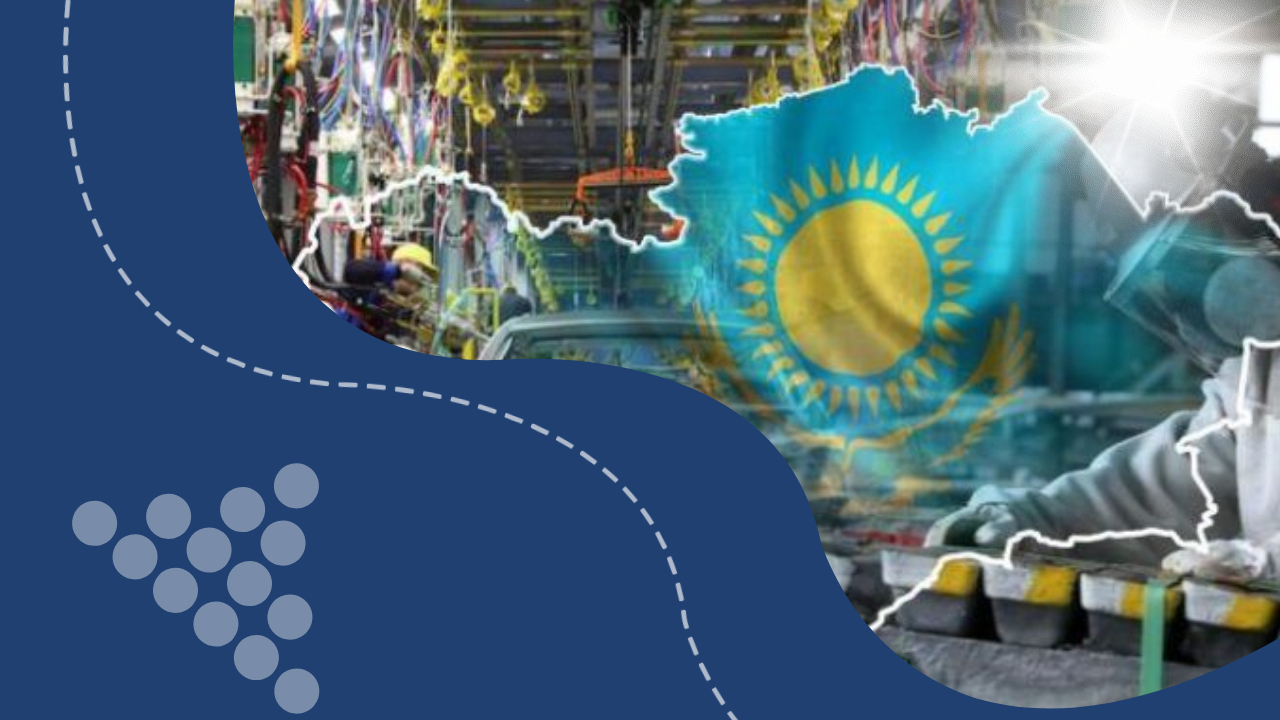
  • Kazakhmys Ships First Batch of Refined Selenium Using New Eco-Friendly Technology

    Kazakhmys Ships First Batch of Refined Selenium Using New Eco-Friendly Technology

    Mining and metals giant Kazakhmys has dispatched its first 100-tonne shipment of high-purity technical selenium, marking a significant milestone for Kazakhstan’s metals industry.

    The technical selenium, graded ST-1, was produced at Kazakhmys Progress LLP’s selenium refining and slag processing plant in Balkhash. This represents the first industrial-scale production in Kazakhstan using a unique vacuum distillation method. The innovative technology has increased the added value of selenium from 30% to 97% of the global market price. The inaugural shipment contained selenium with a purity of at least 99.5%.

    “The vacuum distillation method ensures a high degree of selenium purification without using reagents, making the process environmentally safe,” a company spokesperson explained. “This technology was developed by scientists at the Institute of Metallurgy and Ore Beneficiation of Satbayev University. It has enabled the operation of a unique facility that produces selenium meeting global non-ferrous metals market standards.”

    The project’s origins trace back to the modernisation of the gas cleaning system at the precious metals shop of Kazakhmys Smelting LLP’s Balkhash Copper Smelter in 2017-2018. This upgrade increased crude selenium production from 60 to 100 tonnes annually, making refining economically viable.

    “The implementation of the crude selenium refining project, produced as a by-product of precious metals production, began at the Balkhash industrial site in 2020. A new production unit was launched in 2022, with full-scale industrial operations commencing in 2023,” the spokesperson added.

    Prime Minister Olzhas Bektenov highlighted the significance of this unique technology at an extended government meeting. He noted that selenium is widely used in the production of solar panels, photocopiers, glass, ceramics, as well as in medicine and the chemical industry. The launch of this new production facility in Balkhash opens up prospects for strengthening Kazakhstan’s and Kazakhmys’ economic positions in the global non-ferrous metals market.

    This development represents a major step forward in Kazakhstan’s metallurgical capabilities, combining environmental responsibility with economic advancement.

  • Canadian Gold Miner Files Technical Report for Serbian Project

    Canadian Gold Miner Files Technical Report for Serbian Project

    TORONTO, 31 January 2025 – Dundee Precious Metals Inc. (TSX: DPM), a leading Canadian-based international gold mining company, has announced the filing of a technical report for its Čoka Rakita gold project in Serbia. The report supports the Mineral Resource and Mineral Reserve estimate and pre-feasibility study for Čoka Rakita, as outlined in the company’s news release dated 18 December 2024.

    The technical report has been prepared in accordance with the Canadian Securities Administrator’s National Instrument 43-101 – Standards of Disclosure for Mineral Projects. Both the report and the December 2024 news release are accessible on SEDAR+ (www.sedarplus.ca) and the company’s website (www.dundeeprecious.com).