Кыргызстан одобрил пересмотренное соглашение о продаже золота и серебра, добытых на золотом руднике «Кумтор». Согласно ему, «Кумтор Голд Компани» больше не несет обязательств по продаже драгметалла канадской Centerra Gold. Еще 29 июля 2022 года в посольстве Кыргызстана в Великобритании состоялась процедура обмена документов, подтверждающих процесс перехода золоторудного месторождения Кумтор от Centerra Gold в собственность Кыргызстана.В частности, послу КР в Великобритании Улану Джусупову был передан полный пакет юридических документов, включая все необходимые передаточные акты, доверенности и свидетельства для оформления полного перехода прав собственности на 100% акций компаний «Кумтор Голд Компани» и «Кумтор Оперейтинг Компани» в пользу ОАО «Кыргызалтын».В целях обеспечения непрерывной и эффективной работы рудника «Кумтор» в связи с выходом компании Centerra Gold из проекта «Кумтор» кабинет министров Кыргызстана постановил признать старый договор, действующий между сторонами, утратившим силу и одобрил пересмотренный договор.«Пересмотренный договор о продаже золота и серебра заключен между ЗАО «Кумтор Голд Компани», ОАО «Кыргызалтын» и кабинетом министров», — сообщает пресс-служба кабмина.Правительство также рекомендует всем компаниям, участвующим в этом соглашении, а также Национальному банку Кыргызстана принять необходимые меры, чтобы все шло согласно новому плану. Министерства и различные ведомства Кыргызстана также должны организовать свою работу в соответствии с этим решением.
Website: Kazakhstan.com
-

Kumtor no longer bears any responsibilities related to the sale of gold to the Canadian Centerra Gold
Kyrgyzstan has approved a revised agreement for the sale of gold and silver mined at the Kumtor gold mine. The new agreement relieves ‘Kumtor Gold Company’ from its obligations to sell precious metals to Canadian Centerra Gold. On July 29, 2022, there was a document exchange procedure at the Kyrgyz embassy in Britain to confirm the transfer of ownership of the Kumtor gold deposit from Centerra Gold to Kyrgyzstan. The full package of legal documents, including necessary transfer papers, powers of attorney, and certificates for the complete transfer of property rights over 100% of the shares of companies ‘Kumtor Gold Company’ and ‘Kumtor Operating Company’ to OAO ‘Kyrgyzaltyn’, were handed over to the Kyrgyz ambassador in Britain, Ulan Juusupov. To maintain the continuous and effective operation of the Kumtor mine with Centerra Gold leaving the project, the cabinet of ministers of Kyrgyzstan decided that the old contract between the parties had become invalid, and approved the revised contract. The press service of the cabinet announced that the new agreement was made between JSC ‘Kumtor Gold Company’, OAO ‘Kyrgyzaltyn’, and the cabinet. The government also advised all companies involved, as well as the National Bank of Kyrgyzstan, to take necessary measures to comply with the new plan. Ministries and various departments of Kyrgyzstan were also instructed to organize their work by this decision.
-
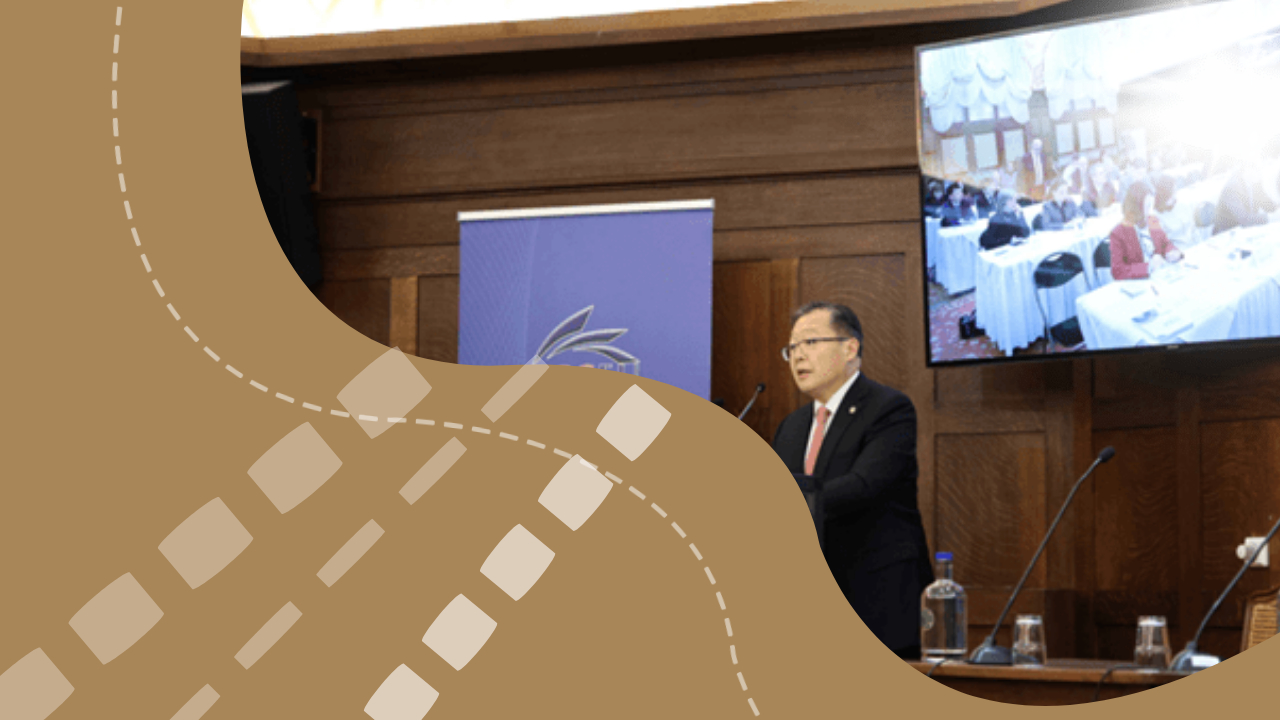
The China Chamber of Commerce response to the Approval of the Critical Raw Materials Act (CRMA)
The China Chamber of Commerce to the European Union (CCCEU) on Tuesday urged the EU not to disrupt global critical raw materials supply chains and value chains through non-market measures following the bloc’s approval of the Critical Raw Materials Act.
The Act, adopted by the Council of the EU on Monday, identifies two lists of materials including 34 critical ones and 17 strategic ones. It aims for the EU to extract 10 per cent, recycle 25 per cent, and process 40 per cent of its annual needs for the materials, which notably encompass lithium and nickel, by 2030.
The CCCEU said that while understanding the EU’s aim to enhance supply chain resilience, it urged the bloc not to disrupt global critical raw materials supply chains and value chains through non-market means to not affect the green and digital economic transformation.
The chamber highlighted the vast room for cooperation between China and the EU, stressing that “dependence is mutual.”
It urged the EU to objectively evaluate both sides’ positions in the global supply chain, refrain from politicizing trade issues, reduce market access barriers, encourage dialogue and cooperation, and provide a fair, non-discriminatory business environment for Chinese enterprises.
The Brussels-based CCCEU represents over 1,000 Chinese companies operating across the EU, with chambers in EU member states.
-

Аналитики высоко оценили финансовый отчет Казатомпрома несмотря на снижение продаж урана
Финансовые аналитики из Freedom Broker и Halyk Finance высоко оценили финансовый отчет урановой компании “Казатомпром”, особенно отметив положительную динамику роста выручки. По оценке Freedom Broker, хотя ожидается увеличение затрат на производство и снижение продаж урана, они рекомендуют приобретать акции “Казатомпрома”, предвидя возможность компании вернуться к своим целевым показателям. Точно так же, Halyk Finance признает, что “Казатомпром” не в полной мере воспользовался взлетом цен на уран, однако советует инвесторам покупать акции компании на фоне рекордных финансовых результатов, как сообщается в обзорах брокеров.
Freedom Broker подчеркивает возможные проблемы с производством из-за трудностей с получением серной кислоты, прогнозируя их временный характер и утверждая способность “Казатомпрома” восстановить прежние показатели производства и продаж. Кроме того, эксперты отмечают рекордную выручку компании в 1,43 трлн тенге, что составляет рост на 43% по сравнению с предыдущим годом, приводимый в движение ростом продаж природного урана на 39% в 2023 году и началом продаж обогащенного урана, приносящего 91 млрд тенге дохода.
Несмотря на незначительное снижение производства урана на 2% в 2023 году, “Казатомпром” смог продать на 10% больше этого сырья по сравнению с 2022 годом, при увеличении средней цены реализации урана на 22%. Операционная прибыль выросла на 49%, а чистая прибыль увеличилась на 23%, при этом активы компании расширились до 2,59 трлн тенге к концу 2023 года.
Аналитики прогнозируют потенциальный рост стоимости акций “Казатомпрома” на 27%, достигнув 23,3 тыс. тенге, вместе с оцененными дивидендами на уровне не менее 1 188 тенге за акцию для 2023 года. Halyk Finance поддерживает целевую цену на уровне 22,8 тыс. тенге, подчеркивая потенциал компании к увеличению продаж урана на фоне высоких рыночных цен.
-
Analysts View Kazatomprom’s Financial Report Positively Despite Uranium Sales Dip
Financial analysts from Freedom Broker and Halyk Finance have lauded the financial report of the uranium company “Kazatomprom,” particularly noting a positive growth trajectory in revenue. According to Freedom Broker’s assessment, while an increase in production costs and a decrease in uranium sales are anticipated, they recommend purchasing Kazatomprom’s shares, anticipating the company’s ability to rebound to its target metrics. Similarly, Halyk Finance acknowledges that Kazatomprom hasn’t fully capitalized on the surging uranium prices, yet they advise investors to buy the company’s stocks based on the record-breaking financial results, as reported by broker reviews.
Freedom Broker highlights potential production challenges due to sulfuric acid procurement issues, projecting them to be temporary and affirming Kazatomprom’s capability to regain previous production and sales targets. Additionally, experts underscore the company’s record revenue of 1.43 trillion tenge, marking a 43% year-on-year increase, driven by a 39% surge in natural uranium sales in 2023 and the initiation of enriched uranium sales, yielding 91 billion tenge in revenue.
Despite a marginal 2% decline in uranium production in 2023, Kazatomprom managed to sell 10% more uranium compared to 2022, amidst a 22% increase in the average uranium selling price. While operational profitability surged by 49%, net profits grew by 23%, with the company’s assets expanding to 2.59 trillion tenge by the end of 2023.
Looking forward, analysts foresee a potential 27% increase in Kazatomprom’s stock value, reaching 23.3 thousand tenge, alongside an estimated dividend of at least 1,188 tenge per share for 2023. Halyk Finance maintains its target price at 22.8 thousand tenge, emphasizing the company’s potential to capitalize on uranium sales amid high market prices.
-

Казахстанский комитет Сената обсудил проблемы геологоразведки
Члены Комитета по экономической политике, инновационному развитию и предпринимательству Сената Парламента собрались на выездное заседание в Восточном Казахстане, чтобы обсудить насущные вопросы геологоразведки. В заседании приняли участие выдающиеся руководители геологических компаний и представители уполномоченных органов.
Сенатор Шакарым Буктугутов подчеркнул историческое значение горнодобывающей деятельности на востоке страны, которая исторически сосредоточена на добыче олова, меди, свинца и других металлов. Однако запасы из ранее изученных месторождений иссякают. Президент Касым-Жомарт Токаев дал указание расширить геологические исследования до 2,2 миллиона квадратных километров к 2026 году.
Особенно озабоченные статистикой, согласно которой экспортные доходы от полезных ископаемых в 2023 году были в шесть раз выше, чем инвестиции в отрасль. На сегодняшний день Казахстан выделяет всего восемь долларов на квадратный километр для геологоразведки, что значительно меньше, чем в таких странах, как Россия, Узбекистан и Великобритания.
Для модернизации и развития отрасли требуется значительное финансирование. Ведутся работы по цифровизации процессов, с онлайн-порталами, облегчающими выдачу лицензий и отчетность. Кроме того, современные методы исследований, такие как дистанционное зондирование и спектральный анализ, используются для повышения эффективности исследований.
Однако отрасль столкнулась с серьезным дефицитом кадров, что требует инвестиций в обучающие программы для оснащения рабочей силы передовыми навыками. Сотрудничество с немецкими университетами направлено на решение этих проблем и стимулирование инноваций в отрасли.
Хотя признается необходимость привлечения иностранных инвестиций, выдвигается требование увеличения государственного финансирования и восстановления привлекательности профессии через социальные поощрения и признание.
-
Kazakhstan Senate Committee Discusses Geological Exploration Challenges
Members of the Senate Parliament’s Committee on Economic Policy, Innovative Development, and Entrepreneurship convened for an off-site session in Eastern Kazakhstan to address pressing issues in geological exploration. Prominent heads of geological companies and representatives from authorized bodies participated in the session.
Senator Shakarym Bukutgutov highlighted the historical significance of mining activities in the eastern region of the country, historically focused on tin, copper, lead, and other metals. However, reserves from previously explored deposits are dwindling. President Kassym-Jomart Tokayev has set a directive to expand geological surveys to 2.2 million square kilometers by 2026.
Notably, the export value of minerals in 2023 was six times higher than the industry’s investments, reflecting concerning statistics. Currently, Kazakhstan allocates a mere eight dollars per square kilometer for geological exploration, significantly lower than comparable countries like Russia, Uzbekistan, and the UK.
The industry requires substantial funding for modernization and development. Efforts are underway to digitize processes, with online portals facilitating licensing and reporting. Additionally, modern research methods such as remote sensing and spectral analysis are being employed to enhance exploration efficiency.
However, the sector grapples with severe staffing shortages, necessitating investment in training programs to equip the workforce with advanced skills. Collaboration with German universities aims to address these challenges and foster innovation in the field.
While the need for foreign investment is acknowledged, there is a call to increase state funding and restore the profession’s attractiveness through social incentives and recognition.
-
Министерство промышленности и строительства запускает пилотный проект по отчетности
В значимом шаге по оптимизации процессов отчетности Министерство промышленности и строительства Республики Казахстан начало пилотный проект 5 марта 2024 года. Этот проект направлен на упрощение подачи отчетов со стороны пользователей недр через единую платформу “Minerals.gov.kz”, как сообщает DKNews.kz. В рамках этой инициативы пользователи недр обязаны предоставлять отчеты о своих операциях по разведке и добыче в соответствии с Правилами предоставления отчетов пользователями недр во время операций по разведке и добыче, утвержденными Министром по инвестициям и развитию Республики Казахстан 24 мая 2018 года приказом № 374.
Пилотный проект позволяет пользователям недр, занимающимся операциями по разведке и добыче, представлять различные виды отчетов в электронном виде. Эти отчеты включают отчеты о соблюдении лицензионных обязательств по разведке твердых минеральных ресурсов в соответствии с формой, предусмотренной в Приложении 1 к Правилам, а также отчеты о соблюдении лицензионных обязательств по добыче твердых минеральных ресурсов в соответствии с формой, предусмотренной в Приложении 2 к Правилам. Пользователи недр должны заполнять электронные формы на электронной платформе “Minerals.gov.kz” и подтверждать их с помощью электронной цифровой подписи уполномоченного представителя, уполномоченного предоставлять такую информацию.
-
Ministry of Industry and Construction Launches Pilot Project
In a significant move towards streamlining reporting processes, the Ministry of Industry and Construction of the Republic of Kazakhstan initiated a pilot project on March 5, 2024. This project aims to facilitate the submission of reports by subsoil users through a unified platform known as “Minerals.gov.kz”. Under this initiative, subsoil users are required to submit reports concerning their exploration and extraction operations in accordance with the Regulations for the Submission of Reports by Subsoil Users During Exploration and Extraction Operations, approved by the Minister for Investments and Development of the Republic of Kazakhstan on May 24, 2018, under Order No. 374.
The pilot project enables subsoil users engaged in exploration and extraction operations to submit various types of reports electronically. These reports include compliance reports on exploration of solid minerals, as per the format outlined in Appendix 1 of the Regulations, and compliance reports on extraction of solid minerals, as per the format outlined in Appendix 2 of the Regulations. Subsoil users are required to fill out electronic forms available on the “Minerals.gov.kz” e-platform and authenticate them using the electronic digital signature of an authorized representative empowered to provide such information.
-
US Looks to Draw Central Asia Into Critical Minerals Supply Chains
On February 8, 2024, the U.S. Department of State hosted the inaugural meeting of the Critical Minerals Dialogue (CMD) in the C5+1 format, chaired by Under Secretary for Economic Growth, Energy, and the Environment Jose W. Fernandez.
The initiative to hold a dialogue on critical minerals was announced by the presidents of the United States, Kazakhstan, Kyrgyzstan, Tajikistan, Turkmenistan, and Uzbekistan at the C5+1 Summit, which took place in New York in September 2023. The main objective of the CMD is to expand Central Asia’s participation in global supply chains of critical minerals, strengthen economic cooperation, promote a transition to clean energy, and protect the unique ecosystems of the region.
The United States commended the contributions of the five Central Asian countries in advancing new partnership opportunities and investment prospects, as well as their efforts to continue the dialogue through national coordinators within the framework of the C5+1. According to the press release, the prospects for cooperation were discussed within the context of the CMD, including the initiatives of the “Partnership for Mineral Resource Security” and “Partnership for Global Infrastructure and Investment.” The Central Asian representatives expressed their interest in attracting American investments in the development of critical minerals. However, experts from the Caspian Policy Center note that financing these initiatives on the scale of China’s Belt and Road Initiative (BRI) may pose challenges.
Countering China’s Dominance: Potential Threats to U.S. National Security
CMD is part of a broader U.S. strategy to counter China’s dominance in the supply chains of critical minerals. Essential minerals such as nickel, cobalt, palladium, and rare earth elements (REEs) are crucial for high-tech industries and defense systems. Critical minerals are also necessary for the transition to “green” technologies, as minerals like lithium, manganese, and chromium are vital components of renewable energy technologies.
As tensions between Washington and Beijing escalate, U.S. dependence on China for critical minerals increasingly becomes a strategic vulnerability. According to the U.S. Department of Commerce, China currently controls nearly 60 percent of rare earth mining operations, over 85 percent of processing capabilities, and more than 90 percent of permanent magnet production, posing a potential threat to U.S. national security. In December 2023, Beijing had announced restrictions on the export of certain critical minerals, as well as mining and processing technologies. This export control raised concerns that China might use mineral resources as leverage in diplomatic discussions on security and the economy.
On February 14, U.S. Secretary of Energy Jennifer Granholm emphasized that she is “very concerned” about China’s control over the supply chain of critical mineral resources. The secretary stated that the United States will “collaborate with friends” to meet the growing demand for critical minerals.
In December 2023, the International Tax and Investment Center, a non-profit organization based in Washington, released a report titled “Leveraging Central Asia’s Rare Earth Elements for Economic Growth,” which analyzes the abundance of REEs in the region. Specifically, Central Asian countries hold 38.6 percent of global manganese ore reserves, 31 percent of chromium, 20 percent of lead, 12.6 percent of zinc, 8.7 percent of titanium, and significant reserves of other materials. China already has significant influence in the mining sectors of Tajikistan and Kyrgyzstan, while Kazakhstan and Uzbekistan appear to be more open to Western public and private investment in this sector.
Central Asia’s Abundance of Critical Minerals and Investment Opportunities
From 2012 to 2018, the United States Geological Survey (USGS) conducted an inventory of mineral deposits throughout Central Asia. During that period, 384 occurrences of rare minerals were identified, including 160 in Kazakhstan, 87 in Uzbekistan, 75 in Kyrgyzstan, 60 in Tajikistan, and two in Turkmenistan. Currently, as part of a joint project between the State Committee of Geology of Uzbekistan and the USGS, a study of the country’s mineral resource reserves is being carried out, with a total funding of $2.3 million from the United States.
Special attention in the report is given to Kazakhstan, which possesses the largest reserves of known REEs in the region. Kazakhstan also holds the world’s largest reserves of chromium and the second-largest reserves of uranium, and it maintains strong positions in many other mining sectors. For instance, in 2020, Kazakhstan earned more revenue from copper exports than from natural gas exports for the first time.
In his address to the nation in September 2023, Kazakh President Kassym-Jomart Tokayev stated that the development of REE deposits should become a priority task, referring to these metals as the “new oil.” U.S. Ambassador to Kazakhstan Daniel Rosenblum has said he is confident that projects for the extraction and processing of critical materials involving American companies will soon emerge in the country.
The preservation of reliable access to these materials has become an integral part of the economic and national security of Western European countries. For example, Tokayev discussed the extraction of critical minerals with French President Emmanuel Macron during his visit to Kazakhstan in November 2023. Additionally, in June 2023, the U.S. Department of State held a similar dialogue with Mongolia, and in December 2023, France initiated an inaugural strategic dialogue on critical minerals with Australia.
Diversification of Transportation Routes and Energy Security in Central Asia
Regional integration projects aimed at reducing dependence on Russia will remain in the focus of the West, as these projects can also enhance Europe’s energy security through the diversification of supply routes. Transportation routes bypassing Russia and China are a necessary condition for Western investments, and the development of the Middle Corridor will be crucial for transporting essential minerals from Central Asian countries to global markets.
In 2023, Kazakhstan purchased two oil tankers to transport its oil to Europe through the Caspian Sea, bypassing Russia. However, this accounts for only 2 per cent of Kazakhstan’s exports, and it is expected that Kazakhstan’s dependence on Russian energy infrastructure for oil exports will remain high in the medium term. Nonetheless, this underscores Kazakhstan’s own geopolitical and economic interests in seeking new alliances and trade relations beyond its relationship with the Kremlin.
A report by the Caspian Policy Center in 2022 recommended that the U.S. Geological Survey expand its work with Central Asian countries to help them harness their resource potential. Utilizing their experience in attracting private investments and facilitating cooperation between U.S. firms and Central Asia, the report emphasizes the necessity for Central Asian mineral development to mobilize private financing. It is expected that in the medium term, the United States will include technology transfer and technical assistance alongside funding for the development of critical mineral deposits. However, currently, the United States has not allocated funds to CMD or promised any investments.
In conclusion, the dialogue on critical minerals indicates the U.S. interest in enhancing the role of Central Asia in global supply chains for essential mineral resources. This initiative can serve as a catalyst for public-private partnerships that develop the mineral resource base of Central Asia and, thus, reduce U.S. dependence on China in technology manufacturing. The competition to gain control over critical mineral supply chains, which are essential for future industries, is intensifying. The outcome of this race in Central Asia’s nations, abundant in valuable resources, has the potential to shape the global balance of economic and technological power for many years ahead.