Website: Kazakhstan.com

  • Uzbekistan’s Uranium Deposits Attract Foreign Investors

    Uzbekistan’s Uranium Deposits Attract Foreign Investors

    Representatives of the China Nuclear Uranium Corporation (CNUC) met with the general director of state company Navoiuran, Jamal Faizullaev, to discuss the possibility of mining black shale uranium at the Jantuar and Ma’danli deposits in the Navoi region of Uzbekistan. Samples have already been taken from the deposits to complete geological studies.

    According to the International Atomic Energy Agency (IAEA), Uzbekistan ranks seventh in the world in terms of uranium reserves, and fifth in terms of uranium production. Until 1991, all uranium mined and processed in Uzbekistan was shipped to Russia, but since 1992, virtually all Uzbek uranium has been exported to the U.S. and other countries through Nukem Inc. In 2008, South Korea’s Kepco signed agreements to purchase 2,600 tons of uranium over six years through 2015 for about $400 million. In May 2014, China’s CGN agreed to purchase $800 million worth of uranium through 2021.

    In November 2023, state-owned Navoiuran and China National Nuclear Corporation (CNNC) signed a memorandum of cooperation on uranium mining and processing. CNNC is the main investor in Chinese nuclear power plants. The company currently has 22 operating units, six units under construction, and is the largest uranium producer in China.

    Besides Chinese investors, Uzbek uranium reserves continue to attract other major market players. In January 2006, Russia’s Techsnabexport, a subsidiary of JSC Atomredmetzoloto, signed a memorandum of understanding with Navoi Mining and Metallurgical Combine (NMMC) and the State Committee on Geology (Goskomgeologiya) to establish a joint venture for uranium mining at the (JV) Aktau deposit. The JV was originally scheduled to begin operations in late 2006, but after four years of negotiations, no agreement was reached, and Russia withdrew in mid-2010.

    In October 2007, Japan’s Itochu Corporation agreed with NMMC to develop technology for the extraction and processing of black shale uranium at the Rudnoye deposit. In mid-2008, Mitsui & Co. signed a basic agreement with Goskomgeologiya to establish a JV for geological research in the development of black shale uranium resources at the Zapadno-Kokpatasskaya mine, 300 km northwest of Navoi. Then, in mid-2009, Goskomgeologiya and the Japan Oil, Gas and Metals National Corporation (JOGMEC) signed an agreement on exploration for uranium and rare-earth metals in the Navoi region with the stipulation that JOGMEC receive 50% of the extracted raw materials. In August 2013, JOGMEC received a license for uranium exploration at two sandstone deposits for five years.

    During the November 2023 state visit by French President Emmanuel Macron to Uzbekistan, President Shavkat Mirziyoyev held a meeting with Orano Chairman, Claude Imoven. The meeting discussed the prospects of cooperation with the French company in the field of geological exploration and uranium mining in Uzbekistan. France’s Orano is the world’s largest producer of uranium and nuclear fuel, with assets totalling 29 billion.

    Uzbekistan’s uranium production increased to 3,560 tons in 2022 from 2,385 tons in 2015. Furthermore, President Mirziyoyev has approved an ambitious uranium production target of 7,100 tons in 2030.
  • Интервью с Бехзодом Маматовым, Министерство горнодобывающей промышленности и геологии Республики Узбекистан

    Интервью с Бехзодом Маматовым, Министерство горнодобывающей промышленности и геологии Республики Узбекистан

    4 марта 2024 – Торонто, Канада

    Официальная делегации Республики Узбекистан впервые принимала участие в PDAC (Конвенции поисковых и горнодобывающих компаний Канады). Основанная в 1932 году Конвенция ежегодно собирает в Торонто около 30 000 участников и свыше 1000 экспонентов из более чем 100 стран мира.  MINEX Forum традиционно участвует в PDAC в роли информационного партнера в странах Европы и Центральной Азии.

    MINEX Forum подготовил интервью с руководителями и представителями узбекской делегации, принимавшей участие в PDAC 2024. Представляем вашему вниманию интервью с Бехзодом Маматовым, начальником департамента Министерства горнодобывающей промышленности и геологии Республики Узбекистан.

    MINEX Forum (далее MF). Прежде всего, расскажите, пожалуйста, с какими задачами вы приехали на PDAC? Почему вы здесь?

    Бехзод Маматов (далее БМ). Здравствуйте! Присутствие на площадке PDAC имеет важное значение для экономики нашей страны, ориентированной на открытость и расширение международного сотрудничества. Мы хотим показать наши намерения и  планы по открытию нашего рынка для мира.

    MF. Что вы представляете на стенде Узбекистана? Вы можете подробней об этом рассказать?

    БМ. Как вы заметили, наша делегация впервые присутствует на PDAС. Это наши первые шаги в ознакомлении международных инвесторов с нашим потенциалом. Мы хотим показать миру, какая в Узбекистане геология, какие территории, какие процедуры по получению разрешений, преимущества системы налогообложения и многое другое.

    MF. Площадка PDAС исторически связана с юниорами, то есть компаниями, которые занимаются геолого-поисковыми проектами. Для Узбекистана какова аудитория является ключевой – юниорные компании, которые могут прийти на ваш рынок для активизации геолого-поисковых работ? Или вы ориентированы на крупные добывающие компании, которые зайдут в Узбекистан на какие-то большие проекты?

    БМ. Во-первых, я должен отметить, что мы открыты для всех – и для юниоров, и для крупных компаний. Мы знаем как работает международный рынок в горной отрасли. Было бы хорошо, если бы к нам приходили юниоры с международным опытом и привлекали бы в нашу страну крупных инвесторов. Мы сейчас осуществляем подготовку законодательной базы для привлечения юниоров и тем самым привлечения крупных инвесторов. У нас сейчас внедряется новый подход в геологоразведочном процессе, который будет осуществляться за счёт инвесторов с минимальным участием государства.

    MF. Есть ли какие-то конкретные инвестиционные проекты и новые механизмы работы с инвесторами?

    БМ. Сейчас мы находимся в подготовительной стадии. У нас разработан проект закона о недропользовании. В нем предусмотрено получение разрешения на геологоразведку и отчуждение этих прав. Право отчуждения — это новое в нашей практике.
    В настоящий момент в горнодобывающей отрасли Узбекистана присутствует более десяти зарубежных инвесторов.

    MF. Недавно президент страны Шавкат Мирзиёев озвучил новую экономическую программу. Какие основные параметры этой программы и какую роль в ней отведена горнодобывающей отрасли?

    БМ. У нас принята стратегия развития Узбекистана до 2030 года. Перед горнодобывающей отраслью стоят конкретные задачи: увеличить до 2030 года производство золота в полтора раза, меди – в три с половиной раза, серебра тоже в три раза и урана в три с половиной раза. Мы ожидаем, что все эти показатели будут достигнуты не только за счёт собственных средств, но и за счёт привлечения международных инвесторов.

    MF. Давайте поговорим о модернизации предприятий горнодобывающей отрасли. В настоящий момент в Узбекистане создаются кластеры по производству меди, золота и других металлов. Как вы видите стратегическое развитие отрасли? Будет ли сделан акцент на повышение изученности природных ресурсов и на рост добычи? Или акцент делается на создании производств глубокой переработки на базе существующих предприятий? Во втором сценарии, кто будет потребителем продукции с высоким содержанием металлов и минералов?

    БМ. В первую очередь я хочу отметить, что сейчас мы перерабатываем более 100 млн тонн руды для производства золота, более 40 млн тонн руды для производства меди.
    Общий объем инвестиционных проектов в горнодобывающий Узбекистана превышает 23 миллиарда долларов США. В результате инвестиционных вложений мы ожидаем повысить переработку медной руды до 200 млн в год. Это означает, что в горнодобывающем секторе вырастет потребление продукции машиностроения и химреагентов.

    Кроме этого, у нас активно развивается производство меди. В 2021 году было принято Постановление Президента по созданию медного кластера. В этом кластере предусмотрены проекты по локализации продукции машиностроения и химреагентов, а также производство и переработка меди. В 2022 году переработка меди составляла 57 тысяч тонн. А в этом году переработка меди превысит 100 тысяч тонн.

    Кроме этого, мы активно работаем над привлечением иностранных инвесторов в геологоразведку. Что даёт инвестору вложение в геологоразведку? У нас в законодательстве есть важный момент. При получении разрешения на геологоразведку инвестор получает исключительное право на дальнейшую разработку месторождений, если там, конечно, есть металл. Благодаря привлечению инвесторов в разведку и разработку новых месторождений мы будем увеличивать производство не только золота и меди, но и так называемых критических металлов. Переработка меди позволяет развивать в нашей стране производство электротехнической продукции, которая требует и редкие и технологические металлы.

    Мы ожидаем инвесторов для разработки месторождений критических металлов не только из соседних стран, таких как Казахстан, Китай или Россия. Мы также ведём работу по привлечению инвесторов из Канады, США и европейских стран.

    Видеозапись интервью 


  • Interview with Bekhzod Mamatov, Head of Department of Uzbekistan’s Mining and Geology Ministry

    Interview with Bekhzod Mamatov, Head of Department of Uzbekistan’s Mining and Geology Ministry

    4 March 2024 – Toronto, Canada 

    The Republic of Uzbekistan’s official delegation made its debut at the PDAC  (The World’s Premier Mineral Exploration and Mining Convention in Toronto, Canada, marking a significant step towards international engagement. With over 30,000 participants and 1,000+ exhibitors from 100+ countries annually attending the event since its establishment in 1932, the Convention serves as a global platform for industry collaboration. MINEX Forum, a key information partner in Europe and Central Asia, traditionally participates in PDAC.

    MINEX Forum conducted interviews with leaders and representatives of the Uzbek delegation at PDAC 2024. One such interview was with Bekhzod Mamatov Head of Department of the Ministry of Mining and Geology of the Republic of Uzbekistan, shedding light on Uzbekistan’s objectives and initiatives at the convention.

    MINEX Forum (MF): What objectives brought the Ministry to PDAC, and what are you hoping to achieve?

    Bekhzod Mamatov (BM): Greetings! Our participation at PDAC is crucial for our nation’s economic strategy, which emphasises openness and international collaboration. We aim to showcase our market’s openness and our plans to the global community.

    MF: What is Uzbekistan presenting at its pavilion? Could you elaborate?

    BM: This marks our debut at PDAC, signalling our initial steps towards presenting our country’s geological potential to global investors. We’re here to highlight Uzbekistan’s geology, available territories, permit acquisition processes, tax benefits, and much more.

    MF: Given PDAC’s historical association with junior companies involved in exploration projects, who is your target audience here? Are you aiming to attract junior companies for exploration or larger corporations for significant mining projects?

    BM: We welcome all, from junior companies to major corporations. Understanding the global mining market dynamics, we believe it’s beneficial for juniors with international experience to enter our market, potentially bringing in larger investors. We’re currently developing a legislative framework to attract junior companies, which, in turn, should help in attracting major investors. This includes a new approach to exploration, primarily funded by investors with minimal state involvement.

    MF: Are there any specific investment projects and new mechanisms for engaging with investors?

    BM: We’re in the preparatory phase, drafting a subsoil use law that outlines the process for obtaining exploration permits and the novel concept of rights alienation. Currently, over ten foreign investors are involved in Uzbekistan’s mining sector.

    MF: Can you discuss the new economic program announced by President Shavkat Mirziyoyev and the mining industry’s role within it?

    BM: Our development strategy up to 2030 sets clear goals for the mining sector: to increase gold production by 1.5 times, copper by 3.5 times, silver by 3 times, and uranium by 3.5 times. These targets are expected to be met through both domestic funding and international investment.

    MF: Regarding the modernisation of mining enterprises and the creation of production clusters, what is the strategic vision for the industry? Is there a focus on developing natural resources and production increase, or on establishing processing facilities?

    BM: Currently, we process annually over 100 million tons of gold ore and 40 million tons of copper ore. The mining sector’s total investment projects exceed 23 billion US dollars. With these investments, we aim to boost copper ore processing capacity to 200 million tons per year, increasing the demand for engineering products and chemicals in the sector.

    In 2021, a Presidential Decree initiated the creation of a copper cluster, encompassing engineering product localisation and copper production and processing projects. Last year, copper processing reached 57 thousand tons, and we anticipate surpassing 100 thousand tons this year.

    Moreover, we’re keen on attracting foreign investment in geological exploration. Investors obtaining exploration permits gain exclusive rights to develop any discovered deposits. This strategy not only aims to enhance gold and copper production but also to explore critical metals, supporting the development of electrical product manufacturing in Uzbekistan.

    We’re looking to attract investors for critical metal deposits from neighbouring countries and beyond, including Canada, the United States, and European nations.

    Interview video recording  


  • AI System Shows Promise in Detecting Environmental Disruption Caused by Poorly Regulated Road Development

    AI System Shows Promise in Detecting Environmental Disruption Caused by Poorly Regulated Road Development

    Recent tests of an AI system have demonstrated its capability to identify the environmental impacts of inadequately regulated road development for mining, logging, and land clearing, leading to significant increases in environmental disruption. Researchers at James Cook University have developed an automated approach to large-scale road mapping, employing convolutional neural networks trained on road data.

    The scientists emphasize that many roads in developing countries, both legal and illegal, remain unmapped, with studies in regions like the Brazilian Amazon and the Asia-Pacific revealing up to 13 times more road length than reported in official government or road databases. This discrepancy underscores the urgent need for improved monitoring and regulation of road development activities.

    The earth is currently witnessing an unprecedented surge in road construction, with an estimated 25 million kilometers of new paved roads projected by mid-century. Traditionally, road mapping has been a labor-intensive process involving manual tracing of road features from satellite imagery, which is time-consuming and often unable to keep pace with the rapid expansion of road networks.

    Bill Laurance, senior author of the study published in the journal Remote Sensing, highlights the significance of AI technology in revolutionizing road mapping efforts. By training machine-learning models to automatically identify road features from high-resolution satellite imagery in rural, remote, and forested areas of regions such as Papua New Guinea, Indonesia, and Malaysia, the researchers have demonstrated the potential of AI for large-scale tasks like global road mapping.

    Laurance emphasizes the critical importance of monitoring road development, particularly in tropical forests, which are facing escalating threats due to expanding road networks. With continued advancements in AI technology, the prospect of accurately mapping and monitoring roads across environmentally sensitive areas becomes increasingly feasible, offering hope for more effective environmental conservation efforts on a global scale.

  • Afganistan’s Qosh Tepa canal likely exacerbate water issues in Central Asia

    Afganistan’s Qosh Tepa canal likely exacerbate water issues in Central Asia

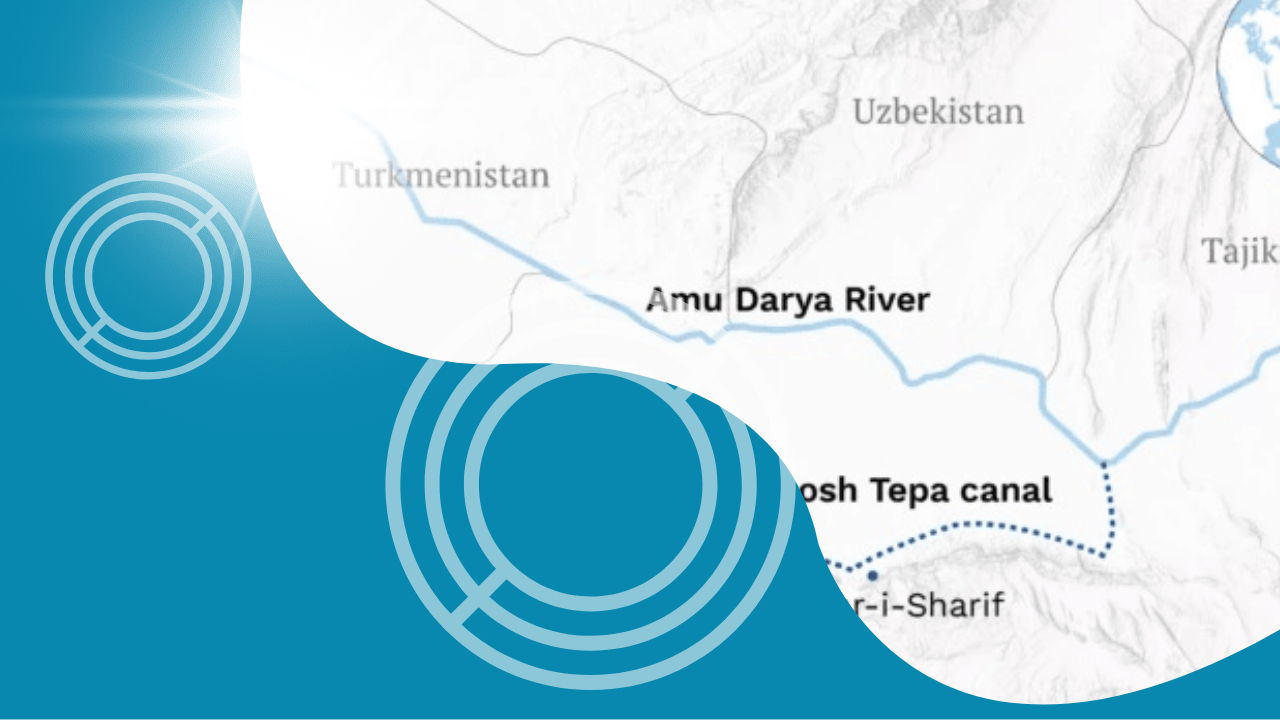
    The construction of the Qosh Tepa Canal in Afghanistan is poised to have significant implications for economic development and the mining industry in Central Asia. The canal, intended to irrigate vast areas of arid land, has sparked concerns and discussions among neighbouring countries like Uzbekistan and Turkmenistan due to its potential impact on water resources and agricultural production.

    Economic Development:

    • Water Woes: Uzbekistan and Turkmenistan are currently facing severe water shortages, with projections indicating a significant deficit by 2030. The canal’s diversion of water from the Amu Darya River could exacerbate these shortages, affecting agricultural productivity in both countries.
    • Agricultural Impact: Given that Uzbekistan and Turkmenistan heavily rely on agriculture, any decline in water flow due to the canal could lead to increased salinisation and reduced agricultural output, impacting their economies.
    • Regional Cooperation: The construction of the canal highlights the need for new agreements on water management between Afghanistan and its Central Asian neighbours to foster regional cooperation in sustainable water management.

    Mining Industry:

    • Chinese Investment: The Taliban government announced a significant investment by a Chinese mining company in Afghanistan, aiming to mine resources and develop infrastructure. This investment could potentially impact the mining landscape in the region.
    • Economic Crisis Alleviation: Discussions among key regional players like China, Russia, Pakistan, and Iran indicate a broader interest in addressing Afghanistan’s economic crisis, which could influence mining activities and economic dynamics in Central Asia.

    While the construction of the Qosh Tepa Canal presents opportunities for agricultural development in Afghanistan, it also raises concerns about water scarcity and economic repercussions for neighbouring countries. The influx of investments into Afghanistan’s mining sector adds another layer of complexity to the economic landscape of Central Asia, emphasising the interconnectedness of regional economies and the importance of sustainable resource management agreements.

  • Polymetal завершила продажу российских активов и сосредотачивается на операциях в Казахстане

    Polymetal завершила продажу российских активов и сосредотачивается на операциях в Казахстане

    Polymetal (Polymetal International plc) объявила 11 марта о завершении сделки по продаже своих российских активов. Polymetal, второй по величине производитель золота в Казахстане, сообщила об этом, как сообщает Orda.kz.

    По информации пресс-службы компании, Polymetal заключила сделку по продаже 100% акций АО “Полиметалл” (холдинговой компании российских активов группы) компании АО “Мангазея Плюс”. Этот шаг был направлен на снижение рисков. Главный исполнительный директор Polymetal Виталий Несис заявил, что в мае компания намерена представить новую стратегию и политику распределения капитала.

    “После завершения сделки чистая денежная позиция группы составляет около 130 миллионов долларов”, – говорится в пресс-релизе Polymetal.

    Группа Polymetal является вторым крупнейшим производителем золота в Казахстане, имея два производственных актива в стране: Кызыл (месторождение Бакырчик, Абайская область) и Варваринский хаб (месторождения Варваринское и Комаровское, Костанайская область). Компания также контролирует Иртышский ГМК. Polymetal зарегистрирована в МФЦА с головным офисом в Астане, а её крупнейшим акционером (доля в 23,9%) является компания Maaden International Investment из Омана.

    Акционеры компании утвердили продажу российских активов на собрании 7 марта. Сделка направлена на восстановление акционерной стоимости группы Polymetal за счёт снижения рисков. Продажа российского бизнеса позволит компании сосредоточиться на развитии и исследованиях казахстанских месторождений.

    Polymetal International plc была одной из компаний, которые переехали в Казахстан из России. Было объявлено в мае 2023 года, что группа смещает фокус на развитие своего казахстанского бизнеса и будет зарегистрирована в МФЦА.

  • Polymetal Completes Sale of Russian Assets, Focuses on Kazakhstan Operations

    Polymetal Completes Sale of Russian Assets, Focuses on Kazakhstan Operations

    Polymetal (Polymetal International plc) announced on March 11 the completion of the sale of its Russian assets. Polymetal, the second-largest gold producer in Kazakhstan, disclosed this information, as reported by Orda.kz.

    According to the company’s press service, Polymetal finalized the sale of 100% of the shares of JSC “Polymetal” (the holding company of the group’s Russian assets) to AO “Mangazeya Plus.” This move was aimed at mitigating risks. Vitaly Nesis, CEO of Polymetal, stated that the company intends to present a new strategy and capital allocation policy in May.

    “After the completion of the deal, the group’s net cash position is approximately $130 million,” the Polymetal press release stated.

    Polymetal Group is the second-largest gold producer in Kazakhstan, with two production assets in the country: Kyzyl (Bakyrchik deposit, Abai region) and Varvarinsky Hub (Varvarinsky and Komarovsky deposits, Kostanay region). The company also controls Irtysh GMK. Polymetal is registered with the MFCA with its head office in Astana, and its largest shareholder (23.9% stake) is Maaden International Investment from Oman.

    The company’s shareholders approved the sale of Russian assets at a meeting on March 7. The deal aims to restore the shareholder value of the Polymetal group by reducing risks. Selling the Russian business will enable the company to focus on the development and exploration of Kazakh deposits.

    Polymetal International plc was one of the companies that relocated to Kazakhstan from Russia. It was reported in May 2023 that the group was shifting its focus to the development of its Kazakh business and would be registered with the MFCA.

  • Улытау планирует открыть комплекс по добыче драгоценных металлов и полиметаллов

    Улытау планирует открыть комплекс по добыче драгоценных металлов и полиметаллов

    Власти региона Улытау раскрыли планы по созданию комплекса по добыче драгоценных металлов и полиметаллов. По предоставленной информации, проект, запланированный к запуску в 2026 году, нацелен на производство 0,72 тонны сплава Доре, 10,8 тысяч тонн свинцового концентрата и 4,3 тысячи тонн цинкового концентрата. Государственное учреждение сообщило, что разработаны проекты определения водоохранных зон и полос вдоль реки на территории планируемого участка для добычи, а также планы горных работ. Оцениваемая стоимость открытия комплекса составляет 3,57 миллиарда тенге, и в настоящее время ведутся работы по получению лицензии на добычу. После запуска объекта предполагается обеспечить работой 140 человек.

  • Ulytau Region Plans to Open Precious Metals and Polymetallic Complex

    Ulytau Region Plans to Open Precious Metals and Polymetallic Complex

    Plans to establish a complex for precious metals and polymetals in the Ulytau region have been revealed by regional authorities. The project, expected to launch in 2026, aims to produce 0.72 tons of Dore alloy, 10.8 thousand tons of lead concentrate, and 4.3 thousand tons of zinc concentrate, according to information provided by the authorities. Projects defining water protection zones and strips along the river within the planned mining area, as well as mining work plans, have been developed, as stated by the government agency. The estimated cost of opening the complex is 3.57 billion tenge, with efforts underway to obtain a mining license. Once operational, the facility aims to employ 140 people.

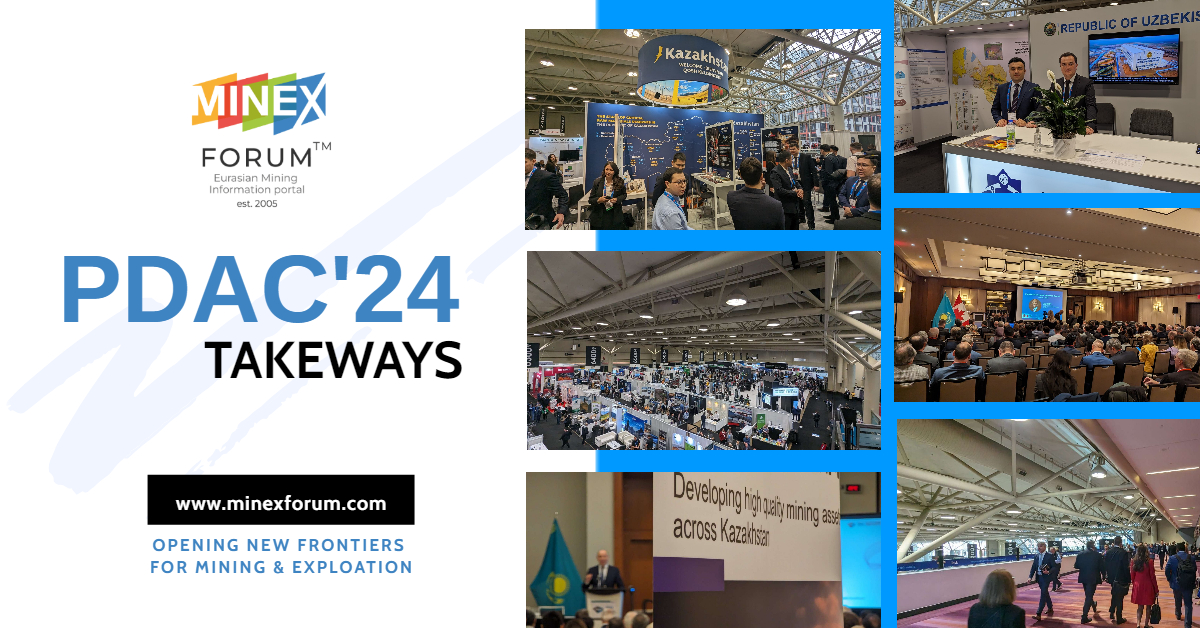
  • MINEX Forum takeaways from PDAC 2024

    MINEX Forum takeaways from PDAC 2024

    Rock-bottom reached… ?

    The market has taken a dive, but at least we’re rock-solid on where we stand… at rock bottom! Valuations are squashed, raising capital is like squeezing blood from a stone, and life is throwing lemons like a pro juggler. But remember, out of the depths of despair springs opportunity. As they say, “When you’re at rock-bottom, there’s only one way to go… up!”

    Not all commodities are equal

    Gold is stealing the show this year, jumping $150/oz and bringing PDAC back to life. Uranium was last year’s news, and now gold is strutting its stuff. But not all commodities are created equal. While uranium is riding high on a wave of funding, lithium, cobalt, and nickel CEOs are trying to dodge the fallout from oversupply and low demand. In defiance of the lithium doom and gloom mining giant Rio Tinto “would love” to produce lithium in Canada, given the right project. The company’s CEO Jakob Stausholm believes lithium is more likely to dominate the battery market in the future than other metals such as nickel and cobalt.

    ESG: Show Me, Don’t Tell Me

    ESG talk was noticeably muted this year. Less talk, more rock! The market has no time for glossy photo ops. ESG should be in your DNA, not just on your magazine covers. Show us the real stuff: the dirt, the rocks, the hard facts. We’ll take geology over glamour any day!

    AI vs Humans in mining and geology

    Humans 1, AI 0. For now…. So far, humans are still beating AI in the real discovery game. However, AI is creeping in, promising to make us faster, smarter…and maybe replace a few of us. Yikes.

    Mongolia and Kazakhstan were the belles of the PDAC ball

    Between the two of them, Central Asia is suddenly looking a lot more interesting.


    Mongolia on the rise

    The enthusiasm for Mongolia’s mining sector was palpable at PDAC 2024, with expectations of significant growth in production and exploration. Mongolia’s Harvard-educated Mining Vice Minister Dr. Uyanga Bold drew crowds worthy of a rock star at the “Mongolia Day”. This event, organised by the Ministry of Mining and Heavy Industry of Mongolia and the Mongolian National Mining, aimed to showcase the country’s mining sector and investment opportunities. Notably, Mongolia’s lithium brine exploration was highlighted, with Lithium ION Energy Ltd. presenting its flagship Baavhai Uul lithium brine project, marking significant progress in Mongolia’s lithium industry. Will Mongolia be able to maintain its leading position in the mining investment world after the 20 June parliamentary elections? It remains to be seen.

    Kazakhstan continues to draw attention

    Kazakhstan has been prominently represented at PDAC through various avenues such as the National Pavilion, Canada-Kazakhstan Business Council, and the “Kazakhstan Day” organised by Aurora Ltd. The new face of Kazakhstan’s Mining Industry, Minister Kanat Sharapaev impressed investors and international institutions alike. Key topics of discussion included Kazakhstan’s ongoing reforms in subsoil management, aimed at improving efficiency, environmental sustainability, and investment attractiveness in the mining sector. Kazakhstan is increasingly becoming an attractive destination for major mining companies, with many considering establishing a local presence or forming partnerships to compete for licenses and projects. Minister Sharlapaev emphasised the Government’s role in creating a business-friendly environment for investors, highlighting Kazakhstan’s strategic position in the global minerals market and its potential for joint ventures and investment opportunities. Minister Sharapaev’s strategic outreach, the country’s natural resource potential and plans for AI-driven exploration, present attractive opportunities for mining companies. The event also saw the signing of numerous MoUs and partnerships with organisations such as the National Geological Survey of Kazakhstan (NGS), Koan Analytics, Eramet, and others.


    If you have not signed this already, book your place at MINEX Kazakhstan Mining and Mineral Exploration we are organising in Astana on 17-18 April https://2024.minexkazakhstan.com/

    Debutants at PDAC


    Debutants at PDAC


    Estonia

    Estonia just levelled up in the global mineral game by joining the Minerals Security Partnership (MSP) contributing to improved international cooperation on securing critical raw materials supply. Invest Estonia, together with the Estonian Ministry of Climate and the Estonian Embassy in Canada, hosted a breakfast with Estonian mining experts from government, academia, and industry representatives. The panel was led by Kalev Ruberg, a futurist visionary known for his transformational technology expertise in business and government. The event featured a network of Estonian companies such as Zeroterrain, Limestone, BiotaTec, TalTech University, Trisector, Eesti Energia, and NPM Silmet (Neo Performance Materials). Topics covered included rare earth elements competence and supply chain in Europe, the NPM Silmet rare earth separation facility, and Neo Performance Materials’ permanent magnet factory. Estonia’s potential critical minerals resources and plans related to the EU critical minerals strategy were also discussed, focusing on phosphorite, metals, and reuse of oil shale ash and semi-coke through partnership and innovation, showcasing Estonia’s mining innovation at its best!

    Uzbekistan

    Uzbekistan made its PDAC debut with the Ministry of Mining organising a national pavilion and Navoi Gold presenting its investment projects. The objectives of the Ministry were to showcase Uzbekistan’s openness and plans to the global community. According to Behzod Mamatov, Head of the Ministry’s Department, over ten foreign investors are involved in Uzbekistan’s mining sector at the moment. The Government is currently developing a legislative framework to attract junior companies, which, in turn, should help in attracting major investors. This includes a new approach to exploration, primarily funded by investors with minimal state involvement. Uzbekistan’s 2030 Development Strategy sets clear goals for the mining sector: to increase gold production by 1.5 times, copper by 3.5 times, silver by 3 times, and uranium by 3.5 times. These targets are expected to be met through both domestic funding and international investment. The total investment projects in the modernization of Uzbekistan’s mining industry amount to a staggering 23 billion US dollars. Navoi Gold is one of the two state-owned mining companies contributing 8% to Uzbekistan’s GDP. With an annual production of over 3 million ounces of gold and a 684 USD cost per ounce production cost, Navoi Gold is the world’s 4th largest gold mining company. However, the company has no plans to slow down and is aiming to increase its production and resource base further. The company has a robust exploration program in place, with a budget of over $100 million for the year, to identify new targets and deepen their understanding of its flagship mine. The company is also committed to ESG principles and is taking steps to reduce its water consumption by 20% by 2030. Additionally, Navoi Gold is transitioning to renewable energy sources and plans to introduce over 500 megawatts of solar power by 2030.

    Save the data and money. Register for the MINEX Central Asia Forum in Bishkek

    Mark the date in your calendar. On 18-20 June 2024 in Bishkek, Republic of Kyrgyzstan, the MINEX Forum is re-launching its Central Asia Nomad event. Early bird registration is open at https://2024.minexasia.com/