Website: Kazakhstan.com

  • Rare and Critical Metals: Kazakhstan’s Global Opportunity

    Rare and Critical Metals: Kazakhstan’s Global Opportunity

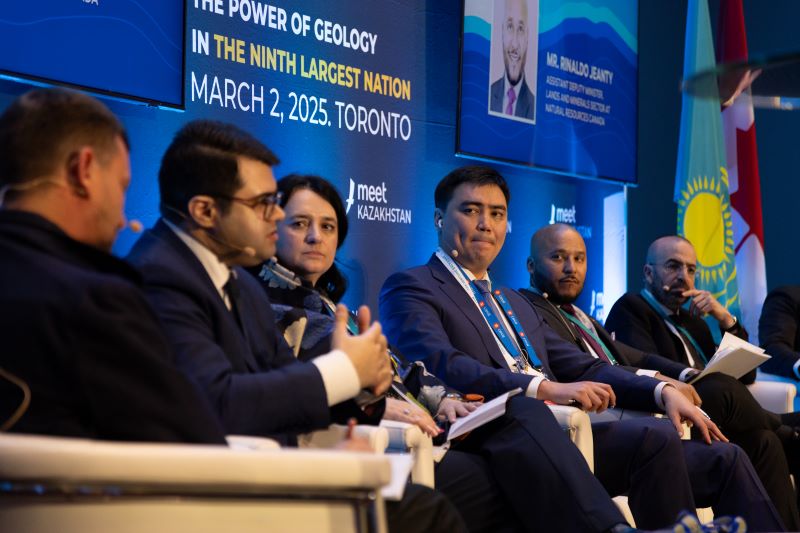
    At the PDAC 2025 Convention in Toronto, Kazakhstan took centre stage with its session “Rare and Critical Metals – Global Perspectives and Local Opportunities,” showcasing its ambition to become a pivotal player in the global critical minerals supply chain. The session ” brought together high-level representatives from Kazakhstan, Canada, the European Union, and private industry to discuss the strategic importance of rare earth elements and critical minerals in today’s technology-driven economy.

    The New Oil: Kazakhstan’s Mineral Wealth

    “Kazakhstan has one of the world’s largest reserves of rare and critical metals,” explained Mr. Renat Bekturov, Governor of the Astana International Financial Centre, during his opening remarks. “According to the World Bank, the country possesses over 5,000 unexplored deposits of rare metals with an estimated total value exceeding $46 trillion US.”

    This staggering figure underscores why President Kassym-Jomart Tokayev has characterized rare metals as “the new oil” and a key driver of Kazakhstan’s technological future. With the global market for these resources expected to grow 8% annually through 2035, Kazakhstan sees an opportunity to position itself as a trusted alternative supplier, reducing global reliance on concentrated markets.

    Kazakhstan’s Strategic Approach

    Vice Minister of Industry and Construction, Mr. Iran Sharhan, outlined Kazakhstan’s vision for rare and critical metals. “We are planning to establish a closed circuit or closed chain starting from exploration, surveying, extraction, and processing of rare metals and critical materials,” he explained through an interpreter.

    The government has identified 20 critical minerals requiring additional geological survey and is actively seeking international partnerships to bring advanced technologies and expertise to the country. “We require extensive financing and investments to ensure deep processing of these critical materials and rare metals,” Iran noted.

    Kazakhstan’s comprehensive plan for 2024-2028 focuses on four key pillars:

    1. Expanding the resource base through large-scale geological exploration and mapping
    2. Advanced processing and value-added manufacturing by modernizing facilities to reduce raw material exports
    3. Strengthening international collaboration through partnerships with leading technology providers
    4. Building a transparent and competitive market with clear regulatory frameworks to attract international investors

    International Collaboration: Key to Success

    The panel highlighted how international collaboration is crucial for developing critical mineral resources. Rinaldo Jeanty, Associate Assistant Deputy Minister at Natural Resources Canada, shared that Canada’s Critical Mineral Strategy, launched in 2022 with $4 billion in backing, prioritizes international partnerships.

    “We have a common understanding when it comes to strong ESG standards, so I think there’s opportunities for us to work together,” Jeanty said, referencing potential collaboration with Kazakhstan. He noted that Canada’s Geological Survey, with its 176-year history, offers expertise that could benefit Kazakhstan’s exploration efforts.

    The European perspective, presented by Madalina Ivanica, Deputy Head of Unit at DG GROW, European Commission, emphasised the EU’s need to diversify its critical mineral supplies. “We are strongly dependent on single suppliers in Europe, so we wanted to look further and see where supplies can come from,” she explained.

    The EU’s partnership with Kazakhstan, established in 2022, focuses on five pillars:

    • Identifying joint projects
    • Cooperating in research and innovation
    • Supporting infrastructure development
    • Developing skills and capacity building
    • Improving ESG standards

    Technology Development Challenges

    Conrad Blake, Managing Director of Minerals at HATCH, addressed the challenges of technology development in the mining sector. “Mining projects are really complex, high-capital projects,” he explained. “Mining houses or project owners are often reluctant to add additional risk by being early adopters of new technologies.”

    However, Blake argued that the current momentum around diversifying supply chains presents an opportunity. “It gives us the unique opportunity to not just slightly improve existing technology but to stand back and say ‘clean slate,’” he suggested.

    Mr. Blake emphasised that successful technology development requires trusted partnerships and doesn’t necessarily have to take decades. “We developed a unicorn for a tier-one player fairly recently,” he shared. “We did it from desktop study to commissioning in 18 months. It doesn’t have to be a multi-decade approach.”

    First-Hand Success in Kazakhstan

    Providing real-world perspective, Pini Althaus, Founding Partner at Cove Capital, shared his company’s successful experience as the first US company to develop critical minerals assets in Kazakhstan.

    “We’ve been very pleasantly surprised by the welcoming we’ve received,” Althaus said. His firm entered Kazakhstan in early 2023, coinciding with a US-Kazakhstan framework agreement to collaborate on critical minerals development.

    “We were able to secure our first licenses during the 2023 drilling season,” he explained. “We successfully drilled 7,000 meters during the course of last year and also did some drill site preparation for the 2025 season.”

    Althaus highlighted President Tokayev’s mining reforms as instrumental in enabling their success and encouraged other Western companies to enter the market. “There are so many undeveloped resources in Kazakhstan,” he noted, adding that his company is committed to helping Kazakhstan develop a vertically integrated supply chain rather than simply exporting concentrates.

    Moving Beyond Mining: Midstream and Downstream Potential

    Vasileios Tsianos, VP Corporate Development at Neo Performance Materials, emphasized Kazakhstan’s potential to move beyond mining into midstream and downstream processing. “Kazakhstan comes in because it is endowed with great geological deposits, but more than that, it has a long history of metallurgical skills,” he explained.

    Mr. Tsianos highlighted Kazakhstan’s unique capability to handle materials that often occur alongside rare earths, such as thorium and uranium. “Outside of China and Russia, there aren’t many jurisdictions that can both mine that but know how to process it and store it responsibly and do it competitively,” he noted. “Kazakhstan can do all three.”

    The Path Forward

    The session painted a clear picture of Kazakhstan’s strategic positioning in the critical minerals space. With its vast geological resources, improving regulatory environment, and openness to international partnerships, the country is poised to become a significant player in global supply chains.

    As technological demands for these materials continue to accelerate—driven by clean energy transitions, digitalization, and electric mobility—Kazakhstan’s development of its rare earth and critical mineral resources represents not just an economic opportunity for the country but a strategic advantage for global industries seeking supply chain diversification and security.

    The collaborative tone set by all panelists suggests that Kazakhstan’s ambitions in this sector will be realized not in isolation but through meaningful partnerships that combine geological wealth with technological expertise and market access—a winning formula in the increasingly critical world of rare and strategic metals.

    Join the Conversation at MINEX Kazakhstan 2025

    To continue these important discussions and explore investment opportunities in Kazakhstan’s mining sector, you’re invited to attend the 15th MINEX Kazakhstan Mining and Exploration Forum in Astana on 9-10 April 2025.

    This premier industry event will bring together government officials, mining companies, investors, and technology providers to discuss the latest developments in Kazakhstan’s mineral resources sector, with special focus on rare and critical minerals opportunities.

    For more information and registration details, visit www.minexkazakhstan.com.
     

  • MeetKazakhstan Forum Showcases Global Collaboration on Geological Exploration

    MeetKazakhstan Forum Showcases Global Collaboration on Geological Exploration

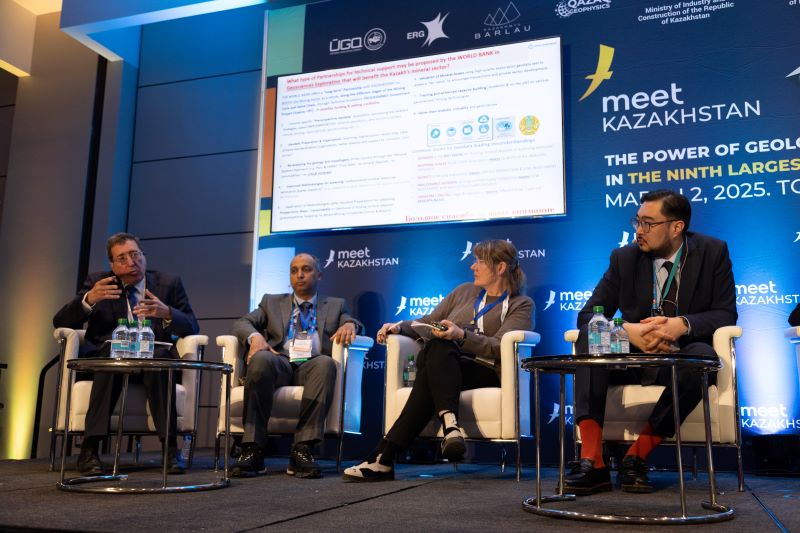
    Toronto, March 2, 2025 – At the PDAC-2025 Conference in Toronto, a standout session at the “Meet Kazakhstan: The Power of Geology in the Ninth Largest Nation” forum brought together top experts to discuss strategic partnerships in geological exploration. The panel, moderated by Mr. Kimmo Tiilikainen, Director General at the Geological Survey of Finland (GTK), highlighted the increasing global need for collaborative innovation and data-driven exploration in the mining sector.

    The session featured a distinguished lineup of speakers including Mr. Yerlan Galiyev, Head of the National Geological Survey of the Republic of Kazakhstan; Mr. Francisco Igualada, Senior Mining Specialist at the World Bank; Dr. Karen Hanghøj, Director of the British Geological Survey; Mr. Hassan Al-Marzouki, Director of Planning and Development at SGS; Mr. Christophe Poinssot, Deputy Managing Director of the French Geological Survey (BRGM); and Mr. Sven-Uwe Schulz, Head of Unit “Evaluation of Mineral Resources” at the German Mineral Resources Agency (DERA).

    Key Themes and Insights

    Throughout the session, panellists underscored the critical role of high-quality geological data—referred to by several speakers as “Geodat”— in attracting investments and advancing exploration. Mr. Galiyev presented Kazakhstan’s ambitious digitisation initiative aimed at transforming vast geological records into machine-readable formats. This initiative not only facilitates better resource estimation but also enables global stakeholders to easily access and utilise the country’s rich data repository.

    Dr. Hanghøj emphasised that modern geoscience must integrate traditional methods with advanced data management techniques to create robust geoinformation infrastructure. “The quality and accessibility of geological data are paramount in attracting investment and driving sustainable development,” she remarked.

    Panellists from Saudi Arabia, France, Germany, and the World Bank echoed this sentiment by discussing how collaborative platforms and technology partnerships could streamline the exploration process. Mr. Al-Marzouki shared challenges such as the shortage of data analysts and the need for enhanced digital tools, while Mr. Poinssot highlighted ongoing research into deep exploration technologies capable of probing up to one kilometre below the surface.

    International Partnerships and Future Prospects

    A recurring theme during the session was the importance of international cooperation. Discussions ranged from the benefits of open data exchange to building integrated value chains that span from raw material exploration to high-tech applications in the energy transition. Mr. Igualada of the World Bank stressed that long-term partnerships are key to unlocking the full potential of critical raw materials, supporting not only mining operations but also the broader economic ecosystem.

    The session concluded with a call to action for global stakeholders to invest in the digitisation and modernisation of geological services. As Mr. Galiyev aptly summarized, “Geological success is measured by the data we collect and share. By collaborating internationally, we can ensure that Kazakhstan and the Central Asian region become a vital bridge between established markets and emerging opportunities.”

    Looking Ahead

    With plans to host a dedicated MINEX Kazakhstan Mining and Exploration Forum in Astana on 9 & 10 April this year for Central Asian geoscience professionals, the session set the stage for continued dialogue and cooperation.

  • Kazakhstan to Invest Over 7 Billion Tenge in Geological Exploration Over Next Two Years

    Kazakhstan to Invest Over 7 Billion Tenge in Geological Exploration Over Next Two Years

    Kazakhstan has announced plans to allocate more than 7.6 billion tenge from the state budget for geological exploration and mineral resource studies in 2025-2026. According to the Ministry of Industry and Construction, the funds will be used for geological re-evaluation, mineragenic mapping, and deep-level mapping of the country’s territory. By the end of 2026, the geological and geophysical awareness of Kazakhstan’s land is expected to increase to 2.2 million square kilometers, up from 2 million square kilometers in 2023.

    The ministry highlighted Kazakhstan’s significant reserves of manganese ore, chromium, lead, zinc, titanium, and lithium. The country ranks second globally in manganese ore reserves, with 600 million tons, and eighth in iron ore deposits, with 12.5 billion tons. Additionally, Kazakhstan holds 30% of the world’s chromite ore reserves and boasts extensive deposits of lead and zinc.

    Kazakhstan also possesses the world’s largest chromium reserves and is the second-largest holder of uranium. Annual production includes 907.9 thousand tons of manganese ore, 6.1 million tons of chromium, 280 thousand tons of zinc, 110 thousand tons of lead, and 15 thousand tons of titanium.

    In efforts to attract investment, the ministry reported ongoing collaborations with the European Union, United States, United Kingdom, and other nations. Foreign companies are encouraged to participate in subsoil use auctions through a digital state platform. Furthermore, Kazakhstan officially joined the Minerals Security Partnership Forum in 2024, enhancing opportunities for projects and policy dialogues on critical minerals at both governmental and corporate levels.

  • Kazakhstan Poised to Meet Global Demand for Critical Minerals Amid Energy Transition

    Kazakhstan Poised to Meet Global Demand for Critical Minerals Amid Energy Transition

    Kazakhstan has the potential to ensure uninterrupted supplies of critical minerals and help meet the growing global demand driven by the energy transition and the expansion of the electric vehicle market, according to the Astana International Financial Centre (AIFC). Experts at the center highlight that Kazakhstan possesses export potential in nine key commodity groups, including metals already being exported and others with untapped potential.

    The AIFC report emphasizes that the global shift toward low-carbon development and the rapid growth of the electric vehicle industry will significantly increase demand for critical minerals. Kazakhstan, with its vast resources, is well-positioned to play a pivotal role in this transition. The country has already demonstrated competitive advantages in exporting copper, zinc, aluminum, silver, and lead. Additionally, gold, nickel, lithium, and rare earth metals are identified as emerging export opportunities that could further strengthen Kazakhstan’s position in the global market.

    Kazakhstan holds a 5% share of the global zinc market, ranking seventh in reserves with 6.7 million tons in 2023. In 2022, 70% of its zinc exports went to Turkey, Russia, and China. The country also accounts for nearly 4% of the global copper market, with 20 million tons in reserves, and its top export destinations include China, Turkey, and the UAE.

    While Kazakhstan’s share in the global lead market is around 3%, its silver reserves rank third globally, with an annual demand of 26,000 tons. The country’s aluminum reserves, though less than 1% of the global market, are significant, with major exports going to Turkey, Italy, and Greece.

    Looking ahead, Kazakhstan is exploring opportunities in nickel, lithium, and rare earth metals. The country ranks among the top 20 globally in nickel reserves, with 1.5 million tons, and is collaborating with companies from Germany, South Korea, and the UK to develop lithium deposits. A recent discovery in March 2024 revealed a lithium deposit in Eastern Kazakhstan worth an estimated $15.7 billion.

    Furthermore, Kazakhstan has seen a 3.8-fold increase in rare earth metal exports since 2020. The government has adopted a comprehensive plan for 2024-2028, investing 2.4 billion tenge to develop this sector. With potential resources valued at $46 trillion, Kazakhstan is set to become a key supplier of critical raw materials to the European Union, as highlighted in a recent agreement worth 3 million euros.

  • Kazakhstan at the Cutting Edge of Mining Innovation

    Kazakhstan at the Cutting Edge of Mining Innovation

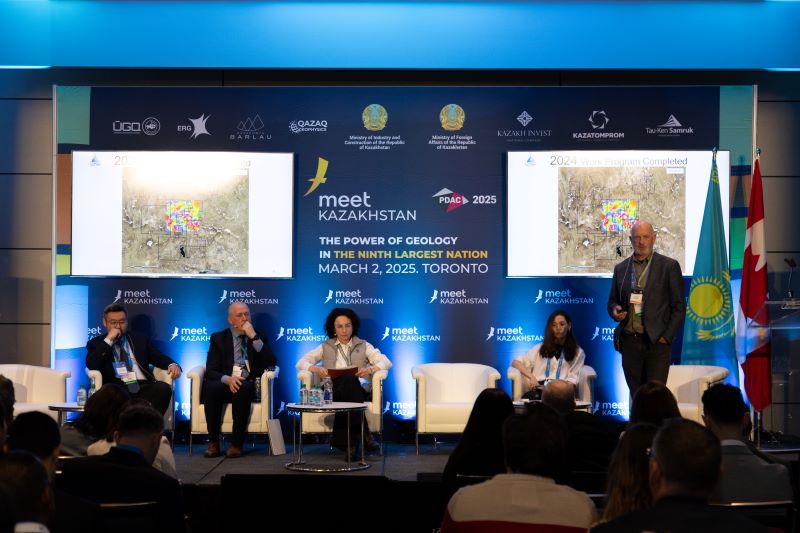
    In a resounding demonstration of its vast geological potential and forward-thinking approach to the mining industry, Kazakhstan recently took centre stage at the “Meet Kazakhstan: The Power of Geology in the Ninth Largest Nation” Forum. Held on March 2, 2025, in Toronto during the PDAC-2025 Convention, the session titled “Mining Innovation in Action: Kazakhstan at the Cutting Edge” showcased breakthrough projects and innovative strategies that are reshaping the global mining landscape.

    A Bold Invitation to Global Collaboration

    Organised by the Ministry of Industry and Construction and the the Ministry of Foreign Affairs of the Republic of Kazakhstan, the forum aimed to present Kazakhstan as a critical player in the global mining and metallurgical sector. The event not only celebrated the nation’s deep-rooted mining heritage but also underscored its commitment to sustainable development, technological advancement, and international economic partnerships. Its overarching goal was to foster dialogue and knowledge exchange, aligning with Kazakhstan’s strategy to modernise its mining industry and attract foreign direct investment.

    A Dynamic Panel of Experts

    Moderated by Mr. Alex Simakov, Special Advisor to the Net Zero Reliability Initiative, the panel brought together leaders from across the mining spectrum. The session featured:

    • Mr. Nariman Absametov – Acting Chairman of the Board of JSC “NK Tau-Ken Samruk,” who detailed projects focused on critical materials, including rare earth elements and lithium.
    • Mr. Alexander Prikhodko – Vice President of Expert Geophysics Limited, who highlighted the deployment of cutting-edge geophysical technologies such as the Mobile MT system for deep subsurface exploration.
    • Ms. Yulia Koryazova – Head of the ERG Data Management Department, who demonstrated how data management and advanced IT solutions are revolutionizing exploration efforts.
    • Mr. Trevor Wright – Partner at Lakeside Minerals LLP, who provided a vivid case study of a junior company leveraging Kazakhstan’s rich resources and robust infrastructure.
    • Ms. Madina Kapenova – CEO of Aurora Minerals Group LLP, who emphasised the country’s investor-friendly policies and the transformative impact of modernizing regulatory frameworks.

    Unveiling Kazakhstan’s Geological Renaissance

    The session was a deep dive into Kazakhstan’s innovation in geological discoveries. Panellists discussed how the nation’s unique geological formations—from ancient mineral-rich terrains to challenging, hard-to-access deposits—are driving the need for innovative extraction and exploration methods. A recurring theme was the integration of state-of-the-art technologies:

    • Advanced Geophysical Surveys: Mr. Prikhodko showcased how the Mobile MT system allows for detailed imaging of subsurface structures, identifying mineralisation zones that traditional methods might miss. This technology, capable of probing depths exceeding one kilometre, underscores the importance of adapting exploration techniques to Kazakhstan’s complex geology.
    • Data-Driven Exploration: Ms. Koryazova’s presentation shed light on how modern data management tools are being used to process historical geological data alongside new survey results. This fusion of old and new data not only refines exploration models but also expedites decision-making processes, enhancing overall project efficiency.
    • Investor-Focused Developments: Mr. Wright and Ms. Kapenova both emphasised the dual narrative of innovation and investment. Their discussions illustrated how Kazakhstan’s stable regulatory environment, improved royalty systems, and robust infrastructure create fertile ground for both exploration companies and seasoned investors. With comprehensive support ranging from license acquisition to due diligence, the country is actively reducing barriers to entry in the mining sector.

    A Historic and Forward-Thinking Mining Tradition

    Kazakhstan’s mining story is one of resilience and transformation. With over 4,000 years of mining history around the Narym river, the nation has evolved from its indigenous Soviet-era practices to a modern, innovation-driven economy. This session clearly articulated that the nation’s resource potential is not only rooted in its past but is dynamically being redefined for a future where sustainability and technology play pivotal roles.

    For those interested in a more detailed look at the session, a full recording is available on YouTube, offering insights into the innovative projects and strategies that are set to redefine the mining industry on a global scale.

  • Kazakhstan Unveils Ambitious Mining Reforms at PDAC-2025 Forum in Toronto

    Kazakhstan Unveils Ambitious Mining Reforms at PDAC-2025 Forum in Toronto

    Toronto, March 2, 2025 — At the PDAC-2025 Conference, the Ministry of Industry and Construction of the Republic of Kazakhstan took centre stage with its “Meet Kazakhstan: The Power of Geology in the Ninth Largest Nation” forum. The event, held in Toronto, showcased the nation’s vast geological potential and highlighted sweeping reforms in the mining and metallurgical sectors aimed at attracting international investment.

    A Vision for Modernization and Global Partnership
    In an invitation issued by Minister Kanat Sharlapaev, Kazakhstan outlined its strategic priorities to modernize its mining industry. The forum underscored efforts to shift from the Soviet-era regulatory framework to a more efficient, transparent system—one that mirrors best practices seen in established mining nations such as Canada and Australia. The nation’s reforms include the adoption of advanced processing technologies, updated legislative measures, and the development of robust infrastructure, all designed to boost investor confidence and integrate Kazakhstan into the global value chain.

    High-Level Panel Discussions Drive the Narrative
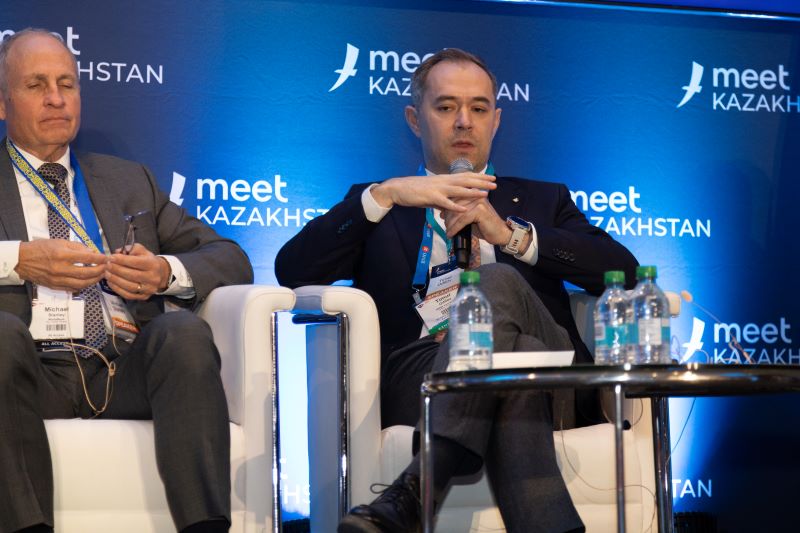
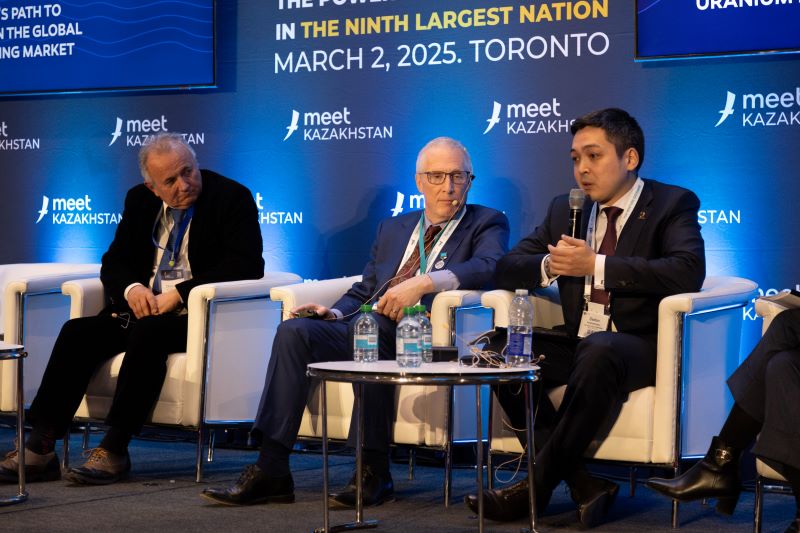
    The session titled “Investment, Supply Chain Development and National Legislation” was moderated by Mr. Wael Jaber, Director of Mining and Metals Consulting at Wood Mackenzie. The panel featured influential voices including Mr. Gabidulla Ospankulov (Chairman of the Investment Committee of Kazakhstan’s Ministry of Foreign Affairs), Mr. Garth Kirkham (Chairperson, CIM Canada CRIRSCO), Mr. Michael Stanley (Mining Sector Lead, World Bank Group), Mr. Andres Blanco (CEO of Xcalibur Smart Mapping), and Mr. Timur Odilov (Partner, Haller Lomax).

    Panellists explored a wide range of topics—from the integration of next-generation mapping technologies and data analytics in exploration to the critical role of international financial institutions in supporting infrastructure development. Mr. Ospankulov emphasised Kazakhstan’s unique geographic advantage as a bridge between Europe and Asia, which bolsters cross-border transportation and enhances the country’s appeal for foreign direct investment.

    Reforming for a Competitive Edge
    A recurring theme throughout the discussions was the overhaul of the nation’s mining legislation. Experts detailed how dismantling outdated Soviet-era regulations has paved the way for a modernized legal framework. This new approach offers incentives such as tax exemptions and streamlined investment support through initiatives like the “Kazak Invest One Stop Shop.” Such reforms are not only intended to attract major multinational corporations but also to foster the growth of junior mining companies and stimulate local supply chain development.

    Michael Stanley of the World Bank Group noted that Kazakhstan’s regulatory clarity and commitment to transparency are key to ensuring that investors can confidently compare projects across borders, regardless of whether they are based in Kazakhstan, Canada, or Australia. The session also highlighted the emerging trend of integrating artificial intelligence into geological data analysis—a move that could accelerate exploration timelines and enhance resource evaluation.

    Implications for the Global Mining Landscape
    Kazakhstan’s proactive approach to mining sector modernization comes at a time when the global energy transition is reshaping resource markets. The forum not only illustrated the country’s abundant mineral reserves—including its position as one of the top five titanium producers globally—but also its readiness to engage with international partners to harness these resources responsibly and sustainably.

    By fostering open dialogue, knowledge exchange, and strategic partnerships, Kazakhstan is positioning itself as a key player in the global mining arena. The insights shared at the forum are expected to catalyse deeper economic ties with the international community, ultimately transforming the nation into a magnet for mining and metallurgical investments.

    For a closer look at the discussions, interested parties can view the session on YouTube here.

  • Kazakhstan’s Ascendant Role in the Global Uranium Market

    Kazakhstan’s Ascendant Role in the Global Uranium Market

    A New Era for Uranium Mining

    The global uranium market is experiencing what industry leaders describe as a “second uranium renaissance” or, as Cameco’s Sean Quinn prefers to call it, a “rejuvenation.” This revival is marked by robust demand, structural supply shortfalls, and growing support for nuclear energy from both political entities and financial institutions.

    During a panel discussion at the MeetKazakhstan conference held on 2 March 2025 at the 93rd PDAC‘2025 Convention in Toronto, key players from Kazatomprom, Cameco, and Orano shared insights into Kazakhstan’s remarkable journey to becoming the world’s leading uranium producer and discussed the future landscape of the industry.

    Kazatomprom: Strategic Vision and Market Discipline

    Dastan Kosherbayev, Chief Director for Strategy and International Development at Kazatomprom, emphasized the company’s multi-vector policy that mirrors Kazakhstan’s broader approach to international relations. “We pursue no geopolitical ambition and we’re driven strictly by business or commercial interests,” Kosherbayev stated, highlighting the company’s long-standing partnerships with major industry players.

    Kazatomprom became the world’s number one uranium producer in 2011 and the top seller in 2018, maintaining what Kosherbayev described as an “impeccable record” of delivering on all obligations since the company’s establishment in 1997.

    The company’s competitive advantage lies in its geology and mining methods. Kazakhstan’s uranium deposits allow for cost-efficient extraction using in-situ recovery (ISR), which Kosherbayev noted is “the most environmentally friendly method that enables us to produce uranium without disrupting any other activities.”

    Market Discipline and Global Presence

    A key factor in the uranium market’s recovery has been Kazatomprom’s commitment to market discipline. Since 2017, the company has implemented production cuts that removed 48,000 tons of uranium from the market, helping eliminate surplus and revitalize the industry.

    Kazatomprom maintains a diverse sales portfolio, with transportation routes through both the Northern route via St. Petersburg and the Trans-Caspian International Transport Route, providing logistical flexibility for deliveries to Western markets.

    Updated Strategic Direction

    Kosherbayev revealed that Kazatomprom has recently updated its long-term strategy, focusing on five major strategic goals:

    1. Replenishing the resource base to address the upcoming structural uranium deficit expected at the beginning of the next decade
    2. Exploring potential opportunities in conversion and enrichment, though “not at any cost”
    3. Investigating possible expansion into rare earth metals, leveraging existing capabilities at their Ulba Metallurgical Plant
    4. Enhancing trading functions through Kazatomprom’s Swiss trading facility
    5. Continuing commitment to ESG principles

    When asked about international expansion, Kosherbayev indicated that Kazatomprom is open to opportunities but prioritizes securing guaranteed demand. “A lot of behind-the-scenes work is carried out currently, and should something arise, we’re going to notify the general public in due course,” he explained.

    Partnerships: Keys to Success in Kazakhstan

    Cameco’s Long-Term Perspective

    Sean Quinn, Senior Vice-President and Chief Legal Officer at Cameco, shared insights from his company’s nearly three-decade involvement in Kazakhstan. Cameco’s interest dates back to 1992, shortly after Kazakhstan declared independence, with JV Inkai being formed in 1998 and beginning production in 2008.

    Quinn attributed their success to several factors: “We’ve taken a very long-term view… geographical diversity is important to Cameco… and we’ve had a patient, long-term focus.” He added that having significant operating assets in different jurisdictions, particularly in Northern Saskatchewan, has allowed the company to weather industry ups and downs.

    Orano’s Evolution from Exploration to Innovation

    Christian Polak, Senior Advisor for Strategy and Partnership at Orano Mining, traced his company’s journey in Kazakhstan back to the 1990s. “In 1996, we signed an agreement with Kazatomprom. We set up the company KATCO where Orano is 51% and Kazatomprom is 49%,” Polak explained.

    He emphasized the importance of the initial decade spent building relationships and understanding the country before beginning production in 2006. KATCO now employs approximately 1,200 people.

    The partnership has evolved beyond commercial relationships to include scientific collaboration. In 2022, Orano signed a memorandum of understanding with Kazatomprom during the Kazakh president’s visit to France, establishing around 20 scientific projects focused on geology, processing, mining, and environment.

    Sustainable Development and Future Outlook

    Polak highlighted Orano’s commitment to sustainable mining practices in Kazakhstan. “Even as we continue to produce, we have to think about the future of the country and the future of deposits,” he stated. Orano works closely with Kazatomprom to develop technologies that predict environmental conditions after production ends.

    Building positive relationships with local communities is equally important: “We have to share very closely with the populations… to restitute what we found before we arrived.”

    Looking ahead, all three companies see opportunities for growth as nuclear energy gains renewed support globally. Quinn mentioned Cameco’s investments in Westinghouse and other fuel cycle opportunities like Global Laser Enrichment (GLE) as providing “even greater exposure to some of that untapped demand.”

    Kosherbayev noted that while uranium accounts for 90% of Kazatomprom’s revenue, the company is exploring opportunities to extract valuable by-products such as rare earth elements, beryllium, tantalum, and niobium from its mining operations.

    A United Industry

    Despite being competitors, the panel emphasized the collaborative nature of the uranium industry. As Kosherbayev concluded, “We may have our differences, but we are like a family… siblings may have their own differences internally, but externally we all come as a big family.”

    This spirit of cooperation, combined with strategic vision and sustainable practices, positions Kazakhstan and its international partners to continue leading the global uranium market as nuclear energy plays an increasingly important role in the world’s energy transition.

  • Kazakhstan and China Discuss Nuclear Energy Cooperation

    Kazakhstan and China Discuss Nuclear Energy Cooperation

    Kazakhstani President Kassym-Jomart Tokayev met with Shen Yanfeng, General Director of China National Nuclear Corporation (CNNC), to explore opportunities for collaboration in nuclear energy.

    During the discussion, Tokayev outlined Kazakhstan’s strategic plans for the sector, highlighting the recent establishment of the Nuclear Energy Agency to oversee the industry’s systematic development. He expressed interest in CNNC’s extensive expertise as a leading force in China’s nuclear sector.

    Shen Yanfeng, in turn, provided an overview of CNNC’s projects both within China and internationally. The meeting also covered potential cooperation in advancing peaceful nuclear technologies and training Kazakhstani specialists.

    CNNC, founded in 1999, is China’s largest state-owned enterprise dedicated to nuclear energy development, technological innovation, and research.

  • Kazakhstani Scientists Help Optimize Gold Extraction and Reduce Losses

    Kazakhstani Scientists Help Optimize Gold Extraction and Reduce Losses

    Gold remains one of the most valuable and in-demand metals globally, occurring in nature both in free form and as part of mineral compositions. Efficient gold extraction requires precise data on its natural distribution and concentration.

    Scientists from the branch of the National Center for Complex Processing of Mineral Raw Materials of Kazakhstan (VNIItsvetmet) conduct highly accurate analyses, determining gold content with a precision of up to 0.01 g/t. Their research allows mining companies to optimize ore processing, potentially saving up to 300 million tenge annually at a single beneficiation plant, such as KazZinc LLP.

    VNIItsvetmet experts have established close cooperation with industry enterprises, helping to address key production challenges. Their recommendations have enabled KazZinc to prevent the loss of approximately 10–12 kg of gold each year at just one processing facility.

    Each year, VNIItsvetmet conducts around a hundred specialized analyses to determine gold content in ores from various deposits and enrichment products for domestic clients. This work plays a crucial role in strengthening Kazakhstan’s gold mining sector.

  • Kazakhstan to Launch 190 Industrial Projects Worth $3 Billion in 2025

    Kazakhstan to Launch 190 Industrial Projects Worth $3 Billion in 2025

    Kazakhstan is set to implement 190 industrial projects worth 1.5 trillion tenge ($3 billion) in 2025, marking the highest number of such initiatives in the past five years. This announcement was made by the Ministry of Industry and Construction of Kazakhstan, highlighting the country’s push to boost its industrial sector.

    Among these projects are nine major investments in metallurgy, machine building, and the chemical industry, with plans for completion by 2035. Once these new enterprises reach their full operational capacity, the total value of their output is expected to reach $7.3 billion annually.

    Key projects include the launch of hot-briquetted iron production, the construction of a copper smelting plant, a potash salt production complex, and a hydrometallurgical plant. Additionally, Kazakhstan will ramp up production of hydrogen peroxide, liquid glass, sulfuric acid, mineral fertilizers, polypropylene, and yellow phosphorus, according to Sputnik Kazakhstan.

    These initiatives are part of Kazakhstan’s broader strategy to diversify its economy and strengthen its industrial base, positioning the country as a key player in regional and global markets.