Website: Kazakhstan.com

  • Laramide Resources exits uranium exploration project in Kazakhstan’s Chu-Sarysu basin

    Laramide Resources exits uranium exploration project in Kazakhstan’s Chu-Sarysu basin

    Canada-listed uranium developer Laramide Resources has terminated its option agreement to explore for uranium in Kazakhstan’s Chu-Sarysu basin, citing regulatory changes that have reduced the project’s economic attractiveness.

    In a company statement reported by inbusiness.kz, Laramide said it had decided to immediately withdraw from its agreement with Aral Resources, which granted access to more than 5,500 sq km of prospective ground near major uranium deposits and operating mines controlled by national producer Kazatomprom.

    Laramide explained that amendments made late last year to Kazakhstan’s Subsoil and Subsoil Use Code significantly altered the investment framework for uranium exploration. The changes increased Kazatomprom’s mandatory participation in new uranium mining ventures from 50% to 75% and granted the national company priority rights to uranium exploration, effectively limiting opportunities for foreign juniors.

    The option agreement, signed in 2024, envisaged securing up to 22 licenses in the Chu-Sarysu basin, an area considered prospective not only for uranium but also for copper and other minerals. Aral Resources had previously planned to invest tens of billions of tenge in exploration across the licensed areas.

    Laramide said it will now refocus on uranium projects in Australia and the United States, which it described as more competitive and stable mining jurisdictions.

    Commenting on the decision, Laramide CEO Mark Henderson said Kazakhstan’s policy amounted to a de facto nationalisation of future uranium exploration, increasing political, country and potential expropriation risks for new entrants. He warned that while Kazakhstan is seeking to secure long-term control over new discoveries, Kazatomprom itself faces a looming decline in its resource base, according to its own investor disclosures.

    Henderson added that underinvestment in global uranium exploration is likely to deepen future supply deficits, potentially driving uranium prices significantly higher to incentivise new discoveries and development.

  • Beyond Resources: How the UK–Kazakhstan Partnership Is Being Recalibrated

    Beyond Resources: How the UK–Kazakhstan Partnership Is Being Recalibrated

    Reflections from the FCDO Mining Roundtable and recent insights from Astana

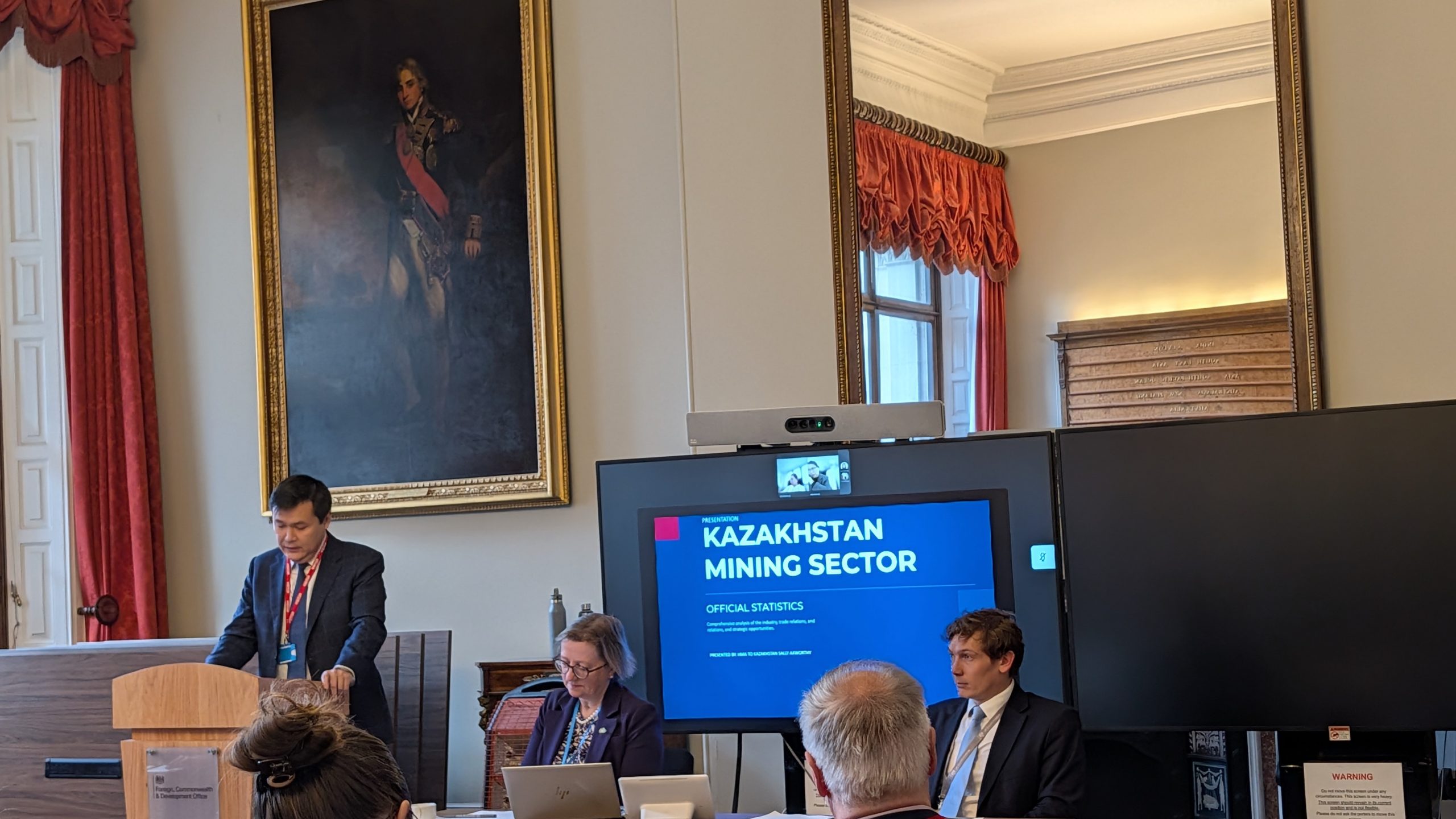
    “Beyond Resources.” That was the unspoken theme defining today’s discussions at the Foreign, Commonwealth & Development Office (FCDO) in London on 20 Jan. The question on the table was a trillion-dollar one: How does the UK secure the building blocks of its energy transition in an increasingly fractured world?

    The answer lies in the Central Asia’s steppes. But as the discussions revealed, the “frontier” days are over. Kazakhstan is no longer just a source of raw ore; it is rapidly becoming the strategic linchpin of the UK’s industrial future. From the race for rare earths to the rise of the “Middle Corridor,” here is an inside look at how the partnership is being recalibrated—and why 2026 marks the shift from potential to execution.

    Recalibrating the UK-Kazakhstan relationships in the critical raw materials race

    The UK-Kazakhstan relationship has undergone significant transformations since independence, with bilateral cooperation growing stronger every year. Critical minerals are a crucial aspect of this relationship, with the UK seeking to establish a reliable supply chain for technology and investment.

    The Mining reinforced a message that is becoming increasingly clear: the UK–Kazakhstan relationship is no longer defined solely by extraction, but by systems, standards, and shared strategic ambition.  it is evident that Kazakhstan has shifted from a “frontier market” to a strategic necessity for the UK’s energy transition. With 99 of the 118 periodic elements available in-country, Kazakhstan is the linchpin of the UK’s Critical Minerals Strategy. However, the UK faces an “execution gap” as China and the US deploy more aggressive, state-backed capital to secure off-take agreements.

    This broader recalibration was also powerfully articulated in a recent interview by The Astana Times with UK Ambassador to Kazakhstan, HMA Sally Axworthy, whose remarks provided important context for today’s discussion on mining and critical minerals.

    Taken together, the roundtable and the interview point to a partnership that is evolving well beyond resources.

    Current Market Landscape

    Kazakhstan’s “winning combination” of resource wealth and a modernizing regulatory framework (2018 Mining Code) is attracting unprecedented global interest.

    • Key Assets: 11% of global Titanium (Boeing/Airbus supply), 40% of global Uranium, and significant deposits of Rhenium, Beryllium, and Rare Earth Elements (REEs).
    • Legal Security: The Astana International Financial Centre (AIFC), operating under English Law, remains the primary vehicle for de-risking UK investment.

    Risks and Mitigations

    • Nationalisation Concerns: There is a trend toward increasing state control and preferential treatment for local investors.
      • Mitigation: Utilise AIFC protections and UK Export Finance (UKEF) to wrap projects in sovereign-level guarantees.
    • Supply Chain Diversification: Dependence on Chinese-controlled logistics remains a threat.
      • Mitigation: Invest in the “Middle Corridor” logistics nodes to ensure independent market access.

    From raw materials to value creation

    Kazakhstan’s extraordinary endowment of critical minerals — from uranium and chromium to vanadium, rhenium and rare earths — is well understood. What is changing is how Kazakhstan wants to participate in global value chains.

    As Ambassador Axworthy emphasised, Kazakhstan is seeking not only to supply raw materials, but to process, refine and add value domestically. This aligns closely with UK priorities under its Critical Minerals Strategy, which focuses on:

    • supply-chain resilience,
    • diversification away from single-country dependencies, and
    • embedding high environmental, social and governance standards.

    Concrete examples already exist. Joint ventures such as Maritime House with Zhezkazgan Redmet on rhenium recycling, supplying Rolls-Royce turbines, and Ferro-Alloy Resources’ vanadium project, expected to meet up to 10% of global demand, show how UK technology, finance and standards can combine with Kazakhstan’s resource base.

    These are not abstract ambitions — they are working models.

    The Competitive Challenge: Speed vs. Standards

    The UK is currently being outpaced in “time-to-market” by global rivals who offer more lucrative, less regulated entry paths.

    Competitor Strategy Competitive Advantage
    China “Infrastructure-for-Minerals” swaps. Speed: Immediate state-backed financing and dominant control of 70% of current exports.
    USA Geopolitical “Friend-shoring” via the Defence Production Act. Access: Massive capital injections to secure REEs and bypass Chinese processing hubs.
    United Kingdom Technical consultancy and ESG-led investment. Quality: High technical standards and legal transparency, but perceived as “slow” and “risk-averse.”


    Navigating Geopolitical Realities: Multivector Diplomacy

    Ambassador Axworthy reaffirmed that the UK views Kazakhstan as a strategic partner, not a zero-sum competitor:

    • Multivector Approach: Kazakhstan’s diplomatic flexibility (balancing ties with EU, China, and the US) ensures no single power dominates.
    • Alignment on Sovereignty & Multilateralism: Kazakhstan’s support for the UN, SDGs, and conflict resolution aligns with UK priorities.
    • Strategic Partnership Agreement (SPA): The UK’s SPA with Kazakhstan (currently being ratified) provides a legal framework for joint projects in energy, defence, and critical minerals.

    Key Challenges & Solutions:

    Challenge UK’s Strategic Response
    China’s Dominance in Critical Minerals UKEF’s guarantees and London’s financial hub position the UK as a competitive alternative.
    Talent Shortages UK universities (Durham, Birmingham) train Kazakh engineers for AI and automation.
    Regulatory Complexity EITI alignment and joint processing projects reduce risks.
    Competition from the US/EU First-mover advantage in SME funding and digital innovation.


    Finance, technology and standards as strategic enablers

    A key takeaway from today’s roundtable was that finance is as strategic as geology.

    UK Export Finance demonstrated how long-tenor, sovereign-backed guarantees can unlock projects across mining, processing and infrastructure, particularly where capital intensity and risk have historically slowed investment. This complements the UK’s strength as a global financial hub — including the role of the London Metals Exchange — highlighted by Ambassador Axworthy in Astana.

    Equally important is the role of technology and data. Several participants pointed to the need for:

    • digitalisation of legacy geological data,
    • AI-ready datasets,
    • Improved mine safety systems, and
    • Smarter, more sustainable operations.

    These are precisely the areas where UK firms — from engineering and digital mining to ESG advisory and geoscience — can play a decisive role.

    Skills, education and people-to-people ties

    One of the most candid discussions today centred on skills shortages, particularly engineers and geoscientists. This challenge is not unique to Kazakhstan — it is global — but it reinforces why education is such a critical pillar of the bilateral relationship.

    As outlined in The Astana Times, the UK’s educational footprint in Kazakhstan is expanding:

    • British universities including Cardiff, Coventry and De Montfort now operate campuses in-country.
    • Geological exploration and mining-related disciplines are part of this offer.
    • Nearly half of Bolashak scholars have studied in the UK, creating a deep reservoir of shared professional culture.

    Education, transparency initiatives such as the Extractive Industries Transparency Initiative, and English-law institutions like the Astana International Financial Centre are not peripheral — they are central to investor confidence.

    Partnership, not pressure, in a competitive landscape

    Kazakhstan sits at the crossroads of Europe and Asia, and competition for its critical minerals is intense. China, the EU, the US, Japan and Korea are all active.

    Yet a recurring theme — both today and in Ambassador Axworthy’s interview — was that this is not a zero-sum game.

    The UK’s approach is deliberately pragmatic:

    • partnership over pressure,
    • long-term engagement over transactional deals,
    • respect for Kazakhstan’s multivector foreign policy.

    As former UK Foreign Secretary David Cameron put it during his 2024 visit: the UK is not asking Kazakhstan to choose — but to partner for mutual security and prosperity.

    Beyond mining: a multidimensional relationship

    What makes the recalibration particularly compelling is that mining and critical minerals sit within a much wider ecosystem of cooperation:

    • Green startups and venture capital,
    • AI and digital innovation,
    • Architecture and urban development,
    • Culture, education and tourism.

    From British-designed landmarks in Astana and Almaty, to venture capital funds backing green and women-led startups, to growing cultural and academic exchanges, the relationship is increasingly people-driven.

    2026 Outlook: The Transition from “Quarry” to “Hub”

    Based on the strategic pillars discussed today, here is what the mining landscape in Kazakhstan will look like by 2026:

    1. The Value-Add Mandate

    By 2026, the era of simply exporting raw ore will be ending. The Kazakh government is pivoting toward in-country processing. We expect to see a surge in “Midstream” projects—refineries and metallurgical plants—where UK technology in chemical engineering and automation will be the primary currency of trade.

    1. Digitalisation and the “Green” Mine

    The 2026 mining code will likely reward “Smart Mines.” As Kazakhstan moves toward its 2060 Net Zero goals, British expertise in AI-driven geological mapping and carbon-neutral extraction will shift from “nice-to-have” to “license-to-operate.”

    1. The Middle Corridor Reality

    By 2026, the Trans-Caspian International Transport Route (TITR) will be the primary artery for critical minerals moving to Europe. UK firms in logistics, insurance, and port infrastructure will play a silent but vital role in ensuring these minerals reach the West without geopolitical interference.

    Final reflection

    Critical minerals may be the catalyst, but trust, standards, skills and shared ambition are the real foundations of the UK–Kazakhstan partnership.

    The “winning combination” mentioned by HMA Sally Axworthy—UK expertise and Kazakh resources—is powerful, but it is not guaranteed. To win in 2026, UK firms must match their technical excellence with a more aggressive commercial posture and faster capital deployment.

    Today’s FCDO roundtable made clear that the opportunity ahead is not simply about securing supply — it is about co-creating resilient, sustainable and technologically advanced value chains that serve both countries’ long-term interests.

    The minerals are there. The roadmap is signed. The challenge now is execution — and the momentum is clearly there.

    Continuing the conversation: MINEX Kazakhstan 2026

    The themes discussed at today’s roundtable—regulatory reform, multi‑vector foreign policy, critical mineral security, green transition, and technological modernisation—will continue at the MINEX Kazakhstan 2026: 16th Mining & Exploration Forum, taking place on 15–16 April 2026 in Astana.

    For those who are interested in the future of Kazakhstan’s mining and critical minerals sector—and in the broader UK–Kazakhstan partnership—this Forum will be an ideal platform to continue today’s discussion, share expertise, and shape the next wave of projects and collaborations.

    MINEX has long provided a platform where government, industry, investors, financiers and technology providers can engage in open, practical dialogue on the future of Kazakhstan’s mineral sector. For those involved in critical minerals, mining reform, processing, finance and downstream integration, it will be a timely opportunity to deepen discussions that are already well underway.

    🔗 https://2026.minexkazakhstan.com/

     

  • Satellite monitoring uncovers illegal mining sites in Kazakhstan region

    Satellite monitoring uncovers illegal mining sites in Kazakhstan region

    Authorities in one of Kazakhstan’s regions have uncovered widespread illegal extraction of mineral resources following satellite monitoring by the national space operator Қазақстан Ғарыш сапары, according to the regional environmental prosecutor’s office.

    Remote sensing data identified 53 zones of suspected unauthorized subsoil use. Subsequent inspections confirmed violations, leading to the opening of two criminal cases for illegal mining. Investigations resulted in criminal liability for those responsible. Environmental damage amounting to 51 million tenge has already been recovered, while an additional 136 million tenge remains subject to collection.

    The prosecutor’s office noted that under Kazakhstan’s Land Code, the detection and prevention of illegal extraction of minerals falls under the responsibility of city and district authorities. However, checks revealed that in several cases local administrations failed to act. Following a formal submission by prosecutors, regional authorities instructed officials to strengthen oversight of subsoil use, and a number of civil servants were disciplined.

    Kazakhstan has used remote monitoring to detect illegal mining since 2021. Data from satellite surveillance is transmitted to the General Prosecutor’s Office. In November 2025, Deputy Minister of Digital Development and Artificial Intelligence Малик Олжабеков said that in 2025 alone, space-based monitoring of 46 major settlements identified 1,845 sites of shadow subsoil use, including 72 newly discovered areas, 109 previously identified sites with changes in size, and 1,664 locations with no change.

  • Chinese investor plans ferrochrome processing project in Kazakhstan’s Aktobe region

    Chinese investor plans ferrochrome processing project in Kazakhstan’s Aktobe region

    Chinese ferrochrome producer Suzhou Hunan New Materials is planning to implement an investment project in Kazakhstan’s Aktobe region focused on the deep processing of chromite ores.

    The initiative was discussed during an official visit to Shanghai by Abzal Abdikarimov, deputy akim of the Aktobe region, who held talks with the company’s management. Following the meeting, the parties signed a memorandum of cooperation aimed at establishing advanced chromite processing facilities in the region.

    The project is designed to be implemented in two stages. The first phase предусматривает construction of a chromite concentrate processing plant with an investment volume of $150 million. At the second stage, the project will expand to include processing of metallic chromium, increasing the depth of value addition.

    Representatives of Suzhou Hunan New Materials said during the talks that the company is ready to move forward with the practical implementation of the project and to continue cooperation with Kazakhstan’s national and regional authorities.

    The Aktobe region hosts the South Kempirsai chromite deposits, an area that ranks second globally in terms of confirmed chromium reserves. Most of the chromite ore mined in the region is currently processed by the Aktobe and Aksu ferroalloy plants operated by Kazchrome.

  • UK deepens engagement with Kazakhstan through green growth, critical minerals and people-to-people ties

    UK deepens engagement with Kazakhstan through green growth, critical minerals and people-to-people ties

    The United Kingdom is recalibrating its engagement with Kazakhstan, placing growing emphasis on green technology, critical minerals, education and cultural cooperation, according to UK Ambassador to Kazakhstan Sally Axworthy.

    In an interview with The Astana Times, Axworthy said London sees Kazakhstan as a key long-term partner as global supply chains shift and demand for sustainable growth increases. Rather than pressure or politics, the UK approach is built around practical cooperation, business links and human connections.

    She noted that the UK Embassy’s role extends well beyond traditional diplomacy, focusing on connecting Kazakh businesses with British expertise. This cooperation is already visible in Kazakhstan’s urban landscape, with major architectural landmarks designed by British firms. These include Khan Shatyr in Astana by Foster and Partners, the newly opened Almaty Museum of Arts by Chapman Taylor, and the Tselinny Center of Contemporary Culture by British architect Asif Khan.

    Beyond flagship projects, Axworthy stressed that small and medium-sized enterprises are a growing priority. Through the Green and Inclusive Growth Programme, the UK is supporting startups with financing and advisory services, particularly in green, digital and AI-driven sectors. She confirmed that a new venture capital fund is being set up to invest in startups, with a special focus on green technologies and women-led businesses.

    Digital innovation has also become a key area of cooperation. During the Digital Bridge forum, the UK Embassy supported an event where startups from across Central Asia pitched to investors, reflecting Kazakhstan’s ambitions in artificial intelligence and technology-led growth.

    On energy and climate policy, Axworthy said the UK’s own decarbonisation experience underpins its partnership offer. She noted that the UK now generates about half of its electricity from green sources and has cut emissions by nearly 50% since 1990 while expanding its economy by 80%. This, she said, aligns naturally with Kazakhstan’s net-zero target for 2060.

    Critical minerals are central to this cooperation. Axworthy outlined the UK’s updated Critical Minerals Strategy, which focuses on domestic production, financial infrastructure and resilient supply chains. While the UK is developing resources such as lithium and tin in Cornwall, she highlighted London’s role as a global financial hub and the importance of partnerships with resource-rich countries like Kazakhstan.

    She cited joint projects already under way, including rhenium recycling through a partnership between Maritime House and Zhezkazgan Redmet, with output expected to supply up to a quarter of global rhenium demand for uses such as aircraft turbines produced by Rolls-Royce. A vanadium project by Ferro-Alloy Resources could eventually meet up to 10% of global demand.

    Education and standards underpin these economic ties. Axworthy pointed to the opening of a branch campus of Cardiff University in Astana, offering courses in geological exploration, as well as cooperation on transparency standards through the Extractive Industries Transparency Initiative.

    Addressing geopolitics, Axworthy described Kazakhstan’s multivector foreign policy as logical given its geography and said the UK does not expect exclusive alignment. She recalled remarks by former UK foreign secretary David Cameron that partnership with Britain is about mutual security and prosperity, not choosing sides.

    Education and culture remain among the strongest pillars of bilateral relations. Nearly half of Kazakhstan’s Bolashak scholars have studied in the UK, and British universities such as De Montfort University, Coventry University and Cardiff now operate campuses in Kazakhstan. Axworthy also highlighted the role of the British Council and growing cultural links, from Kazakh language courses at Oxford University to increased interest from British creative industries.

    She added that Kazakhstan’s tourism and cultural potential is still under-represented in the UK, noting strong interest among British travellers and pointing to Almaty as a city with particular appeal.

  • Kazakhstan’s jewellery industry posts strong growth backed by state support

    Kazakhstan’s jewellery industry posts strong growth backed by state support

    Kazakhstan’s jewellery industry is expanding rapidly, supported by a package of state measures aimed at strengthening domestic production and reducing costs for manufacturers.

    According to official data, jewellery production in the country increased by 41.3% year on year in the first ten months of 2025, reaching $4.1 million. Imports rose by 39.6% to $174.7 million, while exports jumped 7.3 times to $54.5 million. Domestic consumption also grew, up 3.2% to $124.3 million.

    Growth in the sector is closely linked to long-standing government support mechanisms. Since 2016, jewellery manufacturers have been entitled to annual quotas allowing them to purchase up to 300 kg of gold. Refined gold is sold primarily to the National Bank of Kazakhstan, which acquired about 74 tonnes in 2025. The same mechanism is applied through sales of granulated refined gold by Tau-Ken Altyn.

    Additional support was introduced in January 2023 with the abolition of VAT on the purchase of quota gold by jewellery producers operating in Kazakhstan. In 2025, manufacturers purchased 38 kg of gold under this exemption, compared with 34.3 kg a year earlier.

    The sector has also benefited from the inclusion of jewellery manufacturing in the list of priority activities within the Astana Special Economic Zone, as well as the removal of mandatory assay hallmarking for domestically produced silver jewellery.

    In total, Kazakhstan has 4,542 registered participants in the jewellery trade, including 445 manufacturers. The industry operates under the national law regulating precious metals and gemstones.

  • Kazakhstan to invest $500 million in high-resolution geological mapping to boost mineral exploration

    Kazakhstan to invest $500 million in high-resolution geological mapping to boost mineral exploration

    Kazakhstan’s government is launching a new phase of subsoil exploration aimed at significantly expanding geological coverage using modern prospecting methods, in line with instructions from President Kassym-Jomart Tokayev.

    As part of this effort, 20 projects were developed last year to carry out geological mapping at a scale of 1:50,000 across a total area of 100,000 square kilometres, with plans to cover an additional 30,000 square kilometres of the most prospective areas each year. This represents a major increase in detail compared with the Soviet-era standard of 1:200,000 mapping.

    Over the next three years, the government plans to allocate 240 billion tenge, or around $500 million, to implement these projects, conduct seismic surveys in poorly studied sedimentary basins, and build modern geological infrastructure. By comparison, total investment in the sector over the past 15 years amounted to $469 million.

    The programme includes analysis of remote sensing data, aerogeophysical and geochemical surveys, and extensive fieldwork. Areas were selected based on factors such as reserve depletion, the absence or minimal presence of subsoil users, and potential for priority minerals. The identified zones show high prospects for discoveries of copper, gold, lead, zinc, rare earth elements, barite and bauxite.

    Seismic exploration is also planned in underexplored oil and gas basins, including the North Torgai, Shu-Sarysu and Syrdarya regions. In parallel, Kazakhstan intends to modernise its laboratory and analytical base and continue the digitalisation of geological data.

    According to the government, the shift to detailed geological mapping at this scale will significantly improve the accuracy of geological forecasts and align Kazakhstan with international best practice seen in the European Union, Canada, Australia and China. Detailed regional mapping is viewed as a foundation for identifying promising areas, reducing geological and investment risks, and attracting private investment into exploration and mining.

  • Almalyk MMC expands copper processing capacity at Concentrator No. 2

    Almalyk MMC expands copper processing capacity at Concentrator No. 2

    Almalyk Mining and Metallurgical Complex (AGMK) is constructing new beneficiation facilities at its Copper Concentrator No. 2 to increase ore processing capacity. The new complex will cover an area of 3.1 hectares and is designed to process up to 5 million tonnes of ore per year from the Yoshlik I deposit, producing 74,200 tonnes of copper concentrate, the company’s press service said.

    Construction is being carried out by the Olmalikmetallurgkurilish trust, which is part of AGMK. The project is currently at the earthworks stage, while the design documentation for the new production unit was prepared by the complex’s internal project management division.

    The facility will be equipped with modern crushing, grinding, flotation, filtration and thickening units, as well as compressor stations. Key equipment will be manufactured at AGMK’s central repair and mechanical plant, with installation handled by its specialised maintenance unit.

    Around 600 jobs will be created at the new complex. Once commissioned, AGMK’s total ore processing capacity is expected to reach nearly 10 million tonnes per year.

  • Kazakhstan launches large-scale programme to refine geological mapping and resource forecasts

    Kazakhstan launches large-scale programme to refine geological mapping and resource forecasts

    Kazakhstan will roll out a three-year programme of advanced subsurface studies aimed at improving the accuracy of geological forecasting, according to the Ministry of Industry and Construction. A central element of the initiative is the transition to geological mapping at a scale of 1:50,000, which is four times more detailed than the Soviet-era standard of 1:200,000.

    In 2025, authorities approved 20 projects covering a total area of 100,000 square kilometres. During the next stage, around 30,000 square kilometres of the most prospective territories are expected to be studied annually. Funding of 240 billion tenge, or about $500 million, has been allocated for geological exploration of 20 sites, seismic surveys in poorly studied sedimentary basins, and the creation of a digital geological data infrastructure. This represents the largest level of investment in the sector in the past 15 years.

    The programme includes analysis of satellite imagery, aerogeophysical and geochemical surveys, as well as extensive fieldwork. Areas were selected based on declining reserves, the absence of active subsoil users, and strong potential for key minerals. Priority targets include zones prospective for copper, gold, lead, zinc, rare earth metals, barite and bauxite.

    Special focus will be placed on oil and gas potential. Seismic surveys are planned in the North Torgai, Shu-Sarysu and Syrdarya basins, alongside upgrades to laboratory facilities and the digitisation of geological data.

    According to Ulzhabay Ismailov, генеральный директор GeoByte-Info, mapping at a 1:50,000 scale makes it possible not only to chart territories in detail but also to reconstruct geological history, identify ore distribution patterns and better assess exploration prospects. Refining forecast resources in the R3 and R2 categories will help more precisely select targets for subsequent exploration, he said.

  • Kazakhstan moves to define “underexplored areas” as part of subsoil use reform

    Kazakhstan moves to define “underexplored areas” as part of subsoil use reform

    Recent amendments to Kazakhstan’s Subsoil Code have given formal shape to the idea of designating so-called underexplored areas, where subsoil use rights could be granted under simplified conditions. The concept itself is not controversial: territories that are objectively complex, high-risk and poorly studied may justify more flexible terms for investors. However, experts say the success of the reform will depend on how “underexplored” is defined in practice.

    Industry specialists warn that relying on a purely formal or simplified definition risks creating new disputes, allegations of lobbying and inefficient decisions. Geological knowledge alone is not sufficient to determine the true level of exploration. Instead, the degree of exploration should be assessed through a combination of factors, including drilling history, certainty of petroleum systems, presence or absence of proven reserves, technological readiness, market interest and auction results.

    Kazakhstan offers clear examples of why a narrow approach can be misleading. Parts of the Pre-Caspian Basin are formally considered well explored, yet large areas have seen little or no modern exploration activity since Soviet times. Conversely, the Chu-Sarysu Basin is sometimes labelled underexplored, despite hosting multiple discovered and producing gas fields and attracting strong investor interest at recent auctions.

    Experts argue that underexploration should be understood as a lack of sufficient certainty to justify a reliable forecast of commercial reserves, rather than the absence of individual geological surveys. Even areas covered by seismic data may remain underexplored if drilling has not reached target horizons or failed to confirm industrial-scale hydrocarbons.

    The issue becomes more complex when considering unconventional resources such as coalbed methane and shale hydrocarbons. Although legally classified as hydrocarbons, these resources often remain underexplored due to the absence of proven technologies, economic models and successful commercial examples. Coal basins like Karaganda are well studied for coal mining, but industrial production of coalbed methane has yet to be established, making such resources effectively underexplored from an oil and gas perspective.

    Market behaviour is another critical indicator. Areas repeatedly offered at auctions without attracting bidders signal high risk and low certainty, while strong investor demand suggests that simplified access mechanisms may be inappropriate. Ignoring these signals could undermine fair competition.

    To reduce subjectivity, analysts propose an integrated scoring system that combines geological data, drilling results, technological readiness and market activity. Such a framework would allow regulators to justify decisions transparently, strengthen investor confidence and reduce legal and reputational risks. A clear, well-defined methodology, experts conclude, could become one of the most effective elements of Kazakhstan’s subsoil use reform, benefiting the state, investors and regulators alike.