Website: Kazakhstan.com

  • Qarmet Launches Manganese Ore Production at West Karazhal Deposit

    Qarmet Launches Manganese Ore Production at West Karazhal Deposit

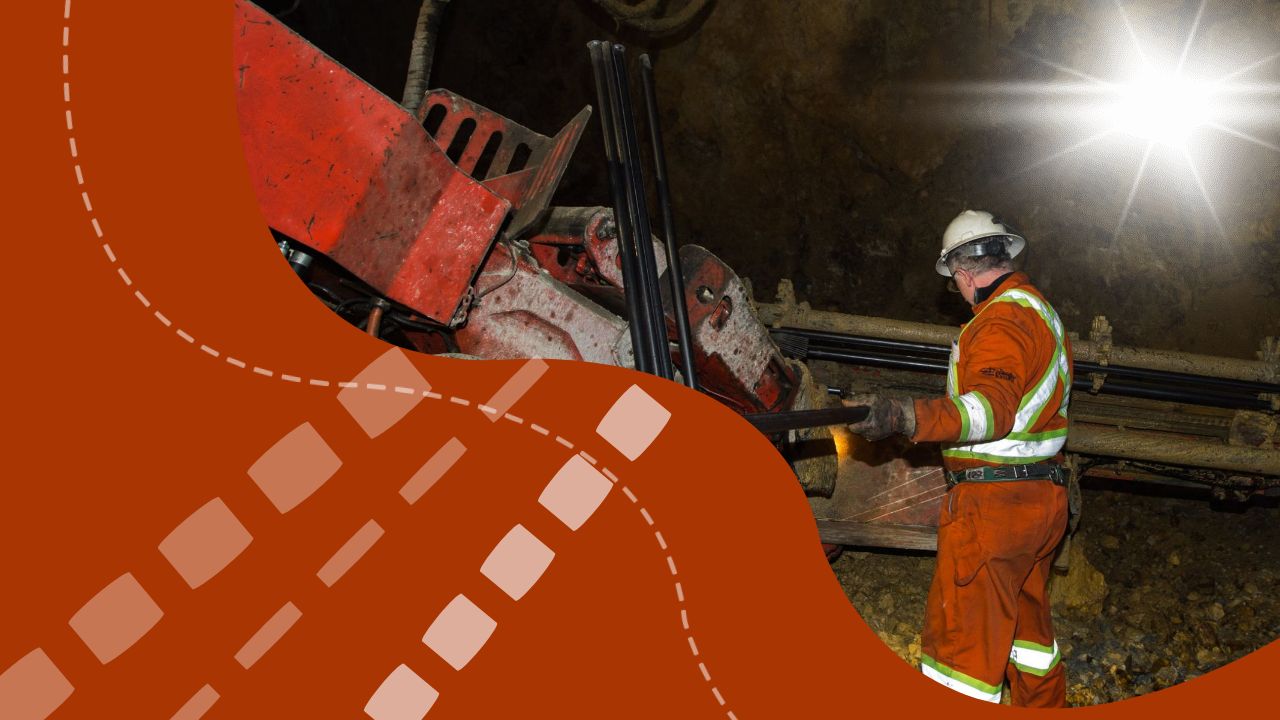
    Qarmet has commenced manganese ore extraction at the West Karazhal deposit of its Iron Ore Department following the breakthrough connection of underground workings, marking the first such operation at the site in more than 30 years.

    The newly developed mining horizon has been integrated with the mine’s main automotive decline, enabling large-scale underground equipment to access previously remote sections of the шахта. Previously, operations in this area were carried out manually without high-capacity machinery. The technical upgrade now allows the company to begin industrial-scale manganese mining.

    The West Karazhal deposit is considered one of the largest manganese resources globally, with reserves estimated at 349 million tonnes. In 2026, Qarmet plans to extract 500,000 tonnes of manganese ore, with a long-term target of reaching design capacity of 2.5 million tonnes per year.

    Manganese is set to become a strategic focus for the operation, forming a central pillar of Qarmet’s long-term development plans. The company intends to increase production volumes, introduce advanced engineering solutions and adopt best international practices in both mining and processing.

    According to Qarmet, interest from potential buyers has already been confirmed through supply inquiries, underscoring the commercial prospects of the project.

    Meanwhile, the Atasu mine currently produces 2.2 million tonnes of ore annually. Through the construction of the Central Shaft Group, the company aims to quadruple output to 9.5 million tonnes by 2028.

  • KazZinc Reports $5.1 Billion Revenue in 2025 as Profit Surges on Higher Metal Prices

    KazZinc Reports $5.1 Billion Revenue in 2025 as Profit Surges on Higher Metal Prices

    Kazakhstan-based KazZinc generated $5.1 billion in revenue in 2025, according to preliminary financial results published by its main shareholder, the Anglo-Swiss commodity group Glencore, which owns nearly 70% of the company. The remaining stake is largely held by state mining holding Tau-Ken Samruk.

    In addition to revenue, the report disclosed key performance indicators for KazZinc in 2025, including adjusted EBITDA of $1.642 billion, depreciation of $666 million and adjusted EBIT of $976 million.

    For comparison, in 2024 KazZinc recorded revenue of $4.2 billion, adjusted EBITDA of $1.185 billion, depreciation of $725 million and adjusted EBIT of $460 million.

    Operating costs in 2025 amounted to $4.333 billion, resulting in net profit of $774 million for the year. Of this, approximately $540 million was attributable to Glencore as the controlling shareholder. Dividends paid to the non-controlling shareholder, primarily Tau-Ken Samruk, reached $242 million. In 2024, KazZinc’s net profit stood at $308 million with costs of $3.9 billion.

    The improved financial performance was largely driven by higher prices for key metals produced by the company, including zinc, gold and copper. In its annual presentation, Glencore reported that adjusted EBITDA for its metals and minerals segment rose 18% year-on-year to $7 billion, supported by stronger zinc margins, gold-related investments at Altyntau Kokshetau and increased copper volumes and prices in the second half of the year.

    Glencore also recorded a non-cash balance sheet capitalisation of $249 million related to the extension of KazZinc’s lease of the Bukhtarma hydropower plant. The group noted expectations of closures of several smaller Kazakh mines.

    According to Interfax-Kazakhstan, Glencore’s net profit in 2025 amounted to $363 million on revenue of $247.54 billion, while its net debt at year-end stood at $11.17 billion.

    Earlier reports indicated that as part of its portfolio restructuring, Glencore may announce in the coming weeks the sale of its 70% stake in KazZinc. Analysts estimate the asset’s value at approximately $5 billion.

  • Zhana Mys to Launch Six-Year Gold and Copper Exploration at Kara Kabyland Site in Abai Region

    Zhana Mys to Launch Six-Year Gold and Copper Exploration at Kara Kabyland Site in Abai Region

    Kazakhstan-based Zhana Mys LLP plans to begin geological exploration at the Kara Kabyland site in the Abai region, according to its statement of intended activity. The subsoil plot is located in the Ayagoz district, approximately 210 km east of the district centre of Ayagoz and 20 km south of the village of Emeltau.

    The exploration licence, issued by the Ministry of Industry in July 2025, covers 63 blocks with a total area of 145 square kilometres. The study programme is designed for a six-year period.

    Historical Soviet-era geophysical surveys in the area identified the promising Sharyk 1 gold prospect, along with other occurrences of copper, molybdenum, polymetals and gold. The Ayagoz district already hosts smaller gold deposits such as Taskora and Muzbel. Notably, aerial gamma-spectrometric methods were previously applied in the area, simultaneously measuring total radioactivity as well as uranium, thorium and potassium content.

    The exploration programme includes topographic and geodetic surveys, geochemical sampling, and geophysical work such as aeromagnetic surveys, induced polarization (IP-SG) electrical prospecting and profile electrical tomography. Mining and drilling operations will also be conducted to collect samples for laboratory analysis, alongside geological and hydrogeological assessments of potential development conditions.

    A light aircraft with a flight endurance of at least five hours will be used for комплекс aerogeophysical surveying at a scale of 1:20 000, according to the project documentation. Electrical prospecting is specifically aimed at identifying and delineating potential copper-porphyry mineralization zones and assessing their distribution within the licence area.

    Environmental documentation notes the presence of small rodents, lizards and venomous pit vipers in the area, as well as occasional sightings of saiga antelope, argali, hares, badgers, wolves and bustards. Migratory birds such as ducks and waders are observed during seasonal flights. The district is sparsely populated.

    No water bodies are located directly adjacent to the exploration site. The nearest major water body is Lake Balkhash, approximately 130 km away. The project area lies outside designated water protection zones.

    According to media reports, Zhana Mys previously held several licences in the Northern Balkhash region and in 2023 was among subsoil users that returned certain licences. Public records indicate that the company’s founder is Solidcore Eurasia, affiliated with gold mining holding Solidcore Resources, whose shares are listed on the Astana International Financial Centre exchange. Earlier licence registers published in 2023 listed Kanat Dosmukametov, head of Solidcore Eurasia, as the beneficial owner.

  • Kazakhstan to Launch 200 Industrial Projects in 2026 Targeting KZT 1.5 Trillion in Import Substitution

    Kazakhstan to Launch 200 Industrial Projects in 2026 Targeting KZT 1.5 Trillion in Import Substitution

    Kazakhstan plans to implement a pool of 200 investment projects this year aimed at generating import substitution worth 1.5 trillion tenge, according to statements made at a board meeting of the Ministry of Industry and Construction.

    The flagship projects include new production facilities for mineral fertilizers, specialised machinery and ferrosilicon in the Zhambyl, Pavlodar and Karaganda regions.

    Once all projects reach full capacity, total output is expected to amount to approximately 2.3 trillion tenge. Of this, around 0.5 trillion tenge is projected for export markets, while 1.5 trillion tenge will contribute directly to import substitution.

    First Deputy Prime Minister Roman Sklyar instructed the ministry to accelerate the launch of the National Industrial Information System and to present a new model for the development of special economic zones within one month. He also tasked officials with expanding geological exploration to 2.2 million square kilometres and updating plans related to rare metals development.

    Earlier, citing a forecast by MINEX Kazakhstan, analysts noted that the country’s mining and metallurgical complex in 2026 will operate under the simultaneous influence of rising global metals demand and tightening domestic regulatory and fiscal conditions. According to the review, the sector is entering a phase of deep structural transformation.

  • Altyn Ken Group Plans Gold Exploration at Mazhera Site in East Kazakhstan

    Altyn Ken Group Plans Gold Exploration at Mazhera Site in East Kazakhstan

    Altyn Ken Group LLP has unveiled a geological exploration programme for hard minerals at the Mazhera site in the Ulan district of East Kazakhstan Region, where gold is expected to be identified across three blocks.

    The company plans to carry out topographic surveying and drill 20 exploration wells with depths ranging from 100 to 200 metres, totalling 3,000 linear metres. Additional geological exploration activities will also be undertaken.

    According to the company’s environmental notification, geochemical work will include lithogeochemical surveying across 80% of the site, with up to 1,000 samples taken at depths of 15–20 cm and analysed for gold using fire assay methods. The objective is to study geological conditions and rock composition, assess peat and sand thickness, determine gold grades in grams per cubic metre, and evaluate the material composition and processing properties of ores and sands in order to select appropriate beneficiation methods. Resource estimates will be calculated in accordance with KazRC standards.

    Altyn Ken Group received its exploration licence from the Ministry of Industry and Construction on 26 December 2025. The company notes that the Mazhera site lies outside the state forest fund, and, according to the National Geological Service, there are no groundwater deposits within the area. The nearest settlement, the village of Zhanuzak, is located 8.4 km east of the site boundary.

    Exploration operations will utilise diesel-powered equipment, including a front-end loader, drilling rig, diesel generator unit, fuel tanker, excavator, water truck, bulldozer, two shift minibuses and a Toyota Hilux SUV. The drilling rig is expected to achieve between 500 and 800 linear metres per month. A team of 16 specialists will work on a rotational basis, either 15/15 or 30/30 days.

    The total area of the Mazhera geological allotment covers 6.48 square kilometres. Exploration is scheduled to begin in the first quarter of 2026 and conclude in the first quarter of 2031.

    The final output of the project will consist of geological data, including core samples, primary documentation, geological maps and a final report with gold and polymetallic resource estimates under categories C2 and P1 for inclusion in the state balance.

    Altyn Ken Group is jointly owned by Xingwang Engineering Kazakhstan Co., Ltd and Inzhu Caspian Gold LLP. The company was registered on 13 November 2025, with Zeng Qi listed as its head. Xingwang Engineering Kazakhstan is fully owned by Guizhou Xingwang Engineering Co., Ltd, while Inzhu Caspian Gold is wholly owned by Aruzhan Sanaeva.

    Earlier, Qazba reported that Shakhtostroy-Gold LLP plans to begin gold exploration in 2026 in the Ulken Naryn district of East Kazakhstan Region.

  • Tau-Ken Samruk and Cove Capital Sign Agreements on Northern Katpar and Verkhneye Kairakty Tungsten Projects

    Tau-Ken Samruk and Cove Capital Sign Agreements on Northern Katpar and Verkhneye Kairakty Tungsten Projects

    Kazakhstan’s state mining company Tau-Ken Samruk has signed a series of agreements with US-based Cove Capital for the joint development of the Northern Katpar and Verkhneye Kairakty deposits, according to a press release from Samruk-Kazyna.

    The projects are expected to form the raw-material base for establishing deep tungsten processing in Kazakhstan. As part of the Northern Katpar project, the partners plan to produce ammonium paratungstate, a key intermediate product used in high-tech and industrial applications.

    To implement the projects, Cove Capital will secure no less than $1.1 billion in financing. Of this amount, $900 million is expected to be provided by the Export-Import Bank of the United States. In addition to financing, the American side will provide technological support for mining, processing, and beneficiation operations. The US will also facilitate exports to global markets, including arranging offtake contracts with US authorities.

    The two deposits contain an estimated 410,000 tonnes of tungsten. According to the mine development plan presented this week by Northern Katpar, sales of tungsten trioxide, molybdenum, copper, and bismuth are projected to generate more than 1 trillion tenge (approximately $2 billion) in revenue between 2030 and 2048.

    The parties initially agreed on joint development of the deposits in November last year. According to Reuters, Cove Capital will hold a 70 percent stake in the joint venture, while Tau-Ken Samruk will retain 30 percent.

  • Germany Deepens Strategic Partnership With Kazakhstan on Energy and Critical Resources

    Germany Deepens Strategic Partnership With Kazakhstan on Energy and Critical Resources

    Germany considers Kazakhstan one of its key partners in Central Asia and a reliable supplier of energy resources, according to statements cited by the Kazakh Ministry of Foreign Affairs. German Foreign Minister Johann Wadephul described Kazakhstan as “an economically, politically, and strategically pivotal country in Central Asia.”

    For Astana, cooperation with Western partners is primarily aimed at attracting investment and implementing modern technologies, while for Berlin, the partnership ensures stable resource supplies and access to Central Asian markets. Kazakhstan’s mineral resource base includes more than 5,000 deposits, with an estimated value in the tens of trillions of dollars. The country ranks first globally in proven reserves of zinc, tungsten, and barite; second in silver, lead, and chromite; third in copper and fluorite; fourth in molybdenum; and sixth in gold. It also ranks ninth in proven oil reserves, eighth in coal, and second in uranium.

    Energy cooperation remains central to bilateral ties. Kazakh oil supplies to the Schwedt refinery in Germany reached approximately 1.5 million tons in the first nine months of 2025. In 2026, monthly shipments are expected to increase from 100,000 to 130,000 tons.

    Discussions are also under way on exporting green hydrogen from Kazakhstan to Germany and other EU countries. For Germany, this supports energy security and decarbonisation goals, while for Kazakhstan it represents an opportunity to build a new high value-added export sector and attract long-term investment.

    Trade turnover between the two countries reached $3.9 billion from January to November 2025, with Kazakh exports rising by 7.9 percent and imports of German goods increasing by 6.1 percent. By January 2026, 36 investment projects involving German capital had been implemented in Kazakhstan, with total investments amounting to approximately €49.7 billion. Many of these projects are already operational. Cooperation is expanding in mechanical engineering, chemicals, and the mining and metallurgical sector, alongside the introduction of German technologies and management practices.

    In February 2026, Kazakh Foreign Minister Yermek Kosherbayev took part in the “Central Asia – Germany” foreign ministers’ meeting in Berlin. During talks with Katherina Reiche, he emphasised Kazakhstan’s intention to expand economic cooperation both bilaterally and within broader EU–Central Asia frameworks.

    The development of the Trans-Caspian International Transport Route is further strengthening Kazakhstan’s role as a transit hub between Europe and Asia. Germany views the corridor as a reliable alternative supply route, while Kazakhstan benefits from infrastructure development and increased industrial cooperation.

    Overall, the partnership reflects mutual strategic interests: Germany seeks stable access to energy and raw materials, and Kazakhstan aims to diversify its economy through investment, technology transfer, green energy development, and expanded transport connectivity.

  • Atameken Committee Reviews Constitutional Reform, Mining Roadmap and Rail Tariff Risks

    Atameken Committee Reviews Constitutional Reform, Mining Roadmap and Rail Tariff Risks

    Kazakhstan’s Committee for Geology, Mining, Coal and Metallurgical Industry under the Presidium of the National Chamber of Entrepreneurs “Atameken” convened to review key policy issues, including constitutional reform, implementation of the Mining and Metallurgical Complex (MMC) Roadmap, and risks linked to a proposed new rail tariff model. The meeting was chaired by Committee Head Nikolai Radostovets and attended by Atameken Presidium Chairman Kanat Sharlapayev and Deputy Chair of the Management Board Gulnara Bizhanova.

    Outlining priorities for 2026, Sharlapayev said the Committee’s agenda was shaped through consultations with industry associations and businesses and would be refined as sector challenges evolve. Among the top priorities is resolving legal inconsistencies between subsoil use and land use rights, an issue affecting companies of all sizes. He also stressed the need to consolidate the MMC’s position in discussions around the new Tax Code, including royalty mechanisms, and to preserve export potential through predictable customs regulation.

    Sharlapayev emphasized that Atameken remains the principal platform for dialogue between business and government and called for greater industry unity. He urged companies to avoid fragmentation into parallel negotiation platforms, highlighting the importance of presenting a consolidated position during a period of political transformation.

    Radostovets described the constitutional reform as part of broader state modernization aimed at strengthening institutions and building a competitive economy. He noted that Kazakhstan’s economy has grown at around 6% annually and underlined the importance of reinforcing rule of law, property rights and predictable conditions for long-term investment.

    The Committee also examined progress on the MMC Development Roadmap prepared by the Ministry of Industry and Construction. According to Rustam Shuntukov, Managing Director of Atameken’s MMC Department, the roadmap includes 15 measures, though only about five of 42 business proposals were reflected in the final document. Positive elements include support for processing technogenic mineral formations, SME development, improved subsoil liquidation procedures, and preparation of a Critical Minerals Strategy to 2030.

    Participants further discussed concerns regarding a new rail tariff methodology being developed for Kazakhstan Temir Zholy. Business representatives warned that key proposals from Atameken had not been incorporated and supported commissioning an independent expert review.

    The Committee concluded the meeting by approving its 2026 work plan.

  • Kazakhstan Advances National Geological Digitalisation Programme

    Kazakhstan Advances National Geological Digitalisation Programme

    Kazakhstan continues the implementation of a national programme aimed at accelerating the digitalisation and systematisation of geological information, in line with the instruction of the Head of State. The initiative is designed to increase the level of geological exploration of the country’s territory, enhance investment attractiveness, and ensure open access to geological data.

    The scanning and digitisation of geological materials form the foundation for the introduction of modern digital and analytical tools, including artificial intelligence-based solutions. The programme is expected to significantly improve transparency and accessibility of geological information for government bodies, investors, and the professional community.

    To date, 66,180 secondary geological reports have been structured, with access to their first volumes available through the Unified Subsoil Use Portal. This enables users to review the general sections of materials online and free of charge, without the need to visit physical geological archives. Work on digitising secondary reports began in the early 2000s.

    Overall, nearly 4.7 million units of geological information have been digitised, representing 97.5% of the total volume of primary geological data. Of this amount, 2,728,620 units were digitised in 2023–2024, and 1,969,216 units in 2025.

    The total volume of priority primary geological information stored in geological archives amounts to approximately 5 million units. These materials are currently held in paper format, graphic appendices, magnetic tapes, and cartridges.

    The full cycle of geological data digitisation is scheduled for completion by the end of 2026, ensuring 100% coverage of archival materials.

  • Development Bank of Kazakhstan Transfers Aktogay Project Financing to Halyk Bank Under New Investment Model

    Development Bank of Kazakhstan Transfers Aktogay Project Financing to Halyk Bank Under New Investment Model

    The Development Bank of Kazakhstan (DBK), a subsidiary of Baiterek Holding, has completed a landmark refinancing transaction for the Aktogay mining and processing complex, demonstrating a new model for attracting private capital into large-scale industrial projects.

    KAZ Minerals Aktogay LLP operates one of Central Asia’s крупнейших open-pit copper mines in the Abai Region. The complex includes two sulphide concentrators with a combined capacity of 50 million tonnes of ore per year, along with a cathode copper plant processing oxidised ore. The facility employs advanced mining and beneficiation technologies, including automated process control systems.

    DBK first financed the Aktogay project in 2016 during the high-risk construction and commissioning phase. With the Bank’s support, a second concentrator was built, doubling sulphide ore processing capacity from 25 million to 50 million tonnes annually and creating more than 2,100 permanent jobs. The initial financing facility has since been fully repaid, and the first phase of the project has reached its planned payback.

    In a significant next step, Halyk Bank refinanced the company’s outstanding debt to DBK, assuming responsibility for servicing the now operational and financially stable project. The transaction reflects a structured approach in which DBK assumes early-stage project risks, while commercial banks step in once operational performance and cash flows become predictable.

    According to Marat Yelibayev, Chairman of DBK’s Management Board, the refinancing frees up state development funds for new capital-intensive industrial projects, reinforcing an investment cycle in which DBK supports projects from inception to stability before transferring them to private lenders.