Website: Europe.com

  • Uzbekistan Boosts Uranium and Rare Material Exports with Greener Mining Push

    Uzbekistan Boosts Uranium and Rare Material Exports with Greener Mining Push

    Uzbekistan is accelerating its efforts to become a key player in the global energy transition supply chain by expanding exports of uranium, copper, and rare earth elements. The Central Asian country is adopting cleaner mining methods and forging international partnerships to position itself as a reliable and responsible supplier of critical raw materials.

    A standout initiative is underway in the Navoi region, where a French-Uzbek-Japanese joint venture — involving France’s Orano and Uzbekistan’s state-owned Navoiyuran — is deploying in-situ leaching. This method offers an environmentally friendlier alternative to traditional open-pit mining and is expected to yield 10,000 tonnes of uranium.

    The move comes as global demand soars for strategic materials essential to renewable energy, electric vehicles, and other green technologies. Uzbek officials are aligning their practices with OECD standards and international environmental benchmarks to boost transparency and win the confidence of Western investors.

    By integrating greener extraction techniques and international oversight, Uzbekistan is not only increasing its export potential but also improving its standing in the global raw materials market. The country is actively seeking to deepen ties with European partners and attract foreign capital to scale up sustainable mining operations.


  • Serbia to Retain Entire Gold Reserve on Home Soil, Snubbing Traditional Hubs

    Serbia to Retain Entire Gold Reserve on Home Soil, Snubbing Traditional Hubs

    Serbia’s central bank has revealed plans to relocate all of its gold reserves—valued at roughly £4.7 billion—back to its own territory, in a move aimed at safeguarding the stockpile during times of crisis.

    This would make Serbia the first country in Eastern Europe to entirely eschew established storage locations such as Switzerland, the United Kingdom, and the United States.

    “In bringing the gold back to Serbia, the National Bank sought to enhance both its accessibility and security during periods of instability,” the institution stated, noting that the repatriation effort had commenced in 2021 amid growing global uncertainty.

    Following the freezing of Russia’s foreign currency reserves in 2022, the rate of gold accumulation by central banks worldwide doubled, underscoring the political risk involved in holding reserves in US dollar and euro-denominated assets. Housing gold bars domestically reduces the threat of external interference.

    Between 2019 and the end of last year, Serbia acquired 17 tonnes of gold abroad and a further 19 tonnes from the local arm of Zijin Mining Group. This brought the total reserve to 50.5 tonnes, nearly all stored in Belgrade—except for five tonnes bought in 2024, which remain in Switzerland for now.

    Those final five tonnes will be brought back “as soon as possible,” according to Governor Jorgovanka Tabaković. Serbia’s neighbours hold differing proportions of their reserves domestically, ranging from 86% in Hungary to around 25% in Poland, as per data compiled by Bloomberg.

    The central bank said it had weighed the pros and cons before committing to full repatriation, admitting that while holding gold in global market hubs facilitates easier selling and lending, the risks outweighed those advantages.

    The Bank of England’s vault in London currently houses a significant portion of the world’s gold reserves—around £430 billion in value—cementing the UK’s position as the primary hub for precious metals trading. Similarly, the Federal Reserve in New York holds gold on behalf of nations including Germany and the Netherlands.

    Germany’s decision to bring gold back home over a decade ago sparked national debate and was driven by Cold War fears. Though the Soviet threat has since faded, the metal remained overseas until the repatriation effort was completed.

    Other countries, such as Poland and the Netherlands, have followed suit, while similar calls for domestic storage have echoed through Slovakia and Romania.

    The notion of storing gold within national borders has gained traction among rising populist movements, such as Germany’s Alternative für Deutschland, which regards it as a crucial safeguard against international political pressure.

  • EU Clamps Down on China Trade Imbalance Despite Rare Earth Breakthrough

    EU Clamps Down on China Trade Imbalance Despite Rare Earth Breakthrough

    The EU, after a one-day summit in Beijing, struck a tentative deal with China to ease export restrictions on crucial rare earths. However, the bloc remains resolute in its demand for a significant rebalancing of trade relations, amidst lingering tensions over industrial overcapacity and market access.

    Trade Concerns Remain Despite Rare Earth Deal:

    • The EU welcomed China’s rapid-fire approval of rare earth export licenses and a new oversight system for supply chain issues, addressing concerns triggered by Beijing’s earlier restrictions.
    • However, EU leaders emphasized the need for further progress to tackle the €300 billion trade deficit with China in 2024, exceeding the bloc’s acceptance of “fair competition” and calling for greater market access in China for European businesses.

    Key Points of Contention:

    • Market Access: The EU insists on reciprocal market access for its companies, similar to the access enjoyed by Chinese firms in Europe, highlighting persistent discrepancies in access and treatment.
    • Industrial Overcapacity: Brussels remains critical of China’s use of subsidies to fuel domestic industries, creating artificial competition and cutting into European firms’ market share.
    • Ukraine War: The EU criticized China’s support for Russia, accusing it of enabling the ongoing conflict, despite China’s denial.

    Impact of Recent Trade Disputes:

    • The recent trade dispute over electric vehicle tariffs was exemplified by the EU’s imposition of duties on Chinese-made EV imports, followed by retaliatory moves from Beijing targeting EU agricultural products.

    Looking Forward:

    • While the summit yielded progress on rare earths, fundamental disagreements persist regarding trade imbalance, market access, industrial practices, and China’s role in the Russia-Ukraine war.
    • The EU warned that failure to address these issues could compel it to reconsider its openness to Chinese trade and investment.

    Overall Tone:

    The summit signals a mixed bag for EU-China relations. While the rare earth accord offers a glimmer of hope, deep-rooted trade concerns and political disagreements suggest a more complex and potentially volatile future.

  • Human Rights and Environmental Abuse Cases Triple at Mines Across Eastern Europe and Central Asia

    Human Rights and Environmental Abuse Cases Triple at Mines Across Eastern Europe and Central Asia

    Allegations of human rights and environmental violations linked to mining operations across Eastern Europe and Central Asia nearly tripled in 2024, according to a new report by the Business and Human Rights Resource Centre (BHRRC). The UK-based non-profit recorded 270 incidents tied to mining, smelting, and refining operations across 13 countries in the region, up from just 92 cases the previous year.

    The findings raise serious concerns about the human and environmental cost of securing critical minerals for the green energy transition. Russia led the region in reported abuses, accounting for 105 cases, or 39% of the total, followed by Ukraine (48), Kazakhstan (43), Serbia (31), and Bosnia and Herzegovina and Georgia (10 each). In several countries, including Serbia and Kazakhstan, the 2024 tally surpassed the combined number of cases from the previous five years.

    Of all the minerals tracked, copper was linked to the most abuse cases — 77 in total, representing nearly 30% of the regional total and spread across eight countries. The top human rights concern was occupational health and safety violations, making up 115 of the 270 allegations. Workplace fatalities (47) and long-term personal health issues (30) also featured prominently. Russia and Kazakhstan together accounted for 37 out of 47 reported deaths.

    Environmental harms were also widespread. Violations of environmental safety standards were documented in 43 cases, while air pollution, soil contamination, and water pollution each appeared in about 20–27% of community-level complaints.

    One of the most frequently named companies was United Company RUSAL, owned by sanctioned Russian oligarch Oleg Deripaska, with 31 abuse allegations linked to its operations. Georgia’s Chiatura mines were also cited in 10 cases.

    The BHRRC warns that the rush to secure essential materials for clean energy must not come at the expense of human rights and environmental protection. “We must not choose between climate progress and protection of people and ecosystems,” said BHRRC researcher and co-author Ella Skybenko.

  • Vulcan Secures €104 Million in German State Grants for Clean Lithium Production

    Vulcan Secures €104 Million in German State Grants for Clean Lithium Production

    German-Australian start-up Vulcan Energy Resources has been awarded €104 million in public funding to advance its clean lithium production project in Germany, the company announced on Tuesday. The funding comes from the federal government and the states of Rhineland-Palatinate and Hesse, and is part of Berlin’s broader strategy to boost electric vehicle (EV) manufacturing and reduce dependency on foreign raw material imports.

    The grants will support Vulcan’s €690 million investment in a geothermal-powered lithium extraction and refining facility. The project includes a plant in Landau, where lithium chloride will be extracted from geothermal brines, and a conversion plant near Frankfurt to produce lithium hydroxide — a vital input for EV battery production.

    The company aims to commission its first large-scale industrial plant by the end of 2026, with a projected annual output of 24,000 tonnes of lithium hydroxide. This volume would be sufficient to power approximately 500,000 EVs per year, according to Vulcan.

    Germany currently relies heavily on lithium imports from countries such as Australia, Argentina, Chile, and China. However, a recent study by the Federal Institute for Geosciences and Natural Resources and the Fraunhofer IEG suggests the country has enough lithium reserves to meet domestic demand for decades.

    Germany’s lithium demand is expected to hit 170,000 tonnes annually by 2030, driven by a sharp rise in battery production needs. Economy Ministry State Secretary Stefan Rouenhoff emphasized the importance of the project, stating: “In times of increasing geopolitical challenges, it is necessary to intensify efforts to open up alternative sources of raw materials for our domestic economy.”

    The €104 million in grants will begin disbursement on October 1, spread over a 36-month period. The federal states of Rhineland-Palatinate and Hesse will each co-finance approximately 30% of the total support package.

  • EU Commission Faces Criticism Over Secrecy in Critical Mining Approvals

    EU Commission Faces Criticism Over Secrecy in Critical Mining Approvals

    Four Members of the European Parliament from the Green/EFA group have accused the European Commission of bypassing transparency in its fast-track process for approving strategic critical raw material (CRM) mining projects. The MEPs say the Commission has refused to disclose impact assessments, kept expert identities confidential, and withheld the exact locations of several major projects—even those granted strategic status under the Critical Raw Materials Act (CRMA).

    Despite multiple formal requests, the MEPs received only publicly available summaries, without access to details about projects such as Mina Doade in Spain, Barroso in Portugal, Sakatti in Finland, a lithium facility in France, and major overseas initiatives in Serbia and New Caledonia. A letter demanding transparency was sent to the Commission in May, followed by what the MEPs describe as a vague and insufficient reply.

    The European Commission has defended its actions, citing Article 46 of the CRMA, which permits the withholding of trade secrets and private information related to external experts. However, critics argue that this undermines the democratic oversight process and turns the CRM Board—tasked with overseeing implementation—into a powerless body.

    Across Europe, opposition to mining projects is intensifying. In France and Finland, local communities are pushing back against operations near protected areas, such as Natura 2000 sites. In Serbia, protests continue against the controversial Jadar lithium project. Environmental groups warn that accelerating mining approvals without reducing material demand or securing public consent risks serious ecological and social consequences.

    While the EU intensifies efforts to secure domestic sources of lithium, cobalt, and rare earths, concerns are growing that the drive for speed and supply security is coming at the cost of transparency and public trust.

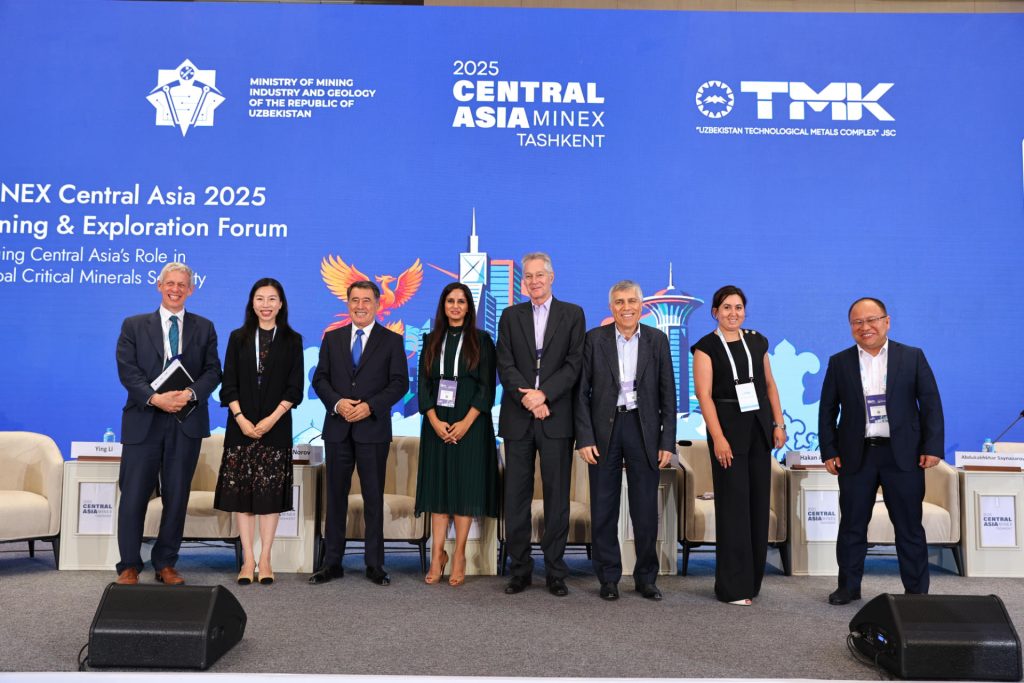
  • MINEX Central Asia 2025 – Session 4:  Creating Resilient Metals & Minerals Value Chains – Emerging Opportunities

    MINEX Central Asia 2025 – Session 4: Creating Resilient Metals & Minerals Value Chains – Emerging Opportunities

    Central Asia is positioned to become a reliable, investment-ready partner in the minerals and metals industry, but long-term stability and international credibility must be established beyond merely owning resources. Experts at this session discussed the needs of buyers, improvement of project development and certification, and the necessity for strategic adjustments in the midstream sector to align with market demands. The session also explored emerging models of buyer-supplier relationships, the importance of long-term agreements, and the critical role of international partnerships in securing Central Asia’s place in the clean energy transition.

    Speakers highlighted global mining trends, with gold and copper remaining the primary exploration targets. Central Asia’s exploration budgets for these metals have risen alongside global prices, though producing new mines remains slow, with the average lead time from discovery to production lengthening to nearly 18 years. The region’s mines tend to have competitive operating costs, especially for gold, with certain Uzbek mines standing out for efficiency. However, both cost management and emission intensity remain ongoing challenges as the industry seeks to decarbonise.

    Artificial intelligence (AI) was presented as a transformative solution for the sector, particularly in accelerating exploration, improving processing, and optimising logistics and supply chains. AI can reduce exploration times, cut costs, and improve the predictability and sustainability of extraction, but barriers such as limited regional expertise, data quality, infrastructure challenges, and limited investment capacity persist. Developing regional specialist training, adopting international standards, and fostering joint innovation hubs were all recommended to overcome these hurdles.

    Responsible gold sourcing and transparent international supply chains were also discussed, with emphasis on meeting established standards, utilising digital tools like blockchain to enable tracking, and ensuring compliance from mine to market. Integration of technology and international best practice is seen as essential to maintain access to premium markets, especially as accountability and transparency expectations increase.

    The discussion acknowledged the region’s potential for rare earth element extraction and opportunities to expand new processing facilities, aiming to add value locally rather than exporting raw materials. However, Central Asia faces tough competition from China, which dominates global processing and refining capacity. Experts stressed that to genuinely reduce dependency, local processing and refining must be developed in tandem with resource extraction.

    Finally, speakers noted that Central Asia’s young population, reform agenda, and improving investment climate make it an increasingly attractive destination for international capital, particularly in critical minerals and technology-driven mining projects. Regional cooperation, robust legal frameworks, and public-private partnerships were highlighted as strategies for maximising opportunities and achieving sustainable, long-term growth.

  • Rovina Valley Project: Europe’s Second-Largest Gold-Copper Mine Moves Toward Construction

    Rovina Valley Project: Europe’s Second-Largest Gold-Copper Mine Moves Toward Construction

    Romania’s Rovina Valley Project — one of Europe’s largest gold-copper developments — is advancing steadily toward construction, with a final Environmental Impact Assessment (EIA) submission expected in the coming months. The project, operated by Toronto-listed Euro Sun Mining, is strategically located in the country’s historic mining region and holds an estimated 10.4 million gold-equivalent ounces.

    CEO Grant Sabor described the deposit as “one big block of uniform copper and gold,” making it exceptionally predictable and operationally low-risk. The site’s porphyry-style mineralization supports long-term, stable production.

    The project is also a pillar of the EU’s Critical Raw Materials Act (CRMA), having received strategic designation that streamlines permitting timelines and places it within Europe’s priority infrastructure. The CRMA aims to reduce the bloc’s reliance on foreign imports by supporting domestic mining initiatives with clear regulatory paths.

    A major financial breakthrough was secured through a $200 million facility agreement with global commodity trader Trafigura. The partnership also includes plans for an additional $200 million in debt financing, supporting full-scale development. Sabor emphasized the deal’s non-dilutive structure and strategic value beyond capital.

    Operational milestones in the next 12 months include finalizing government approvals, acquiring remaining land, and preparing for construction. Once fully permitted, Rovina Valley is expected to become the largest mine development in Romania in over 40 years.

    Despite previous permitting delays and financing difficulties, the project is poised to deliver hundreds of local jobs, bolster Romania’s fiscal position, and contribute significantly to European mineral supply security.

  • Mass Protests Erupt in Serbia Against Rio Tinto’s Jadar Lithium Project

    Mass Protests Erupt in Serbia Against Rio Tinto’s Jadar Lithium Project

    Several thousand people gathered in the city of Loznica, western Serbia, to protest Rio Tinto’s controversial Jadar lithium and boron mining project. Organized by the activist group Ne damo Jadar, the demonstration marks the latest in a series of public pushbacks that began in 2021 and may soon expand to neighboring cities, including Valjevo and Šabac.

    Marijana Petković of Ne damo Jadar accused Serbian authorities of illegally greenlighting new infrastructure for the mining and processing site, located in the village of Gornje Nedeljice. Activists say the approval of a 110 kV transformer station is just the beginning, warning that Rio Tinto could soon receive an exploitation permit — a move that would grant it mining priority over the rare jadarite deposit.

    Protesters also targeted local media for alleged bias. A Lotel TV station building in Loznica was spray-painted and labeled with a sign reading “disturbing content,” reflecting anger over the broadcaster’s failure to report on the opposition or show conditions in the affected villages.

    “Not a single opponent of the Jadar project was ever invited to speak on their channel,” said activist Nebojša Petković, pointing out that major international outlets, including those from France, Italy, Sweden, and Japan, have covered the issue more fairly.

    Further protests are scheduled, with Valjevo hosting the next on July 24. Šabac is also expected to join, forming what Petković called a “Serbian Bermuda triangle” of resistance, with hopes that the movement will gain national traction.

    Despite fierce local resistance, the European Commission granted the Jadar project strategic status in early June, a move seen by opponents as undermining democratic accountability and environmental protections.

    In a related development across the Drina river, citizens of Bosnia and Herzegovina’s Republic of Srpska are also resisting a lithium project near Majevica mountain, where a recent vote to designate the area a protected natural park failed in parliament.

    Both Serbian and Bosnian activists are calling for a blanket moratorium on exploration and exploitation permits across the region.

  • Japan and EU to Launch Joint Strategy to Cut China Dependency on Rare Earths

    Japan and EU to Launch Joint Strategy to Cut China Dependency on Rare Earths

    Japan and the European Union are preparing to launch a joint public-private initiative aimed at reducing their dependency on China for rare earths and other critical minerals, the Nikkei reported on Thursday. The move comes amid increasing global concern over China’s tightening export controls on rare earth alloys, mixtures, and magnets—materials vital for producing electric vehicles, electronics, and defense technologies.

    As part of this new strategy, Japan and the EU will unveil an “economic two-plus-two” dialogue at the upcoming Japan-EU leaders’ summit on July 23. The framework will bring together foreign and economy ministers from both sides and mark the beginning of a coordinated effort to secure diversified, resilient supply chains for critical raw materials.

    The discussions are expected to identify concrete areas for cooperation starting this summer. These may include joint development of rare earth supply infrastructure, simplified EU regulatory access for Japanese firms, and increased Japanese participation in EU strategic mineral projects.

    The framework will also feature Stephane Sejourne, the European Commission’s executive vice president for prosperity and industrial strategy, who is expected to play a central role in industrial coordination.

    The move follows similar actions by other global powers: earlier this month, the U.S. Department of Defense became the largest shareholder in MP Materials through a multibillion-dollar investment aimed at ramping up domestic rare earth production. Meanwhile, India is pursuing critical mineral supply deals with Chile and Peru.

    With Beijing’s dominance of rare earth processing posing a potential threat to industrial and defense stability, Tokyo and Brussels are positioning themselves for long-term strategic autonomy in this increasingly competitive arena.