Website: Europe.com

  • Proposed ERG Ownership Restructuring Raises Geopolitical and Sanctions Concerns

    Proposed ERG Ownership Restructuring Raises Geopolitical and Sanctions Concerns

    A reported restructuring of ownership at Eurasian Resources Group (ERG) is drawing attention from analysts and policymakers due to potential geopolitical implications involving sanctions enforcement, Russian financial influence and the control of critical mineral assets.

    ERG is one of the largest mining groups operating across Eurasia and Africa, with major copper and cobalt operations in the Democratic Republic of Congo. These minerals are essential for battery production, defence technologies and advanced manufacturing, placing the company within supply chains considered strategically important by Western governments.

    According to media reports and industry sources, Kazakh businessman Shakhmurat Mutalip is expected to acquire a significant stake in ERG in a transaction estimated at around $1.4 billion. The move has been interpreted by some observers as part of a broader effort by Kazakhstan’s leadership to reshape ownership structures among major domestic industrial assets.

    However, questions have emerged regarding the potential sources of financing and the broader network of business relationships connected to the proposed transaction. Some reports have suggested possible links between Mutalip and Russian banking institutions including VTB and Sberbank, both of which are subject to Western sanctions. If confirmed, such connections could raise concerns among regulators about exposure to secondary sanctions risks.

    Additional scrutiny has focused on ERG’s chief executive, Shukhrat Ibragimov. Ukrainian authorities have imposed a travel ban on Ibragimov on national security grounds, citing alleged concerns about possible involvement in facilitating sanctions circumvention by individuals connected to Russia. He has not been publicly included in Ukraine’s formal sanctions list.

    Observers have also highlighted business ties between Ibragimov and Kazakh investor Kenes Rakishev, a prominent figure in Kazakhstan’s financial sector. Rakishev is known for longstanding relationships within Kazakhstan’s political and business circles and has previously been associated with networks linked to Chechen leader Ramzan Kadyrov.

    Some reports have further drawn attention to allegations involving Kazakhstan Paramount Engineering, a defence manufacturing company reportedly linked to Rakishev through leaked communications referenced by the Kazakhstani Initiative on Asset Recovery. According to those claims, vehicles produced by the company were later observed in areas of Ukraine during the conflict. These allegations remain a subject of debate and scrutiny.

    The broader concern for policymakers lies in the strategic significance of ERG’s mineral assets. Copper and cobalt resources controlled by the group are central to global supply chains for energy transition technologies, defence systems and advanced industrial production.

    Analysts note that any ownership restructuring that increases exposure to sanctioned financial networks could potentially attract attention from regulators in the United States and the European Union. Western authorities have previously taken enforcement actions where indirect ownership structures were used to bypass sanctions.

    The situation also reflects wider dynamics within Kazakhstan’s political and economic landscape. In recent years, President Kassym-Jomart Tokayev has pursued efforts to reshape elite ownership structures that emerged during the Nazarbayev era. However, analysts note that shifts in corporate control do not necessarily eliminate the influence of longstanding financial and political networks operating across the region.

  • Bosnia’s Nova Ljubija Iron Ore Mine Preparing Bankruptcy Filing Amid Financial Struggles

    Bosnia’s Nova Ljubija Iron Ore Mine Preparing Bankruptcy Filing Amid Financial Struggles

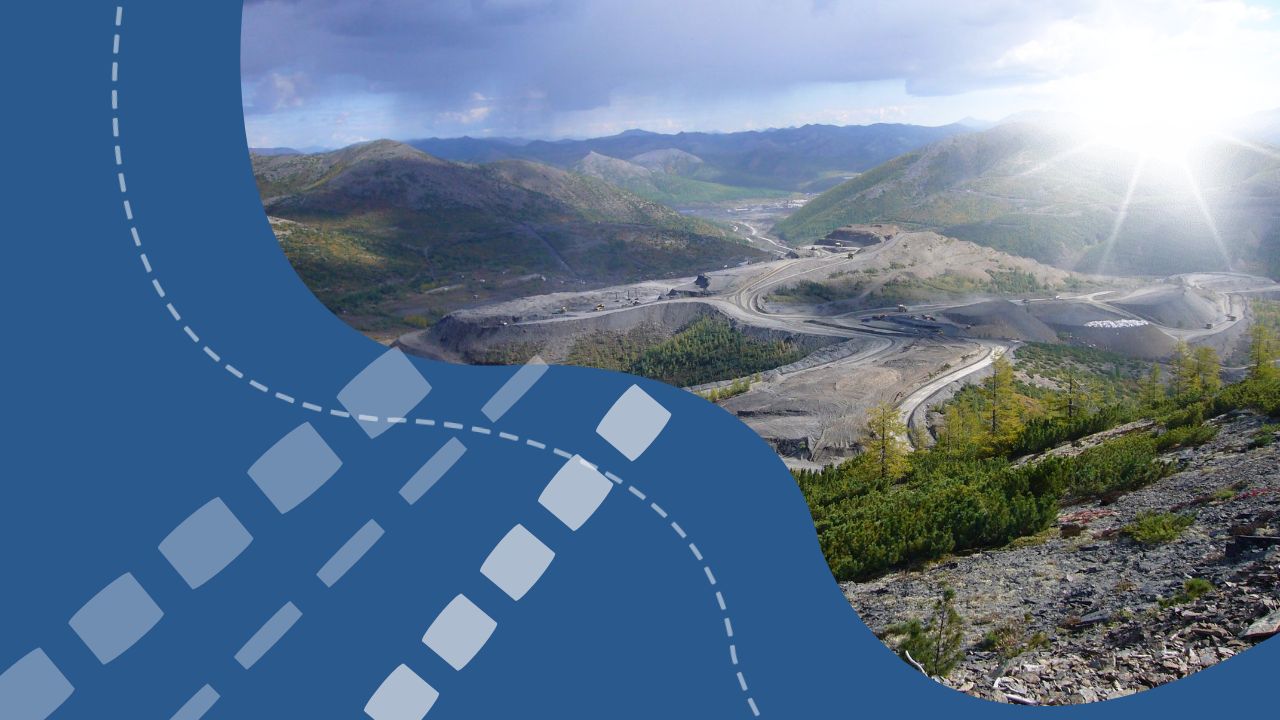
    Iron ore producer Nova Ljubija in Bosnia and Herzegovina is preparing to initiate bankruptcy proceedings after its owners determined that continuing operations is no longer financially viable.

    According to local media reports, the company is currently finalising documentation and is expected to file for bankruptcy in the coming days. Suzana Gasic, deputy director of Nova Ljubija, confirmed the move, noting that prolonged financial difficulties faced by its sole customer, steel producer Nova Zeljezara Zenica, have significantly impacted the mine’s operations.

    Nova Zeljezara Zenica has reportedly been unable to settle outstanding obligations to the mining company, creating a sustained liquidity strain that contributed to the decision to seek bankruptcy protection.

    The Nova Ljubija mine employs around 600 workers and has been a key iron ore supplier to Bosnia’s steel industry. The company is jointly owned by local diversified group Pavgord and mining operator Rudnici Zeljezne Rude Ljubija.

    The situation follows a broader restructuring of steel assets in the country. In June 2025, Luxembourg-based steel giant ArcelorMittal agreed to sell its shares in steel plant operator ArcelorMittal Zenica and iron ore producer ArcelorMittal Prijedor to Pavgord.

    Industry observers note that the difficulties faced by Nova Ljubija reflect broader pressures within the regional steel sector, including financial instability among downstream producers and shifting market conditions.

  • Mundoro Capital Highlights Copper Generator Model and Exploration Partnerships at PDAC 2026

    Mundoro Capital Highlights Copper Generator Model and Exploration Partnerships at PDAC 2026

    Mundoro Capital Inc. used the PDAC 2026 conference in Toronto to outline its exploration strategy focused on copper projects in Eastern Europe and the United States, emphasising the company’s use of a “generator” model designed to advance exploration while limiting shareholder dilution.

    Speaking during the event, Chief Executive Officer Teo Dechev explained that the generator model allows the company to assemble prospective land packages and develop exploration targets before bringing in larger mining companies to fund drilling and project development. This approach reduces the need for continuous equity financing while enabling exploration to move forward through partnerships.

    Mundoro Capital focuses primarily on copper opportunities in regions with strong geological potential. The company currently concentrates its exploration activities in Serbia and Arizona, where it identifies and secures land positions, compiles geological data and generates exploration targets before partnering with major mining companies.

    According to Dechev, option agreements with industry partners provide funding that can be reinvested into developing additional exploration opportunities. The strategy allows the company to build a pipeline of projects while sharing financial risk with larger operators.

    One of the most significant examples of this approach is Mundoro’s Serbian portfolio in the Timok region, a well-known copper district in eastern Serbia. The company has assembled approximately 940 square kilometres of prospective ground in the area and entered into multiple agreements with global mining company BHP.

    Under the partnership, BHP is expected to carry out systematic drilling campaigns across several exploration targets during the year, a development Dechev described as a major step forward for advancing the district’s copper potential.

  • Euromines Urges Stronger Raw Materials Integration in EU Industrial Accelerator Act

    Euromines Urges Stronger Raw Materials Integration in EU Industrial Accelerator Act

    The European Union’s proposed Industrial Accelerator Act (IAA) represents a significant step toward building a more proactive and coordinated industrial policy aimed at strengthening competitiveness, resilience and strategic autonomy across key manufacturing sectors. However, industry representatives warn that the legislation must more clearly integrate the upstream raw materials sector to ensure the effectiveness of Europe’s strategic supply chains.

    The IAA seeks to stimulate investment and accelerate the development of strategic industries by promoting the production of key technologies and introducing measures such as simplified permitting, “Made-in-EU” criteria and requirements related to low-carbon content. These provisions are intended to create stronger regulatory certainty and targeted incentives capable of mobilising private capital and supporting the EU’s green and digital transitions.

    According to industry association Euromines, these policy tools reflect a growing recognition within the EU that achieving climate and technological goals requires a comprehensive industrial strategy capable of aligning supply and demand across critical value chains.

    However, the organisation argues that the current framework does not sufficiently address the role of domestic raw materials production. Without stronger links between manufacturing policies and upstream resource extraction, increased demand for strategic goods could fail to translate into greater supply security within the European Union.

    Euromines also notes that the proposed reliance on non-preferential rules of origin primarily reinforces final manufacturing stages rather than recognising the strategic importance of raw materials produced within the EU. While cooperation with trusted international partners remains important, extending recognition of EU origin to certain Free Trade Agreement partners may do little to strengthen Europe’s internal resource base.

    The organisation has called for greater integration of raw materials policy into the Industrial Accelerator Act, arguing that minerals and metals form the foundation of all strategic industrial value chains.

    Euromines said it is prepared to work with EU lawmakers to address these gaps, emphasising that fully incorporating domestic raw materials production into the IAA will be essential for building resilient supply chains and achieving the bloc’s long-term industrial, strategic and climate objectives.

  • Czech Cinovec Lithium Project Faces Local Opposition Despite EU Strategic Backing

    Czech Cinovec Lithium Project Faces Local Opposition Despite EU Strategic Backing

    A major lithium mining project in the Czech Republic’s north-west is drawing increasing local opposition even as it gains strategic support from the European Union as part of its efforts to secure critical mineral supplies for the green transition.

    The Cinovec deposit, located near the German border in the Ore Mountains, is considered one of the largest lithium resources in Europe. Developed by Geomet, a company jointly owned by Czech state-controlled energy group CEZ (51%) and European Metals Holdings (49%), the project could become a cornerstone of the EU’s emerging domestic lithium supply chain.

    The deposit is estimated to contain up to three percent of global lithium reserves. Current development plans envisage mining roughly 3.2 million tonnes of ore annually, producing about 37,000 tonnes of battery-grade lithium carbonate each year, enough to supply materials for around 1.3 million electric vehicles.

    The project has been designated a strategic initiative under the EU’s Critical Raw Materials Act, enabling accelerated permitting procedures and financial support. The development has also received a €36 million grant from the EU’s Just Transition Fund and a €360 million subsidy from the Czech government. Total project investment is estimated at around CZK 42 billion (€1.75 billion), with mining potentially beginning by 2030.

    However, residents and local officials in the Usti nad Labem region have raised concerns that the project could reverse years of environmental recovery following the decline of heavy industry and coal mining. The area, which transitioned from large-scale industrial extraction to tourism and spa services, now faces the prospect of renewed mining activity.

    Local leaders warn that lithium extraction could bring environmental and social impacts, including noise and air pollution, groundwater contamination and disruption to landscapes and biodiversity. Critics also point out that parts of the proposed mining area lie within protected Natura 2000 zones and the Ore Mountains UNESCO World Heritage site.

    Activists and environmental researchers argue that large-scale lithium extraction cannot be considered environmentally neutral, even if linked to renewable technologies and electric vehicle production. Concerns have also been raised about transparency, community consultation and the long-term economic benefits for local residents.

    Economic uncertainties further complicate the project’s outlook. Lithium prices have fallen sharply since their peak in 2022, raising questions about the financial viability of large-scale hard-rock lithium mining at Cinovec. Analysts note that the project’s costs may be relatively high due to the ore’s lower lithium concentration, while reliance on public subsidies and volatile global markets adds additional risk.

    Despite these challenges, Czech authorities continue to view the project as strategically important for maintaining the country’s role in the European automotive supply chain and supporting the EU’s broader goal of reducing dependence on imported battery materials.

  • Rock Tech Lithium and Siemens Partner to Develop Digitalised Lithium Converter in Ontario

    Rock Tech Lithium and Siemens Partner to Develop Digitalised Lithium Converter in Ontario

    Rock Tech Lithium and Siemens Canada have signed a non-binding memorandum of understanding to establish a long-term strategic partnership aimed at developing advanced lithium conversion capacity in Canada, centred on the planned Red Rock converter project in Ontario.

    The agreement, announced during the Canadian Critical Minerals Forum hosted by Natural Resources Canada at PDAC 2026 in Toronto, focuses on applying Siemens’ digitalisation technologies, including Digital Twin systems, throughout the design, construction and operation of the lithium processing facility.

    The Red Rock converter will be developed using the engineering blueprint of Rock Tech’s fully permitted Guben lithium converter project in Germany. By replicating the design, the company aims to accelerate development timelines, reduce technical risks and improve capital efficiency while moving toward a final investment decision in Canada.

    The planned facility is expected to produce up to 32,000 tonnes of lithium carbonate equivalent annually, enough to supply battery materials for roughly 900,000 electric vehicles each year. Once operational, the plant would become Ontario’s first lithium conversion facility and a key component of Canada’s emerging battery materials supply chain.

    Rock Tech said the project will form part of a vertically integrated supply chain alongside its Georgia Lake lithium mining project, creating a regional “rock-to-battery” corridor within Ontario.

    Under the partnership, Siemens will deploy its Digital Twin technology to model process design, energy use and material flows across the entire project lifecycle. The digital system is intended to optimise plant efficiency, emissions performance and operational reliability before major capital investments are committed.

    The collaboration also reflects growing strategic cooperation between Canada and Germany on critical minerals supply chains. Officials said the Red Rock project aligns with priorities under the G7 Critical Minerals Production Alliance and could serve as a reference model for future lithium conversion facilities in allied markets.

    The partnership will be implemented in multiple phases, beginning with the integration of digital technologies into feasibility and engineering studies. The companies will also explore additional Siemens services and potential joint funding opportunities with Natural Resources Canada, the Government of Ontario and bilateral Canadian-German programmes.

    Canadian Energy and Natural Resources Minister Tim Hodgson said initiatives such as the Red Rock project demonstrate how G7 partners are moving from policy commitments to concrete investments aimed at building secure and sustainable critical mineral supply chains.

  • SSR Mining to Sell 80% Stake in Turkey’s Copler Gold Mine to Cengiz Holding for $1.5bn

    SSR Mining to Sell 80% Stake in Turkey’s Copler Gold Mine to Cengiz Holding for $1.5bn

    SSR Mining has agreed to sell its 80 percent interest in the Copler gold mine and related assets in Turkey to Cengiz Holding for $1.5 billion in cash, marking a major strategic shift toward focusing its operations in the Americas.

    The transaction covers all mining licences, infrastructure, rights and liabilities associated with SSR Mining’s operations at Copler in eastern Anatolia. The company announced that its shares rose approximately 15 percent in pre-market trading in New York following the announcement.

    SSR Mining suspended operations at the Copler mine in 2024 after a landslide at the heap leach facility left at least nine miners missing. An independent investigation later determined that a design flaw in third-party engineering work was the most likely cause of the failure, prompting a broader review of the asset and its operational risks.

    Executive chairman Rod Antal said the divestment forms part of a broader strategy to reposition the company’s portfolio geographically. The move follows SSR Mining’s acquisition of the Cripple Creek & Victor gold mine in the United States and reflects a renewed focus on assets in the Americas.

    The company added that it is also reviewing its remaining presence in Turkey, including its 20 percent stake in the Hod Maden development project.

    Completion of the Copler transaction with Cengiz Holding is expected in the third quarter of 2026, subject to customary approvals and closing conditions.

  • Katco JV Boosts Uranium Output to 3,700 Tonnes in 2025, Strengthening Orano’s Overseas Portfolio

    Katco JV Boosts Uranium Output to 3,700 Tonnes in 2025, Strengthening Orano’s Overseas Portfolio

    The uranium joint venture Katco, owned by France’s Orano (51%) and Kazakhstan’s Kazatomprom (49%), produced more than 3,700 tonnes of uranium in 2025, marking a significant increase in output following the commissioning of the South Tortkuduk section at the Moinkum deposit.

    The figures were disclosed during a conference call by Orano, which confirmed that production at Katco rose from just under 2,400 tonnes in 2024 to slightly above 3,700 tonnes in 2025. Katco operates at the South and Tortkuduk sections of the Moinkum uranium field in the Sozak district of Turkestan region.

    Development of the South Tortkuduk project, formalised through an additional agreement in 2022, has enabled the joint venture to extend production by up to 15 years while targeting annual output of around 4,000 tonnes. A new uranium processing plant under the South Tortkuduk project was launched in July 2024, with production from the new section gradually replacing output from older mining areas.

    According to Kazatomprom’s annual reports, Katco produced 2,564 tonnes in 2022, 2,103 tonnes in 2023 and 2,388 tonnes in 2024, underscoring the scale of the 2025 increase. As of the end of 2024, Katco’s uranium reserves stood at 47,900 tonnes. Based on 2025 production levels, reserves may have declined to approximately 44,200 tonnes by year-end. With a subsoil use contract valid until 2039, sustained production at 4,000 tonnes per year would allow remaining reserves to be mined over roughly 11 years.

    Financially, Katco remains one of Orano’s most profitable international uranium assets. In 2025, the Kazakh joint venture generated €628 million in revenue and €324 million in net profit, compared with €479 million and €273 million respectively in 2024.

    Kazatomprom’s share of net income amounted to €159 million, reflecting its 49 percent ownership stake, along with an additional €36 million under a previously agreed 11 percent profit distribution arrangement valid through the end of the contract period. This implies that Orano’s net income from Katco in 2025 totalled approximately €129 million, a significant contribution given the French group’s adjusted net loss of €25 million for the year.

    During the call, Orano’s management also indicated plans to expand exploration activities into Canada, Botswana, Australia and Mongolia, as the company seeks to diversify its uranium portfolio following the loss of operations in Niger, which had previously accounted for a substantial share of its global production.

  • Fen Deposit in Norway Expands 81%, Strengthening Europe’s Rare Earth Ambitions

    Fen Deposit in Norway Expands 81%, Strengthening Europe’s Rare Earth Ambitions

    Rare Earths Norway has announced a substantial upgrade to mineral resources at its Fen project, describing the deposit as Europe’s largest rare earth accumulation and a potential cornerstone of the continent’s strategic supply chain.

    According to a revised estimate prepared by consulting firm WSP, indicated and inferred resources at Fen now total 15.9 million tonnes of rare earth oxides, an 81 percent increase from the 8.8 million tonnes reported in 2024. The updated figures place Fen well ahead of Sweden’s Per Geijer deposit, previously cited by LKAB as Europe’s largest rare earth discovery.

    Bernd Schaefer, CEO of EIT RawMaterials, said the resource expansion elevates Fen from a promising discovery to what he described as a world-class strategic asset. He noted the project could serve as the foundation for a compact “mine-to-magnet” value chain within Europe, supporting industrial resilience and long-term raw material security.

    Europe currently has no operating rare earth mines, leaving the region heavily dependent on imports. Eurostat data show that in 2024, 95 percent of the European Union’s rare earth imports originated from China, Malaysia and Russia. The development of Fen would support EU efforts to diversify supply and reduce strategic vulnerability.

    Rare earth elements are essential for advanced defence systems, including precision motors and sensors used in naval vessels, fighter aircraft and drones, as well as permanent magnets required for electric vehicles, wind turbines and consumer electronics. The latest resource estimate indicates that approximately 19 percent of Fen’s oxides consist of neodymium and praseodymium, key materials for high-performance magnets. The deposit also contains notable quantities of niobium and thorium.

    Rare Earths Norway has previously outlined plans to commence production in late 2031, targeting annual output of 800 tonnes of NdPr by 2032, equivalent to roughly 5 percent of projected EU demand. While the company holds an extraction permit, it still requires an operating permit before mining can begin. The latest announcement did not revise projected timelines or production targets.

    The project aligns with the EU’s ResourceEU action plan adopted in December 2025, which seeks to accelerate domestic extraction, processing and recycling of critical minerals. However, current EU policy does not restrict the export destinations of rare earths mined within the bloc, meaning production could still be sold to non-European markets.

  • Allied Critical Metals Posts Strong PEA Economics for Borralha Tungsten Project as 20,000 m Drill Program Gets Underway

    Allied Critical Metals Posts Strong PEA Economics for Borralha Tungsten Project as 20,000 m Drill Program Gets Underway

    Allied Critical Metals Inc. has released the results of an initial Preliminary Economic Assessment (PEA) for its 100%-owned Borralha Tungsten Project in northern Portugal, outlining an underground development concept with strong returns across multiple tungsten price scenarios and a fully funded drilling campaign aimed at expanding resources beyond the initial mine plan.

    In the study’s medium case using a tungsten price of USD 1,000/mtu WO₃, the project delivers an after-tax NPV(8%) of C$473.4 million (USD 346.6 million) and an after-tax IRR of 48.8%, with an estimated payback period of 4.2 years. Under the base case aligned with an Argus long-term average price assumption of roughly USD 704/mtu WO₃, the after-tax NPV(8%) is C$182.7 million (USD 134.0 million) and the after-tax IRR is 27.2%, with a payback of 5.8 years. A high-price sensitivity case at USD 1,500/mtu WO₃ increases the after-tax NPV(8%) to C$963.8 million (USD 706.4 million) and the IRR to 78.4%, shortening payback to 3.2 years.

    The PEA estimates initial capital at approximately USD 91 million (C$124.2 million) and sustaining capital at about USD 87 million (C$118.8 million), for total life-of-mine capital of roughly USD 178 million (C$243.1 million). The mine plan covers an 11-year operating life, based on the Santa Helena Breccia deposit, with a nominal processing rate of 1.4 million tonnes per annum and average mill feed grade of about 0.20% WO₃. Average annual recovered production is estimated at approximately 1,708 tonnes WO₃, with peak annual output of 2,388 tonnes WO₃. The company reported an all-in sustaining cost estimate of around USD 303/mtu WO₃.

    Allied said the economic model was built on conservative design assumptions, including mine design and cut-off grade selection developed using USD 659/mtu WO₃. The company highlighted that reported spot market pricing for tungsten has recently been materially higher than the study’s sensitivity cases.

    The company also reported several de-risking milestones and strategic positioning factors. Borralha has received a favourable Environmental Impact Declaration (DIA) from Portugal’s environment agency, subject to standard regulatory conditions, and the project has been endorsed by idD Portugal Defence as a strategic initiative of national importance.

    To support growth beyond the initial 11-year plan, Allied has begun a fully funded 20,000-metre drill program targeting resource expansion, conversion of inferred material into higher-confidence categories, potential mine life extension, and possible throughput and scale optimisation. The PEA does not include Allied’s other tungsten project at Vila Verde.