Website: Europe.com

  • France Eyes Australian Critical Minerals as US Framework Deal Spurs Global Rush for Supply Access

    France Eyes Australian Critical Minerals as US Framework Deal Spurs Global Rush for Supply Access

    France is emerging as a prospective investor in Australian critical minerals projects, Australia’s resources minister has said, as the country’s landmark framework agreement with the United States last October continues to galvanise interest from advanced manufacturing nations seeking to lock in supply chains independent of China.

    Speaking to Reuters during the Minerals Week summit in Canberra on Thursday, Australian Resources Minister Madeleine King said that since the US deal — which anchored an $8.5 billion pipeline of investments — other partners had accelerated their engagement with urgency. “France is more and more keen,” King said, noting that Paris has engaged at a policy and financing framework level, including through export credit agency Bpifrance Assurance Export, though it has yet to announce large-scale project funding of the kind committed by the United States and Japan.

    The remarks come days after Australia and the European Union signed a free trade agreement on Tuesday, which is expected to ease EU access to Australian critical minerals but stopped short of the detailed investment project commitments that accompanied the US deal. Australia has now inked sector cooperation agreements with Japan, South Korea, India, France, Germany and Britain, and this month joined the G7 Critical Minerals Production Alliance.

    Australia is seeking billions of dollars in additional investment across 49 mining projects and 29 midstream processing projects, with the sector forecast to generate A$18 billion ($12.52 billion) in export earnings in the financial year beginning July 1. The government has already committed A$28 billion in financial support for the sector since coming to power in May 2022.

    King cautioned that building a competitive critical minerals industry would require sustained, long-term commitment — potentially spanning decades. “If you want to compare timelines, it took China 40 years,” she said, adding that the government would need to think of its support “as a long-term proposition.” She drew a parallel with Australia’s own history of backing its iron ore and liquefied natural gas sectors, suggesting critical minerals may prove an even more complex undertaking.

    Central to Australia’s near-term strategy is an A$1.2 billion strategic reserve focused on antimony, gallium and rare earths, expected to become operational in the second half of this year. The reserve will incorporate a floor price mechanism to provide market stability, while agreements will be structured to ensure the government can capture upside if prices rise — and exit that arrangement when appropriate.

    King also confirmed that Australia sees its reserve as a potential feeder into the United States’ own $12 billion minerals stockpile, known as Project Vault, though she noted that the details of that arrangement remain under discussion.

    On the broader challenge of attracting investment partners less experienced in mining finance, King was direct: “Many other countries just aren’t used to getting involved in mining and mining-style financing, but they’re going to have to, if they want to have that secure supply.”
  • The First Mining-Site Digital Product Passport in Turkey

    The First Mining-Site Digital Product Passport in Turkey

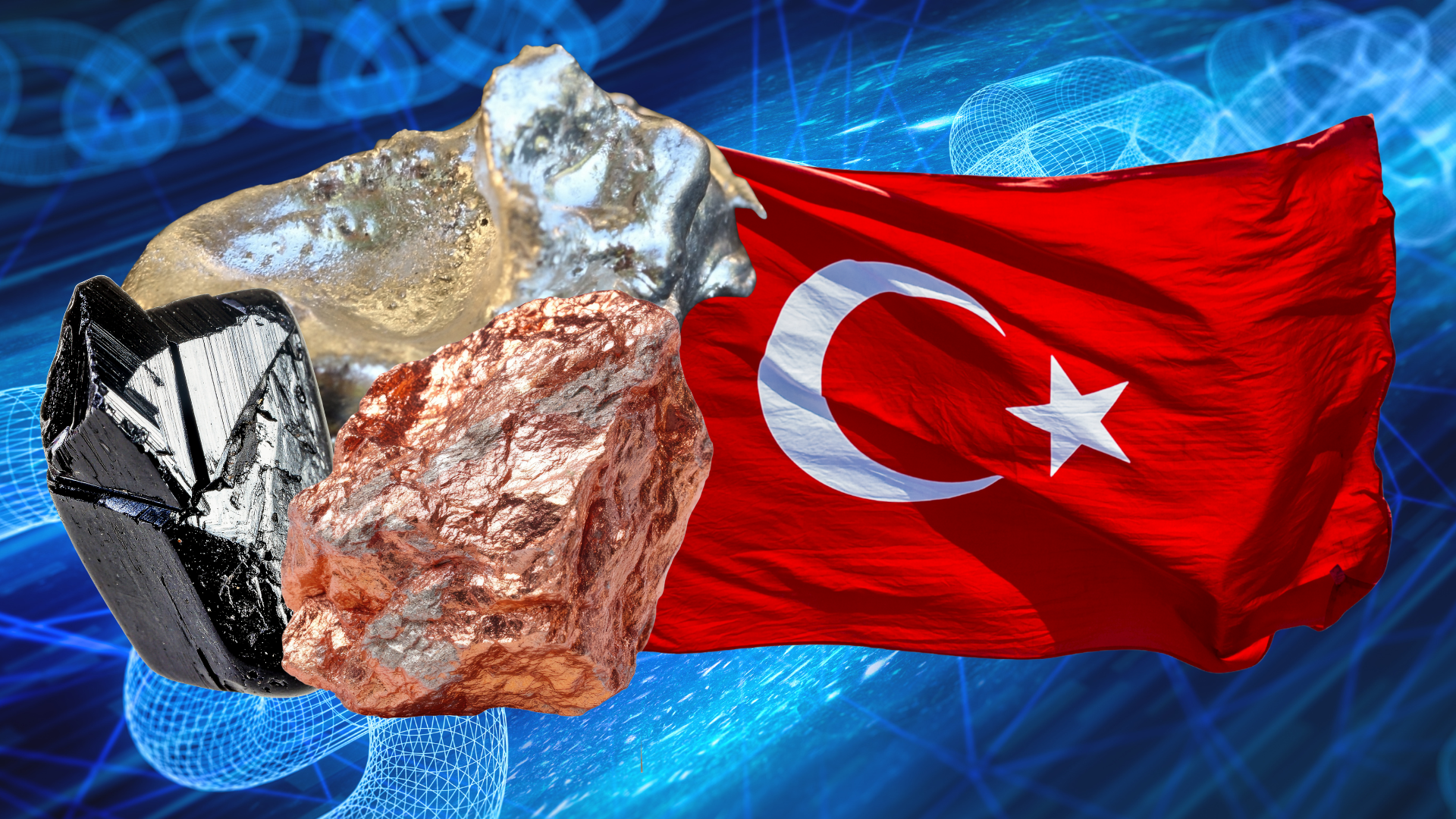
    Minespider, a leading traceability and Digital Product Passport (DPP) platform, and TETHYS Trans-Eurasian Gateway, a company specializing in bridging European technologies to mining projects in Turkey and Central Asia, announce the first Digital Product Passport (DPP) implemented at the Çataltepe Mining Project, marking a significant milestone in the digital transformation of the critical minerals sector.

    This is one of the first implementations of the Digital Product Passport in mining sites in Central Asia and Turkiye, which now positions Çataltepe as a pioneering project in the region’s transition toward transparent and traceable critical minerals supply chains.

    Following a collaboration that began in May 2025, the two companies launched a Digital Product Passport (DPP) pilot at the Çataltepe Polymetallic mine located in the Dardanelles (Çanakkale) in Turkey. The traceability project, including capturing and linking data of origin, processing, and ESG indicators, is planned to be introduced across the entire supply chain – from the Çataltepe Mine based in Lapseki, Çanakkale to the Yenice Flotation Plant, and finally to export.

    A New Standard for Critical Minerals Transparency

    The Digital Product Passport is a dynamic digital record that captures verified data across the full lifecycle of a product—from raw material extraction to end-of-life. The system will provide a transparent chain of custody for each shipment of lead concentrate, zinc concentrate and copper concentrate from the Çataltepe polymetallic mine, with the expected volumes of ~15,000 tonnes of ore processed monthly, yielding 1,000–1,200 tonnes of concentrate output. The introduction of Digital Product Passports will consolidate reporting, improve efficiency, and enhance trust with downstream customers and will help to ensure compliance with international regulations such as the EU Carbon Border Adjustment Mechanism (CBAM) and the Critical Raw Materials Act (CRMA).

    Driving Accountability Across the Critical Minerals Value Chain

    Digital Product Passports are rapidly becoming a cornerstone of the global transition toward sustainable and accountable supply chains. They enable the collection and sharing of product data across the entire value chain, closing information gaps and enhancing decision-making.

    Leyla Keser, Chairperson of TETHYS, stated:

    “At TETHYS, we define accountability not as an abstract principle, but as a measurable and traceable reality across the entire value chain. With the Çataltepe Digital Product Passport, we are embedding transparency at the very origin of critical minerals—where trust must begin. This is not only a technological milestone, but a strategic step toward aligning our region with global standards, strengthening responsible sourcing, and positioning Greater Central Asia, Türkiye, and the Balkans as reliable and future-ready partners in the global critical minerals supply chain.”

    Nathan Williams, Founder & CEO of Minespider, said:

    “We are entering a new phase where mineral supply chains must be not only efficient, but also transparent and verifiable by design. Each shipment can be traced back to its origin, with verified data on production and ESG parameters. This is a critical step toward enabling trusted, data-driven mineral supply chains that meet emerging regulatory requirements and industry expectations. We are proud that the Çataltepe project creates a new benchmark for sustainable mining projects in the region.”

    About Tethys

    Tethys operates across Greater Central Asia, Türkiye, and the Balkans, focusing on critical minerals, infrastructure, and sustainable value chains. Through its integrated approach, Tethys combines investment, technology, and ESG principles to deliver accountable, scalable, and future-oriented projects across strategic regions.

    https://www.tethysgateway.com/

    About Minespider

    Minespider is a leading European mineral traceability platform, trusted by global companies including Microvast, Renault, Minsur, TEMSA, PTL, Ford Otosan, and Tata Elxsi. Its blockchain-based system provides secure, transparent data sharing across supply chains in Digital Product Passports (DPPs) and Digital Battery Passports (DBPs) to support compliance and sustainability from mine to manufacturer.

    For more information about Minespider, please email marketing@minespider.com or visit our website at www.minespider.com.

  • Turkey Eyes $135 Billion Gold Reserves as Lira Comes Under Pressure From Iran War Fallout

    Turkey Eyes $135 Billion Gold Reserves as Lira Comes Under Pressure From Iran War Fallout

    Turkey’s central bank is weighing emergency measures to defend the lira against mounting volatility triggered by the war with Iran, including tapping into its vast gold reserves through swap transactions in the London market, according to people familiar with the deliberations.

    The bank has held internal discussions about conducting gold-for-foreign currency swaps, a move that would allow it to mobilise hard currency without directly selling its gold holdings. Turkey is estimated to hold around $30 billion of its reserves at the Bank of England — assets that a JPMorgan economist said the central bank “may decide to use for FX intervention purposes without logistical constraints.” The central bank declined to comment. Gold prices slipped 0.7% following reports of the potential step.

    Turkey’s total gold reserves stood at approximately $135 billion as of early March, the product of an aggressive decade-long accumulation strategy driven by a policy of reducing exposure to US dollar-denominated assets. The scale of those holdings now makes gold a natural first line of defence as pressure on the lira intensifies.

    The country is acutely exposed to the Iran conflict’s economic aftershocks. As a near-total importer of oil and gas, Turkey faces severe inflation and balance-of-payments risks the longer the war continues — factors already straining a disinflation strategy built around preventing the lira from depreciating faster than monthly inflation. Oil prices have surged from around $70 to above $100 a barrel since hostilities began, compounding the challenge for policymakers who are already contending with an inflation rate of 31.5% — one of the highest in the world.

    The central bank’s crisis response so far has included tightening liquidity conditions, raising the cost of lira funding, and directing state-run lenders to intervene directly in currency markets. It has also been offloading foreign-currency bond holdings, including an estimated $16 billion in US Treasury sales in recent weeks, reducing Turkey’s Treasury holdings to below $17 billion — down sharply from a peak of $82 billion in 2015. Foreign investors, meanwhile, have been exiting Turkish government bonds at the fastest pace on record, according to central bank data covering the week through 13 March.

    Street-level signs of stress are also emerging. Traders at Istanbul’s Grand Bazaar were this week selling dollars at a premium to the interbank rate, a visible indicator of rising local demand for hard currency.

    Interest-rate expectations have shifted significantly. Traders are now pricing in a 100 basis point rate increase at next month’s meeting. Turkey’s benchmark rate currently stands at 37%, though the central bank suspended lending from that rate at the start of March in favour of a costlier 40% funding window. The lira was trading at 44.35 per dollar on Tuesday afternoon in Istanbul, continuing a steady decline that has averaged approximately 0.05% per day this year.

  • Australia and EU Seal Free Trade Deal After Eight Years, With Critical Minerals and Agricultural Quotas at Its Heart

    Australia and EU Seal Free Trade Deal After Eight Years, With Critical Minerals and Agricultural Quotas at Its Heart

    Australia and the European Union have signed a landmark free trade agreement, ending eight years of on-and-off negotiations in a deal shaped as much by geopolitical urgency as by economics — with China’s dominance of critical mineral supply chains and the shadow of US tariffs under the Trump administration providing the final impetus to close talks.

    The agreement, signed on Tuesday, will eliminate more than 99% of tariffs on EU goods exports to Australia, saving European companies an estimated €1 billion ($1.2 billion) annually, while Australian Prime Minister Anthony Albanese said the deal would add approximately A$10 billion ($7 billion) per year to the Australian economy. EU exports to Australia are projected to grow by up to 33% over the next decade.

    At the strategic core of the agreement is a critical minerals partnership. The scrapping of almost all import tariffs on Australian critical minerals entering the EU was hailed by both sides as a vital step toward diversifying Western supply chains away from China, which currently dominates global rare earth production and processing. European Commission President Ursula von der Leyen, addressing Australia’s parliament, said the two parties “cannot be over-dependent on any supplier for such crucial ingredients,” framing the partnership as a strategic imperative for both Europe and Australia.

    The two sides also signed a separate agreement deepening security and defence cooperation, underscoring the deal’s broader geopolitical character. The accord adds to Europe’s expanding footprint in the Indo-Pacific, following trade agreements concluded with Indonesia in September and India in January.

    Agriculture, however, proved the deal’s most contentious terrain. While Australian tariffs on European wine, sparkling wine, fruit, vegetables, chocolates and — over three years — cheeses will fall to zero from day one, the EU has maintained quotas on key Australian agricultural exports. For beef, a sticking point significant enough to derail talks in 2023, the EU has agreed to open two tariff-rate quotas totalling 30,600 metric tons, with around 55% of that volume entering duty-free. Sheep meat will also face restrictions.

    The outcome satisfied neither side of the farming divide. Australian agricultural groups, led by National Farmers Federation president Hamish McIntyre, said they were “extremely disappointed” that the deal had concluded without commercially meaningful market access gains. Meanwhile, French farmers — already mobilised against beef import provisions in the EU-Mercosur agreement — argued that even the agreed quotas were too generous, with France’s National Bovine Federation accusing Von der Leyen of continuing to undermine the domestic beef industry.

    On other terms, Australia agreed to raise its luxury car tax threshold for EU-made electric vehicles to A$120,000 ($83,600), effectively exempting around 75% of European EVs from the tax. Some EU geographical indication names, including Pecorino Romano and Ouzo, will receive full protection after a short transition period, though producers of goods such as feta may continue using the name provided the product’s origin is clearly labelled.

    EU industry groups including BusinessEurope, SpiritsEurope and the European Services Forum welcomed the agreement. EU firms exported €37 billion of goods to Australia in 2025 and €28 billion in services in 2023. The EU is Australia’s third-largest two-way trading partner and its second-largest source of foreign investment.

  • US Plans $250M Contribution to $1 Trillion Supply Chain Investment Consortium

    US Plans $250M Contribution to $1 Trillion Supply Chain Investment Consortium

    The United States government is set to contribute $250 million to a major international investment consortium aimed at securing global supply chains for energy and critical minerals, a senior Trump administration official announced Monday.

    Under Secretary of State for Economic Affairs Jacob Helberg confirmed that Washington will lead the consortium, which is expected to bring together up to $1 trillion in assets under management drawn from sovereign wealth funds and institutional investors. The fund will count Japanese tech conglomerate SoftBank Group, Singapore’s state-owned Temasek Holdings, and Abu Dhabi’s Mubadala Investment Company among its founding participants.

    Helberg outlined the consortium’s top priorities as investments focused on preserving access to energy and rare earth minerals for the United States and its allies — with a particular emphasis on what he described as “mineral security, logistics, and likely energy security infrastructure.” Officials will convene to review a list of candidate projects before making joint investment decisions.

    Congress is expected to be formally notified of the $250 million US commitment in the near term. Representatives for SoftBank, Temasek, and Mubadala had not responded to requests for comment at time of publication.

    The fund forms a central pillar of a broader US-led supply-chain alliance known as Pax Silica, which has expanded its remit to include energy infrastructure following the blockade of the Strait of Hormuz. Helberg cited the ripple effects on global energy markets since the outbreak of conflict with Iran as a key driver, stressing the need to eliminate “single-points of failure” in critical supply networks. Deputy Energy Secretary James Danly is set to lead the consortium’s energy-focused efforts.

    The initiative comes amid heightened concern over the vulnerability of global supply chains exposed by nearly a month of conflict, during which energy infrastructure and key shipping lanes in the Gulf region have been repeatedly targeted, disrupting flows of oil, natural gas, and industrial inputs worldwide. Pax Silica currently counts Japan, India, South Korea, the United Kingdom, the United Arab Emirates, Qatar, and Singapore among its member states.

  • Kazatomprom to Invest up to 85 Billion Tenge in Uranium Exploration by 2030

    Kazatomprom to Invest up to 85 Billion Tenge in Uranium Exploration by 2030

    Kazakhstan’s national atomic company Kazatomprom is accelerating its exploration activities and expanding its mineral resource base, with planned investments of 75 to 85 billion tenge in geological exploration by 2030.

    The announcement was made by CEO Meirzhan Yussupov during a meeting with President Kassym-Jomart Tokayev. According to the company, six uranium exploration areas have already been identified across Kazakhstan, covering a total area of more than 1000 square kilometres.

    Kazatomprom reported that its group enterprises produced 25.8 thousand tonnes of uranium in 2024, with 13.5 thousand tonnes attributable directly to the company. Sales volumes increased by 11% in 2025, reaching 18.5 thousand tonnes, reflecting steady demand growth in global markets.

    As part of its development strategy for 2025–2034, the company is actively expanding its international presence. Over the past year, Kazatomprom has signed supply agreements with major global energy players, including Switzerland’s AxpoPower AG, Czech utility ČEZ Group and Japan’s Kansai Electric Power. In addition, negotiations are underway for a long-term uranium concentrate supply agreement with India.

    The company is also prioritising technological innovation, with a dedicated strategy focused on improving operational efficiency, reducing environmental impact and implementation solutions across its production processes.

    Industry forecasts support the company’s long-term outlook. According to the World Nuclear Association, global nuclear generating capacity could reach 746 GW by 2040, while uranium demand may rise to 150 thousand tonnes annually.

    Against the backdrop of anticipated supply shortages and growing reliance on nuclear energy, Kazatomprom is focusing on expanding its resource base and securing long-term contracts to maintain its leading position in the global uranium market.

  • EU Industrial Accelerator Act Seen as Key to Reviving Metals Production

    EU Industrial Accelerator Act Seen as Key to Reviving Metals Production

    The proposed Industrial Accelerator Act (IAA) is being positioned as a pivotal opportunity to strengthen Europe’s industrial base, with the non-ferrous metals sector highlighting its critical role in achieving the European Union’s climate, digital and security objectives.

    Industry stakeholders argue that the IAA must prioritise restoring a viable business case for producing metals within Europe, which has been undermined in recent years by persistently high energy prices and rising operational costs. They stress that without targeted measures to address energy affordability, the credibility of the IAA as an industrial policy tool could be compromised.

    Among the key proposals is the development of “lead markets” to support demand for low-carbon materials. However, industry representatives warn that such mechanisms must remain realistic, flexible and aligned with sector-specific conditions. They emphasise the need for accompanying incentives, including VAT reductions and public procurement criteria, to prevent European producers from being undercut by cheaper imports.

    The introduction of local content requirements is also seen as a strategic priority to reduce reliance on critical raw materials from third countries and to support a “Made in EU” approach. At the same time, stakeholders caution that these measures must be carefully calibrated to avoid increasing production costs excessively or disrupting global supply chains. Flexibility is recommended, particularly in recognising partnerships with allied countries such as the UK, Canada, Australia and Japan.

    Green public procurement is identified as another key lever, with calls for minimum EU-wide standards based on life-cycle sustainability criteria. Industry groups argue that procurement frameworks should prioritise material efficiency, recyclability and end-of-life recovery, while remaining achievable and aligned with existing regulatory frameworks.

    Permitting reform is also highlighted as a major requirement. Current processes for obtaining environmental approvals can take years, delaying investment and project development. Stakeholders propose the introduction of EU-wide time limits for permitting decisions, alongside measures to streamline administrative procedures and improve regulatory predictability.

    Access to finance remains a central concern, particularly given the high capital and operating costs associated with decarbonisation. The IAA is expected to support both CAPEX and OPEX through long-term, predictable funding mechanisms, including carbon contracts for difference and dedicated instruments to mitigate energy price volatility.

    In addition, stakeholders advocate for a more coordinated approach to critical raw materials, including tailored stockpiling strategies to enhance short-term supply security. However, they emphasise that long-term resilience will depend on increasing domestic extraction, processing and recycling capacity within Europe.

    Overall, industry representatives stress that the success of the IAA will depend on its ability to balance climate ambition with industrial competitiveness. Without addressing structural cost disadvantages and regulatory barriers, they warn that Europe risks further erosion of its metals production base in an increasingly competitive global market.

  • Vatican Launches Global Initiative Urging Disinvestment from Mining Sector

    Vatican Launches Global Initiative Urging Disinvestment from Mining Sector

    The Vatican has launched a new international initiative encouraging investors to withdraw funding from the mining sector, marking an unprecedented move by the Catholic Church to target a specific industry on ethical grounds.

    Announced on Friday and supported by senior Church officials and around 40 faith-based organisations, the initiative aims to promote stronger environmental protection and fair labour practices within mining operations. Companies that fail to meet these expectations could face pressure through divestment.

    Cardinal Fabio Baggio said the expansion of mining activities in many parts of the world has led to significant social tensions and environmental damage. He described the initiative as a reflection of the Church’s commitment to human dignity and ethical responsibility.

    The move builds on previous Vatican guidance urging Catholics to divest from sectors such as fossil fuels and armaments, but represents the first time the Church has directly called for disinvestment from mining.

    Rev. Dario Bossi, one of the project’s coordinators, said the initiative invites Catholic institutions and broader faith communities to reconsider their investment strategies in response to the social and environmental impacts of mining. The Vatican has not disclosed which organisations are participating or identified specific companies that could be affected.

    The announcement comes at a time of rapidly increasing global demand for critical minerals such as lithium, cobalt and copper, driven by the transition to clean energy and digital technologies. According to the International Energy Agency, demand for these materials could triple by 2030 and quadruple by 2040.

    While parts of the mining industry have acknowledged the need for improved sustainability practices—through initiatives such as the International Council on Mining and Metals—the Vatican’s intervention highlights growing scrutiny from non-governmental actors.

    Cardinal Alvaro Ramazzini of Guatemala, who participated in the launch, emphasised that legal compliance alone is not sufficient, calling on governments and corporations to align their actions with broader principles of justice.

    The initiative adds a new ethical dimension to the global debate over responsible sourcing of minerals at a time when demand for these resources is accelerating.

  • Savannah Resources Delays Key Studies for Barroso Lithium Project in Portugal

    Savannah Resources Delays Key Studies for Barroso Lithium Project in Portugal

    Savannah Resources has slightly revised the timeline for its flagship Barroso lithium project in northern Portugal, now expecting to complete its definitive feasibility study and environmental compliance process in July.

    The updated schedule represents a minor delay from the company’s previous target of end-June completion. Despite this, Savannah maintains its broader development timeline, with the final environmental licence anticipated in the third quarter of 2026, a final investment decision by year-end, and first production targeted for 2028.

    Chief executive Emanuel Proença stated that the company can meet required technical and environmental standards without waiting for additional geotechnical and resource data from ongoing fieldwork. Instead, this data will be incorporated into future engineering phases. The decision follows validation from independent technical consultants and project finance advisers.

    The Barroso project has been designated as a “strategic” asset under the European Critical Raw Materials Regulation and is considered by Savannah to be Europe’s largest spodumene lithium deposit. The company is currently finalising metallurgical testing and conducting environmental studies, including noise modelling, as part of the permitting process.

    Savannah plans to develop four open-pit mines at the site, with projected annual output sufficient to supply lithium for approximately 500000 electric vehicles. According to the company, the project is economically viable at lithium prices of around $600 per tonne, positioning it as a competitive source of supply for European battery manufacturers seeking shorter and more secure supply chains.

    The company is also progressing procurement, with a tender underway for detailed engineering services and a contractor expected to be selected in the coming weeks. Additional fieldwork is pending approval for temporary land access and will inform subsequent project stages.

    Portugal has historically produced lithium for ceramic applications but has yet to establish large-scale battery-grade production. The government has recently awarded Savannah a €110 million grant to support the project’s development.

    However, the Barroso project continues to face opposition from local communities and environmental groups, particularly given the area’s designation as a World Heritage agricultural landscape since 2018.

  • EU Divided as 10 Countries Push to Reform Carbon Market Ahead of Summit

    EU Divided as 10 Countries Push to Reform Carbon Market Ahead of Summit

    A growing rift has emerged within the European Union over climate policy, as ten member states call for urgent reforms to the bloc’s Emissions Trading System (ETS), warning that current rules risk undermining industrial competitiveness.

    In a joint letter addressed to the European Commission ahead of a key European Council summit in Brussels, leaders from Austria, the Czech Republic, Croatia, Greece, Hungary, Italy, Poland, Romania and Slovakia argued that the existing ETS framework poses an “existential risk” to strategic industries. The countries are urging a slower and more flexible transition to balance climate ambitions with economic stability.

    The ETS, the EU’s flagship carbon market, requires companies to pay for their emissions but currently provides a limited number of free allowances to ease the burden on industry. The signatories are calling for these free allowances to be extended beyond 2034 and for the planned phase-out, set to begin in 2028, to be slowed.

    They argue that rising energy prices, persistent inflation and the high cost of decarbonisation technologies are placing heavy strain on energy-intensive sectors such as steel, chemicals and manufacturing. Without adjustments, they warn, European industries could struggle to remain competitive globally.

    The letter also calls for measures to reduce volatility in carbon prices, enabling businesses to better plan long-term investments, and for action to prevent excessive electricity costs, which are increasingly linked to natural gas prices.

    The appeal comes at a politically sensitive moment, as EU leaders prepare to discuss energy security challenges exacerbated by geopolitical tensions, including the conflict in the Middle East. The debate highlights a broader struggle within the bloc to reconcile climate targets with economic resilience.

    European Commission President Ursula von der Leyen has defended the ETS, describing it as a cornerstone of the EU’s climate strategy and a key mechanism for driving investment into clean technologies. However, she acknowledged the complexity of reforming the system, noting that electricity pricing is influenced by multiple factors, including national taxes, grid costs and energy market structures.

    The push for reform is not universally supported. A separate group of countries, including Denmark, Finland, the Netherlands and Sweden, has called for the ETS to remain unchanged, arguing that it has been effective in reducing emissions, supporting cross-border electricity trade and generating significant economic benefits.

    With competing positions emerging, EU policymakers face mounting pressure to deliver a compromise. The ten countries have urged the Commission to accelerate its review of the ETS and present concrete proposals within weeks, rather than waiting until the scheduled review later in the year.

    The outcome of the upcoming summit is expected to shape the future direction of Europe’s climate policy and its impact on industrial competitiveness.