Website: Europe.com

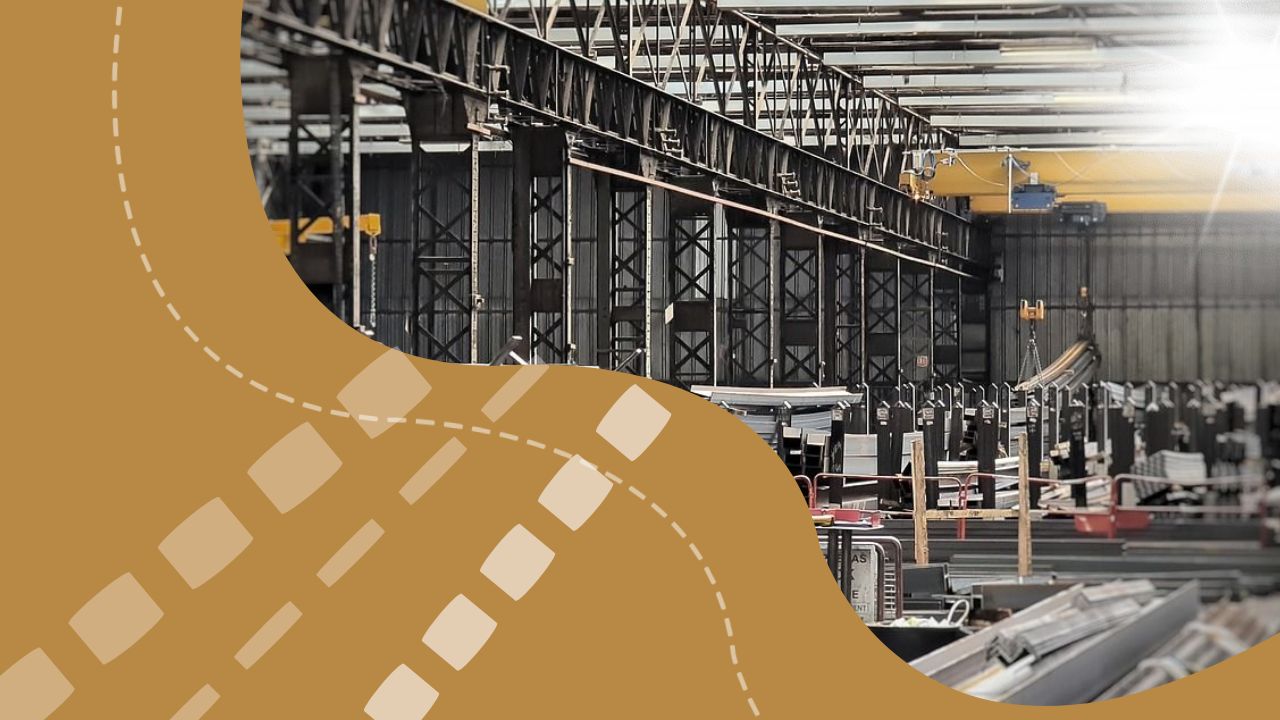
  • Dismay after EU rejects ‘Green Pool’ for industrial energy users in Greece

    Dismay after EU rejects ‘Green Pool’ for industrial energy users in Greece

    The Green Pool scheme was initially floated by the Greek government in July 2022 as part of moves to lower the cost of electricity, which went through the roof last year after Russia invaded Ukraine.

    It was designed to help large industrial consumers of electricity like aluminium, steel, glass, or cement, to jointly sign up to corporate power purchasing agreements (PPAs) for renewable electricity, under the supervision of a public body acting as a single buyer and seller for participating companies.

    The scheme was aimed at mitigating the costs of re-shaping industrial production to match the variable nature of renewable electricity generation coming from wind and solar power installations – so-called firming or shaping costs.

    These costs were identified by the European Commission as a key obstacle preventing industrial consumers of electricity from signing up to Renewable Energy Power Purchase Agreements (PPAs), which Brussels is now promoting as part of its proposed electricity market reform.

    However, the scheme was turned down on Friday (6 October) by the European Commission’s competition directorate, according to Mytilineos, the Greek aluminium and energy company.

    The main reason put forward by the Commission, according to the Greek company, is that renewable PPAs could not be regarded as “decarbonisation” activities from electro-intensive industries because they are not part of so-called scope 1 emissions – those that producers are directly responsible for.

    The underlying rationale communicated to the Greek authorities, they added, was that the Commission does not want energy-intensive industries to benefit from subsidised electricity prices.

    The World Bank has identified aluminium as a “high-impact” and “cross-cutting” metal for green energy technologies ranging from electric vehicles to solar photovoltaics and geothermal.

    But in Europe, the industry has declined steadily over the years with production dropping from over 4.5 million metric tons 15 years ago to 2.7 million currently.

    Contacted by Euractiv, the European Commission did not return emails and phone calls asking for comment. The Greek permanent representation in Brussels also declined comment.

    Metal industry dismayed

    On the industry side, trade association Eurometaux reacted with dismay.

    “We’re surprised and disappointed that the European Commission rejected Greece’s ‘Green Pool’ proposal,” said Guy Thiran, the director general of Eurometaux, which represents non-ferrous metals producers and recyclers.

    For Thiran, the Greek scheme “ticked all the boxes” in terms of decarbonisation, competitiveness, and renewables deployment. “It was a crucial model that would also help the metal and power sector’s wider decarbonisation in other EU member states,” he said in emailed comments to Euractiv.

    According to him, the scheme would have been instrumental in keeping aluminium manufacturing within the EU’s border at a time when bauxite, alumina and aluminium were added to the EU’s list of critical raw materials.

    “Electricity-intensive metals producers are still on their knees from the energy crisis” caused by the war in Ukraine, Thiran said. “If Europe is serious about keeping its strategic metals production ‘Made in Europe’, we urgently need real solutions like the Green Pool,” he added.

    Paul Voss, director general of European Aluminium, a trade association, was equally upset.

    “We are deeply troubled and genuinely shocked by the rejection of this innovative initiative,” Voss told Euractiv in emailed comments.

    “Not only does this decision dangerously undermine the case for investment in solar and wind in Greece, it sends a clear message that energy-intensive industry, even when it’s powered by renewables, simply isn’t wanted in Europe anymore”.

    According to Mytilineos, the Green Pool would have led directly to 4 GW of new wind and solar investments in Greece while securing affordable electricity prices for energy-intensive industries.

    Moreover, the scheme could have easily been replicated in other countries, which is why it was supported by other EU trade associations like BusinessEurope and WindEurope.

    For the aluminium industry, the frustration is made even greater by all the recent EU talk about “strategic autonomy” in the raw materials and energy sector.

    In December last year, EU Commission President Ursula von der Leyen promised a “new assertive industrial policy” with streamlined EU state aid rules in response to the US massive green subsidy programme, the Inflation Reduction Act.

    Last month, the Commission chief announced that the European Green Deal was entering a new phase focused on industrial policy, starting with the launch of a series of Clean Transition Dialogues with individual sectors of industry.

    “The future of our cleantech industry has to be made in Europe,” von der Leyen declared in her annual state of the Union speech to the European Parliament.

    However, the Commission’s decision on the Green Pool scheme appears to contradict those declarations, according to European Aluminium.

    “How can we possibly reconcile this approach with all the recent discussion about strategic autonomy and sustainable industry?” Voss asked. “Outsourcing heavy industry to other, more carbon-intensive regions might look like an easy way to save energy and reduce emissions in Europe, but its ultimate impact will be to fatally compromise our economy, our security and our environment.”

    “This cannot be the way forward,” he added.
  • Essential integration of mining with circular economy highlighted at FT Mining Summit

    Essential integration of mining with circular economy highlighted at FT Mining Summit

    As the circular economy grew in importance, many miners were also starting to look more closely at recycling operations, it was stated during a panel discussion covered by Mining Weekly.

    Financial Times commodities correspondent Harry Dempsey, who moderated, referred to the apparent exponential rise of recycling and the circular economy as demand for critical minerals rose for the global energy transition.

    Panel participants were Glencore global recycling head Kunal Sinha, Norsk Hydro executive VP corporate development Trond Olaf Christophersen, International Copper Association material stewardship global director Louise Assem, and Circular CEO Douglas Johnson-Poensgen.

    Cross-portfolio upcoming demand for critical minerals is roughly calculated to be six times greater than current supply, pointing to the need for as much responsible mining production as possible between now and 2050.

    “Even if you ramp up all the responsible production you can between now and 2050, we think there’s still a gap. It’s hard to quantify, but there’s still a gap. So, how you meet that gap is through what we would like to think of as responsible consumption, which is essentially your circular economy,” said Sinha.

    “The circular economy is not just recycling. It’s product life extension, repair, reuse, all of that, and the very last step is recycling, so it’s not a competition with primary mining because you need as much mining as you can responsibly do, but you also need to consume more responsibly and have a circular ecosystem.

    “Every mining company is different. Your portfolio is different. I can only speak for Glencore. From my point of view, our vantage point comes down to three things from our portfolio. One is assets. We have two types of assets. We have assets that have been recycling for a long time. These are very complex metallurgical assets, so what you can do is operate at a massive scale where you blend both the primary feeds and the recycled feeds, very difficult to process materials,” said Sinha, who added that Glencore also had other built assets that could be repurposed, exemplified by lead refinery outside London, parts of which are being repurposed for electronics recycling and potentially also battery recycling.

    “So, instead of building greenfield, you can pivot and use these existing assets to do it much faster,” Sinha noted.

    Then there was risk management: “From our experience to do recycling properly, the risk is very high. To manage that risk, you need the same skills as commodity trading because you’re not sitting on a deposit of copper and know exactly what it is in there and you’re mining it and you have a plan. You have to buy this feed across hundreds of suppliers. You don’t really know what you’re getting, so you have all kinds of risks in terms of financial risk, counter-party risk, a lot of these risks, which is the same as in commodity trading, so our trading DNA helps with the recycling.

    “In a world where you have a lot of primary production into the energy transition, as we have, and a history of recycling, you can easily combine those two to close the loop,” added Sinha.

    ALUMINIUM

    When it comes to aluminium, Christophersen reported that the circular economy was already in place, with roughly one-third of the total aluminum metal supply being recycled material.

    In more mature markets such as in Europe and the US, 40% to 45% of the total metal production is based on aluminium scrap.

    “A significant share of the total metal supply is secondary aluminium and part of the circular economy,” Christophersen emphasised.

    Going forward, Norsk Hydro is of the view that growth in the circular part of the market will be much higher than the growth in the primary side.

    The main drivers of this are expected to be customer demand, with car makers giving much more attention to sustainable supplies, as well as regulations of countries. These include end-of-life vehicle regulations in Europe and waste shipment directives in the US.

    More than two-million tons of aluminium scrap in the US and a million tons-plus of aluminium scrap in Europe currently being exported could be recycled internally.

    In addition, considerable investment going into scrap-sorting technology development could also result in much more secondary aluminium being recycled within the US and Europe.

    Norsk Hydro, an integrated aluminium and renewable energy company, mines and refines bauxite and smelts and recycles aluminium.

    More than half of its aluminium metal production is based on secondary material, with mining and scrap dealing being completely different businesses, with recycling being very much more commercial.

    “You have to deal with a lot of small suppliers on the scrap side. ‘Scrap is not scrap’. It depends a lot on the quality that you are buying, so it’s a completely different business and you need a completely different business model in order to operate in the recycling business compared to the mining business,” said Christophersen.

    COPPER

    Assem reported that the metals value chains were already circular, “and mining plays a role in that because without the stocks from mining, there would be no circular value chain, there would be no stock to recycle”.

    “So, they are already playing a role, although mining has been left out of the perception of what a circular economy looks like. There is huge demand increase expected for many of the metals, including copper, and that demand is already being filled by both primary and secondary material, and it will continue to be filed by both, as it should be,” Assem said.

    “There are many other drivers, like the throw-away society and the negative perception of mining that does exist, driving what is an attractive concept in the circular economy. It’s nice to think that if we can be fully circular, we won’t have to dig things out of the ground and cut down trees, for example. But the reality is that we do need both.

    “There are also regulatory drivers. Europe has a lot of legislation around the circular economy itself and also around sustainable products, along different aspects of the circular value chain. In Asia, there are also lots of circular pieces of legislation in Japan, China and South Korea and they are going at it from different perspectives.

    “In the US it is slightly different. There’s more of a carrot than a stick, like you would get in Europe. You also have the original-equipment manufacturers (OEMs) that are driving things from the bottom, particularly when we look at targets around recycled content for end-user products. So, that’s also driving things up the supply chain,” Assem added.

    BATTERY MATERIALS

    In Europe, OEMs using batteries are expected to have a per battery carbon footprint, said Johnson-Poensgen, whose company is pursuing traceability in the battery value chain, which means that probably from 2026, consumers will be able to compare embodied carbon in a battery.

    He reported that the battery in an electric vehicle accounts for roughly half the supply chain’s contribution to the carbon footprint in manufacturing each vehicle and recycled battery materials have half the energy requirement to turn scrap into battery-grade materials.

    Indicated during the panel discussion was that going forward, markets would likely be more intent on procuring recycled secondary material than primary material in the interests of global sustainability and mitigation against climate change

  • Cornish Lithium raises £5.1m through crowdfunding

    Cornish Lithium raises £5.1m through crowdfunding

    UK-based Cornish Lithium has raised £5.1-million through crowdfunding on a platform called Crowdcube, marking it as one of the largest crowdfunding endeavours undertaken in the UK this year.

    Cornish launched the crowdfunding to provide exiting shareholders, as well as new retail shareholders, the opportunity to invest alongside a landmark £53.6-million fundraise announced on August 8 by UK Infrastructure Bank, Energy and Minerals Group, and TechMet.

  • Tajikistan or Britain? Origin of famous Bronze Age tin ingots sparks controversy

    Tajikistan or Britain? Origin of famous Bronze Age tin ingots sparks controversy

    Tin was used in the Bronze Age for 150 years. Bronze is an alloy of copper and tin, and in the Bronze Age, it was used to make a range of goods including swords, helmets, bracelets, plates and pitchers. A recent study by a team of archaeometallurgists refutes previous findings published in 2022, which state that most of the tin came from the Mushiston tin deposit in northwestern Tajikistan, as well as from two mines in the Taurus Mountains near the present-day Turkish-Syrian border.

    For this previous analysis, researchers took samples of 105 tin ingots from the wreck, determining chemical and isotopic signatures of 90% of the tin cargo. In particular, they measured the isotope ratios of tin and lead, which, like the chemical composition, provide clues to the origin of the tin.

    Also, the proportion of the trace element tellurium points to tin deposits in Central Asia. The group claims to be able to infer a clear attribution based on the matching signatures between the ingots from Uluburun and tin ore samples from the above mentioned mines.

    But according to the new paper, the data doesn’t support this interpretation or a clear conclusion.

    For the current study, Daniel Berger from the Curt Engelhorn Center for Archaeometry (CEZA), extensively checked chemical and isotopic analyses from previous studies and cross-checked them with the 2022 data set.

    “Due to the isotopic ratios and chemical characteristics, it would be even more likely that at least part of the cargo of tin ingots from the Uluburun shipwreck originated from Cornwall in Britain,” Berger said. “In particular, the comparison with Bronze Age tin ingots from Britain and Israel which we have considered in the past on a similar question of origin suggests this conclusion.”

    He added that more samples and analyses of ores from European and Asian tin deposits were needed.

    Overall, the Bronze Age lasted from the late fourth millennium to the early first millennium BCE—but with different beginnings and ends depending on the region of the world. Bronze, an alloy of copper and tin in a ratio of nine to one, is significantly harder than copper alone.

    Copper ores are found in many regions of Eurasia and Africa. However, tin ores that were accessible in the Bronze Age can only be found in a few places in Central Asia, Iran and Europe.

    It is all the more astonishing that some of the earliest bronze artifacts have been found in the Mesopotamian city-states of the Tigris–Euphrates river system. But there are no tin deposits there; the metal had to be obtained via long-distance trade.

    “Numerous archaeological finds show that the British Isles and Central Europe formed an economic sphere with the Mediterranean region in the Bronze Age and was connected via the transport routes of the Danube, Rhine and Rhône rivers, or via the ocean,” Ernst Pernicka, co-author of the new paper, said. “For instance, amber beads likely traded from the Baltic were found in the Uluburun wreck, indicating the existence of north-south trade routes.”

    The use of standardized weights had already spread in the course of the second millennium BCE, coming from Egypt and Mesopotamia, via Syria, Anatolia and the Aegean, and across the Alps to Central Europe. These standard weights were used to weigh merchandise, including tin ingots.

    For the time of the Uluburun ship, neither weight systems nor established trade connections to Europe and the Eastern Mediterranean can be documented for Central Asia, which underscores the likelihood that the tin originated from the West.


  • UK’s ‘first large scale’ lithium refinery gets green light on Teesside

    UK’s ‘first large scale’ lithium refinery gets green light on Teesside

    A plant which will refine lithium – a material used in electric car batteries – is to be built on Teesside.

    Green Lithium, which it said would be the first large-scale facility in the UK, will be located at PD Ports’ Teesport site after getting approval from Redcar and Cleveland Council.

    The company said it was “confident” the plant would open in 2027. It added more than 1,000 jobs would be created during construction, with about 250 more when it opens.

    Chief executive officer Sean Sargent said: “I’m confident we’ve got a great team together and a lot of delivery partners supporting us and that gives me the confidence that we know what we are doing and we’ve got a team in place that understands the risk profile of a project of this nature and knows how to overcome those risks.

    “The next step is we’ve got to complete a fundraising round that’s going on at the moment.”

    The company said the plant would provide an alternative market for European electric car manufacturers who are reliant on China and East Asia, where 89% of the world’s lithium is currently refined.

    Lithium is a key component in rechargeable batteries that power numerous gadgets such as smartphones and laptops, as well as electric cars.

    Last month the mining of battery-grade lithium carbonate in Cornwall was announced.

    It is expected the Teesport plant will produce 50,000 tonnes of battery-grade lithium chemicals to provide batteries for one million EV car batteries every year.

    The 58-acre site was chosen because of its access to a deep-water port, locally supplied renewable energy and hydrogen gas.

    As well as refining lithium for EV batteries, the chemical will also be used in the production of lithium-ion batteries and energy storage.

    Green Lithium hopes the plant will encourage more gigafactories, which produce batteries, to be built in the UK.

    It said over the next three-and-a-half years it would spend 14 months designing the plant and then 28 months building it.

    Redcar and Cleveland Borough Council leader Alec Brown, Labour, said it demonstrated the developer’s “significant confidence in our area”.

    “This investment will create hundreds of jobs supporting electric vehicle production and the decarbonisation of the UK.

    “With the port on our doorsteps, this will hopefully draw other industries linked to battery production to Teesside.”


  • For critical minerals supply we need investment standards, BHP boss warns

    For critical minerals supply we need investment standards, BHP boss warns

    Speaking at the International Energy Agency’s inaugural critical minerals conference in Paris, Henry called for a “small set of common standards” covering environmental, social and governance to underpin access to the capital required for investment the sector.

    Critical minerals, essential for a range of clean and renewable energy technologies, have risen in the policy and business agenda, but a combination of volatile price movements, supply chain bottlenecks and geopolitical concerns have created a potent mix of risks for secure and rapid energy transitions. This has triggered a scramble across the world to enhance the diversity and reliability of critical mineral supplies.

    The head of the Australian multinational mining and metals public company, based in Melbourne, said urbanisation, industrialisation and population growth were driving demand for minerals such as copper, nickel and lithium and steel-making raw materials, along with a push to decarbonise economies.

    “Governments must provide predictability and stability to attract capital at the lowest possible cost and as quickly as possible,” he said.

    “This means stable fiscal settings, streamlined planning and permitting processes and harmonised standards. Too often we see short-termism in government policy, or policies which seek to meet near term political objectives, but which show limited understanding of what drives investment.”

    Australia is the world’s leading producer of unprocessed lithium, the world’s third-largest cobalt exporter and the fourth-largest exporter of rare earths, which are in increased demand from Europe. Australia is also the fourth-largest exporter of mined copper and nickel and a significant producer of aluminium.

    Using copper as a case study, BHP estimated that about $250-billion in growth capital to 2030, in addition to sustaining capital, was needed to support the climate decarbonisation required for a “plausible 1.5 degrees scenario”.

    Addressing the meeting in Paris were several government ministers, including US Energy Secretary Jennifer Granholm, who cautioned about the potential for critical minerals supplies to be “weaponised”.

    Henry called for a global convergence of environmental, social, and governance (ESG) standards.

    “We need a small set of common standards, upheld by all, and where performance against those standards is a greater and increasing determinant of access to capital,” he said.

    Miners, Henry added, should be granted access to resources based on the value they create, including for host communities and First Nations peoples.

    “Opening a mine, done well, creates sustainable wealth and jobs… But of course, this must be done with least possible impact to the environment,” he said.

    In remarks likely aimed at China, Granholm said the world was up against a dominant supplier of critical minerals that “was willing to exploit its market power for political gain”, and warned that energy security would become increasingly complex due to the transition to cleaner power.

    “But our global energy crisis has taken on a new dimension, which is the urgency of this clean energy transition,” she said.

    IEA executive director Fatih Birol said locking in secure and sustainable supplies of critical minerals for the clean energy transition had quickly become a top priority for governments, companies and investors around the world.

    “When we look at both the production and the refining, processing of the critical minerals we see a very high level of concentration,” he said in opening remarks to the conference.

    “Looking at the history of energy in the last 100 years, when there was major concentration of one single country, one single company, one single route, there’s always a challenge.”

    In a recent report, the IEA highlighted the current concentration of supply, with the Democratic Republic of Congo dominating cobalt stocks, China holding half of planned lithium chemical plants and Indonesia representing nearly 90 per cent of planned nickel refining facilities.

  • Metso expands into Finland

    Metso expands into Finland

    Metso has modernised its pilot facility at Metso Research Center in Pori, Finland, with expanded capabilities for lithium hydroxide (LiOH) and other battery chemicals process testing. The unique pilot line serves mining and battery industry customers processing battery minerals. In connection with the expansion, Metso has also opened a battery materials precursor (pCAM) pilot plant, available now for customer trials.

    “Pilot run requests for battery minerals like lithium, nickel and cobalt have increased significantly during the last three years. Currently, we are working on several battery black mass recycling and precursor projects and have several lithium and other battery chemicals project pilots on our laboratory schedule,” says Janne Karonen, Director for Hydrometallurgical Research & Development at Metso.

    Process simulations are essential in the piloting phase, supporting process and equipment design, training and plant operation. For this purpose, Metso uses its unique metallurgical digital twin Geminex, which is based on the company’s proprietary HSC-Sim software for predictive process simulations. Pilot plant and real-time plant data enrich the simulation model to accurately predict plant behavior.

    Metso has developed sustainable hard rock lithium soda leaching technologies for 20 years already. The pilot facility expansion it says “complements Metso’s frontrunning piloting capabilities for minerals processing and metals refining, enabling minerals and battery industry customers to have end-to-end testing, piloting services and technology and equipment deliveries from one supplier.”

    Metso’s expertise in battery minerals covers the extraction of lithium from brines and pegmatite ores up to battery-grade lithium salts. These patented processes are designed to meet the needs for high-end lithium-ion battery chemicals production. Metso can provide sustainable technology and equipment for the entire lithium, nickel and cobalt production chain – from the mine to battery materials and black mass recycling – with project scopes ranging from equipment packages to plant deliveries.


  • Serbia and Jadar lithium mines: will the project resume?

    Serbia and Jadar lithium mines: will the project resume?

    Serbia’s Minister of Mining and Energy Dubravka Đedović Handanović said on Thursday that it is necessary to “responsibly consider” how to approach her country’s critical natural resources – which includes lithium – in the future.

    “If we want to develop, then we should use natural potentials, but also do everything to minimise risks, especially in the area of ​​the environment,” Minister Đedović Handanović said. “It is important that we do not look at this issue exclusively through the exploitation of mineral wealth, but also as the possibility of obtaining a value chain, which would also mean factories for the production of batteries and electric vehicles. The world is moving towards a new industrial order and it is up to us to see if we want to be part of that order, and we have all the prerequisites for that.”

    The Mining and Energy made a similar point on Tuesday: when asked about the potential exploitation of lithium in Serbia, she responded by saying that her country needs to consider how to utilise such resources in terms of closing the value chain.

    “Serbia is extremely rich in mineral resources that are also on the EU’s list of critical mineral resources. We stopped the ‘Jadar’ project before we had a chance to see the results of the Environmental Impact Assessment. We should consider how we can utilise the wealth we possess in terms of closing the value chain, which would mean factories for battery and electric vehicle production,” Minister Đedović Handanović said on Tuesday.

    The Jadar deposit is estimated to be one of the largest lithium deposits in the world, according to the think-tank Blue Europe. The Jadar mining project, located in western Serbia, had been started by British-Australian mining company Rio Tinto before the company’s license was revoked in 2022 due to environmental concerns about the project.

    However, a report by German tabloid Hadensblatt in December 2022 on a confidential list of investments under the EU’s “Global Gateway” initiative – including a lithium mine in Serbia – has led to speculations that the Jadar project may be revisited in the future.


  • QX Resources expanding its Vuostok nickel-copper project in Sweden

    QX Resources expanding its Vuostok nickel-copper project in Sweden

    QX Resources-backed Bayrock Resources has expanded the mineral lease area around its promising Vuostok nickel-copper project in Northern Sweden.

    In July, the Steve Promnitz-led lithium explorer QX Resources’ acquired 39% of the unlisted Aussie company Bayrock Resources, which has a portfolio of nickel-copper-cobalt projects in Sweden.

    Bayrock’s Vuostok project is located roughly 60km northwest of Lainejaur, offering a potential joint development opportunity as a ‘district play’.

    The newly added Nr 102 lease expands the total mineral lease by 33% at Vuostok, which QXR says could be within potential trucking distance to Lainejaur given the well-established all-weather road network and supporting infrastructure in the district.

    “This would benefit any future stand-alone nickel-copper-cobalt operations or provide additional ore feed for a possible Lainejaur development,” the company says.

    “Trucking of ore material for processing is a regular feature of operations in this part of northern Sweden.”

    Further updates anticipated

    In another exciting development, significant nickel-copper assay results have been identified from boulders located within the new Vuostok lease and from drill results near surface at Vuostok.

    The company says these results underpin Bayrock’s decision to significantly expand the prospect.

    “This is turning into a genuine potential district scale operation given the proximity of Bayrock’s Lainejaur and Vuostok Projects in a mining friendly region of Sweden,” QXR managing director Steve Promnitz says.

    “Further updates are anticipated as Bayrock continues exploration across another highly prospective asset, the Notträsk Project, one of Bayrock’s six 100% owned nickel copper projects.”

    Highly encouraging widths of nickel-copper mineralisation

    The recently released assays by Bayrock highlight significant widths of nickel-copper mineralisation from eight holes at the Storbodsund Prospect within Vuostok.

    The results include:

    6.2m at 1.2% Ni, 2.2% Cu, 0.04% Co from 11m down hole (VUO23011);
    6.9m at 1.2% Ni, 0.3% Cu, 0.05% Co from 5.1m down hole, including 0.4m at 3.9% Ni, 0.3% Cu, 0.11% Co from 6.85m down hole (VUO23013);
    0.7m at 3.2% Ni, 1.0% Cu, 0.08% Co from 10.3m down hole (VUO23004); and
    0.9m at 1.2% Ni, 0.1% Cu, 0.08% Co from 6m down hole (VUO23005).

    QXR says the results indicate near surface massive nickel-copper sulphides between 0.3-6m thick, less than 18m from surface and beneath a thin cover of glacial sediments.

  • Many society organisations are calling on the EBRD to reconsider its approach to mining investments

    Many society organisations are calling on the EBRD to reconsider its approach to mining investments

    Twenty civil society organisations from Albania, Armenia, Azerbaijan, Bosnia and Herzegovina, Georgia, Mongolia, Uganda, Ukraine and Uzbekistan, as well as seven international environmental and human rights organisations, are calling on the European Bank for Reconstruction and Development (EBRD) to reconsider its approach to mining investments.

    In their recommendations, civil society groups urge the Bank to do more to safeguard the environment and welfare of local communities and to take action to reduce the demand for critical raw materials.

    The EBRD is currently in the process of revising its Mining Sector Strategy for 2024 to 2028. The draft document proposes an increase in investments in mining critical raw materials required for the green and digital transition, as well as the promotion of exploration.

    On 15 September, civil society organisations submitted recommendations regarding the EBRD’s mining strategy, advocating for the following measures:

    • Prioritise the circular economy over just mining;
    • Focus on reducing material footprints and promote recycling;
    • Ensure that no mining investments are made in countries that do not enforce environmental laws;
    • Define no-go zones and prohibited technologies;
    • Guarantee Free Prior Informed Consent for Indigenous Peoples and consent from all affected communities;
    • Deliver tangible benefits to local communities in the countries where the EBRD operates.

    Although the draft strategy highlights the importance of improving relations between mining companies and local communities, public consultations on the draft were conducted during the summer holiday period. A very small number of handpicked groups were invited at extremely short notice to local consultation events, seriously limiting public input.

    The mining sector has a shameful track record of pollution, human rights abuses, community resistance and retaliation against activists around the world. It remains the most perilous sector for environmental defenders, with almost 30 per cent of annual attacks occurring within the industry. EBRD-funded projects in Armenia (Amulsar) and Bosnia and Herzegovina (Adriatic Metals) have already prompted complaints by affected communities to the EBRD’s Independent Project Accountability Mechanism (IPAM) due to environmental pollution and lack of public consultation.

    Nina Lesikhina, Policy Officer at Bankwatch, says: ‘Business as usual is no longer an option. Relying solely on environmental and social safeguards is insufficient, given their gaps and inadequate implementation. The EBRD needs to consider each country’s capacity to implement mining projects sustainably and how to reduce demand for critical raw materials in the first place. The imperative for a green transition should not be used as an excuse to reduce efforts, but as a motivation to do more to ensure that the transition is truly green and equitable.’

    Sukhgerel Dugersuren, Chair at Oyu Tolgoi Watch, Mongolia, says: ‘If the EBRD and other development banks increase financing for mining, corporations will scramble to secure critical and/or transition minerals. This will have further negative impacts on climate change, contaminating the environment, depleting water resources and deepening desertification processes. The Mongolian economy is dependent on a single sector – mineral extraction – which is closely tied to the Chinese market. Any future mining strategy must be guided by principles that balance economic, geopolitical and other risks.’

    Gaelle Dusepulchre, Deputy Head of the Business, Human Rights and Environment Desk at the International Federation for Human Rights, says: ‘Mining projects are among the most harmful to human rights and the environment. Any mining strategy must promote a truly just transition. These projects not only require increased due diligence but also rely on the meaningful participation and consent of communities likely to be affected. Protecting human rights and environmental defenders is just as essential.’