Website: Europe.com

  • Barroso’s Lithium Mining Row in Portugal shows no sign of easing

    Barroso’s Lithium Mining Row in Portugal shows no sign of easing

    Tensions are escalating in Boticas, Portugal, where Mayor Fernando Queiroga has accused Savannah Resources, a lithium mining company, of trespassing on private land outside their permitted area. Queiroga condemned the company’s actions, alleging they used the national guard (GNR) to intimidate a landowner who refused them access. He criticised Savannah’s “colonial and abusive tone” and their aggressive pursuit of lithium mining in the region.

    Savannah Resources CEO Emanuel Proença denies the accusations, stating the company operates strictly within its granted easements. He claims the mayor and local activists are inventing flaws to obstruct the project.

    This latest clash follows Savannah’s controversial plan to expropriate 472 plots of land in Boticas, a move that has further inflamed residents and the local council. Queiroga vows to fight the expropriation, stating the council will not sell its land “for any price.”

    Despite strong local opposition and concerns about environmental damage, the Portuguese government continues to support Savannah’s lithium mining project. The company, which has delayed its start date multiple times, now aims to begin operations in 2027. The battle for Barroso’s lithium shows no signs of abating.

  • Czech Republic Sets Date for Complete Coal Phase-Out and Transition to Nuclear Power

    Czech Republic Sets Date for Complete Coal Phase-Out and Transition to Nuclear Power

    The Czech Republic has announced plans to completely phase out the use of coal by 2033, as part of its updated national energy plan submitted to the European Commission. By 2040, nuclear power is expected to account for 68% of the country’s electricity generation.

    According to the plan, nuclear power will constitute 44% of the electricity generation mix by 2030, with this figure set to increase to 68% following the commissioning of new reactors. Nuclear energy will form the cornerstone of the country’s energy balance.

    In addition to nuclear power, the Czech Republic will also actively develop renewable energy sources. Natural gas will serve as a transitional energy source to ensure stability in the energy system, complementing the more variable output from renewable sources due to its reliability and efficiency.

    This energy strategy aligns with global targets to reduce carbon emissions and decrease dependence on fossil fuels. Similarly, Ukraine is also pursuing a transition to carbon-free energy, with a focus on nuclear generation as part of its strategy up to 2050.

  • Ukraine Needs Security Guarantees to Attract Investment in Industry and Mining

    Ukraine Needs Security Guarantees to Attract Investment in Industry and Mining

    To attract investments in industrial production and the lithium and uranium deposits, Ukraine requires security guarantees, says the CEO of Metinvest.

    2025 must become the year of economic recovery, stated Metinvest’s General Director, Yuriy Ryzhenkov.

    For investments in industrial production and mineral resources, security guarantees are needed to attract international investments in key industries. This will provide the country with new jobs and technological opportunities, according to Yuriy Ryzhenkov, the CEO of Metinvest.

    He emphasised that building a people-centric business, where employee and community well-being take precedence over financial success, is crucial for Ukraine’s recovery.

    “We already have over 1,000 veterans and are ready to train anyone interested in jointly building an economically stable and peaceful Ukraine. Victory efforts are being made by workers maintaining production, mobilized soldiers in the armed forces, and even women, some as young as 19, working in mines,” said Ryzhenkov.

    Since the start of the full-scale invasion, Metinvest has directed 8 billion UAH to aid Ukraine and its citizens, according to the company’s website. Of this, 4.4 billion UAH has been allocated for military needs under the “Steel Front” initiative.

  • Dundee Precious Metals Hits 2024 Production Targets in Bulgaria

    Dundee Precious Metals Hits 2024 Production Targets in Bulgaria

    Dundee Precious Metals (DPM), a Canada-based mining company, announced that its Bulgarian mines—Ada Tepe and Chelopech—have met their production guidance for 2024, based on preliminary results.

    DPM’s president and CEO, David Rae, expressed satisfaction with the performance, stating that the company ended 2024 on a high note, with Ada Tepe achieving its highest quarterly production of the year, and Chelopech maintaining its strong operational track record.

    The Ada Tepe mine produced approximately 94,300 ounces of gold in 2024, including 29,000 ounces in the fourth quarter, when mining operations returned to budgeted levels and met expectations.

    Meanwhile, the Chelopech mine produced about 167,000 ounces of gold and 29.7 million pounds of copper. In the final quarter, Chelopech yielded 41,900 ounces of gold and 7.8 million pounds of copper.

    The company had projected total gold production from both mines to fall between 245,000 and 285,000 ounces, with copper production expected to range from 29 to 34 million pounds.

  • Green Light for Parys Mountain Mine?

    Green Light for Parys Mountain Mine?

    Anglesey Mining PLC has announced that the Environmental Impact Assessment (EIA) scoping report for the Parys Mountain mine has been approved by the North Wales Minerals and Waste Planning Service on behalf of Cyngor Sir Ynys Môn/Anglesey county council. The council provided detailed feedback, largely agreeing with the environmental scope presented by the company.

    While there is broad acceptance of the methodology and impact assessments in areas such as ecology, biodiversity, visual impact, air quality, noise, and human health, further work is recommended in ground and surface water, cultural heritage, and traffic and transportation. Anglesey will incorporate expert advice and historical studies to refine these aspects.

    The company believes the re-commencement of mining operations will have a net positive impact on ground and surface water, based on specialist consultants’ feedback. For cultural heritage, although the proposed scheme does not directly impact statutorily designated sites, it will significantly affect the historic environment of Parys Mountain. A full transport assessment will be conducted as recommended.

    Anglesey Mining is committed to collaborating with stakeholders to minimize environmental impacts and maximize economic benefits for local communities. The CEO, Rob Marsden, expressed gratitude for the council’s feedback and reiterated the company’s objectives of providing economic returns, job opportunities, and respecting the mining heritage of Parys Mountain.

    The Parys Mountain mine, a 100% owned copper/zinc/lead/silver/gold VMS deposit in North Wales, has a reported resource of 5.3 million tonnes at over 4.0% combined base metals in the measured and indicated categories, and 10.8 million tonnes at over 2.5% combined base metals in the Inferred category.

  • Anglo American Leads Hydrogen Fuel Cell Electric Vehicle Revolution Across Europe

    Anglo American Leads Hydrogen Fuel Cell Electric Vehicle Revolution Across Europe

    Anglo American, the South Africa-linked mining giant, is spearheading the introduction of platinum-catalysed hydrogen fuel cell electric vehicles (FCEVs) in Europe, offering new mobility options across major cities.

    The London- and Johannesburg-listed corporation is partnering with FCEV taxi operator Hype under the banner of H2 Moves Europe to bring these eco-friendly vehicles to the continent.

    Since launching in Berlin in 2022, the initiative has expanded to Paris and Brussels, with Hamburg reportedly the next stop. H2 Moves Europe has already achieved over eight million zero-emission kilometres across nearly 650,000 passenger journeys.

    Key partners include Toyota Deutschland and SafeDriver-ennoo in Berlin, while Paris boasts a 250-strong hydrogen-powered FCEV taxi fleet, featuring models like the Toyota Mirai, Hyundai Nexo, Peugeot e-Expert, and Citroën ë-Jumpy vans adapted for wheelchair access. Brussels follows a similar pattern, with a fleet of 50 FCEVs.

    In each case, platinum group metals (PGMs) from South Africa play a crucial role, working alongside emission-free green hydrogen, which Hasan Akbulut, an academic expert, highlights on LinkedIn for its high energy content and its significance across various industries, including the chemicals sector.

    Moreover, the New York Times reports that the Biden administration has finalised new rules offering substantial tax credits to companies producing hydrogen—an element efficiently produced using PGM-catalysed proton exchange membrane (PEM) electrolysers and converted back into green electricity through PEM fuel cells.

    Zero-emission PEM fuel cells are gaining traction in various sectors, from buses and commercial trucks to trains, ships, and power stations, providing clean energy solutions for both mobile and stationary needs.

    Notably, Ballard Power Systems has secured contracts to supply fuel cell engines for zero-emission trains and city buses, validating the advantages of fuel cells as a sustainable transport alternative.

    As hydrogen’s industrial applications grow, Bosch Hydrogen Energy reports a transition to large-scale PEM electrolysis systems with capacities in the hundreds of megawatts, positioning hydrogen as a major player in future energy production.

    The global hydrogen movement is gaining momentum, with major cities and industries investing in projects to produce, store, and utilise hydrogen for greener energy solutions. From China to Europe and the US, hydrogen continues to emerge as a pivotal technology for decarbonising industries across the world.
  • Imerys Expands Its European Presence in Diatomite and Perlite

    Imerys Expands Its European Presence in Diatomite and Perlite

    Imerys has completed the acquisition of Chemviron’s European diatomite and perlite assets, a subsidiary of Calgon Carbon Corporation. The deal, which follows exclusive negotiations that began in April 2024, includes facilities in France and Italy.

    The acquisition encompasses three sites employing 130 people: two diatomite extraction and processing plants in Saint-Bauzile (Ardèche) and Riom-ès-Montagnes (Cantal), France, and a perlite processing plant in Foggia (Puglia), Italy.

    This strategic acquisition strengthens Imerys’ presence in the European diatomite and perlite markets, enhancing its offerings to customers in the food, beverage, filtration, and pharmaceutical industries. Additionally, it expands Imerys’ advanced solutions portfolio, including high-permeability filtration aids for sweeteners, gelatin, and enzyme applications, along with high-performance grades for beverage filtration.

    Guillaume Delacroix, Senior Vice President, Performance Minerals EMEA & APAC at Imerys, commented, “This acquisition marks an important milestone in Imerys’ growth and investment in the future. It positions us to deliver increased value to customers in Filtration and Life Sciences, strengthening our market presence and unlocking new avenues for growth and innovation.”

  • Vale and GreenIron Partner to Decarbonize Mining Supply Chains

    Vale and GreenIron Partner to Decarbonize Mining Supply Chains

    Vale has announced a memorandum of understanding with Swedish company GreenIron, focusing on decarbonizing mining industry supply chains in Brazil and Sweden. The collaboration includes feasibility studies for a direct reduction plant in Brazil, to be managed by GreenIron, and the provision of Vale’s iron ore for GreenIron’s commercial operations in Sandviken, Sweden. This partnership aligns with global sustainability goals, targeting innovative solutions to reduce emissions in iron and steel production while strengthening ties between Brazilian and Swedish industries.

  • North Macedonia Advances Solar Energy with EBRD Grant for Two Photovoltaic Plants

    North Macedonia Advances Solar Energy with EBRD Grant for Two Photovoltaic Plants

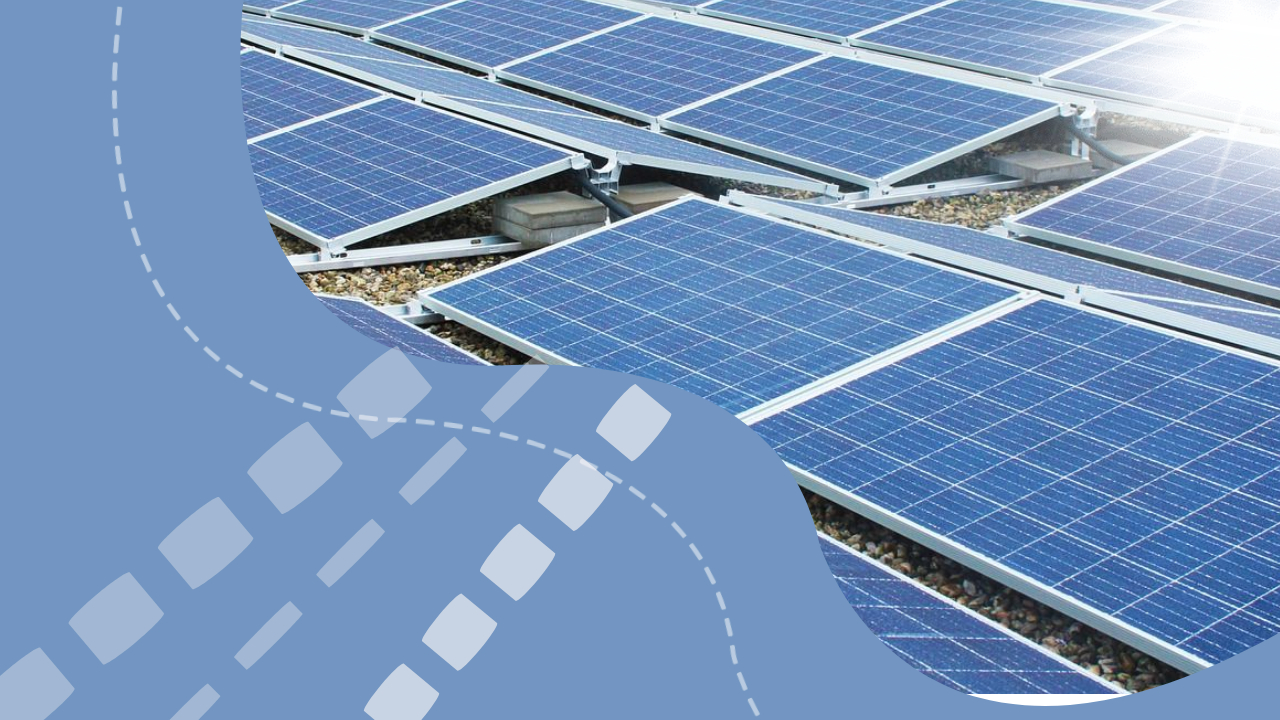
    The European Bank for Reconstruction and Development (EBRD) has allocated nearly €5 million to North Macedonia’s state energy company, ESM, to construct two photovoltaic power plants with a combined capacity of 30 MW on former coal mine sites. The projects, supported under the Western Balkans Investment Framework (WBIF), complement a €25 million loan for Bitola 1 (20 MW) and Oslomej 2 (10 MW). Set for completion by 2026, the plants will produce 46 GWh annually, serving 7,000 households and cutting CO₂ emissions by 40,000 tons.

    Energy Minister Sanja Božinovska highlighted the environmental benefits, including the reclamation of 45 hectares near Bitola and Oslomej, enhancing local conditions. The initiative aligns with broader decarbonization efforts, with EBRD’s Fatih Türkmenoğlu emphasizing its role as a model for sustainable energy transitions.

    Since 2009, North Macedonia has secured €500 million via WBIF for projects spanning energy, transport, and digitalization, further bolstered by new reform frameworks for a greener future.

  • Germany’s Uranium Imports from Russia Surge in 2024 Amid EU Debates

    Germany’s Uranium Imports from Russia Surge in 2024 Amid EU Debates

    Germany significantly ramped up its uranium imports from Russia in 2024, recording a 70% increase to 60.8 tons, according to a report from Der Spiegel based on data from Lower Saxony’s Ministry for Environment, Energy, and Climate Protection. The uranium is processed at the Advanced Nuclear Fuels facility in Lingen, operated under French ownership through Framatome, part of energy company EDF. This facility is preparing specialized nuclear fuel cells for WWER reactors, a Soviet-era design predominantly used in Eastern Europe, which have traditionally relied on Russian-made fuel.

    Germany’s Federal Ministry for the Environment clarified that uranium imports for peaceful nuclear use are not restricted by current EU sanctions on Russia. This exemption highlights a gap in the EU’s energy embargo strategy, even as the bloc attempts to sever energy ties with Moscow. Attempts to impose nuclear-related sanctions have repeatedly stalled due to opposition from member states like Hungary and Slovakia, which rely heavily on Russian energy cooperation.

    Dan Jorgensen, the EU’s energy commissioner, recently admitted that the union’s efforts to curtail dependency on Russian energy, including nuclear fuel, have faltered. Jorgensen emphasized the need for a robust new strategy to address this issue, pointing out that existing policies are failing to achieve their intended goals. His proposed roadmap is expected to outline more effective measures to reduce reliance on Russian energy resources across the EU.