Website: Eurasia.com

  • Armenia’s Prime Minister Calls for Transparency and Higher Standards in Mining at Tsaghkadzor Forum

    Armenia’s Prime Minister Calls for Transparency and Higher Standards in Mining at Tsaghkadzor Forum

    The Mining Armenia Forum 2025 opened on Friday in the resort town of Tsaghkadzor, bringing together government officials, industry leaders, and experts to discuss opportunities and challenges facing Armenia’s mining sector.

    Prime Minister Nikol Pashinyan, delivering opening remarks, underscored the importance of transparency, professionalism, and education in the industry. He acknowledged the sector’s negative public perception and emphasized the need to rebuild trust.

    “We must recognize that the subsoil belongs to the people and the state, and it is essential for citizens to feel this is true,” Pashinyan stated. Highlighting state participation in the Zangezur Copper-Molybdenum Combine and the Amulsar mine, he noted that these projects symbolize shared national ownership.

    According to Pashinyan, the Zangezur Copper-Molybdenum Combine paid 148% more in taxes between 2018 and 2025 compared with the previous seven years. “What matters is not only the revenue growth for the state budget, but the fact that these funds translate into roads, schools, kindergartens, and security,” he said.

    The Prime Minister also stressed Armenia’s efforts to align its mining practices with leading international environmental standards, particularly as the country prepares to host the COP17 Biodiversity Conference in 2026. “Changing traditions is not easy, but care for the environment is a priority,” he said.

    He further emphasized mining as a knowledge-based industry requiring highly qualified professionals across multiple fields, noting its role in driving education, business development, and career opportunities for Armenians. “The more we raise our standards, the more highly skilled professionals we will produce,” he added.

  • Armenia Reaffirms Commitment to Mining Strategy Despite Challenges

    Armenia Reaffirms Commitment to Mining Strategy Despite Challenges

    Armenia’s mining development strategy is moving forward despite certain challenges, with the government determined to ensure its full implementation, Deputy Minister of Territorial Administration and Infrastructure Asatur Vardanyan said at the Mining Armenia Forum 2025 on October 3.

    Vardanyan highlighted that the strategy is supported by a strong platform involving both private sector representatives and scientific institutions. Key elements include the launch of a comprehensive digitalization process — not merely procedural but based on in-depth analysis and fieldwork to guide policymaking. By 2027, full digitalization of the permitting system is expected, with improvements aimed at increasing transparency and reducing approval times.

    The deputy minister also announced plans to establish a national geological service. Armenia is working closely with the EU and the United States, building on agreements signed in August 2025, to create a new platform that will strengthen governance and enable the development of a unified mining policy.

    He stressed the importance of companies adopting international mineral reporting standards to enhance investor confidence and predictability. The ultimate goal, he said, is to create a mining industry that operates more efficiently and on a stronger economic footing, drawing on Armenia’s accumulated expertise and international practices.

    Vardanyan underlined the need for more extensive and higher-quality geological exploration to secure future reserves, particularly of critical minerals. With rising global demand and metal prices, Armenia has been receiving growing interest from international organizations and foreign investors. The new geological service will also commission state-funded regional exploration to open new deposits.

  • Kazakhstan and Kyrgyzstan Sign Memorandum to Boost AI and Digital Development

    Kazakhstan and Kyrgyzstan Sign Memorandum to Boost AI and Digital Development

    The Ministry of Artificial Intelligence and Digital Development of Kazakhstan and the Ministry of Digital Development of Kyrgyzstan have signed a memorandum of cooperation aimed at advancing digital technologies and strengthening bilateral collaboration in IT and artificial intelligence.

    The agreement focuses on experience sharing, the introduction of innovative solutions, and the development of the digital economy in both countries. The partnership is expected to enhance digital services, foster integration in the field of tech startups, and improve infrastructure to create more efficient and secure solutions in IT and AI.

    Officials emphasized that strengthening this strategic partnership opens up new opportunities for the implementation of digital technologies across Central Asia, contributing to long-term regional growth and innovation.

  • USA Rare Earth Acquires UK’s Less Common Metals in $100M Deal to Accelerate Mine-to-Magnet Strategy

    USA Rare Earth Acquires UK’s Less Common Metals in $100M Deal to Accelerate Mine-to-Magnet Strategy

    USA Rare Earth (Nasdaq: USAR) announced it will acquire Less Common Metals (LCM), a UK-based producer of rare earth metals and alloys, in a $100 million cash-and-stock deal designed to accelerate its vertically integrated mine-to-magnet strategy.

    Under the terms of the agreement, USAR will pay $100 million in cash and issue 6.74 million common shares to complete the transaction. At the time of the announcement, USAR shares traded at $18.70, but have since climbed nearly 30% to $23.36, giving the company a market capitalization of $2.61 billion.

    LCM operates a 67,000-square-foot facility in Cheshire, England, and is one of the only companies outside China capable of producing both light and heavy rare earth permanent magnet metals and alloys at scale. Its product portfolio includes samarium, samarium cobalt, neodymium-praseodymium, dysprosium, terbium, yttrium, and gadolinium — all critical materials for defense, automotive, and renewable energy technologies.

    “The acquisition of LCM is a bold and transformative leap forward for our company and the domestic rare earth industry,” said Michael Blitzer, chairman of USA Rare Earth. “Midstream metal making is the linchpin of the global supply chain, and LCM is the only proven ex-China producer of rare earth metal, alloys, and strip casting at scale.”

    The acquisition comes as USA Rare Earth continues to develop a sintered neodymium magnet manufacturing facility in Stillwater, Oklahoma. The plant is expected to begin commercial production in the first half of 2026, with an annual capacity of 5,000 metric tons, or hundreds of millions of magnets.

    The facility will be supported by feedstock from the company’s Round Top deposit in West Texas, where USAR recently produced its first sample of dysprosium oxide, a heavy rare earth used in semiconductors, EV motors, wind turbines, and defense applications.

    Blitzer added that the USAR-LCM combination will re-establish rare earth metal production in the United States for the first time in decades, while also expanding LCM’s capabilities across the UK and Europe to strengthen the global supply chain outside China.

  • London’s Loss: Mining Finance Shifts ‘Down Under’ as Risk Appetite Fades

    London’s Loss: Mining Finance Shifts ‘Down Under’ as Risk Appetite Fades

    London’s centuries-long dominance as the world’s financial hub for the mining industry is waning, as capital increasingly flows to Australia and Canada, where risk appetite is stronger and giant pension funds provide robust backing. The shift marks a significant departure from an era where fortunes were made in the City of London on speculative, global mining ventures.


    From Imperial Capital to Financial Backwater

    For centuries, any geologist or mining engineer who struck upon a lucrative deposit would inevitably turn to London to secure the necessary finance. This status survived the twilight of the British Empire, with major players like Rio TintoAnglo American, and Consolidated Goldfields having been built through London’s financial markets.


    The Data Tells a Stark Story

    The decline is quantified in recent data. Over the past decade, the collective market capitaliыation of miners with a primary London listing has fallen behind that of the stock exchanges in Australia (ASX)Toronto (TSX), and New York (NYSE).

    Exchange 2015 Primary Listings (Market Cap) June 2025 Primary Listings (Market Cap)
    London (LSE/Aim) 134 ($300bn) 109 ($233bn)
    Australia (ASX) 662 ($233bn) 712 ($385bn)
    Toronto (TSX) 1,119 ($132bn) 886 ($439bn)
    New York (NYSE) 32 ($117bn) 44 ($349bn)

    Sourse: https://www.telegraph.co.uk

    The drop for London was exacerbated by BHP, the world’s biggest miner, abandoning its primary London listing in early 2022.

    The disparity is even more pronounced in new capital raising:

    • Over the past 10 years, Australia saw over 300 mining IPOs compared to just 37 in London.
    • Australian follow-on capital raisings totaled nearly 4,900, bringing in $53 billion, against London’s 886 raisings for only $14 billion.

    The Root of the Problem: Risk Aversion

    Mining executives, speaking anonymously to avoid damaging relationships, point to a single core issue: London has lost its appetite for risk.

    “If you’re looking to tap into capital for exploration, forget it,” one executive stated, recounting a failed attempt to raise funds for an early-stage project in London. He noted that London institutions are primarily focused on “the bigger end of town,” seeking much larger transactions and development funding, not speculative exploration.

    Another executive lamented the shift, claiming that London is “no longer innovation-focused or active,” suggesting the City has become “more of a legal centre than a financial centre.”

    ESG and ‘Mum-and-Dad Punters’

    Further contributing to the trend is the European focus on Environmental, Social, and Governance (ESG) factors. “Investment funds have criteria around whether or not something is a clean and green industry,” one source explained, arguing that mining continues to be viewed negatively in Europe.

    In contrast, Australia benefits from a deeply ingrained mining culture. “The mining industry is in the blood. It’s well-understood, well-owned, well-followed,” a senior Australian executive commented. Crucially, Australian pension funds are heavily exposed to mining (which comprises up to a quarter of the ASX), and even retail investors—the ‘mum-and-dad punters’—are willing to “chuck in 10 grand” on highly speculative, ‘blue-sky’ exploration projects.


    Efforts to Maintain Relevance

    Despite the stark data, the London Stock Exchange (LSE) is not completely out of the picture. The LSE recently issued a consultation paper on ways to make its start-up market, Aim, more attractive.

    Furthermore, some industry observers remain optimistic. Greek miner Metlen’s recent summer listing in London, saying the move indicates the company sees an “attractive pool of investors, who understand the industry.” Anglo American has affirmed it will retain its primary listing in London when it merges with Canadian rival Teck Resources, a vote of confidence in the City’s understanding of natural resources.

    The UK Government is also attempting to shift the landscape by introducing policies aimed at encouraging individual investors and pension funds to embrace equity investing, similar to the model used in Australia.

  • Middle Island Resources Becomes Serbia’s Largest Mineral License Holder After Konstantin Acquisition

    Middle Island Resources Becomes Serbia’s Largest Mineral License Holder After Konstantin Acquisition

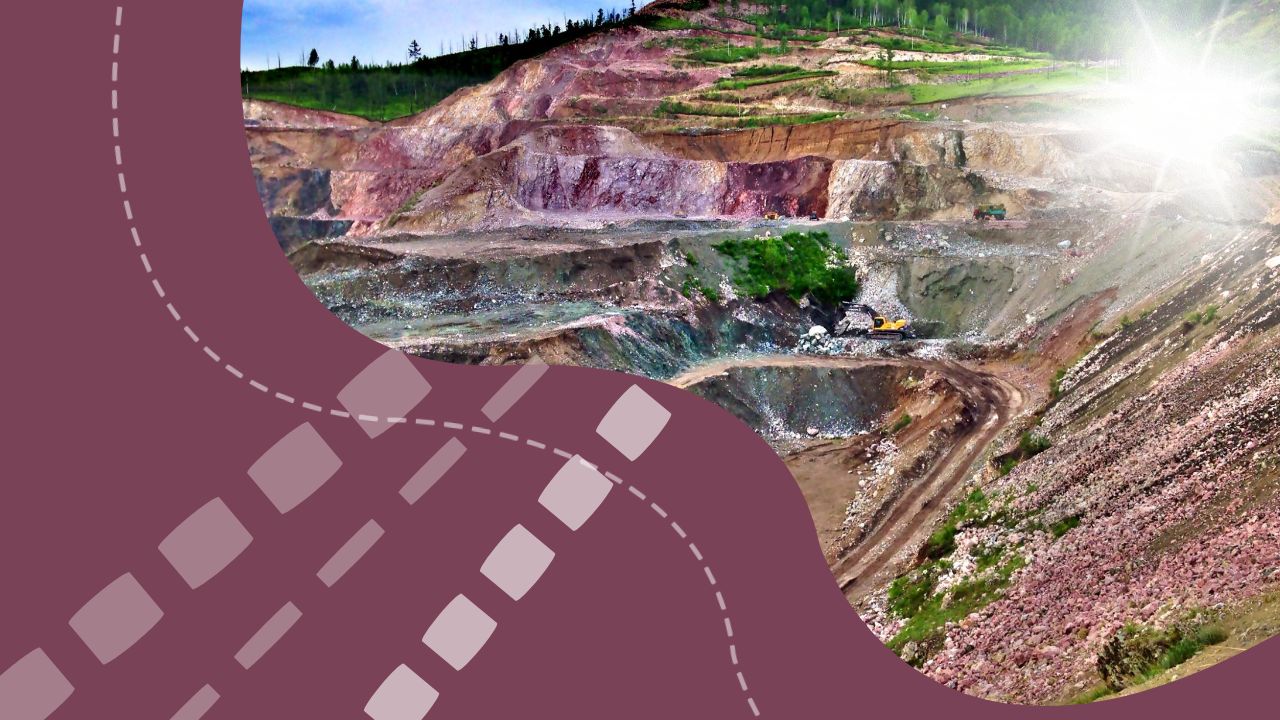
    Australian explorer Middle Island Resources has secured a dominant position in Serbia’s mining sector after acquiring fellow Australian firm Konstantin Resources, gaining ownership of 14 mineral exploration licenses covering 62,000 hectares — the largest portfolio held by any company in the country.

    The licenses are spread across three key project areas: Bobija, Priboj, and Timok. While primarily targeting gold and copper, the assets also show potential for silver, lead, and zinc, according to reports from Mining, cited by Ekapija.

    Middle Island has already commenced exploration at the Bobija project, which will be the company’s initial focus. Located roughly 100 kilometers southwest of Belgrade, the project spans 20,800 hectares and includes three granted exploration permits — Bobija, Bobija East, and Kamenita Kosa. In addition, Middle Island holds an application for the Orovica area and a ten-year option for two mining licenses owned by local operator Bobija doo Ljubovija.

    The acquisition underscores Serbia’s growing importance as a European hub for critical gold and copper exploration, with Middle Island positioning itself at the forefront of this activity.

  • U.K. Nears Critical Minerals Partnership with Greenland Amid Global Supply Chain Rivalry

    U.K. Nears Critical Minerals Partnership with Greenland Amid Global Supply Chain Rivalry

    Britain is preparing to sign a landmark critical minerals partnership with Greenland, a move aimed at securing access to the Arctic island’s vast reserves of rare earths and reducing reliance on Chinese supply chains. Sources familiar with the talks told POLITICO that the agreement could be announced during Prime Minister Keir Starmer’s visit to Copenhagen this week for the European Political Community summit.

    Greenland, a self-ruling Danish territory, hosts 40 of the 50 minerals the United States deems essential to national security, including uranium and graphite. These resources are increasingly vital for global supply chains powering electric vehicles, renewable energy, and advanced technologies.

    The U.K. Department for Business and Trade stressed that securing critical minerals is central to Britain’s industrial strategy, growth, and clean energy transition. Trade Minister Chris Bryant hinted earlier this week that new trade talks were imminent, without naming the country involved.

    Analysts caution that while Greenland’s mineral wealth presents an opportunity, the financial and environmental costs of extraction remain high. Environmental standards and indigenous community participation will be key to securing local support. Greenland has previously revoked mining licenses over radioactive waste concerns, underscoring the political and ecological sensitivities.

    The deal also carries political implications. Greenland’s revenues from mining could reduce its reliance on Denmark’s annual block grant, potentially strengthening its independence. However, experts warn that London must coordinate with Denmark, Nordic states, and the EU to avoid tensions, particularly as Brussels already signed a minerals partnership with Greenland in 2023.

    Even if secured, extraction is only part of the challenge. Most refining of rare earths and critical minerals still occurs in China. Without parallel investment in processing capacity elsewhere, Europe and the U.K. risk remaining tied to Chinese supply chains despite new mining agreements.

  • Pasechnik Appeals to Putin for Funds Amid Mining Crisis in Occupied Luhansk

    Pasechnik Appeals to Putin for Funds Amid Mining Crisis in Occupied Luhansk

    Leonid Pasechnik, the Kremlin-appointed leader of the self-proclaimed Luhansk People’s Republic (LPR), has asked Russian President Vladimir Putin to help secure salary payments for miners in the occupied Luhansk region. According to Ukraine’s Center for Countering Disinformation (CCD), Pasechnik’s appeal reflects the severe deterioration of the mining sector, where most mines have been handed over to Russian companies.

    These operators had pledged investment but later declared the mines unprofitable, opting instead to mothball or liquidate production. The CCD reports that the situation has left many miners without pay, creating a desperate social and economic crisis in the region.

    The challenges are compounded by Russia’s own coal sector, which is suffering under international sanctions and the loss of export markets. Mines across Russia are shutting down, wages are going unpaid, and layoffs are spreading — leaving little incentive for companies to inject resources into the occupied Donbas territories.

    The mining crisis unfolds as Moscow grapples with broader financial troubles. The Russian government projects a $68 billion budget deficit by the end of 2025, nearly double previous forecasts, driven by falling oil and gas revenues and soaring wartime expenditures.

  • Critical Metals to Boost Tanbreez Stake in Greenland Rare Earth Project to 92.5%

    Critical Metals to Boost Tanbreez Stake in Greenland Rare Earth Project to 92.5%

    Critical Metals Corp (Nasdaq: CRML) will increase its ownership in the Tanbreez rare earth project in southern Greenland from 42% to 92.5%, securing control over one of the world’s largest rare earth deposits, major shareholder European Lithium (ASX: EUR) confirmed on Thursday.

    The revised agreement involves Critical Metals issuing 14.5 million shares to Rimbal Pty Ltd, a company controlled by project founder Gregory Barnes, at $8 per share – a 23% premium to the company’s last closing price of $6.49. The transaction is valued at $116 million and is subject to approval by the Greenland government, with completion expected in October or November 2025.

    Barnes agreed to waive a previous requirement for Critical Metals to commit $10 million in investment before qualifying for the increased stake. European Lithium will retain its 7.5% interest in Tanbreez, along with a 60% shareholding in Critical Metals, worth about $408 million at current market prices.

    The Tanbreez project hosts one of the world’s largest untapped heavy rare earth element (HREE) deposits, with more than 27% HREE content and an estimated 4.7 billion tonnes of host rock. A preliminary economic assessment completed in March valued the project at a pre-tax NPV of $3.04 billion, with an internal rate of return of 180%.

    Describing Tanbreez as “a game-changer” for Western rare earth supply chains, founder Gregory Barnes underscored the project’s strategic significance at a time when China dominates global supply, accounting for about 60% of production and 85% of processing.

    The move also coincides with discussions between the UK, EU allies, and Greenland over a potential critical minerals partnership, with Greenland’s foreign minister signalling the island’s mineral wealth as central to future cooperation.

  • ABB Completes Acquisition of French Power Electronics Specialist BrightLoop

    ABB Completes Acquisition of French Power Electronics Specialist BrightLoop

    ABB has finalized its acquisition of French advanced power electronics company BrightLoop, securing a 93% controlling interest with the remaining 7% to be acquired by 2028. The deal marks a key milestone in ABB’s strategy to expand its role in electrification across mining, industrial mobility, and marine propulsion. Financial details of the transaction were not disclosed.

    Founded in 2010 and headquartered in Paris, BrightLoop is best known for its high-performance DC/DC converters, originally designed for motorsports and now deployed across the ABB FIA Formula E racing series. The company has since expanded its applications into critical industries including construction, mining, marine, aerospace, hydrogen mobility, and defence.

    Commenting on the deal, Edgar Keller, President of ABB’s Traction division, said the acquisition strengthens ABB’s position in the global electrification market. “It’s a significant milestone that strengthens our position in the electrification space and brings valuable expertise into ABB as we continue to support the transition to cleaner, more efficient transport systems,” Keller said.

    Florent Liffran, CEO of BrightLoop, welcomed the move: “This is an exciting new chapter for BrightLoop and our 90 employees. With ABB’s global scale and shared commitment to innovation, we’re looking forward to accelerating our growth and continuing to deliver cutting-edge power electronics to the industries that need them most.”

    The acquisition positions ABB and BrightLoop to drive further advances in compact, efficient, and scalable power systems critical for enabling smarter, cleaner energy solutions across multiple sectors.