Website: Eurasia.com

  • Kiruna’s Shifting Ground: Swedish Mining Town Faces Painful Trade-Off in Europe’s Raw Materials Push

    Kiruna’s Shifting Ground: Swedish Mining Town Faces Painful Trade-Off in Europe’s Raw Materials Push

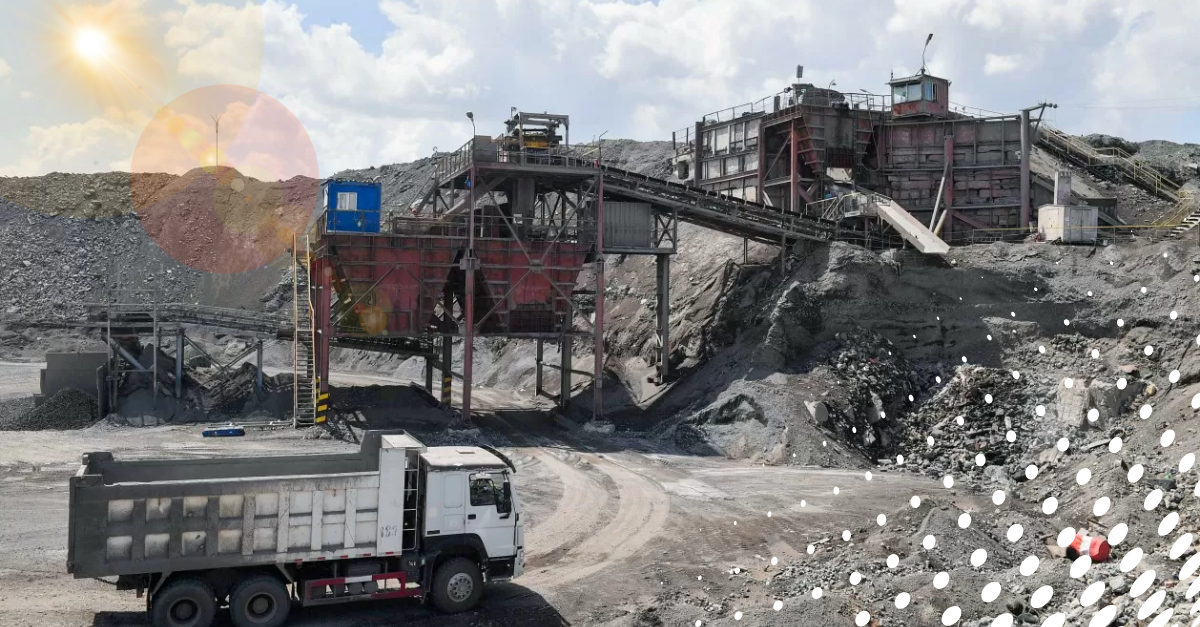
    In the far north of Sweden, the residents of Kiruna are once again being forced to pack up and move — this time, for the second or even third time. Tanja Mattila and her husband had just spent about $300,000 on a new home when a letter arrived from LKAB, Sweden’s state-owned mining company, informing them that their neighborhood would soon become unsafe due to ground movement from the expanding iron ore mine.

    “It was a shock,” said Mattila, a 54-year-old language teacher. “We planned to stay here until we retire.” She and thousands of others are caught in the tension between local life and Europe’s growing appetite for raw materials deemed essential to the green transition.

    Kiruna, which produces nearly 80% of Europe’s iron ore, is also home to one of the continent’s largest deposits of rare earth minerals — metals vital for electric vehicles, wind turbines, and smartphones. As the EU pushes to secure domestic supplies of critical resources and reduce reliance on China, the mining boom in Kiruna is accelerating. But so are the social costs.

    LKAB, seeking to boost production by 50% over the next decade, says its operations are vital for Europe’s energy independence. “If you want self-reliance, you need to mine,” EU Industry Commissioner Stéphane Séjourné said during a recent visit. Yet, for Kiruna’s 23,000 residents, that strategy means homes, schools, and shops are being demolished and rebuilt miles away from the original town center.

    Earlier this year, the relocation of Kiruna’s iconic wooden church — a nationally treasured monument — was broadcast live, hailed as a feat of engineering and cultural preservation. But only days later, residents learned that 6,000 more people would have to move. Local officials, blindsided by the announcement, described the mood as one of mourning.

    For some business owners, the uncertainty is overwhelming. Grocery store owner Fredrik Spett noticed his shop floor rising as the ground shifted beneath it. Across the road, hotelier Jan Grönberg is unsure whether he’ll receive enough compensation to rebuild. “It’s hard to find the motivation,” he said.

    LKAB insists that no one will be left behind and that all residents will be compensated. Still, critics argue that the company and government failed to adequately communicate the scale of the project or involve locals in planning. “It’s a matter of survival for Kiruna,” said Energy and Enterprise Minister Ebba Busch, “but also a matter of sovereignty for Sweden and Europe.”

    The town’s social democrat official, Mats Taaveniku, gestures at a model in the new town hall where a red ribbon marks the previous demolition line. The new one, he says, should be black — “for mourning.”

    While Kiruna symbolizes Europe’s push for “strategic autonomy” in critical minerals, it also raises difficult questions about who pays the price for the continent’s green transition. As excavators tear down the Ferrum Hotel and graffiti nearby asks, “Is this what happens to a town no one cares about?”, residents can’t help but wonder if Europe’s sovereignty is worth their sacrifice.

  • Polish Government Moves to Cut Copper Mining Taxes and Restructure Coal Sector

    Polish Government Moves to Cut Copper Mining Taxes and Restructure Coal Sector

    The Polish government has approved a draft amendment to the tax act on the extraction of certain minerals, designed to ease the tax burden on copper producers, government spokesman Adam Szłapka announced on Tuesday. The cabinet also adopted draft changes to the acts regulating hard coal mining and personal income tax, paving the way for a gradual restructuring of Poland’s coal sector.

    The Ministry of Finance, which prepared the proposal, said the reform aims to support copper producers as they invest in projects crucial for the energy transition, noting copper’s vital role in clean energy technologies. The tax reductions will be implemented in phases: in 2026, the coefficient used to calculate mineral extraction tax will drop from 0.85 to 0.74, followed by a further cut to 0.68 in 2027–2028.

    Earlier drafts of the legislation, presented in July, proposed even lower coefficients — 0.71 for 2026 and 0.64 for 2027–2028 — but these were adjusted during consultations. According to ministry estimates, the reduced rates will lower annual state revenues from copper and silver mining taxes by about PLN 0.5 billion (EUR 117.2 million) in 2026, and by PLN 0.75 billion (EUR 175.8 million) per year in 2027–2028.

    Separately, the draft amendment to the act on the functioning of hard coal mining and the personal income tax act will enable companies in the support system to gradually close down coal mines and pay social benefits to affected workers — a process previously blocked by legal constraints.

    The new regulatory impact assessment projects that closing down Poland’s hard coal mines over the next decade will cost PLN 11.275 billion (EUR 2.6 billion). Earlier estimates placed the cost between PLN 4.182 billion (EUR 980 million) and PLN 9.125 billion (EUR 2.1 billion).

  • Protests, Politics, and Lithium: Serbia’s Unrest Tests the EU’s Democratic Credibility

    Protests, Politics, and Lithium: Serbia’s Unrest Tests the EU’s Democratic Credibility

    As student-led pro-democracy protests sweep across Serbia, tensions between citizens and Brussels are deepening, exposing the European Union’s struggle to balance its democratic principles with its strategic green industrial ambitions.

    The unrest, sparked by last year’s Novi Sad tragedy in which a newly built railway canopy collapsed and killed 16 people, has evolved into a nationwide movement demanding transparency and reform. But after nearly a year of demonstrations, violence erupted again this week — a shooting and arson attack outside the Serbian parliament left one person injured and further inflamed an already volatile political climate.

    President Aleksandar Vučić has responded to growing dissent with increasingly aggressive rhetoric. Visiting a vandalised party office in August, he pledged to “act faster, stronger,” portraying the protesters as part of a campaign of “terror.”

    Meanwhile, frustration with the EU is reaching historic levels. Serbia has been an EU candidate since 2012, but progress toward membership has stalled amid concerns about democratic backsliding, media repression, and ties with Russia and China. Despite these issues, Brussels continues to provide around €1.8 billion in annual funding through grants and pre-accession support.

    The European Parliament recently passed a resolution condemning “state repression and political polarisation,” while Enlargement Commissioner Marta Kos described the violence as “deeply concerning.” But for many Serbs, such statements ring hollow. Public confidence in the EU has plummeted from 64% in 2020 to just 33% in 2025 — the lowest in the Western Balkans.

    Analysts suggest that part of this disillusionment stems from the controversial Jadar Valley lithium mine, a cornerstone of the EU’s green transition strategy. Developed by Rio Tinto, the mine is projected to meet up to 90% of Europe’s lithium needs by 2028, supporting the bloc’s electric vehicle and renewable energy ambitions. Yet 63% of Serbs oppose the project due to environmental and agricultural risks, seeing it as a symbol of EU-backed exploitation rather than partnership.

    Critics like University College London professor Eric Gordy argue that “the EU knows the project cannot succeed under a truly democratic Serbian government,” given the public’s strong opposition. The mine’s use of toxic sulphuric acid, in one of Serbia’s key farming regions, has only heightened fears.

    Srdjan Majstorović of the Centre for European Policy in Belgrade warns that the EU’s hesitancy to confront Vučić’s increasingly authoritarian government risks alienating a generation of young Serbs who once saw Europe as a model of democracy. “The long-term viability of European interests in Serbia,” he said, “depends on democratic governance, not transactional politics.”

    Without a change in tone, he added, the EU may soon face the sentiment voiced in a popular Serbian song: “Where were you when I was nobody… how can I trust you now?”

  • Tajikistan and South Korea to Create Joint Tungsten Supply Chain

    Tajikistan and South Korea to Create Joint Tungsten Supply Chain

    A memorandum of understanding (MoU) was signed in Dushanbe between Tajikistan’s Ministry of Industry and New Technologies and South Korean company GB Innovation (GBI) to establish a joint tungsten supply chain — a strategically important mineral for high-tech industries. The document provides for the joint development of the Maikhura tungsten deposit and the creation of a full production cycle, from raw material extraction to finished products. The signing took place during the Dushanbe Investment Forum, in a ceremony overseen by Tajik President Emomali Rahmon.

    Minister of Industry and New Technologies Sherali Kabir stated that the Maikhura project would become a model of mutually beneficial cooperation, promoting Tajikistan’s industrialization and strengthening economic ties with South Korea. Under the agreement, GB Innovation and the state-owned company TALCO plan to reach an annual output of 4,000 tons of tungsten concentrate within three to four years. The concentrate will be processed locally into tungsten oxide and tungsten carbide for use in domestic industries.

    Tungsten is a key component in high-tech sectors such as semiconductor production, defense, rechargeable batteries, automotive manufacturing, and aerospace. Establishing a stable tungsten supply chain is of strategic importance to South Korea, which aims to secure self-sufficiency in this critical mineral. The Maikhura mine stands out for its high tungsten content—1.0%, five times the global average of 0.2%. Combined with production from South Korea’s Uljin Ssangjeon mine, the total output will reach about 5,000 tons per year, nearly covering South Korea’s annual domestic demand of 3,400 tons.

    GB Innovation President Kim Young-woo emphasized the importance of stable supply chains for strategic minerals and expressed readiness to expand cooperation to other resources, including rare earth elements and lithium. Minister Kabir highlighted that the Maikhura project represents a key step toward Tajikistan’s industrialization and the establishment of sustainable supply chains for strategic resources.

    Investment Commissioner Rahim Joda announced that the government would provide over 200 investment and tax incentives to ensure the project’s success. The initiative aims to build a full-cycle local value chain—from mining to processing and production—within Central Asia, enhancing competitiveness and ensuring supply stability in the global market.

    Tajikistan currently accounts for around 20% of global antimony production and possesses significant reserves of rare earth elements and lithium, solidifying its role as an emerging resource hub in Central Asia.

  • Tajikistan Aims to Become a Key Producer of Critical Metals for the Green Transition

    Tajikistan Aims to Become a Key Producer of Critical Metals for the Green Transition

    Tajikistan holds reserves of ten out of twelve metals essential for the global green transition and is actively developing their production, Minister of Industry and New Technologies Sherali Kabir announced on October 14 at the Dushanbe – 2025 International Investment Forum. According to the minister, six of these critical metals are already being produced domestically, with plans to further expand operations and integrate into the new global supply chain of rare earth elements.

    Critical metals, such as those used in solar and wind power systems as well as electric vehicles, are vital to green technologies. Kabir highlighted that during the Soviet era, only three plants in the entire USSR produced rare earth metals—two of them located in Tajikistan and one in Russia. Negotiations are currently underway with several international companies to modernize these facilities. “I am confident that in the near future we will see very good results,” Kabir said.

    Special focus has been placed on elements like antimony and stibnite, which play an important role in the green transition. “Tajikistan ranks second in the world in terms of antimony reserves,” Kabir noted, adding that four antimony plants are currently under development, ranging from feasibility studies to active construction stages.

    The minister also reported that Tajikistan has launched copper production—a key metal for the green economy—and plans to significantly increase output by attracting investment. Gold production is growing at around 20% annually, while the country also possesses large reserves of nickel and lithium. “We will be the first country in the CIS to produce lithium,” Kabir declared.

    Enterprises such as Azot and TALCO Gold are being positioned not only as regional leaders but as integral players in the global critical metals market. State programs are already in place to develop the mining sector, with Kabir expressing confidence that Tajikistan will soon secure a prominent place in the international market for metals vital to the green transition.

    He emphasized that international cooperation remains the main driver of growth for the metallurgical industry and that establishing new supply chains for rare earth and critical metals is essential to stabilizing global markets. The country’s president has made rapid industrialization a national priority—an approach that has already doubled Tajikistan’s industrial output over the past five years.

  • Trump Team Pushes for U.S. Access to Major Tungsten Deposits in Kazakhstan

    Trump Team Pushes for U.S. Access to Major Tungsten Deposits in Kazakhstan

    According to Bloomberg, former U.S. President Donald Trump’s team is seeking to secure mining rights in Kazakhstan for Cove Capital, an American company aiming to develop some of the world’s largest untapped tungsten deposits. The negotiations involve the Kazakh-American joint venture Cove Kaz Capital and Kazakhstan’s sovereign wealth fund Samruk-Kazyna, with U.S. Commerce Secretary Howard Lutnick reportedly taking part in the talks.

    The project may receive financial backing from the U.S. International Development Finance Corporation (DFC) and the Export-Import Bank of the United States (Exim Bank). Sources indicate that Washington is particularly interested in developing the Verkhne-Kairaktinskoye and Severo-Katparskoye deposits located in Kazakhstan’s Karaganda region—assets valued at several billion dollars.

    Cove Kaz Capital has been in discussions with Samruk-Kazyna for several months, Bloomberg reports. However, the American firm faces competition from a Chinese state-owned company that has offered a price exceeding the market value for the same assets.

    The United States classifies tungsten as a critical mineral essential for national security and industrial applications. Under the proposed plan, Cove Kaz Capital and Samruk-Kazyna would jointly extract the ore in Kazakhstan, process it locally, and then export the finished metal to the U.S. for use in both defense and civilian industries. While Kazakhstan would receive a share of the joint venture’s profits, Cove Kaz Capital is expected to remain the main beneficiary.

  • Kazakhstan and Finland Sign Cooperation Agreement on Nuclear Energy

    Kazakhstan and Finland Sign Cooperation Agreement on Nuclear Energy

    During Finnish President Alexander Stubb’s official visit to Astana, Kazakhstan and Finland signed an agreement establishing cooperation between the nuclear energy regulators of both countries. The document outlines plans for experience exchange, joint research, and potential uranium fuel supply deals. The Finnish government will also consider the possibility of regular imports of nuclear fuel raw materials from Kazakhstan.

    According to Almassadam Satkaliyev, head of Kazakhstan’s Atomic Energy Agency, the agreement creates a foundation for more detailed discussions on future volumes and conditions of uranium supplies to Finnish nuclear power plants. He emphasized that Finland holds a leading position in the field of peaceful nuclear energy, boasting significant achievements in operating nuclear technologies and conducting scientific and technical research.

    Finland’s legislation is among the strictest in the world when it comes to regulating the extraction, management, and operation of nuclear facilities. Kazakhstan plans to adopt Finland’s best practices and conduct a joint audit of its own regulatory framework to align national standards with global benchmarks, Satkaliyev added.

  • Europe Must Adapt to a New Era of Geoeconomics, EU Leader Warns at Berlin Global Dialogue

    Europe Must Adapt to a New Era of Geoeconomics, EU Leader Warns at Berlin Global Dialogue

    At the Berlin Global Dialogue, European Commission President delivered a stark warning about the accelerating pace of global change, urging Europe to act swiftly to safeguard its competitiveness and independence in an increasingly fragmented world. Addressing a room of policymakers, economists, and industry leaders, she emphasized that “the world is changing faster than our policies,” calling for institutional renewal and strategic agility across the continent.

    Europe, she said, faces a dual challenge: an economic slowdown and growing strategic vulnerabilities. Yet it also possesses “exceptional assets”—its single market, strong institutions, rule of law, research excellence, and skilled workforce. To harness these strengths, she announced plans to accelerate the completion of the Single Market, simplify regulations, and create a new “28th regime” for innovative companies to scale up across all EU member states under one unified framework.

    The speech also underscored the growing fusion of economics and geopolitics. “We are in the middle of a systemic shift,” she noted, warning that economic tools—such as export controls, subsidies, and technology theft—are increasingly being used as instruments of power. To confront these trends, Europe must rethink its approach to both economic and national security, she said, highlighting the EU’s “Made in Europe” strategy, which focuses on strategic autonomy in defence, energy, and key technologies.

    She cited China’s recent export restrictions on rare earth materials as a wake-up call, revealing Europe’s dangerous dependency on external suppliers. In response, she announced the forthcoming RESourceEU initiative—modelled on the REPowerEU plan—to secure critical raw materials through recycling, joint purchasing, stockpiling, and new international partnerships. “Europe cannot afford to repeat the mistakes of the past,” she stated. “The world rewards speed, not hesitation.”

    Despite the sobering tone, the President concluded on a note of determination, citing the EU’s recent trade deals with Mercosur, Mexico, Indonesia, and Switzerland as proof of Europe’s continuing global influence. Negotiations with India and several Southeast Asian nations are also advancing. “Europe must use its geoeconomic weight to its advantage,” she said. “With urgency, independence, and courage, we will make it happen together.”

  • Bishkek Forum Highlights Transparency and Investment as Keys to Kyrgyzstan’s Mining Future

    Bishkek Forum Highlights Transparency and Investment as Keys to Kyrgyzstan’s Mining Future

    Government officials, business leaders, civil society representatives, and international experts gathered in the Kyrgyz capital for the “Dialogue on the Extractive Industry: Investment, Transparency, Development” forum, aimed at fostering an open exchange on the future of Kyrgyzstan’s mining sector.

    The event, organized by the Ministry of Natural Resources, Ecology and Technical Supervision of Kyrgyzstan with the support of the World Bank, the Extractive Industries Transparency Initiative (EITI), and consulting firm Data Lab, focused on advancing reforms to make the country a competitive and sustainable hub for critical mineral investment.

    According to the ministry, the forum’s main goal was to build a framework for cooperation grounded in transparency, accountability, and sustainability — principles vital for developing industries tied to the global energy transition.

    World Bank representative Brian Land emphasized that Kyrgyzstan needs deep and sustained reforms to attract exploration and mining investments, while Arkady Rogalsky, a data consultant for the Bank, noted that the EITI standard remains essential for building trust between government, business, and citizens by promoting openness, anti-corruption measures, and equal rules for all participants.

    At the conclusion of the discussions, participants adopted a resolution outlining future priorities:

    • The government was urged to continue reforms and strengthen coordination in preparation for the EITI 2027 validation.

    • The private sector was encouraged to enhance corporate responsibility and environmental transparency while promoting equal opportunities.

    • Civil society was called to engage more actively in public oversight and dialogue.

    • International partners were invited to support Kyrgyzstan in advancing transparency and sustainable growth.

    Deputy Director of the Kyrgyz Geological Service Ruslan Kalilov stressed that citizen participation and transparency are the cornerstones of trust, adding that the mining industry can become a driver not only of economic growth but also of social development.

    A dedicated session addressed gender inclusion in transparency practices. Data Lab presented a gender analysis of EITI implementation, highlighting the importance of women’s participation in decision-making and leadership roles. Gulnura Toralieva, head of Data Lab, noted that the goal is to foster a “culture of transparency” based on respect and openness, not merely to produce compliance reports.

    The forum concluded with a joint commitment to prepare Kyrgyzstan for the 2027 EITI validation and to continue collaborative efforts to strengthen trust and sustainable development within the extractive industry. As participants agreed, when government, business, and civil society work in concert — the whole country benefits.

  • Cornish Lithium Becomes First UK Company to Produce Lithium Hydroxide Monohydrate

    Cornish Lithium Becomes First UK Company to Produce Lithium Hydroxide Monohydrate

    Cornish Lithium has announced that it has become the first company in the United Kingdom to produce lithium hydroxide monohydrate (LHM), a key component used in electric vehicle batteries, grid-scale energy storage, and consumer electronics.

    The breakthrough was achieved at a repurposed Сhina clay quarry in Cornwall, where the company used patented low-carbon processing technology to extract lithium from Cornish granite.

    Founder and Executive Chairman Jeremy Wrathall called it a landmark achievement for both the company and the UK’s battery industry:

    “We can test every single stage of it on an industrial scale — that’s why it is such an important day for us. Our faith in investing £10 million in this project has been vindicated.”

    The milestone marks a significant advance toward establishing a domestic lithium supply chain, a critical step as the UK transitions to electric mobility and renewable energy storage.

    Mining consultant James McFarlane praised the accomplishment, noting the rapid pace of development:

    “The company was only founded in 2016 and began exploring the hard rock potential in St Austell in 2019. To go from that to producing LHM domestically from their own deposit is a massive milestone that deserves recognition.”

    Cornish Lithium said it plans to construct a commercial-scale lithium processing and refining plant capable of producing up to 10,000 tonnes of LHM per year. The facility is expected to be operational by 2029, creating around 300 new jobs and contributing £800 million to the UK economy.

    The project is seen as a cornerstone of Britain’s effort to secure critical mineral independence and reduce reliance on imported battery materials, aligning with the UK government’s net-zero and green industrial strategies.