Website: Eurasia.com

  • Zijin to Lift Stake in Strickland Metals via A$55 Million Placement for Serbia Gold Project

    Zijin to Lift Stake in Strickland Metals via A$55 Million Placement for Serbia Gold Project

    China’s  is set to increase its shareholding in Australia’s  through a A$55 million institutional placement aimed at accelerating development of the Rogozna gold project in southern Serbia.

    Strickland said on Tuesday that Zijin will invest A$5 million in the placement, lifting its stake to 4.0% from 3.3%. The company plans to issue about 343.2 million fully paid ordinary shares at A$0.16 per share, according to a filing with the .

    Funds raised will support an expanded 70,000-metre drilling programme at Rogozna in 2026, with the aim of delivering updated resource estimates in late 2026 for the Shanac, Gradina and Copper Canyon deposits. Additional drilling is also planned at the Red Creek prospect following a recent discovery.

    The proceeds will further be used to advance a pre-feasibility study for Rogozna, targeted for completion in the first half of 2027. Earlier on Tuesday, Strickland reported a new high-grade gold and base metals discovery at Red Creek, its second since acquiring Rogozna in mid-2024.

    Last month, Strickland increased Rogozna’s inferred mineral resource estimate to 8.6 million ounces of gold equivalent from 7.4 million ounces, following a maiden estimate for the Gradina deposit. Rogozna comprises four exploration licences covering around 184 square kilometres and is considered a potential candidate to become one of the world’s largest undeveloped gold deposits.

    Zijin already has a significant presence in Serbia through its mining subsidiaries, operating copper and gold assets in the eastern part of the country, underscoring its growing interest in the region’s mineral potential.


  • Germany Seeks Deeper Partnership With Australia on Critical Raw Materials

    Germany Seeks Deeper Partnership With Australia on Critical Raw Materials

    Germany is looking to strengthen its cooperation with Australia on the supply and development of critical raw materials, German Foreign Minister Johann Wadephul said on Thursday during an official visit to Canberra.

    Following talks with Australian Foreign Minister Penny Wong, Wadephul described Australia as a key partner for Germany in diversifying global supply chains. He highlighted the strategic importance of minerals extracted in Australia, particularly lithium, and said Berlin is keen to expand collaboration in the raw materials sector.

    Australia hosts some of the world’s most significant mineral resources, including the largest hard-rock lithium mine, located near the town of Greenbushes south of Perth. The site spans more than 2000 hectares and is responsible for roughly 20% of global lithium production. Lithium is a crucial component in lithium-ion batteries used in consumer electronics and electric vehicles.

    In addition to lithium, Australia holds substantial reserves of rare earth elements such as neodymium and terbium, which are essential for manufacturing permanent magnets used in electric motors and other advanced technologies.

    Wadephul acknowledged that closer cooperation in developing and exploiting mineral resources would require significant financial investment. He noted that extraction and processing of critical raw materials can be costly, but emphasised that Germany’s economy is particularly reliant on secure access to these resources.

  • Czech Republic Ends Hard Coal Mining After Nearly 250 Years

    Czech Republic Ends Hard Coal Mining After Nearly 250 Years

    The Czech Republic has formally brought nearly two and a half centuries of hard coal mining to a close, marking the moment with a symbolic final cart of black coal lifted from a depth of 1300 metres. The ceremony took place on Wednesday at the CSM mine in Stonava, close to the Polish border, and was attended by current and former miners, officials, and invited guests.

    State-owned mining company OKD confirmed that the CSM operation was the country’s last active hard coal mine and said production had become unsustainable due to rising costs. Speaking at the event, OKD general director Roman Sikora described the closure as a historic milestone and paid tribute to generations of miners who shaped the country’s industrial development.

    Over its long history, the CSM mine developed an underground network exceeding one million metres in length and became the setting for several notable moments, including a wedding held almost 900 metres below ground in 1992. The mine was also visited underground by playwright and former Czech president Václav Havel in the early 1990s.

    The shutdown marks the end of an era for the Moravian-Silesian region, long defined by heavy industry and coal production. While around 700 workers will remain involved in decommissioning and closure activities, others are expected to transition into retraining programmes.

    Hard coal, also known as black coal or anthracite, is valued for its high carbon content and energy density. Although underground hard coal mining has now ended in the Czech Republic, lignite extraction in open-cast mines is expected to continue until 2033. Comparable closures have already taken place elsewhere in Europe, including Germany, which shut its last hard coal mine in the Ruhr region in 2018.

  • Why Artisanal Gold Mining Struggles to Go Legal in Kazakhstan Despite Record Prices

    Why Artisanal Gold Mining Struggles to Go Legal in Kazakhstan Despite Record Prices

    Reports of arrests of so-called illegal gold prospectors have become more frequent as gold prices hover near record highs. Despite legislative changes intended to legalize artisanal mining, many prospectors continue to operate outside the formal system. In an interview with inbusiness.kz, veteran geologist Bolat Kabaziev outlined why legalization has proven far more difficult in practice than on paper.

    According to Kabaziev, the 2018 Subsoil Code was expected to unlock large-scale legal artisanal mining on designated plots approved by regional authorities and the Ministry of Industry. In reality, progress has been slow. He said artisanal gold mining remains constrained by environmental and water protection rules, as well as technical limits on production volumes, mining depth and allowable equipment.

    While the law formally introduced artisanal mining licences, Kabaziev noted that bureaucracy remains a major barrier. Lengthy approvals at regional administrations have made the process complex and time-consuming. “On paper it was legalized, but in practice obtaining a licence has become difficult and slow,” he said.

    Kabaziev also addressed the blurred line between informal prospectors and outright illegal miners. While some prospectors argue that subsoil resources belong to the people, he stressed that unauthorized mining is still a criminal offense under existing laws on subsoil use and precious metals. A deeper issue, he said, is the lack of clear oversight mechanisms once licences are issued. For example, the law caps artisanal gold production at 50 kg per year, but there is no effective system to monitor actual output or the movement of mined gold.

    Additional obstacles include long approval timelines, multiple administrative clearances, technical constraints and, in some cases, resistance from local communities. Environmental and water permits are particularly hard to obtain, especially when gold-bearing placers are located in riverbeds, where approvals are often impossible.

    Kabaziev cautioned that artisanal placer gold mining is also a high-risk business. Even on officially designated plots, prospectors must study historical geological data and consult experts before investing. “Statistics show that only a few actually earn money, but this is rarely discussed,” he said.

    He also raised concerns about weak reporting requirements. Despite dozens of artisanal licences being issued in recent years, little gold is officially surrendered or recorded. Kabaziev believes most gold is sold through informal buyers, forming a shadow market, with uncertain downstream destinations. While estimates suggest illegal artisanal mining could amount to 10–15 tonnes of gold per year, he said much of this gold likely remains within Kazakhstan, entering jewellery production or, in some cases, refineries.

    With gold prices recently exceeding $5,000 per ounce, Kabaziev acknowledged a renewed “gold rush” mentality. However, he said the phenomenon remains poorly studied. He argued that true legalization would require open dialogue between authorities, law enforcement, industry experts and the prospectors themselves to address regulatory gaps, environmental concerns and market transparency.

  • Uzbekistan Surpasses Uranium Production Targets and Accelerates Sector Expansion

    Uzbekistan Surpasses Uranium Production Targets and Accelerates Sector Expansion

    Uzbekistan has significantly exceeded its previously announced uranium production targets and plans to continue expanding the sector in the coming years, according to information cited by inbusiness.kz from Reuters.

    In 2025, the country increased uranium output to 7000 metric tons, well above earlier government projections. The disclosure was made by the presidential press service, which also said Uzbekistan intends to begin developing four new uranium deposits within the year.

    An official report, published for the first time with detailed production data, estimates Uzbekistan’s total uranium reserves at 139000 tons. These figures contrast sharply with earlier expectations from the national atomic energy agency, which had forecast production of just over 4200 tons for 2025.

    As part of its longer-term development strategy, Uzbekistan aims to raise annual uranium production to 7200 tons by 2030. Deputy Minister of Mining and Geology Ural Yusupov told state television that one project, with an estimated investment of $150 million, could start production as early as July this year.

  • Kazakhstan to Spend ₸240 Billion on Geological Exploration: What and Where the State Plans to Explore

    Kazakhstan to Spend ₸240 Billion on Geological Exploration: What and Where the State Plans to Explore

    Kazakhstan’s government will allocate ₸240 billion to geological exploration, but the specific distribution of these funds and the rationale behind the chosen priorities have raised questions among industry experts. In response to an inquiry from inbusiness.kz, the Ministry of Industry and Construction detailed its plans for 2026–2028 via the eOtinish electronic platform.

    A central focus of the program will be regional geological mapping at a scale of 1:50,000. Preparatory work began in 2025, with 20 design-and-cost project documents developed, covering a total area of around 100,000 square kilometers. These projects предусматривают comprehensive analysis of Earth remote sensing data, airborne geophysical and geochemical surveys, as well as field geological work. The estimated cost of these 20 projects amounts to ₸110 billion.

    Another major spending area is 2D seismic exploration. Six projects are scheduled to begin in 2026 with a combined budget of ₸42.6 billion. The work is aimed at identifying structural traps for hydrocarbons and will cover two blocks in the Shu–Sarysu sedimentary basin and four blocks in the North Turgai basin. In total, 2D seismic surveys will span 25,300 line kilometers, with completion planned by the end of 2028.

    According to the ministry, seismic work will begin simultaneously in several regions. The North Turgai basin will be surveyed in Kostanay Region, while the Shu–Sarysu basin will cover parts of Ulytau, Turkestan and Zhambyl regions. Information on forecast resources will become available after completion of the surveys, and the resulting geological reports are expected to be published in open access on the minerals.e-qazyna.kz portal and the website of the Committee of Geology.

    The ministry stressed that these regional programs should not interfere with the normal operations of existing subsoil users. On the contrary, officials say the data generated by the state program can be used by private companies when planning and implementing their own exploration activities.

    However, industry specialists note that the ministry’s explanation leaves the strategic logic of the program insufficiently articulated. In their view, there is no publicly available document that systematically assesses the prospectivity of different regions and mineral types or sets out a long-term exploration roadmap.

    Experts have also questioned the choice of basins selected for state-funded seismic surveys. Both the Shu–Sarysu and North Turgai basins are already seeing strong interest from national and private companies, while other underexplored areas—such as the Irtysh, Balkhash and Teniz basins—remain largely outside the scope of large-scale government programs.

    Additional criticism relates to institutional bottlenecks, including lengthy procedures for accessing geological data and a five-year confidentiality period for submitted exploration results. Analysts argue that removing such constraints could deliver faster and more tangible benefits for the sector than large-scale mapping or seismic programs alone.

  • EU Moves to Forge Critical Minerals Partnership with US to Counter China’s Dominance

    EU Moves to Forge Critical Minerals Partnership with US to Counter China’s Dominance

    The European Union is preparing to propose a formal critical minerals partnership with the United States, seeking to align with the Trump administration’s renewed push to secure global supply chains and reduce reliance on China.

    According to sources familiar with the discussions, Brussels is ready to sign a memorandum of understanding with Washington that would launch work on a “Strategic Partnership Roadmap,” with a draft framework expected within three months. Negotiators on both sides are aiming to conclude initial talks within 30 days, with a joint statement by the European Commission and the US expected this week.

    The proposed partnership is designed to coordinate sourcing, pricing and market safeguards for critical minerals that underpin modern technologies ranging from clean energy systems to defence equipment. Both the EU and the US remain heavily dependent on Chinese production and processing, a concentration that has given Beijing significant leverage over global supply chains.

    Under the proposal, the EU and US would explore joint mining and processing projects, develop secure transatlantic supply chains, and consider price-support mechanisms to protect Western producers from cheaper imports. The draft also highlights tools to prevent market manipulation and manage oversupply, including coordinated stockpiling and shared response mechanisms in the event of disruptions.

    Notably, EU officials insist the partnership explicitly include respect for territorial integrity. This provision follows recent strains in transatlantic relations after Donald Trump publicly floated the idea of acquiring Greenland, an autonomous territory within the Kingdom of Denmark and part of the EU.

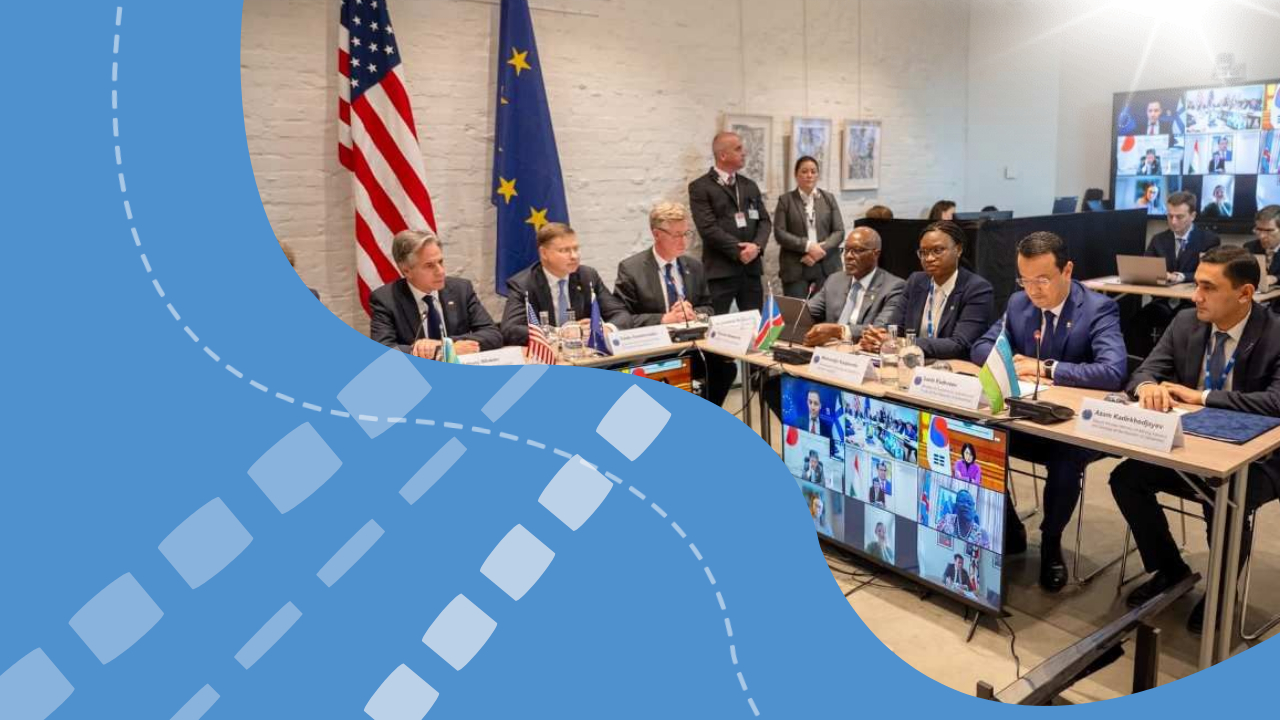
    The initiative coincides with a US-led ministerial meeting this week, bringing together foreign ministers and senior officials from allied countries to advance agreements aimed at cutting dependence on Chinese critical minerals. A draft statement seen by Bloomberg indicates the EU, the US and partners are considering a broader plurilateral trade initiative involving like-minded nations.

    Potential measures under discussion include coordinated trade policies such as standards-based markets, price-gap subsidies, border-adjusted price floors and long-term offtake agreements. While the text remains subject to change, it reflects Washington’s interest in shielding domestic producers from undercutting by Chinese exports.

    China’s role looms large in the background. Beijing dominates both mining and refining of many critical minerals, and its export restrictions on rare earths last year elevated the issue to the top of Washington’s strategic agenda. Although some restrictions were temporarily eased following talks between Trump and Chinese leader Xi Jinping, US officials remain focused on accelerating diversification.

    In parallel, the Trump administration has placed renewed emphasis on stockpiling. Earlier this week, the US announced a $12 billion critical minerals reserve aimed at protecting manufacturers from sudden supply shocks, a move closely aligned with elements of the EU proposal.

    The European Commission has described the talks as essential to reducing dependence on any single supplier, though officials privately caution that reaching a comprehensive agreement on complex pricing and trade mechanisms within weeks will be challenging. Still, the EU’s willingness to table a detailed proposal signals momentum toward closer transatlantic coordination on one of the most strategically sensitive areas of the global economy.

  • Kazakhstan’s Foreign Minister Heads to Washington for Critical Minerals Talks with the United States

    Kazakhstan’s Foreign Minister Heads to Washington for Critical Minerals Talks with the United States

    Kazakhstan’s Foreign Minister Yermek Kosherbayev will travel to Washington DC on 3–4 February to take part in the Critical Minerals Ministerial, marking his first official visit to the United States since assuming office in September 2025. On 3 February, he is scheduled to meet with the United States Department of State and representatives of other rare earth element (REE) supplier countries.

    Kosherbayev, a career diplomat, previously served as Kazakhstan’s ambassador to Russia, governor of the East Kazakhstan Region, and deputy prime minister, combining diplomatic, regional and executive experience. His visit also includes engagement with Yerzhan Kazykhan, appointed in January as Kazakhstan’s first-ever Special Envoy to the United States, underscoring Astana’s emphasis on high-level engagement with Washington.

    The trip follows months of intensified diplomatic and economic contacts between Kazakhstan and the United States. Since November, President Kassym-Jomart Tokayev and US President Donald Trump have met twice in person and held a phone call, with discussions spanning trade, investment and global forums, including an invitation to the G20 meeting scheduled for December 2026.

    Critical minerals have emerged as a central pillar of this renewed engagement. Rare earth elements form a key part of Washington’s supply-chain diversification strategy, and Kazakhstan’s geological potential positions it as a relevant partner. This alignment has already been formalized through a memorandum of understanding on cooperation in critical minerals, signed by Tokayev, aimed at strengthening supply chains and expanding bilateral economic ties.

    Investor interest has begun to follow diplomatic signaling. US-backed initiatives and early-stage engagement from investors, including Cove Capital, as well as a letter of interest of up to $900 million from the Export-Import Bank of the United States, point to growing momentum, even as projects remain at an early phase.

    Unlike many emerging REE suppliers, Kazakhstan brings an existing industrial base to the table. Its established processing and refining capacity across metals such as uranium, copper, chromium and titanium allows the country to participate across the value chain rather than act solely as a raw-material exporter. Long-standing partnerships with global majors like Chevron and Exxon Mobil further reinforce Kazakhstan’s track record in delivering complex, capital-intensive projects.

    Still, translating strategic alignment into functioning supply chains will depend on execution. Regulatory clarity, permitting efficiency and coordination between mining and industrial policy remain key variables. The State Department–hosted meetings during Kosherbayev’s visit represent an initial step from diplomacy toward implementation, as Kazakhstan seeks to position itself as a credible long-term partner in US efforts to diversify rare earth and critical mineral supplies.

  • Uzbekistan to Launch Uranium Extraction at Four New Deposits

    Uzbekistan to Launch Uranium Extraction at Four New Deposits

    President Shavkat Mirziyoyev has reviewed the latest developments and future plans for Uzbekistan’s coal and uranium industries during a recent presentation, according to the presidential press service.

    Discussions centred on increasing coal output, strengthening competition within the sector, and improving the use of existing reserves. It was noted that during the 2025–2026 autumn-winter season, the country plans to extract 10 million tonnes of coal — 1.3 million tonnes more than last season. Production so far has reached 9 million tonnes, up by 590,000 tonnes year-on-year, with next season’s goal set at 11 million tonnes.

    Efforts will focus on faster development of deposits in the Tashkent and southern regions, expanding selective extraction, and engaging additional excavators and outsourced equipment. By supporting private entrepreneurs, authorities expect to produce an extra 2.5 million tonnes of coal in 2026.

    Particular attention was given to the “Nishbosh” coal deposit in Angren, where a nearly $500 million investment project is set to begin production this year. With reserves of about 233 million tonnes, the site is expected to yield 1 million tonnes of coal in its first year and reach an annual output of 10 million tonnes. The project will also create around 880 permanent jobs.

    Separately, state company Uzkimyosanoat unveiled a $5 billion initiative to establish a new polymer production facility based on the chemical processing of coal. The plant will be capable of converting 8–9 million tonnes of coal into 1.18 million tonnes of polymer products annually.

    In 2025, Uzbekistan produced 7,000 tonnes of uranium while confirmed reserves rose to 139,000 tonnes. This year, the government plans to start mining operations at four new deposits — ArnasayWestern KizilkukSouthern Jongeldi, and Eastern Agron. To accommodate rising output, additional uranium processing capacity will be developed, including stable supplies of sulphuric acid and technical sulphur.

  • EU to Offer US Critical Minerals Partnership to Counter China’s Dominance

    EU to Offer US Critical Minerals Partnership to Counter China’s Dominance

    The European Union is set to offer the United States a critical minerals partnership designed to curb China’s influence over global supply chains, according to people familiar with the matter.

    Brussels is preparing a memorandum of understanding to create a “Strategic Partnership Roadmap” within three months, which would guide joint efforts to source and refine essential materials for modern technologies—ranging from batteries to semiconductors—without heavy reliance on Beijing.

    The proposal includes initiatives such as joint mineral projects, price support mechanisms, and safeguards against market manipulation. It also encourages building reciprocal supply chains between the two economies while maintaining mutual respect for territorial integrity—a pointed reference after tensions rose when U.S. President Donald Trump signaled interest in purchasing Greenland, an autonomous territory of Denmark.

    The renewed cooperation effort comes ahead of a major U.S.-led meeting of foreign ministers and senior officials this week aimed at forming global alliances to reduce Chinese mineral dominance. Washington’s sense of urgency follows Beijing’s export restrictions on rare earth elements last year, temporarily eased under a deal between Trump and Chinese President Xi Jinping.

    Underlining its seriousness, the Trump administration this week launched a $12 billion national critical mineral stockpile. The EU’s draft mirrors this approach, suggesting both sides could coordinate stockpiling and rapid response measures to supply disruptions.

    Key pillars of the EU proposal include cooperation on securing supply chains, developing international premium markets, and sharing information to boost market transparency. It also envisions exemptions from mutual export restrictions, collaboration on innovation and research, and the creation of a joint EU-U.S. response group to manage potential shortages.

    Despite concerns over the pace of negotiations, EU officials called the talks “vital to diversify our supplies away from any single country,” indicating that the transatlantic allies are increasingly aligned in reshaping critical mineral dependencies.