Website: Eurasia.com

  • NGOs Challenge EU ‘Strategic Project’ Status for Covas do Barroso Lithium Mine

    NGOs Challenge EU ‘Strategic Project’ Status for Covas do Barroso Lithium Mine

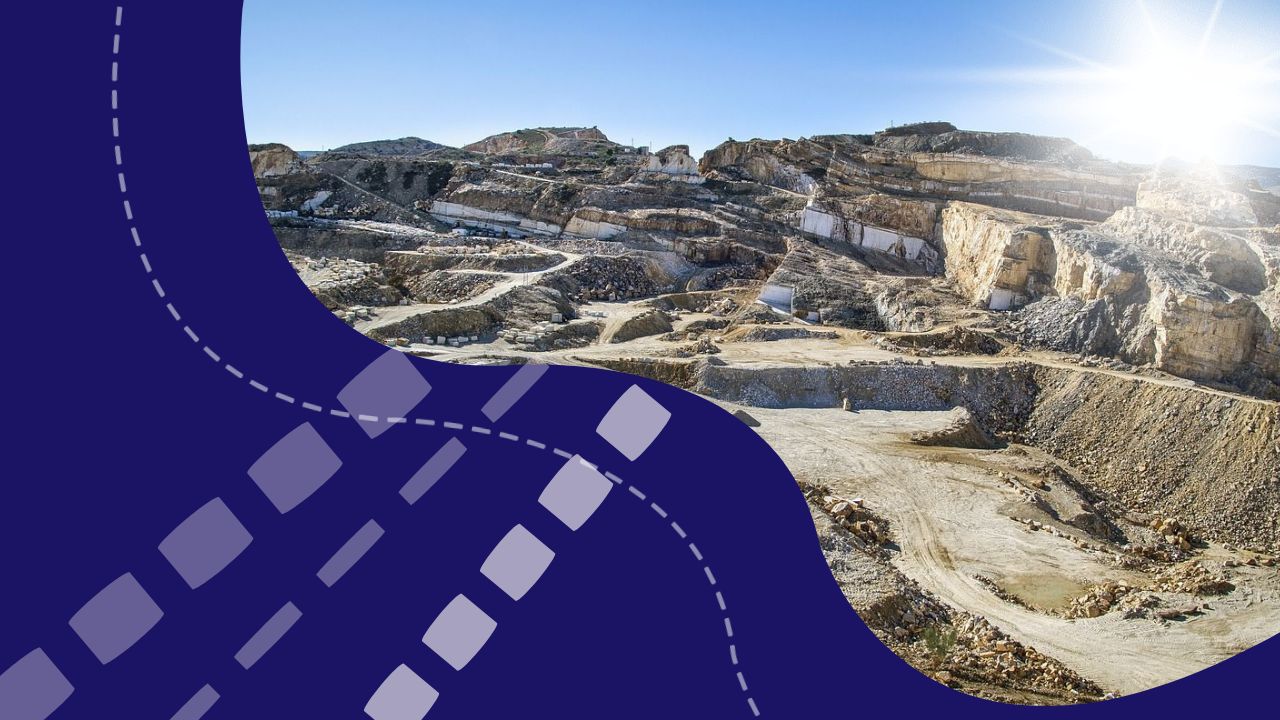
    Environmental organisations have launched legal proceedings against the European Commission before the Court of Justice of the European Union over Brussels’ decision to classify the proposed lithium mine in Covas do Barroso as a “strategic project” under the EU’s Critical Raw Materials Act.

    The action has been brought by the Association United in the Defence of Covas do Barroso (UDCB) and environmental law group ClientEarth. The groups argue that the Commission failed to properly assess the sustainability of the open-pit mining project, despite detailed submissions outlining environmental, social and safety concerns.

    According to the applicants, the Commission declined to revisit its designation even after evidence was presented highlighting risks related to water scarcity, biodiversity loss, impacts on protected species and the safety of planned tailings storage infrastructure. The NGOs contend that by limiting its review to identifying “manifest errors” in project applications, Brussels effectively sidestepped its broader obligations under EU environmental law and the Critical Raw Materials Regulation.

    In its earlier response, the Commission reportedly maintained that core environmental concerns fall primarily within national jurisdiction. The NGOs argue this interpretation weakens environmental safeguards and marginalises affected local communities, particularly in rural regions such as Covas do Barroso.

    By bringing the case to Luxembourg, the organisations are asking the Court to annul the Commission’s decision and clarify that projects labelled as “strategic” must demonstrably comply with sustainability standards and EU environmental principles.

    Opposition to the lithium project has persisted for more than eight years, with local residents and civic groups repeatedly challenging permitting decisions. The latest legal move marks a significant escalation in a long-running dispute over how Europe balances critical mineral supply ambitions with environmental protection and community rights.

  • Czechia’s Chvaletice Manganese Project Gains Strategic Importance for EU Battery Supply Chains

    Czechia’s Chvaletice Manganese Project Gains Strategic Importance for EU Battery Supply Chains

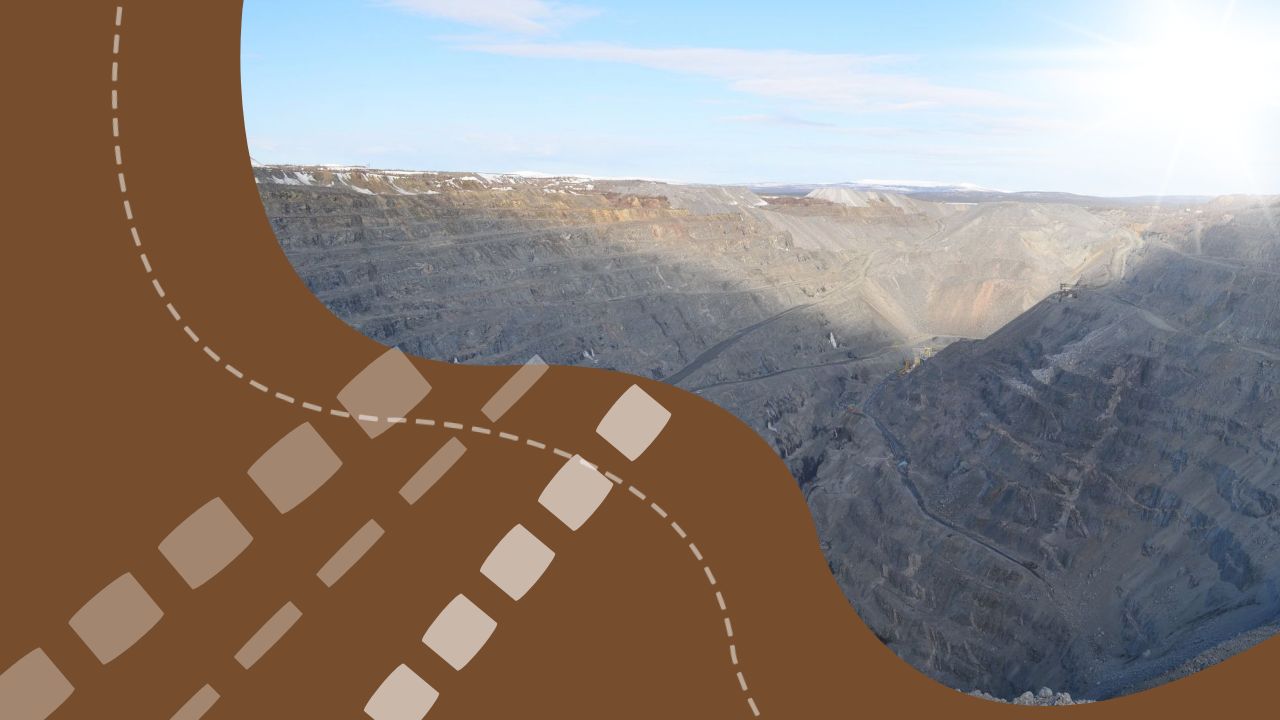
    A major manganese deposit in eastern Czechia is emerging as a key asset in Europe’s push to secure strategic minerals for electric vehicles and renewable energy technologies. The Chvaletice site in the Pardubice region, once a legacy mining area, is now believed to host the largest manganese reserves in the European Union, according to local reporting.

    The project is being advanced by Mangan Chvaletice, which plans to reprocess historic mining tailings accumulated around the former industrial site. What was once considered waste is now viewed as a valuable secondary resource. The company says the project could eventually produce up to 50,000 tonnes of high-purity manganese per year.

    Manganese plays a critical role in lithium-ion battery cathodes, improving performance and safety in electric vehicle batteries. As demand for battery materials accelerates, securing regional supply is increasingly seen as essential for Europe’s economic resilience and industrial autonomy.

    The Chvaletice project has reportedly achieved key permitting milestones, including environmental approvals and mining licences. Preparatory work for a conveyor system and processing plant is expected to begin later this decade, with full commercial production targeted around 2030. The project could create up to 400 jobs.

    The Czech government has designated the Chvaletice deposit as a strategic mineral resource under national legislation, highlighting its importance for supply chain security. Current reserves are estimated to potentially meet up to one quarter of European manganese demand, with a projected mine life of approximately 25 years.

    Manganese and lithium are both listed as critical raw materials by the European Commission. Beyond Chvaletice, Czechia hosts one of Europe’s largest lithium deposits at Cínovec, as well as tungsten reserves and a history of uranium production, reinforcing the country’s growing role in Europe’s advanced technology supply chains.

  • Satellite Data Suggest Polish Coal Mines Continued Methane Venting Despite EU Ban

    Satellite Data Suggest Polish Coal Mines Continued Methane Venting Despite EU Ban

    New satellite analysis indicates that several Polish coal mines may have continued venting methane in 2025 despite a ban under the EU Methane Regulation that took effect in January of that year. The findings raise concerns about enforcement gaps and the absence of penalty frameworks in Poland, the EU’s largest coal methane emitter.

    According to analysis cited in the report, 96% of methane plumes detected over onshore European energy infrastructure in 2025 were traced to Polish coal mines, making them the most frequent fossil fuel methane super-emitters in the bloc. Out of 22 coal mine drainage systems examined in Poland, five were observed venting methane during the year, even though routine venting from drainage systems has been prohibited since January 2025.

    The EU Methane Regulation requires operators to either utilize captured methane or flare it with at least 99% destruction efficiency. Venting is permitted only in cases of emergency, malfunction, or unavoidable maintenance, and operators must notify competent authorities within 48 hours. However, no national penalty framework has yet been adopted in Poland, despite a deadline of 5 August 2025 for Member States to define sanctions.

    Methane is a potent greenhouse gas, and coal remains the largest source of fossil methane emissions in the EU energy sector. According to UNFCCC data, EU coal mining emitted 783.6 thousand tonnes of methane in 2023, accounting for around 60% of energy-sector methane emissions. The International Energy Agency estimates that 62% of the EU’s coal mine methane emissions could be technically abated by 2030, with the vast majority originating in Poland.

    Satellite observations detected emission rates ranging from roughly 120 kg per hour to 7,560 kg per hour, with 19 plumes exceeding 2,000 kg per hour. Coking coal mines were responsible for most of the detected events, despite representing a smaller share of overall hard coal production. Analysts argue this highlights the need for stricter methane reduction targets for coking coal operations.

    The report also estimates that methane reportedly vented from Polish drainage systems in 2024, if captured and used, could have provided enough energy to meet roughly one week of heating demand for approximately 14.5 million Polish households. Polish coal mines reportedly utilized 70% of captured drainage methane in 2024, while 57,000 tonnes went unused and were emitted into the atmosphere.

    Experts stress that the effectiveness of the EU Methane Regulation depends on enforcement, independent emissions verification, and the introduction of dissuasive penalties. Recommendations include harmonized verification standards, combining satellite monitoring with on-site inspections, and setting meaningful penalty levels to incentivize compliance.

    Without these measures, observers warn, the regulation risks falling short of delivering the significant methane reductions required to meet EU climate objectives.

  • Türkiye and Uzbekistan Sign Mining Cooperation MoU Focused on Critical Minerals

    Türkiye and Uzbekistan Sign Mining Cooperation MoU Focused on Critical Minerals

    Türkiye and Uzbekistan have signed a memorandum of understanding aimed at strengthening bilateral cooperation in the mining sector, with a particular focus on critical minerals and rare earth elements, officials said on Thursday.

    The document was signed by Turkish Minister of Energy and Natural Resources Alparslan Bayraktar and Uzbekistan’s Minister of Mining Industry and Geology Bobir Islamov. The signing took place following high-level talks in Ankara between Recep Tayyip Erdogan and Shavkat Mirziyoyev.

    According to Bayraktar, the agreement is intended to promote information exchange, research and development, and the implementation of concrete joint projects in the mining sector. He said the memorandum would help advance cooperation in strategically important minerals and support broader economic ties between the two countries.

    Writing on Türkiye’s NSosyal platform, Bayraktar described the agreement as an important step toward achieving the bilateral trade volume targets set by the two presidents, expressing confidence that it would deliver mutual benefits.

    The signing coincided with the Fourth Meeting of the Türkiye–Uzbekistan High-Level Strategic Cooperation Council, chaired by Erdogan and Mirziyoyev at the presidential complex in Ankara. Beyond mining, the two countries concluded a series of additional agreements and memoranda covering cooperation in health, education, culture, transport corridors, energy, higher education, free and special economic zones, as well as economic and financial affairs.

  • Arras Minerals and Teck End Strategic Alliance as Kazakhstan Copper Targets Advance to 2026 Plans

    Arras Minerals and Teck End Strategic Alliance as Kazakhstan Copper Targets Advance to 2026 Plans

    Canada-based Arras Minerals Corp. has provided an update on its Strategic Alliance with Teck Resources Limited and outlined its exploration plans for 2026 across its licence portfolio in Kazakhstan, following Teck’s decision to exit the staged option phase of the agreement.

    The two companies entered into the alliance in December 2023 to explore for copper across approximately 1,900 square kilometres of Arras’ licence package in Kazakhstan’s Pavlodar region. Under the agreement, Teck funded around $5 million in generative exploration over a two-year period, with Arras acting as project manager. Teck had the option to select up to four designated properties for further investment of up to $47.5 million per project to earn up to a 75% interest, but has elected not to proceed to this second phase.

    Despite the decision, the alliance delivered extensive exploration results. Over two years, the program identified three new porphyry systems along a 54-kilometre trend parallel to the operating Bozshakol copper-gold mine, defined a large hydrothermal system at the Besshoky project, and generated a substantial geochemical and geophysical dataset. Work included nearly 40,000 soil samples, airborne magnetic surveys, Heli-EM and induced polarization surveys, 479 top-of-bedrock drill holes, and 18 diamond drill holes totaling more than 5,200 metres.

    Drilling returned multiple mineralized intercepts across several targets, confirming porphyry-style alteration and mineralization at Shirderty, Bozshakol South and Tort Kuduk. At Tort Kuduk, one hole intersected 34 metres grading 0.25 g/t gold, highlighting precious-metal upside alongside copper potential.

    Teck said that while the results did not meet its threshold to advance to the next phase, it remains positive on Kazakhstan and will continue as a supportive shareholder. Arras management described the alliance as successful in narrowing a large land package into a focused set of high-priority targets and said many warrant further follow-up.

    For 2026, Arras plans additional geophysical surveys, including magnetotelluric and gravity work, followed by targeted diamond drilling at several copper porphyry prospects. The company also intends to advance precious metals-focused targets that were not drilled during the alliance period and could reach drill-ready status with additional fieldwork.

    Arras said the work completed with Teck’s funding has significantly de-risked its portfolio and strengthened the pipeline of drill targets, supporting continued exploration of its Elemes copper-gold project and other priority areas across its Kazakhstan licences.

  • US Launches Project Vault to Secure Critical Minerals and Deepens Engagement With Central Asia

    US Launches Project Vault to Secure Critical Minerals and Deepens Engagement With Central Asia

    The United States has stepped up efforts to secure independent supply chains for critical minerals with the launch of Project Vault, a new initiative designed to establish a US Strategic Critical Minerals Reserve and reduce reliance on China. The project, formally approved on February 2 by the Export-Import Bank of the United States, is backed by up to $10 billion in long-term public financing and an additional $2 billion in expected private-sector participation.

    Project Vault will operate as a public-private stockpile, creating reserves of essential minerals and metals used in aerospace, defence, semiconductors, advanced manufacturing, renewable energy, and electric vehicles. Planned storage sites across the United States are intended to buffer domestic industries against global supply shocks, mirroring the role of the Strategic Petroleum Reserve in energy markets.

    The initiative reflects Washington’s broader strategy to diversify critical mineral supply chains away from China, which currently dominates global mining, refining, and processing capacity for rare earths. US officials have increasingly framed this dominance as a strategic vulnerability, citing past export restrictions imposed by Beijing as evidence of how mineral supply can be used as a geopolitical tool.

    While Project Vault focuses on domestic resilience, its success depends on diversified upstream supply. In this context, mineral-rich Central Asia has emerged as a key region in US policy thinking. Kazakhstan and Uzbekistan were invited to participate prominently in the 2026 Critical Minerals Summit, underscoring growing US interest in the region as an alternative source of strategic materials.

    Central Asia collectively hosts deposits of more than 25 minerals classified as critical by the United States Geological Survey, including rare earth elements, tungsten, antimony, manganese, chromium, and titanium. Despite Kazakhstan’s long-standing role as the world’s largest uranium supplier and the region’s significant reserves, much of Central Asia’s mineral output remains underdeveloped or exported as raw material, primarily to China and Russia.

    Washington has signalled a shift from purely diplomatic engagement toward commercially driven cooperation. Alongside the traditional C5+1 framework, the US has increasingly relied on business-focused mechanisms such as the B5+1 platform to connect private capital with Central Asian projects. This approach is supported by US agencies including the US International Development Finance Corporation, the US Trade and Development Agency, and EXIM, all of which are expanding financing and technical support for critical minerals projects in the region.

    US officials argue that stockpiling alone cannot resolve supply vulnerabilities without parallel investment in downstream processing and refining capacity, much of which remains concentrated in China. As a result, future cooperation is expected to focus not only on extraction but also on building value-added processing capabilities in partner countries.

    Taken together, Project Vault and the intensified engagement with Central Asia mark a decisive shift in US critical minerals policy. Washington now views the region not just as a geopolitical partner, but as a potential long-term contributor to diversified, market-based supply chains that underpin US economic and national security.

  • Kazakhstan to Invest Over 8 Trillion Tenge in Expanding Coal Power Generation by 2030

    Kazakhstan to Invest Over 8 Trillion Tenge in Expanding Coal Power Generation by 2030

    Kazakhstan plans to invest more than 8 trillion tenge in expanding its coal-fired power generation capacity by 2030, the country’s Ministry of Energy of Kazakhstan said during a recent roundtable outlining the main areas of planned spending.

    Under a national project to develop coal-based power generation, Kazakhstan intends to construct five new thermal power plants in Kurchatov, Kokshetau, Semey, Ust-Kamenogorsk, and Zhezkazgan, as well as build Ekibastuz GRES-3. In parallel, the existing Ekibastuz GRES-2 and Aksu GRES power stations are set to undergo modernization.

    The national project focuses on introducing technologies that reduce atmospheric emissions from coal combustion. It предусматривает a gradual replacement of worn-out generation assets with modern, high-efficiency power units designed to minimize environmental impact. According to the ministry, the new coal-fired plants are expected to strengthen Kazakhstan’s energy security while meeting environmental standards.

    Investors for the construction of new power facilities will be selected through competitive tenders. For the modernization of existing plants, project operators will sign investment agreements directly with the Ministry of Energy. These mechanisms are intended to ensure transparency and provide investors with guaranteed returns, as electricity tariffs will be fixed under long-term contracts.

    To integrate the new generating capacity into the national energy system, the ministry also plans to increase coal production and further develop railway infrastructure. The proposals will be coordinated with other relevant government agencies before being incorporated into the final version of the national project.

  • Success Minerals Kazakhstan Plans Resource Evaluation in Aktogay District

    Success Minerals Kazakhstan Plans Resource Evaluation in Aktogay District

    Private company Success Minerals Kazakhstan Ltd plans to carry out a resource assessment of solid minerals at a 9.35 sq km site in Kazakhstan’s Aktogay district, according to a planned activity notice published on the country’s Unified Environmental Portal.

    The subsoil user intends to evaluate reserves and resources at the Akkuduk East and Akkuduk West deposits, as well as conduct geological exploration at known mineralisation points, geophysical anomalies, and ore occurrences identified within the licence area. The work is aimed at defining targets suitable for potential industrial development. Detailed prospecting across halo fields is also planned.

    Exploration activities are scheduled to begin in spring or early summer 2026 and continue through the end of 2030. The programme includes geophysical surveys, trenching over an area of 10,800 sq m, and the drilling of 140 exploration boreholes with a combined length of 35,000 metres. Collected samples will undergo laboratory testing, including chemical and geological analyses with a focus on copper content.

    As a result of the exploration campaign, the company plans to prepare geological maps of the deposits and ore occurrences, delineate ore zones and ore bodies, and calculate reserves and resources within the licensed area.

    The exploration licence was granted to Success Minerals Kazakhstan Ltd in January 2025. According to data from Kazakhstan’s eGov system cited by qazba.kz, the company is registered at the Astana International Financial Centre and is owned by Jinyu Sheng.

  • Glencore Shifts Focus to Asset Sales After Failed Merger Talks With Rio Tinto

    Glencore Shifts Focus to Asset Sales After Failed Merger Talks With Rio Tinto

    Following another breakdown in merger talks with Rio Tinto, Swiss mining major Glencore is turning its attention to asset sales as part of a strategy to strengthen its copper portfolio, Reuters reported.

    Discussions aimed at creating a global mining giant valued at around $240 billion collapsed this week due to disagreements over valuation and ownership structure. The failed talks mark the third unsuccessful attempt to merge the two companies, following earlier efforts in 2014 and 2024.

    As part of its portfolio reshaping, Glencore is expected to announce the sale of a 70% stake in KazZinc in the coming weeks. Analysts estimate the value of the asset at around $5 billion. KazZinc is a major producer of zinc, lead, and gold in Kazakhstan.

    Glencore Chief Executive Gary Nagle has repeatedly spoken in favour of industry consolidation, arguing that combining assets can unlock value and make the mining sector more attractive to investors.

    The company has also set a long-term goal of increasing copper production to 1.6 million tonnes by 2035, up from 852,000 tonnes produced in 2025, through a combination of new mine development and the restart of existing operations.

    In the near term, investors expect Glencore to prioritise divestments to create a more focused copper mining and metals trading business. Talks are reportedly under way to sell a 40% stake in Glencore’s copper and cobalt operations in the Democratic Republic of Congo to a consortium led by Orion Critical Minerals, with backing from the United States.

    Separately, Glencore is exploring potential cooperation with Brazil’s Vale on the joint development of copper deposits in Canada.

    Since the collapse of the Rio Tinto talks, Glencore shares have fallen by more than 10%, although they remain up 19% year-to-date. The company is also reviewing its coal portfolio and has not ruled out a partial spin-off of coal assets to raise additional capital.

    In Kazakhstan, Glencore continues to invest in gold production. In December 2025, the company allocated nearly $500 million to extend the life of the Vasilkovskoye gold mine in the Akmola Region, operated by Altyntau Kokshetau, the main gold supplier for KazZinc.

    Industry expert Nurlan Zhumagulov noted that Altyntau Kokshetau ranked thirteenth among Kazakhstan’s largest taxpayers in 2025, contributing 142 billion tenge, a year-on-year increase of 47%.

    It was also reported that Kazakh businessman Shakhmurat Mutalip is in talks to acquire a 70% stake in KazZinc. In January 2026, he registered two new companies at the Astana International Financial Centre: KazZinc Group Ltd and Central Asia Resources Holding Ltd.

  • Illegal Gold Mining Uncovered in Kazakhstan’s Turkestan Region

    Illegal Gold Mining Uncovered in Kazakhstan’s Turkestan Region

    Kazakh authorities have uncovered an illegal gold mining operation in the Sozak district of the Turkestan Region, where a group of individuals was found to be unlawfully exploiting gold-bearing sites.

    According to investigators, 12 people carried out mining activities without the required permits, in violation of environmental regulations and industrial safety standards. As a result of the illegal operations, the group is believed to have extracted around 451 grams of gold.

    A pre-trial investigation has been launched under Parts 1 and 3 of Article 295-1 of the Criminal Code of the Republic of Kazakhstan, which covers offences related to the illegal extraction of mineral resources. Law enforcement agencies have conducted the necessary investigative procedures, and five of the suspects have been placed under house arrest as a preventive measure.

    Prosecutors stressed that unlawful mining poses a serious threat to the environment, undermines the country’s economic security, and carries criminal liability. Authorities said enforcement efforts will continue to deter illegal exploitation of mineral resources.