Website: Eurasia.com

  • DFC Highlights Major Investments at US Critical Minerals Ministerial

    DFC Highlights Major Investments at US Critical Minerals Ministerial

    Senior US and international officials gathered in Washington as the United States reinforced its push to secure critical minerals supply chains at a high-level ministerial hosted by US Secretary of State Marco Rubio. The meeting, held at the US Department of State, brought together government leaders committed to building secure, resilient, and transparent global supply chains for critical minerals.

    The US International Development Finance Corporation (DFC) was represented by Conor Coleman, Chief of Staff and Head of Investments, who took part in discussions focused on mobilising public and private capital for strategic mineral projects. DFC Chief Executive Officer Ben Black said the administration had demonstrated strong leadership in safeguarding access to resources vital to US economic growth and national security, adding that DFC would continue working closely with the White House, Congress, and interagency partners.

    Coleman participated in a plenary session outlining US government funding tools available to support investment in critical minerals. He was joined by senior officials from the Departments of Commerce and Energy, the Export-Import Bank, and the Office of Strategic Capital. The session highlighted how coordinated financing mechanisms can strengthen supply chain security while encouraging private sector participation.

    DFC also outlined a series of recent and ongoing investments. In the Democratic Republic of Congo, state-owned miner Gécamines, through its joint venture with commodity trader Mercuria, has begun shipping around 100000 tonnes of copper committed to the United States, with additional volumes planned for Saudi Arabia and the United Arab Emirates.

    In Brazil, DFC signed a financing agreement with SVRE Holdings Ltd. for a $565 million loan to expand the Pela Ema rare earths mine operated by Serra Verde, supporting the development of a Western-aligned source of heavy rare earth elements. In Kazakhstan, DFC issued letters of interest for up to $700 million in financing linked to Cove Kaz Capital Group’s investment in the Severniy Katpar tungsten mine.

    The corporation has also closed a $600 million investment in the Orion Critical Mineral Consortium, a $1.8 billion public-private partnership established with Orion Resource Partners and ADQ, designed to deploy flexible capital across critical minerals projects in eligible jurisdictions. In addition, DFC committed $75 million in equity to the United States-Ukraine Reconstruction Investment Fund, matched by the Ukrainian government, to support investment in critical minerals and other strategic sectors.

    DFC said securing diversified and reliable supplies of critical minerals remains central to its investment strategy, as these resources underpin advanced technologies, energy systems, and long-term economic security.


  • Berkeley Energia Seeks $1.25 Billion From Spain Over Blocked Salamanca Uranium Project

    Berkeley Energia Seeks $1.25 Billion From Spain Over Blocked Salamanca Uranium Project

    Australia’s Berkeley Energia said on Friday it has filed a memorial of claim worth about $1.25 billion against Spain at the World Bank’s arbitration tribunal, escalating its long-running dispute over the stalled Salamanca uranium project.

    The company said its subsidiary, Berkeley Exploration, submitted the claim to the International Centre for Settlement of Investment Disputes. The filing includes detailed factual background on the project and the dispute, witness statements, an assessment of damages, and supporting expert reports.

    Berkeley initially launched arbitration proceedings in May 2024, seeking $1 billion in damages after the Spanish government declined to grant final approval for the uranium mine. The Salamanca project, located near the city of Salamanca in western Spain, received preliminary approval in 2013. However, Spain’s Energy Ministry refused to issue final approval in 2021 and again in 2023.

    In 2024, Berkeley accused Spain of breaching its obligations under the Energy Charter Treaty, an international framework intended to promote energy security through open and competitive energy markets.

    Spain now has until July 2026 to submit its response to the memorial of claim, Berkeley said. The announcement weighed on investor sentiment, with Berkeley shares falling as much as 8.8% to A$0.52, broadly in line with weakness across the mining sector, where the sub-index was down 2.8% at the same time.

  • United States Strengthens Rare Earth Supply Chains Through Partnership With Kazakhstan

    United States Strengthens Rare Earth Supply Chains Through Partnership With Kazakhstan

    The United States is moving to reinforce its supply of rare earth elements through cooperation with Kazakhstan, following the signing of non-binding long-term partnership agreements between US-based  and Kazakh mining company .

    The agreements were disclosed by , which is currently in the process of combining its business with REAlloys. Further details of the cooperation were reported by Mining Technology.

    The partnership is aimed at securing Kazakh raw materials for REAlloys’ processing facilities. The two companies plan to jointly explore and develop rare earth element deposits in Kazakhstan, with extracted material to be processed and refined before being shipped to REAlloys’ production sites in North America.

    Following around six months of negotiations, the partners identified several promising sites. A central element of the agreement relates to offtake from Altyn Group’s Kokbulak project. More than 350 million tonnes of iron ore are located across an area of roughly 127,000 square kilometres in Kazakhstan’s Karaganda and Kostanay regions. Processing of iron ore tailings is expected to yield concentrates rich in both light and heavy rare earth elements, including terbium and dysprosium.

    To support future deliveries, Altyn Group plans to invest in expanding REAlloys’ processing capacity in the United States, including the country’s only rare earth metallisation facility. The plant supplies a number of government-linked customers and supports demand from high-technology industries.

    Altyn Group Qazaqstan is registered in Kurchatov, Abai Region, and is a subsidiary of UK-based . The company is active in the exploration and mining of gold, silver and rare metal ores.

    From 2025, Altyn Group has also planned to begin development of the Ulken-Karashoky gold-copper deposit in the Abai Region, alongside reported plans to extract gold-silver ores at the Mailikara deposit in Pavlodar Region.

  • Why Central Asia Must Lead on Critical Minerals Cooperation

    Why Central Asia Must Lead on Critical Minerals Cooperation

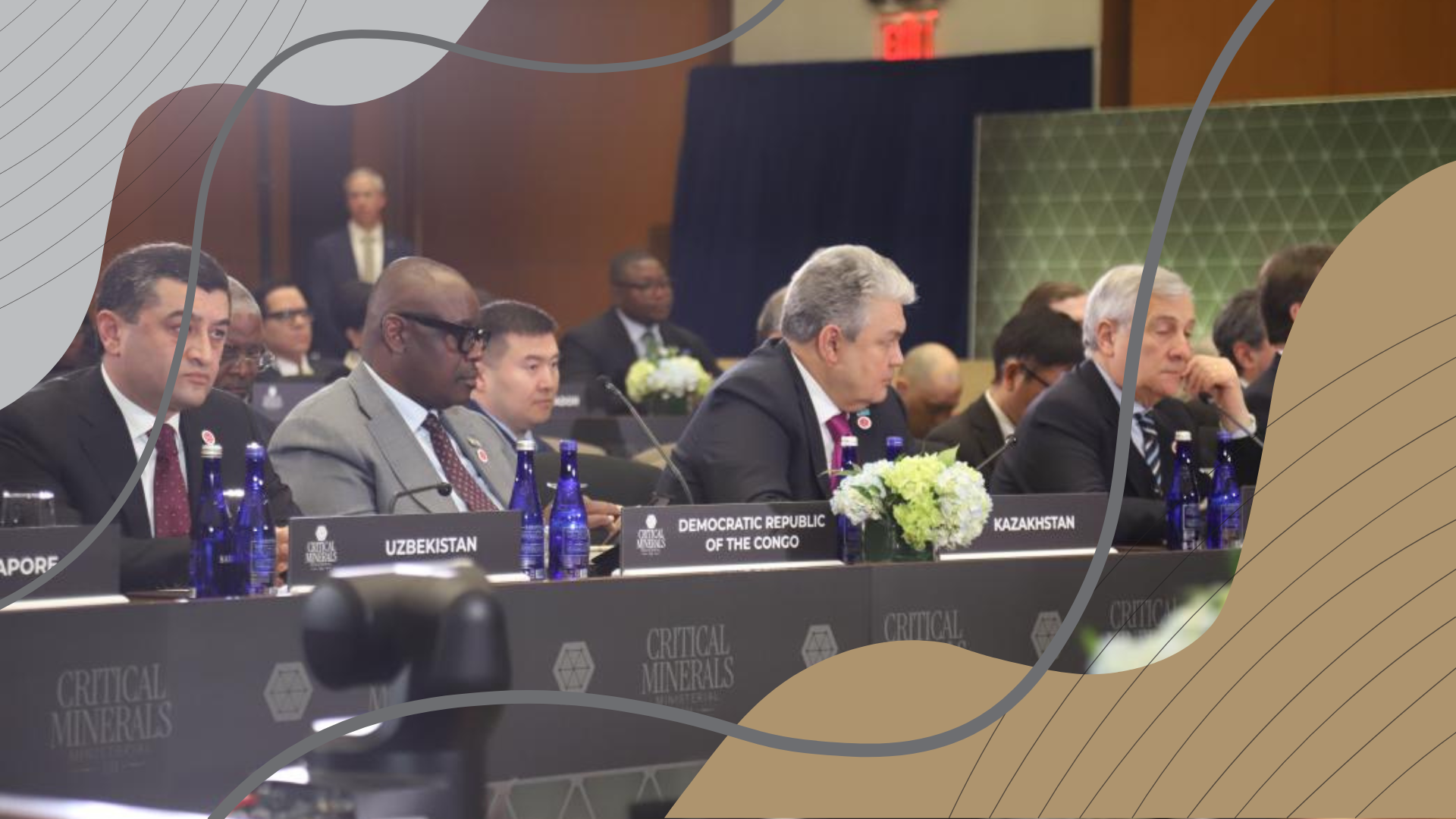
    Senior officials from more than 50 countries gathered at the White House on February 4 for the United States’ first Critical Minerals Ministerial, marking a symbolic moment for Central Asia’s engagement in global resource diplomacy. Delegations from Kazakhstan and Uzbekistan underscored the region’s long-standing “multi-vector” foreign policy ambitions, but the meeting also highlighted a persistent challenge: turning diplomatic visibility into tangible industrial outcomes.

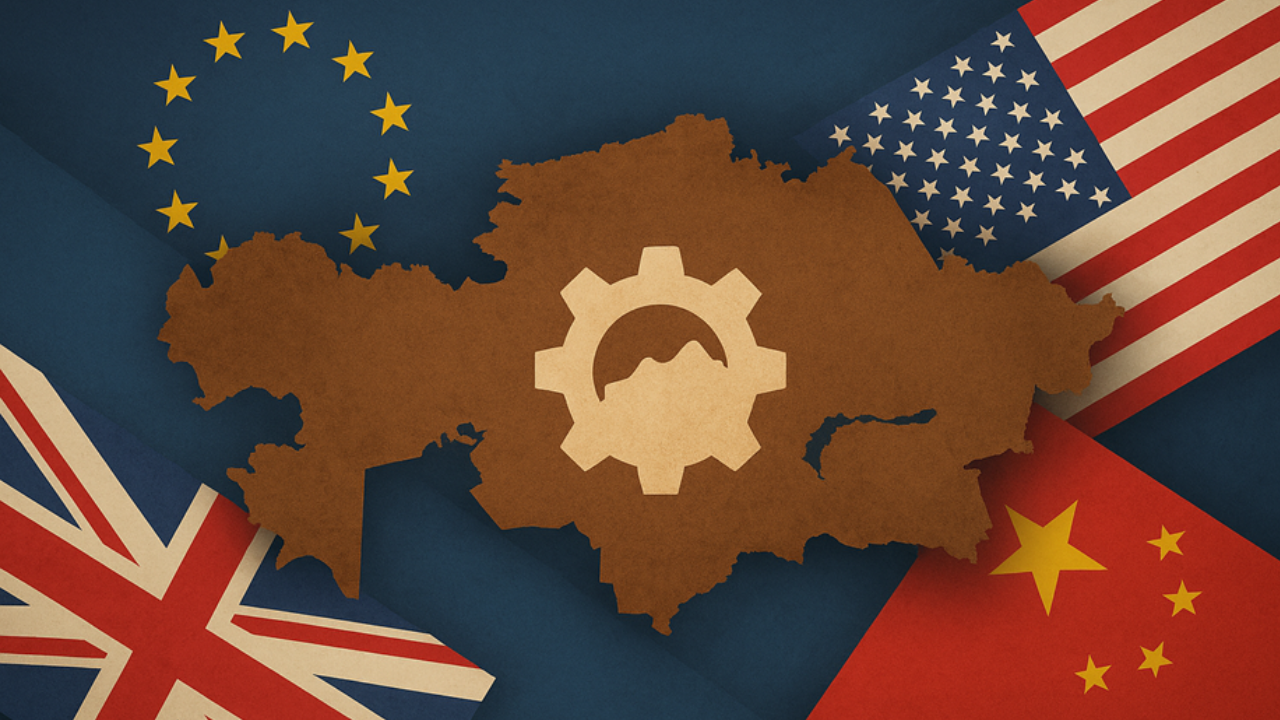
    While Washington’s message focused on openness and coordination, the imbalance between intent and execution remains stark. China has consistently converted engagement into financed, operational mining and processing projects, typically combining contractors, concessional financing, and long-term offtake agreements. By contrast, Western engagement has largely taken the form of memoranda of understanding and strategic frameworks that signal political alignment but stop short of delivering mines, refineries, or downstream capacity.

    Uzbekistan offers a contrasting model of what project readiness can look like. In March 2025, Tashkent unveiled a $2.6 billion, three-year programme encompassing 76 projects across 28 minerals, with a clear objective of moving beyond extraction toward processing and finished products. The initiative is structured for partners capable of execution at scale, rather than symbolic cooperation.

    The evolving US approach further complicates expectations. Washington is increasingly pursuing techno-economic sovereignty, integrating supply chain security, energy systems, advanced manufacturing, and artificial intelligence into a tightly coordinated industrial policy. Dependencies are reframed as vulnerabilities, and resilience has become a central organising principle. In this context, US engagement abroad is likely to be selective, focusing on de-risked, compliant projects that directly support domestic resilience goals rather than driving industrialisation in partner regions.

    This creates both a constraint and an opportunity for Central Asia. High-level political gestures, including the first-ever C5+1 Presidential Summit in Washington in 2025, have raised the region’s profile. Yet momentum will not emerge automatically from diplomacy alone. To shape outcomes, Central Asian governments and companies must proactively present bankable, project-ready opportunities, particularly through direct business-to-business engagement with US firms.

    Developing midstream capabilities is critical. Exporting raw ore is capital-intensive, logistically exposed, and low-margin. By contrast, refined metals and intermediate products can anchor value locally, create skilled employment, and reduce vulnerability to external supply chain shocks. Without this shift, the region risks deeper path dependency and gradual absorption into China-centric production networks.

    Ultimately, the future of Central Asia’s critical minerals sector will not be decided in Washington or Beijing alone. Strategic autonomy depends on the region’s ability to define priorities, structure viable projects, and act as the primary driver of its own industrial transformation.

  • Investigation Links UK Shell Firms to $200 Million in Uzbek State Mining Contracts

    Investigation Links UK Shell Firms to $200 Million in Uzbek State Mining Contracts

    Two U.K.-registered companies with no apparent mining background won tens of millions of dollars in procurement contracts from Uzbekistan’s state-owned Almalyk Mining-Metallurgical Complex (AMMC) over the past three years, according to an investigation by OCCRP. The reporting found the firms were part of a wider network of companies spanning multiple jurisdictions that collectively secured more than $200 million in AMMC tenders since 2022.

    AMMC, described as a “crown jewel” of Uzbekistan’s economy and a potential candidate for a foreign stock exchange listing, is a major producer of copper, silver, and gold and contributes a significant share of national tax revenues. The tenders examined by reporters covered equipment and raw-material supplies and represent around seven percent of AMMC’s total expenditures since 2022. AMMC did not respond to detailed questions about the contracts or delivery performance.

    The investigation identified links between the tender-winning companies and two individuals: Grigoriy Khvan, an Uzbek businessman known for his role in the country’s table tennis community, and Felipe Guerrero, a Colombian national with no publicly identifiable mining-sector background. Reporters said these connections, combined with abrupt changes in official filings, raised questions about whether listed owners were acting as proxies.

    One U.K. firm, Lemixton Solutions Ltd, reportedly won at least 56 AMMC tenders worth $22.53 million while filing dormant accounts in the U.K. for the same periods. Import-export records reviewed by OCCRP indicated shipments to AMMC during those years. After reporters made inquiries in late 2025, filings were amended in a rapid sequence: a British accountant previously listed as the person with significant control was removed, Khvan was added with control backdated to 2018, and then replaced weeks later by Guerrero, also backdated to 2018.

    A similar pattern was reported at a second U.K. company, Golders Business Ltd, which also filed dormant accounts while winning at least $13 million in AMMC tenders and sending more than 100 shipments to the Uzbek enterprise. In both cases, the investigation noted that competing firms sometimes bid against one another for the same tenders even when they appeared to be under common ownership or control.

    OCCRP also reported concerns involving procurement paperwork. Contracts worth more than $7 million included electronic signatures attributed to accounting associates who deny signing them or being involved, with at least one individual saying the matter was reported to British authorities.

    Beyond the U.K., the investigation traced related activity to Georgia and Singapore. In Georgia, a medical tourism coordinator reportedly purchased companies for a nominal sum after they had already been awarded tens of millions of dollars in AMMC tenders. In Singapore, three companies were reported to have won more than $100 million in AMMC contracts, with corporate records and third-party filings suggesting overlapping links to entities associated with Khvan, though representatives disputed any shared ownership or control.

    The findings come as Uzbekistan publicly emphasizes stronger anti-corruption standards and as AMMC’s potential privatization increases scrutiny of procurement transparency and beneficial ownership disclosure.

  • DPM Metals Extends Chelopech Mine Life to 2036 as Reserves Jump 42%

    DPM Metals Extends Chelopech Mine Life to 2036 as Reserves Jump 42%

    DPM Metals Inc. (TSX: DPM, ASX: DPM) has updated its Mineral Resource and Mineral Reserve estimate and revised the life-of-mine plan for its Chelopech mine in Bulgaria, extending the operation’s mine life to 2036 and maintaining average production of about 160000 gold equivalent ounces per year.

    The company reported a significant increase in Proven and Probable Mineral Reserves to 23.2 million tonnes, representing a 42% net rise in tonnage compared with the previous reserve estimate. DPM said the updated reserve model reflects the inclusion of the Sharlo Dere prospect, revised design and modelling parameters, and updated cut-off assumptions. In metal terms, the new reserve estimate shows higher contained gold and copper, with gold content up 12% and copper up 10% versus the prior estimate.

    Beyond reserves, DPM said its Measured and Indicated Mineral Resource base, excluding Mineral Reserves, increased by 20% to 15.3 million tonnes, with grades of 1.96 g/t gold and 0.57% copper, broadly consistent with reserve grades. The company noted that part of the year-on-year shift in resource figures was driven by conversion of resources into reserves and updates to cut-off assumptions.

    DPM highlighted additional upside potential from exploration, including the Wedge Zone Deep discovery, which is not yet included in the current MRMR estimate. The Wedge Zone Deep target is located within the Chelopech mine concession and around 300 metres below existing reserves and current infrastructure. DPM plans an additional 10000 metres of drilling, expected to be completed in the first quarter of 2026, with an update on drilling results anticipated in the second quarter of 2026.

    The revised life-of-mine plan maintains a 2.2 million tonne per year mining rate through to 2032, following schedule optimisation aimed at meeting production goals and maximising value within development constraints. DPM said the updated plan will form the basis of its 2026 guidance and refreshed three-year outlook, due to be released on February 10, 2026 alongside fourth quarter and full-year 2025 financial results.

    In parallel, the company is progressing permitting and tenure expansion around Chelopech, including efforts to convert the Chelopech North and Brevene licences toward mining concessions, with Chelopech North expected in 2026.

  • Austria Extends Mining Licence for Wolfsberg Lithium Project, Boosting Development Certainty

    Austria Extends Mining Licence for Wolfsberg Lithium Project, Boosting Development Certainty

    A key regulatory step has been secured for the Wolfsberg lithium project in Austria, as national authorities granted a two-year extension to its mining licence, strengthening planning certainty for the project’s next development phases. The Wolfsberg project is linked to  and is located in the Carinthia region of southern Austria.

    The licence extension comes at a time of firmer lithium prices and heightened European efforts to secure domestic supplies of critical raw materials. While the regulatory approval provides a stable framework for continued project planning, the transition to production will still depend on external market and financing conditions.

    According to the company, the extended permit supports progress toward establishing a framework for a potential “Decision to Mine,” which is now targeted for completion by the end of 2026. However, any final investment decision will remain conditional on favourable lithium market pricing and the successful securing of project financing.

    Wolfsberg is considered a strategic asset for , which was formed following a business combination with European Lithium. The renewed licence is seen as a crucial enabler for advancing technical and commercial planning, though it does not remove the economic hurdles associated with bringing the project into production.

    The timing of the permit renewal aligns with broader European policy objectives aimed at strengthening raw material security. Wolfsberg is intended to produce spodumene concentrate for use in electric mobility and battery storage markets, in line with the EU’s push to localise supply chains under the .

    Alongside progress at Wolfsberg, European Lithium has recently taken steps to reinforce its corporate position, including divesting part of its stake in Critical Metals Corp. and announcing a diversification move through the planned acquisition of US-based Velta Holding, which owns titanium assets in Ukraine.

    For Wolfsberg, the next major milestone remains the targeted framework for a “Decision to Mine” by the end of 2026, provided market conditions and financing arrangements align.

  • A Strategic Assessment of Promise vs. Reality in Central Asia’s Mineral Development

    A Strategic Assessment of Promise vs. Reality in Central Asia’s Mineral Development

    Central Asia’s role in global critical minerals took a decisive turn at the 4 February 2026 Critical Minerals Ministerial in Washington, where officials from more than 50 countries acknowledged the region as a strategic hub rather than a geopolitical buffer.

    While Washington presented an ambitious framework to advance mineral sovereignty, analysts caution that the region—not the U.S.—must drive implementation to avoid becoming a passive arena for major‑power competition.

    U.S. Strategy: A Vertical Integration “New Order”

    The U.S. vision, centred on the FORGE initiative and the concept of “Pax Silica,” positions minerals and energy as shared strategic assets among trusted partners and offers an alternative to dependency on China.
    Washington differentiates its value proposition in three areas:

    1. Market Stability Through Price Floors
      Proposed tariff‑backed price floors aim to counter predatory market dumping and protect investments in assets such as Kazakhstan’s rare earth reserves.
    2. Vertical Value Integration
      The U.S. framework prioritises domestic processing and refining over raw‑ore exports, enabling Central Asian states to capture more value across the supply chain.
    3. Connectivity Autonomy
      By incorporating the Middle Corridor into initiatives like TRIPP, the West presents routes that bypass Russia and China, reducing geopolitical transit pressures.

    Kazakhstan and Uzbekistan have responded quickly—Kazakhstan has declared critical minerals the “new oil” and joined the Abraham Accords to strengthen supply‑chain integration, while Uzbekistan has pursued strategic MOUs to modernise mining and secure battery‑metal supply chains.

    Reality Check: Gaps Between Intent and Implementation

    Despite strong rhetoric, Western engagement has largely taken the form of frameworks and MoUs—not operational projects.

    Three challenges persist:

    • Operational Disparity – China continues to deliver turnkey, financed projects backed by contractors and long‑term offtake agreements, while Western partners emphasise declarations.
    • U.S. Inward Focus – Washington’s drive for techno‑economic sovereignty favours selective, de‑risked engagements rather than proactive industrial development in the region.
    • Execution Gaps – Uzbekistan’s $2.6bn program covering 76 projects illustrates regional ambition, but real progress requires partners capable of building at scale.

    Strategic Imperative: Central Asian Agency

    Experts argue that relying on future U.S. demand is a strategic mistake.
    To convert high‑level dialogue into economic gains, Central Asia must prioritise:

    1. Midstream Capabilities

    Refining and producing intermediary products offer higher margins and reduce reliance on long‑distance transport of low‑value raw ore.

    2. Direct Private‑Sector Engagement

    Regional firms should proactively present project‑ready opportunities to U.S. companies rather than depending on government‑to‑government frameworks.

    Conclusion

    The U.S. “New Order” provides Central Asia with a potential pathway to diversify away from Beijing and Moscow while improving price stability and long‑term sovereignty.
    But success hinges on regional execution. Astana and Tashkent must convert diplomatic signals into tangible midstream capacity—and do so quickly—to secure their strategic autonomy before the current window closes.

  • Ending the ‘Extract-and-Export’ Era: How FORGE and Pax Silica Transform Central Asian Mining

    Ending the ‘Extract-and-Export’ Era: How FORGE and Pax Silica Transform Central Asian Mining

    The 2026 Critical Minerals Ministerial in Washington has signaled the definitive end of Central Asia’s era as a “landlocked” geopolitical afterthought. For decades, the five nations of the region were viewed through the narrow lens of the “Great Game”—a buffer zone between Russian security interests and Chinese infrastructure investments. However, the “New Order” proposed by the Trump administration, articulated by Vice President JD Vance and Secretary of State Marco Rubio, has repositioned Kazakhstan, Uzbekistan, and their neighbors as the indispensable pivot of a new Western-aligned industrial statecraft.

    The Mineral Sovereignty Pivot

    The strategic argument for Central Asian states to embrace the U.S.-led FORGE (Forum on Resource Geostrategic Engagement) initiative and the proposed Preferential Trade Zone rests on the promise of escaping “coercive dependencies”. For years, Central Asian producers have been vulnerable to the same market distortions Vance identified in Washington: a “foreign supply” (read: China) that floods markets to crash prices and kill domestic projects.

    By joining the new trading bloc, countries like Kazakhstan and Uzbekistan are being offered a “necessary foundation for private financing” and a “price floor” enforced by adjustable tariffs. This mechanism is a game-changer for the region. It essentially guarantees that if Kazakhstan develops its potentially world-class rare earth element (REE) reserves—estimated by some to reach 20 million metric tons—its investments will be shielded from predatory pricing strategies designed to maintain Beijing’s monopoly.

    Kazakhstan: The Vanguard of the New Order

    Kazakhstan has moved first and most aggressively to align with this reindustrialization doctrine. President Kassym-Jomart Tokayev’s branding of critical minerals as the “new oil” is not mere rhetoric; it is backed by a landmark memorandum of understanding (MOU) with the U.S. signed in November 2025, which focuses on technology transfer and processing capacity.

    Perhaps most significantly, Kazakhstan’s accession to the Abraham Accords in November 2025 serves as a profound geopolitical signal. While traditionally a Middle Eastern normalization framework, its expansion to Kazakhstan—the first member with preexisting ties to Israel—is being used to facilitate secure, tech-driven supply chains that reduce the region’s reliance on China. This “unorthodox” alignment places Astana at the heart of the Pax Silica vision, where silicon, minerals, and energy are treated as shared strategic assets among “trusted partners”.

    Uzbekistan and the C5+1 Renaissance

    Uzbekistan is rapidly following this blueprint. On February 5, 2026, during the Ministerial, Tashkent signed its own strategic MOU with the U.S. to secure supply chains for rare earths and critical minerals like lithium, magnesium, and indium. For President Mirziyoyev, this is a path to modernize a mining sector that has often relied on outdated Soviet-era surveys.

    The broader C5+1 diplomatic platform, now celebrating its tenth anniversary, has evolved from a symbolic talk shop into a “pragmatic, project-driven economic coordination framework”. This “renaissance of American influence” is evidenced by the $17 billion in investment projects agreed upon following recent summits and the integration of the Middle Corridor (Trans-Caspian International Transport Route) into the Trump Route for International Peace and Prosperity (TRIPP).

    The Argument for Central Asian Alignment

    The “New Order” offers Central Asia three structural advantages that neither Moscow nor Beijing can—or will—match:

    1. Vertical Value Integration: Unlike China’s “extract-and-export” model, the U.S. framework emphasizes domestic processing and refining. This allows Central Asian states to capture high-value segments of the supply chain rather than remaining mere “resource bases”.

    2. Market Stability: The Project Vault and price floor mechanisms provide a buffer against “market whiplash”. For a region where commodity price volatility can destabilize entire national budgets, this sovereign de-risking is a vital survival tool.

    3. Connectivity Autonomy: By backing the Middle Corridor/TITR, the U.S. and its partners are providing the region with its first viable route to global markets that does not pass through Russia or China. This reduces the ability of larger neighbors to use transit as a tool of political pressure.

    Central Asia is currently in a “hedging game,” and both Pakistan and Central Asian states have approached these initiatives with a degree of caution to avoid immediate Chinese retaliation. However, the message from the 2026 Ministerial is clear: in an economy of “real things,” those who control the minerals control the future. For Kazakhstan and Uzbekistan, the American proposal is not just about mining; it is about finally securing their economic and territorial sovereignty.

  • Kazakhstan Strengthens Global Role in Critical Minerals at Landmark US-Led Conference

    Kazakhstan Strengthens Global Role in Critical Minerals at Landmark US-Led Conference

    Kazakhstan has taken another step toward positioning itself as a key player in the global critical minerals agenda, with Foreign Minister  participating in the first Ministerial Conference on Critical Minerals. The event was held at the invitation of US Secretary of State  and brought together representatives from more than 50 countries to discuss the future of global supply chains.

    The conference opened with remarks from US Vice President  and was attended by leaders of major Kazakh mining companies, highlighting the practical focus of the discussions and growing interest in concrete investment and industrial projects.

    Talks centred on the diversification and resilience of global supply chains for critical minerals, which underpin green energy, high technology, defence industries and the digital economy. Participants stressed that access to these resources is increasingly viewed as a matter of strategic and economic security, prompting calls to reduce dependence on a limited number of suppliers and to expand international cooperation in extraction, processing and logistics.

    Addressing the conference, Kosherbayev outlined Kazakhstan’s substantial potential in critical minerals and its readiness to contribute to stable and reliable global supply chains. He pointed to the country’s significant mineral reserves, established processing capacity, modern infrastructure, political stability and a transparent regulatory environment.

    Kosherbayev noted that Kazakhstan is capable of supplying 20 of the 60 critical minerals listed by the , not merely as raw materials but as value-added products demanded by strategic sectors of the global economy.

    Special attention was given to the implementation of a bilateral memorandum on critical minerals cooperation between Kazakhstan and the United States, signed during a presidential visit to Washington in November 2025. The agreement, the first of its kind in Central Asia, focuses on expanding processing capacity in Kazakhstan, facilitating technology transfer and improving access for Kazakh products to the US market, marking a shift toward deeper integration in global value chains.