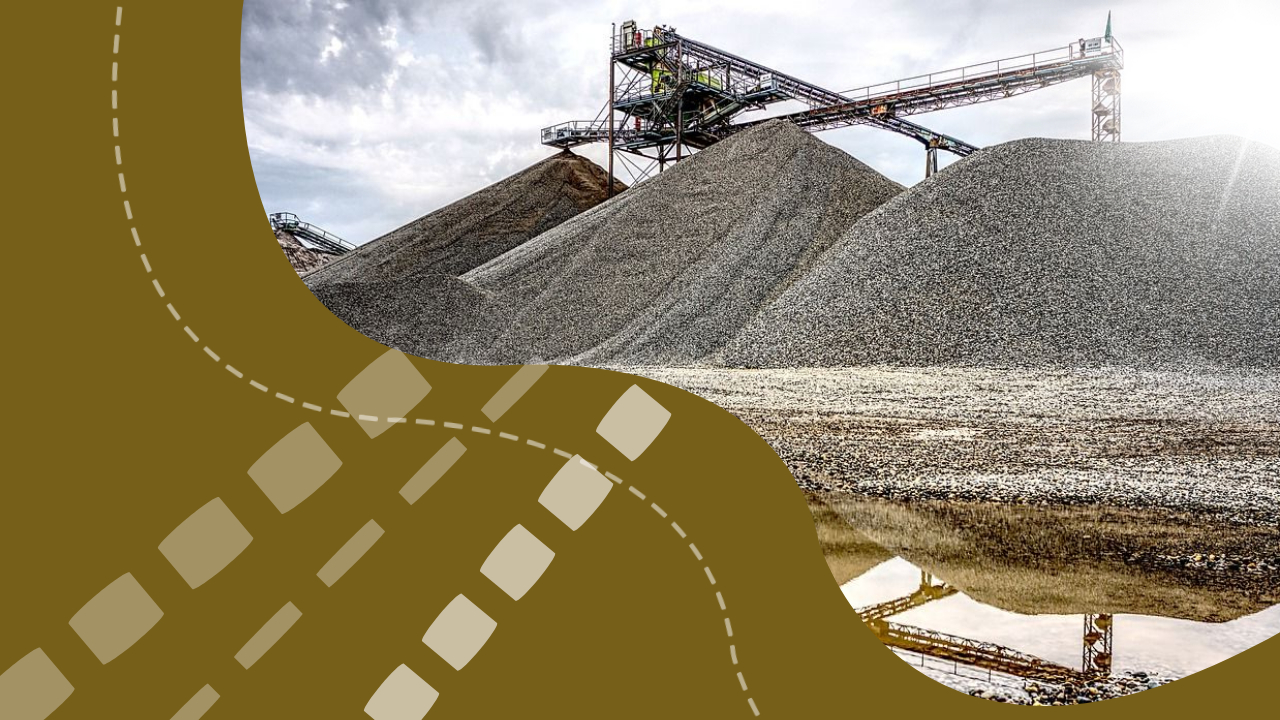
The metals and other minerals mining industry has been tasked with achieving 40% growth by the end of the decade. The National Development Plan of Kazakhstan, scheduled until 2029, was published on the portal “Open Regulatory Legal Acts” .
Among the problems that hinder the development of the mining industry, the document notes such as the depletion of the mineral resource base, the high energy intensity of the industry with a probable energy shortage (leading to a decrease in the competitiveness of products), rising labor costs, etc.
Despite significant mineral deposits, there are few deposits in the republic that are ready for development. The authorities fear that in the next 10–20 years the production of the main export metals: copper, chromium and iron will decrease significantly. In addition, the plan notes that the Republic of Kazakhstan is not realizing its potential for the production of nickel, cobalt, lithium, as well as other rare and rare earth metals.
First of all, Kazakhstan wants to solve the problem of low geological exploration activity. By 2029, the geological and geophysical exploration of the territory is expected to increase from 1.9 to 2.3 million, and the reserve replenishment rate for critical metals is expected to increase to 20–50%.
It is proposed to stimulate companies through co-financing, exemption from VAT, depreciation of 25% of expenses for geological exploration work for solid mineral deposits (the practice is valid for hydrocarbon exploration) and other financial support instruments.
In addition, the country wants to create an infrastructure for storing and processing geomaterials, in particular, to build a storage facility and core storage facilities on the basis of a geological cluster in the capital and other regions of the country.
The National Development Plan also takes special control over the development of technogenic mineral formations . In order to increase the extraction of useful components from industrial waste, the tax rate for investors may be revised.
Six journalists from the independent Azerbaijani investigative website Abzas Media have been under arrest since November 2023. They had previously transmitted elements of their investigations to the Paris-based Forbidden Stories collective, which took over their work in collaboration with 14 European news organisations in the “The Baku Connection” project, including FRANCE 24 and RFI. This article focuses on the tensions surrounding a mine in the west of the country, whose gold ends up in the products of major high-tech brands.
The anger was visible on their faces as they faced off against squadrons of riot police sent to silence them. On June 20, 2023, residents of the village of Söyüdlü, in western Azerbaijan, demonstrated to reject the construction of a new reservoir to store toxic waste from a gold mine that has been operating in the area since 2012. An initial reservoir had been installed by Anglo Asian Mining, the British company that operates the mine, but it was close to capacity. The villagers believe it had led to soil and river water pollution, and that the fumes escaping from it were causing an increase in respiratory illnesses.
The first reservoir, with a capacity of 6 million cubic metres, is located a few hundred meters from Söyüdlü. To separate the gold from the rock, Anglo Asian Mining uses cyanide, and dumps the sludge generated by the process, which contains toxic products including cyanide and arsenic, into the reservoir, known as a tailings pond. The company says that the quantities of waste do not threaten the environment or the health of local residents.
‘The police set up roadblocks and turned back journalists who were not under government control’
Исследование базирующегося в США Международного центра налогов и инвестиций предупреждает, что бездействие может оставить Китаю «решающее преимущество» в этом секторе, который имеет решающее значение для зеленой энергетики, многих новых систем вооружения и других передовых технологий.
«По мере расширения использования этих полезных ископаемых растет и глобальная конкуренция за них в период резкого увеличения геостратегической и геоэкономической напряженности», — говорится в докладе.
«Развитые страны с безопасным и надежным доступом к РЗЭ пользуются экономическими преимуществами в производстве, а страны, не имеющие такого доступа, сталкиваются с соответствующими экономическими недостатками».
Китаю, на долю которого приходится большая часть мировой добычи редкоземельных металлов в пределах его собственных границ, еще не пришлось искать дополнительные поставки из Центральной Азии, которая обладает обильными запасами полезных ископаемых – от железа и цветных металлов до урана.
Но, как говорится в докладе, «огромный размер китайской экономики и сознательные усилия Коммунистической партии Китая по доминированию в секторе возобновляемых источников энергии в мире означают, что такой рост является вопросом времени».
Богатый нефтью Казахстан, экономический гигант региона, обладает крупнейшими в мире запасами хрома и вторыми по величине запасами урана, а также обладает другими важными элементами.
Соавтор доклада Ариэль Коэн говорит, что правительства стран Центральной Азии должны создать инвестиционный климат для разработки этих ресурсов.
«Они могут стать следующим большим событием в Центральной Азии как двигатель экономического роста», — заявил Коэн на этой неделе во время панельной дискуссии в Атлантическом совете, вашингтонском аналитическом центре.
По всей Центральной Азии, отмечают эксперты, РЗЭ встречаются в значительных объемах в казахских степях и нагорьях, а также в горах Тянь-Шаня в Казахстане, Кыргызстане и Узбекистане, а также в горах Памира в Таджикистане.
Монацит, циркон, апатит, ксенотим, пирохлор, алланит и колумбит входят в число наиболее распространенных редких металлов и минералов Центральной Азии.
В 2016 году Геологическая служба США зарегистрировала 384 месторождения РЗЭ в регионе: 160 в Казахстане, 87 в Узбекистане, 75 в Кыргызстане, 60 в Таджикистане и два в Туркменистане.
Посол США в Казахстане описывает участие США в Центральной Азии
Уэсли Хилл, другой эксперт по минеральным запасам Центральной Азии, говорит, что добыча редкоземельных металлов в настоящее время “почти полностью монополизирована Китаем”.
«В зависимости от того, как считать, от 80 до 90% переработки РЗЭ контролируется Китаем и осуществляется непосредственно внутри Китая», — сказал Хилл.
Но, по его мнению, несмотря на активное участие Китая в Центральной Азии, ему еще предстоит полностью овладеть редкоземельным сектором региона. «Итак, это означает, что Центральная Азия находится на перепутье», – сказал он. «У Центральной Азии есть возможность расширить производство РЗЭ, не будучи полностью зависимым от Китая».
По словам Хилла, Центральная Азия в настоящее время находится в состоянии, когда она может развивать свои мощности по переработке РЗЭ как для своих национальных стратегий развития, так и для разрушения китайской монополии.
«Но это произойдет только при наличии хорошей политики, как со стороны Америки, так и со стороны Центральной Азии».
Посол Джон Хербст, бывший главный дипломат Вашингтона в Узбекистане и Украине, говорит, что активы РЗЭ в регионе являются «просто еще одной причиной для расширения участия Запада».
Он сказал, что не уверен, что правительства стран Центральной Азии понимают, насколько важны редкоземельные элементы для их развития. «Но я знаю, что страны Центральной Азии хотят более тесных отношений с Соединенными Штатами, и это одна из важных частей сохранения ими с таким трудом завоеванной независимости».
Хербст добавил, что Соединенные Штаты и Центральная Азия имеют общий интерес в совместной работе по разработке редкоземельных металлов региона «для экономики будущего».
«У нас есть способность к инновациям, которая намного превосходит [китайскую]. Их инновации во многом основаны на использовании наших технологий».
Центральноазиатский торговый коридор приобретает интерес на фоне региональной напряженности
Сурия Эванс-Притчард Джаянти, советник по энергетическому переходу в Министерстве торговли США, говорит, что регион жаждет инвестиций.
«Это возможность развития. Особенно в связи с геостратегической перестройкой энергетики после вторжения России в Украину, а также из-за энергетического перехода. Литий и другие РЗЭ необходимы для различных этапов этого перехода. Так что это в первую очередь экономический стимул», она сказала.
Она указала на Инициативу стратегического партнерства в сфере полезных ископаемых, реализуемую Бюро по энергетическим ресурсам Госдепартамента США, которая способна стимулировать прямые иностранные инвестиции в регион, одновременно предоставляя техническую помощь в горнодобывающем секторе.
Коэн сказал, что страны Центральной Азии не могут долго ждать, чтобы начать разработку своих редкоземельных металлов. «Существует конкуренция, и африканские страны, страны Латинской Америки и другие страны будут конкурировать все сильнее».
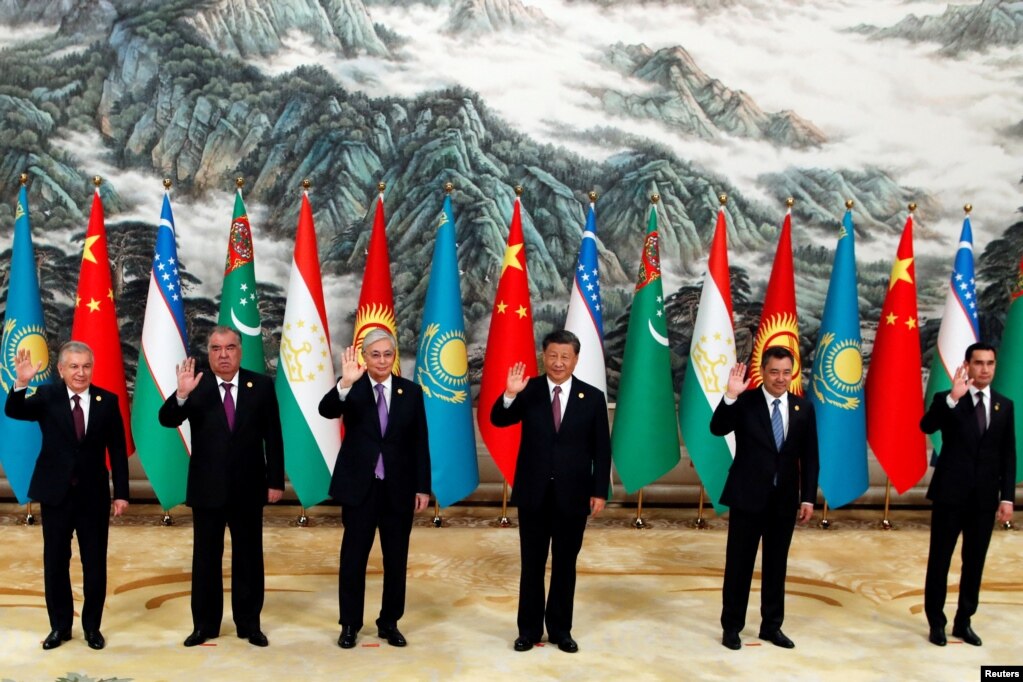
Президент Китая Си Цзиньпин (в центре) позирует для фотографий вместе с президентами Казахстана, Кыргызстана, Таджикистана, Туркменистана и Узбекистана во время саммита Китай-Центральная Азия в Сиане, Китай, 19 мая. , 2023 г.
Уайлдер Алехандро Санчес, возглавляющий консалтинговую компанию Second Floor Strategies, говорит, что Центральной Азии нужен центр исследования редкоземельных металлов, который сможет предоставлять своевременную информацию потенциальным клиентам и инвесторам.
Транспорт имеет ключевое значение, сказал Санчес. «Речь идет не только о их поиске и добыче. Вы должны вывести их на международный рынок».
Доступ из региона, не имеющего выхода к морю, в настоящее время ограничен китайской инфраструктурой «Пояса и пути» или маршрутами через Россию. Санчес и другие рекомендуют использовать Средний коридор, также называемый Транскаспийским международным транспортным маршрутом, который может доставлять товары в Европу через Каспийское и Черное моря.
Эти эксперты также говорят, что прогресс будет зависеть от того, преодолеют ли региональные правительства свою традиционную скрытность в отношении природных ресурсов. Они подчеркивают важность прозрачности, верховенства закона, приверженности передовому опыту и соблюдению международных норм, если они надеются привлечь западные инвестиции.
Текст переведен автоматически с помощью Google Translate.
The study by the U.S.-based International Tax and Investment Center warns that a failure to act could leave China with a “decisive advantage” in the sector, which is crucial to green energy, many new weapons systems and other advanced technologies.
“As the uses for these minerals has expanded, so too has global competition for them in a time of sharply increasing geostrategic and geo-economic tension,” the report says.
“Advanced economies with secure, reliable access to REEs enjoy economic advantages in manufacturing, and corresponding economic disadvantages accrue for those without this access.”
China, which accounts for most of the world’s rare earth mining within its own borders, has not yet had to seek additional supplies from Central Asia, which enjoys plentiful reserves of minerals ranging from iron and nonferrous metals to uranium.
But, the report says, “the massive size of the Chinese economy and the Chinese Communist Party’s conscious efforts to dominate the REE sector globally means such increases are a matter of time.”
Oil-rich Kazakhstan, the region’s economic giant, holds the world’s largest chromium reserves and the second-largest stocks of uranium, while also possessing other critical elements.
Report co-author Ariel Cohen says it is up to the governments of Central Asia to create the investment climate for the development of these resources.
“They may be the next big thing in Central Asia as the engine of economic growth,” Cohen said this week during a panel discussion at the Atlantic Council, a Washington think tank.
Across Central Asia, experts note, REEs are found in substantial volumes in the Kazakh steppe and uplands as well as in the Tien Shan mountains across Kazakhstan, Kyrgyzstan and Uzbekistan, and in the Pamir Mountains in Tajikistan.
Monazite, zircon, apatite, xenotime, pyrochlore, allanite and columbite are among Central Asia’s most abundant rare metals and minerals.
In 2016, the U.S. Geological Survey listed 384 REE occurrences in the region: 160 in Kazakhstan, 87 in Uzbekistan, 75 in Kyrgyzstan, 60 in Tajikistan, and two in Turkmenistan.
US Ambassador to Kazakhstan Outlines US Engagement in Central Asia
Wesley Hill, another expert on Central Asia’s mineral reserves, says production of rare earths at present “is almost wholly monopolized by China.”
“Depending on how you count, between 80 to 90% of REE refining is controlled by China and done directly inside of China,” Hill said.
But, he argued, despite China’s heavy involvement in Central Asia, it has yet to fully take over the region’s rare earth sector. “So, this means that Central Asia is very much at a crossroads,” he said. “Central Asia has the opportunity to expand its REE production without being wholly dependent on China.”
Central Asia is currently in a position where it can develop its REE refining capacities both for its national development strategies and to break the Chinese monopoly, Hill said.
“But this is only going to happen with good policy, both from the American side and the Central Asian side.”
Ambassador John Herbst, Washington’s former top diplomat in Uzbekistan and Ukraine, says the region’s REE assets are “simply another reason for enhanced engagement by the West.”
He said he is not sure that Central Asian governments appreciate how important rare earths can be to their development. “But I do know that the countries of Central Asia want a closer relationship with the United States, and that is one important part of their maintaining their hard-won independence.”
Herbst added that the United States and Central Asia have a common interest in working together to develop the region’s rare earths “for the economy of the future.”
“We have an ability to innovate that far exceeds [China’s]. Their innovation is based largely on taking our technology.”
Central Asian Trade Corridor Gains Interest Amid Regional Tensions
Suriya Evans-Pritchard Jayanti, who serves as energy transition counsel at the U.S. Department of Commerce, says the region is eager for investment.
“It is a development opportunity. Particularly with the geostrategic energy realignment after the Russian invasion of Ukraine, but also, because of the energy transition. Lithium and other REE are necessary for different parts of that transition. So that’s primarily an economic incentive,” she said.
She pointed to the Mineral Strategic Partnership Initiative run by the U.S. State Department’s Bureau on Energy Resources, which is able to promote foreign direct investment in the region while providing technical assistance in the mining sector.
Cohen said the Central Asian countries cannot wait long to develop their rare earths. “There is a competition, and the African countries, Latin American countries and others will compete increasingly.”
FILE – Chinese President Xi Jinping (center) poses for photos along with the presidents of Kazakhstan, Kyrgyzstan, Tajikistan, Turkmenistan and Uzbekistan during the China-Central Asia Summit in Xian, China May 19, 2023.
Wilder Alejandro Sanchez, who heads a consultancy called Second Floor Strategies, says Central Asia needs a rare earth research center that can provide timely information to prospective customers and investors.
Transportation is key, Sanchez said. “It’s not just about finding and mining them. You have to get them to the international market.”
Access from the landlocked region at present is limited to China’s Belt and Road infrastructure or routes through Russia. Sanchez and others recommend using the Middle Corridor, also called the Trans-Caspian International Transport Route, which can carry goods to Europe across the Caspian and Black seas.
These experts also say progress will depend on regional governments overcoming their traditional secretiveness regarding natural resources. They emphasize the importance of transparency, the rule of law, adherence to best practices and compliance with international norms if they hope to attract Western investment.
На Западе растет обеспокоенность по поводу энергетической безопасности, поскольку, судя по всему, Россия и Китай, но особенно Россия, монополизировали рынок U308. Россия также контролирует большую часть мировой переработки урана, что является неприятной реальностью на фоне планов США ввести санкции против импорта российского урана из-за войны на Украине. Эти опасения были в центре внимания недавней статьи Financial Times.
Посреди всего этого находится Казахстан: около 59 миллионов фунтов U308, что составляет 44% текущего мирового производства урана, поступает из этой центральноазиатской страны, отмечается в статье. Эта тревога, конечно, касается и других стран, но Казахстан остается ключевым слабым местом в обеспечении энергетической безопасности западных стран. И хотя ЕС повозился с идеей полагаясь на Казахстан в обход России, этот подход будет так же эффективен, как и полагаться на Россию в обход России.
И вот почему:
Автономность решений Казахстана по добыче урана и потенциальное влияние Москвы на нее находятся под вопросом, поскольку поддержка Россией казахстанского президента Касым-Жомарта Токаева выступает в качестве главная гарантия его дальнейшего правления. Так происходит со многими лидерами Центральной Азии, включая предыдущего президента Казахстана Нурсултана Назарбаева. Неоспоримый авторитет России в этом вопросе был продемонстрирован во время политических волнений в январе 2022 года в Казахстане, где поддержка возглавляемой Россией ОЭСР сыграла ключевую роль в сигнал казахстанским военным подчиняться Токаеву.
Хотя новость об отказе Токаева признать оккупированные Россией территории на Украине вселила на Западе надежду на то, что Казахстан уходит с заднего двора России, реальность такова, что Казахстан просто пытается избежать вторичных санкций, сохраняя при этом тесные связи с Россией.
Помимо политики, уран казахстанского происхождения, прямо или косвенно, играет решающую роль в удовлетворении энергетических потребностей Запада, покрывая 40% потребностей коммунальных предприятий Соединенных Штатов и 44 % в Европейском Союзе. Что еще более важно, государственный урановый оператор Казатомпром, который прошел листинг на Лондонской фондовой бирже в 2019 году и на 75 % принадлежит государству, самостоятельно управляет урановыми рудниками в Казахстане и через совместные предприятия, находился под косвенным влиянием России и Китая, по крайней мере, с конца нулевых годов. Слитые в сеть видео допросов Казатомпрома экс-глава Мухтар Джакишев – который был арестован и заключен в тюрьму в 2009 году и выпущен в 2020 году – показывают, что Джакишев считал (на момент допроса), что его арест как-то связан с тем, что его решения неоднократно наступали на ногу России.
Джакишев, известный тем, что руководил Казатомпромом в период быстрого роста в начале 2000-х годов, отметил на видео, что перед арестом он призывал Японию и Китай приобрести совместный контрольный пакет акций Uranium One, канадской фирмы, которая в то время косвенно контролировала несколько ключевых урановых активов в Казахстане. После его ареста произошла печально известная сделка с Uranium One, в результате которой Россия получила контрольный пакет акций. Это был лишь один из случаев конкуренции России и Китая за казахский уран. С тех пор Россия сохраняет контроль над более чем 26% казахстанских урановых месторождений и имеет права на дополнительные 22% годовой добычи. Между тем, Китайская национальная урановая корпорация (CNUC) и ее партнеры владеют правами почти на 60% будущей добычи в Казахстане и планируют создать центр торговли ураном в Синьцзяне, прямо за границей с Казахстаном.
Более того, хотя Казахстан является крупнейшим в мире игроком на поставках урана, большая часть его измельченного урана проходит через российские конверсионные заводы, прежде чем экспортироваться на мировые рынки. В настоящее время в мире существует только четыре основных действующих предприятия по переработке урана, отвечающих за производство газообразного гексафторида урана. Эти предприятия, расположенные в России, Китае, Франции и Канаде, играют решающую роль в процессе конверсии, которая является предпосылкой для последующего обогащения и производства ядерного топлива. Россия доминирует в этом секторе, на ее долю приходится около 40% мировой инфраструктуры по конверсии урана и она поставляет примерно треть утилизируемого газа гексафторида урана на мировой рынок.
Значение процесса конверсии невозможно переоценить, поскольку это важный шаг, предшествующий обогащению и производству ядерного топлива. В 2020 году коммунальные предприятия Европейского Союза полагались на Россию примерно в 20% поставок урана и 26% услуг по обогащению урана. Аналогичным образом, по данным на 2021 год, Соединенные Штаты получали примерно 14% своего урана и 28% своих услуг по обогащению урана из России.
Поставки урана в Казахстане в последнее время также пострадали из-за проблем с обеспечением серной кислотой, необходимой для производства урана в прошлом и этом году. Казатомпром объявил в этом месяце о возможности сокращения своего производственного плана на 2024 год из-за этих проблем. Ранее компания прогнозировала добычу урана в диапазоне 25 000–25 500 тонн в 2024 году и 30 500–31 500 тонн в 2025 году по сравнению с 20 500–21 500 тонн в 2023 году.
В целом это рисует мрачную картину для США и ЕС, поскольку энергетическая независимость от России – и частично от Китая – может не стать реальностью в ближайшее время. Однако это не помешало некоторым европейским странам попытаться игнорировать контроль России над казахским ураном. Примечательно, что французская атомная компания Orano, ранее известная как Areva, стремится активизировать свою деятельность по добыче урана в Казахстане, где она уже разрабатывает урановые месторождения совместно с Казатомпромом.KATCO, совместное предприятие Orano и Казатомпрома, как сообщается, готовится начать добычу урана на площадке Южный Торткудук к концу 2023 года, сообщает Trend.az со ссылкой на источник в Orano. Предприятие, в котором 51% акций принадлежит Orano Mining и 49% акций Казатомпрома, ориентировано на разработку и использование урановых ресурсов в Туркестанской области, в частности на участках Муюнкум и Торткудук, расположенных примерно в 300 километрах (186 милях) к северу от Шымкента.
Аналитики связывают визит президента Франции Эммануэля Макрона в Казахстан в конце прошлого года в первую очередь с необходимостью обеспечить более тесные связи в сфере производства и импорта урана.
Таким образом, возможно, какие-то пути прямого доступа к казахстанскому урану еще не полностью перекрыты Россией, хотя кто сказал, что это не вопрос времени?
Текст переведен автоматически с помощью Google Translate.
Concerns are rising in the West over energy security as it appears to be that Russia and China – but especially Russia – have been both cornering the U308 market. Russia also handles much of the world processing of uranium, an awkward reality amid US plans to sanction Russian uranium imports over the war in Ukraine. These concerns were the focus of a recent Financial Times article.
In the midst of this stands Kazakhstan – around 59mn pounds of U308, constituting 44% of the current global uranium production is sourced from this Central Asian nation, the article noted. This alarm also concerns other countries of course, but Kazakhstan remains a key weak spot in securing the energy security for Western countries. And although the EU has tinkered with the idea of relying on Kazakhstan to bypass Russia, the approach would be as effective as relying on Russia to bypass Russia.
Here is why:
The autonomy of Kazakhstan’s decisions on uranium production and the potential influence exerted by Moscow on it is under question, since Russia’s support of the current Kazakh president, Kassym-Jomart Tokayev stands as the main guarantee of his continued rule. This happens to be the case with multiple leaders in Central Asia, including the previous Kazakh president, Nursultan Nazarbayev. Russia’s unquestionable authority over this was demonstrated during the January 2022 political unrest in Kazakhstan, where the Russia-led OECD’s support played a key role in signalling the Kazakh military to obey Tokayev.
Although the news of Tokayev’s refusal to recognise Russia-occupied territories in Ukraine has made the West hopeful that Kazakhstan is moving away from Russia’s backyard, the reality is that Kazakhstan is simply trying to evade secondary sanctions, while staying as close to Russia as possible.
Beyond the realm of politics, Kazakh-origin uranium, whether directly or indirectly, plays a crucial role in meeting the West’s energy needs, covering 40% of the United States’ utility requirements and a substantial 44% of the European Union’s.
More critically, the state-run uranium operator Kazatomprom, which went public on the London Stock Exchange in 2019 and is 75%-state-owned, operates uranium mines in Kazakhstan independently and through joint ventures, has been indirectly under Russia’s and China’s influence since at least the late noughties. Leaked interrogation videos of Kazatomprom ex-head Mukhtar Dzhakishev – who was arrested and imprisoned in 2009 and released in 2020 – show that Dzhakishev believed (at the time of the interrogation) that his arrest had something to do with Dzhakishev’s decision-making repeatedly stepping on Russia’s foot.
Dzhakishev, who is known for having led Kazatomprom through a period of rapid growth in the early 2000s, noted in the videos that prior to his arrest he was urging Japan and China to grab joint controlling stakes in Uranium One, a Canadian firm that, back then, had indirect control over several key uranium assets in Kazakhstan. After his arrest, the infamous Uranium One deal took place, which led to Russia taking hold of a controlling stake instead. This was just one case of Russia and China’s competition over Kazakh uranium.
Since then, Russia has been maintaining control of over 26% of Kazakh uranium deposits and holds rights to an additional 22% of annual production. Meanwhile, China National Uranium Corporation (CNUC) and its counterparts possess rights to almost 60% of future Kazakh production, with plans for a uranium trading hub in Xinjiang, just across the Kazakh border.
Moreover, even though Kazakhstan is the world’s biggest player in uranium supply, much of its milled uranium travels through Russian conversion plants before it is exported to global markets. The are currently only four main operational uranium converter facilities globally, responsible for producing uranium hexafluoride gas. These facilities, located in Russia, China, France, and Canada, play a crucial role in the conversion process, which is a prerequisite for subsequent enrichment and nuclear fuel production. Russia dominates this sector, accounting for approximately 40% of the world’s uranium conversion infrastructure and supplying roughly one-third of the utilised uranium hexafluoride gas in the global market.
The significance of the conversion process cannot be overstated, as it is an essential step preceding enrichment and the manufacturing of nuclear fuel. In 2020, European Union utilities relied on Russia for about 20% of their uranium and 26% of their uranium enrichment services. Similarly, based on 2021 data, the United States sourced approximately 14% of its uranium and 28% of its uranium enrichment services from Russia.
Kazakhstan’s uranium supply has also recently been harmed by challenges in securing sulfuric acid essential for uranium production last year and this year. Kazatomprom announced this month the possibility of reducing its 2024 production plan due to these challenges. Previously, the company projected uranium production in the range of 25,000-25,500 tonnes for 2024 and 30,500-31,500 tonnes for 2025, compared to 20,500-21,500 tonnes in 2023.
This overall paints a grim picture for the US and the EU, as energy independence from Russia – and, partly from China – may not become a reality any time soon.
This has not deterred some European nations from attempting to ignore Russia’s grip on Kazakh uranium though. Notably, French nuclear company Orano, formerly known as Areva, is, looking to step up its uranium activities in Kazakhstan, where it already mines uranium deposits in a joint venture with Kazatomprom.
KATCO, a joint venture between Orano and Kazatomprom, is reportedly gearing up to commence uranium mining operations at the South Tortkuduk site by the end of 2023, Trend.az reported, citing a source at Orano. The venture, with 51% ownership by Orano Mining and 49% by Kazatomprom, is focused on developing and utilising uranium resources in the Turkistan Region, specifically in the Muyunkum and Tortkuduk areas situated around 300 kilometres (186 miles) north of Shymkent.
Analysts have attributed French President Emmanuel Macron’s visit to Kazakhstan late last year to be primarily driven by the need to secure closer ties over uranium production and import.
As such, perhaps some paths for direct access to Kazakh uranium have not yet been entirely blocked off by Russia, though who is to say this not a matter of time?
The reserves of titanium-magnetite and rare earth metals in the vicinity of the Kyzyl Ompol deposit are estimated by scientists from the Polytechnic Institute to be worth up to $300 billion. This was announced by the Chairman of the Cabinet of Ministers and Head of the Presidential Administration, Akylbek Japarov, at a meeting with local government leaders.
Previously in 2019, the Commission on Licensing Issues for Subsoil Use suspended the license 2852 MP of the LLC “UrAsia in Kyrgyzstan” for uranium exploration in the Kyzyl-Ompol area amid protests.
“People were shouting about uranium, but in reality, the uranium reserves are extremely small. There are reserves of titanium-magnetite amounting to 20 million tons. There is zirconium, all rare earth metals. Scientists from the Polytechnic Institute are preparing a preliminary feasibility study. They say that there are minerals worth up to $300 billion just in the vicinity of the Kyzyl Ompol deposit. Rare earth metals are also found in Batken,” said A. Japarov.
The Chairman of the Cabinet of Ministers announced plans to develop the deposits and called on local government leaders to support this policy. According to A. Japarov, the government will not allow the use of environmentally harmful technologies in the development of the deposits.
Note:
The head of the LLC UrAsia in Kyrgyzstan is Igor Alekseevich Mashnev, and the founder is the LLC “Central Asian Uranium Company”. The company was registered on November 14, 2019.
The head of the LLC “Central Asian Uranium Company” is Arsen Shamkhalovich Musaev, and the founders are the LLC “Spectrum” and Alexey Alexandrovich Shulmin. The company was registered on September 8, 2022.
Запасы титано-магнетита и редкоземельных металлов в окрестностях месторождения Кызыл Омпол оцениваются учеными Политехнического института на сумму до $300 млрд. Об этом сообщил председатель Кабинета министров – руководитель Администрации президента Акылбек Жапаров на заседании с участием руководителей местных органов власти.
Ранее в 2019 году, Комиссия по вопросам лицензирования недропользования остановила действие лицензии 2852 МР ОсОО «Юразия в Кыргызстане» на разведку урана на Кызыл-Омпольской площади на фоне протестов.
«Кричали про уран, уран, на деле запасов урана крайне мало. Там есть запасы титано-магнетита объемом 20 млн тонн. Есть цирконий, все редкоземельные металлы. Ученые Политехнического института готовят предварительное ТЭО. Они говорят, что только в окрестностях месторождения Кызыл Омпол находятся полезные ископаемые до $300 млрд. Редкоземельные металлы также имеются в Баткене», – сказал А.Жапаров.
Председатель кабмина сообщил о намерениях разрабатывать месторождения и призвал руководителей местных властей поддержать эту политику. При разработке месторождений, как сказал А.Жапаров, правительство не допустит использования экологически вредных технологий.
Справка:
Руководителем ОсОО UrAsia in Kyrgyzstan («ЮрАзия в Кыргызстане»), является Машнев Игорь Алексеевич, учредителем — ОсОО «Центрально-Азиатская Урановая Компания». Компания прошла перегистрацию 14 ноября 2019 года
Руководителем ОсОО «Центрально-Азиатская Урановая Компания» является Мусаев Арсен Шамхалович, учредителями — ОсОО «Спектр» и Щульмин Алексей Александрович. Компания прошла перегистрацию 8 сентября 2022 года.
The world of natural resource exploration is witnessing a surge in innovation and strategic investment, particularly evident in BHP Xplor’s 2024 Global Exploration Program. BHP, a leading global resources company, has recently unveiled its latest cohort of six projects, carefully selected from a staggering 500 applicants. Notably, two of these promising projects are based in Kazakhstan, a country rich in mineral resources and increasingly significant in the global energy transition narrative.
BHP’s involvement goes beyond financial support. They bring a wealth of expertise in exploration, ecology, environmental impact, and governance. Access to a network of service providers and international experts enhances East Star Resources’ capabilities.
Pallas Resources Revolutionising Mineral Exploration with Innovative Strategies
Pallas Resources benefits from a substantial financial boost, receiving up to US$500,000 in non-dilutive funding from the BHP Xplor program. This funding is pivotal for accelerating exploration activities over a defined area of interest, particularly in the pursuit of significant copper systems. Importantly, this agreement does not entail equity acquisition by BHP in either Pallas or any of its projects.
Pallas Resources, a Central Asian explorer, is redefining mineral exploration with its disciplined and strategic approach. Focusing on the under-explored yet highly prospective regions of Kazakhstan, Pallas is at the forefront of uncovering large-scale systems of copper, gold, nickel, and lithium. These efforts are not merely exploratory but a leap towards realizing the untapped potential of regions that were once renowned for their Tier 1 Soviet-era discoveries.
East Star Resources pursuing two parallel exploration strategies
Kazakhstan holds enormous potential for copper exploration, akin to Western Australia in the 1970s. With two world-class copper projects already identified in a vast area, the odds are that more remain undiscovered. East Star Resources is pursuing two parallel exploration strategies. While the VMS (Volcanogenic Massive Sulfide) projects remain a focus due to their excellent return on invested capital, the grant from BHP will fund the copper porphyry exploration. This dual approach maximizes their chances of success in a burgeoning copper market.
BHP recognises this prospectivity and views East Star Resources as a valuable partner in unlocking this potential awarding the company with $500,000 in grant funding.
References:
Interview with Alex Walker the CEO of East Star Resources following news that the company have received $500,000 in grant funding from BHP Xplor. https://www.youtube.com/watch?v=moa-GEWA6w8
Revolutionising Mineral Exploration with Innovative Strategies
Pallas Resources, a Central Asian explorer, is redefining mineral exploration with its disciplined and strategic approach. Focusing on the under-explored yet highly prospective regions of Kazakhstan, Pallas is at the forefront of uncovering large-scale systems of copper, gold, nickel, and lithium. These efforts are not merely exploratory but a leap towards realizing the untapped potential of regions that were once renowned for their Tier 1 Soviet-era discoveries.
BHP Xplor Program: A Gateway to Unprecedented Opportunities
The inclusion of Pallas Resources in the prestigious 2024 BHP Xplor program marks a significant milestone for the company. This global accelerator program, initiated by BHP, the world’s largest mining entity, targets innovative, early-stage mineral exploration companies. The objective is clear: to discover the critical resources essential for advancing the energy transition.
Strategic Collaboration and Advanced Exploration Techniques
The BHP Xplor program provides an exclusive opportunity for Pallas Resources to collaborate with leading experts in the field. This six-month engagement involves interdisciplinary workshops, where knowledge and expertise are shared across BHP’s extensive network and the exploration cohort. Such collaboration is not only about sharing ideas but also about de-risking geological concepts and testing new theories in mineral exploration.
Financial Backing and Non-Dilutive Funding
Pallas Resources benefits from a substantial financial boost, receiving up to US$500,000 in non-dilutive funding from the BHP Xplor program. This funding is pivotal for accelerating exploration activities over a defined area of interest, particularly in the pursuit of significant copper systems. Importantly, this agreement does not entail equity acquisition by BHP in either Pallas or any of its projects.
Data-Driven Exploration and Big-Picture Approach
The success of Pallas Resources in securing a place in the BHP Xplor program is largely attributed to its extensive digitized datasets and holistic approach to mineral systems targeting. This data-driven method ensures a more accurate and efficient exploration process, setting a new standard in the industry.
Future Outlook: Testing New Concepts and Making Major Discoveries
Simon Cooper, CEO & Director of Pallas Resources, expresses his enthusiasm for the company’s participation in the BHP Xplor program. This involvement is a testament to Pallas’s commitment to unlocking Kazakhstan’s significant, yet unrealized, mineral potential. The use of the program’s proceeds will be instrumental in accelerating exploration efforts and testing innovative concepts, particularly in the quest for major copper discoveries.
BHP: A Leader in Mining and a Catalyst for Change
BHP, the initiator of the Xplor program, stands as the world’s largest mining company and a top producer of iron ore, copper, nickel, and metallurgical coal. With its diverse portfolio of tier 1 assets globally, BHP is not only a leader in the mining industry but also a catalyst for change and innovation. The Xplor program, launched in 2023, is a clear indication of BHP’s commitment to fostering collaboration and advancement in the mineral exploration sector.