Website: Asia.com

  • Uzbek President Mirziyoyev Meets U.S. Business Leaders in Washington to Deepen Economic Partnership

    Uzbek President Mirziyoyev Meets U.S. Business Leaders in Washington to Deepen Economic Partnership

    At the conclusion of his working visit to Washington, D.C., President of Uzbekistan Shavkat Mirziyoyev met with representatives of major U.S. corporations, investment funds, and financial institutions to discuss expanding economic cooperation between the two countries.

    The meeting was attended by U.S. Secretary of Commerce Howard Lutnick, Special Assistant to the President Ricky Gill, Special Envoy Paolo Zampolli, and Deputy Secretary of Agriculture Stephen Vaden. Senior executives from leading American companies — including Traxys, FLSmidth, McKinsey, Meta, Google, Amazon, Boeing, Air Products, Axiom Space, Cove Capital, Freeport-McMoRan, Orion CMC, Cargill Cotton, John Deere, Honeywell, Valmont Industries, and Flowserve Corporation — also took part in the discussions.

    President Mirziyoyev highlighted that trade turnover between Uzbekistan and the United States has quadrupled over the past eight years, with more than 300 American companies now operating in Uzbekistan. He emphasized that this growth marks only the beginning of a new stage in bilateral cooperation, and that specific projects would be further discussed during his upcoming meeting with U.S. President Donald Trump.

    The Uzbek leader outlined priority areas for strategic partnership, including renewable energy, critical minerals, and digital transformation. By 2030, Uzbekistan aims to build a next-generation energy system with 18–20 gigawatts of renewable capacity, generating more than half of its electricity from solar and wind sources.

    In partnership with the United States, Uzbekistan plans to develop extraction and advanced processing of uranium, copper, tungsten, molybdenum, and graphite, establishing secure supply chains and adopting U.S. technologies in resource processing.

    The President also highlighted Uzbekistan’s ambitious transport infrastructure modernization program, with $12 billion in planned investments by 2030 to upgrade roads, railways, terminals, and airports.

    Digital cooperation is also expanding through joint initiatives with Google, Meta, and NVIDIA, including the launch of Apple Pay and Google Pay, the creation of a Digital Academy, and a nationwide startup hub network.

    Financial support for these initiatives will involve the U.S. International Development Finance Corporation (DFC) and the U.S. Export-Import Bank (Exim Bank).

    Concluding the meeting, President Mirziyoyev reaffirmed Uzbekistan’s commitment to support American investors and maintain the country’s reputation as a reliable and stable partner.

    “Uzbekistan remains a dependable partner and a guarantor of success for foreign investors,” the President said.
  • Turkey’s Miryildiz Mining to Launch Gold and Copper Production in Kazakhstan by 2026

    Turkey’s Miryildiz Mining to Launch Gold and Copper Production in Kazakhstan by 2026

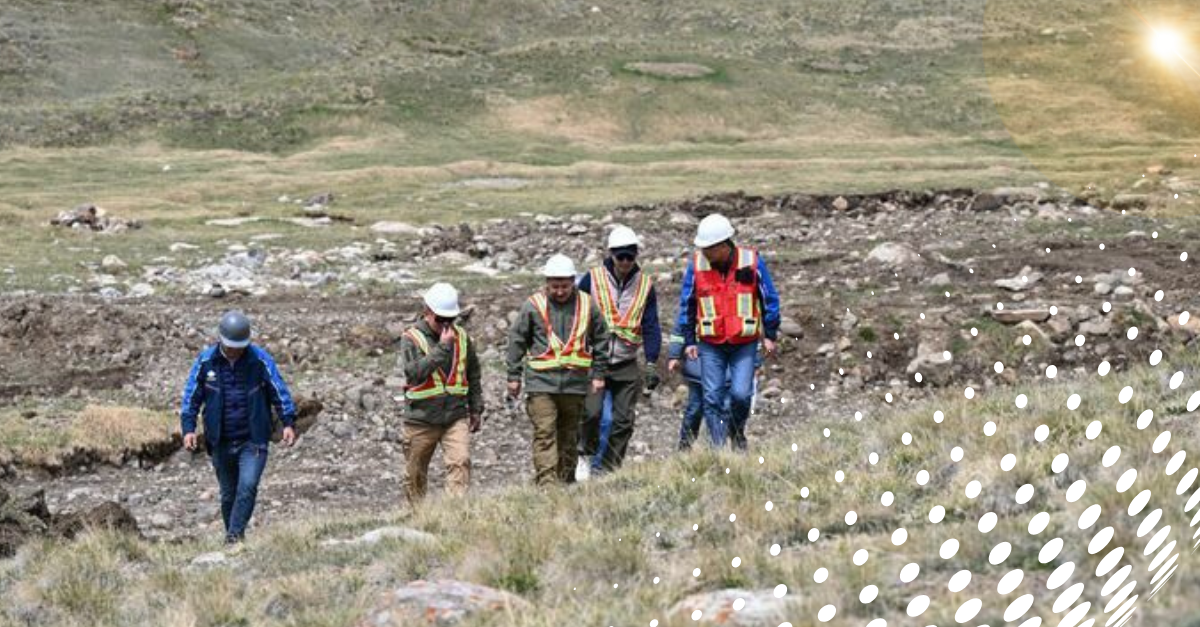
    Turkish mining company Miryildiz Mining plans to begin gold and copper production in Kazakhstan by late 2026, the company’s CEO Emrah Erdem announced at the Kazakhstan Global Investment Roundtable (KGIR).

    “We are engaged in gold and copper mining. Our plants in Turkey have been operating for nearly ten years. I hope that by the end of 2026, we will start gold production in Kazakhstan,” Erdem said.

    According to him, Miryildiz Mining is currently working in cooperation with the Development Bank of Kazakhstan (DBK), a subsidiary of the Baiterek Holding.

    The company operates in five countries, extracting gold, copper, chromium, and other metals, with Turkey remaining its primary market. It produces around 1 million tonnes of copper ore annually.

    “We have now set targets for copper mining in Kazakhstan,” Erdem said, adding that the company sees strong potential for copper extraction in East Kazakhstan, particularly in the Abai and Pavlodar regions.

    He also highlighted promising opportunities in the gold and rare earth metals sectors, noting Kazakhstan’s untapped mineral wealth.

    $482 Million Mining and Processing Project

    Earlier this year, Miryildiz Mining presented a $482 million project to construct a mining and processing complex (MPC) in the Zhanan-Boko-Zaisan gold ore zone to Abai Region Governor Berik Uali. The facility is expected to employ around 2,000 workers.

    The company has already completed geological exploration and purchased some of the necessary extraction and ore-processing equipment.

    Global Footprint

    Miryildiz Mining holds over 100 exploration and production licenses worldwide and is active in Central African Republic (CAR), Sierra Leone, and The Gambia, where it is also building a gold mining operation.

    In Kazakhstan, its subsidiary MIRYILDIZ KZ Ltd plans to conduct metal exploration at the Takyr site in the Zhetysu and Abai regions between 2025 and 2030.

    Market Context

    The company’s expansion comes amid record-high commodity prices — copper surpassed $11,000 per tonne, and gold exceeded $4,000 per ounce in 2025 — boosting investment in mining and geological exploration across the sector.

  • Sarytogan Graphite Secures $1.4 Million Top-Up from EBRD to Advance Definitive Feasibility Study

    Sarytogan Graphite Secures $1.4 Million Top-Up from EBRD to Advance Definitive Feasibility Study

    Sarytogan Graphite Limited (ASX: SGA), a key player in the mining industry specializing in natural graphite extraction, has announced a $1.4 million top-up placement from the European Bank for Reconstruction and Development (EBRD). This follows a previous $5 million investment, bringing EBRD’s total investment in the company to $6.4 million. The funding is part of a broader package aimed at supporting Sarytogan’s Definitive Feasibility Study, which is on track for completion by mid-2026.

    The additional investment will increase EBRD’s shareholding in Sarytogan Graphite Limited from 17.3% to 19.99%. This increased stake reflects the EBRD’s confidence in the company’s operations and its strategic positioning in the critical raw materials market.

    Sarytogan’s primary project, the Sarytogan Graphite Deposit located in the Karaganda region of Central Kazakhstan, is recognized as a Strategic Project under the European Union’s Critical Raw Materials Act. This designation underscores the project’s importance in supplying sustainable critical raw materials, particularly for battery production and other strategic uses.

    The company’s focus on sustainable mining practices and its strategic location make it a vital player in the global supply chain for critical raw materials. The completion of the Definitive Feasibility Study will be a significant milestone, providing a clearer picture of the project’s potential and its role in meeting the growing demand for graphite in various industries.

  • Kazakhstan and the US Ink Critical Minerals Agreement

    Kazakhstan and the US Ink Critical Minerals Agreement

    A memorandum of understanding (MOU) on critical minerals was signed by Kazakhstan, the world’s leading uranium producer, and the United States government. The agreement was formalised by Yersayin Nagaspayev, Kazakhstan’s Minister of Industry and Construction, and U.S. Secretary of Commerce Howard Lutnick during a Washington meeting, as announced by the Press Office of the President of Kazakhstan on Thursday.

    The signing followed a meeting between Tokayev and U.S. administration officials, including Secretary of State Marco Rubio and Special Envoy for South and Central Asian Affairs Sergio Gor. In a separate statement, Tokayev highlighted the “excellent opportunities” for enhancing the strategic partnership between Kazakhstan and the U.S. through economic cooperation.

    Strategic Rare Earth Ventures

    The MOU signing marks another strategic move by the U.S. to secure future supplies of rare earth elements, aiming to reduce China’s dominance in this sector. Kazakhstan, largely unexplored, presents a promising opportunity. Earlier this year, the deputy chairman of Kazakhstan’s industry and construction ministry noted the nation’s “promising reserves” of rare earth minerals, suggesting it could become one of the world’s top 10 producers if forecasts are confirmed. This is supported by the discovery of the substantial Kuyrektykol deposit, which, if verified, would place Kazakhstan behind only China and Brazil in reserve size.

    According to official geologic data, Kazakhstan has over 980 solid mineral deposits. Since 2018, it has issued 2,906 exploration licenses and 111 production licenses, with only a dozen sites currently under exploration. Over the past five years, Kazakhstan has attracted about $1 billion in private investment into the mining sector.

    U.S. Investment and Tungsten Reserves

    U.S. investors are taking notice. In March, New York-based private equity firm Cove Capital formed a joint venture with JSC Qazgeology, Kazakhstan’s national geological exploration company, to advance the Akbulak Rare Earth Project in the Kostanay region. This project involves geological surveys, feasibility studies, and exploration work, with Akbulak hosting a historical resource of 380,000 tonnes of rare earth oxides, including neodymium and praseodymium.

    The Trump administration has been strengthening ties with Kazakhstan for some time. In September, the Commerce Department assisted Pittsburgh-based manufacturer Wabtec in securing a $4.2 billion locomotive order.

    Although Kazakhstan is not ranked by the U.S. Geological Survey among the top countries for recoverable tungsten deposits, it is estimated to have over 2 million tonnes of the mineral in reserve. China currently accounts for about 80% of global tungsten concentrate production, according to U.S. Geological Survey data.

  • Kazakhstan Confirms Central Asia–U.S. Summit in Washington on November 6

    Kazakhstan Confirms Central Asia–U.S. Summit in Washington on November 6

    Kazakhstan’s presidency has confirmed that a Central Asia–United States summit will take place in Washington, D.C., on November 6, bringing together the leaders of the C5+1 format — the United States and the five Central Asian nations: Kazakhstan, Kyrgyzstan, Tajikistan, Turkmenistan, and Uzbekistan.

    According to the press office of President Kassym-Jomart Tokayev, the Kazakh leader sent a letter of gratitude to U.S. President Donald Trump for the invitation to participate in the summit. Tokayev described the initiative as both “timely and important,” emphasizing that he shares Trump’s key domestic and foreign policy principles, including the promotion of traditional values, common sense, and global peace and security.

    The upcoming gathering will coincide with the tenth anniversary of the C5+1 diplomatic platform, launched in 2015 to strengthen regional cooperation and deepen U.S.–Central Asia engagement in areas such as energy security, trade, counterterrorism, and sustainable development.

    Regional media have confirmed participation from other Central Asian heads of state. Uzbek outlet Gazeta.uz reported that President Shavkat Mirziyoyev has received an invitation, while Kyrgyz media stated that President Sadyr Japarov will also attend. Invitations have reportedly been extended to all five Central Asian leaders, according to Azattyq.

    The announcement follows recent visits to Kazakhstan and Uzbekistan by U.S. Special Envoy for South and Central Asia Sergio Gor and Deputy Secretary of State Christopher Landau, underscoring Washington’s renewed diplomatic focus on the region.

    President Trump met both Tokayev and Mirziyoyev during the U.N. General Assembly last month in New York, where several multi-billion-dollar business deals were announced. Analysts suggest the upcoming summit aims to counterbalance the influence of Russia and China in Central Asia amid heightened global competition for access to the region’s critical minerals and strategic trade routes.

    In an October 20 letter, members of the U.S. House Foreign Affairs Committee urged President Trump to host the C5+1 summit before the end of the year. The letter highlighted U.S. strategic interests in developing regional critical mineral supply chains—notably tungsten, antimony, lithium, and rare earth elements—as well as advancing trade liberalization through the repeal of the Jackson-Vanik amendment and bolstering counterterrorism cooperation against the regional branch of the Islamic State group.

    The Washington summit is expected to mark a major step in U.S. efforts to strengthen political and economic ties with Central Asia, promote regional resilience, and enhance collaboration in energy, defense, and raw materials security.

  • Putin Orders Roadmap for Russia’s Rare-Earth Extraction as Global Competition Intensifies

    Putin Orders Roadmap for Russia’s Rare-Earth Extraction as Global Competition Intensifies

    Russian President Vladimir Putin has instructed his cabinet to develop a national roadmap for rare-earth mineral extraction by December 1, as global competition for critical raw materials intensifies and countries seek to reduce dependence on China’s near-monopoly in the sector.

    The directive, published Tuesday on the Kremlin’s website, also calls for the expansion of transport and logistics infrastructure at Russia’s borders with China and North Korea, including multimodal hubs and new railway links.

    Rare-earth elements—vital for smartphones, electric vehicles, wind turbines, and advanced weapons systems—have become a major point of strategic rivalry between the world’s largest economies.

    In April, U.S. President Donald Trump and Ukrainian President Volodymyr Zelenskyy signed an agreement granting the United States preferential access to Ukraine’s mineral resources and supporting U.S. investment in reconstruction projects. Moscow has since said it is also open to cooperation with the U.S. on rare-earth projects, though political and diplomatic tensions stemming from Russia’s ongoing war in Ukraine have stalled progress.

    Earlier this year, Kirill Dmitriev, Putin’s investment envoy, said U.S. firms had shown interest in Russian rare-earth ventures, but talks remain at an exploratory stage.

    Meanwhile, China, which dominates the global rare-earth supply chain, has tightened export controls in retaliation against Western tariffs, pushing Washington and its allies to accelerate domestic and alternative sources of supply.

    Putin’s order stems from discussions at the Far Eastern Economic Forum in Vladivostok in September, where he emphasized the strategic importance of developing Russia’s Far East as a resource and transport hub connecting Asia and Europe.

    According to the U.S. Geological Survey (USGS), Russia’s known rare-earth reserves total about 3.8 million tonnes, though Moscow claims much higher figures. The Russian Natural Resources Ministry estimates 28.7 million tonnes of reserves across 15 different rare-earth metals as of January 2023. Even by Moscow’s count, however, Russia’s share remains relatively small compared to China’s dominant position.

    Putin also ordered the construction of new multimodal transport and logistics centers along the country’s borders with China and North Korea, including upgrades to two existing railway bridges and the completion of a new bridge to North Korea by 2026.

    Both China and North Korea have deepened economic cooperation with Russia amid Western sanctions, making regional integration and resource development key components of Moscow’s broader pivot to Asia strategy.

  • Ferro-Alloy Resources Secures Major Cost Savings and Financing Boost for Kazakhstan Vanadium Project

    Ferro-Alloy Resources Secures Major Cost Savings and Financing Boost for Kazakhstan Vanadium Project

    Ferro-Alloy Resources Ltd (LSE: FAR) saw its shares surge 13% to 6.21p after announcing substantial cost reductions and a financing breakthrough for its flagship Balasausqandiq vanadium project in southern Kazakhstan.

    The AIM-listed mining company has signed an agreement with China National Chemical Engineering Sixth Construction (CC6) — one of the world’s top industrial contractors — for front-end engineering and design (FEED) work on the project.

    According to the company, CC6 has provided an indicative construction cost of $261 million, cutting the total funding requirement to $311.9 million — about 40% lower than previously estimated in the project’s feasibility study.

    The revised figures have significantly improved project economics, boosting Balasausqandiq’s post-tax internal rate of return (IRR) to 31% and its net present value (NPV) to $931.6 million.

    Adding to the positive momentum, CC6 has arranged a conditional, non-binding loan offer worth $221.8 million from the Bank of Communications (Hubei Branch), covering 85% of CC6’s construction scope.

    Discussions are also under way with Sinosure, China’s export credit agency, which could provide loan guarantees to reduce borrowing costs.

    “This partnership with CC6 demonstrates the potential to significantly enhance the project’s financial returns,” said Nick Bridgen, CEO of Ferro-Alloy Resources. “It also strengthens our path to production and positions Balasausqandiq as one of the most competitive vanadium operations globally.”

    The company is now in talks with potential strategic investors to fund the project’s equity component, while CC6’s FEED work — expected to last six months — will be followed by a final engineering, procurement and construction (EPC) contract once costs are finalized.

  • Zijin Mining Expands in Kazakhstan, Sees Over 200 Tonnes of Gold Potential at Raigorodok Deposit

    Zijin Mining Expands in Kazakhstan, Sees Over 200 Tonnes of Gold Potential at Raigorodok Deposit

    Chinese mining giant Zijin Gold International, a subsidiary of Zijin Mining Group, expects gold reserves at Kazakhstan’s Raigorodok deposit to exceed 200 tonnes, citing advanced recovery technology and favorable market conditions. The statement follows the company’s $1.008 billion acquisition of RG Gold, which owns the mining rights to Raigorodok — one of the largest active gold deposits in Kazakhstan’s Akmola region.

    The deal was finalized in mid-October, according to reports by inbusiness.kz. Initially valued at $1.2 billion, the final amount was adjusted due to existing liabilities. Zijin Mining, which raised $3.9 billion through a Hong Kong IPO in September, confirmed plans to invest an additional $500 million to build a new processing plant capable of treating 6–8 million tonnes of ore annually. The project is expected to create over 1,000 new jobs.

    Speaking at Kazakhstan Day, held during the China Mining 2025 exhibition in Tianjin, Liao Jiansheng, head of Zijin Eurasia Mining, said the company intends to make Raigorodok a model for green and high-tech gold mining. He emphasized that Zijin’s advanced extraction methods could increase gold recovery to more than 90%, significantly expanding proven resources.

    “The current plant and management are good, and local employees are highly skilled,” Liao said. “We’ll introduce our technologies carefully, ensuring a smooth transition. For us, this project is a shared success — both for Kazakhstan and Zijin.”

    Zijin plans to maintain compliance with Kazakh labor and investment laws, limiting the number of foreign specialists to the legal quota and prioritizing local employment. During the plant’s reconstruction phase, temporary Chinese technical experts will assist in modernization.

    The company holds a mining license valid until 2035, with the potential for renewal. The Raigorodok mine will continue to operate as an open-pit site, with Zijin exploring opportunities to expand its resource base through additional exploration and acquisitions in the Akmola region.

    Zijin also expressed interest in investing further in geological exploration in Kazakhstan, supported by Kazakh Invest and the Chinese Embassy, signaling its long-term commitment to the country’s mining sector.

    Founded in 1993, Zijin Mining Group is the world’s sixth-largest metal producer and China’s largest gold miner. As of 2024, the company controlled 4,000 tonnes of gold, 110 million tonnes of copper, 13 million tonnes of zinc and lead, and 17.9 million tonnes of lithium globally. In the first half of 2025, Zijin reported $23.4 billion in revenue and $3 billion in net profit, with operations in 17 countries and a workforce of 55,000.

  • Kazakhstan Development Bank Launches $1 Billion Program to Finance Rare and Critical Minerals Projects

    Kazakhstan Development Bank Launches $1 Billion Program to Finance Rare and Critical Minerals Projects

    The Development Bank of Kazakhstan (DBK), a subsidiary of the national holding Baiterek, has announced a new $1 billion financing program to support projects in the extraction and processing of rare, rare earth, and critical materials for the period 2025–2030.

    The initiative is designed to become a key financial instrument for advancing high-tech industries in the country’s mining and metallurgical sector, in line with the strategic course set by Kazakhstan’s President to boost domestic value-added production.

    The program aims to support medium and large enterprises implementing investment projects in sectors deemed strategically important to Kazakhstan’s economy.

    Among its main features are a minimum loan threshold of 5 billion tenge (in any currency — dollars, euros, yuan, etc.), loan terms of up to 20 years, the abolition of financing arrangement and modification fees, and the inclusion of grace periods for borrowers.

    DBK emphasized that the program’s relevance stems from the strategic role of rare and critical materials in diversifying Kazakhstan’s industrial base and integrating the nation into global value and trade chains. It also contributes to the objectives of the Comprehensive Development Plan for the Rare and Rare Earth Metals Industry (2024–2028).

    “The launch of this program reflects the Bank’s strategic focus on supporting new growth drivers in the economy,” said Marat Yelibayev, Chairman of the Management Board of the Development Bank of Kazakhstan. “We are creating conditions for Kazakhstan to become a producer of high value-added products. This will help build new technological chains, enhance the competitiveness of domestic industry, and strengthen the country’s position in the global critical materials market.”

    Financing will target projects within the metallurgical industry, including mining and metallurgical complexes with processing capacity. Borrowers must confirm mineral reserves under the JORC international code. Eligible materials include rare earth elements (lanthanides, scandium, yttrium) and critical materials such as lithium, cobalt, tungsten, germanium, gallium, and graphite, all essential for high-tech industries, green energy, and electronics.

    The program is expected to stimulate technological and industrial development, expand DBK’s portfolio of long-term projects in high-tech sectors, and enhance the sustainability of financial flows. For Kazakhstan’s economy, it promises to create new jobs, increase exports of value-added products, promote domestic raw material processing, and consolidate the country’s role as a reliable global supplier of rare and critical materials.

  • Kazakhstan’s Untapped Tungsten Reserves Draw U.S. Interest in Strategic Mining Deal

    Kazakhstan’s Untapped Tungsten Reserves Draw U.S. Interest in Strategic Mining Deal

    Kazakhstan’s sweeping steppes may soon become the focal point of a global shift in critical mineral supply chains. With an estimated 2 million tons of untapped tungsten reserves, the Central Asian nation is emerging as a potential powerhouse in a market vital to defense, clean energy, and advanced manufacturing. Ongoing negotiations between Washington and Astana could lead to the first large-scale, U.S.-backed tungsten mining operation in the region, underscoring Western efforts to reduce dependence on Chinese-controlled supply chains.

    Kazakhstan’s Tungsten Wealth: A Strategic Resource Reawakens

    Two massive deposits — Upper Kairaktinskoye and North Katpar in the Karaganda region — anchor Kazakhstan’s tungsten potential. Industry insiders estimate the sites are worth billions of dollars and could sustain production for up to four decades. While the U.S. Geological Survey (USGS) does not list Kazakhstan among the top tungsten holders, the country’s own geological data points to reserves exceeding 2 million tons, suggesting international underreporting of Central Asia’s mineral wealth.

    Kazakhstan’s sovereign wealth fund, Samruk-Kazyna, has described these sites as the world’s most desirable undeveloped tungsten deposits and is actively soliciting bids from foreign investors.

    From Dormancy to Development

    Tungsten mining in Kazakhstan halted more than 30 years ago following the Soviet Union’s collapse, as infrastructure decay, capital flight, and regulatory uncertainty halted operations. That long pause has left enormous reserves untouched — a rare opportunity for new investment at a time when global tungsten demand continues to climb.

    Strategic Importance of Tungsten

    Tungsten’s exceptional hardness, density, and heat resistance make it irreplaceable in defense and high-tech industries. It is a critical component in ammunition, projectiles, armor-piercing shells, and advanced weapon systems, earning a place on the U.S. Geological Survey’s list of critical minerals. The Pentagon’s Defense Logistics Agency identifies tungsten as a material of strategic importance, with supply disruptions posing potential risks to U.S. defense manufacturing and economic stability.

    Key Players in a High-Stakes Negotiation

    The leading U.S. contender, Cove Kaz Capital Group LLC, has positioned itself at the center of the negotiations. Building on its 2025 partnership with Kazakhstan’s JSC Qazgeology on rare earth exploration, Cove Kaz Capital aims to establish majority control of the tungsten venture while ensuring Kazakhstan retains a significant profit share.

    The company’s responsibilities would include mine development, local processing infrastructure, and export logistics, with a commitment to technology transfer and workforce development within Kazakhstan.

    For Samruk-Kazyna, the deal aligns with national goals of diversifying the economy, modernizing the mining sector, and expanding export markets beyond traditional partners like Russia and China. The fund’s competitive tendering process has attracted multiple international bidders, ensuring Kazakhstan maximizes both revenue and strategic leverage.

    U.S. Government’s Direct Role

    The unusual direct involvement of U.S. Commerce Secretary Howard Lutnick in the negotiations underscores the project’s geopolitical weight. Washington views the partnership as part of a wider strategy to secure critical mineral supply chains and implement former President Trump’s executive order prioritizing access to strategic materials such as tungsten.

    For the U.S., success in Kazakhstan could represent a decisive step toward reducing vulnerability to supply shocks and strengthening control over critical materials vital to both defense and green technologies.