Website: Asia.com

  • Kazatomprom to Lower Uranium Production in 2026 Amid Market Uncertainties

    Kazatomprom to Lower Uranium Production in 2026 Amid Market Uncertainties

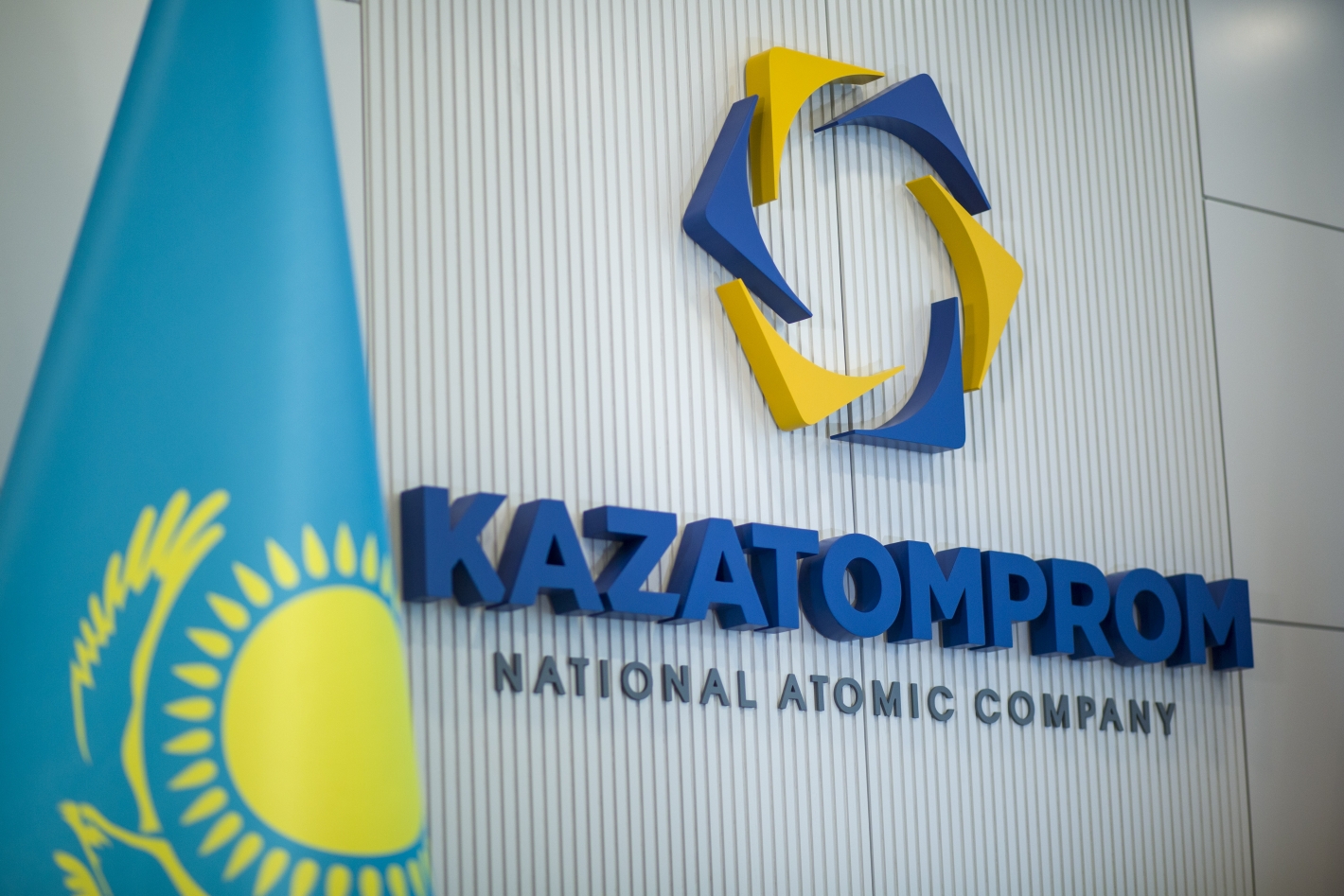
    Friday, 22 August 2025 – Kazakhstan’s national atomic company, Kazatomprom, the world’s largest producer of natural uranium, has announced a significant reduction in its planned production for 2026. The company will lower its output by approximately 10% from previous targets, stating that current market conditions do not provide sufficient incentive to return to its 100% production levels at this time.

    The decision was announced alongside the company’s consolidated financial results for the first half of 2025. CEO Meirzhan Yussupov stated that while the long-term price for uranium has remained stable at around US$80 per pound, proving that “fundamentals remain strong,” the company does not view the current supply-demand balance and existing uncovered demand as sufficient to justify a return to full capacity.

    The reduction will decrease Kazatomprom’s nominal production level (on a 100% basis) from 32,777 tU (around 85 million pounds U₃O₈) to 29,697 tU. This cut, which amounts to roughly 8 million pounds, is expected to reduce the world’s primary uranium supply by about 5%. The majority of this production adjustment is attributed to the JV Budenovskoye project.

    Kazatomprom’s announcement comes despite a positive first half of 2025, which saw a 13% year-on-year increase in production to 12,242 tU (on a 100% basis). The company’s whole-year production guidance for 2025 remains unchanged. Kazatomprom also confirmed that its sulphuric acid supplies, a key reagent for its in-situ leach mining process, are estimated to be stable for 2026.

    In his statement, Yussupov also highlighted the potential for a new domestic market for the company’s output, pointing to Kazakhstan’s plans to build nuclear power plants. With each plant requiring about 400 tonnes of uranium annually, this could translate to a cumulative demand of 72,000 tonnes over the lifetime of three plants, potentially creating a new allocation for a portion of the company’s production.

  • Kyrgyzaltyn Strengthens Ties with Tajik Mining Giants Through Strategic Co-Op Agreements

    Kyrgyzaltyn Strengthens Ties with Tajik Mining Giants Through Strategic Co-Op Agreements

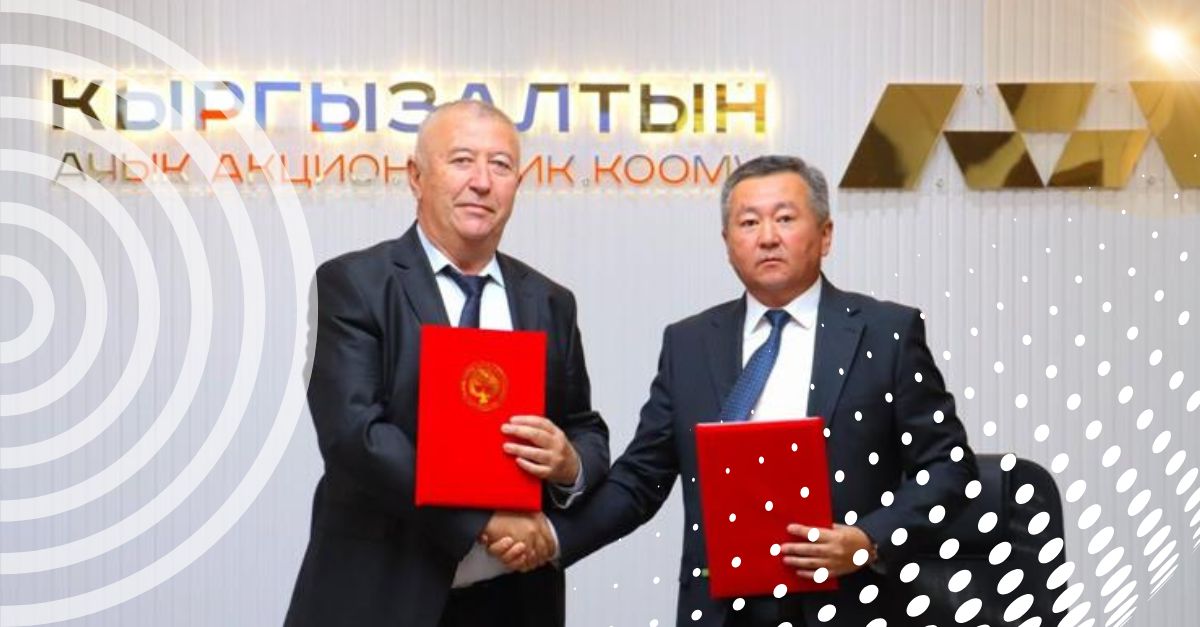
    Kyrgyzaltyn, Kyrgyzstan’s state-owned mining company, has entered on 27 August 2025 into significant co-operation agreements with three of Tajikistan’s premier mining firms: Talco Gold, Tajik-China Mining Company, and Pakrut. The memorandums of understanding were officially signed during a high-level visit by Tajikistan’s First Deputy Prime Minister, Hokim Kholikzoda, and a large business delegation.

    The agreements, which were announced by Kyrgyzaltyn, are intended to bolster the development of the mining sector across both nations. The focus will be on the implementation of advanced technologies, improving production efficiency, and creating new job opportunities.

    In a further sign of burgeoning economic ties, a separate memorandum was also signed between the Tajik delegation and the wheel processing and restoration plant belonging to Kumtor Gold Company, a subsidiary of Kyrgyzaltyn.

    As part of their visit, the Tajik delegation toured several key Kyrgyz enterprises, including the wheel processing and restoration factory and Kyrgyzaltyn’s main facilities.

    Kyrgyzaltyn, which holds a crucial position as the sole domestic producer of refined gold and gold bars in Kyrgyzstan, stated that the newly signed agreements will lay the groundwork for strengthened good-neighbourly relations and foster long-term, mutually beneficial collaboration between the two countries.

  • Kazakhstan’s RG Gold Expands Operations, Safety Standards, and Workforce Development Amid Booming Mining Sector

    Kazakhstan’s RG Gold Expands Operations, Safety Standards, and Workforce Development Amid Booming Mining Sector

    Kazakhstan’s mining industry is thriving as rising gold and commodity prices drive exploration, investment, and legislative reform. Among the country’s leading players, RG Gold is charting a growth path that blends operational expansion, safety leadership, and employee development while preparing for its transition into a global gold operator.

    Deputy CEO and CFO Marat Shaimardanov said recent government reforms, including a new royalty-based tax code and deregulation of mining laws, have spurred fresh activity. “There’s a lot of deregulation happening for the mining industry, which is reflected by its current increased activity,” he noted.

    Operational Growth and Heap Leach Revival
    RG Gold has restarted its heap leach operations after exploration revealed remaining potential, buoyed by higher gold prices. The site is expected to run for another five years. Meanwhile, the company’s carbon-in-pulp (CIP) plant, built in 2022, has been upgraded from 5 Mtpa to a 7.2 Mtpa run rate, with plans to stabilize at 7+ Mtpa by 2026. Exploration has also expanded resources to more than 10 million ounces, with reserves rising from 450,000 oz to 4 million oz in less than eight years.

    The firm is expanding its tailings storage facility, identifying new nearby deposits, and improving environmental compliance through a new oxygen plant. It is also preparing to transition from outsourced mining to owner-operated fleets to boost efficiency and safety.

    Safety and Cultural Transformation
    Shaimardanov stressed that safety remains a cornerstone of RG Gold’s strategy. The company has tripled its safety department headcount and changed its reporting culture to encourage incident disclosure without penalizing staff KPIs. “Even our CEO was once stopped at site for not wearing the correct gloves,” he said, underlining a culture where safety applies to all, from top management to contractors.

    Local and Workforce Engagement
    RG Gold prioritizes local contractors for both essential and non-essential services, strengthening ties with surrounding villages and SMEs while sourcing international partners only for specialized needs such as SGS lab testing.

    Employee development has also advanced, with personal development plans, international training programs, and partnerships with universities. The company supports professional associations, including a geotechnical engineering network now recognized internationally. Staff turnover has dropped sharply from 19% to 5% in just two years.

    Looking Ahead
    With construction projects delivered on schedule and ore reserves expanding, RG Gold is now focused on sustaining operational quality, ensuring smooth shareholder transitions, and pursuing new gold tenders. “It’s really about sustaining the business, raising the bar in operational quality, retaining employees, and taking our expansion to the next level,” Shaimardanov said.

  • Kazakhstan’s Mining Industry Grows 8.5% in First Seven Months of 2025

    Kazakhstan’s Mining Industry Grows 8.5% in First Seven Months of 2025

    Kazakhstan’s mining industry recorded an 8.5% increase in output in January–July 2025, according to figures presented at a government press conference on the country’s socio-economic performance.

    The official website of the Prime Minister noted strong results from companies extracting hydrocarbon raw materials: oil production rose by 11.9%, while gas output increased by 14.3%. Coal enterprises also posted gains, with fuel production up 10.6% despite ongoing logistical challenges.

    The manufacturing sector also saw positive momentum, expanding by 6.1%. Minister of National Economy Serik Zhumangarin highlighted ongoing efforts to diversify the economy and deepen raw material processing. Over the reporting period, machinery production rose by 14%, oil refining by 8.6%, and chemical manufacturing by 6%.

    Investments in fixed capital increased by 16.1% overall, with particularly strong growth of 38.7% in manufacturing.

  • CATL Mine Closure Sparks Lithium Rally as China Tightens Mining Rules — UK Miners Poised to Gain

    CATL Mine Closure Sparks Lithium Rally as China Tightens Mining Rules — UK Miners Poised to Gain

    Lithium prices and mining stocks surged Monday after Contemporary Amperex Technology Co. Ltd (CATL), the world’s largest EV battery maker, unexpectedly shut down one of its biggest lithium mines in China’s Jiangxi province due to an expired permit.

    The Jianxiawo mine, a major producer churning out roughly 9,000 tonnes of lithium carbonate equivalent per month, lies in China’s Yichun lithium hub. Its temporary closure pushed spot lithium prices up nearly 4% in a day and over 15% in the past month. Shares in global lithium giants Albemarle and Sociedad Química y Minera (SQM) jumped 11% and 9% respectively, while developers Lithium Americas and Sigma Lithium saw even sharper gains.

    The shutdown reflects a broader policy shift under China’s new Mineral Resources Law, in effect since July 1, aimed at halting unregulated expansion and curbing destructive over-competition. Authorities have ordered other Yichun mines to resubmit resource reports by September or risk closure.

    While analysts at Citi and China Futures Co. warn the market remains in structural surplus through 2025, Beijing’s clampdown signals an end to the era of cheap, rapid, and loosely regulated Chinese supply growth. That could benefit miners outside China, especially those in politically stable regions with advanced projects.

    UK-listed lithium companies are among the potential winners. Rio Tinto (LSE: RIO) is investing $2.5 billion in its Rincon brine project in Argentina, aiming for 60,000 tonnes annual output by 2028. Atlantic Lithium’s Ewoyaa project in Ghana is on track for first production in 2025–26. Kodal Minerals (AIM: KOD) is targeting first output from its Bougouni project in Mali later this year, backed by Chinese funding. European Metals Holdings (AIM: EMH) is advancing the Cinovec project in the Czech Republic, while Savannah Resources (AIM: SAV) is progressing the Barroso project in Portugal — both with potential production starts by 2027–28.

    With EV demand expected to triple lithium consumption by 2035, and long-term supply potentially falling short by as much as 40% without major investment, the tightening Chinese regulatory environment could accelerate opportunities for alternative suppliers.

  • Uzbekistan’s Navoi Mining Targets $20 Billion Valuation in Potential London–Tashkent IPO

    Uzbekistan’s Navoi Mining Targets $20 Billion Valuation in Potential London–Tashkent IPO

    Navoi Mining & Metallurgical Co. (NMMC), one of the world’s largest gold producers, has selected Citigroup, Morgan Stanley, and JPMorgan Chase to lead a possible dual listing in London and Tashkent, according to sources familiar with the matter. The Uzbekistan state-backed miner is eyeing a valuation of around $20 billion, including debt, buoyed by a near-30% surge in gold prices this year.

    The company is considering issuing London-listed global depositary receipts alongside a domestic listing in line with an April presidential decree requiring state-backed firms to go public both locally and internationally. NMMC is also working with Rothschild & Co. as an IPO adviser.

    The planned share sale, which could involve 10% to 15% of the government’s stake, forms part of Uzbekistan’s broader privatization drive. The same decree also calls for an IPO of 25% of the $1.7 billion national investment fund, UzNIF. Officials are still weighing which offering to launch first.

    Gold prices have roughly doubled over the past three years, hitting a record above $3,500 an ounce in April, driven by central bank purchases, investor demand, and heightened geopolitical risk. The rally has lifted mining stocks globally, with Newmont Corp. and Barrick Gold Corp. among those benefiting.

    NMMC, the world’s fourth-largest gold miner, produced 3.1 million ounces of gold last year, generating $7.4 billion in revenue and $4 billion in operating profit, according to its annual report.

    For London, the IPO could provide a much-needed boost after the exchange suffered its weakest first half for new listings in nearly 30 years. The city has long been a preferred destination for mining and emerging market listings.

    No final decision has been made on the offering’s timing or structure, and representatives for NMMC, the banks, and Rothschild declined to comment.

  • Uzbek Technological Metals Plant and Germany’s LBBW Forge Strategic Financial Partnership

    Uzbek Technological Metals Plant and Germany’s LBBW Forge Strategic Financial Partnership

    In a significant step towards strengthening international industrial ties, Uzbekistan’s Technological Metals Plant (TMK) has held high-level talks with Landesbank Baden-Württemberg (LBBW), one of Germany’s leading financial institutions. The meeting focused on boosting bilateral investment cooperation, exploring advanced financial tools for large-scale industrial projects, and supporting the acquisition of cutting-edge European equipment.

    Aziz Inomkhodjaev, head of LBBW’s representative office in Uzbekistan, underscored the bank’s strong interest in forging a long-term partnership with TMK. He emphasized LBBW’s readiness to provide sustained financial support for Uzbekistan’s industrial modernization, especially in the critical minerals and high-tech manufacturing sectors.

    As a result of the discussions, both sides agreed to establish a framework for systematic collaboration, beginning with the phased rollout of priority industrial projects. The partnership with LBBW is expected to significantly enhance TMK’s ability to access European technologies and investment resources, further integrating Uzbekistan into global critical minerals supply chains.

  • Verny Capital Signs Agreement to Sell RG Gold

    Verny Capital Signs Agreement to Sell RG Gold

    Since 2018, Verny Capital’s partner in the project has been the American investment company Resource Capital Funds (RCF). Together, they have increased production capacity and introduced modern technologies. Over the past ten years, RG Gold’s resource base has tripled, reaching 7.6 million ounces in accordance with the international JORC standard.

    The new owner of RG Gold will be Zijin Gold International, a subsidiary of Zijin Mining Group, one of the world’s largest mining corporations. The company operates more than 30 projects in 17 countries and has a market capitalization of approximately $70 billion. In Kazakhstan, Zijin plans to develop mining with a focus on environmental sustainability and innovation, as well as job creation.

    Leading international investment banks JP Morgan Securities plc and BMO Capital Markets, along with the law firm Herbert Smith Freehills, acted as advisors to Verny Capital and RCF in the transaction.

    “We managed to implement a unique project, transforming a small production facility into the country’s leading gold mining enterprise. Now, ten years later, we plan to transfer it to a major international player with an impressive track record in managing mining assets. This reflects Verny Capital’s standard business model—developing an asset and selling it under optimal market conditions. We are now looking for new, potentially successful investment opportunities. We see strong prospects for developing successful projects in Kazakhstan and would like to be part of them,” said Aidan Akanov, CEO of the Verny Capital Group.

    In 2022, under Verny Capital’s management, RG Gold launched a $424 million gold recovery plant, enabling it to significantly increase production volumes.

    “Investing in RG Gold was our first project in Kazakhstan, and we are proud to have contributed to the successful growth of one of the country’s leading enterprises. We are sincerely grateful to our strategic partner, Verny Capital Group, with whom we have realized this success story. We also welcome the entry of such a major international company as Zijin Mining Group into the Kazakh market, as this confirms Kazakhstan’s long-term investment appeal as a reliable partner for businesses and investors,” said Martin Valdez, Partner at RCF.

    Over the course of its operations, the company has become one of the largest taxpayers in the country, having contributed more than 160 billion tenge to the national budget and created approximately 1,200 jobs. It also implements initiatives to support local communities and develop regional infrastructure.

  • Kazakhstan Eyes Industrial Revolution Through Waste Mineral Reprocessing

    Kazakhstan Eyes Industrial Revolution Through Waste Mineral Reprocessing

    Kazakhstan is sitting on more than 55 billion tonnes of technogenic mineral formations (TMFs) — the result of decades of intensive mining and mineral processing. But while this massive reserve of industrial waste is growing by 300–700 million tonnes annually, only 11% is currently being recycled, far behind the 70–80% reprocessing rate in developed countries.

    TMFs — tailings, slags, ashes, and waste rock — often contain valuable residual metals such as copper, zinc, and rare earth elements. As traditional ore reserves diminish, these “wastes” present a significant opportunity to recover critical resources and reduce environmental harm.

    President Kassym-Jomart Tokayev has highlighted the importance of moving from accumulation to utilization of TMFs. Reprocessing could not only ease ecological pressure, but also fuel industrialization, support single-industry towns, create jobs, and help diversify the national economy.

    Experts warn, however, that current legislation lacks clarity. TMFs are simultaneously classified as both waste and subsoil resources, meaning they are taxed like raw mineral output but lack a clear legal framework for extraction and reuse. Calls are growing for reforms to reclassify certain TMFs as secondary resources under Kazakhstan’s Environmental Code.

    The Ministry of Industry and Construction has begun an inventory of TMFs and is working on a roadmap to support rare and rare earth metal sectors. Officials are considering simplified licenses for TMF processing and legal changes to allow removal of TMFs from residential areas.

    At the same time, industrial players are already investing in practical solutions. Qarmet is advancing 10 reprocessing projects worth over $137 million, while ERG Recycling processes over 1 million tonnes of TMFs annually, developing new materials for construction and metallurgy.

    Experts emphasize that unlocking the full potential of TMFs requires tax incentives, green investment, and robust science-business-government coordination. Kazakhstan’s new Tax Code includes a reduced mineral extraction tax rate (0.1 coefficient) for materials recovered from TMFs, signaling progress.

    Ultimately, stakeholders agree that TMF reprocessing must become core industrial policy. “It’s not just a technological issue — it’s a matter of national importance,” said Gulnara Bizhanova of Atameken. With soaring global demand for metals and a drive toward green energy, Kazakhstan could evolve from a raw material exporter into a producer of high-tech, value-added goods.

  • Uzbekistan Boosts Uranium and Rare Material Exports with Greener Mining Push

    Uzbekistan Boosts Uranium and Rare Material Exports with Greener Mining Push

    Uzbekistan is accelerating its efforts to become a key player in the global energy transition supply chain by expanding exports of uranium, copper, and rare earth elements. The Central Asian country is adopting cleaner mining methods and forging international partnerships to position itself as a reliable and responsible supplier of critical raw materials.

    A standout initiative is underway in the Navoi region, where a French-Uzbek-Japanese joint venture — involving France’s Orano and Uzbekistan’s state-owned Navoiyuran — is deploying in-situ leaching. This method offers an environmentally friendlier alternative to traditional open-pit mining and is expected to yield 10,000 tonnes of uranium.

    The move comes as global demand soars for strategic materials essential to renewable energy, electric vehicles, and other green technologies. Uzbek officials are aligning their practices with OECD standards and international environmental benchmarks to boost transparency and win the confidence of Western investors.

    By integrating greener extraction techniques and international oversight, Uzbekistan is not only increasing its export potential but also improving its standing in the global raw materials market. The country is actively seeking to deepen ties with European partners and attract foreign capital to scale up sustainable mining operations.