Tag: mining

  • Sweden Lifts Uranium Mining Ban, Opening Path to Exploration from January

    Sweden Lifts Uranium Mining Ban, Opening Path to Exploration from January

    Sweden’s parliament, the Riksdag, has voted to repeal a 2018 moratorium on uranium mining, reopening the country to exploration and production beginning January 1. The decision restores uranium’s status under the Minerals Act, enabling companies to apply for exploration and mining concessions after a seven-year freeze.

    The move positions Sweden — which holds an estimated 27% of Europe’s known uranium resources, according to the Geological Survey of Sweden — to play a larger role in Europe’s energy transition and nuclear fuel supply security.

    “It is very positive that the Riksdag is now backing the government’s proposal,” said Maria Sunér, CEO of the Swedish Mining Association (Svemin). “There are no factual reasons for uranium to be treated differently than other metals, and it is therefore entirely reasonable that we now have the opportunity to utilize the resources found in our bedrock efficiently.”

    A municipal veto on handling small quantities of uranium was also narrowed, reducing local barriers to development.


    Policy Shift and Strategic Context

    The repeal caps a two-year legislative push led by Sweden’s Climate and Enterprise Ministry. The government formally presented the bill in August 2025, describing uranium as strategic for both nuclear energy expansion and raw-materials security.

    Sweden operates six nuclear reactors, supplying roughly one-third of the nation’s electricity. Plans are underway to build several new reactors over the next decade to meet surging power demand.

    The change also aligns with broader EU supply-chain resilience goals, as the bloc seeks to reduce its dependence on imported uranium, particularly from Russia.


    Exploration Ready to Resume

    Several companies are preparing to act immediately.

    Australian explorer Aura Energy (ASX: AEE; AIM: AURA), which controls the Häggån polymetallic deposit in Jämtland, has already submitted a 25-year exploitation permit to Sweden’s Mining Inspectorate. Häggån’s JORC resource includes roughly 800 million lb of uranium oxide (U₃O₈) within a 2.55-billion-tonne vanadium deposit.

    “This vote means that from now on uranium has the potential to be an important contributor to Sweden’s economy and energy security and to support the region’s intention to triple nuclear power,” said Aura executive chairman Phil Mitchell.

    Canada’s District Metals (TSXV: DMX) also hailed the vote as a “historic step.” The company plans fieldwork in 2026 at its Viken project, including geophysics, drilling, and economic studies. Viken hosts an indicated resource of 176 million lb U₃O₈ and an inferred resource of 1.54 billion lb U₃O₈, alongside vanadium and molybdenum.


    Market Response

    Despite the legislative breakthrough, uranium developers saw modest share pullbacks:

    • Aura Energy fell 7% to A$0.20, trimming its 12-month gain to 46% (market cap A$188 million / $122 million).

    • District Metals slipped 6% to C$1.37, giving it a valuation of C$228 million ($162 million), though its stock has quadrupled in the past year.


    Next Steps

    A separate proposal is now under consultation until December 3 to redefine uranium mining so it is no longer legally classified as a nuclear installation. If adopted, that change would take effect on July 1, 2026, further simplifying the permitting process.

  • U.S. and Kazakhstan Forge Joint Venture to Secure Global Tungsten Supply

    U.S. and Kazakhstan Forge Joint Venture to Secure Global Tungsten Supply

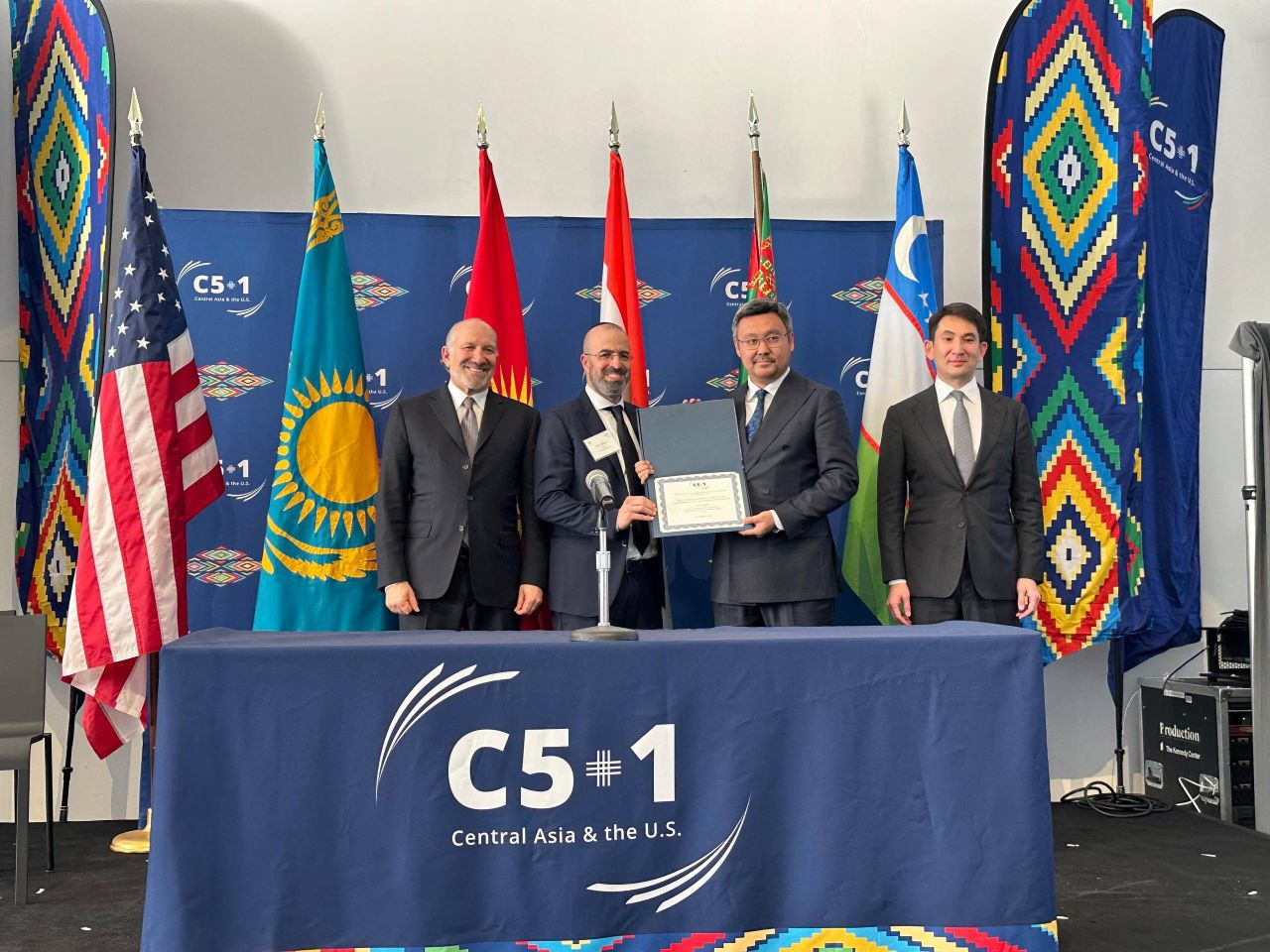
    Following the announcement of the joint venture between US-based Cove Capital LLC and Kazakhstan’s National Mining Company, JSC Tau-Ken Samruk, further details have emerged regarding the development timeline and scale of the Northern Katpar and Upper Kairakty tungsten projects.

    Cove Kaz Capital Group LLC (“Cove Kaz”), a portfolio company of U.S.-based Cove Capital LLC, will hold a 70 per cent interest, with Tau-Ken Samruk retaining 30 per cent ownership of Severniy Katpar LLP, which owns the Northern Katpar and Upper Kairakty tungsten projects.

    Cove Kaz will oversee marketing of 100 per cent of project output and has entered into a Letter of Intent with the International Trade Administration at the U.S. Department of Commerce to prioritise supply for U.S. government and commercial needs.

    The announcement was made in Washington, D.C., during the C5+1 Leaders’ Summit by U.S. President Donald J. Trump and Kazakhstan President Kassym-Jomart Tokayev.

    Total development costs for the Northern Katpar and Upper Kairakty projects are estimated at USD $1.1 billion. The Export-Import Bank of the United States has issued a Letter of Interest for USD $900 million in financing, complemented by a similar commitment from the U.S. International Development Finance Corporation.

    Cove Kaz’s project team will be led by Dominic Heaton, who previously oversaw development of the Nui Phao integrated tungsten mine and refinery in Vietnam – the world’s largest tungsten operation outside China. Preparatory work has already commenced to support a Definitive Feasibility Study for Northern Katpar, including the establishment of downstream refining capacity in Kazakhstan to produce ammonium paratungstate (APT) and other tungsten compounds.

    Pini Althaus, Chief Executive Officer of Cove Capital and Cove Kaz Capital, expressed gratitude for U.S. and Kazakh government support:

    “On behalf of Cove Capital and Cove Kaz, I wish to thank President Donald J. Trump, Secretary of Commerce Howard Lutnick, and the U.S. Trade Advocacy Center for their exceptional engagement. Their efforts have aligned financing, offtake pathways, and policy support to deliver a secure, allied tungsten supply for America’s industrial and defence needs.

    “I also wish to thank President Kassym-Jomart Tokayev for his leadership and partnership. This collaboration is a win for both nations—strengthening U.S. supply chains while fostering investment and long-term prosperity in Kazakhstan.”

    Tungsten – A Critical Industrial and Defence Mineral

    Tungsten is ranked by the U.S. Defense Logistics Agency as a “material of interest” and by the European Union as the raw material of highest economic importance due to its unique physical properties: the highest tensile strength at high temperatures, the highest melting point of any metal, and exceptional corrosion resistance.

    Its density and durability make tungsten indispensable in high-performance cutting and drilling tools, aerospace alloys, semiconductor contacts, and radiation shielding. In defence applications, tungsten is used in armour-piercing munitions, missile components, aircraft ballast, and other high-stress environments.

    Currently, China controls over 80 per cent of global tungsten production and processing. In February 2025, China imposed new export restrictions on tungsten and tungsten-containing products to the United States.

    Severniy Katpar LLP

    Severniy Katpar LLP holds licences for two projects—Northern Katpar and Upper Kairakty—located approximately 30 kilometres apart in the established Karaganda mining district of central Kazakhstan, less than 160 kilometres south of the city of Karaganda.

    Feasibility studies completed in April 2023 report total JORC-compliant mineral resources of 1.4 million tonnes of tungsten trioxide (WO₃), accounting for around 70 per cent of Kazakhstan’s total tungsten resources. For comparison, the U.S. Geological Survey estimates China’s reserves at 2.4 million tonnes.

    Combined production from both projects is expected to reach 12,000 metric tonnes per annum (mtpa) of tungsten trioxide—approximately 15 per cent of current global output.

    Cove Capital’s Broader Commitment in Kazakhstan

    Cove Capital’s portfolio company, Kaz Resources LLC, became in 2023 the first U.S. entity to receive critical minerals and rare earth concessions in Kazakhstan. These include licences for 13 minerals such as lithium, tantalum, beryllium, niobium, and rare earth elements.

    In 2024, Cove Capital and Tau-Ken Samruk formalised a joint venture for exploration of rare earths at the Akbulak project in the Kostanay region, with Cove holding 75 per cent and “Qazgeology” JSC 25 per cent. Cove is fully financing exploration activities until reserves are booked.

    About Cove Capital LLC

    Founded in 2015, Cove Capital is a mining-focused investment and development firm headquartered in New York and Melbourne. Since 2018, the company has focused on critical minerals projects that enhance U.S. and allied supply chains. Led by CEO Pini Althaus, Cove Capital brings extensive expertise across exploration, mining, processing, and offtake structuring.

    About Tau-Ken Samruk

    Tau-Ken Samruk, Kazakhstan’s national mining company, manages the sustainable development of the nation’s mineral wealth. Through partnerships with international investors, it aims to strengthen Kazakhstan’s mining sector and support the country’s long-term economic growth.
  • Sweden’s Parliament Lifts Uranium Mining Ban Amid Narrow Vote and Environmental Concerns

    Sweden’s Parliament Lifts Uranium Mining Ban Amid Narrow Vote and Environmental Concerns

    The Swedish Parliament (Riksdag) has narrowly voted to lift the national ban on uranium mining, reopening the door to domestic extraction of the nuclear fuel for the first time since 2018.

    The decision passed by just one vote, with support from the government coalition and the Sweden Democrats, while the opposition — including the Green Party and Social Democrats — strongly opposed the measure.

    Supporters of the move argue that uranium mining is essential for Sweden’s long-term energy stability as the country expands its nuclear power capacity. Critics, however, warn that the decision poses significant environmental and social risks, particularly for rural municipalities with uranium-rich deposits.

    “This is a step backwards for environmental protection and public safety,” said Amanda Lind, a Green Party representative, sharply criticising the government’s decision.


    Key Changes and Next Steps

    Under the new legislation, mines with small uranium reserves will no longer be subject to strict permit requirements or municipal veto rights, which had previously allowed local authorities to block mining projects.
    This effectively simplifies the approval process and allows uranium to be treated as a secondary raw material in broader mining operations.

    The legal changes will take effect on January 1, with further reforms planned for mid-2026 that could fully abolish municipal veto powers and reclassify uranium extraction from a “nuclear instrument” to a “nuclear activity,” reducing procedural delays for industry.


    Local Concerns

    The decision has sparked strong reactions in uranium-rich regions such as Falköping, Östersund, and Vilhelmina, where local leaders and residents fear potential impacts on water quality, farmland, livestock, and rural landscapes.

    “We risk losing public trust if local communities feel overruled,” said one municipal council member quoted in Swedish media.


    Nuclear Expansion Context

    Sweden currently operates six nuclear reactors and plans to build additional ones in the next decade to meet rising electricity demand and reduce dependence on fossil fuels.

    The previous uranium mining ban, introduced in 2018 by the Social Democratic government, aimed to limit environmental risks and reduce nuclear proliferation concerns.

    However, following Russia’s invasion of Ukraine in 2022, Sweden halted uranium imports from Russia, which previously supplied state-owned utility Vattenfall AB. The government now sees domestic uranium extraction as a way to cut import costs and secure a stable fuel supply for its expanding nuclear fleet.


    The Bigger Picture

    The debate highlights Sweden’s broader energy dilemma — how to balance green transition goals, energy independence, and public environmental concerns.

    While the repeal marks a significant policy shift, it also deepens divisions between advocates of energy security and defenders of environmental safeguards.

  • ‘Europe’s Lithium Paradox’: Documentary Highlights Europe’s Struggle Between Green Ambitions and Mining Reality

    ‘Europe’s Lithium Paradox’: Documentary Highlights Europe’s Struggle Between Green Ambitions and Mining Reality

    Europe is facing a “critical crossroads” in its green transition, warns Dr. Peter Tom Jones, director of the KU Leuven Institute for Sustainable Metals and Minerals, whose new documentary Europe’s Lithium Paradox explores the continent’s mounting dilemma over lithium extraction.

    The one-hour film focuses on two key European lithium projects — in Portugal and Serbia — both stalled amid fierce public opposition and political hesitation. As Europe pushes to electrify transport and expand renewable energy, it finds itself torn between the need for raw materials and growing citizen resistance to mining.

    “You can’t recycle your way out of a fossil fuel economy,” Jones says. “You have to mine first — we simply don’t have enough scrap in Europe, and we won’t until at least 2035. That leaves us with a ten-year gap.”

    Europe’s Feedstock Crisis

    Jones argues that Europe’s transition to clean energy is being undermined by a lack of “feedstock” — the raw materials required for batteries, solar panels, and electric vehicles. While recycling giants like Umicore have proven high-level battery recovery is possible, the continent’s reliance on imported lithium remains a major vulnerability.

    He estimates that lithium mined in Serbia alone could power at least one million electric vehicles, potentially creating a “new ecosystem” including a refinery, battery recycling hub, and full supply chain infrastructure.

    “With ten or more industrial-scale mining sites — compared to just four today, one of which is idle — Europe could achieve self-sufficiency in lithium,” he insists. “We need to act now to avoid sleepwalking into the abyss.”

    A “Minerals Cold War”

    In the film, Jones warns that the geopolitical race for critical minerals is intensifying.

    “China and the U.S. aren’t playing by the rules — they’re making their own,” he says. “Donald Trump is pushing a capitalist model with minimum price floors for lithium, while China is restricting exports of technology metals. Europe is a bystander in this minerals cold war.”

    He argues that Europe’s regulatory delays, public protests, and political indecision risk leaving it strategically dependent on foreign supply chains — with devastating consequences for its industrial competitiveness.

    Between Industry and Activism

    Europe’s Lithium Paradox aims to spark informed debate, but its reception has been polarized. In both Serbia and Portugal, local communities refused to speak on camera, accusing the filmmakers of promoting mining interests. Ironically, mining companies also distanced themselves from the project, with some reportedly banning employees from watching it for being “too critical.”

    Jones acknowledges the tension but maintains that the documentary is “grounded in science, not politics.”

    “We’re trying to balance innovation with real-world concerns. I’ve heard the phrase ‘you can’t fight feelings with facts’ — but we can at least try to change the narrative,” he says.

    The film is currently touring European universities, R&D institutes, and industry conferences, and is also available on Amazon Prime.

    “Europe must move beyond entrenched positions and forge a united front,” Jones concludes. “This is not about taking sides — it’s about survival.”

  • Montenegro Hires U.S. and Serbian Law Firms to Defend Against Tara Resources’ Mining Arbitration

    Montenegro Hires U.S. and Serbian Law Firms to Defend Against Tara Resources’ Mining Arbitration

    Montenegro has appointed U.S. law firm Hughes Hubbard & Reed and Serbian firm Nikčević Kapor to represent the state in an arbitration case filed by Swiss company Tara Resources over the termination of its mining concession at the former Brskovo mine, the country’s Ministry of Energy and Mining announced Wednesday.

    The ministry said the firms were selected after submitting the top bid in a public tender earlier this year, without revealing details about the other bidders.

    In July 2025, Tara Resources filed a request with the International Centre for Settlement of Investment Disputes (ICSID) in Washington D.C., following Montenegro’s unilateral termination of its concession contract for the Brskovo mining area in May 2024. The government said the company had failed to correct irregularities in its feasibility study, which violated national legislation, before the set deadline.

    The Brskovo mine, located near the northeastern town of Mojkovac, has a long history of exploration. Montenegro originally granted a 25-year lease to Australia’s Sultan Corporation in 2010, which reported a 9.2 million-tonne inferred resource the following year. Tara Resources, based in Switzerland, took over the project in 2018.

    The company claims its 2019 preliminary economic assessment and 2021 pre-feasibility study confirmed Brskovo’s strong economic potential, estimating construction costs at around €180 million for two open pits, a processing plant, and a waste facility. Once operational, the mine was projected to produce 45,000 tonnes of zinc, 13,000 tonnes of lead, 3,000 tonnes of copper, and about 1 million ounces of silver annually, creating 550 direct and 200 indirect jobs.

    However, the project has faced persistent environmental opposition from local residents and non-governmental organizations in Mojkovac, who fear the mine could threaten ecosystems and public health in the region.

    Montenegro’s government maintains that the termination was lawful and in line with national environmental and mining regulations. The arbitration proceedings in Washington could become one of the country’s most closely watched investment disputes, potentially setting a precedent for future resource development projects in the Balkans.

  • Poland Approves Bill to Support Coal Phaseout and Protect Mining Communities

    Poland Approves Bill to Support Coal Phaseout and Protect Mining Communities

    Poland’s government has approved a new bill to accelerate the country’s transition away from coal, aiming to make mine closures easier, provide financial support to affected workers, and promote the redevelopment of mining regions.

    “This is a specific response to the challenges of the energy transition and provides real support for thousands of miners,” said Energy Minister Miłosz Motyka. “We want the process of change to be carried out responsibly, with respect for local communities.”

    Under the proposed legislation, which still requires approval from parliament and President Karol Nawrocki, mining companies would be allowed to decommission mines independently with state financial assistance. They could also transfer decommissioned assets to local authorities or state entities to be repurposed for investment, revitalization, or infrastructure projects.

    The bill introduces a severance package of 170,000 zloty (€40,000) for miners losing their jobs, along with measures to ensure that state subsidies for reducing production are not misused to cover operational expenses.

    Minister Motyka described the initiative as paving “the way for a just transition in mining regions,” fostering investment, job creation, and economic renewal. The government maintains a parliamentary majority, but the bill could face a presidential veto — President Nawrocki, who previously called coal Poland’s “black gold,” has pledged to preserve domestic coal production.

    Poland remains Europe’s most coal-dependent country, with coal accounting for 57% of its electricity generation in 2024. The mining sector, however, is under growing economic strain: domestic coal extraction is among the most expensive in the world, and its high emissions increase costs under the EU Emissions Trading System (ETS).

    Recent data from Eurostat show that Polish households pay the third-highest electricity prices in the EU when adjusted for purchasing power. Meanwhile, state subsidies to the coal sector are expected to total 9 billion zloty this year and 5.5 billion zloty in 2026, highlighting the industry’s dependence on government support.

    According to the energy ministry’s impact assessment, the total cost of closing hard coal mines over the next decade will reach 11.3 billion zloty (€2.6 billion).

    Financial pressures are already mounting for major producers. Jastrzębska Spółka Węglowa (JSW), the EU’s largest coking coal producer, reported a 2 billion zloty loss in the first half of 2025 following a record 7.3 billion zloty loss in 2024, raising questions about its long-term viability and potential need for further state aid.

    Some state-owned utilities are also accelerating the shift away from coal. Last week, a subsidiary of PGE, Poland’s largest electricity provider, reached an agreement with trade unions to close one of its coal-fired power plants, offering a €59 million compensation package to affected workers.

  • Eramet Cuts 2025 Capital Spending and Seeks Lender Waiver Amid Falling Sales and Rising Debt

    Eramet Cuts 2025 Capital Spending and Seeks Lender Waiver Amid Falling Sales and Rising Debt

    French mining and metals group Eramet has lowered its capital expenditure forecast for 2025 and announced plans to unveil additional measures in December aimed at stabilizing its finances in the face of weak metal prices, operational challenges, and mounting debt.

    In a third-quarter sales statement released Thursday, the company said it now expects to spend €400 million–€425 million ($466 million–$496 million) this year, down from the previous range of €400 million–€450 million. The revision comes as part of a broader performance review launched in June by new CEO Paulo Castellari, focused on preserving liquidity and strengthening the balance sheet.

    Eramet also disclosed that it has requested a waiver from lenders to mitigate the risk of breaching its gearing covenant as of December 31, 2025. The group said more details about its cost-cutting and liquidity-improving actions will be presented in early December.

    Third-quarter sales dropped 10% year-on-year to €720 million, pressured by softer metal prices and logistics issues at its manganese operations in Gabon. Due to rail capacity constraints in the country, Eramet cut its 2025 target for transported manganese ore volumes to 6.1–6.3 million metric tons, down from 6.5–7.0 million tons previously — the second downward revision this year.

    The company maintained its 2025 production outlook for its Weda Bay nickel joint venture in Indonesia at 36–39 million wet metric tons, and for its new lithium project in Argentina, where it expects to produce 4,000–7,000 tons of lithium carbonate equivalent in 2025. Both figures were reduced earlier in July.

    Eramet, a key player in Europe’s critical minerals supply chain, has been under pressure from falling prices for nickel and manganese — metals vital to the green transition — as well as operational bottlenecks across its global portfolio. Castellari’s restructuring strategy is seen as pivotal to restoring confidence among investors and lenders as the group navigates an increasingly volatile commodities market.

  • World’s Deepest Marathon Takes Runners More Than a Kilometer Underground in Sweden

    World’s Deepest Marathon Takes Runners More Than a Kilometer Underground in Sweden

    In the pitch-black tunnels of Boliden’s Garpenberg zinc mine, over a kilometer below the surface of northern Sweden, 55 runners from 18 countries gathered to compete in one of the most extreme races ever attempted — the World’s Deepest Marathon.

    The course, carved through the humid, diesel-scented rock 180 kilometers northwest of Stockholm, spanned a 2-kilometer stretch of tunnel that participants ran back and forth 11 times to complete the full 42 kilometers. Among them were mining executives, Boliden employees, ultra-marathoners, and first-time racers.

    “You’d run to the end and then turn around — 11 times,” said Henrietta Newman, a consultant with the World Gold Council who took part in the event. “Other than our headlamps, it was complete darkness.”

    The marathon, organized by BecomingX, the International Council on Mining and Metals, and Boliden, is expected to enter the Guinness World Records as both the deepest marathon and the deepest underground marathon distance ever completed, pending verification. The event also had a charitable mission — raising over $1 million for the BecomingX Foundation, which supports education in Africa, and for dog welfare projects run by the Wild at Heart Foundation.

    Runners descended by elevator to 1,120 meters below sea level before being driven by truck into the tunnels. Despite being inside an active mine, organizers ensured safety: helmets were mandatory, though participants wore running shoes after the course was smoothed for the event. “I was worried about the hard hat,” Newman admitted, “but it was actually super light.”

    Conditions underground were challenging. The air was thick and humid, around 24°C, but also contained 30% more oxygen than at the surface — a small advantage against fatigue. “Coming down the incline, you’d get these occasional puffs of air, and it felt amazing,” Newman said.

    Though well-supported with hydration stations and logistics teams, the unique environment tested endurance. Even the top finisher completed the course about 50 minutes slower than his personal record.

    For many, however, the sense of camaraderie outweighed the discomfort. Newman described a heartwarming moment when a group of South African runners doubled back to accompany a first-time marathoner on her final lap. “It was just such a nice moment,” she said. “There were people from all walks of life, and everyone helped each other finish.”

  • Kiruna’s Shifting Ground: Swedish Mining Town Faces Painful Trade-Off in Europe’s Raw Materials Push

    Kiruna’s Shifting Ground: Swedish Mining Town Faces Painful Trade-Off in Europe’s Raw Materials Push

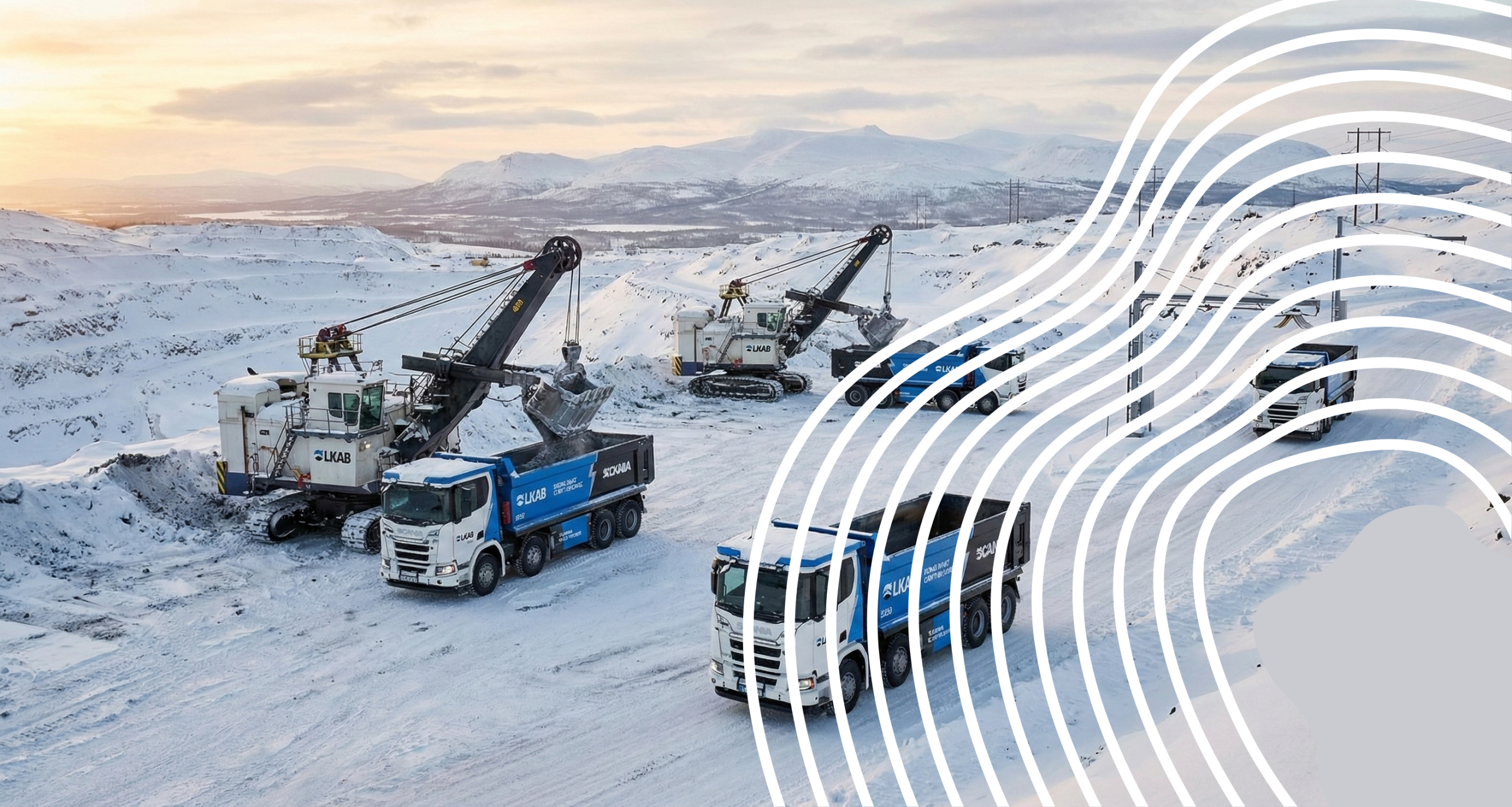
    In the far north of Sweden, the residents of Kiruna are once again being forced to pack up and move — this time, for the second or even third time. Tanja Mattila and her husband had just spent about $300,000 on a new home when a letter arrived from LKAB, Sweden’s state-owned mining company, informing them that their neighborhood would soon become unsafe due to ground movement from the expanding iron ore mine.

    “It was a shock,” said Mattila, a 54-year-old language teacher. “We planned to stay here until we retire.” She and thousands of others are caught in the tension between local life and Europe’s growing appetite for raw materials deemed essential to the green transition.

    Kiruna, which produces nearly 80% of Europe’s iron ore, is also home to one of the continent’s largest deposits of rare earth minerals — metals vital for electric vehicles, wind turbines, and smartphones. As the EU pushes to secure domestic supplies of critical resources and reduce reliance on China, the mining boom in Kiruna is accelerating. But so are the social costs.

    LKAB, seeking to boost production by 50% over the next decade, says its operations are vital for Europe’s energy independence. “If you want self-reliance, you need to mine,” EU Industry Commissioner Stéphane Séjourné said during a recent visit. Yet, for Kiruna’s 23,000 residents, that strategy means homes, schools, and shops are being demolished and rebuilt miles away from the original town center.

    Earlier this year, the relocation of Kiruna’s iconic wooden church — a nationally treasured monument — was broadcast live, hailed as a feat of engineering and cultural preservation. But only days later, residents learned that 6,000 more people would have to move. Local officials, blindsided by the announcement, described the mood as one of mourning.

    For some business owners, the uncertainty is overwhelming. Grocery store owner Fredrik Spett noticed his shop floor rising as the ground shifted beneath it. Across the road, hotelier Jan Grönberg is unsure whether he’ll receive enough compensation to rebuild. “It’s hard to find the motivation,” he said.

    LKAB insists that no one will be left behind and that all residents will be compensated. Still, critics argue that the company and government failed to adequately communicate the scale of the project or involve locals in planning. “It’s a matter of survival for Kiruna,” said Energy and Enterprise Minister Ebba Busch, “but also a matter of sovereignty for Sweden and Europe.”

    The town’s social democrat official, Mats Taaveniku, gestures at a model in the new town hall where a red ribbon marks the previous demolition line. The new one, he says, should be black — “for mourning.”

    While Kiruna symbolizes Europe’s push for “strategic autonomy” in critical minerals, it also raises difficult questions about who pays the price for the continent’s green transition. As excavators tear down the Ferrum Hotel and graffiti nearby asks, “Is this what happens to a town no one cares about?”, residents can’t help but wonder if Europe’s sovereignty is worth their sacrifice.

  • Tajikistan and South Korea to Create Joint Tungsten Supply Chain

    Tajikistan and South Korea to Create Joint Tungsten Supply Chain

    A memorandum of understanding (MoU) was signed in Dushanbe between Tajikistan’s Ministry of Industry and New Technologies and South Korean company GB Innovation (GBI) to establish a joint tungsten supply chain — a strategically important mineral for high-tech industries. The document provides for the joint development of the Maikhura tungsten deposit and the creation of a full production cycle, from raw material extraction to finished products. The signing took place during the Dushanbe Investment Forum, in a ceremony overseen by Tajik President Emomali Rahmon.

    Minister of Industry and New Technologies Sherali Kabir stated that the Maikhura project would become a model of mutually beneficial cooperation, promoting Tajikistan’s industrialization and strengthening economic ties with South Korea. Under the agreement, GB Innovation and the state-owned company TALCO plan to reach an annual output of 4,000 tons of tungsten concentrate within three to four years. The concentrate will be processed locally into tungsten oxide and tungsten carbide for use in domestic industries.

    Tungsten is a key component in high-tech sectors such as semiconductor production, defense, rechargeable batteries, automotive manufacturing, and aerospace. Establishing a stable tungsten supply chain is of strategic importance to South Korea, which aims to secure self-sufficiency in this critical mineral. The Maikhura mine stands out for its high tungsten content—1.0%, five times the global average of 0.2%. Combined with production from South Korea’s Uljin Ssangjeon mine, the total output will reach about 5,000 tons per year, nearly covering South Korea’s annual domestic demand of 3,400 tons.

    GB Innovation President Kim Young-woo emphasized the importance of stable supply chains for strategic minerals and expressed readiness to expand cooperation to other resources, including rare earth elements and lithium. Minister Kabir highlighted that the Maikhura project represents a key step toward Tajikistan’s industrialization and the establishment of sustainable supply chains for strategic resources.

    Investment Commissioner Rahim Joda announced that the government would provide over 200 investment and tax incentives to ensure the project’s success. The initiative aims to build a full-cycle local value chain—from mining to processing and production—within Central Asia, enhancing competitiveness and ensuring supply stability in the global market.

    Tajikistan currently accounts for around 20% of global antimony production and possesses significant reserves of rare earth elements and lithium, solidifying its role as an emerging resource hub in Central Asia.