
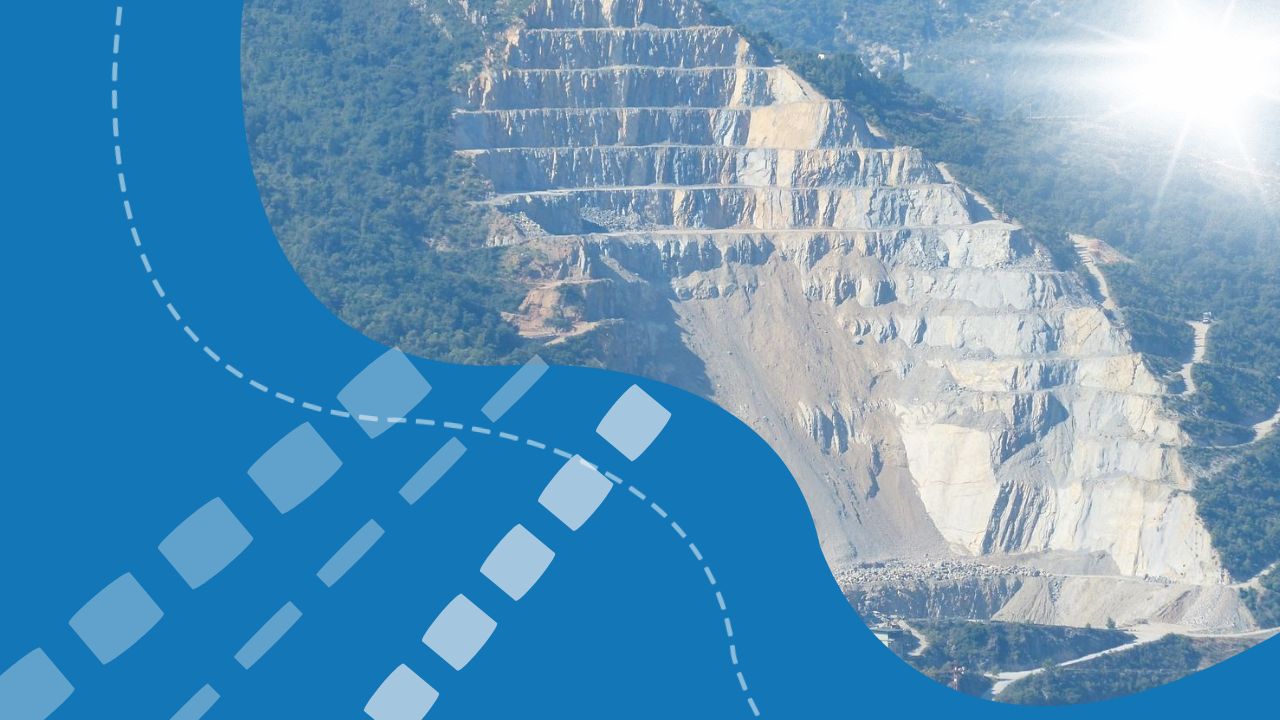
The European Union has moved from political framework to project pipeline on Brazilian critical minerals, formally analysing four specific operations covering rare earths, lithium and nickel — the first tangible outcome of the cooperation agreement signed between President Luiz Inácio Lula da Silva and German Chancellor Friedrich Merz at Hannover Messe on 20 April.
The four projects under EU review represent a cross-section of Brazil’s strategic mineral endowment. Serra Verde in Goiás, operated by the Singapore-based Energy Transition Minerals Fund, is already producing commercial volumes of neodymium, praseodymium, terbium and dysprosium — the four magnetic rare earths essential for EV motors and wind turbine generators — on track for roughly 6,500 tonnes of rare earth oxide output per year by 2027 and described as the first non-Chinese operation producing all four magnetic elements at scale. Viridis Mining and Minerals’ rare earth project in Poços de Caldas, Minas Gerais, is targeting first extraction by 2028 with partial financing from a French public development bank. Brazilian Nickel’s Piauí heap-leach facility is already producing battery-grade class-one nickel targeted at European cathode chemistries. AMG Lithium, part of Netherlands-headquartered AMG group, is operating and expanding lithium refining in Minas Gerais under a Germany-funded partnership.
The Hannover agreement itself is a declaration of intent rather than a financing instrument, committing Brazil’s Ministry of Science, Technology and Innovation and Germany’s Federal Ministry of Research to joint R&D, scientist exchange and a bilateral direct-financing mechanism to be elaborated before year-end. What is new is the EU’s mapping of specific Brazilian projects to the Critical Raw Materials Act framework, which requires the bloc to source at least 10% of strategic materials domestically and no more than 65% from any single third country by 2030 — a ceiling mechanically breached by Chinese rare earth dominance without Brazilian supply.
Spain’s Técnicas Reunidas has also signed a memorandum of understanding with St George Mining to test rare earth samples from the Araxá project. Técnicas Reunidas leads PERMANET, the EU-funded consortium building Europe’s first integrated permanent magnet value chain, and the agreement is designed to determine which intermediate or oxide product fits the European industrial processing route.
Brazil’s geological case is compelling: the country holds 94% of global niobium reserves, 23% of rare earths, 26% of graphite and the world’s third-largest nickel reserves. The political dimension has also sharpened. Brazilian officials have consistently insisted on value-added processing inside Brazil rather than raw ore exports, and the Hannover financing structure is being designed around that constraint — a condition the EU framework, with its emphasis on processing partnerships, fits better than the US model adopted at the March Critical Minerals Ministerial.
The next milestones to watch include the bilateral financing mechanism announcement expected before year-end, a committee vote on Brazil’s strategic minerals legislation PL 2.780, and whether the EU formally designates any of the four shortlisted projects as Strategic Projects under the Critical Raw Materials Act.
