
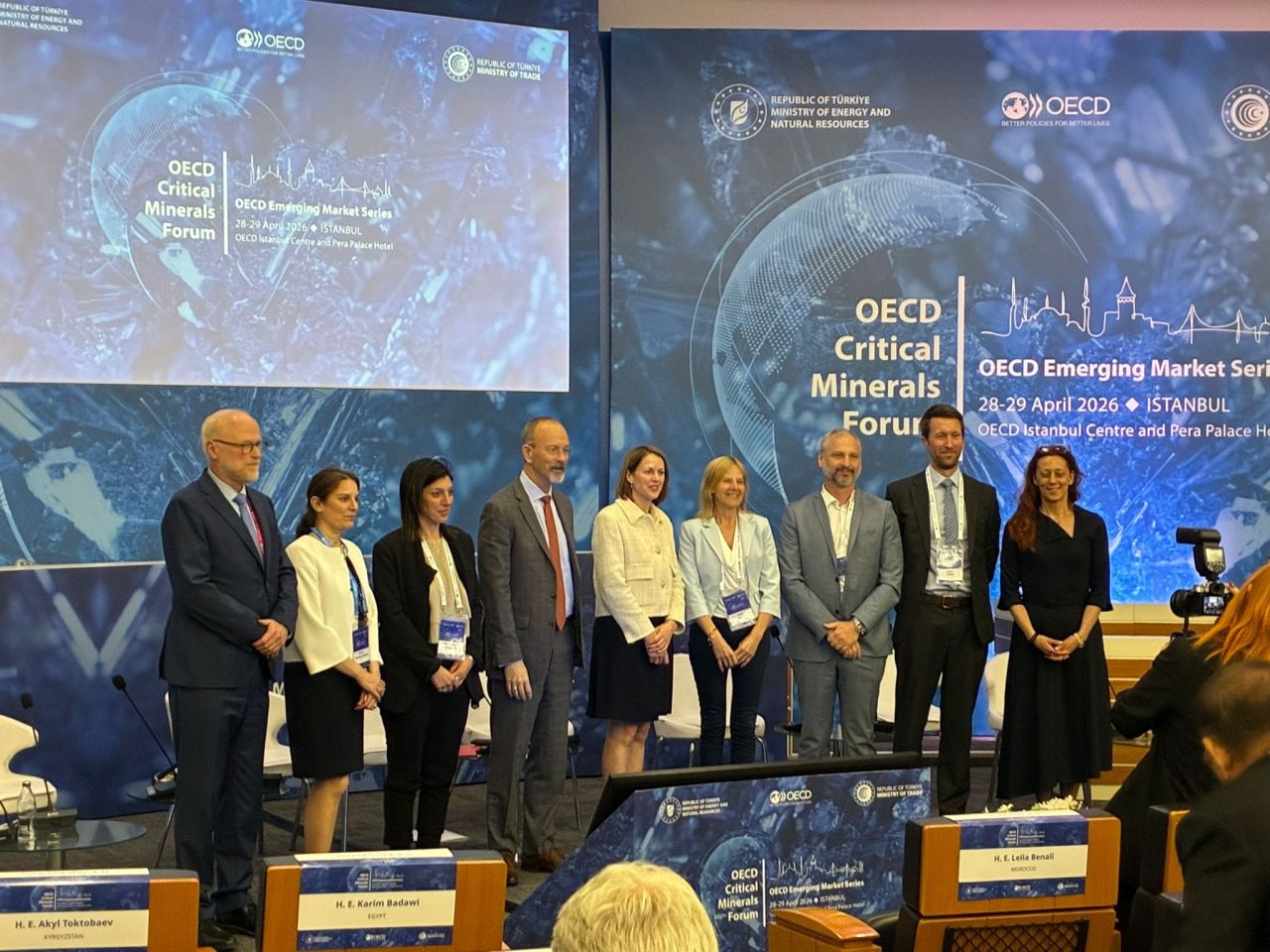
The global conversation around critical minerals has undergone a fundamental shift, moving beyond resource availability and diplomatic frameworks toward a more complex question: who designs the systems that connect mines to markets, and who captures the value those systems generate. That was the central argument advanced at the OECD Critical Minerals Forum 2026, where a panel examining regional perspectives on critical minerals in Central Asia, Latin America, Southeast Asia and Africa drew a clear conclusion — the era of project-by-project thinking is over.
The intervention, delivered by a representative of TETHYS during the geoeconomic panel drawing on OECD regional notes, framed critical minerals not as a sector but as the foundation of a broader system-level competition for economic power, industrial resilience and geopolitical alignment. Within that framing, Central Asia and the wider corridor region were positioned not as peripheral suppliers but as potential architects of future global supply chains.
The core argument was direct: value is no longer created at the mine. It is created across the integrated system that connects extraction to the end market — and building that system requires moving decisively beyond fragmented, project-based approaches toward what the speaker described as integrated mining corridor ecosystems. These ecosystems must connect mining operations with transport and logistics infrastructure, energy and water systems, digital traceability tools and finance — treating each as an interdependent variable rather than a separate consideration.
Several specific reframings were advanced. Water, the panel argued, must be recognised not merely as an environmental compliance issue but as a core investment and supply chain risk — one that will increasingly determine whether projects are viable and financeable. Mining waste similarly needs to be redefined across three dimensions simultaneously: as a potential resource, as a financial liability and as a risk variable that investors and regulators must account for. State-owned enterprises, often treated as complications in Western investment frameworks, were described as system enablers without which the infrastructure and scale required for corridor-level development cannot be achieved. International standards such as the Initiative for Responsible Mining Assurance were presented not as constraints on operators but as market enablers that create the transparency conditions institutional capital requires. And Digital Product Passports were identified as an emerging system-level tool for traceability, transparency and accountability across the full supply chain.
The overarching vision articulated was one of endogenous ecosystems — integrated structures in which the connections between components, not the components themselves, become the primary source of economic value. If Central Asia can build those connections, the argument ran, the region will not merely supply the minerals that underpin the energy transition and advanced manufacturing — it will help define the rules by which global supply chains are structured and governed.
