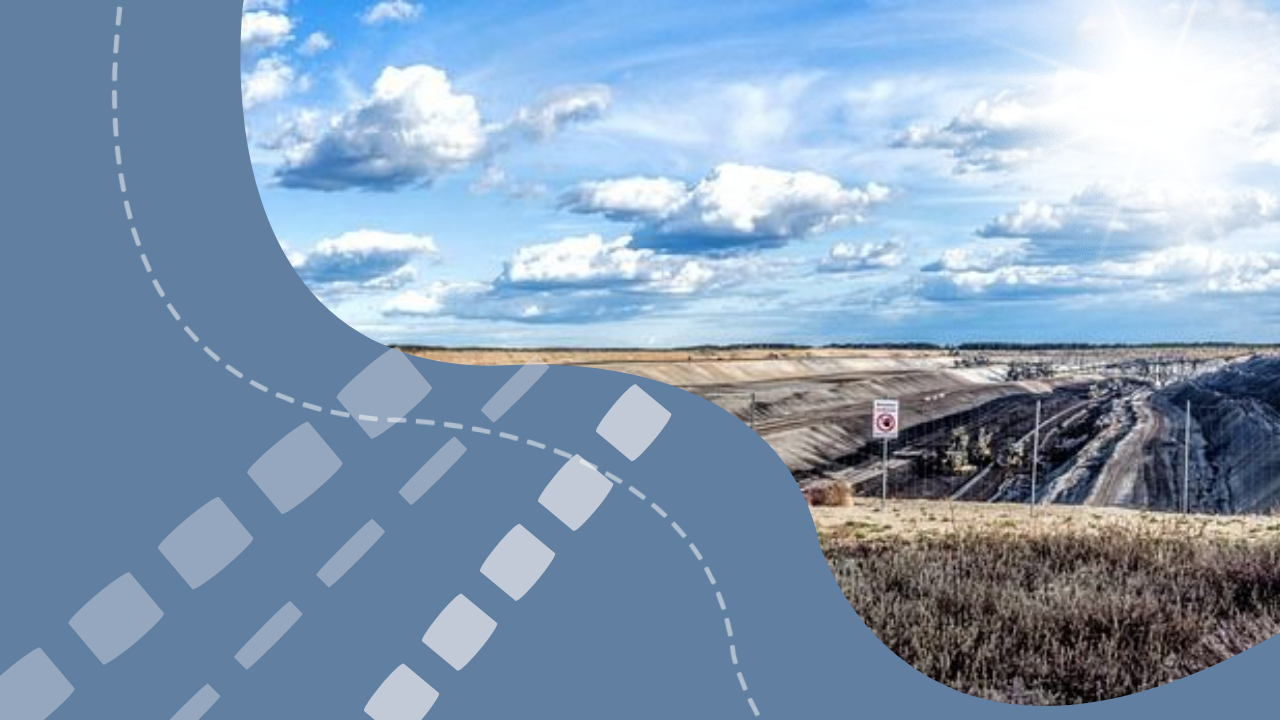
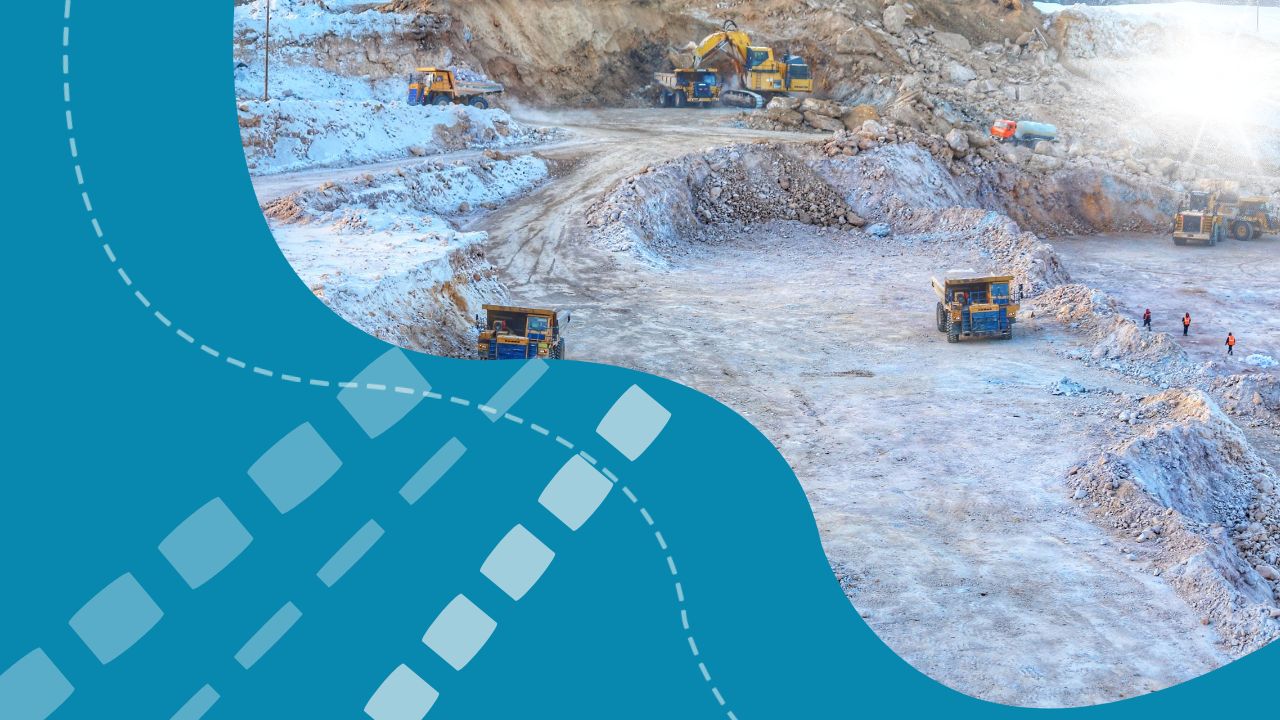
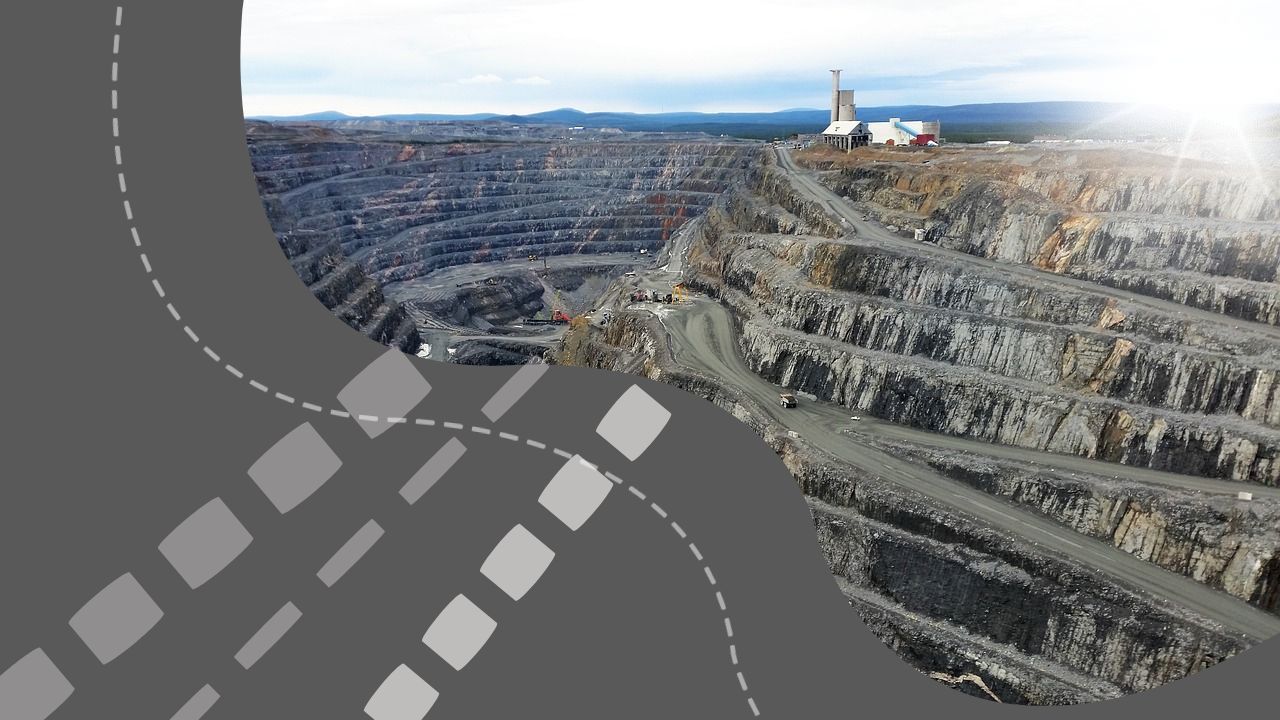
Kazakhstan’s gold mining company Altynalmas plans to develop the Karierny deposit in the Karaganda region over the next 19 years, according to an updated mine closure plan submitted for public review.
Under the revised mining plan, operations at the Karierny site are scheduled to run from 2026 to 2044. The project is designed to process an average of about 3 million tonnes of gold-bearing ore per year. The deposit covers an area of approximately 4.3 square kilometres and will be mined to a depth of around 200 metres.
The Karierny site is located in the Aktogay district of the Karaganda region, roughly 100 kilometres east of the city of Balkhash. Infrastructure near the project includes the Balkhash–Aktogay railway line, a 110 kV power transmission line and the Tokrau–Sayak water pipeline. Nearby deposits operated by Altynalmas include the Dolinnoye and Pustynnoye gold fields.
According to the company’s documentation, all approved reserves at the Karierny deposit will be mined during the project’s lifetime. The mine is expected to produce approximately 43.7 million tonnes of ore with an average gold grade of about 0.9 grams per tonne.
Based on these figures, the total gold output from the project is estimated at roughly 39.3 tonnes over the life of the mine. At current market prices, this volume would be valued at around $6.4 billion.
Altynalmas originally received the licence to develop the Karierny deposit in 2011, with the initial contract set to expire in 2026. The revised closure plan likely reflects a renewal or extension of subsoil use rights.
The project also outlines environmental and post-mining land management measures. Since backfilling the open pit with waste rock is considered economically unfeasible, the site will be fenced to prevent accidents, reduce dust dispersion and stop animals or waste from entering the pit.
After mine closure, the area could potentially be converted into a recreational water reservoir. Land disturbed during operations will also be rehabilitated to support pasture use, with soil preparation and seeding of perennial grasses planned to restore grazing land for livestock.
Closure activities are scheduled to begin in 2045, in accordance with Kazakhstan’s legislation requiring reclamation work to start within eight months after the expiration of a mining licence. The company estimates the cost of these activities at approximately $1.8 million.
Altynalmas currently operates nine gold deposits across Kazakhstan and remains one of the country’s largest gold producers.
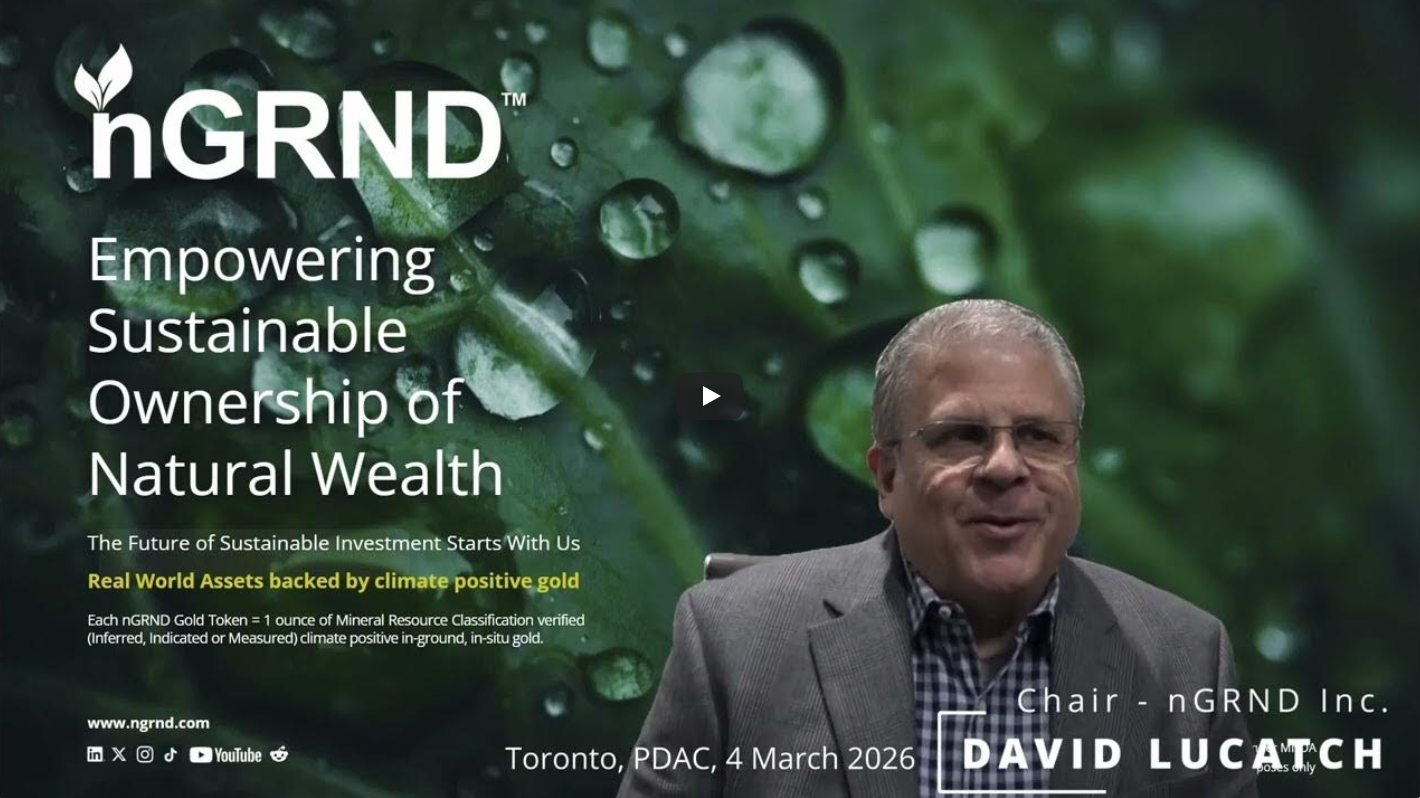
MINEX Forum Spotlights nGRND’s Vision for Sustainable Mining Finance at PDAC 2026
As a PDAC media partner for Europe and Central Asia, MINEX Forum continued to highlight innovations that can attract investment and accelerate the adoption of best-in-class technologies for sustainable mining. In its recent interview with David Lucatch, Chair of nGRND Inc., MINEX Forum explored a business model that challenges one of mining’s oldest assumptions: that value can only be unlocked by extracting metal from the ground.
nGRND, short for “in-Ground,” is advancing a novel concept built around the securitisation and tokenisation of verified in-ground gold reserves. The company’s vision is bold and deliberately provocative: to become “the world’s biggest resource company that doesn’t mine.”
A new way to unlock mineral value
In the interview, David Lucatch explained that nGRND is a land management and sustainability company working with gold discovery and exploration firms to monetise verified in-ground gold resources without physically mining them.
The company uses recognised technical documentation, such as NI 43-101 reports and other verified geological reports, to confirm the existence of gold resources. It then purchases those verified in-ground ounces from site owners and transforms them into a digital asset proposition for investors.
What makes the model distinctive is that it does not stop at the mineral resource itself. nGRND also seeks to integrate carbon, ESG and avoided mining programmes, creating an additional sustainability layer around the asset. In effect, the company aims to combine the enduring value of gold with the measurable benefits of reduced environmental disturbance, carbon impact mitigation and biodiversity protection.
This approach positions nGRND at the intersection of mining, environmental finance and blockchain-enabled asset structuring.
“We don’t just digitise gold — we redefine it”
nGRND describes itself as a company that is redefining how the world perceives, values and provides democratised access to natural wealth. Its proposition is centred on tokenising verified climate-positive in-ground gold reserves while integrating benefits from avoided mining and environmental restoration frameworks.
The company’s message is clear: gold can be reframed not merely as a mined commodity, but as a climate-positive, real-world asset. That framing is captured in its positioning:
Responsible innovation – Real-world value – Climate positive verified impact
This is a significant departure from the traditional mining investment thesis. Rather than focus solely on extraction, production growth and commodity cycles, nGRND is attempting to create value from preservation, optionality and sustainability.
Why gold, and why now?
David Lucatch made the case that gold is the ideal starting point for this model. He noted that roughly 93% of all gold is ultimately used as stored value—whether in jewellery, coins, bullion or central bank holdings—while only a small proportion is consumed for industrial or trade purposes. In his view, this makes gold uniquely suited to a system where the asset’s value can be recognised and monetised without immediate extraction.
For nGRND, the long-term opportunity is substantial. Lucatch said the company’s ambition is to monetise nearly 250 million ounces over the next decade.
That ambition reflects broader shifts in the global mining and investment landscape. Juniors and mid-tier explorers often hold significant resource inventories but struggle to convert those ounces into market value. Many trade at a fraction of the implied value of their resources, and raising capital to advance projects often leads to repeated equity dilution. nGRND’s model is designed to address precisely that problem.
Non-dilutive capital for explorers and developers
One of the strongest themes in the interview was the potential for nGRND to provide non-dilutive capital to exploration and mining companies.
Mr. Lucatch pointed out that many public companies may hold large resource bases while trading at only a few dollars per ounce in the ground. The more they raise through conventional financing, the more dilution they create for existing shareholders. By contrast, nGRND’s programme is intended to generate revenue by purchasing in-ground ounces and layering in future carbon and ESG value, thereby placing revenue on a company’s books without altering its capital structure.
That could be especially relevant for:
discovery and exploration companies
brownfield or retired assets
stranded deposits
projects that are currently uneconomic or inaccessible
properties constrained by environmental, geographic or regulatory factors
David Lucatch was clear that nGRND is not trying to interfere with active producers whose business depends on mining and selling gold. Rather, the company sees opportunity in assets where extraction may not make sense now—or for decades.
This opens an intriguing pathway for projects located under sensitive areas, near protected land, or in settings where mining would face high environmental or logistical barriers. In such cases, keeping the gold in the ground may itself become part of the value proposition.
The importance of jurisdictional stability
The success of such a model depends not only on geology, but also on geopolitics. Since nGRND’s premise is to keep resources in the ground over long time horizons—Lucatch referred to agreements of around 30 years with renewal features—the company must be confident that control over those resources can be maintained.
For that reason, nGRND is prioritising geopolitically stable jurisdictions. He noted that even previously attractive mining regions can become more uncertain over time, citing recent examples of nationalisation risk. For a company whose asset thesis depends on long-term preservation rather than near-term extraction, legal certainty and jurisdictional continuity are essential.
At present, nGRND is looking at opportunities involving Canadian, American, European, Australian, South American and South African companies, while remaining open to additional jurisdictions where the business model can be executed securely.
Global investor access through regulated token issuance
Another key part of the nGRND proposition is access to capital through digital markets. Lucatch said the company plans to launch its in-ground gold token to investors globally, excluding the United States and restricted jurisdictions. The investor base is expected to include both institutional and retail participants.
According to the interview, nGRND’s token issuance and generation partner is regulated in Dubai, and the structure is blockchain-based. The company believes this gives it a compliant route to market while offering broad international reach.
This matters because nGRND is not simply creating a mining finance instrument. It is attempting to build a bridge between real-world mineral assets, sustainability-linked value creation and digital finance infrastructure.
No direct competitor—yet
David Lucatch suggested that nGRND’s model is highly differentiated. While there are already businesses involved in tokenising physical gold, he argued that nGRND has not identified a direct competitor offering the same combination of:
verified in-ground gold monetisation
avoided mining and sustainability integration
compatibility with both private and publicly listed companies
non-dilutive financing potential
That combination could appeal to a market increasingly focused on ESG alignment, capital efficiency and alternative asset structures.
Relevance for Europe and Central Asia
For MINEX Forum audiences across Europe and Central Asia, the concept may be especially timely. The region includes a wide range of mining jurisdictions with large undeveloped or stranded mineral inventories, as well as governments and companies seeking new ways to attract investment while minimising environmental impact.
Lucatch indicated that Central Asia is still a new area for nGRND, but one the company is open to exploring. That leaves the door open for future engagement in a region where resource development, sustainability policy and foreign investment priorities increasingly intersect.
If the model proves scalable, it could offer a new option not only for companies seeking capital, but also for governments interested in balancing resource monetisation, environmental protection and long-term land stewardship.
A different future for mineral wealth
The significance of the MINEX Forum interview lies in the fact that nGRND is not merely proposing another financing instrument. It is proposing a different philosophy of resource ownership and value creation.
Instead of asking how quickly a gold deposit can be extracted, financed and sold, nGRND asks a different question: can the value of that resource be realised while leaving it in the ground?
That idea will undoubtedly attract scrutiny. Questions remain around market adoption, valuation frameworks, regulatory treatment and long-term execution. But the concept is difficult to ignore, particularly at a time when the mining sector is under pressure to decarbonise, reduce land disturbance and find more creative funding pathways.
For MINEX Forum, whose long-term objective is to promote investment and best-in-class technologies for sustainable mining, the conversation with David Lucatch reflects precisely the kind of innovation now reshaping the industry’s horizon.
nGRND’s ambition is striking, but its proposition is simple at its core: natural wealth does not always have to be extracted to be valuable.
If that idea gains traction, “the world’s biggest resource company that doesn’t mine” may become more than a slogan. It may become a new category in global mining finance.
French President Emmanuel Macron has called for Europe to reduce its reliance on Russian uranium supplies and diversify sources of nuclear fuel, pointing to several alternative producers including Uzbekistan.
Speaking at an international nuclear energy summit in Paris, Macron said Europe remains significantly dependent on Russian uranium and must accelerate efforts to diversify supply chains. Among potential alternative suppliers, he mentioned Uzbekistan, Kazakhstan, Mongolia, Canada and Australia.
Macron stressed that nuclear energy remains central to Europe’s long-term strategy for energy independence, economic decarbonisation and sustainable development.
The French president also announced that France will soon hold a meeting of its Nuclear Policy Council in Paris, where new decisions regarding the development of the country’s nuclear energy sector are expected to be adopted.
Uzbekistan has been increasing its uranium production in recent years. According to available data, the country produced about 7 000 tonnes of uranium last year, compared with around 4 000 tonnes in 2024.
The country’s total identified uranium reserves are estimated at approximately 139 000 tonnes. Uzbekistan is also planning to expand production through the development of four additional uranium deposits.
The renewed focus on alternative uranium suppliers comes amid growing concerns in Europe about the security of nuclear fuel supply as geopolitical tensions reshape global energy markets.
First Quantum Minerals has agreed to sell its Çayeli copper-zinc mine in Türkiye to a company controlled by Cengiz Holding as part of the Canadian miner’s strategy to focus on core assets.
Under a binding agreement, Cengiz Insaat will acquire the underground mine for $340 million in cash, including an upfront payment of $50 million. The transaction is expected to strengthen First Quantum’s balance sheet as the company allocates capital toward key projects.
Chief executive Tristan Pascall said the divestment reflects the company’s disciplined portfolio management approach as it prioritizes strategic assets, including efforts to restart the Cobre Panama operation.
“For more than a decade, the performance of Çayeli within First Quantum has been underpinned by the dedication of its employees and a strong safety and operating culture,” Pascall said.
Cengiz Holding, one of Türkiye’s largest industrial conglomerates, has been rapidly expanding its mining portfolio. The group recently announced a $1.5 billion acquisition of the Copler gold mine from SSR Mining, marking its largest mining deal to date.
Located on the Black Sea coast in northeastern Türkiye, the Çayeli mine has been operating since 1994. The underground operation produces copper and zinc concentrates from a volcanic-hosted massive sulphide deposit and is expected to remain in production until around 2036.
The sale represents the second recent asset divestment by First Quantum. In December, the company sold the past-producing Cobre Las Cruces copper mine in Spain for $190 million.
Shares of First Quantum initially rose after the announcement but later reversed gains. By midday trading, the stock was down about 1.7%, giving the company a market capitalization of approximately C$27.5 billion ($20.2 billion).
Despite the decline, UBS analyst Myles Allsop upgraded the stock rating to “Buy” from “Neutral” and raised the price target to C$50 from C$38, citing improved financial flexibility and portfolio focus.
The escalating conflict involving the United States, Israel and Iran is already disrupting global commodity markets, tightening supply across energy, fertilizers, chemicals and several metals while raising the risk of prolonged price volatility.
Analysts at BMO Capital Markets say the region’s central role in global supply chains has triggered sharp price reactions in commodities tied to Middle Eastern production. The most immediate impacts have been seen in oil and fertilizer markets, where supply is highly concentrated.
Oil markets have experienced the most significant disruption. According to BMO oil and gas analyst Randy Ollenberger, the conflict represents one of the largest shocks to oil markets in decades. Prices briefly surged toward $120 per barrel before stabilizing near $90, but analysts warn the market may still be underestimating potential supply risks.
Shipping through the Strait of Hormuz has been severely disrupted, with tanker traffic dropping dramatically from the usual 80 vessels per day to only a small number. Storage constraints and refinery outages are adding further pressure to global petroleum supply chains.
Analysts warn that prolonged hostilities could tighten global oil inventories even further and drive prices higher if regional disruptions expand.
Chemical markets are also tightening as Middle Eastern production faces constraints. The region accounts for roughly 15% of global polyethylene production, meaning disruptions could push global industry utilization rates above 90%.
Producers in the United States and Europe have already begun announcing price increases as supply conditions shift from surplus to tighter markets. Higher feedstock costs are also affecting related sectors, including titanium dioxide production.
Fertilizer markets are experiencing similar pressures. Nitrogen fertilizer prices have risen about 30% since the conflict began, reflecting the Middle East’s major role in global exports. Countries in the region account for nearly half of global urea exports, while Russia and Middle Eastern producers dominate nitrogen supply.
Higher natural gas prices in Europe are also widening the cost advantage for North American fertilizer producers. Companies such as CF Industries and Nutrien could benefit from the shifting market dynamics.
Metals markets have responded unevenly depending on supply exposure and macroeconomic factors. Aluminum prices have strengthened due to the Middle East’s role in global production, which accounts for roughly 9% of supply. Analysts estimate up to 5 million tonnes of regional output may already face disruption.
Iron ore and thermal coal have also seen price support due to higher energy costs and supply uncertainties. Meanwhile, metals such as copper and nickel have remained under pressure as broader market concerns about inflation and a stronger U.S. dollar dampen investor sentiment.
Analysts suggest the conflict could reinforce long-term trends supporting electrification and strategic resource security. Rising energy security concerns may accelerate efforts to diversify supply chains and build strategic reserves of key industrial metals.
Battery metals face a more complex outlook. Lithium production is less directly exposed to higher sulfur costs, but prolonged disruptions could affect refining capacity in China, the world’s largest lithium processor. Nickel production may face greater risk because sulfur-intensive extraction methods, particularly in Indonesia, depend heavily on sulfuric acid.
Beyond battery metals, the conflict could also increase demand for minerals linked to defence manufacturing. Modern warfare relies heavily on metals used in drones, missiles and advanced weapon systems, including tungsten, rare earth elements and antimony.
With the duration and potential escalation of the conflict still uncertain, commodity markets remain highly sensitive to developments in the region. Even if shipping routes normalize quickly, analysts say the disruption has already altered supply dynamics across several key sectors of the global resources industry.
Authorities in Kosovo have arrested six individuals during an operation targeting illegal coal mining activities in the Mitrovica region.
The action was carried out by the Basic Prosecution Office in Mitrovica in coordination with Kosovo Police across three locations in the municipality of Vushtrri. The operation focused on suspected illegal mining activities in the villages of Bivolak, Zhilivodë and Stroc.
According to prosecutors, the six suspects were detained on suspicion of committing criminal offenses including “Pollution, degradation or destruction of the environment” and “Causing general danger.” The individuals will be interviewed by police as part of the ongoing investigation.
During the operation, authorities also seized equipment believed to have been used in illegal coal extraction. Confiscated machinery included three excavators, six trucks and a tractor.
The Basic Prosecution Office in Mitrovica said the action reflects ongoing efforts by law enforcement to combat environmental crimes and protect natural resources.
Officials emphasised that institutions remain committed to prosecuting activities that damage the environment or threaten public safety.
Kazakhstan failed to meet its planned growth target for metallic ore production in 2025, according to the Ministry of Industry and Construction, although the sector’s value increased significantly due to higher global metal prices.
Under the ministry’s development plan, metallic ore production was expected to grow by 3.1% in 2025. Instead, output declined by 0.2%, meaning the target was achieved at only 96.8%.
Officials attributed the shortfall primarily to operational changes at the country’s largest gold deposit, Vasilkovskoye, which supplies roughly 20% of Kazakhstan’s gold-bearing ore. The mine is currently transitioning from open-pit to underground mining, a process that reduced production volumes and lowered the sector’s physical output index by about 2.5%.
Additional pressure came from declining ore grades at several zinc and lead mines in East Kazakhstan Region, including the Maleevsky, Tishinsky and Dolinny deposits.
Despite the drop in physical production, the total value of metallic ore extraction reached 5.8 trillion tenge in 2025, representing a 28.3% increase compared with 2024 due to stronger metal prices.
The ministry also missed its target for metallurgical production. Output in the sector was expected to grow by 5%, but actual growth reached only 1.2%.
This underperformance was linked to a slight decline in non-ferrous metallurgy production, which fell by 0.5%. Several key metals saw reduced output during the year.
Production of refined zinc dropped by 6.6%, refined gold by 1.1%, refined silver by 10.4%, and refined lead fell sharply by 29.6%. Authorities cited declining metal content in mined ore as one of the main contributing factors.
Operational disruptions also affected several major companies. At Kazakhmys Corporation, which accounts for about 22% of the industry, an accident involving an explosion and collapse at the Zhomart mine disrupted operations. The mine supplies about 40% of the feedstock for the Zhezkazgan copper smelter.
In addition, shipments of approximately 40,000 tonnes of raw material from Russia’s Russian Copper Company were halted due to sanctions affecting Russian businesses.
Another producer, Tau-Ken Altyn, saw a sharp reduction in recycled feedstock — falling from 2.5 tonnes to just 60 kilograms — because of repair work at Russia’s Amur Mining and Metallurgical Plant.
Kazzinc, which represents about 30% of Kazakhstan’s non-ferrous metallurgy sector, also faced supply disruptions. Due to customs restrictions under the “red corridor” import regime introduced by the State Revenue Committee, the company lost a contract to import around 40,000 tonnes of raw materials from Tajikistan. Kazzinc depends on imports for roughly 40% of its feedstock.
Overall, the ministry met 19 out of 29 performance indicators for the year. Five targets were not achieved, while final statistical data for another five indicators has yet to be confirmed.
Despite the short-term challenges, longer-term mining output trends remain positive. Between 2021 and 2025, copper ore production in Kazakhstan increased by 31.8% to 162.9 million tonnes. Gold-bearing ore production rose by 20.4% to 39.2 million tonnes, while lead-zinc ore extraction grew by 19% to 9.9 million tonnes.
The Bureau of National Statistics is expected to publish final industry data for these indicators on July 3, 2026.
Greenland holds vast reserves of rare earth elements and other critical minerals, but major infrastructure and logistical challenges mean large-scale production is likely at least a decade away.
The Arctic island, an autonomous territory within the Kingdom of Denmark since 2009, covers a vast area but has a population of just about 56 000 people, making it the least densely populated country in the world. Around 80% of the island is covered by permanent ice, with most residents living along the southwestern coast.
Greenland’s strategic importance extends beyond its resources. Located between North America, Europe and the Arctic Ocean, the island sits near the GIUK Gap — the Greenland-Iceland-United Kingdom maritime corridor — a key NATO chokepoint used to monitor naval movements between the Arctic and Atlantic. The United States also operates the Pituffik Space Base, formerly Thule Air Base, which supports missile warning systems and satellite surveillance.
Beneath Greenland’s ice lies substantial mineral wealth. The U.S. Geological Survey estimates the island holds about 1.5 million tonnes of proven rare earth reserves, ranking it among the world’s top resource holders. Several deposits are considered globally significant.
The Kvanefjeld deposit alone contains more than 11 million tonnes of rare earth resources, including around 370 000 tonnes of heavy rare earth elements. Another project, Tanbreez, may represent the world’s largest rare earth resource at approximately 28.2 million tonnes, with an unusually high proportion of heavy rare earths.
These minerals — including dysprosium, neodymium, terbium and gadolinium — are critical for manufacturing permanent magnets used in electric vehicles, wind turbines, advanced electronics and defence technologies.
Greenland also hosts 25 of the 34 critical minerals identified by the European Union and 43 of the 50 minerals classified as strategically important for U.S. national security. In addition to rare earths, the island has deposits of graphite, lithium, copper, zinc, gold and uranium, as well as an estimated 31 billion barrels of oil-equivalent hydrocarbon resources.
Despite this geological potential, Greenland currently has no commercial rare earth production. The main obstacles include extreme Arctic conditions, widespread ice cover, limited infrastructure, absence of power grids and ports, and very high logistics costs.
Projects have also faced regulatory and environmental challenges. The Kvanefjeld project, explored extensively since the late 2000s, was halted in 2021 after Greenland introduced a ban on uranium mining. Meanwhile, the Tanbreez project completed a preliminary economic assessment only in 2025 and remains years away from development.
Even under favourable conditions, mining projects typically require seven to fifteen years from discovery to production. Greenland’s lack of existing infrastructure means development timelines could be even longer.
Analysts note that while Greenland represents a significant long-term opportunity to diversify global supply chains for critical minerals, it cannot address immediate supply vulnerabilities. China currently dominates global processing capacity for many key materials, controlling roughly 95% of manganese processing, 65% of cobalt processing and about 35% of nickel processing.
As a result, governments are increasingly focusing on accelerating domestic or allied mining projects that could reach production sooner, while simultaneously investing in long-term strategic opportunities such as Greenland.
Experts say both approaches are necessary: developing Greenland’s resources will require sustained infrastructure investment and international cooperation, while near-term supply security will depend on faster development of projects in established mining jurisdictions.
Mongolia is pushing to renegotiate the commercial terms of the massive Oyu Tolgoi copper mine, seeking earlier profit payments and a larger share of revenues from the project it co-owns with Rio Tinto.
The Mongolian government, which holds a 34% stake through state-owned Erdenes Mongol LLC., believes the current arrangement does not deliver sufficient economic benefits to the country. Officials are reportedly aiming to increase Mongolia’s share of returns to around 60% and accelerate dividend payments.
Rio Tinto acknowledged the discussions and said it remains committed to working with its partners to maximise the value of the project. “These discussions reflect our continued commitment to working together to achieve Oyu Tolgoi’s full potential for the benefit of all partners,” the company said in a statement.
Oyu Tolgoi is one of the world’s largest copper projects and a key asset in Rio Tinto’s long-term growth strategy as global demand for copper rises with the expansion of renewable energy, electrification and infrastructure linked to the energy transition.
Under the existing agreement, Mongolia is not expected to receive dividends until it repays a multi-billion-dollar loan from Rio Tinto that financed its share of the mine’s development costs. Those costs significantly exceeded early projections, potentially delaying dividend payments until the next decade.
Rio Tinto has invested heavily in expanding the underground operations at the mine. Copper production rose 61% last year as development progressed.
Relations between the partners have fluctuated in recent years. In 2022, Rio Tinto cancelled $2.4 billion of debt owed by Mongolia in what it described as a reset of the partnership, allowing the underground phase of the project to move forward.
However, tensions have resurfaced. Mongolia is currently pursuing a legal claim against Rio Tinto over alleged tax underpayments of roughly $450 million related primarily to depreciation accounting for the 2021 and 2022 tax years.
The renewed pressure also comes as Mongolia approaches national elections next year and commodity prices remain strong. Copper and gold prices are hovering near historic highs, increasing political scrutiny over how the country benefits from its mineral resources.
Oyu Tolgoi, which began production as an open-pit mine in 2011, is expected to become the world’s fourth-largest copper mine by 2030 once its underground expansion reaches full capacity.
Allied Critical Metals has released additional economic and technical details from the Preliminary Economic Assessment (PEA) of its Borralha tungsten project in northern Portugal, highlighting strong cash flow potential, rapid capital recovery and capital-efficient development.
The company confirmed that the previously announced project economics remain unchanged, including an after-tax net present value (NPV) of $473.4 million and an internal rate of return (IRR) of 48.8% based on a tungsten price of $1,000 per metric tonne unit (mtu) of WO₃.
Under this scenario, the project is expected to achieve payback in approximately 2.2 years from the start of commercial production, equivalent to about 4.2 years from the beginning of construction.
The underground tungsten project requires initial capital investment of about $124.2 million (US$91 million). The development plan incorporates a compact infrastructure layout designed to support efficient underground mining and processing operations.
According to the PEA, the project could generate average annual revenue of approximately $184.9 million and average annual EBITDA of about $104.1 million over the initial mine plan at the $1,000/mtu WO₃ price assumption. Average annual free cash flow is estimated at roughly $70.5 million.
The economic outlook strengthens significantly at higher tungsten prices. At $1,500/mtu WO₃, the project’s after-tax IRR increases to 78.4% and NPV rises to $963.8 million.
The current mine plan is based on an initial production period of 11 years with average annual output of about 1,708 tonnes of WO₃ concentrate. Processing capacity is expected to reach approximately 1.4 million tonnes of ore per year with an average grade of about 0.20% WO₃.
Tungsten accounts for around 96% of the project’s economic value, with minor contributions from copper and tin.
Infrastructure for the project includes a planned connection to Portugal’s national power grid through a 60 kV line, water supply and recycling systems, road access, and a paste backfill facility designed to support underground operations while minimizing environmental impact.
The project will produce tungsten concentrate grading about 65% WO₃ using a gravity-dominant processing flowsheet, which reduces metallurgical complexity and operating costs.
The current resource estimate for the Santa Helena Breccia deposit includes 13.0 million tonnes of measured and indicated resources at 0.21% WO₃, along with 7.7 million tonnes of inferred resources at 0.18% WO₃.
Allied Critical Metals is currently conducting a fully funded 20,000-metre drilling program aimed at expanding the mineral resource, upgrading inferred resources to higher confidence categories and potentially extending the mine life beyond the initial 11-year production plan.